EBUS (Endobronchial Ultrasound) in Thailand Your guide to cost, top specialists & hospitals
A scan can show a shadow in the lung but it cannot say what the shadow is. EBUS carries an ultrasound probe into the airways so a needle can find out.
What Is EBUS?
Also known as: Airway Ultrasound Biopsy · Endobronchial Ultrasound (EBUS)
EBUS is a camera test of the airways that carries an ultrasound probe into the breathing tubes so a needle can sample a lymph node or a mass sitting just outside the airway wall. The letters stand for endobronchial ultrasound. A bronchoscope shows the inside of the airways, and the ultrasound sees through the wall, which is how tissue can be taken from something the camera alone cannot reach.1
This is a test rather than a treatment, and it is worth being plain about that. It is usually the step that establishes whether a shadow on a scan is cancer, and if it is, whether it has reached the lymph nodes in the middle of the chest. That answer shapes almost everything that comes afterwards.
It is done under sedation or a light general anaesthetic, takes under an hour, and most people are home the next day. The harder part is the wait for the pathology result, which takes days rather than hours, and no one can tell you what it will say before it arrives.
It can address a range of concerns, including:
Am I a Good Candidate for EBUS (Endobronchial Ultrasound)?
The question is not whether you could have an EBUS but whether it is the right test for where your abnormality sits and whether the answer would change anything.
EBUS can only sample what lies within reach of the breathing tubes, so the CT decides before anyone else does.
Central nodes and masses: Lymph nodes and masses beside the main airways are exactly what needle aspiration is for.
Peripheral lesions: Nodules further out can sometimes be reached with a guide sheath, and sometimes cannot.
Right at the edge: A lesion against the chest wall is often better sampled with a needle through the skin instead.
A test is worth having when the answer alters the plan, and worth questioning when it would not.
Diagnosis unknown: The main reason is to establish what an abnormality actually is.
Staging undecided: Node involvement determines whether surgery is possible, so sampling them changes everything.
Tissue for molecular testing: Where targeted or immune treatment is a possibility, the sample needs to be big enough.
The procedure is short but it involves the airway, so the assessment is about breathing more than anything else.
Breathing at rest: Severe breathlessness at rest raises the risk and may push towards a general anaesthetic.
Heart assessed: Unstable heart disease or a recent heart attack is reviewed before the test is booked.
Fasting and clearance: Standard pre-procedure blood work and a fasting period apply.
A needle passes through the airway wall, so blood thinning medication needs handling deliberately.
A pausing plan agreed: Anticoagulants and antiplatelets are paused on a plan set in advance, never on the day.
Clotting checked: Blood tests confirm clotting is normal before sampling.
Bleeding history declared: Any tendency to bleed or bruise easily should be mentioned at the consultation.
Who is not suitable for ebus (endobronchial ultrasound)?
- An abnormality out of reach of the airways, better sampled through the chest wall
- Severe breathing difficulty at rest that makes sedation unsafe
- Unstable heart disease or a recent heart attack until reviewed
- Blood thinning medication that cannot be safely paused
- A result that would not change management, where surveillance may be more appropriate
Pricing
How Much Will EBUS (Endobronchial Ultrasound) Cost in Thailand?
What ebus (endobronchial ultrasound) costs at accredited hospitals in Thailand, and what your final quote depends on.
Get your exact price
Tell us what you're considering and we'll send a personalised quote from accredited clinics within 24 hours.
Get my free quoteTypical prices in Thailand
Typical ranges based on recent hospital quotes. Your exact price depends on the hospital and how complex your case is, and is confirmed at your teleconsultation.
EBUS (Endobronchial Ultrasound)
An ultrasound probe is carried into the airways so a needle can sample a lymph node or lung mass through the airway wall, without any incision.
| EBUS with guide sheath 1 night For lesions further out in the lung, reached through a sheath left in place while samples are taken | $5,100 ฿172,000 |
| EBUS-TBNA 1 night Needle aspiration of lymph nodes or masses next to the central airways | $7,000 ฿237,000 |
| EBUS-TBNA with guide sheath 1 night Both techniques in the same session, where central nodes and a peripheral lesion both need sampling | $9,800 ฿333,000 |
Typically not included
- Pathology and pathologist charges on the samples taken
- Molecular and genetic testing of the tissue
- CT, PET-CT and other imaging outside the package
- Pre-procedure medical clearance and specialist consultant fees
Get your exact price
Tell us what you're considering and we'll send a personalised quote from accredited clinics within 24 hours.
Hospitals Trusted for EBUS (Endobronchial Ultrasound)
From internationally accredited flagships to dedicated specialist hospitals, these are the kinds of facilities where international patients have this procedure.
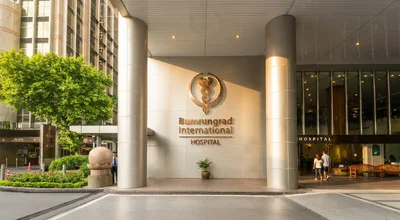
Bumrungrad International Hospital
Tertiary hospital with over 1,200 physicians treating 520,000+ international patients a year.
View hospital profile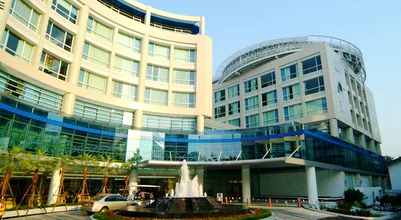
Bangkok Hospital
BDMS flagship tertiary campus with standalone heart, cancer, and neuro-orthopaedic hospitals.
View hospital profile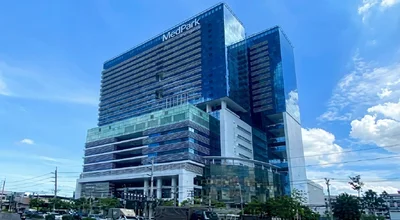
MedPark Hospital
Purpose-built tertiary hospital opened in 2020, focused on complex cardiac, cancer, and transplant care.
View hospital profile
Tell Us What You Need. We Do the Rest.
Share what you're considering and we'll come back with surgeon options, pricing, and a clear plan.
- Real hospital pricing with zero markup
- Matched with a specialist experienced in your specific procedure
- Full coordination from consultation to recovery


Trusted by patients worldwide
The complete guide to EBUS (Endobronchial Ultrasound) in Thailand
Everything below is for readers who want the full detail: costs broken down, types and techniques, recovery, risks and safety, and planning your trip.
Interventional Pulmonology Teams in Thailand
This is a test where the operator and the pathologist matter more than the hardware, because both the sampling and the reading have to go right.
What an Interventional Pulmonology Service Involves
EBUS belongs to interventional pulmonology rather than general respiratory medicine. A service set up for it has ultrasound bronchoscopes in regular use, anaesthetic support for airway procedures, and a pathology department that reports lung and lymph node specimens routinely. Our partner hospitals in Bangkok run services of this kind alongside their thoracic surgery programmes.
Experience That Matters Here
Ask how many EBUS procedures the team performs and what proportion return a usable sample, since the diagnostic yield of this test varies more with the operator than most people expect. A unit that also does thoracic surgery is a good sign, because staging and treatment are then discussed by the same group rather than handed between services.
Questions Worth Asking Before You Commit
Ask which node stations are planned and why, based on your PET-CT. Ask whether the sample will be checked on site during the procedure. Ask what the plan is if the sample is inconclusive, because there should be one, and whether molecular testing can be done on the same tissue without another procedure.
Understanding Your Results
This test produces information rather than a change you can feel, and knowing what the report can and cannot settle is part of preparing for it.
What the Result Can Tell You
Whether the abnormality is cancer, and if it is, what type. Whether the lymph nodes in the centre of the chest contain disease, which is what determines the stage and therefore whether surgery is even on the table. Molecular testing on the same tissue can identify mutations that point towards targeted or immune treatment, which is why sample size matters.
What It Cannot Settle
A negative result does not always mean there is nothing there. If the needle missed, or the sample was too small, the abnormality is still unexplained and further testing follows. That is the frustrating truth of any biopsy and it is better heard beforehand. Results vary with the size and position of the target, and no one can promise a definitive answer from a single test.
How the Result Changes the Plan
A benign result may end the investigation or lead to surveillance scans. Cancer confined to the lung with clear nodes opens the door to surgery. Cancer in the central nodes usually moves the plan towards chemotherapy, radiotherapy or a combination, sometimes with surgery afterwards. This is why the test is worth doing properly rather than quickly.
EBUS Cost in Thailand
What Our Partner Hospital Quotes
Our partner hospital prices EBUS within its respiratory surgery package list at ฿172,000 for EBUS with a guide sheath, ฿237,000 for EBUS-TBNA, and ฿333,000 where both are done in one session, each with one night in hospital. These are the respiratory surgery package rates rather than a separately tiered international rate. They are also one hospital group's figures, not a Thai national price.
The Exclusion That Matters Most Here
Pathology and pathologist charges sit outside the package, and on a diagnostic test that is the point of the exercise. The samples have to be examined and reported by a pathologist before the procedure has told you anything, and molecular or genetic testing on the same tissue is a further separate cost. Ask for the pathology charges in writing at the same time as the procedure price, because the two only make sense together.
What Else Sits Outside It
Pre-procedure medical clearance and specialist consultant fees are excluded, as are CT, PET-CT and other imaging not included in the package, and medication for conditions you already have. Flights, accommodation and travel insurance are yours to arrange. If you are travelling specifically for this test, budget for the wait as well as the procedure, since the result is what you came for.
How That Compares Internationally
Private EBUS in the United States commonly runs from around $8,000 to $20,000, in Australia from roughly A$6,000 to A$14,000, and in the United Kingdom from about £4,000 to £9,000. The saving here is real but more modest than on surgical procedures, and in most countries this test is delivered through the public or insured system on a suspected cancer pathway rather than paid for privately. If you can access it at home quickly, that is usually the sensible route.
EBUS or the Other Ways of Getting Tissue
A needle passed through the chest wall under CT guidance is the usual alternative for a lesion near the edge of the lung. It reaches places a bronchoscope cannot and gives a good yield for peripheral nodules. The trade-off is a meaningfully higher chance of a collapsed lung afterwards, since the needle crosses the lung surface, and it cannot sample the lymph nodes in the middle of the chest at all. For a peripheral nodule with no suspicious nodes, it is often the better test.
Mediastinoscopy is the surgical route to those central nodes, done through a small incision at the base of the neck under general anaesthetic, and it remains a recognised way of examining the lymph nodes in the middle of the chest.2 It was the standard for decades and it still has a place, particularly when an EBUS has come back inconclusive but the suspicion remains. It samples more tissue. It also means an operation, an incision and a longer recovery, which is why ultrasound-guided needle sampling now does much of that work.
An endoscopic ultrasound through the gullet reaches some node stations that the airways cannot, and the two are sometimes combined. Which test you need depends entirely on where the abnormality is, and that is read off your CT and PET-CT rather than chosen. If you are told EBUS is the right test, it is fair to ask why that one rather than a needle through the chest wall, and there should be a clear answer.
Types of EBUS Procedure
The two techniques reach different parts of the lung. Which you need is a question of geography, decided from your CT scan before you arrive.
EBUS-TBNA
Transbronchial needle aspiration guided by ultrasound. A probe on the tip of the bronchoscope images the lymph nodes and masses lying just outside the central airways, and a needle passes through the airway wall into them under live ultrasound view. This is the standard technique for staging the lymph nodes in the middle of the chest.
- Samples the mediastinal lymph nodes that determine the stage of a lung cancer
- Needle passes under live ultrasound rather than blindly
- Often replaces the older surgical approach of mediastinoscopy
- Best for: enlarged or PET-active lymph nodes next to the central airways
EBUS With Guide Sheath
A thin ultrasound probe is passed further out into the smaller airways inside a plastic sheath. Once the probe finds the lesion, it is withdrawn and the sheath stays in place as a tunnel, so brushes and forceps can be passed to the same spot repeatedly without losing it.
- Reaches lesions in the outer part of the lung that a standard bronchoscope cannot
- The sheath holds the position so several samples come from the same place
- Usually combined with X-ray guidance to confirm the location
- Best for: peripheral nodules sitting along an airway rather than centrally
Both in One Session
Where a peripheral lesion needs identifying and the central lymph nodes need staging, both techniques are used in the same anaesthetic. It answers the diagnosis question and the staging question together, which avoids a second procedure and a second wait.
- Diagnosis and staging established from one session
- Avoids repeating the sedation and the recovery
- Costs more than either technique alone, which the published pricing reflects
- Best for: a peripheral lesion with suspicious central nodes on PET-CT
Rapid On-Site Evaluation
Some centres have a pathologist or technician examine a smear from each pass while the procedure is still going on. It does not give the final answer, but it confirms whether enough usable material has been obtained before you wake up, which reduces the chance of being called back for a repeat test.
- Confirms sample adequacy during the procedure rather than days later
- Reduces the risk of a non-diagnostic result and a second procedure
- Not available everywhere, so it is worth asking about
- Why it matters: an inadequate sample is the most common way this test fails
What Happens During an EBUS
The whole test happens through the mouth and the airways. Understanding the sequence takes most of the apprehension out of it.
Sedation or Light General Anaesthetic
You are either sedated so you are drowsy and relaxed but breathing for yourself, or given a light general anaesthetic. Local anaesthetic numbs the throat and airways either way, which is what stops the coughing that would otherwise make the test impossible.
- Sedation is common, with a general anaesthetic used where more time or stillness is needed
- Local anaesthetic to the throat and airways suppresses the cough reflex
- You will not usually remember the procedure afterwards
- Best for: almost everyone, since the choice is made on your health rather than preference
The Bronchoscope and Ultrasound Probe
A flexible tube a little thicker than a standard bronchoscope is passed through the mouth, past the vocal cords and into the main airways. It carries a camera and a small ultrasound probe at the tip. A balloon around the probe is inflated with water so it makes proper contact with the airway wall and the ultrasound image comes through clearly.
- Passes through the mouth and vocal cords rather than any incision
- Ultrasound sees lymph nodes and vessels through the airway wall
- Blood vessels are identified so the needle avoids them
- Best for: assessing structures the camera view alone cannot show
Taking the Samples
A fine needle is passed through the working channel and through the airway wall into the target, under live ultrasound. Several passes are usually made from each node, because more material means a more reliable answer and often enough tissue for molecular testing as well. Each pass takes seconds.
- Multiple passes per target, since one is rarely enough
- Enough tissue for molecular testing is a specific goal, not an afterthought
- Several separate lymph node stations may be sampled in one session
- Why it matters: the quality of the sample determines whether the result is usable
Recovery and the Wait
You are observed while the sedation wears off, and you cannot eat or drink until the throat anaesthetic has worn off and swallowing is safe again. A chest X-ray is often taken. The packages include one night in hospital. The pathology takes several days, and molecular testing longer still.
- Nothing by mouth for a couple of hours until the throat is no longer numb
- A sore throat and a little blood-streaked phlegm are common and settle quickly
- Preliminary pathology usually takes several days, molecular testing longer
- Why it matters: the result, not the procedure, is what you are really waiting for
Recovery After EBUS
Day 1
You are monitored while the sedation wears off, with oxygen levels and breathing watched. Nothing to eat or drink for a couple of hours until the throat anaesthetic has gone and swallowing is safe. A chest X-ray checks there is no air leak. A sore throat, a hoarse voice and a small amount of blood in the phlegm are all normal at this point.
Day 2
Most people feel largely themselves the next morning, with a sore throat as the main complaint. The one night in hospital included in the published packages covers the small risk of a delayed problem. You are discharged with instructions on what to watch for and, usually, an idea of when the pathology will be ready.
Days 3–7
Ordinary activity resumes immediately and there are no restrictions from the test itself. This is the waiting period, and it is the part people find hardest. Preliminary pathology often comes back within this window. Molecular and genetic testing on the same tissue takes longer, sometimes another week or two.
What Comes Next
Once the result is in, the conversation moves on to what it means. A benign result may end the matter or lead to surveillance scans. A cancer diagnosis leads to a treatment discussion involving an oncologist and, where surgery is on the table, a thoracic surgeon. An inconclusive result means repeating the sampling by another route, which is disappointing but not uncommon.
When Can You Fly After EBUS?
Usually within a few days for a straightforward central sampling, once a chest X-ray has confirmed there is no air leak. Peripheral sampling with a guide sheath carries a slightly higher risk of a collapsed lung, so the wait may be longer and a repeat X-ray is sometimes wanted first. Your pulmonologist makes the decision, and it is worth planning around the pathology result anyway.
Getting Back to Normal
There are no activity restrictions from the test itself. A sore throat and a hoarse voice for a day or two are usual, and a small amount of blood in the phlegm settles quickly. If you had sedation, do not drive, sign anything important or make major decisions for the rest of that day, and have someone with you overnight.
Waiting for the Result
Preliminary pathology usually takes several days and molecular testing longer, sometimes a further week or two. If you have travelled, decide in advance whether you will wait for the result in Thailand or receive it after you return, and make sure the reporting route is agreed either way. Waiting for this particular answer is difficult, and having a plan for how it will reach you helps.
Anaesthesia and Sedation for EBUS
Most EBUS procedures are done under sedation, sometimes called conscious or twilight sedation, given through a small tube in a vein. You stay breathing for yourself but drowsy and relaxed, and most people remember little or nothing afterwards.1 Local anaesthetic is sprayed onto the throat and dripped into the airways, which is the part that actually makes the test tolerable, because it suppresses the reflex that would otherwise have you coughing continuously.
A light general anaesthetic is used instead in some centres and for some patients, particularly where several node stations need sampling, where the procedure is expected to take longer, or where breathing problems make sedation less predictable. It is not a more serious version of the test, simply a different way of keeping you comfortable and still. The choice is made by the pulmonologist and anaesthetist from your medical history.
You are asked not to eat for several hours beforehand, and any blood thinning medication is paused on a plan agreed in advance rather than stopped on the day. Afterwards you cannot eat or drink until the throat numbness has worn off, usually a couple of hours, since swallowing is not safe until then. A sore throat and a hoarse voice for a day or two are the usual after effects and need nothing more than time.
Risks and Safety of EBUS
EBUS is among the safer ways of obtaining tissue from inside the chest, which is much of the reason it has replaced more invasive sampling. The risks are low rather than absent.
- Sore throat, hoarse voice and blood-streaked phlegm, common and short lived
- Bleeding at the needle site, usually minor and self-limiting
- Collapsed lung, uncommon with central sampling but more likely with peripheral techniques
- Chest infection or fever in the days afterwards
- Low oxygen levels during the procedure, monitored continuously and managed
- Reaction to sedation, particularly where breathing is already limited
- An inadequate or inconclusive sample requiring the test to be repeated
- Injury to the airway wall or nearby structures (rare)
The most common way this test disappoints is not a complication but a non-diagnostic sample, which means going through it again by another route. Multiple passes from each target and, where it is available, on-site checking of the sample during the procedure are what reduce that. It is a reasonable thing to ask about beforehand.
Is EBUS Safe to Have in Thailand?
Thailand's JCI-accredited hospitals run interventional pulmonology services with the same ultrasound bronchoscopes and needles used in Europe and North America. What matters more than the equipment is how often the team performs the test and whether the pathology service reporting your samples is experienced with lung specimens, since an unusable sample is the main way this test fails.
How to Reduce the Chance of an Inconclusive Result
Bring your CT and PET-CT images, not just the reports, so the targets can be planned properly. Ask whether on-site sample checking is available during the procedure. Ask how many passes are typically taken from each node. If molecular testing is likely to be needed, say so in advance, because obtaining enough tissue for it is a decision made during the procedure rather than afterwards.
What to Watch For Afterwards
Blood-streaked phlegm and a sore throat are expected. What is not expected is increasing breathlessness, sharp chest pain on breathing in, coughing up more than a small amount of blood, or a fever in the days that follow. Any of those needs assessing the same day, and if you have already flown home, tell whoever sees you that you have recently had a bronchoscopic biopsy.
Planning Your Trip to Thailand for an EBUS
The procedure is short and the wait is not, so the length of this trip is decided by how you want to receive the result.
How Long to Stay in Thailand
Plan for 7 to 10 days if you want to be there when the result arrives. The procedure and one night in hospital take up very little of that. The rest is the consultation and planning beforehand and the pathology wait afterwards. If you would rather have the result relayed to you at home, the trip can be shorter, but agree the reporting route before you leave.
What to Bring With You
Bring your CT and PET-CT images rather than only the reports, since the targets are planned off the images. Bring any previous biopsy results, a full medication list, and details of any blood thinning medication so a pausing plan can be agreed in advance. Previous chest imaging is useful even if it is old, because a nodule that has not changed in years means something different from a new one.
Think About What Follows
It is worth deciding before you travel what you would do with each possible result. If the answer is cancer, would you want treatment in Thailand or at home? If the answer is inconclusive, would you repeat the test there or return? Having thought it through means the conversation after the result is a decision rather than a scramble. Your care coordinator can help map out both routes.
Related Procedures
Other procedures that address similar goals or conditions, in case one of them is a closer fit for you.
Planning your treatment in Thailand
Independent guides to help you weigh the decision, before you commit to anything.
Common Questions About EBUS
Everything you need to know before your procedure

Medical References
Keep researching with AI
Open this guide in your AI assistant to dig deeper and ask the questions it didn't answer.
Opens in a new tab with this guide already loaded.
Medical disclaimer: Content on this site is provided for informational purposes and should not be treated as medical advice. Outcomes, timelines, and eligibility differ from person to person. Consult a qualified medical professional before making any decisions about surgery or treatment.
Ready to Get Started?
Speak with our care coordinators for a free, no-obligation consultation and personalised quote.
Speak to Our Team