Spine Surgery in Thailand Your guide to cost, top specialists & hospitals
Back pain that radiates into the legs is not something to endure. Surgery addresses the structural cause.
What Is Spine Surgery?
Also known as: Back Surgery · Spinal Decompression and Fusion
Spine surgery is a family of operations that relieves back and neck problems by taking pressure off compressed nerves or stabilising a part of the spine that has become loose or worn. Decompression removes the bone, disc, or ligament that is pressing on a nerve. Fusion permanently joins two or more vertebrae to stop painful movement at an unstable segment, and many operations combine the two. The scope ranges widely, from a 45-minute microdiscectomy with overnight recovery to a several-hour multi-level fusion with weeks of rehabilitation.
The right procedure depends entirely on what your scans actually show. A herniated disc, spinal stenosis, and slipped vertebrae each call for a different approach, so your surgeon plans the operation around your MRI and your symptoms, not around a one-size-fits-all template. The aim is to do as little as the problem needs, no more.
Surgery helps most when the scan and the pain tell the same story, after conservative treatment has been given a real chance. A careful surgeon will say so if your case is not a clear fit, and that honest assessment is part of what your consultation is for.
It can address a range of concerns, including:
Am I a Good Candidate for Spine Surgery?
The strongest candidates have scans that explain their symptoms; surgery treats structures, so the structure must match the pain.
Spine surgery succeeds when the MRI and the symptoms tell the same story.
Compression or instability proven: Nerve compression or spinal instability must be confirmed on MRI and supported by clinical examination, not assumed from pain alone.
Symptoms that correlate: Sciatica or arm pain matching the compressed level, or stenosis limiting walking distance, are the patterns surgery reliably helps.
Mismatch is a warning: A pain pattern that does not match the MRI findings lowers the chance of surgical benefit, and a good surgeon will say so.
Surgeons expect non-surgical treatment to have been given a genuine, sustained trial.
Six months as the benchmark: At least six months of physiotherapy and medication is the standard expectation before elective spine surgery.
Exceptions are neurological: Progressive weakness or other advancing neurological symptoms can justify moving faster.
Restraint is a good sign: The best spinal surgeons decline cases without clear surgical indications; a recommendation for fusion without exploring decompression alone deserves a second opinion.
Fusion biology is unforgiving, so the factors that affect bone healing are checked before theatre.
Smoking paused well before: Smoking significantly reduces fusion rates and is the biggest modifiable risk factor for non-union.
Bone density adequate: Untreated osteoporosis compromises pedicle screw fixation and needs optimising before any instrumented fusion.
Whole-person review: Stable general health for general anaesthesia, sensible body weight, and a frank look at psychosocial stressors that can complicate outcomes.
Different symptoms recover on very different timetables, and candidates should know which is which.
Leg pain first, back pain later: Nerve-related leg or arm pain often improves from the first day; back pain resolves more gradually, especially after fusion.
Fusion takes months to mature: Bone graft matures over six to twelve months, with activity restrictions protecting it along the way.
Known long-term trade-offs: Recurrent herniation affects a minority after microdiscectomy, non-union a minority of fusions, and adjacent segments carry extra load over years; these are discussed before consent, not after.
Who is not suitable for spine surgery?
- A pain pattern that does not match the MRI findings
- Less than six months of trialled conservative treatment, unless there is progressive weakness or cauda equina, which need urgent surgery
- Smoking, until paused well before any fusion procedure
- Untreated osteoporosis, until bone density is optimised
- Major unaddressed psychosocial stressors or unrealistic recovery expectations
- Severe uncorrected cardiac or respiratory disease unfit for general anaesthesia
Pricing
How Much Will Spine Surgery Cost in Thailand?
What spine surgery costs at accredited hospitals in Thailand, and what your final quote depends on.
Get your exact price
Tell us what you're considering and we'll send a personalised quote from accredited hospitals within 24 hours.
Get my free quoteTypical prices in Thailand
Typical ranges based on recent hospital quotes. Your exact price depends on the hospital and how complex your case is, and is confirmed at your teleconsultation.
Decompression, taking pressure off the nerve
Nothing is implanted here, which is why these sit below the fusion prices. How much bone has to come away sets which of the two you need.
| Microscopic discectomy or foraminotomy, one level 2 nights Clears the fragment pressing on the nerve, for sciatica from a single slipped disc | $11,000 ฿374,000 |
| Microscopic laminectomy or laminotomy, one level 3 nights Trims bone to widen a narrowed canal, for legs that ache after a few minutes walking | $12,700 ฿432,000 |
Fusion, joining one level of the spine
A cervical fusion costs less than a lumbar one. The price follows the level fused and the length of stay.
| Cervical fusion at the front of the neck (ACDF) 3 nights Worn disc removed through the front of the neck, for arm pain or numbness | $12,200 ฿414,000 |
| Cervical fusion on an enhanced recovery pathway 2 nights The same operation, on a pathway built around a shorter ward stay where recovery allows | $11,500 ฿391,000 |
| Lumbar fusion with O-Arm navigation 3 to 5 nights Two vertebrae joined with screws and a cage, for a level that has become unstable | $17,400 to $18,900 ฿592,000 to ฿640,000 |
Typically not included
- Spinal implant hardware on the fusion packages, meaning the screws, rods, plate and cage, quoted once your surgeon chooses the construct
- Intensive care, or hospital nights beyond those stated in the package you choose
- Physiotherapy after you leave the ward. A pre-operative rehabilitation assessment is included, a post-operative course is not
- Laboratory tests and imaging, including the MRI or CT your surgeon works from
- Pathology and pathologist charges
- Pre-operative medical clearance and fitness assessment
Get your exact price
Tell us what you're considering and we'll send a personalised quote from accredited hospitals within 24 hours.
Hospitals Trusted for Spine Surgery
From internationally accredited flagships to dedicated specialist hospitals, these are the kinds of facilities where international patients have this procedure.

Vejthani Hospital
Orthopaedic-focused tertiary hospital with a high-volume joint replacement and spine programme.
View hospital profile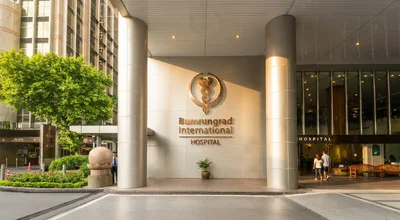
Bumrungrad International Hospital
Tertiary hospital with over 1,200 physicians treating 520,000+ international patients a year.
View hospital profile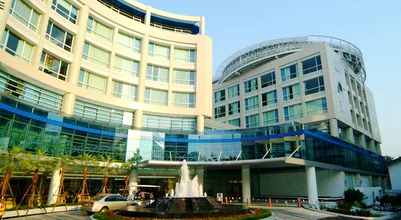
Bangkok Hospital
BDMS flagship tertiary campus with standalone heart, cancer, and neuro-orthopaedic hospitals.
View hospital profile
Tell Us What You Need. We Do the Rest.
Share what you're considering and we'll come back with surgeon options, pricing, and a clear plan.
- Real hospital pricing with zero markup
- Matched with a specialist experienced in your specific procedure
- Full coordination from consultation to recovery


Trusted by patients worldwide
The complete guide to Spine Surgery in Thailand
Everything below is for readers who want the full detail: costs broken down, types and techniques, recovery, risks and safety, and planning your trip.
Spine Surgeons & Hospitals in Thailand
Spine surgery outcomes depend on diagnostic accuracy, surgical technique, and appropriate patient selection. Here is what our partner centres bring.
Leading Spinal Surgery Centres in Bangkok
Our partner hospitals operate dedicated spine surgery units with high-resolution MRI, CT-based navigation systems, intraoperative neuromonitoring, and the full range of open and minimally invasive instrumentation. These are high-volume centres where spinal surgery is a core clinical programme, not an occasional add-on. Complications are managed in-house because the diagnostic and surgical infrastructure exists to handle them.
Fellowship-Trained Spinal Surgeons
Our partner spinal surgeons hold board certification in orthopaedic surgery or neurosurgery with additional fellowship training specifically in spinal surgery. Many trained internationally (at centres in the US, UK, Germany, or Japan) before returning to Thailand. They perform the full range of cervical, thoracic, and lumbar procedures and are experienced with both open and minimally invasive approaches.
What to Look for in a Spine Surgeon
Fellowship training in spinal surgery is essential. Ask about procedure-specific volume: how many of the exact operation you need does the surgeon perform each year. Check whether they use intraoperative navigation or neuromonitoring for fusion cases. Pay attention to how conservative the surgeon is in recommending surgery. The best spinal surgeons decline cases that do not have clear surgical indications. If a surgeon recommends fusion without exploring whether decompression alone might suffice, seek a second opinion.
Understanding Your Results
Spine surgery produces measurable improvements in pain levels, neurological function, and mobility. Here is what the evidence shows.
Typical Spine Surgery Outcomes
Microdiscectomy relieves sciatica in the large majority of patients, with most noticing leg pain improvement from the first post-operative day. Laminectomy for spinal stenosis significantly improves walking distance and leg pain scores. Spinal fusion relieves pain at the treated segment in most cases when appropriate patient selection criteria are applied. The SPORT trial (the largest randomised study of spine surgery) confirmed surgical superiority over conservative treatment for disc herniation, stenosis, and spondylolisthesis.
What Results Can You Expect?
For microdiscectomy, expect rapid leg pain relief with back pain improving more gradually. For decompression, expect improved walking distance and reduced leg fatigue. For fusion, expect elimination of painful segmental motion and progressive back pain improvement as the fusion matures. Full recovery takes longer for fusion than decompression; plan for six to twelve months of progressive improvement. The trajectory is usually one of steady, measurable gains rather than a single dramatic moment.
Spine Surgery Cost in Thailand
Average Cost of Spine Surgery
Our partner hospital holds fixed fly-in package rates for single-level spine surgery until 31 December 2026. A microscopic lumbar discectomy or foraminotomy is ฿374,000, roughly $11,000, with two nights in hospital. A wider lumbar decompression, laminectomy or laminotomy, is ฿432,000 with three nights. A single-level neck fusion is ฿414,000 with three nights, or ฿391,000 on an enhanced recovery pathway that gets you home a night sooner. A single-level lumbar fusion with O-Arm navigation runs ฿592,000 to ฿640,000 depending on whether the package covers three, four or five nights. The fusion figures exclude the screws, rods and cage, which are quoted on top. These are the rates we hold from one partner hospital rather than a national Thai price, and your own quote is confirmed in writing once a surgeon has reviewed your scans.
Cost Breakdown
The package covers the operating surgeon and assistant, the anaesthetist and monitoring, the operating theatre, the ward stay for the nights stated, nursing, meals and routine post-operative medication on the ward. Where the operation is a fusion, the hardware itself sits outside the price and is quoted once your surgeon has planned the construct, which is normal practice at Thai hospitals. Also outside the package are the MRI or CT your surgeon works from, pre-operative medical clearance, blood work, pathology, consultant fees from other departments, medication for conditions you already take, and any night on the ward or in intensive care beyond the package.
What Affects the Price?
Whether the operation fuses anything is the largest step in the published rates. A single-level lumbar decompression is ฿374,000 to ฿432,000, while a single-level lumbar fusion with navigation starts at ฿592,000 before hardware, so the choice between decompression alone and decompression plus fusion moves the figure more than any other decision. Length of stay is the second lever, priced explicitly on the fusion packages at ฿24,000 a night. Navigation is bundled into the fusion price rather than added as a technology fee. What the published rates will not tell you is the hardware, because no Thai hospital publishes an implant price list, so ask for the exact construct to be named and costed in your written quote before you compare hospitals.
When to Try Conservative Treatment First
For most back and leg pain, surgery is not the starting point. Conservative care, physiotherapy and a structured core programme, anti-inflammatory or nerve-pain medication, activity modification, and in many cases an image-guided epidural or nerve-root steroid injection, settles a large share of disc and stenosis symptoms without an operation. A herniated disc in particular often reabsorbs on its own over weeks to months, which is why surgeons expect a genuine six-month trial of non-surgical treatment before considering elective spine surgery.
Conservative care has honest limits, though. Injections calm inflammation around an irritated nerve but do not remove what is compressing it, so relief is often partial and can be temporary, and there is a sensible ceiling on how often they are repeated. When a clear structural cause on your MRI matches your symptoms and that pressure stays, no amount of physiotherapy will lift bone or disc off the nerve. There are also situations where waiting is the wrong call: progressive weakness, a foot that is starting to drop, or any loss of bladder or bowel control (possible cauda equina) needs urgent surgical assessment, not more conservative treatment.
Surgery becomes the right step when the scan and the pain tell the same story, conservative care has been given a real chance and run its course, or neurological signs are advancing. At that point a decompression or fusion treats the structural cause directly rather than managing the symptom, which is what the rest of this page covers. A careful surgeon will still say so if your case is not a clear fit and continued non-surgical care is the better route.
Types of Spine Surgery
Spine surgery is not a single procedure; it is a family of operations matched to the specific structural problem. Your surgeon determines the approach from MRI, CT, and neurological examination.
Microdiscectomy
A small incision is made over the affected disc level and the herniated fragment is removed under microscope magnification to decompress the nerve root. The rest of the disc is left intact. This is the most common spinal procedure and relieves sciatica in the vast majority of cases.
- Minimally invasive with a two-to-three centimetre incision
- Rapid leg pain relief, often from the first post-operative day
- Same-day or next-day mobilisation with minimal restrictions
- Best for: lumbar disc herniation causing sciatica unresponsive to conservative treatment
Spinal Fusion (Lumbar or Cervical)
Two or more vertebrae are permanently joined using screws, rods, and bone graft. This eliminates painful motion at an unstable or degenerated segment. The approach (anterior, posterior, lateral, or combined) depends on the anatomy and pathology being addressed.
- Eliminates motion at an unstable or painful spinal segment
- Multiple approaches available depending on anatomy and pathology
- Modern instrumentation and grafts promote reliable bone union
- Best for: spondylolisthesis, recurrent disc herniation, degenerative instability
Laminectomy / Spinal Decompression
The lamina (the bony arch at the back of the vertebra) is partially or fully removed to widen the spinal canal. This relieves pressure on the spinal cord or nerve roots caused by stenosis. It may be performed alone or combined with fusion if instability is present.
- Widens the spinal canal to relieve nerve compression
- Significant improvement in walking distance and leg symptoms
- May be combined with fusion if segmental instability is present
- Best for: lumbar spinal stenosis causing claudication and reduced mobility
Artificial Disc Replacement (Arthroplasty)
Instead of fusing the segment, the worn disc is removed and replaced with a mobile artificial implant that preserves movement at that level. By keeping the segment mobile, it aims to reduce the extra mechanical load placed on neighbouring levels that drives adjacent segment degeneration after fusion. It is most established in the neck (cervical disc replacement) and is offered for selected lumbar cases where the facet joints are healthy and there is no significant instability.
- Preserves motion at the treated level rather than fusing it
- May reduce stress on adjacent segments compared with fusion
- Suited to a well-preserved disc space without instability or facet arthritis
- Best for: single-level cervical, or selected lumbar, disc disease with healthy facet joints and no instability
Spine Surgery Techniques
Technique selection is driven by the pathology, the number of spinal levels involved, and whether instability needs to be addressed. Here is what our partner centres use.
Minimally Invasive Spine Surgery (MISS)
Tubular retractors and microscope or endoscope visualisation allow decompression and even fusion through incisions of two to three centimetres. Muscle is dilated rather than cut, reducing tissue trauma and post-operative pain. This approach is increasingly used for single-level microdiscectomy, laminectomy, and transforaminal lumbar interbody fusion.
- Smaller incisions with reduced muscle damage and blood loss
- Less post-operative pain and faster return to activity
- Hospital stays typically one to two days shorter than open approaches
- Best for: single-level disc herniation, stenosis, or TLIF fusion
Intraoperative Navigation and Robotics
CT-based navigation systems provide real-time 3D tracking of surgical instruments, ensuring pedicle screws are placed with millimetre accuracy. Robotic assistance further constrains the drill trajectory to the pre-planned path. This technology is particularly valuable for complex multi-level fusions and revision surgery.
- Real-time 3D guidance for screw placement accuracy
- Reduces radiation exposure compared to repeated fluoroscopy
- Particularly valuable for complex or revision cases
- Best for: multi-level fusion, revision surgery, and anatomically challenging cases
Interbody Fusion Techniques (TLIF, ALIF, XLIF)
A structural cage packed with bone graft is placed between two vertebrae to restore disc height and promote fusion. The approach varies (transforaminal TLIF, anterior ALIF, or lateral XLIF) depending on the level, anatomy, and pathology. Each provides a different combination of access, visualization, and spinal biomechanics.
- TLIF: posterior approach through the foramen, most versatile single-level option
- ALIF: anterior abdominal approach, excellent disc height restoration
- XLIF: lateral approach through the psoas, avoids both anterior and posterior structures
- Best for: interbody fusion technique matched to the specific spinal level and anatomy
Spine Surgery Recovery Timeline
Days 1–2
Hospital monitoring with regular neurological checks. Pain managed with a structured multimodal protocol. A physiotherapist guides your first seated and standing movements. Most microdiscectomy patients walk independently by day one. Fusion patients may be fitted with a supportive brace.
Days 3–7
Walking distances increase under physiotherapy supervision. Safe movement techniques for bending, lifting, and transfers are taught. Wound care is managed by the nursing team. Pain transitions from intravenous to oral medication. Discharge planning begins once mobility targets are met.
Weeks 2–4
Light daily activity at your recovery accommodation (short walks and gentle stretching). A follow-up appointment confirms wound healing and reviews imaging if needed. Your surgeon clears you for the return flight. Core activation exercises begin under guidance.
Weeks 6–12
Progressive return to normal activities guided by your home physiotherapist and the surgical team's remote follow-up. Core strengthening intensifies. Most microdiscectomy patients are fully active by six weeks. Fusion patients return to desk work and light duties around six to twelve weeks, but full unrestricted activity waits on bone union: fusion maturation takes six to twelve months, with activity restrictions continuing until your surgeon confirms it on imaging.
When Can You Fly After Spine Surgery?
Most patients are cleared to fly 10–14 days after surgery once wound healing and neurological recovery are confirmed. We recommend an aisle seat so you can stand and stretch during the flight. Avoid sitting continuously for more than 60–90 minutes. Your surgeon provides a fitness-to-fly letter. Bring adequate pain medication for the flight and consider a supportive lumbar cushion.
When Can You Return to Work and Exercise?
After microdiscectomy, desk work is often possible within two to three weeks. Fusion patients typically return to desk work by six to eight weeks. Physically demanding roles require three to six months of graduated return. Light walking is encouraged from day one. Core strengthening begins at four to six weeks. Return to gym work, swimming, and recreational exercise is guided by your surgeon based on healing progress and procedure type.
When Will You See Full Results?
Leg pain from nerve compression often improves immediately after microdiscectomy; patients frequently notice the difference on the first post-operative day. Back pain takes longer to resolve, particularly after fusion, as the bone graft matures and the muscles strengthen around the instrumentation. Most patients see their main improvement within the first three months, with continued gains up to six to twelve months. Fusion bone maturation takes six to twelve months.
Anaesthesia for Spine Surgery
Spine surgery is performed under general anaesthesia, so you are fully asleep and feel nothing during the operation. A consultant anaesthetist stays with you for the whole procedure and monitors you continuously, which is standard at the JCI-accredited hospitals we work with. For fusion and other complex cases, intraoperative neuromonitoring is also used to track nerve function in real time while you are under, adding a further layer of safety around the spinal cord and nerve roots.
Before you are cleared, you have a pre-operative assessment covering blood work, a review of your current medications, and a check that any conditions affecting general anaesthesia are stable. The anaesthetist plans your pain relief around the procedure, from a single-level microdiscectomy to a multi-level fusion, so longer or more involved operations are matched with the right level of cover.
You feel nothing during surgery. Afterwards, a structured multimodal pain protocol keeps discomfort well controlled, starting with intravenous medication and moving to oral tablets as you recover on the ward. Most patients find that the nerve-related leg or arm pain they came in with is noticeably improved from the first day, while any surgical back discomfort is mild and managed, settling more gradually as you heal.
Risks and Safety of Spine Surgery
Spine surgery has a well-established safety profile, particularly with modern minimally invasive techniques. The risks vary by procedure complexity. A microdiscectomy carries substantially different risks from a multi-level fusion.
- Non-union of fusion (pseudarthrosis), more likely in patients who smoke and influenced by other patient factors1
- Adjacent segment degeneration developing at levels above or below a fusion
- Implant-related complications (screw malposition, cage subsidence)
- Recurrent disc herniation at the same level after microdiscectomy
Adjacent segment degeneration is the most discussed long-term consideration after fusion. The levels above and below a fused segment absorb more mechanical stress, which may accelerate wear over time2. This is a real phenomenon, but it does not affect all patients and develops over years, not months. The alternative (continuing to live with nerve compression) carries its own consequences. Your surgeon weighs these trade-offs with you during the planning process.
Is Spine Surgery Safe in Thailand?
Yes. JCI-accredited hospitals in Thailand perform spine surgery with fellowship-trained spinal surgeons using advanced navigation, intraoperative neuromonitoring, and the same implant systems available internationally. Minimally invasive techniques reduce complication rates further. Our partner hospitals track outcomes and maintain complication rates consistent with published international data.
How to Reduce Risks Before Surgery
Stop smoking. Smoking impairs bone healing and is the single biggest modifiable risk factor for non-union after spinal fusion. Optimise your weight. Excess body weight increases mechanical stress on the spine and makes surgery more technically demanding. Strengthen your core before surgery if possible. Bring all current imaging (MRI, CT, and X-rays) to avoid unnecessary repeat scans and ensure your surgeon has the most complete picture of your spine.
When Is Revision Surgery Needed?
Revision may be considered for non-union (pseudarthrosis), recurrent disc herniation, hardware failure, or new symptoms from adjacent segment degeneration. Non-union occurs in a minority of fusion cases and is minimised by using modern instrumentation, bone graft substitutes, and following activity restrictions during healing. Recurrent disc herniation affects a minority of microdiscectomy patients over their lifetime. Your surgeon discusses these possibilities and their management before the initial procedure.
Planning Your Trip to Thailand for Spine Surgery
Most patients need 10–14 days in Thailand. Here is what the trip involves and how to prepare.
How Long to Stay in Thailand
Plan for 10–14 days. Days one and two cover MRI review (or repeat if needed), CT scanning for fusion cases, blood work, and surgical consultation. Surgery and two to five nights of hospital recovery follow.3 The remaining days cover outpatient follow-up, wound check, imaging review, and fitness-to-fly assessment. Bring all existing imaging to avoid unnecessary repeat scans.
What's Included in a Medical Trip
Your care coordinator manages scheduling, hospital logistics, and follow-up. The package quote covers the surgeon, anaesthesia, operating theatre, the hospital nights stated, nursing and ward medication. Spinal hardware is quoted separately on fusion cases, imaging and pre-operative clearance sit outside the package, and while a pre-operative rehabilitation assessment is included, a course of physiotherapy after surgery is not, so budget for it in Thailand and plan the rest for home. Flights and accommodation are separate, but your coordinator recommends nearby options.
What to Bring
Bring all existing spinal imaging (MRI and CT scans) on disc or accessible via cloud sharing. Bring a complete list of current medications and supplements. If you have recent nerve conduction studies or specialist reports, bring those too. Comfortable, easy-to-put-on clothing and supportive shoes with good grip make recovery accommodation more practical. A lumbar support cushion is useful for the flight home.
Related Procedures
Other procedures that address similar goals or conditions, in case one of them is a closer fit for you.
Planning your treatment in Thailand
Independent guides to help you weigh the decision, before you commit to anything.
Common Questions About Spine Surgery
Everything you need to know before your procedure

Medical References
Keep researching with AI
Open this guide in your AI assistant to dig deeper and ask the questions it didn't answer.
Opens in a new tab with this guide already loaded.
Medical disclaimer: Content on this site is provided for informational purposes and should not be treated as medical advice. Outcomes, timelines, and eligibility differ from person to person. Consult a qualified medical professional before making any decisions about surgery or treatment.
Ready to Get Started?
Speak with our care coordinators for a free, no-obligation consultation and personalised quote.
Speak to Our Team