Rotator Cuff Repair in Thailand Your guide to cost, top specialists & hospitals
A torn cuff does not mend itself once the damage is significant. Surgical repair reattaches what tore loose.
What Is Rotator Cuff Repair?
Also known as: Shoulder Surgery · Arthroscopic Rotator Cuff Repair
Rotator cuff repair is shoulder surgery that reattaches a torn cuff tendon to the upper arm bone using suture anchors, small screw-like fixings set into the bone at the tendon's original footprint. The rotator cuff is the group of tendons that lift and rotate your arm, so a tear there causes pain, weakness, and trouble reaching overhead or sleeping on that side. Most repairs are done arthroscopically, through two to four keyhole incisions, and usually take one to two hours under general anaesthesia.
No two tears behave the same way. A small fray might need one tidy repair, while a larger tear that has pulled back from the bone takes more work to secure. Your surgeon studies your MRI and chooses the technique before you reach the operating room.
Once stitched down, the tendon still has to heal to the bone on its own, which takes several weeks. The sling and staged rehabilitation protect that healing so the repair lasts. Outcomes tend to be best for tears caught before the muscle wastes, so an early MRI and an honest consultation are worth having.
It can address a range of concerns, including:
Am I a Good Candidate for Rotator Cuff Repair?
Repair works when the torn tendon can still reach bone and you can protect it while it heals.
Not every cuff tear can be stitched back, and the MRI tells the surgeon what is achievable.
MRI-confirmed tear with symptoms: Surgeons want imaging plus ongoing pain, weakness, or night pain that physiotherapy and injections have not resolved.
Tissue that can heal: Tear size, retraction, and fatty muscle degeneration determine whether direct repair is realistic. Small and medium tears repaired before atrophy do best.
Options for irreparable tears: Massive retracted tears may need superior capsular reconstruction rather than repair, and that conversation happens before surgery, not after.
Tendon-to-bone healing is biological, and several health factors directly affect it.
Fit for general anaesthesia: Standard pre-operative checks apply for a one-to-two-hour procedure with an overnight stay.
Smoking: Significantly reduces tendon healing rates after repair. Surgeons expect you to stop.
Diabetes under control: Poor glycaemic control raises both stiffness and re-tear risk, so it should be stable before you book.
Timing matters: Untreated tears retract and the muscle degenerates over time, changes that become irreversible, so delaying indefinitely narrows your options.
The first six weeks are one-handed, and surgeons check you have a plan for them.
Sling immobilisation: The arm stays in a sling for around six weeks except during prescribed exercises, with no active lifting or reaching.
Help at home: Dressing, cooking, and carrying all become one-handed tasks. Living alone without support is a genuine practical barrier.
No driving: Usually five to six weeks before you can safely control a vehicle, which affects work and daily logistics.
The repair is held by anchors until biology takes over, and rehabilitation protects that handover.
Four to six months of phased physio: Passive, active-assisted, active, then strengthening. Each phase is earned, not scheduled.
Respecting early restrictions: Loading the repair before the tendon heals to bone is the strongest modifiable cause of re-tear.
Continuing at home: Only the first week happens in Thailand. A detailed phased protocol travels with you for your home physiotherapist, with remote surgeon follow-up at key points.
Who is not suitable for rotator cuff repair?
- Shoulder pain without an MRI-confirmed rotator cuff tear
- Massive retracted tears with fatty degeneration, until reconstruction alternatives are discussed
- Active glenohumeral arthritis, where total or reverse shoulder replacement may be the primary indication rather than cuff repair
- Severe osteoporosis that compromises suture anchor fixation, until assessed and discussed with the surgeon
- Diabetes with poor glycaemic control until it improves
- Smokers unwilling to stop, given significantly reduced tendon healing
- No support at home for six weeks of sling immobilisation<sup class='cite'><a href='#ref-1'>1</a>,<a href='#ref-3'>3</a></sup>
- Unable to commit to four to six months of structured rehabilitation
Pricing
How Much Will Rotator Cuff Repair Cost in Thailand?
What rotator cuff repair costs at accredited hospitals in Thailand, and what your final quote depends on.
Get your exact price
Tell us what you're considering and we'll send a personalised quote from accredited hospitals within 24 hours.
Get my free quoteTypical prices in Thailand
Typical ranges based on recent hospital quotes. Your exact price depends on the hospital and how complex your case is, and is confirmed at your teleconsultation.
Rotator Cuff Repair
A torn shoulder tendon is reattached to the upper arm bone with small anchors, worked through keyhole incisions so the joint is never fully opened.
| Arthroscopic shoulder acromioplasty with rotator cuff repair, Bankart or SLAP repair, one shoulder 2 nights The torn tendon or labrum is reattached to bone in the same session as the decompression | $11,000 ฿373,000 |
| Arthroscopic shoulder acromioplasty without rotator cuff repair, one shoulder 2 nights Decompression only, for an impinging shoulder where the tendon does not need reattaching | $10,500 ฿357,000 |
Typically not included
- Implants and implantable devices, including the suture anchors that hold the repair
- Physiotherapy after you leave the ward. The package covers a pre-operative assessment, not the four to six month course of cuff rehab that follows
- Intensive care, or hospital nights beyond the two in the package
- Laboratory tests and imaging, including the MRI your surgeon works from
- Pre-operative medical clearance and specialist consultant fees where another department is brought into your care
Get your exact price
Tell us what you're considering and we'll send a personalised quote from accredited hospitals within 24 hours.
Hospitals Trusted for Rotator Cuff Repair
From internationally accredited flagships to dedicated specialist hospitals, these are the kinds of facilities where international patients have this procedure.
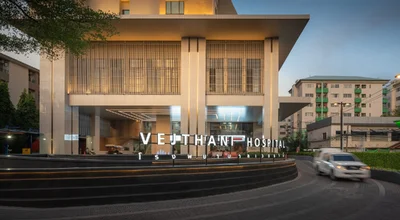
Vejthani Hospital
Orthopaedic-focused tertiary hospital with a high-volume joint replacement and spine programme.
View hospital profile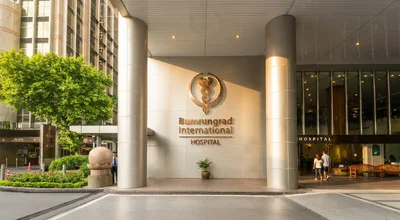
Bumrungrad International Hospital
Tertiary hospital with over 1,200 physicians treating 520,000+ international patients a year.
View hospital profile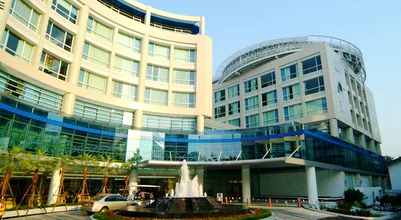
Bangkok Hospital
BDMS flagship tertiary campus with standalone heart, cancer, and neuro-orthopaedic hospitals.
View hospital profile
Tell Us What You Need. We Do the Rest.
Share what you're considering and we'll come back with surgeon options, pricing, and a clear plan.
- Real hospital pricing with zero markup
- Matched with a specialist experienced in your specific procedure
- Full coordination from consultation to recovery


Trusted by patients worldwide
The complete guide to Rotator Cuff Repair in Thailand
Everything below is for readers who want the full detail: costs broken down, types and techniques, recovery, risks and safety, and planning your trip.
Rotator Cuff Surgeons & Hospitals in Thailand
Rotator cuff repair requires arthroscopic skill and shoulder-specific fellowship training. Here is what our partner centres offer.
Leading Shoulder Surgery Centres
Our partner hospitals operate dedicated shoulder arthroscopy suites with high-definition camera systems, double-row suture anchor instrumentation, and in-house rehabilitation facilities. These centres handle rotator cuff repair as a high-frequency procedure with the volume that produces consistent anchor placement and reliable tissue handling across patients.
Fellowship-Trained Shoulder Surgeons
Our partner surgeons hold board certification in orthopaedic surgery with additional fellowship training in shoulder and upper-limb surgery. They perform the full range of cuff repairs (arthroscopic, mini-open, and revision) and are experienced with augmentation techniques for complex or recurrent tears.
What to Look for in a Shoulder Surgeon
Fellowship training in shoulder surgery is essential. Ask about annual rotator cuff repair volume and re-tear rates. Check whether they perform double-row repairs for larger tears. Ask about their rehabilitation protocol. A surgeon who does not have a structured, phased programme is missing a critical part of the treatment. Pay attention to how they discuss the repair's limitations for your specific tear size and tissue quality.
Understanding Your Results
Rotator cuff repair produces significant improvements in pain and shoulder function when followed by proper rehabilitation.
Typical Rotator Cuff Repair Outcomes
Most patients report significant pain relief and improved shoulder function after successful repair1,2. Overhead reach, sleeping comfort, and ability to perform daily tasks all improve substantially. Validated functional scores such as the Constant and ASES scores improve markedly from pre-operative baselines, with the largest gains in patients who complete their rehabilitation. Outcomes are best for small and medium tears repaired before significant muscle atrophy occurs.
What Results Can You Expect?
Expect progressive improvement over four to six months. Night pain (often the most debilitating symptom) resolves relatively early. Overhead function returns as strengthening progresses through the rehabilitation phases. The shoulder continues to improve for up to twelve months. Patients who commit fully to rehabilitation consistently report better outcomes than those who cut the programme short.
Rotator Cuff Repair Cost in Thailand
Average Cost of Rotator Cuff Repair
Our partner hospital publishes two fixed fly-in packages for shoulder arthroscopy, both covering one shoulder and two nights in hospital, and both holding until 31 December 2026. An acromioplasty with a rotator cuff, Bankart or SLAP repair is ฿373,000, roughly $11,000. The same decompression without a cuff repair is ฿357,000. The gap between them is ฿16,000, which is a useful thing to know, because it tells you the hospital does not treat stitching the tendon back to bone as a different order of operation. Suture anchors sit outside both figures. This is one hospital's published rate rather than a national Thai price.
What Affects the Price?
Rehabilitation is the cost most people miss. The surgery is a two-night episode, but the shoulder needs four to six months of phased physiotherapy before the result is in, and none of that is inside the package, in Thailand or at home. Price a course of physiotherapy before you compare hospitals. After that, the suture anchors move the number, since they sit outside the package and the count depends on the size of the tear, which your surgeon can only estimate from the MRI. Ask for a per-anchor price and a likely count rather than a bundled figure. Length of stay is fixed at two nights, so an extra night is billed rather than absorbed. Biologic augmentation with scaffolds or platelet-rich plasma, where it is offered, is a separate material cost again.
Thailand vs International Price Comparison
The ฿373,000 package, about $11,000, sits below the US private range of $12,000 to $24,000 and inside the UK range of £8,800 to £18,000. Against the middle and top of those markets that is a clear saving. Against a competitively priced quote at home it is narrow, and it narrows further once you add flights and the four to six month course of physiotherapy that no country's surgical package covers. On a shoulder, work out the whole episode rather than comparing surgical figures alone.
Surgery vs Non-Surgical Treatment for a Rotator Cuff Tear
Many rotator cuff tears are managed without surgery first, and for good reason. A structured course of physiotherapy strengthens the surrounding muscles to compensate for the damaged tendon, and a corticosteroid injection can settle the inflammation enough to make rehabilitation bearable. For small or partial tears, for older patients with lower physical demands, and for anyone whose pain is driven more by inflammation than the tear itself, this conservative route often restores comfortable day-to-day function and is the sensible place to start.
Where it falls short is on the tear itself. Physiotherapy and injections relieve symptoms and build support, but they cannot reattach a tendon that has pulled away from the bone, so a full-thickness tear does not knit back together on its own. Repeated steroid injections carry their own downside, as they can weaken tendon tissue over time, and there is a clock running quietly in the background: an untreated tear tends to enlarge, retract, and let the muscle waste, changes that eventually make a clean repair impossible.
Surgical repair becomes the right step when the conservative route has been given a fair trial and the pain, weakness, or disturbed sleep persist, or when an MRI shows a tear large enough that waiting risks it becoming irreparable. It is also the better first move for active people and significant full-thickness tears, where reattaching the tendon early protects the muscle and gives the most durable result. That repair, and how it is done, is what the rest of this page covers.
Types of Rotator Cuff Repair
The approach depends on tear size, tissue quality, and whether the tendons have retracted or undergone fatty degeneration. Your surgeon determines the optimal technique from MRI and clinical examination.
Arthroscopic Repair
The standard approach for most rotator cuff tears. A camera and instruments are inserted through small portal incisions to visualise the tear and reattach the tendon using suture anchors placed into the bone. This provides excellent visualisation with minimal soft-tissue disruption.
- Minimally invasive with less post-operative pain than open surgery
- Excellent visualisation of the entire joint and subacromial space
- Shorter hospital stay and a gentler early recovery than an open repair
- Best for: small, medium, and most large rotator cuff tears
Mini-Open Repair
Begins with arthroscopy to assess the joint and address associated pathology, then the repair is completed through a small three-to-five centimetre incision. This gives the surgeon direct access to the torn tendon for repairs that are difficult to complete arthroscopically.
- Combines arthroscopic assessment with open repair precision
- Useful for larger or retracted tears requiring direct tissue handling
- Well-established technique with strong long-term evidence
- Best for: large tears where arthroscopic repair alone is technically limited
Superior Capsular Reconstruction
When the rotator cuff is irreparable (the tendon has retracted and undergone fatty degeneration) a graft is used to reconstruct the superior capsule. This restores the biomechanical constraint that the cuff normally provides, allowing the deltoid to power shoulder elevation.
- An option when the rotator cuff tear is too massive to repair directly
- Uses dermal allograft or autograft to reconstruct the superior capsule
- Improves overhead function and reduces pain in irreparable cases
- Best for: massive irreparable cuff tears in patients not suited to reverse replacement
Rotator Cuff Repair Techniques
The repair configuration (single-row, double-row, or transosseous-equivalent) affects the footprint coverage and healing rate. Here is what our partner surgeons use.
Double-Row / Transosseous-Equivalent Repair
Suture anchors are placed in two rows (one at the medial margin of the footprint and one laterally) creating a broad contact area between tendon and bone. This produces the strongest construct and maximises the healing surface, particularly important for larger tears.
- Maximises tendon-to-bone contact area for improved healing rates
- Stronger construct than single-row repair for medium-to-large tears
- The current standard at most shoulder surgery centres
- Best for: medium and large rotator cuff tears where repair integrity matters most
Single-Row Repair
A single row of suture anchors is placed at the lateral edge of the footprint and the tendon is compressed against the bone. This is a simpler, faster construct that produces reliable results for smaller tears. It uses fewer anchors and may be preferred for partial or small full-thickness tears.
- Simpler construct with fewer anchors and shorter operative time
- Reliable outcomes for small and some medium tears
- Lower implant cost due to fewer suture anchors
- Best for: small and partial-thickness tears where a simpler repair suffices
Biologic Augmentation
For large or revision tears where tissue quality is compromised, biologic augmentation with scaffolds, platelet-rich plasma, or growth factors may be used to support healing. Evidence is evolving, but these adjuncts are offered at leading centres for selected cases where the risk of re-tear is elevated.
- Scaffolds reinforce the repair in tissue with poor mechanical quality
- PRP and growth factors may promote tendon-to-bone healing
- Evidence is promising but still evolving for some augmentation strategies
- Best for: large, chronic, or revision tears with compromised tissue quality
Rotator Cuff Repair Recovery Timeline
Days 1–3
Arm immobilised in a sling with ice therapy. A regional nerve block provides pain relief for the first 12–24 hours. Gentle pendulum exercises begin under physiotherapy guidance. The focus is protecting the repair while maintaining elbow, wrist, and hand mobility.
Weeks 1–6
Sling worn continuously except during prescribed exercises. Passive and assisted range-of-motion exercises progress gradually. No active lifting or reaching. Follow-up appointments confirm the repair is healing and guide exercise progression. Driving and manual tasks are not permitted. Superior Capsular Reconstruction differs here: the graft needs a longer protected phase, so an abduction brace is typically worn for up to six weeks and passive motion is introduced more cautiously.
Weeks 6–12
Sling discontinued. Active range-of-motion exercises begin. Light strengthening is introduced progressively as tendon healing allows. Pain reduces significantly and daily function improves noticeably during this phase. After Superior Capsular Reconstruction, active motion is started later and strengthening is held back further, as the graft must incorporate before it is loaded.
Months 3–6
Strengthening intensifies with resistance exercises targeting the rotator cuff and scapular stabilisers. Return to sport and heavy manual activity is typically permitted from four to six months1,2, guided by tear size, repair integrity, and rehabilitation progress. Superior Capsular Reconstruction follows a more conservative schedule, with lower strength targets and a slower return to overhead and loaded activity.
When Can You Fly After Rotator Cuff Repair?
Most patients are cleared to fly 7–10 days after surgery, provided wound healing is satisfactory. You travel with your arm in a sling and should avoid carrying luggage with the operated side. Request an aisle seat for comfort. Cabin pressure has no effect on the repair.
When Can You Return to Work and Sport?
Desk work is typically possible from two to three weeks. Driving resumes when you can safely control the vehicle (usually five to six weeks for automatic transmission). Low-impact sport like swimming and cycling may resume from three months. Contact sports, heavy overhead work, and throwing activities are typically permitted from four to six months depending on tear size and repair integrity.
Why Rehabilitation Takes So Long
The tendon must biologically heal to bone, a process that takes six to twelve weeks. During this time, the repair is held in place by the suture anchors, not by biological integration. Loading the repair before healing is complete risks mechanical failure. The sling period, restricted range of motion, and gradual progression through passive, active-assisted, active, and strengthening phases are all designed to protect the repair while restoring function in a controlled sequence.
Anaesthesia for Rotator Cuff Repair
Rotator cuff repair in Thailand is performed under general anaesthesia, so you are fully asleep and feel nothing during the operation. A consultant anaesthetist stays with you throughout and monitors you continuously, which is standard at the accredited hospitals we work with.
In most cases the anaesthetist also gives a regional nerve block to the shoulder, either alongside the general anaesthetic or while you are asleep. This numbs the arm and provides extended pain relief for the first 12 to 24 hours after you wake, which is often the most comfortable way through that first day. Whether a block is used, and which type, is decided by your anaesthetist based on your tear and your medical history.
Before you are cleared you have a pre-operative assessment, including blood tests and a review of any medications you take. You feel nothing during surgery, and the discomfort once the block wears off is managed with the oral medication your surgeon prescribes. The sling itself helps too, by protecting the repair and reducing movement that would otherwise be sore.
Risks and Safety of Rotator Cuff Repair
Rotator cuff repair is a well-established arthroscopic procedure. Serious complications are uncommon, but the risk of re-tear (particularly for larger tears) is the most clinically significant consideration.
- Nerve or vessel injury (rare)
- Persistent pain or weakness despite successful repair
- Blood clot (rare in upper limb surgery)
Re-tear rates correlate with tear size, tissue quality, and patient age. Small tears have lower re-tear rates than large, chronic tears. Large, chronic tears with fatty muscle infiltration carry higher rates. The strongest modifiable factor in preventing re-tear is adherence to the rehabilitation protocol, particularly respecting the sling period and avoiding active loading before the tendon has healed to bone.
Is Rotator Cuff Repair Safe in Thailand?
Yes. JCI-accredited hospitals in Thailand perform arthroscopic rotator cuff repair with fellowship-trained shoulder surgeons using the same equipment and suture anchor systems as leading international centres. Complication rates are consistent with published clinical evidence.
How to Reduce Re-Tear Risk
Follow the sling protocol strictly for the prescribed duration. Do not lift or reach with the operated arm during the healing phase. Attend all physiotherapy sessions and progress exercises only as directed. Stop smoking, it impairs tendon healing. If you notice a sudden increase in pain or weakness after a period of improvement, report it promptly. It may indicate a re-tear that needs assessment.
What If the Repair Fails?
Re-tear is more likely after repair of larger tears than after small repairs. If a re-tear occurs and symptoms persist, options include revision arthroscopic repair, superior capsular reconstruction, tendon transfer, or reverse shoulder replacement, depending on the remaining tissue quality, patient age, and functional demands. Your surgeon discusses these contingencies before the initial procedure.
Planning Your Trip to Thailand for Rotator Cuff Repair
Most patients need 7–10 days in Thailand. Here is what the trip involves.
How Long to Stay in Thailand
Plan for 7–10 days. Day one covers your surgical consultation and MRI review. Surgery typically occurs on day two or three, with the package covering two nights in hospital. The remaining days cover your wound check, sling adjustment and a follow-up appointment before you fly, plus any physiotherapy sessions you book, which are charged separately.
What's Included in a Medical Trip
Your care coordinator manages scheduling and logistics. The package quote covers the surgeon, anaesthesia, operating theatre, two nights in hospital, nursing and ward medication. Suture anchors are quoted separately, your MRI and pre-operative clearance sit outside the package, and while a pre-operative rehabilitation assessment is included, the four to six month course of physiotherapy that follows is not, in Thailand or at home. Flights and accommodation are separate.
Continuing Rehabilitation at Home
Rotator cuff rehabilitation lasts four to six months. Only the first week happens in Thailand. We provide a detailed, phased protocol with specific milestone targets for your home physiotherapist. The protocol covers passive range-of-motion, active-assisted exercises, active movement, and progressive strengthening. Remote follow-up with your surgeon is available at key decision points.
Related Procedures
Other procedures that address similar goals or conditions, in case one of them is a closer fit for you.
Planning your treatment in Thailand
Independent guides to help you weigh the decision, before you commit to anything.
Common Questions About Rotator Cuff Repair
Everything you need to know before your procedure

Medical References
Keep researching with AI
Open this guide in your AI assistant to dig deeper and ask the questions it didn't answer.
Opens in a new tab with this guide already loaded.
Medical disclaimer: Content on this site is provided for informational purposes and should not be treated as medical advice. Outcomes, timelines, and eligibility differ from person to person. Consult a qualified medical professional before making any decisions about surgery or treatment.
Ready to Get Started?
Speak with our care coordinators for a free, no-obligation consultation and personalised quote.
Speak to Our Team