ACL Reconstruction in Thailand Your guide to cost, top specialists & hospitals
A stable knee is not optional for an active life. ACL reconstruction replaces what the injury took.
What Is ACL Reconstruction?
Also known as: ACL Surgery · Anterior Cruciate Ligament Reconstruction
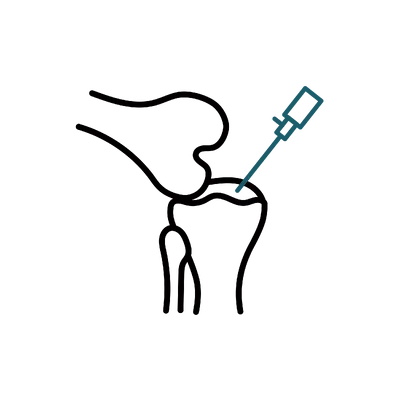
ACL reconstruction is keyhole knee surgery that rebuilds the torn anterior cruciate ligament by replacing it with a tendon graft. The graft is threaded through narrow tunnels drilled into the thigh bone and shin bone, following the path of the original ligament so the knee regains the rotational stability it needs to pivot and cut without giving way. It usually takes one to two hours under general or spinal anaesthesia, and the graft heals into living tissue over the following months.
A torn ACL does not knit back together on its own1, so this is the operation that restores a stable knee. The surgery is only the start. The rest is rehabilitation, around six to nine months of structured physiotherapy1 that turns a passive graft into a ligament you can trust again. Your surgeon chooses the graft around your sport, age, and goals.
For most active people a well-rehabilitated graft restores knee function that lasts for years. Returning to demanding sport is judged on strength and stability testing rather than the calendar, and your team will tell you honestly when your knee is ready.
It can address a range of concerns, including:
Am I a Good Candidate for ACL Reconstruction?
Surgeons weigh your tear, your activity goals, and your readiness for a long rehabilitation before recommending reconstruction.
Reconstruction is offered once the tear is confirmed and the knee remains unstable despite early rehabilitation.
MRI-confirmed complete tear: Surgeons want imaging evidence of a full rupture, not just a painful knee. Bring existing scans to avoid repeat imaging.
Ongoing instability: Giving way during direction changes, recurrent swelling, and lost confidence in the knee are the symptoms that justify surgery.
Associated injuries mapped: ACL tears commonly involve the meniscus. Concurrent meniscal, cartilage, or multi-ligament damage changes the surgical plan and the rehab timeline.
The benefit of reconstruction scales with how much you ask of the knee.
Pivoting and cutting sport: Football, racquet sports, skiing, and other direction-change activities load the ACL hardest. Active patients gain the most from a stable knee.
Demanding daily life: Physical work and high-activity lifestyles carry the same instability risk as sport, and ongoing instability damages the menisci and cartilage over time.
Lower-demand lifestyles: Some partial tears in low-demand patients are managed with rehabilitation alone, accepting some rotational instability. Your surgeon discusses this option honestly before recommending surgery.
Surgeons screen the basics that affect anaesthesia safety and graft healing.
Fit for anaesthesia: The procedure runs one to two hours under general or spinal anaesthesia, so standard pre-operative checks apply.
Quadriceps strength and motion: Persistent weakness or limited range of motion raises post-operative stiffness risk, so a short prehab block often comes first.
Non-smoker, or stopping: Surgeons want patients who do not smoke or are genuinely committed to stopping.
Clear skin: Any active infection or open wound on the operative knee must resolve before surgery.
The graft is only half the result; the other half is built over months of physiotherapy.
Six to nine months of structured rehab: Most re-rupture risk sits with patients who cut the programme short, so surgeons want genuine commitment before operating.
Functional testing, not calendar time: Return to pivoting sport is cleared on strength and stability benchmarks, not a date in the diary.
A plan at home: Only the first week happens in Thailand. You need access to a physiotherapist who can follow the phased protocol provided.
Who is not suitable for acl reconstruction?
- Knee symptoms without an MRI-confirmed ACL tear
- Persistent quadriceps weakness or restricted motion until prehab restores it
- Active skin infection or open wound on the operative knee until cleared
- Unable to commit to six to nine months of structured rehabilitation
- Smokers not committed to stopping before surgery
- Skeletally immature adolescents with open growth plates, until assessed for a growth-plate-sparing technique rather than standard tunnel placement
- Low-demand partial tears managing well with physiotherapy alone
Pricing
How Much Will ACL Reconstruction Cost in Thailand?
What acl reconstruction costs at accredited hospitals in Thailand, and what your final quote depends on.
Get your exact price
Tell us what you're considering and we'll send a personalised quote from accredited hospitals within 24 hours.
Get my free quoteTypical prices in Thailand
Typical ranges based on recent hospital quotes. Your exact price depends on the hospital and how complex your case is, and is confirmed at your teleconsultation.
ACL Reconstruction
A torn knee ligament is rebuilt with a tendon graft threaded through tunnels drilled into the thigh and shin bones, restoring the knee's rotational stability.
| Arthroscopic ACL or PCL reconstruction with complicated meniscal repair, one knee, implants not included 2 nights The torn ligament is rebuilt and a damaged meniscus stitched during the same arthroscopic operation on one knee | $9,600 ฿327,000 |
Typically not included
- Physiotherapy after the ward. The pre-operative rehab assessment is included, the post-operative course is not, and it runs six to nine months
- The graft fixation devices and suture anchors, meaning the interference screws, suspensory buttons and meniscal implants
- Intensive care, or hospital nights beyond the two in the package
- Pre-operative medical clearance and fitness assessment
- Laboratory tests and imaging, including the MRI your surgeon works from
Get your exact price
Tell us what you're considering and we'll send a personalised quote from accredited hospitals within 24 hours.
Hospitals Trusted for ACL Reconstruction
From internationally accredited flagships to dedicated specialist hospitals, these are the kinds of facilities where international patients have this procedure.
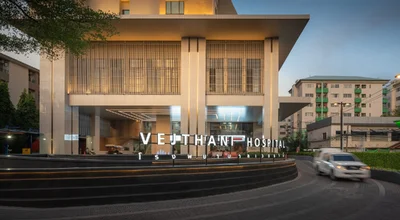
Vejthani Hospital
Orthopaedic-focused tertiary hospital with a high-volume joint replacement and spine programme.
View hospital profile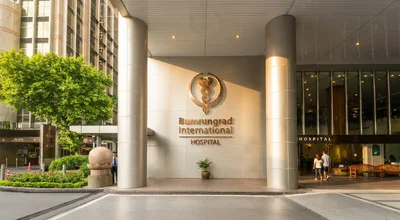
Bumrungrad International Hospital
Tertiary hospital with over 1,200 physicians treating 520,000+ international patients a year.
View hospital profile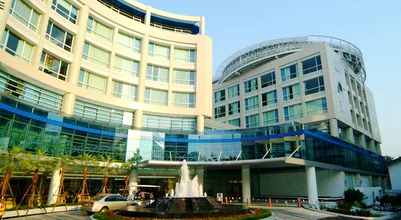
Bangkok Hospital
BDMS flagship tertiary campus with standalone heart, cancer, and neuro-orthopaedic hospitals.
View hospital profile
Tell Us What You Need. We Do the Rest.
Share what you're considering and we'll come back with surgeon options, pricing, and a clear plan.
- Real hospital pricing with zero markup
- Matched with a specialist experienced in your specific procedure
- Full coordination from consultation to recovery


Trusted by patients worldwide
The complete guide to ACL Reconstruction in Thailand
Everything below is for readers who want the full detail: costs broken down, types and techniques, recovery, risks and safety, and planning your trip.
ACL Reconstruction Surgeons & Hospitals in Thailand
Tunnel positioning accuracy and graft selection judgment are what separate good ACL outcomes from poor ones. Here is what our partner centres deliver.
Leading Sports Medicine Centres in Bangkok
Our partner hospitals operate dedicated sports-medicine and arthroscopic surgery units with high-definition arthroscopy towers, advanced fixation systems, and in-house rehabilitation facilities. They handle ACL reconstruction as a high-volume procedure with the kind of volume that produces reliable tunnel positioning and consistent graft tensioning across patients.
Fellowship-Trained Knee Surgeons
Our partner surgeons hold board certification in orthopaedic surgery with additional fellowship training in sports medicine and arthroscopic reconstruction. Many trained at international sports surgery centres; exposure that matters for understanding the nuances of graft choice, tunnel positioning, and return-to-sport criteria that define modern ACL management.
What to Look for in an ACL Surgeon
Ask about annual ACL reconstruction volume and re-rupture rates. Check whether the surgeon offers all graft options or defaults to one type for every patient. Ask about their return-to-sport protocol. A surgeon who clears patients based on calendar time alone rather than functional testing criteria is not following current evidence. Pay attention to how much emphasis they place on rehabilitation. The surgery is only half the equation.
Understanding Your Results
ACL reconstruction restores knee stability and allows return to demanding physical activity. Here is what the evidence supports.
Typical ACL Reconstruction Outcomes
Most people regain a stable knee that no longer gives way after ACL reconstruction3. Most patients return to pre-injury activity levels, though return to elite-level pivoting sport is lower at approximately 65–80%; a gap that reflects psychological readiness as much as structural outcome. A well-rehabilitated ACL graft can provide stable knee function for decades.
What Results Can You Expect?
Expect a stable knee that no longer gives way during direction changes, deceleration, or pivoting. The improvement in confidence is often described by patients as the most significant change. Walking, stairs, and daily activities improve rapidly. Return to running by three to four months, sport-specific training by five to six months, and competitive sport by six to nine months: all guided by functional testing rather than fixed timelines.
ACL Reconstruction Cost in Thailand
Average Cost of ACL Reconstruction
Our partner hospital quotes a fixed package of ฿327,000, roughly $9,600, for an arthroscopic ACL or PCL reconstruction with a complicated meniscal repair, covering two nights in hospital. The figure holds until 31 December 2026. It excludes the fixation devices, meaning the interference screws, suspensory buttons and meniscal anchors that hold everything in place, which are quoted once your surgeon has chosen them. The package does not vary by graft type, so if your surgeon is weighing a hamstring, patellar or quadriceps graft, ask what each one does to the total. This is one hospital's rate rather than a national Thai price.
Cost Breakdown
The package covers the arthroscopic procedure itself, graft harvesting and tunnel preparation, the anaesthetist and monitoring, the operating theatre, two nights on the ward, nursing and routine post-operative medication. Fixation devices sit outside it and are quoted separately, which is normal practice at Thai hospitals. So do the MRI your surgeon works from, pre-operative clearance and blood work, pathology, consultant fees from other departments, medication for conditions you already take, and any night beyond the two in the package.
What Affects the Price?
Rehabilitation is the part most people underestimate. The surgery is a two-night episode, but the ligament takes six to nine months of supervised physiotherapy to become something you can pivot on, and none of that is in the package figure, in Thailand or at home. Price a course of physiotherapy before you compare hospitals, because on ACL it can rival the difference between two surgical quotes. After that, the fixation devices move the number most, since they are quoted separately and no Thai hospital publishes a device price list. Treating a second problem in the same knee, or a revision after a failed previous reconstruction, changes the operation and the package it falls under. Length of stay is fixed at two nights, so an extra night is billed rather than absorbed.
Thailand vs International Price Comparison
The ฿327,000 package, about $9,600, sits below the US private range of $12,000 to $24,000 and inside the UK range of £8,800 to £18,000. Against the middle and top of those markets the saving is substantial. Against a keenly priced quote at the low end of the UK range it is slim, and once you add flights and a six to nine month course of physiotherapy that neither country's package covers, the arithmetic can close entirely. Work out your whole-episode cost rather than comparing surgical headline against surgical headline.
Surgery vs Conservative Treatment for an ACL Tear
Not every torn ACL goes straight to the operating table. A structured physiotherapy programme, sometimes called the coper pathway, rebuilds the strength and neuromuscular control of the quadriceps, hamstrings, and hip stabilisers so the surrounding muscles compensate for the missing ligament. For some people, particularly those with a partial tear or a lower-demand lifestyle, this restores a knee that holds up well for daily life and straight-line activity without surgery at all.
The honest limit is that the ACL itself has very poor blood supply and does not knit back together, so rehab manages around the injury rather than repairing it. It cannot restore true rotational stability, which is what fails during pivoting, cutting, and deceleration. If the knee keeps giving way despite committed physio, each episode of instability risks fresh damage to the menisci and cartilage, and that secondary wear is what drives arthritis later. Watchful waiting is reasonable for the right knee, but only while it stays genuinely stable.
For active people who pivot, cut, or play contact sport, and for anyone whose knee keeps buckling despite rehabilitation, reconstruction is the route that rebuilds a ligament you can trust and protects the joint long term. That is the operation the rest of this page covers, and your surgeon will be honest about whether a trial of physiotherapy makes sense for you first.
Types of ACL Reconstruction
Graft selection is the most important decision after confirming the need for surgery. Each graft type has distinct advantages. Your surgeon recommends based on your sport, age, anatomy, and activity goals.
Hamstring Tendon Autograft
The semitendinosus and gracilis tendons are harvested from the same knee through a small incision and folded into a multi-strand graft. This is the most commonly used graft worldwide, producing a strong construct with less anterior knee pain than patellar tendon grafts.
- Smaller harvest incision with reduced donor-site morbidity
- Comparable long-term stability to patellar tendon grafts
- Less anterior knee pain during kneeling activities
- Best for: recreational and competitive athletes across most sports
Patellar Tendon Autograft (Bone-Tendon-Bone)
A central strip of the patellar tendon with bone plugs from the kneecap and shinbone provides bone-to-bone healing within the tunnels. This graft type has the longest track record in high-level sport and is often favoured for athletes in pivoting sports who need the earliest possible return.
- Bone-to-bone healing for rapid and reliable tunnel fixation
- The most extensively studied graft with the longest outcome data
- Often preferred for revision ACL reconstruction
- Best for: high-demand pivoting athletes seeking the strongest fixation
Allograft (Donor Tissue)
Sterilised donor tendon tissue eliminates the need for graft harvesting from your own body, avoiding donor-site pain entirely. Operative time is shorter. Allografts are typically recommended for lower-demand patients, multi-ligament reconstructions, or revision cases where autograft has been exhausted.
- No donor-site morbidity or harvest pain
- Shorter operative time, suitable for complex multi-ligament cases
- Slightly higher re-rupture risk in young, high-demand athletes
- Best for: lower-demand patients, multi-ligament injuries, or revision reconstruction
Quadriceps Tendon Autograft
A strip of the quadriceps tendon, taken from just above the kneecap, gives a thick, strong graft that can be harvested with or without a bone block. It has become a well-established third autograft option, valued for its size and strength while sparing the hamstrings and the front of the kneecap. Surgeons often turn to it for revision cases or for patients who need a larger graft than the hamstring provides.
- Thick, strong graft that spares the hamstrings and patellar tendon
- Less anterior knee pain than a patellar tendon harvest
- A versatile choice for primary and revision reconstruction
- Best for: patients needing a large, strong graft, or where hamstring or patellar tendon is unsuitable
ACL Reconstruction Techniques
Tunnel positioning and fixation method directly affect graft function and long-term stability. Here is what our partner surgeons use and why each technique matters.
Anatomical Single-Bundle Reconstruction
The graft is placed through tunnels positioned at the anatomical footprint of the native ACL. This replicates the original ligament's isometry, meaning the graft tension remains consistent through the full range of knee motion. It is the current gold standard and has largely replaced non-anatomical techniques.
- Tunnels placed at the native ACL attachment sites for biomechanical accuracy
- Consistent graft tension through the full range of flexion and extension
- The standard technique at all leading sports-medicine centres
- Best for: the vast majority of primary ACL reconstructions
All-Inside Technique
Both femoral and tibial tunnels are created from inside the joint using retrograde drilling, preserving cortical bone on both sides. This produces shorter, socket-type tunnels rather than full-length tunnels. The technique may reduce post-operative pain and protect bone stock for potential future revision.
- Shorter sockets preserve cortical bone on both femur and tibia
- May reduce post-operative pain from tunnel-related bone bruising
- Preserves bone stock that simplifies potential future revision
- Best for: patients who may benefit from bone preservation, including younger athletes
ACL Reconstruction with Meniscal Repair
ACL tears commonly occur alongside meniscal damage4. When the meniscus is torn in a repairable location, it is stitched during the same arthroscopic session. Preserving the meniscus protects the cartilage from accelerated wear and delays the onset of arthritis; a critical consideration for young, active patients.
- Combined procedure addresses both ACL and meniscal injury in one session
- Meniscal preservation protects cartilage and delays arthritis
- Requires additional protected weight-bearing during meniscal healing
- Best for: ACL tears with concurrent repairable meniscal damage
Lateral Extra-articular Tenodesis (LET)
LET adds a small reinforcement on the outer side of the knee, using a strip of the iliotibial band to control the rotational forces that the graft alone sometimes struggles to hold. Done alongside the main reconstruction, it has been shown to lower re-rupture rates in higher-risk knees, so surgeons increasingly add it for young pivoting athletes, revision cases, and patients with marked rotational laxity.
- Reinforces rotational control on the outer side of the knee
- Shown to reduce graft re-rupture in higher-risk patients
- Adds a small incision and a little operative time to the main procedure
- Best for: young pivoting athletes, revision surgery, or knees with high rotational laxity
ACL Reconstruction Recovery Timeline
Days 1–3
Knee immobilised in a hinged brace with ice therapy and elevation. Weight-bearing begins immediately with crutch support. Gentle range-of-motion exercises start under physiotherapy guidance to prevent stiffness. Full extension is the immediate priority.
Weeks 1–6
Progressive physiotherapy restores full extension and gradually increases flexion. Transition from crutches to unaided walking as quadriceps strength improves. Stationary cycling and pool-based exercises begin around week three to four.
Months 2–4
Strengthening intensifies with resistance exercises targeting quadriceps, hamstrings, and hip stabilisers. Proprioceptive and balance training is introduced. Light jogging on flat surfaces typically begins around month three once strength benchmarks are met.
Months 6–9
Sport-specific agility, cutting, and plyometric drills are introduced once functional testing confirms adequate strength and stability. Full return to competitive or pivoting sport is cleared between six and nine months based on objective criteria, not just time elapsed.
When Can You Fly After ACL Reconstruction?
Most patients are cleared to fly 7–10 days after surgery, provided wound healing is satisfactory and there are no complications. You will travel with a hinged knee brace and should request an aisle seat for legroom. Do regular ankle exercises during the flight and stay hydrated. Your surgeon provides a fitness-to-fly letter at your final follow-up.
When Can You Drive After ACL Reconstruction?
For a right (driving-leg) knee, most patients return to driving around four to six weeks, once they are off crutches, out of a locked brace, and can brake hard in an emergency without hesitation. A left knee in an automatic car is often sooner, around two to three weeks. Do not drive while taking opioid pain medication. The honest test is whether you could perform an emergency stop safely, so build it up in a stationary car first and check that your insurer has no specific post-surgery clause.
When Can You Return to Sport?
Return to pivoting and contact sport is typically cleared between six and nine months, once functional testing confirms adequate strength, stability, and agility. The decision is based on objective criteria (hop tests, isokinetic strength ratios, and sport-specific movement quality), not just time elapsed since surgery. Lower-impact activities like swimming and cycling can resume much earlier, typically from six to eight weeks.
Does Recovery Differ by Graft Type?
The six-to-nine-month framework applies to all grafts, but the early weeks differ. Patellar tendon (bone-tendon-bone) patients often progress fastest to firm fixation but tend to have more anterior knee pain on kneeling and need focused early work to recover full extension and quadriceps control. Hamstring and quadriceps autograft patients usually have less front-of-knee discomfort but protect early hamstring or quadriceps strength. Allograft has a slower ligamentisation window, commonly cited at around twelve months, so surgeons are more conservative with loading and with pivoting-sport clearance in younger, high-demand patients. Your phased protocol is set to your specific graft.
Why Rehabilitation Takes Six to Nine Months
The graft undergoes a biological process called ligamentisation: it transitions from a tendon to something that functions like a ligament. During this process, the graft is temporarily weakened before it strengthens. The graft is at its weakest around six to twelve weeks after surgery, which is why progressive loading must be carefully managed. By six to nine months, the graft has remodelled sufficiently to withstand the forces generated during pivoting sport. Rushing this timeline is the most common cause of preventable graft failure.
Anaesthesia for ACL Reconstruction
ACL reconstruction in Thailand is done under either general or spinal anaesthesia, so you feel nothing during the operation. With a general, you are fully asleep. With a spinal, you are numb from the waist down and stay pain-free throughout, usually with light sedation so you are relaxed and drowsy rather than aware of the surgery. A consultant anaesthetist stays with you the whole time and monitors you continuously, which is standard at the accredited hospitals we work with.
Which option is used is decided by your surgeon and anaesthetist together, based on your general health, your preference, and the planned graft and any meniscal work. A spinal can mean a smoother early recovery with less grogginess and often pairs well with a nerve block around the knee that keeps the area comfortable for the first day. They will talk this through with you beforehand so you know what to expect.
Before you are cleared, you have a pre-operative assessment including blood tests, an ECG, and a review of any medication you take. You feel nothing during surgery itself. Afterwards the discomfort is moderate rather than severe, managed with the nerve block, ice, and prescribed medication, and most people are up on crutches the same day.
Risks and Safety of ACL Reconstruction
ACL reconstruction is a commonly performed arthroscopic procedure with a well-characterised risk profile. Serious complications are uncommon in experienced hands, but all surgical risks should be understood clearly.
- Graft failure or re-rupture (fewer than 10%)1
- Post-operative knee stiffness or loss of extension (prevented with early physiotherapy)
- Cyclops lesion, a small fibrous nodule at the front of the graft that can block full extension and occasionally needs arthroscopic removal
- Infection of the joint (an uncommon complication)2,3
- Deep vein thrombosis (uncommon in young, mobile patients)
- Residual knee pain or swelling (usually resolves with rehabilitation)
- Donor-site discomfort from autograft harvesting (varies by graft type)
- Tunnel widening over time (usually clinically insignificant)
- Contralateral ACL injury (risk factor is age and sport, not the surgery itself)
The most important risk to understand is graft re-rupture. By six to nine months the graft has biologically incorporated enough to handle pivoting sport, even though remodelling continues toward its peak strength at twelve to twenty-four months. That is why clearance is judged on functional testing rather than the calendar: passing hop tests, strength ratios, and movement-quality benchmarks confirms the graft and the muscles around it are ready, even while maturation is still finishing in the background. Returning before you meet those criteria, when the graft has not yet incorporated and the muscles are not strong enough to protect it, is the single biggest controllable risk factor.
Is ACL Reconstruction Safe in Thailand?
Yes. JCI-accredited hospitals in Thailand perform ACL reconstruction with fellowship-trained sports-medicine surgeons using the same arthroscopic equipment, graft options, and fixation devices as international centres. The procedure is routine at our partner hospitals, with complication rates consistent with published data from major sports surgery registries.
How to Reduce Re-Rupture Risk
Commit fully to the rehabilitation programme. Patients who cut corners on physiotherapy have higher re-rupture rates. Do not return to pivoting sport until you pass functional testing criteria, regardless of how good the knee feels. Maintain quadriceps and hamstring strength as a lifelong habit. Address any biomechanical issues (landing patterns, hip weakness, movement quality) that may have contributed to the original injury.
Can a Torn ACL Heal Without Surgery?
The ACL has very limited healing capacity due to its poor blood supply. Some patients with partial tears and low-demand lifestyles can manage with rehabilitation alone, accepting some loss of rotational stability. However, most active individuals benefit from reconstruction to restore full knee stability and prevent secondary damage to the menisci and cartilage that occurs with ongoing instability.
Planning Your Trip to Thailand for ACL Reconstruction
Most patients need 7–10 days in Thailand. Here is how to plan the trip and what to prepare.
How Long to Stay in Thailand
Plan for 7–10 days. Day one covers your surgical consultation and MRI review. Surgery typically occurs on day two or three, with the package covering two nights in hospital. The remaining days cover your wound check, brace fitting and a follow-up appointment confirming early healing before you fly home, plus any physiotherapy sessions you book, which are charged separately.
What's Included in a Medical Trip
Your care coordinator manages scheduling, hospital logistics, and follow-up. The package quote covers the surgeon, anaesthesia, operating theatre, two nights in hospital, nursing and ward medication. Fixation devices are quoted separately, your MRI and pre-operative clearance sit outside the package, and while a pre-operative rehabilitation assessment is included, the six to nine month course of physiotherapy that follows is not, in Thailand or at home. Flights and accommodation are separate.
Continuing Rehabilitation at Home
ACL rehabilitation lasts six to nine months. Only the first week happens in Thailand. We provide a detailed, phased rehabilitation protocol that your home physiotherapist can follow. The protocol includes specific milestone targets at each stage. Your surgeon is available for remote follow-up at key decision points, particularly the return-to-sport assessment at six to nine months.
Related Procedures
Other procedures that address similar goals or conditions, in case one of them is a closer fit for you.
Planning your treatment in Thailand
Independent guides to help you weigh the decision, before you commit to anything.
Common Questions About ACL Reconstruction
Everything you need to know before your procedure

Medical References
Keep researching with AI
Open this guide in your AI assistant to dig deeper and ask the questions it didn't answer.
Opens in a new tab with this guide already loaded.
Medical disclaimer: Content on this site is provided for informational purposes and should not be treated as medical advice. Outcomes, timelines, and eligibility differ from person to person. Consult a qualified medical professional before making any decisions about surgery or treatment.
Ready to Get Started?
Speak with our care coordinators for a free, no-obligation consultation and personalised quote.
Speak to Our Team