Mastectomy in Thailand Your guide to cost, top specialists & hospitals
The surgery removes the disease. What follows (staging, reconstruction, adjuvant care) builds on that.
What Is Mastectomy?
Also known as: Breast Cancer Surgery · Oncological Mastectomy
Mastectomy is breast cancer surgery that removes all or part of the breast tissue to take out the disease. How much is removed depends on the tumour's size, position and stage, and on whether you plan to rebuild the breast. A sentinel lymph node biopsy, sampling the first node the breast drains into, is often done at the same time to check whether the cancer has reached the lymph nodes under the arm. It usually takes around an hour and a half under general anaesthesia, longer when a lymph node procedure or immediate reconstruction is done at the same time, and the tissue removed does not regrow.
Hearing you need this surgery is a lot to take in, and feeling uncertain about what it means for your body is normal. The right operation is the one that suits your cancer, your anatomy and your wishes about reconstruction. Your surgeon talks it through with you, and you are not asked to decide alone.
Results vary, and what comes next is guided by the pathology of the tissue removed, so chemotherapy or radiotherapy may still be recommended. For most people the goal is clear margins, accurate staging and a plan you understand.
It can address a range of concerns, including:
Am I a Good Candidate for Mastectomy?
Mastectomy suits patients with confirmed breast cancer, and surgeons complete staging and reconstruction planning before operating.
The operative plan follows the cancer's biology and stage, so the workup is completed first.
Confirmed on biopsy: good candidates have cancer confirmed on biopsy with imaging complete.
Biology known: receptor status, HER2, and staging shape the plan, so outstanding results may change it.
Treatment sequence: recent neoadjuvant chemotherapy or radiotherapy affects wound healing and timing.
Whether and how to reconstruct shapes the incision, so the decision is best made before surgery.
Decision shapes incision: skin-sparing, nipple-sparing, or delayed reconstruction each change the surgical plan.
Options discussed: good candidates have explored reconstruction preferences with the surgical team.
One coordinated plan: aligning the cancer operation and reconstruction avoids compromise on either.
General health and a few modifiable factors affect healing after surgery.
Fit for surgery: good candidates are in stable general health suitable for general anaesthesia.
Smoking and diabetes: both meaningfully raise skin-flap necrosis and infection rates, so smokers should stop before surgery.
Committed to follow-up: suitability includes a commitment to recommended adjuvant treatment.
Mastectomy is part of a wider cancer pathway, so expectations span beyond the operation itself.
A stay commitment: the surgery needs roughly 10 to 14 days in Thailand with 4 to 6 weeks of recovery.
Adjuvant treatment: further treatment is often recommended and is part of the plan.
Coordinated care: outcomes are best when surgery, reconstruction, and follow-up are planned together.
Who is not suitable for mastectomy?
- Receptor status, HER2, or staging imaging still outstanding
- Recent neoadjuvant treatment where wound healing may be impaired, until reviewed
- Smokers unwilling to stop before surgery
- Poorly controlled diabetes, until optimised
- Active systemic infection, which must be treated and resolved before any elective surgery under general anaesthesia
- Severe uncontrolled cardiac or respiratory disease that makes general anaesthesia unsafe, until cleared and optimised
- Stage IV metastatic disease, where surgery is not curative; any operation here is for palliative local control of the breast and is a separate, carefully selected decision rather than standard treatment
Pricing
How Much Will Mastectomy Cost in Thailand?
What mastectomy costs at accredited hospitals in Thailand, and what your final quote depends on.
Get your exact price
Tell us what you're considering and we'll send a personalised quote from accredited hospitals within 24 hours.
Get my free quoteTypical prices in Thailand
Typical ranges based on recent hospital quotes. Your exact price depends on the hospital and how complex your case is, and is confirmed at your teleconsultation.
Mastectomy
The breast tissue is surgically removed to treat cancer, sometimes with lymph nodes from under the arm sampled or cleared to check how far the disease has spread.
| Total mastectomy with sentinel lymph node biopsy, under general anaesthesia 3 nights The breast removed with the first draining lymph node sampled to check for underarm spread | $9,100 ฿308,000 |
| Total mastectomy with sentinel lymph node biopsy and axillary dissection, under general anaesthesia 4 nights Adds a fuller clearance of the underarm lymph nodes when the sentinel node is involved | $10,200 ฿348,000 |
| Modified radical mastectomy, under general anaesthesia 4 nights The breast and the underarm lymph node levels removed together in one operation | $9,100 ฿310,000 |
Typically not included
- Chemotherapy, radiotherapy, hormone therapy or targeted treatment recommended by the pathology
- Breast reconstruction, implants and any special medical supplies
- Intensive care beyond the nights stated in the package
- Pathology and pathologist charges on the breast tissue and lymph nodes removed
- Receptor, HER2 and molecular testing that guides what treatment follows
- Specialist consultant fees outside the surgical team
Get your exact price
Tell us what you're considering and we'll send a personalised quote from accredited hospitals within 24 hours.
Hospitals Trusted for Mastectomy
From internationally accredited flagships to dedicated specialist hospitals, these are the kinds of facilities where international patients have this procedure.
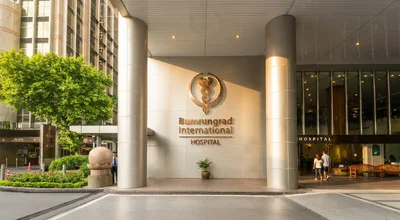
Bumrungrad International Hospital
Tertiary hospital with over 1,200 physicians treating 520,000+ international patients a year.
View hospital profile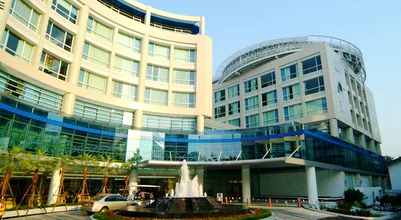
Bangkok Hospital
BDMS flagship tertiary campus with standalone heart, cancer, and neuro-orthopaedic hospitals.
View hospital profile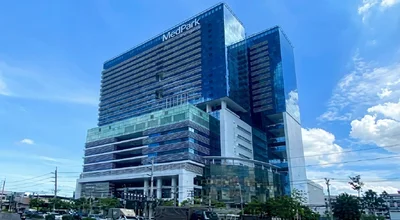
MedPark Hospital
Purpose-built tertiary hospital opened in 2020, focused on complex cardiac, cancer, and transplant care.
View hospital profile
Tell Us What You Need. We Do the Rest.
Share what you're considering and we'll come back with surgeon options, pricing, and a clear plan.
- Real hospital pricing with zero markup
- Matched with a specialist experienced in your specific procedure
- Full coordination from consultation to recovery


Trusted by patients worldwide
The complete guide to Mastectomy in Thailand
Everything below is for readers who want the full detail: costs broken down, types and techniques, recovery, risks and safety, and planning your trip.
Breast Surgeons & Cancer Centres in Thailand
In breast cancer surgery, the multidisciplinary team around the surgeon matters as much as the surgical skill itself. Here is what our partner centres offer.
Leading Breast Units in Bangkok
Our partner hospitals have dedicated breast surgery programmes within their cancer centres. Leading JCI-accredited hospitals in Bangkok provide multidisciplinary tumour boards, on-site molecular pathology, reconstruction capability, and radiation oncology departments: the full treatment pathway under one roof.
Experienced Breast Surgeons
Our partner breast surgeons are board-certified with specific oncological training and high surgical volumes. Many completed fellowships at established international breast units. They work alongside plastic surgeons experienced in post-mastectomy reconstruction, ensuring coordinated planning when reconstruction is part of the surgical plan.
What to Look for in a Breast Surgeon
Board certification in oncological surgery or breast surgery specifically. Ask about their mastectomy volume and reconstruction options. Confirm that your case will be reviewed by a multidisciplinary tumour board before surgery. A surgeon who discusses margins, staging, and adjuvant therapy planning during consultation is operating at the right level.
Understanding Your Results
Mastectomy outcomes are measured by complete tumour removal, accurate staging, and, where applicable, the quality of reconstruction. Here is what to expect.
Typical Mastectomy Results
Clear surgical margins are achieved in the vast majority of cases at experienced centres. Complete pathology reporting, including receptor status and molecular markers, provides the staging information needed for adjuvant treatment planning. When reconstruction is performed, most patients report satisfaction with the cosmetic result at six to twelve months.
What Results Can You Expect?
Preliminary pathology is available within days. The comprehensive report takes one to two weeks and determines what happens next: hormonal therapy, chemotherapy, radiotherapy, or surveillance alone. Your oncology team reviews everything with you and coordinates the handover to your home medical team before discharge.
Mastectomy Cost in Thailand
Average Cost of Mastectomy
Bangkok Cancer Hospital publishes three fly-in packages for mastectomy on one breast. A total mastectomy with sentinel lymph node biopsy is ฿308,000, or about $9,059, with three nights in hospital. Adding an axillary dissection takes it to ฿348,000, or about $10,235, with four nights. A modified radical mastectomy is ฿310,000, or about $9,118, with four nights. None of the three includes reconstruction. These are one hospital's published rates rather than what Thailand as a whole charges.
Cost Breakdown
The package covers the operating theatre and recovery room, the surgeon and anaesthetist teams, the medicines and supplies used during the operation, and three or four nights in a standard inpatient room with nursing care and meals. Under our partner hospital's current surgical programme, medical clearance before surgery and a pre-operative rehabilitation assessment by a physiotherapist are provided at no charge. Pathology on the tissue and nodes removed is charged separately, and so are the receptor, HER2 and molecular tests that determine what treatment follows. Laboratory work, imaging and take-home medication are billed on top, as are flights, accommodation and travel insurance. Coordinator support comes from us and is not a hospital charge.
What Affects the Price?
How much of the axilla has to be cleared is the main driver, and it accounts for the ฿40,000 step from sentinel node biopsy alone to a full axillary dissection, along with an extra night in hospital. A modified radical mastectomy is published at ฿310,000, close to the sentinel node package rather than to the axillary dissection one, even though it clears the axilla. That is how Bangkok Cancer Hospital has priced it, and we would rather report that than invent a reason for it. Reconstruction is not part of any published package and is quoted separately, and no Thai hospital publishes what an implant costs, so we will not put a figure on one before your surgeon has seen your case. Bilateral surgery is likewise quoted case by case rather than published.
Thailand vs International Price Comparison
At $9,059 to $10,235, these packages sit below the US range of $15,000 to $30,000 and the UK range of £11,000 to £22,500, and the saving against the lowest American quotes is roughly a third rather than the half or more often advertised for Thailand. The Australian range quoted here, A$12,500 to A$25,000, converts to a floor slightly below the Thai packages, so Thailand is not the cheaper option against the bottom of that market. Because pathology, receptor testing and any chemotherapy, radiotherapy or hormone therapy are separate wherever they are given, the figure to plan around is the whole treatment pathway rather than the operation alone.
Types of Mastectomy
The surgical approach is selected based on tumour characteristics, breast anatomy, and whether immediate reconstruction is part of the plan. Your breast surgeon and oncologist decide together.
Total (Simple) Mastectomy
Removes all breast tissue including the nipple and areola, along with overlying skin. The standard approach for invasive cancer where reconstruction is planned as a separate later procedure. Provides thorough tissue clearance with decades of supporting survival data.
- Complete removal of all breast tissue and overlying skin
- Well-established long-term survival outcomes
- Compatible with delayed reconstruction at a later date
- Best for: invasive breast cancer where immediate reconstruction is not planned
Skin-Sparing Mastectomy
All breast tissue and the nipple-areola complex are removed, but the natural skin envelope is preserved. This allows a plastic surgeon to perform immediate reconstruction with a more natural contour and less visible scarring. Oncological safety is equivalent to total mastectomy when the tumour is adequately distanced from the skin.
- Preserves the skin envelope for immediate reconstruction
- Equivalent oncological safety when tumour is clear of the skin
- Improved aesthetic outcome compared with total mastectomy alone
- Best for: patients choosing immediate reconstruction where the tumour position allows skin preservation
Nipple-Sparing Mastectomy
Breast tissue is removed through a concealed incision while preserving the nipple-areola complex and skin envelope. Produces the most natural post-reconstruction result. Requires careful patient selection; the tumour must be positioned well away from the nipple, and intraoperative frozen section of the sub-areolar margin confirms safety.
- Preserves nipple-areola complex for the most natural reconstruction result
- Intraoperative frozen section confirms the sub-areolar margin is clear
- Careful patient selection based on tumour location and size
- Best for: selected patients where tumour position allows safe nipple preservation
Mastectomy Techniques
Technique selection depends on tumour characteristics, the planned reconstruction approach, and what the multidisciplinary team agrees will give the best oncological and functional outcome.
Sentinel Lymph Node Biopsy
A radiotracer or blue dye identifies the first lymph node draining the breast. If this sentinel node is cancer-free on intraoperative frozen section, more extensive axillary dissection can be avoided, preserving arm function and reducing lymphoedema risk. This is now the standard approach for clinically node-negative breast cancer.
- Identifies the first draining lymph node for targeted biopsy
- Avoids full axillary dissection when the sentinel node is clear
- Reduces lymphoedema risk and preserves arm function
- Best for: clinically node-negative breast cancer where lymph node status needs confirmation
Immediate Breast Reconstruction
Performed during the same operation as the mastectomy by a plastic surgeon working alongside the breast surgeon. Implant-based or autologous tissue reconstruction can be offered depending on body habitus, previous radiation, and patient preference. One operation, one anaesthetic, one recovery period.
- Combined with mastectomy in a single surgical session
- Implant-based or autologous tissue options available
- Reduces the psychological impact of breast loss
- Best for: patients who are medically suitable and wish to wake from surgery with a reconstructed breast
Axillary Lymph Node Dissection
When the sentinel node already shows cancer, or the cancer is clinically node-positive before surgery, a more complete clearance of the lymph nodes under the arm is performed alongside the mastectomy. Removing the affected nodes improves staging accuracy and local control, though it carries a higher lymphoedema risk than sentinel node biopsy alone, which is why it is reserved for cases that genuinely need it rather than done routinely.
- Clears the axillary lymph nodes when cancer has reached them
- Performed when the sentinel node is positive or nodes are clinically involved
- Higher lymphoedema risk, so physiotherapy and arm care matter more4
- Best for: node-positive breast cancer needing fuller axillary clearance
A Note on Oncoplastic Surgery
Oncoplastic surgery combines lumpectomy with cosmetic reshaping; it is a breast-conserving technique covered on the breast-conserving surgery page, not a form of mastectomy.
- Breast-conserving approach, not a mastectomy variant
- Combines lumpectomy with reshaping of the remaining tissue
- Covered in detail on the breast-conserving surgery page
- Best for: patients where lumpectomy is an option and reshaping improves the cosmetic outcome
Mastectomy Recovery Timeline
Days 1–2
You recover on the surgical ward with wound monitoring and drain management. Pain is controlled through a structured protocol, and the nursing team helps you begin gentle arm movements. Most patients sit up and walk short distances within the first day after surgery.
Days 3–7
Drains are typically removed once output decreases below a threshold, usually within a few days. Your surgical team reviews wound healing, discusses preliminary pathology, and begins planning any recommended adjuvant therapy. Arm exercises continue with physiotherapy guidance.
Weeks 2–4
Gentle walking and progressive arm exercises restore range of motion, and light desk work is usually manageable from around two to three weeks. You attend outpatient appointments for wound checks and to review final pathology, including margin status, receptor profile, and tumour grade, which guides adjuvant therapy decisions.
Weeks 4–6
Most patients are back to their normal daily routines, with driving and moderate activity resuming gradually once arm mobility allows. Higher-impact exercise such as gym work and swimming resumes from around six weeks, once your surgeon confirms the wound is fully healed.1,2 Your oncology team at home receives a complete treatment summary, and any recommended chemotherapy or radiotherapy is coordinated before you depart.
When Can You Fly After Mastectomy?
Most patients are cleared to fly 10 to 14 days after surgery, once drains are removed and wound healing is confirmed. Your surgical team provides a fitness-to-fly letter. Wear a comfortable, loose-fitting top and consider a compression garment for the flight.
When Can You Return to Work and Exercise?
Light desk work is usually possible within two to three weeks. Driving resumes at four weeks if you have adequate arm mobility and are no longer taking strong pain medication. Exercise intensity increases gradually; gym work and swimming resume from around six weeks, once your surgeon confirms the wound is fully healed. An axillary clearance or immediate reconstruction can extend the limits on heavy lifting, so your surgeon sets a personalised timeline.
When Will Final Pathology Be Available?
Preliminary results are often available within two to three days. The full comprehensive report, covering margin status, hormone receptors, HER2 status, and Ki-67, takes seven to ten working days. This report determines whether adjuvant chemotherapy, radiotherapy, or hormonal therapy is recommended.
Anaesthesia for Mastectomy
Mastectomy is performed under general anaesthesia, so you are fully asleep and feel nothing during the operation. A consultant anaesthetist stays with you throughout and monitors your heart rate, breathing, and oxygen levels continuously, which is standard at the accredited cancer centres we work with. Many surgeons also use additional regional or local anaesthetic at the wound, which helps keep early pain low as you wake.
Because this is major surgery, you have a formal pre-operative assessment before you are cleared. This typically includes blood tests, a review of your current medications, and cardiac and respiratory checks where your history or age makes them relevant, so the anaesthetist can plan the safest approach for you. The breast surgeon and anaesthetist decide the details together based on your general health and the extent of the planned surgery.
You feel nothing during the procedure itself. Afterwards, discomfort and a tight, heavy feeling across the chest are expected rather than sharp pain, and they are controlled through a structured pain protocol with the nursing team helping you start gentle arm movements early. Most patients describe it as moderate and steadily easing over the first week.
Risks and Safety of Mastectomy
Mastectomy is one of the most well-established operations in surgical oncology. Complication rates at high-volume centres are low, but all surgical risks should be understood.
Pre-operative assessment includes imaging review, blood work, and multidisciplinary discussion. Your breast surgeon explains all risks specific to your planned procedure. Post-operative monitoring catches complications early.
Is Mastectomy Safe in Thailand?
Yes. Mastectomy at JCI-accredited hospitals in Thailand is performed by board-certified breast surgeons within comprehensive cancer programmes. The hospitals have full surgical infrastructure, on-site pathology with molecular testing, and multidisciplinary teams that mirror the structure of major Western breast units.
How to Reduce Surgical Risks
Choose a hospital with JCI accreditation and a dedicated breast surgery programme. Sentinel lymph node biopsy reduces lymphoedema risk compared with full axillary dissection. Early arm exercises and physiotherapy protect shoulder mobility. Report any signs of wound redness, swelling, or fever promptly.
When Is Further Surgery Needed?
Re-excision may be recommended if pathology shows involved margins, meaning cancer cells are found at the cut edge. This occurs in a minority of cases. Delayed reconstruction can be performed months or years later if not done at the time of mastectomy. Your surgeon discusses these possibilities during consent.
Planning Your Mastectomy in Thailand
Most patients need 10 to 14 days in Thailand. Here is how to organise your trip, what is covered, and what to expect on arrival.
How Long to Stay in Thailand
Plan for 10 to 14 days. This covers pre-operative diagnostics and tumour board review, the surgery itself, three to four nights in hospital, drain removal, wound checks, and a final assessment before travel. Patients having immediate reconstruction may need a day or two longer.
What's Included in a Medical Trip
Your care coordinator manages hospital scheduling, transfers, and follow-up appointments. Bangkok Cancer Hospital's package covers the surgeon and anaesthetist teams, the operating theatre, the medicines and supplies used during surgery, and three or four nights in a standard room, with medical clearance before surgery provided at no charge under their current programme. Pathology, receptor and HER2 testing, imaging, and take-home medication are billed separately, as are reconstruction, any chemotherapy or radiotherapy, flights and accommodation.
Emotional and Practical Support
A cancer diagnosis and surgery overseas is a significant undertaking emotionally. We encourage bringing a companion. Our partner hospitals offer counselling services, and your coordinator is available throughout for practical and pastoral support. Clear communication about what to expect at each stage helps reduce uncertainty.
Related Procedures
Other procedures that address similar goals or conditions, in case one of them is a closer fit for you.
Planning your treatment in Thailand
Independent guides to help you weigh the decision, before you commit to anything.
Common Questions About Mastectomy
Everything you need to know before your procedure

Medical References
Keep researching with AI
Open this guide in your AI assistant to dig deeper and ask the questions it didn't answer.
Opens in a new tab with this guide already loaded.
Medical disclaimer: Content on this site is provided for informational purposes and should not be treated as medical advice. Outcomes, timelines, and eligibility differ from person to person. Consult a qualified medical professional before making any decisions about surgery or treatment.
Ready to Get Started?
Speak with our care coordinators for a free, no-obligation consultation and personalised quote.
Speak to Our Team