Radiation Therapy in Thailand Your guide to cost, top specialists & hospitals
Precision radiotherapy shapes the dose around the tumour while sparing as much of the surrounding healthy tissue as the plan allows.
What Is Radiation Therapy?
Also known as: Radiotherapy · External Beam Radiotherapy
Radiation therapy is a cancer treatment that damages cancer cells by aiming precise high-energy radiation beams at a tumour. External beam radiotherapy delivers this from outside the body, breaking the DNA inside the cells so they can no longer grow. It is usually given in small daily doses, called fractions, over several weeks, so healthy tissue recovers while the tumour receives its full dose. Each painless session takes about 15 to 30 minutes. It may aim to cure a cancer, follow surgery to lower recurrence, or ease advanced-disease symptoms.
If you are facing this, the planning can feel reassuring. First you have a CT scan mapping where the cancer is, often with MRI or PET images. Your radiation oncologist and a physicist then shape the dose around the tumour, sparing healthy organs as far as possible, and nothing starts until that plan is checked.
How well it works depends on the cancer type, stage, and treatment intent, so your oncologist will be honest rather than promise one outcome. Sharing your scans and pathology beforehand lets them confirm whether it suits your diagnosis and how long a course you need.
It can address a range of concerns, including:
Am I a Good Candidate for Radiation Therapy?
Radiotherapy suitability comes down to a defined target, a treatment history the physics allows, and weeks of daily attendance.
Radiation needs something precise to aim at, so planning starts with a defined target.
Defined target volume: A confirmed cancer diagnosis with a target mapped by CT simulation, often fused with MRI or PET data.
Specialist assessment: Suitability is confirmed by a radiation oncologist, with every plan peer-reviewed by the medical physics team before delivery.
Treatment intent: Curative, adjuvant, and palliative courses make different demands, from 25-35 daily fractions down to a single session, and the intent shapes who is suitable.
Several conditions change how, or whether, a plan can be delivered safely, so your history is screened in detail.
Previous radiotherapy: Earlier treatment to the same region means cumulative dose to organs at risk must be carefully re-planned.
Autoimmune disease: Active connective tissue or autoimmune disease such as scleroderma or lupus can amplify tissue reaction and needs review first.
Devices and implants: Pacemakers, defibrillators, or metal implants in the beam path need device interrogation and dose modelling before planning.
Pregnancy: Abdominal and pelvic fields are contraindicated at any stage without a fully shielded plan.
Radiotherapy is delivered daily over weeks, and the schedule itself is a genuine suitability factor.
Daily attendance: Standard curative courses run 25-35 sessions over five to seven weeks, and consistency matters.
Staying nearby: Plan three to seven weeks near the treatment centre; stereotactic courses compress this to one to two weeks across one to five sessions.
Manageable sessions: Each visit takes 15-30 minutes and is painless, and most patients keep up light daily routines throughout the course.
Who is not suitable for radiation therapy?
- Pregnancy where abdominal or pelvic fields are involved
- Previous radiotherapy to the same region until re-planning confirms a safe dose
- Active scleroderma, lupus, or similar disease until specialist review
- Cardiac devices or metal implants in the beam path until assessed
- Unable to attend daily sessions for the full course
Pricing
How Much Will Radiation Therapy Cost in Thailand?
What radiation therapy costs at accredited hospitals in Thailand, and what your final quote depends on.
Get your exact price
Tell us what you're considering and we'll send a personalised quote from accredited clinics within 24 hours.
Get my free quoteTypical prices in Thailand
Typical ranges based on recent hospital quotes. Your exact price depends on the hospital and how complex your case is, and is confirmed at your teleconsultation.
Radiation Therapy
High-energy beams are aimed at the tumour from outside the body, given in small daily doses so surrounding healthy tissue can recover between sessions.
| IMRT / VMAT, full course Beam shaped to the tumour with the dose varied across it, for complex shapes near critical organs | $3,800 to $5,000 ฿129,200 to ฿170,000 |
| Stereotactic radiotherapy (SRS / SBRT), full course Very high dose delivered in one to five sessions, for small, well-defined tumours | $4,500 to $5,400 ฿153,000 to ฿183,600 |
| 3D conformal radiotherapy, full course CT-planned beams shaped to the tumour, for regularly shaped targets where simpler planning is enough | $3,000 to $3,800 ฿102,000 to ฿129,200 |
Typically not included
- Chemotherapy or other systemic drug treatment given alongside or after radiotherapy, planned and priced as its own course
- Hospital admission during the course for a severe reaction, such as fluids or a feeding tube if head and neck treatment stops you swallowing
- Dental assessment and any tooth extractions required before head and neck radiotherapy
- The diagnostic biopsy and pathology confirming cancer type and grade, if not completed before you travelled
- Any further cancer treatment your plan later calls for, such as surgery or radiotherapy to another site
Get your exact price
Tell us what you're considering and we'll send a personalised quote from accredited clinics within 24 hours.
Hospitals Trusted for Radiation Therapy
From internationally accredited flagships to dedicated specialist hospitals, these are the kinds of facilities where international patients have this procedure.
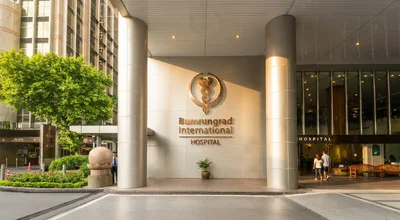
Bumrungrad International Hospital
Tertiary hospital with over 1,200 physicians treating 520,000+ international patients a year.
View hospital profile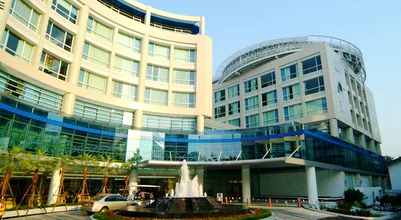
Bangkok Hospital
BDMS flagship tertiary campus with standalone heart, cancer, and neuro-orthopaedic hospitals.
View hospital profile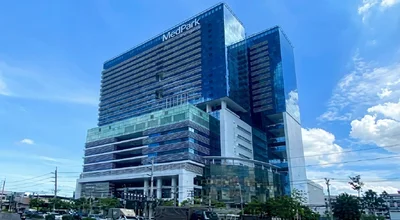
MedPark Hospital
Purpose-built tertiary hospital opened in 2020, focused on complex cardiac, cancer, and transplant care.
View hospital profile
Tell Us What You Need. We Do the Rest.
Share what you're considering and we'll come back with surgeon options, pricing, and a clear plan.
- Real hospital pricing with zero markup
- Matched with a specialist experienced in your specific procedure
- Full coordination from consultation to recovery


Trusted by patients worldwide
The complete guide to Radiation Therapy in Thailand
Everything below is for readers who want the full detail: costs broken down, types and techniques, recovery, risks and safety, and planning your trip.
Radiation Oncologists & Cancer Centres in Thailand
The quality of your treatment plan depends on the team behind it. Here is what to look for when choosing a radiation oncology centre.
Leading Cancer Centres in Bangkok
Our partner hospitals operate dedicated radiation oncology departments with modern linear accelerators, CT simulators, MRI-fusion planning, and on-site medical physics teams. Bangkok's leading JCI-accredited cancer centres run comprehensive oncology programmes where radiotherapy is integrated with surgery, chemotherapy, and immunotherapy.
Experienced Radiation Oncologists
Our partner radiation oncologists are board-certified with subspecialty training in specific tumour sites. Many completed fellowships at major international centres before returning to Thailand. They work alongside medical physicists and dosimetrists who verify every treatment plan before delivery begins.
What to Look for in a Radiation Oncologist
Board certification in radiation oncology specifically, not general oncology. Ask whether your case will be reviewed by a multidisciplinary tumour board. Confirm the centre has the equipment needed for your treatment type. A radiation oncologist who explains the planning rationale and expected side effects in detail is following best practice.
Understanding Your Results
Radiotherapy outcomes are assessed through imaging and clinical response rather than visible before-and-after changes. Here is what to expect.
Typical Radiation Therapy Results
Response varies by cancer type and treatment intent. Curative courses achieve local tumour control in a high proportion of cases. Adjuvant radiotherapy reduces recurrence risk significantly. Palliative treatment provides symptom relief, often within days for bone pain. Your oncologist discusses expected response rates for your specific diagnosis.
What Results Can You Expect?
Follow-up imaging several weeks after treatment completion shows the treatment response. Some tumours shrink gradually over months rather than immediately. Your radiation oncologist reviews scan results with you and establishes a surveillance schedule for ongoing monitoring.
Radiation Therapy Cost in Thailand
Average Cost of Radiation Therapy
A full course of external beam radiotherapy in Thailand typically costs between $3,000 and $5,400, depending on the technique, number of fractions, and treatment complexity. Stereotactic treatments (SRS/SBRT) may fall at the higher end due to the precision involved, while shorter palliative courses cost less.
Cost Breakdown
The radiation oncologist's fee covers treatment planning, on-treatment reviews, and clinical oversight. Medical physics charges cover dosimetry, quality assurance, and plan optimisation. Facility fees cover the linear accelerator, imaging verification, and treatment-room time. Supportive care and coordinator support are included.
What Affects the Price?
Technique complexity is the biggest factor. IMRT and VMAT planning takes more physics time than 3D conformal. Stereotactic treatments require additional precision measures. The number of fractions drives the total; a 30-fraction curative course costs more than a 5-fraction palliative schedule.
Thailand vs International Price Comparison
Radiation therapy in Thailand costs 50 to 70 percent less than equivalent courses in the US ($9,000–$18,000), Australia (A$7,500–A$15,000), and UK (£6,600–£13,500). Over a multi-week treatment course, the savings compared with private treatment abroad are very significant.
Types of Radiation Therapy
The treatment intent (curative, adjuvant, or palliative) determines the approach. Your radiation oncologist selects the technique that delivers the most effective dose distribution for your specific tumour.
Curative Radiotherapy
Used when radiation alone can control or eliminate the cancer, or as the primary component of a chemoradiation protocol. Treatment courses typically run five to seven weeks. Common in head and neck cancers, cervical cancer, and early-stage lung disease where surgery is not preferred.
- Aims for complete tumour control as the primary treatment
- Often combined with concurrent chemotherapy for synergistic effect
- Requires precise planning and daily image guidance
- Best for: cancers where radiation alone or with chemotherapy offers curative potential
Adjuvant Radiotherapy
Delivered after surgery to destroy microscopic cancer cells that may remain at the operative site. Reduces local recurrence rates and improves long-term survival for many tumour types. Standard practice following breast-conserving surgery, high-risk rectal resection, and many head and neck procedures.
- Targets residual microscopic disease after surgical resection
- Reduces local recurrence and improves overall survival
- Typically begins four to six weeks after surgery
- Best for: post-surgical patients where pathology indicates elevated recurrence risk
Palliative Radiotherapy
Shorter courses aimed at symptom relief rather than cure. Effective for bone pain from metastases, airway obstruction, bleeding, and spinal cord compression. Often completed in one to ten sessions, providing relief relatively quickly without the burden of a prolonged treatment schedule.
- Short courses of one to ten sessions for symptom control
- Effective for bone pain, obstruction, and spinal cord compression
- Minimises treatment burden for patients with advanced disease
- Best for: symptom relief in metastatic or locally advanced cancer
Radiation Therapy Techniques
The technique your radiation oncologist selects depends on tumour geometry, proximity to sensitive structures, and whether motion management is needed. All techniques listed below are available at our partner centres.
IMRT / VMAT
Intensity-modulated and volumetric arc techniques shape the beam to match the three-dimensional tumour contour while varying dose intensity across the field. VMAT delivers treatment in continuous arcs, reducing session time. Both are standard for head and neck, prostate, and pelvic cancers.
- Conformal dose distribution around irregular tumour shapes
- Reduced radiation to surrounding healthy organs
- VMAT delivers treatment faster through continuous arc rotation
- Best for: complex tumour geometries near critical structures
Stereotactic Radiotherapy (SRS / SBRT)
Delivers very high doses in one to five sessions with sub-millimetre targeting accuracy. Image guidance and immobilisation devices ensure precision. Completed far faster than conventional courses, making it practical for patients who cannot stay for weeks. Effective for small brain, lung, liver, and spinal tumours.
- High-dose treatment in one to five sessions
- Sub-millimetre accuracy with real-time image guidance
- Shorter overall treatment time than conventional radiotherapy
- Best for: small, well-defined tumours in the brain, lung, liver, or spine
3D Conformal Radiotherapy
CT-planned beams shaped to match the tumour volume using multi-leaf collimators. A reliable, well-established approach suited to a broad range of cancer sites where simpler beam arrangements are effective. Lower planning complexity keeps costs down without compromising outcomes for suitable cases.
- CT-based planning with shaped beam delivery
- Proven long-term efficacy across many tumour types
- Cost-effective option for straightforward target volumes
- Best for: regularly shaped tumours where simpler planning is sufficient
Radiation Therapy Recovery Timeline
During Treatment
Each session lasts 15 to 30 minutes, with most of that time spent on positioning and image checks. The radiation itself takes only a few minutes and is completely painless. Most patients continue light daily activities throughout their treatment course.
Weeks 1–3
Side effects are usually mild in the early weeks and localised to the treatment site. Fatigue is the most common symptom. Skin in the treated area may turn slightly pink. Your clinical team monitors you at regular intervals and manages any symptoms as they develop.
Weeks 4–6
Cumulative effects may build towards the end of a standard course. Fatigue tends to increase and site-specific symptoms such as mucositis or bowel changes may develop depending on the treatment area. With head and neck treatment, mucositis usually peaks in the final week or two: stay on soft, high-calorie foods, keep fluids up, and tell the team at once if a sore mouth or throat stops you swallowing enough to stay hydrated, as a feeding tube or extra fluids may be needed. Nutritional and supportive care continue throughout.
Post-Treatment
Acute side effects usually begin to settle within two to six weeks of the final session, in line with the recovery window above. Mucositis after head and neck treatment typically eases enough to return to a normal diet within that period, and energy gradually returns over the following weeks. Follow-up imaging is arranged to assess treatment response, and your oncologist provides a surveillance plan before you travel home.
Can You Travel During a Radiation Course?
Radiotherapy requires consistent daily attendance, so you will need to remain near the treatment centre for the duration. We help arrange comfortable local accommodation. Short breaks between treatment weeks may be possible depending on your protocol and your oncologist's recommendation.
How Are Side Effects Managed During Treatment?
Your oncology team monitors you throughout the course with regular clinical reviews. Skin care guidance, anti-inflammatory medication, nutritional support, and fatigue management are provided proactively. Site-specific side effects are anticipated based on the treatment plan and addressed early.
When Will You Know If Treatment Has Worked?
Response is assessed through follow-up imaging, typically CT or PET-CT, performed several weeks after completing the course. Your radiation oncologist reviews the results and discusses next steps. A long-term surveillance schedule is established before you return home.
Risks and Safety of Radiation Therapy
Radiotherapy has a strong safety record across decades of clinical use. Side effects are mostly localised to the treated area and resolve after the course is completed.
- Radiation pneumonitis (cough or breathlessness in the weeks or months after chest, lung, or breast treatment)4,5
- Cardiac effects (arrhythmia, pericarditis, or raised long-term coronary risk) with left-breast, mediastinal, or oesophageal fields4
- Temporary hair loss limited to the treated area3
- Late tissue fibrosis (uncommon with modern techniques)
Your radiation oncologist explains the expected side effects specific to your treatment site before you begin. Supportive medications and monitoring protocols are in place from the first session.
Is Radiation Therapy Safe in Thailand?
Yes. Our partner hospitals hold JCI accreditation and maintain the same equipment calibration, quality assurance, and infection-control standards required at leading Western radiation oncology departments. Treatment plans are peer-reviewed by the physics team before delivery begins.
How to Reduce Risks During Radiotherapy
Accurate planning is the primary risk-reduction tool. CT simulation, immobilisation devices, and daily image guidance ensure the beam hits the right target every day. Your oncologist and physicist verify the plan before treatment starts. Following skin care and nutritional guidance during the course also reduces side-effect severity.
What About Long-Term Side Effects?
Modern conformal techniques have significantly reduced late effects compared with older approaches. Fibrosis, dry mouth after head and neck treatment, and secondary malignancy are possible but uncommon. Your oncologist discusses your individual long-term risk profile during consent.
Planning Your Radiation Therapy in Thailand
Radiotherapy courses require daily attendance over several weeks. Planning ahead makes the logistics straightforward.
How Long to Stay in Thailand
Plan for three to seven weeks depending on your treatment protocol. This covers the planning CT and simulation in the first few days, the full treatment course of daily sessions, and a post-treatment review before you travel home. Shorter stereotactic courses may require only one to two weeks.
What's Included in Treatment
Your care coordinator manages scheduling and logistics. The treatment quote covers the radiation oncologist, medical physics planning, all treatment sessions, daily imaging verification, supportive medications, and coordinator support. Accommodation near the hospital and flights are arranged separately.
Accommodation During Treatment
Your coordinator can recommend hotels and serviced apartments within easy reach of the treatment centre. Many international patients prefer serviced apartments for multi-week stays. Proximity to the hospital matters; you attend daily, and a short commute reduces fatigue.
Related Procedures
Other procedures that address similar goals or conditions, in case one of them is a closer fit for you.
Planning your treatment in Thailand
Independent guides to help you weigh the decision, before you commit to anything.
Common Questions About Radiation Therapy
Everything you need to know before your treatment

Medical References
Keep researching with AI
Open this guide in your AI assistant to dig deeper and ask the questions it didn't answer.
Opens in a new tab with this guide already loaded.
Medical disclaimer: Content on this site is provided for informational purposes and should not be treated as medical advice. Outcomes, timelines, and eligibility differ from person to person. Consult a qualified medical professional before making any decisions about surgery or treatment.
Ready to Get Started?
Speak with our care coordinators for a free, no-obligation consultation and personalised quote.
Speak to Our Team