Bone Marrow Transplant in Thailand Your guide to cost, top specialists & hospitals
When the marrow itself is the problem, replacing it entirely can be the path to long-term remission.
What Is Bone Marrow Transplant?
Also known as: Bone Marrow Transplant · Haematopoietic Stem Cell Transplantation
A bone marrow transplant, or haematopoietic stem cell transplantation, is a treatment that rebuilds your blood and immune system by replacing diseased marrow with healthy blood stem cells. The cells come from your own body (autologous) or a matched donor (allogeneic), and are given through a drip after high-dose chemotherapy, sometimes with radiation, clears the old marrow. It treats leukaemias, lymphomas, myeloma, aplastic anaemia, and some inherited blood disorders.
This is a big treatment, and feeling daunted is normal. The path runs through assessment, conditioning, the infusion, then the engraftment weeks as new cells take hold and immunity slowly rebuilds. Your haematologist plans each step around your diagnosis, fitness, and donor situation.
Outcomes vary a great deal and depend on your diagnosis, disease stage, and overall health. No one can promise a cure, and an honest team will not try to. What the right specialist can do is review your case fully, tell you plainly whether a transplant is likely to help, and walk you through what to expect before you decide.
It can address a range of concerns, including:
Am I a Good Candidate for Bone Marrow Transplant?
A transplant suits patients whose blood disorder warrants it, and the team confirms disease control, fitness, and a donor first.
Transplant outcomes are far better when the underlying disease is controlled, so this comes first.
Clear indication: good candidates have a confirmed haematological diagnosis where transplant is indicated.
Remission preferred: outcomes are much stronger when disease is in remission rather than active progression.
Right classification: getting the diagnosis exactly right shapes whether the transplant is autologous or allogeneic.
Conditioning chemotherapy is demanding, so organ reserve and infection status are assessed carefully.
Organ function: adequate cardiac, pulmonary, hepatic, and renal function is needed to tolerate conditioning.
Infection cleared: an active or recently treated infection must fully resolve before entering aplasia.
Foci cleared: dental disease or chronic sinus infection should be treated before conditioning.
An allogeneic transplant depends on a suitable donor, so matching is part of suitability.
Donor identified: an HLA-matched or haploidentical donor should be found, or your own stem cells harvested.
Workup complete: the donor search and workup are best finished before committing to travel.
Viral status: a history of CMV, EBV, or hepatitis B reactivation needs suppression in place beforehand.
Transplant is intensive with a long recovery, so understanding the commitment matters.
A long road: recovery spans 3 to 12 months with a 6 to 10 week stay around the transplant.
Follow-up critical: close monitoring and follow-up are essential throughout recovery.
Team-confirmed: suitability is a specialist team decision based on your full picture.
Who is not suitable for bone marrow transplant?
- Active or recently treated infection, until fully resolved
- Significant cardiac, pulmonary, hepatic, or renal impairment for conditioning
- Disease still in active progression, until remission is achieved
- No HLA-matched or haploidentical donor yet identified
- Pregnant, as conditioning chemotherapy and radiation are harmful to a fetus
Pricing
How Much Will Bone Marrow Transplant Cost in Thailand?
What bone marrow transplant costs at accredited hospitals in Thailand, and what your final quote depends on.
Get your exact price
Tell us what you're considering and we'll send a personalised quote from accredited clinics within 24 hours.
Get my free quoteTypical prices in Thailand
Typical ranges based on recent hospital quotes. Your exact price depends on the hospital and how complex your case is, and is confirmed at your teleconsultation.
Bone Marrow Transplant
Transplant type is the main driver, because a donor adds HLA workup, a longer isolation stay and GVHD management that an autologous transplant does not need.
| Autologous transplant Uses your own harvested stem cells, with shorter isolation and no GVHD risk | $30,000 to $38,000 ฿1,020,000 to ฿1,292,000 |
| Matched allogeneic transplant A sibling or registry donor provides the graft, with a longer stay | $40,000 to $48,000 ฿1,360,000 to ฿1,632,000 |
| Haploidentical transplant A half-matched family donor, using the post-transplant cyclophosphamide protocol | $45,000 to $54,000 ฿1,530,000 to ฿1,836,000 |
Get your exact price
Tell us what you're considering and we'll send a personalised quote from accredited clinics within 24 hours.
Hospitals Trusted for Bone Marrow Transplant
From internationally accredited flagships to dedicated specialist hospitals, these are the kinds of facilities where international patients have this procedure.
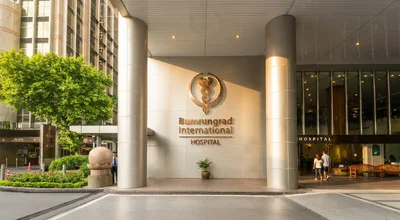
Bumrungrad International Hospital
Tertiary hospital with over 1,200 physicians treating 520,000+ international patients a year.
View hospital profile
Bangkok Hospital
BDMS flagship tertiary campus with standalone heart, cancer, and neuro-orthopaedic hospitals.
View hospital profile
MedPark Hospital
Purpose-built tertiary hospital opened in 2020, focused on complex cardiac, cancer, and transplant care.
View hospital profile
Tell Us What You Need. We Do the Rest.
Share what you're considering and we'll come back with surgeon options, pricing, and a clear plan.
- Real hospital pricing with zero markup
- Matched with a specialist experienced in your specific procedure
- Full coordination from consultation to recovery


Trusted by patients worldwide
The complete guide to Bone Marrow Transplant in Thailand
Everything below is for readers who want the full detail: costs broken down, types and techniques, recovery, risks and safety, and planning your trip.
Transplant Specialists & Centres in Thailand
Transplant outcomes depend on the specialist team and the infrastructure around them. Here is what our partner centres provide.
Leading Transplant Centres in Bangkok
Our partner hospitals operate dedicated bone marrow transplant units within their haematology departments. Leading JCI-accredited hospitals in Bangkok run transplant programmes with HEPA-filtered isolation wards, on-site stem cell processing laboratories, blood banking services, and intensive care units equipped for transplant complications.
Experienced Haematologists
Our partner haematologists are board-certified with fellowship training in transplant medicine. Many completed advanced training at international transplant centres and bring that experience to managing the complex clinical decisions that arise during conditioning, engraftment, and long-term follow-up.
What to Look for in a Transplant Centre
HEPA-filtered isolation rooms, on-site blood banking, and 24-hour haematology coverage are non-negotiable. Ask about annual transplant volume; centres performing a higher number of procedures each year tend to manage complications more effectively. Confirm the centre has experience with your specific transplant type.
Understanding Your Results
Transplant success is measured by engraftment, disease remission, and long-term survival. Here is what outcomes typically look like.
Typical Bone Marrow Transplant Outcomes
Engraftment, when donor cells begin producing new blood cells, typically occurs within two to three weeks1. Many patients with acute leukaemia achieve long-term remission after allogeneic transplant, though the likelihood varies widely with disease risk: good-risk leukaemia in first remission does considerably better than relapsed, refractory, or high-risk cytogenetic disease. Autologous transplant for myeloma extends progression-free survival by several years. Outcomes improve steadily with advances in conditioning, GVHD prevention, and supportive care.
What Results Can You Expect?
Your haematologist discusses expected outcomes based on your disease type, stage, and transplant approach. Recovery milestones include neutrophil engraftment, platelet recovery, hospital discharge, and incremental immune reconstitution over months. Disease status is monitored through blood tests and bone marrow biopsies at defined intervals.
Bone Marrow Transplant Cost in Thailand
Average Cost of Bone Marrow Transplant
A bone marrow transplant in Thailand typically costs between $30,000 and $54,000. Autologous transplants sit at the lower end of the range, while allogeneic and haploidentical procedures cost more due to donor workup, longer isolation stays, GVHD management, and additional supportive care.
Cost Breakdown
The haematologist's fee covers pre-transplant assessment, conditioning oversight, and post-transplant management. Hospital charges include the isolation ward, 24-hour nursing, and blood banking. Conditioning chemotherapy, stem cell processing, and supportive medications are itemised separately. Coordinator support is included throughout.
What Affects the Price?
Transplant type is the main cost driver; autologous is simpler and shorter than allogeneic. Conditioning intensity affects toxicity management costs. Length of isolation stay, transfusion requirements, and complication management all influence the final total. Donor search fees for unrelated registry donors are additional.
Thailand vs International Price Comparison
Bone marrow transplant in Thailand costs 50 to 70 percent less than equivalent procedures in the US ($90,000–$180,000), Australia (A$75,000–A$150,000), and UK (£66,000–£135,000). For a treatment that can exceed $100,000 privately, the difference makes transplant financially viable for many more patients.
Types of Bone Marrow Transplant
The transplant type depends on the disease, its biology, and whether a suitable donor is available. Each carries a distinct risk-benefit profile that your haematologist discusses thoroughly before you consent.
Autologous Transplant
Your own stem cells are collected from peripheral blood before high-dose conditioning, then reinfused to rescue marrow function. No graft-versus-host disease risk. The standard approach for myeloma and relapsed lymphoma, where the goal is to enable dose-intensive chemotherapy that would otherwise destroy the bone marrow permanently.
Allogeneic Transplant
Donor stem cells from a matched sibling or unrelated registry donor replace your diseased marrow. The donor graft provides a new immune system with a graft-versus-tumour effect: donor immune cells that continue to attack residual cancer. This is the standard curative approach for acute leukaemias and marrow failure.
- Matched related or unrelated donor provides the stem cells
- Graft-versus-tumour effect targets residual malignant cells
- Standard curative treatment for acute leukaemia and aplastic anaemia
- Best for: blood cancers where immune-mediated disease control is essential for long-term remission
Haploidentical Transplant
A half-matched family donor (parent, child, or sibling) provides stem cells when no fully matched donor exists. Post-transplant cyclophosphamide protocols have made this approach increasingly viable, expanding access for patients from ethnic backgrounds underrepresented in donor registries.
- Half-matched family member serves as the donor
- Post-transplant cyclophosphamide controls graft-versus-host risk
- Expands donor access for patients without a full HLA match
- Best for: patients who lack a matched sibling or registry donor
Bone Marrow Transplant Techniques
The transplant process involves conditioning, infusion, and engraftment, each phase requiring specific clinical expertise. Here is how our partner centres manage the technical aspects.
Myeloablative Conditioning
High-dose chemotherapy with or without total body irradiation destroys the existing bone marrow completely before transplant. This creates space for donor cells and eliminates residual disease. It is the most intensive conditioning approach and requires the longest engraftment period in isolation.
- Destroys existing marrow to make space for the graft
- Eliminates residual disease before new stem cells are infused
- Standard for younger, fitter patients with aggressive disease
- Best for: patients with adequate organ function who can tolerate intensive conditioning
Reduced-Intensity Conditioning
Lower-dose conditioning regimens suppress the immune system enough for engraftment without fully ablating the marrow. Relies more heavily on the graft-versus-tumour effect. Suitable for older patients or those with comorbidities who cannot tolerate full myeloablative therapy.
- Lower-intensity regimen allowing engraftment with less toxicity
- Relies on graft-versus-tumour effect for disease control
- Shorter engraftment period and reduced organ stress
- Best for: older patients or those with comorbidities limiting intensive conditioning
Post-Transplant Cyclophosphamide (PTCy)
High-dose cyclophosphamide given on days three and four after transplant selectively eliminates rapidly dividing alloreactive T-cells that would cause graft-versus-host disease. This protocol has been transformative for haploidentical transplants, making half-matched family donors a viable option.
- Selectively eliminates alloreactive T-cells causing GVHD
- Enables safe use of half-matched haploidentical donors
- Preserves graft-versus-tumour immunity
- Best for: haploidentical transplant protocols and GVHD risk reduction
Stem Cell Source (PBSC, Bone Marrow, or Cord Blood)
The graft itself can be collected in different ways, and the source affects engraftment speed and GVHD risk. Peripheral blood stem cells (PBSC) are the most common today, harvested from the bloodstream after growth-factor stimulation, with faster engraftment. A direct bone marrow harvest from the donor's pelvis under anaesthetic is still used in some settings, while banked umbilical cord blood is an option when no matched adult donor is found. Your haematologist selects the source that best fits your diagnosis and donor situation.
- PBSC collected from the bloodstream, with the fastest engraftment
- Bone marrow harvest taken directly from the donor's pelvis under anaesthetic
- Cord blood as an alternative when no matched adult donor is available
- Best for: tailoring the graft source to donor availability and engraftment needs
Bone Marrow Transplant Recovery Timeline
Weeks 1–2
The engraftment phase begins as infused stem cells migrate to your marrow cavities and start producing new blood cells. You remain in a HEPA-filtered isolation room with daily blood counts, infection surveillance, and nutritional support. This is the highest-risk period for infection.4
Weeks 3–6
Blood counts begin recovering and you may move from isolation to a step-down ward. Your team watches closely for graft-versus-host disease, infection, and organ complications. Medications are adjusted frequently and gradual increases in physical activity are encouraged.
Months 2–3
Outpatient reviews continue with regular blood work and medication adjustments. Immune function is still rebuilding, so infection precautions remain in place. Your haematologist manages any GVHD symptoms and begins tapering immunosuppression where clinically appropriate.
Months 4–12
Immune reconstitution continues through the rest of the first year. Vaccinations are rescheduled, dietary restrictions ease, and activity levels increase. Bone marrow biopsies and blood tests monitor disease status to confirm sustained remission and guide your long-term care plan.
How Long Will I Be in Isolation?
Most patients spend two to four weeks in a HEPA-filtered isolation room while blood counts are at their lowest. Strict hygiene protocols apply and visitors are limited. You transition to a step-down ward once neutrophil counts reach a safe level, though infection precautions continue.
When Can I Travel Home?
Most patients are cleared to travel six to ten weeks after the transplant infusion, once engraftment is confirmed, immediate complications are resolved, and outpatient monitoring is stable. Your haematologist provides a fitness-to-travel assessment and detailed handover to your home medical team.
What Does Long-Term Recovery Involve?
Full immune reconstitution takes several months after an autologous transplant and one to two years after an allogeneic transplant.3 During this period you should avoid crowds, raw foods, and contact with unwell people. Vaccinations are readministered on a schedule. Your haematologist monitors for late effects including chronic GVHD, endocrine changes, and secondary malignancy risk.
Anaesthesia & Sedation
The transplant itself does not require anaesthesia. The stem cells are given through a drip, much like a blood transfusion, while you are awake and comfortable, with the transplant team monitoring you closely throughout in case of an infusion reaction. There is nothing to feel during this part beyond the line already in place.
What does usually involve sedation is the placement of the central venous line used to deliver conditioning chemotherapy, blood products, and the stem cells themselves. This is a minor procedure carried out under local anaesthetic, often with light sedation so you are relaxed and pain-free, with an anaesthetist or proceduralist present to monitor you. A bone marrow biopsy, where one is needed, is likewise done under local anaesthetic. Your team decides on sedation case by case, taking your blood counts and general condition into account.
Because the whole pathway is demanding, you go through a thorough pre-transplant assessment before any of it begins, including cardiac, pulmonary, hepatic, and renal function tests and infection screening, to confirm you are fit for conditioning. The harder part of the journey is not pain from a procedure but the side effects of high-dose chemotherapy and the engraftment weeks that follow. Your team manages nausea, mouth soreness, and fatigue actively with medication and supportive care, so you are kept as comfortable as the treatment allows at every stage.
Risks and Safety of Bone Marrow Transplant
Bone marrow transplant is a major procedure with significant risks. Understanding these risks is part of making an informed treatment decision with your haematologist.
- Bleeding requiring red cell and platelet transfusions
- Veno-occlusive disease of the liver (uncommon)
- Late effects including endocrine dysfunction, cataracts, secondary malignancy
Thorough pre-transplant assessment (cardiac, pulmonary, hepatic, and renal function tests alongside infectious disease screening) identifies risk factors early. Your haematologist discusses your individual risk profile and expected outcomes before you proceed.
Is Bone Marrow Transplant Safe in Thailand?
Yes. Our partner hospitals hold JCI accreditation and operate dedicated transplant units with the infrastructure these procedures require: HEPA-filtered isolation, 24-hour haematology coverage, blood banking, and intensive care capability. Transplant outcomes at these centres are consistent with published international data.
How Is Graft-Versus-Host Disease Managed?
GVHD prevention begins with donor matching and conditioning protocol selection. Post-transplant immunosuppression, including calcineurin inhibitors and, for haploidentical cases, cyclophosphamide, reduces incidence. When GVHD occurs, it is graded and treated with corticosteroids, additional immunosuppression, or targeted therapies as needed.
What If the Transplant Does Not Work?
Primary graft failure, where donor cells do not engraft, occurs in a small percentage of cases and may require a second transplant or alternative treatment. Disease relapse after transplant is managed through donor lymphocyte infusions, immunotherapy, or other salvage approaches. Your haematologist plans for these contingencies from the outset.
Planning Your Bone Marrow Transplant in Thailand
A transplant requires an extended stay. Planning ahead for logistics, accommodation, and companion support makes the experience more manageable.
How Long to Stay in Thailand
Plan for six to ten weeks minimum. This covers pre-transplant evaluation, conditioning therapy, the transplant infusion, isolation during engraftment, step-down ward recovery, and initial outpatient follow-up before you are cleared to travel home. Some patients require longer stays depending on complications.
What's Included in Treatment
Your package covers the haematologist and transplant team, conditioning chemotherapy, stem cell infusion, isolation ward and nursing, pre-transplant diagnostics including HLA typing, post-transplant medications and blood products, and coordinator support. Donor search fees, accommodation, and flights are arranged separately.
Bringing a Companion
We strongly encourage patients to bring a family member or companion for the duration of the stay. The emotional and practical support during isolation and recovery is invaluable. Your coordinator can help arrange nearby accommodation for your companion and facilitate hospital visiting within infection-control guidelines.
Related Procedures
Other procedures that address similar goals or conditions, in case one of them is a closer fit for you.
Planning your treatment in Thailand
Independent guides to help you weigh the decision, before you commit to anything.
Common Questions About Bone Marrow Transplant
Everything you need to know before your treatment

Medical References
Keep researching with AI
Open this guide in your AI assistant to dig deeper and ask the questions it didn't answer.
Opens in a new tab with this guide already loaded.
Medical disclaimer: Content on this site is provided for informational purposes and should not be treated as medical advice. Outcomes, timelines, and eligibility differ from person to person. Consult a qualified medical professional before making any decisions about surgery or treatment.
Ready to Get Started?
Speak with our care coordinators for a free, no-obligation consultation and personalised quote.
Speak to Our Team