Proton Therapy in Thailand Your guide to cost, top specialists & hospitals
Protons stop inside the tumour. That single physical property changes the equation for cancers near critical organs.
What Is Proton Therapy?
Also known as: Proton Beam Radiation · Proton Beam Therapy
Proton therapy is a radiation treatment that destroys cancer cells using beams of accelerated protons rather than conventional X-rays. Protons release most of their energy at a set depth and then stop, a point called the Bragg peak, so the dose lands inside the tumour with little radiation carrying on into healthy tissue beyond1,2. That makes it especially useful for cancers near organs that tolerate radiation poorly, such as the brain, spinal cord, heart, or a child's growing tissues. A course is usually short daily sessions over several weeks.
A cancer diagnosis abroad is a lot to carry. The aim is not a stronger dose but less collateral damage, which for the right cancers can mean fewer side effects now and lower risk of late problems later. Your oncologist plans every beam around your tumour and the organs near it.
Proton therapy is not right for every cancer, and because results depend on type and stage no honest team can promise an outcome. Sometimes conventional radiotherapy works just as well, and a good oncologist will say so plainly. Reviewing your records before you travel shows whether it helps.
It can address a range of concerns, including:
Am I a Good Candidate for Proton Therapy?
Proton therapy suits localised tumours where sparing surrounding tissue matters, and oncologists confirm the diagnosis and plan first.
Proton therapy is precise radiation, so it suits situations where the target is defined and collateral exposure must be minimised.
Localised disease: good candidates have a localised solid tumour confirmed on diagnostic imaging.
Sparing matters: it is most valuable where reducing radiation to nearby healthy tissue is essential.
Motion management: tumours with significant respiratory or organ motion need gating or breath-hold protocols.
A course runs over weeks, so general fitness to attend daily sessions is part of suitability.
Daily attendance: good candidates are well enough to attend daily treatment sessions over the course.
Implant review: metallic implants near the target can distort the dose and need careful modelling.
Stillness or sedation: patients, including children, who cannot lie still need sedation planning reviewed first.
Protons offer a dosimetric advantage in the right cases, but they do not change treatment intent in others.
Limited benefit: widely metastatic disease usually gains little from the proton advantage.
A long window: the course and recovery span several weeks, with a two to eight week stay depending on your fraction count.
A team decision: suitability is confirmed by the treating oncology team against your full picture.
Who is not suitable for proton therapy?
- Widely metastatic disease where protons do not change treatment intent
- Metallic implants near the target, until dose modelling is done
- Significant tumour motion without gating or breath-hold available
- Unable to lie still for sessions, until sedation suitability is reviewed
- Pregnant, until a fetal-dose-minimising plan is reviewed
- Prior radiotherapy to the same region exceeding safe cumulative dose
Pricing
How Much Will Proton Therapy Cost in Thailand?
What proton therapy costs at accredited hospitals in Thailand, and what your final quote depends on.
Get your exact price
Tell us what you're considering and we'll send a personalised quote from accredited clinics within 24 hours.
Get my free quoteTypical prices in Thailand
Typical ranges based on recent hospital quotes. Your exact price depends on the hospital and how complex your case is, and is confirmed at your teleconsultation.
Proton Therapy
A proton beam is aimed at the tumour in daily sessions, delivering its dose at a set depth.
| Standard proton therapy, 20 to 35 fractions Daily sessions five days a week across four to eight weeks, for a full prescribed dose | $19,000 to $24,000 ฿646,000 to ฿816,000 |
| Hypofractionated proton therapy, 5 to 15 fractions Larger dose per session over two to three weeks, where the tumour type allows it | $15,000 to $19,000 ฿510,000 to ฿646,000 |
| Complex IMPT with motion management Multi-field planning with gating or breath-hold, for targets that move or wrap around critical organs | $22,000 to $27,000 ฿748,000 to ฿918,000 |
Typically not included
- Chemotherapy, immunotherapy or hormone treatment given alongside the radiation, quoted by the oncology team once your full plan is set
- Sedation or general anaesthesia, needed at every fraction for children or anyone who cannot lie still, so it multiplies across the course
- Any night spent in hospital, since the course is priced as outpatient treatment
- Fiducial markers or a tissue spacer placed before treatment, with the theatre time to insert them, where your plan calls for them
- Biopsy and pathology, which belong to the diagnosing team rather than the radiotherapy quote
Get your exact price
Tell us what you're considering and we'll send a personalised quote from accredited clinics within 24 hours.
Hospitals Trusted for Proton Therapy
From internationally accredited flagships to dedicated specialist hospitals, these are the kinds of facilities where international patients have this procedure.
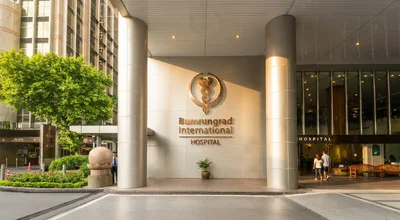
Bumrungrad International Hospital
Tertiary hospital with over 1,200 physicians treating 520,000+ international patients a year.
View hospital profile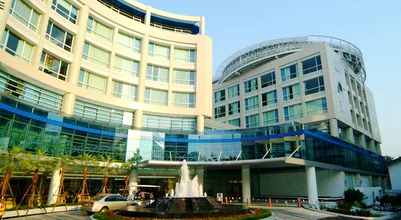
Bangkok Hospital
BDMS flagship tertiary campus with standalone heart, cancer, and neuro-orthopaedic hospitals.
View hospital profile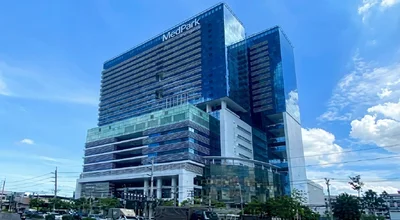
MedPark Hospital
Purpose-built tertiary hospital opened in 2020, focused on complex cardiac, cancer, and transplant care.
View hospital profile
Tell Us What You Need. We Do the Rest.
Share what you're considering and we'll come back with surgeon options, pricing, and a clear plan.
- Real hospital pricing with zero markup
- Matched with a specialist experienced in your specific procedure
- Full coordination from consultation to recovery


Trusted by patients worldwide
The complete guide to Proton Therapy in Thailand
Everything below is for readers who want the full detail: costs broken down, types and techniques, recovery, risks and safety, and planning your trip.
Proton Therapy Centres & Oncologists in Thailand
Proton therapy requires a specialist team: radiation oncologists with proton-specific training, dedicated medical physicists, and purpose-built infrastructure. Here is what our partner centre offers.
Thailand's Proton Therapy Centre
Our partner centre operates a cyclotron-based proton therapy system with pencil beam scanning, robotic patient positioning, and cone-beam CT verification. It is one of the few centres in Southeast Asia with this capability, treating patients from across the region and beyond.
Experienced Radiation Oncologists
The radiation oncologists at our partner centre have proton-specific clinical training and treat a high volume of cases annually. Many trained at established proton centres in the US, Japan, or Europe before joining Thailand's programme. They work alongside a medical physics team that verifies every treatment plan.
What to Look for in a Proton Therapy Centre
Pencil beam scanning capability is essential; older passive scattering systems are less precise. Confirm the centre has experience treating your tumour type with proton therapy. Ask about their quality assurance process and whether treatment plans undergo independent physics review. Centre volume matters in proton therapy more than most treatments.
Understanding Your Results
Proton therapy results are measured through imaging response and, critically, through the side effects that did not occur because healthy tissue was spared.
Typical Proton Therapy Results
Tumour control rates with proton therapy are comparable to conventional photon radiation2; the clinical advantage lies in reduced collateral damage. Paediatric patients show lower rates of growth impairment, cognitive effects, and secondary cancers. Adult patients near critical structures experience fewer acute and late side effects.
What Results Can You Expect?
Follow-up imaging assesses tumour response over weeks and months after treatment. Your radiation oncologist reviews results and establishes a long-term monitoring schedule. For paediatric patients, developmental milestones and endocrine function are tracked as part of ongoing surveillance.
Proton Therapy Cost in Thailand
Average Cost of Proton Therapy
A full course of proton therapy in Thailand typically costs between $15,000 and $27,000. The wide range reflects the number of treatment fractions, tumour complexity, and whether intensity-modulated planning is required. Shorter hypofractionated courses sit at the lower end.
Cost Breakdown
The radiation oncologist's fee covers treatment planning, on-treatment reviews, and clinical oversight. Medical physics charges include dosimetry, plan optimisation, and quality assurance. Facility fees cover the cyclotron, treatment-room time, and daily imaging verification. Coordinator support is included throughout.
What Affects the Price?
The number of fractions is the main cost driver; a 30-fraction course costs more than a 5-fraction hypofractionated plan. IMPT planning adds complexity and physics time. Paediatric cases requiring sedation or anaesthesia for each session incur additional charges. Treatment site complexity also influences planning costs.
Thailand vs International Price Comparison
Proton therapy in Thailand costs roughly 40 to 83 percent less than equivalent treatment in the US ($45,000–$90,000), Australia (A$37,500–A$75,000), and UK (£33,000–£67,500). The saving is narrowest comparing a complex Thai course against the lowest Western quotes and widest comparing a short Thai course against the highest. For a treatment that can cost over $100,000 privately in some countries, the difference is transformative.
Types of Proton Therapy
The treatment intent and clinical indication determine the approach. Proton therapy's advantages are most pronounced where conventional radiation would expose healthy tissue to unacceptable dose.
Definitive Proton Therapy
Used as the primary cancer treatment when proton precision offers a meaningful dosimetric advantage over photon radiation. Standard for paediatric brain tumours, skull base chordomas, and eye cancers where sparing surrounding tissue directly affects long-term function and quality of life.
- Primary treatment where proton dosimetry offers clear benefit
- Reduced risk of long-term developmental effects in children
- Standard of care for skull base, eye, and select brain tumours
- Best for: cancers where the dosimetric advantage translates directly to better outcomes
Adjuvant Proton Therapy
Delivered after surgical resection to reduce local recurrence risk. Proton precision matters when the tumour bed sits near critical structures: post-operative radiotherapy to the brain, spine, or mediastinum benefits from reduced exit dose to the heart, lungs, or spinal cord.
- Targets the surgical bed while sparing adjacent critical organs
- Particularly valuable when the operative site is near the heart or spinal cord
- Reduces late side effects compared with conventional adjuvant radiation
- Best for: post-surgical patients where photon exit dose would affect long-term health
Paediatric Proton Therapy
Children are the patient group with the strongest evidence base for proton therapy. Their developing tissues are highly radiation-sensitive, and the reduced dose to healthy organs lowers the risk of growth impairment, endocrine dysfunction, cognitive effects, and radiation-induced secondary cancers later in life.
- Reduced radiation exposure to growing organs and developing brain
- Lower risk of secondary cancers compared with photon treatment2
- Sedation or general anaesthesia used for younger children who cannot remain still
- Best for: paediatric patients with CNS tumours, sarcomas, or other radiation-sensitive cancers
Proton Therapy Techniques
The delivery method is selected based on the tumour's shape, depth, motion characteristics, and proximity to organs at risk. Here is what is available at our partner centre.
Pencil Beam Scanning (PBS)
The most advanced proton delivery method. A narrow beam is steered magnetically to paint the tumour layer by layer, with each layer corresponding to a specific depth. Dose intensity varies across thousands of individual spots, conforming precisely to irregular tumour shapes and enabling intensity-modulated proton therapy.
- Layer-by-layer tumour painting with magnetic beam steering
- Thousands of individually weighted dose spots per field
- Enables intensity-modulated proton therapy (IMPT) for optimal conformity
- Best for: irregular tumour shapes and targets near critical structures
Intensity-Modulated Proton Therapy (IMPT)
An advanced application of pencil beam scanning where computer algorithms optimise dose delivery across multiple beam angles simultaneously. Each spot's intensity is adjusted to maximise tumour coverage while further reducing dose to organs at risk. Represents the most advanced approach currently available in proton treatment planning.
- Multi-field optimisation for superior dose conformity
- Further reduced dose to surrounding organs compared with standard PBS
- Particularly beneficial for concave targets wrapping around critical structures
- Best for: complex cases where maximum organ sparing is essential
Image-Guided Positioning & Verification
Proton therapy demands higher positional accuracy than photon treatment because the Bragg peak depth is sensitive to tissue density changes. Cone-beam CT, orthogonal X-ray verification, and robotic couch adjustments ensure the patient is positioned to sub-millimetre precision before every fraction. Motion management is applied for thoracic and abdominal targets.
- Daily cone-beam CT or X-ray verification before each session
- Robotic couch adjustments for sub-millimetre alignment
- Motion management techniques for moving targets in chest and abdomen
- Best for: ensuring treatment accuracy at every single session
Proton Therapy Recovery Timeline
During Treatment
Each daily session is painless and lasts 15 to 45 minutes including positioning and imaging. You remain fully alert and can return to normal activities immediately. Most patients maintain light daily routines (walking, reading, working remotely) throughout the treatment course.
Weeks 1–2 After Course
Mild fatigue is the most common side effect3 and usually peaks in the first week after your final session. Localised skin changes may be present in the treatment area. Your clinical team reviews early recovery and provides symptom management guidance.
Weeks 2–4 After Course
Fatigue gradually improves and any skin redness begins to settle. Follow-up imaging and blood work are arranged to assess initial treatment response. Most patients feel well enough to consider travel home during this period.
Weeks 4–6 After Course
Energy levels approach baseline and acute side effects resolve for most patients. A comprehensive follow-up confirms treatment response and establishes a long-term surveillance plan. Your oncologist coordinates ongoing monitoring with your home medical team.
How Long Does a Proton Therapy Course Take?
Most courses run five days per week for four to eight weeks depending on the cancer type and dose prescription. Each session is 15 to 45 minutes. Your radiation oncologist confirms the exact fraction count during initial planning. Allow additional time for the planning CT and simulation before treatment begins.
When Can You Travel Home After Treatment?
Most patients travel home within one to two weeks of their final session, once a post-treatment review confirms recovery is on track. Fatigue may persist for several weeks but does not prevent travel. Your team provides a fitness-to-fly recommendation.
What About Long-Term Follow-Up?
Your radiation oncologist provides a detailed surveillance plan including imaging intervals and clinical review schedules for your home team. For paediatric patients, long-term developmental monitoring is arranged. Remote consultations with your Thai oncologist remain available.
Risks and Safety of Proton Therapy
Proton therapy exposes less healthy tissue than conventional radiation, so common side effects are usually milder and confined to the treatment area1,2. It is still radiation, and the serious complications depend on where the tumour sits. The risks that matter most are specific to the treated site, and your oncologist sets these out for your case.
- Localised skin redness or irritation in the beam path
- Fatigue that builds during the treatment course
- Temporary hair loss limited to the treated area
- Mild nausea with abdominal or pelvic treatments
- Localised swelling or inflammation near the target
- Range uncertainty error, where tissue-density changes between the planning CT and a session can shift the Bragg peak and under-dose the tumour or over-dose adjacent tissue; daily imaging and verification reduce this
- Cranial or brainstem radiation necrosis with brain and skull base targets, a serious late effect that is a key reason protons are favoured for paediatric CNS tumours
- Radiation myelopathy (spinal cord injury) with tumours adjacent to the spinal cord
- Radiation pneumonitis with thoracic targets near the lungs
- Mucositis and dysphagia (painful swallowing) with head and neck treatments
- Secondary malignancy (very low risk, lower than with photon therapy)2
Pre-treatment assessment includes diagnostic imaging, blood work, and review of any prior radiation exposure. Your radiation oncologist explains your individual risk profile and anticipated side effects before treatment begins.
Is Proton Therapy Safe in Thailand?
Yes. Thailand's proton therapy centre operates to the same safety, quality assurance, and equipment calibration standards as major international facilities. Treatment plans undergo independent physics verification before the first fraction. The centre holds international accreditation and reports outcomes in line with published international data.
How Does Proton Therapy Compare to Conventional Radiation?
The principal advantage is reduced radiation to healthy tissue. For tumours near the brain, spinal cord, heart, or developing tissues in children, this translates to fewer acute side effects and lower risk of late complications. Tumour control rates are comparable to photon therapy; the benefit is in what is spared, not in the dose to the tumour itself.
Are There Cancers Where Proton Therapy Is Not Appropriate?
Proton therapy is not suitable for all cancers. Widespread metastatic disease, haematological cancers, and some tumour locations may not benefit from the dosimetric advantage. Your radiation oncologist will advise honestly whether proton therapy offers a genuine clinical benefit over conventional treatment for your specific case.
Planning Your Proton Therapy in Thailand
A proton therapy course requires a stay of several weeks. Planning ahead for accommodation and daily logistics makes the experience considerably smoother.
How Long to Stay in Thailand
Plan for four to eight weeks. This covers the planning CT and simulation in the first few days, the full treatment course of daily sessions, and a post-treatment review. Shorter hypofractionated courses may require only two to three weeks. Your coordinator provides a personalised timeline once your fraction count is confirmed.
What's Included in Treatment
Your quote covers the radiation oncologist, medical physics team, all treatment sessions, daily imaging verification, pre-treatment diagnostics, supportive care, and coordinator support. Accommodation near the treatment centre and flights are arranged separately, with coordinator assistance.
Daily Life During a Proton Therapy Course
Treatment sessions are short; most patients finish within 45 minutes and have the rest of the day free. Many international patients work remotely, explore Bangkok, or rest at their accommodation. Your coordinator helps arrange comfortable serviced apartments close to the centre.
Related Procedures
Other procedures that address similar goals or conditions, in case one of them is a closer fit for you.
Planning your treatment in Thailand
Independent guides to help you weigh the decision, before you commit to anything.
Common Questions About Proton Therapy
Everything you need to know before your treatment

Medical References
Keep researching with AI
Open this guide in your AI assistant to dig deeper and ask the questions it didn't answer.
Opens in a new tab with this guide already loaded.
Medical disclaimer: Content on this site is provided for informational purposes and should not be treated as medical advice. Outcomes, timelines, and eligibility differ from person to person. Consult a qualified medical professional before making any decisions about surgery or treatment.
Ready to Get Started?
Speak with our care coordinators for a free, no-obligation consultation and personalised quote.
Speak to Our Team