Immunotherapy in Thailand Your guide to cost, top specialists & hospitals
Checkpoint inhibitors have changed the prognosis for cancers that had few options a decade ago.
What Is Immunotherapy?
Also known as: Cancer Immunotherapy · Immune Checkpoint Inhibitor Therapy
Immunotherapy is a cancer treatment that helps your own immune system find and attack tumour cells by blocking the proteins cancer uses to hide from it. The most common form, checkpoint inhibitors, releases the natural brakes on your immune cells so they can recognise the cancer again.1,2 It is given as a drip into a vein, usually every two to six weeks, with each infusion taking about 30 to 90 minutes. When it works, the response can last months or years, sometimes continuing after treatment stops. It is well established in advanced melanoma, non-small cell lung cancer, and kidney cancer.1
A treatment that uses your own immune system can sound either too good to be true or hard to grasp. The honest picture is in between. Whether it is likely to help you depends on your specific cancer and on biomarker tests of your tumour.
Immunotherapy does not help everyone, and no one can promise it will work for you. A consultation and tumour review are the only way to know, and a good oncologist will tell you honestly if it is not a sensible option.
It can address a range of concerns, including:
Am I a Good Candidate for Immunotherapy?
Suitability for immunotherapy starts in the laboratory: your tumour's biomarkers decide whether checkpoint inhibitors are worth offering at all.
Not every cancer responds to checkpoint inhibitors, so tumour profiling comes before any treatment decision.
PD-L1, MSI, and TMB: Tumours should test positive for relevant biomarkers before checkpoint blockade is recommended.
Profiling before committing: Comprehensive tumour profiling and multidisciplinary review avoid exposing you to a drug unlikely to work for your biology.
Where it is established: Efficacy is documented across melanoma, non-small cell lung cancer, kidney, bladder, and head and neck cancers, among others.
Because treatment unleashes the immune system, anything that immune activation could destabilise is screened first.
Autoimmune disease: Active uncontrolled lupus, rheumatoid arthritis, or inflammatory bowel disease can flare under checkpoint blockade; well-controlled cases need careful evaluation.
Transplants and immunosuppressants: Organ transplant recipients risk graft rejection when immunity is unmasked, so this history needs specialist review.
Latent infections: Active hepatitis B or C and untreated tuberculosis need baseline screening and prophylaxis before the first cycle.
Standard oncological fitness checks apply, along with sequencing decisions about what needs treating first.
Organ function and performance status: Adequate organ function and overall fitness for systemic therapy are required.
Brain metastases first: Symptomatic brain metastases need radiotherapy or corticosteroids before systemic immune activation begins.
Monitoring commitment: Routine blood work at every cycle screens thyroid, liver, and kidney function; keeping to that schedule is the main safety measure.
Checkpoint inhibitors can produce remarkable, durable responses, but not for everyone.
Response is not guaranteed: Rates vary by cancer type and biomarker status; biomarker selection improves the odds but does not promise a result.
Durable when it works: Responses can last months to years, sometimes continuing after treatment stops.
Patience with scans: Pseudoprogression can make tumours look larger before they shrink, so early imaging needs experienced interpretation.
Who is not suitable for immunotherapy?
- Active uncontrolled autoimmune disease
- Organ transplant recipients on immunosuppressants until specialist review
- Symptomatic brain metastases until treated with radiotherapy or corticosteroids
- Active hepatitis B or C, or untreated tuberculosis, until screened and managed
- Tumours without supportive biomarker results
- Pregnant, as checkpoint inhibitors carry serious fetal risk
Pricing
How Much Will Immunotherapy Cost in Thailand?
What immunotherapy costs at accredited hospitals in Thailand, and what your final quote depends on.
Get your exact price
Tell us what you're considering and we'll send a personalised quote from accredited clinics within 24 hours.
Get my free quoteTypical prices in Thailand
Typical ranges based on recent hospital quotes. Your exact price depends on the hospital and how complex your case is, and is confirmed at your teleconsultation.
Immunotherapy
A drug is dripped into a vein to release the brakes on your immune cells so they can recognise and attack the cancer.
| Single-agent PD-1 / PD-L1 inhibitor, per cycle One checkpoint drug given by drip, for PD-L1-positive or MSI-high solid cancers | $3,000 to $4,200 ฿102,000 to ฿142,800 |
| CTLA-4 inhibitor monotherapy, per cycle A drug blocking an earlier immune checkpoint, used mainly in advanced melanoma | $3,500 to $4,800 ฿119,000 to ฿163,200 |
| Combination checkpoint therapy, per cycle Two checkpoint drugs given together, for eligible melanoma, kidney and certain lung cancers | $4,500 to $5,400 ฿153,000 to ฿183,600 |
Typically not included
- Further treatment cycles. Each figure above is one cycle, and a full course usually runs four to twelve or more
- Any chemotherapy, targeted therapy or radiotherapy given alongside or after your immunotherapy
- Inpatient care for a severe immune-related reaction, including hospital admission, immunosuppressive medication and any intensive care
- Interval CT or PET-CT response scans across the course
- Ongoing monitoring and any treatment once you are home, including managing an immune-related side effect that appears after you return
Get your exact price
Tell us what you're considering and we'll send a personalised quote from accredited clinics within 24 hours.
Hospitals Trusted for Immunotherapy
From internationally accredited flagships to dedicated specialist hospitals, these are the kinds of facilities where international patients have this procedure.
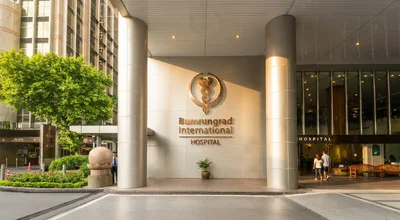
Bumrungrad International Hospital
Tertiary hospital with over 1,200 physicians treating 520,000+ international patients a year.
View hospital profile
Bangkok Hospital
BDMS flagship tertiary campus with standalone heart, cancer, and neuro-orthopaedic hospitals.
View hospital profile
MedPark Hospital
Purpose-built tertiary hospital opened in 2020, focused on complex cardiac, cancer, and transplant care.
View hospital profile
Tell Us What You Need. We Do the Rest.
Share what you're considering and we'll come back with surgeon options, pricing, and a clear plan.
- Real hospital pricing with zero markup
- Matched with a specialist experienced in your specific procedure
- Full coordination from consultation to recovery


Trusted by patients worldwide
The complete guide to Immunotherapy in Thailand
Everything below is for readers who want the full detail: costs broken down, types and techniques, recovery, risks and safety, and planning your trip.
Oncologists & Cancer Centres in Thailand
Immunotherapy requires oncologists with specific experience in checkpoint inhibitor management. Here is what our partner centres provide.
Leading Cancer Centres in Bangkok
Our partner hospitals run dedicated medical oncology departments with tumour profiling laboratories, infusion suites, and full emergency support. Leading JCI-accredited international hospitals in Bangkok have extensive experience delivering immunotherapy to international patients, with pharmacies that stock the full range of approved checkpoint inhibitors.
Experienced Medical Oncologists
Our partner oncologists hold board certification in medical oncology with subspecialty training in immunotherapy protocols. Many trained at international cancer centres and bring that experience to managing immune-related adverse events, the clinical skill that distinguishes good immunotherapy care from adequate care.
What to Look for in an Oncologist
Confirm board certification in medical oncology and specific experience with checkpoint inhibitors for your cancer type. Ask how they monitor for immune-related adverse events and what protocols they follow if complications arise. An oncologist who provides a written treatment plan and explains biomarker results clearly is meeting the standard you should expect.
Understanding Your Results
Immunotherapy response is measured objectively through imaging and biomarkers. Here is what treatment outcomes typically look like.
Typical Immunotherapy Results
Response rates vary by cancer type and biomarker status. In PD-L1-high non-small cell lung cancer, pembrolizumab can improve survival compared with chemotherapy, though not every patient responds.5 Advanced melanoma treated with combination checkpoint therapy can produce durable responses that continue long after treatment in some patients, though not everyone responds.4 Not every patient responds, which is why biomarker selection matters.
What Results Can You Expect?
Imaging assessment after every two to four cycles shows whether the tumour is responding. Durable responses lasting months to years are possible even after treatment stops. Pseudoprogression can occur, so early scans require careful interpretation by an experienced oncologist.
Immunotherapy Cost in Thailand
Average Cost of Immunotherapy
A single cycle of checkpoint inhibitor therapy in Thailand typically costs between $3,000 and $5,400, depending on the drug, dosing protocol, and whether combination therapy is used. This compares favourably to equivalent treatment in the US, UK, and Australia.
Cost Breakdown
The immunotherapy drug itself is the largest cost component. Oncologist consultation and treatment-planning fees cover clinical oversight. Infusion-suite charges cover administration and nursing supervision. Biomarker testing, blood monitoring, and coordinator support are included in the package.
What Affects the Price?
The specific drug and dosing weight are the main cost drivers. Combination regimens using two checkpoint inhibitors cost more per cycle. The number of cycles varies; some patients respond after four to six cycles, while others continue for up to two years.
Thailand vs International Price Comparison
Immunotherapy in Thailand costs 50 to 70 percent less than equivalent treatment in the US ($9,000–$18,000 per cycle), Australia (A$7,500–A$15,000), and UK (£6,600–£13,500). Over a multi-cycle course, the cumulative savings make treatment accessible to patients who face cost barriers at home.
Types of Immunotherapy
Checkpoint inhibitors are the most widely used form of cancer immunotherapy. The class of drug your oncologist recommends depends on your cancer type, biomarker profile, and whether combination treatment is appropriate.
PD-1 / PD-L1 Inhibitors
Block the PD-1 receptor on T-cells or PD-L1 on tumour cells, restoring the immune system's ability to detect and attack the cancer. The most widely prescribed checkpoint inhibitors with established efficacy across melanoma, lung, bladder, kidney, and head and neck cancers.
- Restore immune recognition of cancer cells
- Durable responses documented across multiple solid tumour types
- Administered as IV infusion every two to six weeks
- Best for: PD-L1-positive or MSI-high cancers where checkpoint blockade is indicated
CTLA-4 Inhibitors
Target an earlier checkpoint in T-cell activation, boosting immune response at a more upstream level. Particularly effective in advanced melanoma, both alone and in combination with PD-1 inhibitors. The immune activation is broader, which also means a higher side-effect profile that requires careful monitoring.
- Enhances early-stage T-cell activation and proliferation
- Proven survival benefit in advanced melanoma
- Higher immune-related adverse event rate than PD-1 agents alone
- Best for: advanced melanoma and combination protocols where dual blockade is indicated
Combination Checkpoint Therapy
Two agents targeting different immune checkpoints given together to produce a more powerful anti-tumour response. Combination regimens have improved outcomes in melanoma, kidney cancer, and certain lung cancers. The trade-off is closer monitoring, as immune-related side effects are more frequent and can be more severe.
- Dual checkpoint blockade for stronger immune activation
- Improved response rates compared with single-agent therapy
- Requires more intensive monitoring for immune-related events
- Best for: melanoma, renal cell carcinoma, and specific lung cancer subtypes
Immunotherapy Protocols & Delivery
Modern immunotherapy delivery involves more than the infusion itself. Here is how our partner centres manage the treatment process from biomarker testing through to response assessment.
Biomarker-Guided Selection
Comprehensive tumour profiling determines which patients are most likely to respond. PD-L1 immunohistochemistry, microsatellite instability testing, and tumour mutational burden analysis guide drug selection. This avoids exposing patients to treatment that is unlikely to work for their specific biology.
- PD-L1, MSI, and TMB testing guide treatment selection
- Genomic profiling identifies additional targetable pathways
- Multidisciplinary tumour board reviews all results before treatment
- Best for: ensuring the right drug for the right patient before committing to a course
Infusion & Monitoring Protocols
Each infusion is administered in a dedicated oncology suite with pre-medications and close nursing supervision. Post-infusion monitoring lasts at least one hour. Between cycles, blood tests screen for immune-related organ inflammation; thyroid, liver, and kidney function are checked routinely.
- Infusions administered in a supervised oncology suite
- Post-infusion monitoring for at least one hour after each session
- Regular blood work screens for immune-related adverse events
- Best for: maintaining safety throughout a multi-cycle treatment course
Immune-Related Adverse Event Management
Checkpoint inhibitors can trigger inflammation in healthy organs, a consequence of immune activation. Your oncology team follows established grading and management algorithms. Most events respond to corticosteroids when detected early. Severe events are managed with immunosuppressive therapy under close inpatient supervision.
- Standardised grading system for immune-related side effects
- Early detection through routine blood work at every cycle
- Corticosteroid protocols for prompt management
- Best for: ensuring side effects are caught early and managed effectively
Immunotherapy Recovery Timeline
Infusion Day
Each infusion takes 30 to 90 minutes, delivered in a comfortable outpatient setting. You are monitored for at least one hour afterwards for any immediate reactions. Most patients return to their accommodation the same day feeling largely normal.
Days 1–7
Mild fatigue is the most common early symptom. On single-agent PD-1/PD-L1 or CTLA-4 therapy most patients carry on with light daily activities between infusions. On combination checkpoint therapy the immune-related side-effect burden is substantially higher, so side effects appear earlier and more often and your team schedules closer review during this window. Blood tests and a clinical review check organ function and screen for emerging immune-related effects.
Weeks 2–6
Treatment cycles continue at intervals of two to six weeks depending on your protocol. Single-agent regimens usually allow normal light activity between cycles. Combination checkpoint therapy requires more restricted activity and more frequent blood work between cycles because severe immune-related events are more likely. Your oncologist tracks response through imaging and tumour markers and makes dose adjustments if side effects warrant it.
Ongoing Monitoring
After completing your treatment cycles in Thailand, your oncologist provides a comprehensive summary and monitoring plan for your home medical team. Remote consultations are available to review follow-up scans and guide any ongoing decisions.
Can You Travel Between Immunotherapy Cycles?
In many cases, yes. Cycle intervals of two to six weeks allow time for travel. Your oncologist advises based on your response and side-effect profile. Carrying a treatment summary and having blood work done locally between visits is recommended.
How Are Immune-Related Side Effects Managed?
Routine blood tests at every cycle screen for thyroid, liver, kidney, and adrenal inflammation. Skin rashes, colitis, and pneumonitis are monitored clinically. Most immune-related events are mild and respond well to corticosteroids when caught early. Severe events are managed under close medical supervision with immunosuppressive therapy.
When Will You Know If Treatment Is Working?
Response is assessed through imaging scans, typically CT or PET-CT, after every two to four cycles. Some patients experience pseudoprogression where tumours appear larger initially before shrinking. Your oncologist interprets scan results in context and explains what to expect at each review.
Risks and Safety of Immunotherapy
Immunotherapy has a different side-effect profile to chemotherapy. Because it activates the immune system broadly, inflammation can occur in healthy organs. Most events are manageable when detected early.
- Infusion reactions (fever, chills, flushing, or breathlessness during or shortly after the drip)
- Colitis (diarrhoea and bowel inflammation)
- Hepatitis (elevated liver enzymes)
- Thyroid dysfunction (hypo- or hyperthyroidism)
- Skin rash, itching, or dermatitis
- Pneumonitis (lung inflammation causing cough or breathlessness)1,2
- Fatigue, the most common reported side effect
- Hypophysitis (pituitary inflammation, more common with CTLA-4 agents)
- Adrenal insufficiency (uncommon but requires monitoring)
- Immune-mediated type 1 diabetes (uncommon but permanent, causing lifelong insulin dependence)
- Neurological events such as encephalitis, peripheral neuropathy, or Guillain-Barré syndrome (rare but serious, can develop weeks after an infusion)
- Myocarditis (rare but serious)3,1
Blood tests and clinical assessment before each cycle screen for immune-related adverse events. Your oncologist explains your individual risk profile before treatment begins and has management protocols ready for any events that arise.
Is Immunotherapy Safe in Thailand?
Yes. Immunotherapy at JCI-accredited hospitals in Thailand follows the same international protocols and monitoring standards as leading Western cancer centres. The drugs are identical, and the oncology teams have specific experience managing immune-related adverse events.
How to Reduce Immunotherapy Risks
Comprehensive biomarker testing before treatment ensures you receive the right drug. Routine blood work at every cycle catches organ inflammation early. Patients with pre-existing autoimmune conditions require careful assessment. Following your oncologist's monitoring schedule is the single most important safety measure.
When Should Treatment Be Paused or Stopped?
Grade 3 or 4 immune-related adverse events typically require a treatment pause and corticosteroid management. Your oncologist decides whether to resume, switch agents, or discontinue based on the severity and your overall response. These decisions follow established international oncology guidelines.
Planning Your Immunotherapy in Thailand
Immunotherapy involves multiple cycles over weeks to months. Some patients complete their full course in Thailand, while others split treatment between Thailand and home.
How Long to Stay in Thailand
Plan for 7 to 14 days per cycle, covering biomarker testing or review, pre-infusion blood work, the infusion, post-infusion monitoring, and a follow-up assessment. If completing a full course, stays of several months may be needed. Many patients return for cycles at intervals.
What's Included in Treatment
Your care coordinator handles all scheduling. The quote covers oncologist consultations, the immunotherapy drug, infusion-suite use, biomarker testing, blood monitoring, supportive medications, and coordinator support. Accommodation and flights are arranged separately.
Coordinating with Your Home Oncologist
We provide detailed treatment summaries, drug protocols, biomarker results, and monitoring plans for your home medical team. If further cycles are administered locally, your home oncologist can continue without interruption using our documentation. Remote consultations with your Thai oncologist are available.
Related Procedures
Other procedures that address similar goals or conditions, in case one of them is a closer fit for you.
Planning your treatment in Thailand
Independent guides to help you weigh the decision, before you commit to anything.
Common Questions About Immunotherapy
Everything you need to know before your treatment

Medical References
- Immune Checkpoint Inhibitors (National Cancer Institute)
- Checkpoint inhibitors (Cancer Research UK)
- What Causes Immunotherapy's Heart-Related Side Effects? (National Cancer Institute)
- Immunotherapy Drugs Shrink Brain Metastases from Melanoma (National Cancer Institute)
- Pembrolizumab for Non-Small Cell Lung Cancer Improves Survival (National Cancer Institute)
Keep researching with AI
Open this guide in your AI assistant to dig deeper and ask the questions it didn't answer.
Opens in a new tab with this guide already loaded.
Medical disclaimer: Content on this site is provided for informational purposes and should not be treated as medical advice. Outcomes, timelines, and eligibility differ from person to person. Consult a qualified medical professional before making any decisions about surgery or treatment.
Ready to Get Started?
Speak with our care coordinators for a free, no-obligation consultation and personalised quote.
Speak to Our Team