VATS Lobectomy in Thailand Your guide to cost, top specialists & hospitals
Removing a lobe of the lung is the same operation whether the chest is opened or entered through keyhole ports. What changes is how much of your recovery is spent getting over the access.
What Is a VATS Lobectomy?
Also known as: Keyhole Lung Cancer Surgery · Video-Assisted Thoracoscopic (VATS) Lobectomy
VATS lobectomy is keyhole chest surgery that removes one lobe of a lung through two or three small cuts between the ribs, guided by a camera rather than by opening the chest. The letters stand for video assisted thoracoscopic surgery. Each lung is divided into lobes, and taking out the lobe containing a tumour along with the nearby lymph nodes is the standard operation for early stage lung cancer that has not spread.1
It remains a major operation. It is done under general anaesthesia, usually takes two to four hours, and a drain stays in the chest for a few days afterwards. The keyhole route does not make the operation smaller, it makes the access smaller, which for most people means less pain and a shorter stay than an open incision.
Whether surgery is right at all depends on the stage of the cancer, where the tumour sits, and how well your lungs would manage without that lobe. Results vary considerably between people, and the plan is built around your scans and your breathing tests rather than the diagnosis on its own.
It can address a range of concerns, including:
Am I a Good Candidate for VATS Lobectomy?
Suitability rests on three separate questions, which are what stage the cancer is, where in the lung it sits, and whether your lungs could manage without that lobe. A yes to one is not a yes to all three.
Surgery is offered when the cancer looks confined enough for an operation to clear it.
Staged properly first: CT and PET-CT, and usually a lymph node biopsy, establish the stage before an operation is planned.
Confined to one lobe: Disease crossing lobes or into the other lung changes the operation or rules it out.
Nodes assessed: Lymph nodes in the centre of the chest are checked, since involvement there often shifts treatment.
The question is not only whether the tumour can come out, but whether you can spare the lobe it sits in.
Breathing tests done: Spirometry and gas transfer measurements predict what you would be left with.
Existing lung disease counts: Emphysema or chronic obstructive lung disease narrows the margin considerably.
Smaller operations exist: A segmentectomy or wedge resection may preserve function where a lobectomy would not.
A lobectomy is a demanding anaesthetic as well as a demanding operation.
Heart assessed: Cardiac fitness is checked before a one lung anaesthetic is planned.
Smoking stopped: Stopping before surgery measurably lowers the chance of a chest complication, even by a few weeks.
Other conditions managed: Diabetes, anaemia and nutrition are optimised beforehand rather than during recovery.
Surgery is one part of a treatment plan and it should be decided as part of one.
Multidisciplinary decision: A surgeon, oncologist, radiologist and pathologist should have considered your case together.
Alternatives discussed: Precision radiotherapy is a genuine option for some early tumours, not only a fallback.
What follows agreed: Whether chemotherapy is likely afterwards should be part of the conversation before, not a surprise later.
Who is not suitable for vats lobectomy?
- Cancer that has spread beyond the lung and its local lymph nodes
- Lung function too limited to tolerate losing a lobe
- Heart or general health that makes a one lung anaesthetic unsafe
- A tumour whose position means no operation short of a pneumonectomy would clear it
- Staging investigations not yet complete, so the operation cannot be planned properly
Pricing
How Much Will VATS Lobectomy Cost in Thailand?
What vats lobectomy costs at accredited hospitals in Thailand, and what your final quote depends on.
Get your exact price
Tell us what you're considering and we'll send a personalised quote from accredited hospitals within 24 hours.
Get my free quoteTypical prices in Thailand
Typical ranges based on recent hospital quotes. Your exact price depends on the hospital and how complex your case is, and is confirmed at your teleconsultation.
VATS Lobectomy
One lobe of the lung, along with the lymph nodes that drain it, is removed through small incisions between the ribs using a camera rather than an opened chest.
| VATS lobectomy 4 nights The cardiothoracic centre's package, four nights in hospital | $21,000 ฿713,000 |
| Robot-assisted (RATS) lobectomy 3 nights Priced under the respiratory surgery list as advanced robot-assisted thoracic surgery, three nights | $24,400 ฿828,000 |
Typically not included
- Intensive care beyond the nights stated in the package
- Chemotherapy or radiotherapy before or after surgery, and the staging scans and biopsy that led to the diagnosis
- Pathology and pathologist charges on the removed lobe and lymph nodes, which is how the stage is confirmed rather than an optional extra
- Pulmonary rehabilitation, since what is included is a pre-operative assessment rather than a course of rehab
- Pre-operative medical clearance, specialist consultant fees, and laboratory tests and imaging outside the package
Get your exact price
Tell us what you're considering and we'll send a personalised quote from accredited hospitals within 24 hours.
Hospitals Trusted for VATS Lobectomy
From internationally accredited flagships to dedicated specialist hospitals, these are the kinds of facilities where international patients have this procedure.
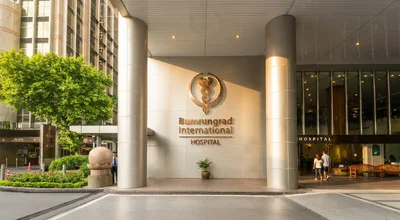
Bumrungrad International Hospital
Tertiary hospital with over 1,200 physicians treating 520,000+ international patients a year.
View hospital profile
Bangkok Hospital
BDMS flagship tertiary campus with standalone heart, cancer, and neuro-orthopaedic hospitals.
View hospital profile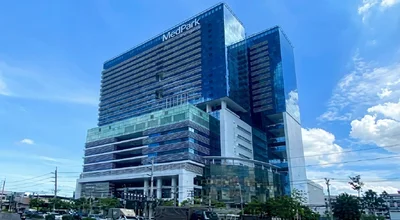
MedPark Hospital
Purpose-built tertiary hospital opened in 2020, focused on complex cardiac, cancer, and transplant care.
View hospital profile
Tell Us What You Need. We Do the Rest.
Share what you're considering and we'll come back with surgeon options, pricing, and a clear plan.
- Real hospital pricing with zero markup
- Matched with a specialist experienced in your specific procedure
- Full coordination from consultation to recovery


Trusted by patients worldwide
The complete guide to VATS Lobectomy in Thailand
Everything below is for readers who want the full detail: costs broken down, types and techniques, recovery, risks and safety, and planning your trip.
Thoracic Surgeons and Hospitals in Thailand
Lobectomy is a thoracic operation, not a general surgical one, and the distinction between a surgeon who does it weekly and one who does it occasionally is the single most useful thing to check.
What a Thoracic Programme Involves
A unit set up for lung cancer surgery has thoracic anaesthetists who do one lung ventilation routinely, an intensive care unit for the small number of patients who need it, on-site pathology so the lobe and nodes are reported without delay, and physiotherapists who work with chest patients daily. Our partner hospitals in Bangkok run thoracic services of this kind rather than treating lobectomy as an occasional case.
Experience That Matters Here
Ask how many lobectomies the surgeon performs a year and what proportion are completed thoracoscopically. Ask about the conversion rate to open surgery, and treat a candid answer as a good sign rather than a warning. Board certification in cardiothoracic or thoracic surgery is the relevant credential, and a robotic programme is only an advantage where the surgeon uses it regularly.
Questions Worth Asking Before You Commit
Ask what the plan is if the operation has to be converted to an open incision, because it is a real possibility on any keyhole lobectomy. Ask how long the pathology takes and who will explain it to you. Ask what happens if the nodes come back positive, since that answer tells you whether the team is thinking about your whole treatment or only about the operation.
Understanding Your Results
The operation removes the tumour, but the result that shapes what happens next arrives a week or two later in a pathology report.
What the Surgery Achieves
A successful lobectomy removes the tumour with a margin of healthy tissue and takes the lymph nodes that drain that part of the lung. For early stage non-small cell lung cancer that has not spread, this offers the best prospect of long term control that current treatment can provide. Outcomes vary considerably with stage, cancer type and general health, and no operation can promise an individual result.
What the Pathology Report Tells You
The report confirms the exact type of cancer, whether the margins around the tumour are clear, and whether any of the removed lymph nodes contain disease. That last point often matters more than anything else, because node involvement changes the stage and frequently leads to chemotherapy afterwards. Molecular testing on the tissue may also guide targeted or immune treatment.
Living With One Fewer Lobe
The remaining lung expands to fill the space over the following months and most people find everyday breathlessness settles. Stairs and hills tend to be where you notice it longest. How much function you keep depends heavily on what you had before surgery, so someone with healthy lungs generally adapts more completely than someone with existing emphysema.
VATS Lobectomy Cost in Thailand
What the Two Packages Cost
Our partner hospital quotes ฿713,000 for VATS lobectomy at its cardiothoracic centre, with four nights in hospital. Robot-assisted lobectomy sits separately on the respiratory surgery list at ฿828,000 with three nights. These are package prices for those two operations at one hospital group. They are not a Thai national price, and figures at other Thai hospitals differ in both directions.
What the Package Does Not Cover
The surgical package excludes pre-operative medical clearance, specialist consultant fees, implants, pathology and pathologist charges, laboratory tests and imaging, and intensive care beyond the nights stated. On this operation the pathology exclusion is the one to plan for, because examining the lobe and the lymph nodes is not an optional extra. It is how the stage is confirmed and how the rest of your treatment is decided.
What Sits Outside Any Package
Staging scans, the biopsy that made the diagnosis, and any chemotherapy or radiotherapy before or after surgery are separate. So is pulmonary rehabilitation. The hospital offers a free pre-operative rehabilitation assessment, which is an assessment rather than a course of rehabilitation, and it is worth being clear about that distinction when you are budgeting. Flights, accommodation and travel insurance are yours to arrange.
How That Compares Internationally
Private lobectomy in the United States commonly runs from around $40,000 to $85,000, in Australia from roughly A$35,000 to A$70,000, and in the United Kingdom from about £22,000 to £45,000. In most of those countries lung cancer surgery is delivered through the public or insured system rather than paid for privately, so the comparison is more useful for understanding the scale of the operation than as a like for like shopping decision.
Surgery, Radiotherapy or Systemic Treatment
Surgery is not automatically the treatment for early stage lung cancer, and the main alternative is a form of radiotherapy that delivers a high dose very precisely over a small number of sessions. It is used where lung function or general health makes an operation too risky, and increasingly it is discussed alongside surgery rather than only after surgery is ruled out. It avoids an anaesthetic, a drain and a recovery entirely. What it does not do is give a pathologist a lobe and a set of lymph nodes to examine, so the true stage is never confirmed the way it is after an operation.
For cancer that has already spread beyond the lung, or into lymph nodes in the middle of the chest, systemic treatment leads instead. Chemotherapy, targeted drugs and immunotherapy are chosen on the type of cancer and on the mutations found in the tissue, and surgery may follow, precede or play no part. Some people have chemotherapy before an operation to shrink the tumour, and some have it afterwards because the node pathology showed more disease than the scans did.
None of this is decided by a single doctor. It is a multidisciplinary decision involving a thoracic surgeon, an oncologist, a radiologist and a pathologist, made on your staging scans and your lung function tests. If you are being offered an operation without that discussion having happened, ask when it did or when it will.
Types of Lung Cancer Surgery
How much lung comes out is decided by where the tumour sits, how big it is and your general health, not by preference.2 Lobectomy sits in the middle of a range that runs from a small wedge to an entire lung.
Lobectomy
Removal of one whole lobe of the lung, along with the lymph nodes that drain it. The right lung has three lobes and the left has two, so a lobectomy removes a defined portion rather than an arbitrary piece. It is the standard operation for early stage non-small cell lung cancer where the patient can tolerate it.3
- Takes the tumour with a margin of healthy tissue around it
- Removes the draining lymph nodes so the stage can be confirmed by a pathologist
- Most people manage well on the remaining lobes over time
- Best for: early stage cancer confined to one lobe in a patient with adequate lung function
Segmentectomy or Wedge Resection
Removal of a segment of a lobe, or a wedge of tissue around the tumour, leaving the rest of the lobe in place. It preserves more lung, which matters when breathing reserve is limited, and has become more common for very small peripheral tumours.
- Preserves more lung tissue than a lobectomy does
- Used for small peripheral tumours or where lung function is borderline
- Margins and lymph node sampling still determine whether it was enough
- Best for: small tumours, or patients whose lungs could not spare a whole lobe
Pneumonectomy
Removal of an entire lung. It is reserved for tumours that sit centrally or cross between lobes in a way that no lesser operation can clear. Living with one lung is manageable for many people but it is a substantial loss of reserve and the assessment before it is correspondingly thorough.
- Reserved for central tumours that a lobectomy cannot clear
- Requires careful assessment of heart and lung reserve beforehand
- Recovery is longer and breathlessness on exertion is more likely to persist
- Why it matters: it is the operation a lobectomy is designed to avoid where possible
Sleeve Resection
A lobe is removed along with a section of the airway it connects to, and the remaining airway is rejoined. It is a way of clearing a tumour at the origin of a lobe without taking the whole lung, so it preserves function that a pneumonectomy would sacrifice.
- Preserves lung that would otherwise be removed with a pneumonectomy
- Needs an experienced thoracic surgeon and a well planned airway repair
- Often performed open, though experienced centres do it thoracoscopically
- Why it matters: it can turn a pneumonectomy into a lobectomy for the right anatomy
Keyhole, Robotic and Open Approaches
The approach is about access, not about how much cancer is removed. All three routes are aiming at the same operation and the same margins.
VATS (Video-Assisted Thoracoscopic Surgery)
Two or three small incisions are made between the ribs. A camera goes through one and instruments through the others, and the surgeon works from a screen. The ribs are not spread, which is where much of the pain after an open thoracotomy comes from. Most people are up and walking the day after surgery.
- No rib spreading, which is the main reason pain is lower than after an open incision
- Shorter hospital stay for most patients than open surgery
- Chest drain usually removed within a few days
- Best for: early stage tumours in the outer part of the lung with no dense adhesions
Robot-Assisted Thoracic Surgery (RATS)
The same keyhole operation performed with instruments mounted on a robotic platform that the surgeon controls from a console. The instruments articulate more freely than rigid thoracoscopic tools and the view is three dimensional, which some surgeons find helps with lymph node dissection in awkward corners.
- Wristed instruments and a three dimensional view inside the chest
- Priced on the respiratory surgery list with a three night stay
- Costs more than standard VATS, and the surgeon's experience still matters most
- Best for: centres and surgeons with an established robotic thoracic programme
Open Thoracotomy
A single longer incision in the side of the chest, with the ribs spread to give direct access. It is still the right choice for large or central tumours, for extensive adhesions, and whenever a keyhole operation needs converting partway through. Conversion is a judgement in favour of safety rather than a failure.
- Direct access and direct handling of the lung and its vessels
- Necessary for large, central or complex tumours
- More postoperative pain and a longer stay than a keyhole approach
- Why it matters: every keyhole lobectomy is consented with conversion as a possibility
Lymph Node Dissection
Whatever the approach, the lymph nodes in the centre of the chest are sampled or removed alongside the lobe. This is not an optional extra. It is how the true stage of the cancer is established, and the pathology result on those nodes often decides whether chemotherapy follows.
- Establishes the real stage, which imaging can only estimate
- The result frequently determines whether treatment continues after surgery
- Performed through the same keyhole ports as the lobectomy
- Why it matters: the node result is often more consequential than the operation itself
Recovery After VATS Lobectomy
Day 1
You wake with a drain in the chest to remove air and fluid while the remaining lung expands to fill the space. Pain relief is given regularly rather than on request, because breathing deeply is the priority and pain is what stops people doing it. A physiotherapist starts breathing exercises and you are helped to sit out of bed.
Days 2–4
The drain comes out once the air leak has stopped and the fluid has settled, usually within two to four days. Walking distance increases each day and the breathing exercises continue several times an hour. A chest X-ray confirms the lung has expanded. Most people are discharged from hospital at this point on oral pain relief.
Weeks 1–3
Fatigue is the dominant symptom and it is easy to underestimate. The wounds are healing, the chest wall is sore, and walking a little further each day is the useful work. Avoid lifting anything heavy. The pathology report on the lobe and lymph nodes usually comes back during this period and the oncology plan follows from it.
Weeks 4–8
Breathlessness on stairs and hills continues to improve as the remaining lung takes over. Most people return to desk work somewhere in this window and to more physical work later. Some nerve pain or numbness around the incisions can persist for months. Pulmonary rehabilitation, where it is available at home, is one of the more useful things you can do for stamina.
When Can You Fly After a Lobectomy?
Longer than after most operations. Cabin pressure at altitude expands any air remaining in the chest, so flying too soon after lung surgery carries a real risk. Most surgeons want three to four weeks and a chest X-ray confirming the lung is fully expanded before clearing a long haul flight, and some want longer. The decision is your surgeon's and it is not one to press against.
When Can You Return to Work and Exercise?
Walking starts in hospital and increases daily. Desk work is realistic for many people at four to six weeks, physical work later, and both depend more on fatigue than on the wounds. Avoid heavy lifting for six weeks. Breathlessness on hills and stairs improves over a few months as the remaining lung compensates, and results vary with how much reserve you had beforehand.
What Happens After the Pathology Comes Back
The report on the lobe and lymph nodes usually takes one to two weeks and it is the document that shapes what follows. It confirms the type of cancer, whether the margins are clear, and whether the nodes contain disease. Chemotherapy or further treatment may be recommended on the strength of it, and that treatment is generally continued with your own oncology team at home.
Anaesthesia for VATS Lobectomy
A lobectomy is done under general anaesthesia with a specific twist. The anaesthetist places a tube that allows one lung to be deflated while the other keeps breathing for you, because the surgeon needs the operated lung still and collapsed to work around it. This is called one lung ventilation and it is routine in thoracic surgery, though it is one of the reasons an experienced thoracic anaesthetist matters here.
Pain control is usually planned before you go to sleep rather than after you wake. Many centres place an epidural or a nerve block in the chest wall, which numbs the area around the incisions and the drain site for the first days. Good pain relief is not simply about comfort. It is what allows you to take deep breaths and cough properly, which is how the remaining lung expands and how chest infections are avoided.
A pre-operative assessment covers your breathing tests, heart, blood work and current medications, and it is more detailed than for most operations because the anaesthetic itself is more demanding. Waking is usually straightforward. Expect a sore throat, a sore chest wall, and a drain that is uncomfortable rather than painful. Say plainly if the pain relief is not working, because on this operation that is a clinical problem rather than a matter of stoicism.
Risks and Safety of VATS Lobectomy
This is major chest surgery for a serious disease, and the risks reflect that. They are manageable in an experienced thoracic unit, but they are not small, and understanding them is part of making the decision properly.
- Prolonged air leak from the cut lung surface, the most common reason a stay is extended
- Chest infection or pneumonia, particularly where deep breathing is limited by pain
- Bleeding requiring transfusion or a return to theatre
- Atrial fibrillation, which is common after chest surgery and usually temporary
- Conversion from keyhole to an open incision partway through the operation
- Persistent nerve pain or numbness around the incision sites
- Blood clots in the leg or lung, reduced by early walking and preventive medication
- Breathlessness that does not fully resolve, more likely where lung reserve was already limited
Two things reduce these risks more than anything else, and both are partly yours. Stopping smoking before surgery measurably lowers the chance of a chest complication, even when the gap is only a few weeks. Doing the breathing exercises properly in the days afterwards, which requires saying when the pain relief is inadequate, is what keeps the remaining lung expanded.
Is Lung Cancer Surgery Safe to Have in Thailand?
Thailand's JCI-accredited hospitals run thoracic surgical services with intensive care, on-site pathology and the same thoracoscopic and robotic platforms used in Europe and North America. What to establish for yourself is whether the unit does thoracic surgery regularly rather than occasionally, since lobectomy outcomes track closely with how often a team performs the operation.
How to Reduce Your Risk
Stop smoking as far ahead of surgery as you can manage, since the benefit begins within weeks. Bring your existing scans and lung function tests so the assessment starts from real data. Practise the breathing exercises before the operation rather than learning them afterwards. Move early and often once you are up, because walking is what prevents both clots and chest infections.
Getting a Second Opinion on the Plan
Lung cancer treatment is a multidisciplinary decision and it is entirely reasonable to want the plan reviewed. Ask whether your case has been discussed by a team including an oncologist and a radiologist rather than by the surgeon alone, and ask what the alternative to surgery would be in your case. A team confident in its plan will not object to the question.
Planning Your Trip to Thailand for Lung Surgery
This is the longest stay of any procedure in this section, and almost all of the extra time is about the flight home rather than the operation.
How Long to Stay in Thailand
Plan for three to four weeks at minimum. The first days cover assessment, lung function testing and any repeat imaging, then the operation and three or four nights in hospital. The remaining time is recovery and the wait until your surgeon is willing to clear you for a long flight, which is the part people underestimate. The pathology report usually arrives within that window.
What to Bring With You
Bring your CT and PET-CT images rather than only the reports, your biopsy result and any molecular testing already done, your lung function tests, and a full medication list. If a multidisciplinary team at home has already discussed your case, bring that record too. Anything that saves repeating an investigation shortens your stay and reduces what you pay outside the package.
Travelling With Someone
Bring someone if at all possible. This is a major operation followed by weeks of fatigue in a country you may not know, and there is a pathology result to receive partway through it. Practical help matters, and so does having another person in the room when the plan is explained. Your care coordinator arranges scheduling, hospital logistics and follow-up across the stay.
Related Procedures
Other procedures that address similar goals or conditions, in case one of them is a closer fit for you.
Planning your treatment in Thailand
Independent guides to help you weigh the decision, before you commit to anything.
Common Questions About VATS Lobectomy
Everything you need to know before your procedure

Medical References
Keep researching with AI
Open this guide in your AI assistant to dig deeper and ask the questions it didn't answer.
Opens in a new tab with this guide already loaded.
Medical disclaimer: Content on this site is provided for informational purposes and should not be treated as medical advice. Outcomes, timelines, and eligibility differ from person to person. Consult a qualified medical professional before making any decisions about surgery or treatment.
Ready to Get Started?
Speak with our care coordinators for a free, no-obligation consultation and personalised quote.
Speak to Our Team