Bypass Surgery in Thailand Your guide to cost, top specialists & hospitals
When the arteries narrow, the heart adapts. Bypass surgery gives it the blood supply it was always meant to have.
What Is Bypass Surgery?
Also known as: Heart Bypass · Coronary Artery Bypass Grafting (CABG)
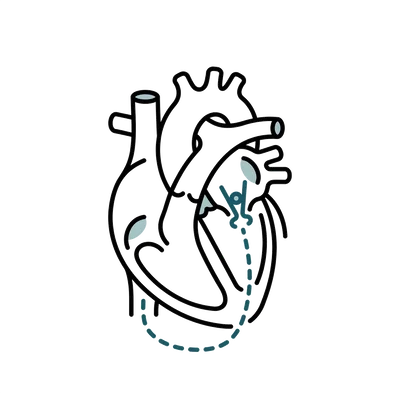
Bypass surgery is heart surgery that restores blood flow to the heart muscle by routing it around blocked coronary arteries. The surgeon grafts a healthy vessel, usually the internal mammary artery from the chest wall or the saphenous vein from the leg, past the blockage so blood reaches the heart again. Known medically as coronary artery bypass grafting, or CABG, it usually takes three to six hours under general anaesthesia, and for most people it brings lasting relief from angina.
The number of grafts depends on how many arteries are narrowed, which your angiogram shows before anything is planned. A triple bypass means three grafts in one operation, not three surgeries. It is open-heart surgery, so a big step, but also a routinely performed one.
Bypass gives back what angina takes: walking further, climbing stairs without chest pain, sleeping through the night. The grafts work hardest when you support them, so smoking has to stop and lifelong medication matters. Your team will talk all of this through honestly at your consultation.
It can address a range of concerns, including:
Am I a Good Candidate for Bypass Surgery?
Suitability for bypass surgery rests on your angiogram, your fitness for major cardiac surgery, and your willingness to rebuild afterwards.
Surgeons do not book CABG on symptoms alone; the operation is planned from what the imaging confirms.
Angiography confirmed: Multiple coronary blockages must be documented on angiography before grafting is considered. This is the baseline, not a formality.
Multi-vessel disease: Bypass shows its survival advantage in three-vessel and left main disease. An isolated single blockage is usually better treated with a stent.
Imaging to hand: Recent angiograms and echocardiography let the surgical team plan graft numbers and conduit choice before you travel.
Cardiac surgeons look for disease that medication has stopped controlling, not just disease that exists.
Angina despite medication: Chest pain that persists on an optimised tablet regime is the classic surgical indication.
Reduced heart function: Chronic ischaemia that is measurably weakening the heart muscle strengthens the case for revascularisation.
Disease after a heart attack: Ongoing multi-vessel coronary disease following an infarct often favours grafting over further stenting.
This is major surgery under general anaesthesia, so the assessment checks that your whole body can carry it.
Lungs strong enough: Severe chronic lung disease can make weaning from the ventilator difficult and needs respiratory review before a date is set.
Kidneys optimised: Contrast dye and cardiopulmonary bypass both stress the kidneys, so function is checked and corrected beforehand.
No unresolved stroke risk: A recent stroke or significant carotid disease requires neurology and vascular clearance first.
Medication plan agreed: Blood thinners need a cessation and bridging plan from your cardiologist before surgery.
What you do in the weeks around the operation shapes the result as much as the grafts themselves.
Smoke-free for four weeks: Surgeons expect smoking stopped at least four weeks before surgery; it materially cuts wound and respiratory complications.
Blood sugar controlled: Uncontrolled glucose raises infection rates, so diabetic patients are optimised before theatre.
Committed to rehabilitation: Structured cardiac rehab, lifelong aspirin, and statins are what protect the grafts. Candidates need to be prepared for that follow-through.
Who is not suitable for bypass surgery?
- Smoking with no commitment to stop at least four weeks before surgery
- Severe chronic lung disease until respiratory and anaesthetic review is complete
- Recent stroke or significant carotid disease without neurology and vascular clearance
- Kidney function not yet optimised for contrast and cardiopulmonary bypass
- Dual antiplatelet therapy with no agreed cessation and bridging plan
- Single-vessel disease usually better treated with a stent
- Active systemic infection or sepsis, until treated
Pricing
How Much Will Bypass Surgery Cost in Thailand?
What bypass surgery costs at accredited hospitals in Thailand, and what your final quote depends on.
Get your exact price
Tell us what you're considering and we'll send a personalised quote from accredited hospitals within 24 hours.
Get my free quoteTypical prices in Thailand
Typical ranges based on recent hospital quotes. Your exact price depends on the hospital and how complex your case is, and is confirmed at your teleconsultation.
Bypass Surgery
Blocked coronary arteries are bypassed by grafting a healthy vessel past the narrowing so blood reaches the heart again. The two levels reflect how demanding the case is graded.
| Off-pump or on-pump CABG, level 1 8 nights The standard published tier, with intermediate and critical care unit time inside the price | $34,500 ฿1,173,000 |
| Off-pump or on-pump CABG, level 2 8 nights The higher tier, for cases the surgical team grades as more demanding | $42,300 ฿1,437,500 |
Typically not included
- Intensive care days beyond the eight nights stated, which is the one overrun on this operation large enough to move the total
- Devices or implants not specified in the package
- Cardiac rehabilitation after discharge, which is a programme in its own right rather than part of the surgical fee
- Consultation or treatment by a specialist outside the cardiac team
- Pre-operative medical clearance and pre-anaesthetic assessment
- Medication prescribed to take home after discharge
Get your exact price
Tell us what you're considering and we'll send a personalised quote from accredited hospitals within 24 hours.
Hospitals Trusted for Bypass Surgery
From internationally accredited flagships to dedicated specialist hospitals, these are the kinds of facilities where international patients have this procedure.

Bangkok Hospital
BDMS flagship tertiary campus with standalone heart, cancer, and neuro-orthopaedic hospitals.
View hospital profile
Bumrungrad International Hospital
Tertiary hospital with over 1,200 physicians treating 520,000+ international patients a year.
View hospital profile
MedPark Hospital
Purpose-built tertiary hospital opened in 2020, focused on complex cardiac, cancer, and transplant care.
View hospital profile
Tell Us What You Need. We Do the Rest.
Share what you're considering and we'll come back with surgeon options, pricing, and a clear plan.
- Real hospital pricing with zero markup
- Matched with a specialist experienced in your specific procedure
- Full coordination from consultation to recovery


Trusted by patients worldwide
The complete guide to Bypass Surgery in Thailand
Everything below is for readers who want the full detail: costs broken down, types and techniques, recovery, risks and safety, and planning your trip.
Bypass Surgeons & Hospitals in Thailand
The hospital and surgeon you choose are the two decisions that matter most. Here is what to look for and what our partner centres offer.
Leading Cardiac Hospitals in Bangkok
Our partner hospitals are JCI-accredited and rank among Southeast Asia's highest-volume cardiac centres. They maintain dedicated cardiac surgery departments with full-time teams, not visiting consultants. Facilities include hybrid catheterisation-operating theatres, cardiac ICUs with one-to-one nursing ratios, and on-site cardiac rehabilitation units. These are not boutique clinics; they handle complications in-house because they have the infrastructure for it.
Experienced Cardiac Surgeons
Our partner cardiothoracic surgeons are board-certified by the Royal College of Surgeons of Thailand and hold subspecialty qualifications in cardiac surgery. Several trained internationally, with fellowships in the US, UK, Germany, or Japan, before returning to Thailand where the surgical volume is substantially higher. That combination of international training and sustained operative volume is a significant factor in Thailand's cardiac surgery outcomes.
What to Look for in a Cardiac Surgeon
Board certification by the Thai Board of Cardiothoracic Surgery is the baseline. Beyond that, ask about CABG-specific volume: how many bypass operations the surgeon performs per year. Request to see outcome data if available. Pay attention to how the surgeon communicates during your consultation. A good cardiac surgeon explains the plan clearly, discusses risks without minimising them, and answers questions directly rather than deferring everything to brochures or coordinators.
Understanding Your Results
Bypass surgery produces measurable, lasting improvements in cardiac function and symptom relief. Here is what the evidence shows and what you should expect.
Typical Bypass Surgery Outcomes
The primary outcome is resolution or significant reduction of angina.2 Most patients notice improved exercise capacity within weeks as the heart receives better blood supply through the new grafts. Echocardiography typically shows improved wall motion in previously ischaemic segments. Long-term studies confirm that CABG provides superior symptom relief and survival benefit over medical therapy alone for patients with multi-vessel coronary disease.
What Results Can You Expect?
Expect a substantial improvement in daily function: walking further, climbing stairs without chest pain, and sleeping without being woken by angina. The internal mammary graft stays open and works well for many years.3 Vein grafts are reliable but have a higher attrition rate beyond five years. Long-term outcome depends heavily on medication adherence, smoking cessation, and cardiac rehabilitation. The surgery buys time and function, but lifestyle and medication are what protect the investment.
Bypass Surgery Cost in Thailand
What the Published Package Covers
We hold fly-in bypass package rates at our partner hospital's dedicated heart centre of ฿1,173,000 at level 1 and ฿1,437,500 at level 2, both valid to 31 December 2026 and both covering eight nights in hospital. The cardiac packages are more generous than the surgical ones in one specific way, which is that intermediate critical care and critical care unit time are named as included rather than billed if you use them. On an operation where the first days are spent in intensive care, that is the largest single thing a package can absorb.
What Sits Outside the Package
Pre-operative medical clearance and the pre-anaesthetic assessment are not in the price, which matters here because the workup before bypass is substantial. A consultation with a specialist outside the cardiac team is billed separately, as are devices not named in the package and any intensive care days beyond the eight nights. Medication you take home after discharge is yours. Flights, accommodation and travel insurance sit outside entirely. Ask for the exclusions in writing before you travel, because a package price only helps you plan if you know its edges.
What Actually Moves the Total
Less than you would expect, which is the point of a package. The two published figures differ by ฿264,500, and the level is assigned by the surgical team from your angiogram rather than by the technique used, since off-pump and on-pump grafting sit inside the same figure. What changes a real quote is found mostly before theatre rather than during it, in what the pre-operative workup turns up and in whether anything needs treating before you are fit for surgery.
How That Compares Internationally
Level 1 works out at roughly $34,500 and level 2 at roughly $42,300. Private bypass in the United States commonly runs from around $36,000 to $72,000, in Australia from about A$30,000 to A$60,000, and in the United Kingdom from roughly £26,400 to £54,000, though in the UK and Australia most bypass grafting happens inside the public system rather than privately. This is one hospital's published rate rather than a Thai national price, and figures at other Thai hospitals differ in both directions.
Bypass Surgery vs Stents (Angioplasty)
The main alternative to bypass is a coronary stent, placed during angioplasty (PCI). A cardiologist threads a catheter to the narrowed artery, inflates a small balloon, and leaves a drug-eluting stent to hold the vessel open. It needs no chest incision, is usually done under local anaesthetic with sedation, and recovery is measured in days rather than weeks. For a single blockage, or for someone too frail for major surgery, it is often the right call. Optimal medical therapy alone, the tablets that control cholesterol, blood pressure, and clotting, also has a real role and is part of treatment whichever route you take.
The limits show up in more extensive disease. For three-vessel disease, left main disease, or coronary disease alongside diabetes, large trials have consistently found bypass gives more complete revascularisation and a better long-term survival and symptom result than stenting. Stents treat the segments they reach; bypass reroutes blood around them, and arterial grafts in particular stay open and keep working for many years. Stents can also need repeat procedures more often as disease progresses.
This is why the decision is made from your angiogram rather than your preference, usually by a cardiologist and surgeon together. Where the imaging shows isolated or limited disease, a stent may well be the better-matched option, and that is a conversation for your cardiologist. Where it shows the multi-vessel or left main pattern that this page describes, bypass is the indicated route for a lasting result, and the rest of this page covers what that involves.
Types of Bypass Surgery
Not all CABG is the same. The approach depends on how many vessels are blocked, your cardiac function, and whether additional procedures are needed at the same time.
On-Pump CABG
The heart is stopped and a heart-lung machine takes over circulation while the surgeon works on a still, bloodless field. This is the standard for multi-vessel grafting and complex cases where simultaneous valve work is needed.
- Decades of outcome data supporting its safety profile
- Optimal visibility for complex multi-vessel grafting
- Allows combined valve repair or replacement in the same session
- Best for: patients needing three or more grafts, or combined cardiac procedures
Off-Pump (Beating Heart) CABG
Surgery on the beating heart without cardiopulmonary bypass. A mechanical stabiliser holds the target area steady while each graft is constructed, avoiding the inflammatory effects of the bypass machine.
- Avoids the systemic inflammatory response of cardiopulmonary bypass
- May reduce stroke risk and kidney stress in selected patients
- Often allows shorter ICU stays and earlier discharge
- Best for: patients with significant kidney disease or calcified aorta
Minimally Invasive CABG (MIDCAB)
A smaller incision between the ribs provides access without full sternotomy. The left internal mammary artery is grafted to the blocked vessel while the heart beats, typically suited to single-vessel disease of the LAD.
- Smaller incision with reduced surgical trauma and blood loss
- Faster sternal recovery since the breastbone is not divided
- Shorter hospital stay compared to conventional open CABG
- Best for: isolated LAD disease in patients who qualify anatomically
Hybrid Coronary Revascularisation
A planned combination of two treatments rather than one operation. The surgeon places a minimally invasive internal mammary graft to the most important vessel, the LAD, while a cardiologist treats the remaining blockages with stents, often in a staged sequence. It pairs the durability of an arterial graft on the key artery with the lower invasiveness of stenting elsewhere.
- Combines a durable LIMA-to-LAD graft with stenting of secondary vessels
- Avoids full sternotomy while still protecting the most critical artery
- Requires a hybrid theatre and close cardiology and surgical coordination
- Best for: selected multi-vessel disease where the LAD warrants an arterial graft
Bypass Surgery Techniques
Technique is driven by your coronary anatomy and what the imaging shows. Here is what Thailand's cardiac centres use and when each approach makes sense.
Arterial vs Vein Grafts
Arterial grafts, particularly the internal mammary artery, stay open and work well for many years. Vein grafts are reliable but decline faster. Most surgeons use at least one arterial graft for the most critical vessel and supplement with vein grafts where needed.
- Internal mammary artery: gold-standard graft with the best long-term data
- Saphenous vein: readily available, suitable for supplementary grafts
- Radial artery: another arterial option with good intermediate-term results
- Best for: arterial grafts suit the LAD; vein grafts work well for secondary vessels
Total Arterial Revascularisation
Uses only arterial conduits, bilateral internal mammary arteries and/or the radial artery, eliminating vein grafts entirely. This approach maximises long-term graft patency but is technically more demanding and adds operative time.
- Superior long-term patency compared to mixed arterial-venous strategies
- Avoids the higher attrition rate seen in vein grafts after five years
- Requires a surgeon experienced in bilateral mammary harvesting
- Best for: younger patients with good life expectancy who benefit from lasting grafts
Robotic-Assisted Harvesting
The internal mammary artery can be harvested using robotic instruments through small port incisions, reducing chest wall trauma. The actual grafting is still performed through a mini-thoracotomy or sternotomy, but the harvest itself is less invasive.
- Reduced chest wall trauma during mammary artery harvesting
- Available at Thailand's leading cardiac centres with robotic capability
- Smaller incisions and potentially less post-operative pain
- Best for: patients undergoing MIDCAB or hybrid revascularisation approaches
Bypass Surgery Recovery Timeline
Days 1–3
ICU monitoring with continuous telemetry. The ventilator is removed within hours for most patients. Chest drains and a urinary catheter are in place initially. The physiotherapy team gets you sitting upright and taking first steps within 24–48 hours, earlier than most patients expect.
Days 4–7
Transfer to the cardiac ward. Walking distances increase daily, supervised by physiotherapy. Chest drains are removed, wound care continues, and structured breathing exercises help prevent chest infections. Pain transitions from intravenous to oral medication.
Weeks 2–4
Light daily activity at your recovery accommodation. Short walks, stair practice, and gentle stretching. Formal cardiac rehabilitation begins with supervised exercise and dietary guidance. Sternal precautions remain in place: no heavy lifting, no driving.
Weeks 6–12
Progressive return to normal activity including driving and desk work. Cardiac rehab continues with graduated exercise targets. Long-term medications (aspirin, statins, and blood pressure drugs) are reviewed and optimised before your final discharge.
When Can You Fly After Bypass Surgery?
Most patients are cleared to fly 14–21 days after surgery, once sternal healing is progressing well and cardiac function is stable on echocardiography. Your surgical team issues a fitness-to-fly letter. Cabin pressure at cruising altitude is safe at this stage. We recommend an aisle seat, compression stockings, and regular leg movement during the flight to reduce venous thromboembolism risk.
When Can You Return to Work and Exercise?
Desk work is typically possible four to six weeks after surgery.1 Driving usually resumes from around six weeks, once the sternum has healed enough to perform an emergency stop comfortably. Light walking is encouraged from week one and remains the foundation of early recovery. Structured cardiac rehabilitation with graduated exercise targets begins from week two. Heavy lifting and strenuous exertion should wait until at least eight to twelve weeks, guided by your surgical team.
When Will You See Full Recovery?
The sternum takes six to eight weeks to heal. Cardiac function typically improves progressively over the first three months as the heart receives better blood supply through the new grafts. Most patients report significantly improved exercise tolerance and resolution of angina within six to eight weeks. Full recovery, including return to vigorous activity, is usually achieved by twelve weeks.1
Anaesthesia for Bypass Surgery
Bypass surgery is performed under general anaesthesia, so you are fully asleep and aware of nothing during the operation. A consultant cardiac anaesthetist plans and delivers the anaesthetic and stays with you throughout, monitoring your heart, blood pressure, breathing, and depth of anaesthesia continuously. For open-heart surgery this monitoring is more involved than for routine procedures, with arterial and central lines placed once you are asleep so the team can track your circulation closely while the grafts are constructed.
Anaesthesia for major cardiac surgery is the cardiac anaesthetist's specialty, working alongside the surgeon and perfusionist as a single team. They manage your circulation during cardiopulmonary bypass where on-pump technique is used, and guide your recovery in the first hours afterwards. A breathing tube supports you during surgery and into the early ICU period, and is usually removed within hours of the operation finishing once you are stable.
Because this is a big operation, a formal pre-operative assessment comes first: coronary angiography, echocardiography, lung function tests, and blood work, alongside cardiac and respiratory clearance to confirm you are fit for anaesthesia. You feel nothing during the surgery itself. Afterwards there is genuine discomfort around the chest and graft harvest site, but it is managed with intravenous pain relief in the ICU that steps down to oral medication, and most patients describe the sternum as sore and tight rather than sharply painful.
Risks and Safety of Bypass Surgery
CABG is one of the most extensively studied operations in modern medicine. Death is an uncommon but recognised risk of this major operation. That does not mean it is without risk, and the risks are worth understanding clearly.
- Bleeding requiring transfusion (managed intraoperatively in most cases)
- Wound infection of the sternotomy or graft harvest site
- Temporary heart rhythm disturbances, particularly atrial fibrillation
- Stroke (a rare but recognised complication)3
- Kidney injury from reduced perfusion during surgery
- Operative mortality (a recognised risk of major cardiac surgery, though uncommon)3
- Sternal non-union or dehiscence (uncommon with proper precautions)
- Graft failure in the early post-operative period (rare)
The strongest protection against complications is choosing the right hospital and surgical team. Pre-operative assessment, intraoperative monitoring, and ICU-level post-operative care all contribute to keeping the numbers favourable, and those systems are well established at our partner hospitals.
Is Bypass Surgery Safe in Thailand?
Yes. When performed at a JCI-accredited hospital by a board-certified cardiothoracic surgeon, CABG in Thailand meets the same safety standards as the UK, US, and Australia. Thailand's top cardiac centres maintain rigorous protocols and surgical teams that handle this procedure as a routine part of their caseload. Published outcomes from leading Bangkok cardiac centres are comparable to major international registries.
How to Reduce Risks Before Surgery
Stop smoking at least four weeks before surgery; this single step materially reduces wound complications and respiratory risk. Optimise blood sugar if you are diabetic, as uncontrolled glucose increases infection rates. Adjust blood-thinning medications as directed by your cardiologist. A thorough pre-operative workup including coronary angiography, echocardiography, lung function, and blood work identifies issues that can be addressed before you reach the operating table.
What Happens If Complications Arise?
The ICU at our partner hospitals runs 24-hour cardiac monitoring with immediate access to interventional cardiology and reoperation capability. Atrial fibrillation, the most common post-CABG arrhythmia, is detected on continuous telemetry and managed with medication or cardioversion. Bleeding, graft issues, or wound concerns are identified early through structured post-operative protocols. You are not discharged until your surgical team is satisfied that recovery is on track.
Planning Your Trip to Thailand for Bypass Surgery
Most patients need 14–21 days in Thailand. Here is how to plan the trip, what is included, and what to arrange before you travel.
How Long to Stay in Thailand
Plan for a minimum of 14–21 days. The first two days cover your cardiac assessment and pre-operative workup, including coronary angiography if not already completed. Surgery and the hospital stay run to eight nights, including the critical care time. The remainder covers ward recovery, initial cardiac rehabilitation, and at least two follow-up appointments to confirm wound healing, cardiac rhythm, and graft function before you are cleared to fly.
What's Included in a Medical Trip
Your care coordinator handles hospital logistics, from surgical scheduling and pre-operative assessments to interpreter services and post-operative follow-up appointments. The package covers the surgeon and team fee, anaesthesia, theatre time, and eight nights in hospital including the critical care time. Pre-operative clearance, specialists outside the cardiac team, and medication to take home are billed on top. Flights and accommodation are arranged separately, but your coordinator recommends hotels near the hospital and helps with bookings.
Recovery in Bangkok
Bangkok is the only practical base for cardiac surgery recovery. You need to be close to your surgical team for the critical first two weeks, with ICU-level backup available if anything unexpected occurs. Our partner hospitals are in central Bangkok with nearby accommodation options ranging from serviced apartments to international hotels. Moving to a resort destination during early cardiac recovery is not advisable; proximity to your surgical team is not optional for this procedure.
Related Procedures
Other procedures that address similar goals or conditions, in case one of them is a closer fit for you.
Planning your treatment in Thailand
Independent guides to help you weigh the decision, before you commit to anything.
Common Questions About Bypass Surgery
Everything you need to know before your procedure

Medical References
Keep researching with AI
Open this guide in your AI assistant to dig deeper and ask the questions it didn't answer.
Opens in a new tab with this guide already loaded.
Medical disclaimer: Content on this site is provided for informational purposes and should not be treated as medical advice. Outcomes, timelines, and eligibility differ from person to person. Consult a qualified medical professional before making any decisions about surgery or treatment.
Ready to Get Started?
Speak with our care coordinators for a free, no-obligation consultation and personalised quote.
Speak to Our Team