Spinal Injections in Thailand Your guide to cost, top specialists & hospitals
Before anyone operates, somebody has to be sure which level is actually causing the pain. An injection is often how that gets answered.
What Is Spinal Injections?
Also known as: Epidural and Nerve Root Injections · Spine Intervention
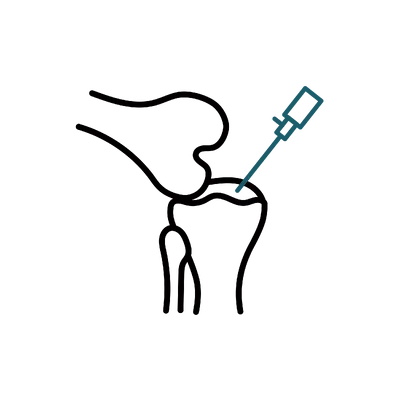
A spinal injection is a needle procedure that treats or investigates back and leg pain by delivering local anaesthetic, steroid or both directly to an irritated nerve or joint under X-ray guidance. It serves two purposes at once. The anaesthetic tells the surgeon something, because if numbing one particular level switches your pain off for a few hours, that level is almost certainly the source. The steroid calms the inflammation around the irritated nerve, which is where any lasting relief comes from. Each injection takes minutes and is done awake, either as a day case or with an overnight stay.
The honest framing matters here. An injection settles inflammation around a nerve, it does not remove whatever is pressing on it. So relief is often partial and often temporary, measured in weeks or months rather than years, and there is a sensible ceiling on how often they are repeated.
That is not a failure. Knowing which level is generating your pain, and how much of it responds, is frequently what makes the next decision a good one.
It can address a range of concerns, including:
Am I a Good Candidate for Spinal Injections?
The best candidates have a specific question the injection can answer. Where there is no clear target and no clear question, the result is hard to interpret whatever it shows.
An injection is only as good as the structure it is aimed at.
A pattern that points somewhere: Nerve root, facet joint or sacroiliac pain each have recognisable patterns on examination that narrow the target before any needle is prepared.
Current imaging: A recent MRI matters, because a target chosen from an old scan may no longer be the right one.
A question worth answering: Where several levels look degenerate on imaging, a block that isolates one of them is worth more than another scan.
Injections sit after the simple things and before the invasive ones.
Physiotherapy and medication: A structured strengthening programme and appropriate medication settle a large share of spinal pain without any procedure.
Time for natural recovery: Sciatica from a disc herniation often improves over weeks to months as the fragment shrinks, and an injection can carry you through that window.
Not a substitute for rehabilitation: The pain-free period after an injection is most valuable when it is used to train, not to rest.
Most of the preparation for these procedures is about medication rather than fitness.
Blood thinners planned for: Anticoagulants and antiplatelet drugs need a plan agreed in advance, including over-the-counter supplements that affect clotting.
Diabetes managed: Injected steroid commonly raises blood glucose for several days, so monitoring and a plan should be arranged beforehand.
No active infection: Any current infection, including chest or urinary, means postponing rather than proceeding.
Understanding what the result will and will not tell you is most of what makes this worthwhile.
Relief is often temporary: Weeks to months is typical where it works, and some people get little benefit at all.
A negative result is still information: No change after a properly targeted injection suggests the structure injected is not the source, which redirects the search.
There is a ceiling: Repeat injections are judged on their merits, and there is a sensible limit on how often steroid is given at one site.
Who is not suitable for spinal injections?
- Active infection anywhere in the body, until it is fully treated
- An uncorrected bleeding disorder, or anticoagulation that cannot safely be adjusted
- Known allergy to the contrast, steroid or local anaesthetic required, unless an alternative is available
- Progressive weakness, a dropping foot, or any loss of bladder or bowel control, which need urgent surgical assessment rather than an injection
- Pain with no identifiable target on examination or current imaging
- Repeated injections at the same site that have already produced no benefit
Pricing
How Much Will Spinal Injections Cost in Thailand?
What spinal injections costs at accredited hospitals in Thailand, and what your final quote depends on.
Get your exact price
Tell us what you're considering and we'll send a personalised quote from accredited clinics within 24 hours.
Get my free quoteTypical prices in Thailand
Typical ranges based on recent hospital quotes. Your exact price depends on the hospital and how complex your case is, and is confirmed at your teleconsultation.
Outpatient, home the same day
A needle delivers anaesthetic, steroid or both to an irritated nerve or joint under X-ray guidance, to find the source of back or leg pain and calm it.
| Spine intervention, 2 sites Day case Day case, home the same day | $1,400 ฿47,000 |
| Spine intervention, more than 2 sites Day case Day case, home the same day | $1,550 ฿52,000 |
Inpatient, one night in hospital
An overnight stay is used where the procedure is more involved, where sedation is heavier, or where you would be safer observed rather than travelling back to a hotel.
| Spine intervention, 2 sites 1 night With one night in hospital | $2,100 ฿71,000 |
| Spine intervention, more than 2 sites 1 night With one night in hospital | $2,250 ฿77,000 |
Typically not included
- Laboratory tests and imaging, including the MRI that identifies which level to target
- Physiotherapy afterwards, which is what usually converts short-term relief into lasting improvement
- Further hospital nights beyond the one in the inpatient package
- Pre-procedure medical clearance, and specialist consultant fees where your case needs another department involved
Get your exact price
Tell us what you're considering and we'll send a personalised quote from accredited clinics within 24 hours.
Hospitals Trusted for Spinal Injections
From internationally accredited flagships to dedicated specialist hospitals, these are the kinds of facilities where international patients have this procedure.

Vejthani Hospital
Orthopaedic-focused tertiary hospital with a high-volume joint replacement and spine programme.
View hospital profile
Bumrungrad International Hospital
Tertiary hospital with over 1,200 physicians treating 520,000+ international patients a year.
View hospital profile
Bangkok Hospital
BDMS flagship tertiary campus with standalone heart, cancer, and neuro-orthopaedic hospitals.
View hospital profile
Tell Us What You Need. We Do the Rest.
Share what you're considering and we'll come back with surgeon options, pricing, and a clear plan.
- Real hospital pricing with zero markup
- Matched with a specialist experienced in your specific procedure
- Full coordination from consultation to recovery


Trusted by patients worldwide
The complete guide to Spinal Injections in Thailand
Everything below is for readers who want the full detail: costs broken down, types and techniques, recovery, risks and safety, and planning your trip.
Spine Specialists and Hospitals in Thailand
Who holds the needle matters less than how the target was chosen and how the result will be interpreted. Those two things separate a useful injection from an expensive one.
Accredited Spine and Pain Units
Our partner hospitals run dedicated spine and interventional pain services with live fluoroscopy and CT guidance, sterile procedure suites and same-day recovery facilities. Being part of a full spine programme matters, because the injection is usually a step in a larger plan rather than a standalone event, and the person who interprets the result should be the same person who can act on it.
Who Performs These Procedures
Spinal injections are performed by fellowship-trained spinal surgeons, interventional pain physicians and interventional radiologists depending on the hospital and the target. All three are appropriate. What you should establish is that image guidance with contrast confirmation is standard practice, that the operator does these regularly, and that there is a clear plan for reviewing the result with you afterwards.
What to Ask Before You Commit
Ask which structure is being targeted and why that one. Ask whether the aim is diagnostic, therapeutic or both, because it changes how you should judge the outcome. Ask whether it will be done under live imaging with contrast. Ask what happens next if it works and what happens next if it does not, since a specialist who has already thought about both answers is a specialist with a plan rather than a procedure.
Understanding Your Results
These procedures produce two different kinds of result, and confusing them is the commonest reason people feel let down by an injection that actually worked.
The Diagnostic Result
Anaesthetising a specific nerve or joint to see whether the pain stops is a recognised way of establishing where pain is coming from, and for the sacroiliac joint an image-guided block is regarded as the reference standard1. The answer arrives within the first hour and lasts only as long as the anaesthetic. A clear yes or a clear no both move you forward. What weakens the test is heavy sedation, a poorly targeted needle or nobody asking you to record what happened.
The Therapeutic Result
Steroid reduces inflammation around an irritated nerve or joint, and where inflammation is a significant part of the problem the relief can be substantial. It takes days to build and its duration ranges from weeks to several months. It does not remove a disc fragment, widen a narrowed canal or repair a worn joint, so where mechanical compression dominates, the benefit tends to be smaller and shorter. Results vary considerably from person to person, and no one can predict in advance which pattern yours will follow.
Spinal Injection Cost in Thailand
What the Published Packages Cost
Our partner hospital quotes fixed package rates for spine intervention, current to the end of 2026. As a day case it is ฿47,000 for two sites and ฿52,000 for more than two. With one night in hospital it is ฿71,000 for two sites and ฿77,000 for more than two. That is roughly $1,350 to $2,300 at current rates. These are one accredited hospital's figures rather than a Thai national price, and fees vary between hospitals and between branches of the same group.
The Cheapest Way Into Spine Care
At a fraction of the cost of any spinal operation, this is the least expensive procedure in the spine group by a wide margin, and it is a reasonable option for someone who is not ready for surgery and may never need it. It is worth being realistic about what that buys. The saving against home is narrower here than it is for major surgery, because the procedure itself is not expensive anywhere, and once flights and accommodation are added the arithmetic often works best when the injection is combined with a consultation and imaging in one trip rather than travelling for the injection alone.
What Sits Outside the Package
Pre-procedure medical clearance, specialist consultant fees where another department is involved, laboratory tests and imaging including the MRI that identifies the target, pathology, medication for conditions you already take, and any hospital nights beyond the one stated are all outside the price. Physiotherapy is outside it too, and that omission matters more here than on most pages, because using the pain-free window for rehabilitation is often what determines whether the relief outlasts the steroid.
Where Injections Sit Among the Alternatives
Injections are rarely the first thing to try. Physiotherapy with a structured strengthening programme, anti-inflammatory or nerve-pain medication, staying as active as the pain allows, and adjusting the activities that provoke it settle a large share of back and neck problems without any procedure. Sciatica in particular often improves on its own over weeks to months as a disc herniation shrinks2, which is why surgery is not usually needed and guidance consistently favours a period of conservative management before anything invasive3.
At the other end sits surgery, which removes or stabilises the structure causing the trouble. Decompression works well when the scan and the symptoms tell the same story and conservative care has run its course. It is a bigger undertaking, with a longer recovery and a real, if small, risk profile, and it is not the right answer for pain that has no clear structural cause.
Injections occupy the ground between those two, and they are useful in two specific ways. They can carry someone through a flare or through the natural recovery window of a disc herniation without an operation. And they can answer the question surgery depends on, which is which level is actually generating the pain. Where an MRI shows degeneration at three levels and the symptoms could plausibly come from any of them, a block that switches the pain off at one of them is worth more than another scan. If nobody has explained which of those two jobs your injection is meant to do, ask, because the answer changes how you should judge the result.
Types of Spinal Injection
The name of the injection describes where the needle goes, and where it goes is decided by which structure is thought to be generating the pain. Getting that target right is most of the work.
Epidural Steroid Injection
Medication is placed into the epidural space, the sleeve that surrounds the spinal nerves, to bathe an inflamed nerve root. It is the most familiar of these procedures and the usual choice for sciatica or arm pain from a disc herniation. Injecting anaesthetic alone can also be used diagnostically to establish whether a particular nerve is the source of the pain1.
- Targets inflammation around a compressed nerve root
- Can be delivered from several approaches depending on the level and anatomy
- Doubles as a diagnostic test when anaesthetic is used alone
- Best for: leg or arm pain following a nerve path, with a matching level on MRI
Facet Joint Injection and Medial Branch Block
The small paired joints at the back of the spine can themselves generate pain, typically felt across the back and into the buttock or shoulder rather than down the limb. Anaesthetic placed into the joint, or onto the tiny nerves that supply it, tests whether those joints are responsible. Steroid may then be added for longer relief1.
- Tests whether the small spinal joints are the pain source
- Often done at two levels because each joint has a dual nerve supply
- A positive block can lead on to radiofrequency treatment of those nerves
- Best for: axial neck or low back pain without a nerve root pattern
Sacroiliac Joint Injection
The joint between the base of the spine and the pelvis is a common and frequently missed source of one-sided low back and buttock pain. Anaesthetising it under image guidance is regarded as the reference standard for confirming it is the culprit, and steroid is usually included for therapeutic effect1.
- Confirms or excludes the sacroiliac joint as the pain generator
- Image guidance is essential, as blind injection frequently misses the joint
- Often clarifies a picture that examination alone leaves ambiguous
- Best for: one-sided low back and buttock pain that has resisted diagnosis
Radiofrequency Ablation
Where a diagnostic block has confirmed that facet joints are the source, the small nerves carrying that pain can be treated with heat to interrupt the signal. It is not an injection in the usual sense but it belongs to the same family and follows on from one. Relief usually lasts several months before the nerves regenerate1.
- Follows a positive diagnostic block rather than replacing it
- Effect typically lasts several months and can be repeated
- Treats the pain signal rather than the joint itself
- Best for: confirmed facet joint pain that responded to a diagnostic block
How Spinal Injections Are Done
The difference between a spinal injection that works and one that does nothing is usually millimetres. Everything about the technique exists to close that gap.
Live X-Ray Guidance
The needle is positioned under live fluoroscopy, and a small amount of contrast dye is injected first to confirm the medication will spread where it is intended and has not entered a blood vessel. Injections performed by feel alone miss the target often enough that image guidance is regarded as standard for anything diagnostic.
- Contrast confirms needle position before any medication goes in
- Substantially more accurate than landmark-guided injection
- Essential when the result is being used to make a surgical decision
- Why it matters: an inaccurate injection gives you a misleading answer, not just a poor result
CT Guidance for Difficult Targets
Where the anatomy is distorted by previous surgery, severe degeneration or scoliosis, CT guidance gives cross-sectional detail that plain X-ray cannot. It takes longer and involves more radiation, so it is reserved for targets that genuinely need it rather than used routinely.
- Cross-sectional detail for anatomy that X-ray alone cannot resolve
- Useful after previous spinal surgery or in significant deformity
- Longer procedure and higher radiation dose, so used selectively
- Best for: distorted anatomy, revision cases and deep or awkward targets
Awake, Under Local Anaesthetic
Almost all of these procedures are done with you awake, with the skin numbed and light sedation available if you want it. Staying awake is not incidental. You can tell the operator whether the needle is reproducing your usual pain, which is itself diagnostic information, and you can report the effect of the anaesthetic in the first hour, which is the whole point of a diagnostic block.
- Your feedback during and after the injection is part of the test
- Sedation is available but heavy sedation blunts the information
- Recovery is short, with most people home within an hour or two
- Why it matters: a diagnostic block is only as useful as the report you can give afterwards
What to Expect After a Spinal Injection
The First Few Hours
You rest in a recovery area while the local anaesthetic is working. This window is the diagnostic part, so you will be asked to record how much your usual pain has changed and for how long. A leg that feels heavy or slightly numb is expected and wears off. Most day-case patients go back to their accommodation within an hour or two.
Days 1–3
Steroid takes time to act, so it is common for the anaesthetic effect to wear off and the original pain to return before any lasting improvement begins. A day or two of soreness at the injection site is normal. People with diabetes should check blood glucose more often, as steroid can push it up for several days.
Days 3–14
If the injection is going to help therapeutically, this is usually when it shows. Use the window rather than resting through it, because gentle activity and physiotherapy during a period of reduced pain is what turns temporary relief into something that lasts. A review appointment confirms what happened and what it means.
Weeks 2–12
How long relief lasts varies widely, from weeks to several months, and some people get little benefit at all. Where a diagnostic block was positive, the result feeds directly into planning, whether that is radiofrequency treatment, targeted rehabilitation or a surgical opinion. Repeat injections are considered on their merits rather than scheduled automatically.
When Can You Fly Home?
Most people can fly within a couple of days, and some the day after a straightforward day-case injection, once your doctor confirms there were no complications. Staying long enough to attend the review appointment is worth more than leaving quickly, because the report of what happened in the first hours and days is the result. Move around the cabin regularly and stay hydrated as you would after any procedure.
When Can You Return to Work and Exercise?
Most people are back to normal daily activity within 24 to 48 hours. Avoid heavy lifting and strenuous exercise for the first day or two while any soreness settles. After that, gentle activity is encouraged rather than restricted. If the injection has reduced your pain, that window is the moment to progress physiotherapy rather than to rest, and using it well is what makes the difference between weeks of relief and months.
How Long Will the Relief Last?
It varies more than almost anything else on this site. Some people get months, some get weeks, and some get very little. Anaesthetic relief lasting a few hours confirms the target but says nothing about how long the steroid effect will last. Where relief is short but real, that result still has value, because it identifies the level and points to what else might be done about it. Nobody can tell you in advance which group you will fall into.
Anaesthesia for Spinal Injections
These procedures are done under local anaesthetic with you awake. The skin and deeper tissues are numbed, and the injection itself is usually described as pressure rather than sharp pain. Light sedation is available if needles or lying still are difficult for you, and it is offered readily rather than grudgingly.
There is a reason not to be heavily sedated for a diagnostic block. The information the procedure produces comes from you, from whether the needle reproduces your familiar pain as it reaches the target and from how much of that pain disappears in the following hour. Deep sedation blurs both. Where the injection is purely therapeutic, that matters less, and comfort can take priority.
General anaesthesia is rarely used and is generally reserved for people who cannot tolerate the procedure awake. Before any of these, tell the team about blood-thinning medication, any allergy to contrast dye or local anaesthetic, and any active infection, because each of those changes the plan. If you have diabetes, expect a conversation about blood glucose, since injected steroid commonly raises it for several days afterwards.
Risks and Safety of Spinal Injections
These are low-risk procedures by the standards of spinal treatment, which is a large part of their appeal. The complications worth knowing about are mostly minor and short-lived, with a small number that are not.
- A temporary increase in pain for a day or two after the injection, which is common and settles
- Raised blood glucose for several days after steroid, relevant if you have diabetes
- Facial flushing, disturbed sleep or a change in mood for a few days, from the steroid
- A headache that is worse sitting or standing and eases lying flat, from an inadvertent dural puncture
- Temporary leg heaviness or numbness from the anaesthetic, which wears off within hours
- Bleeding or bruising around the needle tract, more likely on blood-thinning medication
- Infection at the injection site or, very rarely, deeper in the spine
- Nerve injury, which is rare and reduced by image guidance and contrast confirmation
The most useful thing to understand is not a complication at all. An injection that gives you no relief is not a wasted procedure if it was properly targeted, because it has told you that the structure injected is probably not the source of your pain, and that is information you did not have before. The corollary is that repeating injections that have not worked, at the same target, on the assumption that the next one will be different is rarely a good plan. There is a sensible limit on how often steroid is given at one site, and a clinician who declines a fourth injection is protecting you rather than obstructing you.
Are Spinal Injections Safe in Thailand?
Accredited Thai hospitals perform image-guided spinal injections in dedicated procedure suites with live fluoroscopy or CT, sterile technique and full resuscitation facilities. The question worth asking is not whether the hospital is capable but whether the injection will be image-guided and contrast-confirmed, because a landmark-guided injection is a different procedure with a meaningfully different miss rate. Ask who performs it and how the target was chosen.
How to Reduce Your Own Risk
Declare all blood-thinning medication, including aspirin and over-the-counter supplements that affect clotting, well before the date. Mention any allergy to contrast, iodine or local anaesthetic. Postpone if you have any active infection, including a chest or urine infection. If you have diabetes, plan for higher readings for several days and know how you will respond. Bring a recent MRI, because a target chosen from an old scan may no longer be the right one.
What if It Does Not Work?
Then you have learned something. A properly targeted, image-guided injection that produces no change in your pain is evidence that the structure injected is probably not the source, which redirects the search rather than ending it. What should not happen is the same injection repeated at the same target several times in the hope of a different outcome. Discuss with your clinician whether a different target, a different modality or a surgical opinion is the more logical next step.
Planning Your Trip to Thailand for Spinal Injections
This is a short trip by the standards of spine care, and it is usually best planned as a package with consultation and imaging rather than as a stand-alone visit.
How Long to Stay
Plan on three to five days. That allows a consultation and imaging review on arrival, the procedure itself, a rest day and a review appointment before you leave. The review is not a formality, because what you report about the first hours and days is the result. If you are combining the injection with a wider spinal assessment, allow a little longer.
How the Trip Is Organised
Your care coordinator arranges the consultation, the procedure slot, interpreting where needed and the follow-up review. Send your MRI before you travel so the target can be discussed rather than decided on the day. Flights and accommodation are separate. Somewhere quiet and close to the hospital is enough here, since mobility afterwards is generally good.
What to Bring
Bring your MRI and any CT or X-rays on disc or shared electronically, along with reports of any previous spinal injections, which are genuinely useful because what happened last time predicts a good deal. Bring a full list of medicines with blood thinners flagged. A simple pain diary for the first week, noting how much your pain changed and for how long, is the single most valuable thing you can produce for the review.
Related Procedures
Other procedures that address similar goals or conditions, in case one of them is a closer fit for you.
Planning your treatment in Thailand
Independent guides to help you weigh the decision, before you commit to anything.
Common Questions About Spinal Injections
Everything you need to know before your procedure

Medical References
Keep researching with AI
Open this guide in your AI assistant to dig deeper and ask the questions it didn't answer.
Opens in a new tab with this guide already loaded.
Medical disclaimer: Content on this site is provided for informational purposes and should not be treated as medical advice. Outcomes, timelines, and eligibility differ from person to person. Consult a qualified medical professional before making any decisions about surgery or treatment.
Not Ready for Surgery?
Send us your MRI and we will come back with a personalised quote and a clear explanation of what an injection would be trying to achieve.
Speak to Our Team