Endoscopic Spine Surgery in Thailand Your guide to cost, top specialists & hospitals
A camera the width of a pencil reaches the trapped nerve without cutting through the muscle around it. One night in hospital, when the scan suits it.
What Is Endoscopic Spine Surgery?
Also known as: Keyhole Disc Surgery · Percutaneous Endoscopic Decompression
Endoscopic spine surgery is decompression surgery that relieves a trapped nerve by working through a tube about the width of a pencil, with a camera at its tip lighting the way. The surgeon parts the muscle rather than cutting through it, removes the disc fragment or bone spur pressing on the nerve, and closes with a stitch or two. It is usually done at a single level of the spine, most often in the lower back, and one night in hospital is typical. Most people are up and walking the same day.
That one night is the headline, against two to five for a microscopic decompression or a fusion. It is a real difference, and it is also the reason to be careful. The endoscope reaches some disc problems beautifully and others not at all, so the approach is chosen by what your MRI shows rather than by how appealing the recovery sounds.
If your scan does not suit it, a slightly longer stay and the right operation is the better trade.
It can address a range of concerns, including:
Am I a Good Candidate for Endoscopic Spine Surgery?
The endoscope is a narrow tool and it suits a narrow set of problems. Candidacy here is decided almost entirely by what the MRI shows and where the compression sits.
Imaging decides whether an endoscopic approach is possible at all.
One level, clearly identified: A single-level disc herniation or focal narrowing that matches the symptoms is the core indication.
Reachable position: The compression has to sit where a seven to ten millimetre tube can get to it, which rules some fragments out on geometry alone.
Leg pain over back pain: Decompression treats nerve compression well and disc wear poorly, so a leg-dominant pattern predicts a better result.
Disc herniations frequently settle on their own, so surgeons expect non-surgical treatment to have had a genuine run.
Six to twelve weeks minimum: Physiotherapy, medication and staying active are the standard first line, and most people improve without an operation.
Injections as a step: An image-guided nerve root or epidural injection can carry you through the recovery window and also confirms which level is generating the pain.
Exceptions are neurological: Progressive weakness, a dropping foot, or any loss of bladder or bowel control needs urgent assessment rather than more waiting.
Being told the endoscope does not suit your scan is useful information, not a rejection.
Multi-level stenosis: Where several levels are narrowed, an endoscopic decompression treats too little of the problem to help much.
Instability or slipped vertebra: Taking pressure off an unstable segment without stabilising it can leave things worse than before.
Previous surgery at the level: Scar tissue distorts the anatomy and makes endoscopic judgement considerably harder.
The gain here is a gentler recovery in a suitable case, not a better long-term result than other approaches.
Fast pain relief, slow numbness: Leg pain often improves within hours; numbness recovers over months and sometimes not fully.
Recurrence is possible: The rest of the disc stays in place, so a further herniation at the same level can happen, most often in the first year.
Conversion is a safety feature: If the endoscopic view is inadequate on the day, switching to a microscopic approach is the correct decision rather than a failure.
Who is not suitable for endoscopic spine surgery?
- Severe or multi-level spinal stenosis, where too little of the problem is reachable
- Segmental instability or spondylolisthesis needing stabilisation rather than decompression alone
- Back pain without a matching nerve compression pattern on MRI
- Cauda equina syndrome or progressive weakness, which need urgent open assessment rather than an elective trip
- Spinal infection or tumour as the cause of the compression
- Severe uncorrected cardiac or respiratory disease unfit for anaesthesia
Pricing
How Much Will Endoscopic Spine Surgery Cost in Thailand?
What endoscopic spine surgery costs at accredited hospitals in Thailand, and what your final quote depends on.
Get your exact price
Tell us what you're considering and we'll send a personalised quote from accredited hospitals within 24 hours.
Get my free quoteTypical prices in Thailand
Typical ranges based on recent hospital quotes. Your exact price depends on the hospital and how complex your case is, and is confirmed at your teleconsultation.
Endoscopic Spine Surgery
A trapped spinal nerve is decompressed through a pencil-width tube with a camera at its tip, sparing the muscle that a wider operation would cut through.
| Endoscopic spine surgery, one level 1 night Single spinal level, one night in hospital | $11,800 ฿402,000 |
Typically not included
- Implants or hardware, where the operation turns out to need any
- ICU care or extra hospital nights beyond the one in the package
- Physiotherapy after discharge. The package covers a pre-operative rehabilitation assessment, not a course of post-operative rehab
- Laboratory tests and imaging, including MRI
- Pre-operative medical clearance
- Treatment of more than one spinal level, which is quoted separately as it changes operating time and recovery
Get your exact price
Tell us what you're considering and we'll send a personalised quote from accredited hospitals within 24 hours.
Hospitals Trusted for Endoscopic Spine Surgery
From internationally accredited flagships to dedicated specialist hospitals, these are the kinds of facilities where international patients have this procedure.

Vejthani Hospital
Orthopaedic-focused tertiary hospital with a high-volume joint replacement and spine programme.
View hospital profile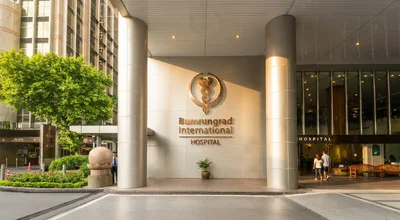
Bumrungrad International Hospital
Tertiary hospital with over 1,200 physicians treating 520,000+ international patients a year.
View hospital profile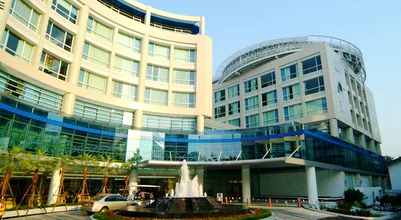
Bangkok Hospital
BDMS flagship tertiary campus with standalone heart, cancer, and neuro-orthopaedic hospitals.
View hospital profile
Tell Us What You Need. We Do the Rest.
Share what you're considering and we'll come back with surgeon options, pricing, and a clear plan.
- Real hospital pricing with zero markup
- Matched with a specialist experienced in your specific procedure
- Full coordination from consultation to recovery


Trusted by patients worldwide
The complete guide to Endoscopic Spine Surgery in Thailand
Everything below is for readers who want the full detail: costs broken down, types and techniques, recovery, risks and safety, and planning your trip.
Spine Surgeons and Hospitals in Thailand
This is a technique where the gap between an occasional operator and a routine one is wide. The questions below are the ones that actually separate them.
Accredited Spine Units
Our partner hospitals operate dedicated spine programmes with high-resolution MRI and CT, live fluoroscopy in theatre, intraoperative neuromonitoring where the case calls for it, and the full range of endoscopic and open instrumentation. Having the open equipment in the same theatre matters. A surgeon who can convert to a microscopic approach mid-operation is safer than one who is committed to the endoscope by the kit on the trolley.
Fellowship-Trained Spinal Surgeons
Our partner spinal surgeons hold board certification in orthopaedic surgery or neurosurgery with further fellowship training in spinal surgery, many of them at centres in the United States, United Kingdom, Germany, Japan or Korea. Endoscopic spine surgery is a subspecialty within that, and it is fair to ask where and when a surgeon trained in the technique specifically rather than in spinal surgery generally.
What to Ask Before You Commit
Ask how many endoscopic decompressions they perform a year and what proportion of their spinal practice that represents. Ask which approach they plan for your scan and why that one. Ask what their conversion rate to microscopic or open surgery is, since a surgeon who has never converted either does very few or persists when they should not. Ask directly whether your MRI genuinely suits an endoscopic approach, and treat a straight no as a good sign.
Understanding Your Results
Endoscopic and microscopic decompression are usually reported as reaching similar destinations by different routes. The differences show up in the first fortnight rather than the first year.
What the Evidence Shows
For well-selected single-level disc herniations, endoscopic decompression relieves leg pain effectively, and the consistent advantages reported for minimally invasive approaches are less muscle damage, less blood loss, less post-operative pain and a shorter hospital stay than open surgery1,2. Longer-term pain and function outcomes tend to converge with conventional microdiscectomy rather than exceed it. The honest summary is that the endoscope buys you a faster, gentler recovery in the right case, not a better result.
What You Can Reasonably Expect
Expect the leg pain to improve quickly, often within hours. Expect to be walking the same day and out of hospital the next. Expect numbness to lag well behind pain and sometimes to leave a patch that does not fully recover. Expect back pain to improve less predictably than leg pain, because decompression treats nerve compression rather than the wear in the disc itself. Results vary with the size and position of the herniation and with how long the nerve was compressed before you got to theatre.
Endoscopic Spine Surgery Cost in Thailand
What the Published Package Costs
Our partner hospital holds a fixed fly-in package for endoscopic spine surgery at one level, with one night in hospital, at ฿402,000, valid to 31 December 2026. That is roughly $11,800 at current rates. This is one accredited hospital's figure and not a Thai national price. Fees vary considerably between Thai hospitals and even between branches of the same group, so use it as a reference point rather than a market rate.
What the Package Does Not Cover
Pre-operative medical clearance, specialist consultant fees where another department is involved, pathology, laboratory tests and imaging including MRI, medication for conditions you already take, and any ICU care or hospital nights beyond the one stated all sit outside the price. Implants are excluded as standard across these packages, which rarely matters for a straightforward endoscopic decompression but is worth confirming for your specific plan. Physiotherapy after discharge is also outside it, and the pre-operative rehabilitation assessment the package includes is an assessment rather than a course of treatment.
Why One Level Is the Priced Unit
The package is written for a single spinal level because that is where endoscopic surgery does its best work. Adding levels adds operating time, and beyond a certain point it changes which operation is appropriate rather than just how long it takes. If your MRI shows problems at more than one level, expect a separate quote and expect a frank conversation about whether the endoscope is still the right tool. Bring your imaging before you travel so that discussion happens early.
What to Try Before Endoscopic Surgery
A herniated disc is one of the few structural spinal problems that often resolves without any operation. The fragment shrinks and is reabsorbed over weeks to months, and most people improve without surgery, which is why surgeons expect a genuine trial of non-surgical treatment first. Physiotherapy, anti-inflammatory or nerve-pain medication, and staying as active as the pain allows do more than rest does. An image-guided epidural or nerve root injection can settle the inflammation around the nerve enough to get you through the window while the disc recovers on its own, and it also tells the surgeon which level is generating the pain.
Conservative care has clear limits. An injection calms inflammation but does not remove what is pressing on the nerve, so relief is often partial and can be temporary. If the compression is still there when the medication wears off, the pain generally comes back. There are also situations where waiting is the wrong call, and progressive weakness, a foot that is beginning to drop, or any loss of bladder or bowel control needs urgent assessment rather than more physiotherapy.
Surgery becomes reasonable when the leg pain has not settled after that trial, the MRI shows a clear cause at a level that matches the symptoms, and daily life has narrowed around it. Whether the endoscope is the right way in is a separate question, and it is answered by the scan rather than by the recovery time.
Types of Endoscopic Spine Surgery
Endoscopic surgery is a route to the nerve rather than a single operation, and there is more than one route. The one your surgeon picks depends on where the compression sits and which way in gives the cleanest line to it.
Transforaminal Endoscopic Discectomy
The endoscope enters from the side, through the natural opening where the nerve root exits the spine, and reaches the disc without going through the back muscles at all. It is often done under local anaesthetic with sedation, which means the surgeon can talk to you during the operation. It suits herniations that sit to the side or in the exit canal.
- Enters through the existing nerve exit rather than through muscle
- Can often be done with sedation rather than general anaesthesia
- Leaves the bony arch at the back of the spine completely untouched
- Best for: side-lying or foraminal disc herniations in the lower back
Interlaminar Endoscopic Discectomy
The endoscope enters from behind, through the gap between two vertebral arches, which is the same general direction as a traditional microdiscectomy but through a far smaller opening. It reaches herniations sitting centrally or just off centre, and it is the usual choice at the lowest lumbar level where the pelvis blocks a side approach.
- Direct line to central and paracentral herniations
- The practical choice at L5 to S1, where the pelvis limits side access
- Familiar anatomy for surgeons trained in microdiscectomy
- Best for: central disc herniations, particularly at the lowest lumbar level
Endoscopic Decompression for Stenosis
Rather than removing a disc fragment, the surgeon shaves back the thickened ligament and overgrown bone that are narrowing the canal, widening the space around the nerve. It works well for narrowing confined to one level. Where several levels are tight, a wider decompression usually treats the problem better.
- Widens the canal without removing the supporting bony arch
- Preserves the muscle attachments that hold the spine steady
- Limited by how many levels are involved, not by the technique itself
- Best for: single-level lateral recess or foraminal narrowing
Cervical Endoscopic Decompression
The same principle applied to the neck, either from the front or from the back depending on where the compression sits. It is a smaller field of practice than lumbar endoscopy and is offered by fewer surgeons, so volume matters even more here than it does lower down the spine.
- Avoids fusing the segment, so the neck keeps its movement
- Performed by a narrower group of surgeons than lumbar endoscopy
- Not appropriate where the spinal cord itself is compressed
- Best for: selected single-level nerve root compression in the neck
How Endoscopic Spine Surgery Is Done
What separates endoscopy from other minimally invasive spine surgery is that the camera goes inside the body rather than looking in from outside it. Everything else about the technique follows from that.
Working Through a Single Portal
A dilator is passed down to the spine under X-ray guidance and the working sheath follows it. The endoscope, the light, the irrigation fluid and the instruments all pass down that one tube, typically seven to ten millimetres across. Because muscle is dilated apart rather than stripped off the bone, the structures that hold your spine steady are left doing their job.
- Incision usually under a centimetre, closed with one or two stitches
- Muscle is separated rather than cut and reattached
- Continuous fluid irrigation keeps the view clear and cools the field
- Why it matters: less muscle disruption is the main reason the hospital stay is shorter
Awake or Lightly Sedated Surgery
Transforaminal endoscopy is often done under local anaesthetic with sedation. You are comfortable but responsive, so if an instrument comes close to a nerve root you can say so and the surgeon adjusts immediately. That feedback is a genuine safety mechanism, and it also avoids general anaesthesia entirely for people in whom that carries extra risk.
- Real-time feedback from you if a nerve is irritated
- Avoids general anaesthesia in patients with heart or lung conditions
- Faster to wake, eat and walk afterwards
- Best for: transforaminal cases in patients who are comfortable staying awake
Continuous X-Ray Guidance
The surgeon confirms the position of the sheath against live X-ray images at each stage, because a seven-millimetre tube gives no view of the surrounding anatomy on its own. This is what makes the operation accurate, and it is also why the technique has a long learning curve. The relevant question for any surgeon offering it is how many they perform a year.
- Position confirmed against live imaging at every step
- Steeper learning curve than microscopic decompression
- Surgeon volume correlates strongly with results in this technique
- Why it matters: ask for the annual number, not just whether they offer it
Endoscopic Spine Surgery Recovery Timeline
Day 1
You are usually walking within a few hours, and the leg pain you came in with is often noticeably better straight away. A single small dressing covers the wound. The night in hospital is there to confirm the nerve is recovering, check you can walk and pass urine normally, and settle pain relief before you leave.
Days 2–7
You move to your accommodation and walk several times a day, building distance gradually. Sitting for long stretches is limited early on, which is one reason the flight home waits. Nerve symptoms often continue improving through this week, though numbness settles more slowly than pain does.
Weeks 2–6
A follow-up review confirms wound healing and neurological recovery, and your surgeon clears you to fly. Desk work is realistic from around one to two weeks. Core and hip strengthening starts under guidance. Bending, twisting and lifting are still restricted while the annulus, the outer ring of the disc, heals over.
Weeks 6–12
Most people are back to normal activity by this point, with physically demanding work returning on a graduated basis. Residual numbness or a patch of altered sensation can take months to fade and sometimes does not fully go, which is a nerve recovery issue rather than a surgical one. Ongoing core strength is what protects the level long term.
When Can You Fly Home?
Most people are cleared to fly around 10 to 14 days after surgery, once wound healing and nerve recovery are confirmed at follow-up. The limiting factor is not the wound but the sitting. Book an aisle seat, stand and walk every 60 to 90 minutes, and avoid sitting continuously for long stretches. Your surgeon provides a fitness-to-fly letter, and a lumbar support cushion makes the journey easier.
When Can You Return to Work and Exercise?
Desk work is realistic from around one to two weeks, which is faster than most spinal procedures allow. Physically demanding roles need six to twelve weeks and a graduated return. Walking starts on day one and builds from there. Core and hip strengthening usually begins at two to four weeks under guidance, and bending, twisting and heavy lifting stay restricted for around six weeks while the outer ring of the disc heals over.
When Will the Nerve Symptoms Fully Settle?
Leg pain often improves within hours, sometimes before you leave the recovery area. Pins and needles usually follow over days to weeks. Numbness is the slowest to recover and sometimes leaves a permanent patch of altered sensation, because a nerve that has been compressed for a long time repairs slowly and not always completely. Weakness recovers over weeks to months where it recovers at all. None of this is unusual and none of it means the surgery failed.
Anaesthesia for Endoscopic Spine Surgery
Endoscopic spine surgery can be done under general anaesthesia or, for many transforaminal cases, under local anaesthetic with sedation. Awake surgery is not a gimmick here. Being able to tell the surgeon that an instrument is touching a nerve root gives real-time feedback that no monitor provides, and it lets people with heart or lung conditions avoid a general anaesthetic altogether. A consultant anaesthetist is present either way.
Interlaminar approaches from behind are more often done asleep, because the anatomy and the working angles make it easier for everyone. Your surgeon and anaesthetist decide together, and the plan is explained before you agree to it. If staying awake for spinal surgery is not something you want, say so early rather than on the day, because in most cases it can be accommodated.
Before you are cleared, you have a pre-operative assessment covering blood tests, a review of your medicines and a check that anything affecting anaesthesia is stable. That clearance is not part of the published package price, so ask for it to be quoted. Afterwards, pain is generally modest. The wound is small, the muscle has not been cut, and most of the discomfort people report in the first days is the nerve settling rather than the surgery itself.
Risks and Safety of Endoscopic Spine Surgery
The small access route lowers some risks and does not touch others. Infection and blood loss are less of an issue than with open surgery, while the risks that come from working millimetres from a nerve root are the same whatever instrument you use to get there.
- Incomplete removal of the disc fragment, leaving symptoms unresolved and sometimes needing a second procedure3
- Nerve root irritation causing temporary numbness or a burning sensation in the leg
- Nerve root injury causing lasting weakness or numbness, which is rare
- Dural tear with a cerebrospinal fluid leak, harder to repair through an endoscope than in open surgery
- Recurrent herniation at the same level, since the rest of the disc stays in place3
- Conversion to an open or microscopic procedure during the operation if the endoscopic view is inadequate
- Infection at the wound or in the disc space, uncommon with antibiotic prophylaxis
- Fluid overload from the irrigation used to keep the working view clear, uncommon and managed by limiting operating time
The risk most specific to this technique is that it is not finished properly. A seven-millimetre tube gives a superb view of a small area and no view at all of anything outside it, so if the fragment sits somewhere the endoscope cannot reach, the operation can end with the nerve still compressed. Experienced surgeons prevent this by being selective about which cases they take, which is exactly why the candidacy conversation matters more here than the recovery time does. Ask what happens if the view turns out to be inadequate on the day, because the answer should be a plan to convert rather than a plan to persevere.
Is Endoscopic Spine Surgery Safe in Thailand?
Accredited Thai hospitals run dedicated spine units with fellowship-trained spinal surgeons, high-resolution MRI, live imaging in theatre and full endoscopic instrumentation. What matters more than the country is the individual surgeon's volume in this specific technique, because endoscopy has a longer learning curve than microscopic decompression. Ask how many endoscopic decompressions they perform each year and how often they convert to an open approach.
How to Reduce Your Own Risk
Bring a recent MRI, ideally within six months, so the plan is built on current anatomy rather than an old scan. Stop smoking, which slows disc and wound healing. Start core strengthening before you travel if your physiotherapist agrees, since the muscles that support the level do more work after surgery, not less. Be honest about previous spinal surgery at the same level, because scar tissue changes the risk profile materially.
What if a Disc Herniates Again?
Endoscopic and microscopic discectomy both remove the fragment pressing on the nerve and leave the rest of the disc in place, so recurrence at the same level is possible for either. It affects a minority of patients, most often in the first year, and it presents as the original leg pain coming back rather than as new back pain. Management ranges from conservative treatment through repeat decompression to fusion, depending on what the repeat scan shows and how the level has behaved.
Planning Your Trip to Thailand for Endoscopic Spine Surgery
The operation and the hospital stay are short. The trip is not, because flying is governed by how long you can sit rather than by how the wound looks.
How Long to Stay
Plan on 10 to 14 days. The first day or two cover consultation, MRI review or a repeat scan if yours is old, blood tests and the pre-operative assessment. Surgery and one night in hospital follow. The remaining days are for walking daily, a wound check, a follow-up review of nerve recovery and your fitness-to-fly clearance. Some people are ready sooner, and your surgeon makes that call rather than the calendar.
How the Trip Is Organised
Your care coordinator arranges scheduling, hospital admission, interpreting where needed and follow-up appointments. Send your MRI ahead of travelling. Candidacy for an endoscopic approach is decided on imaging, so the single most useful thing you can do before booking anything is get the scan reviewed. Flights and accommodation are separate, and somewhere within easy reach of the hospital with a lift is worth the small premium.
What to Bring
Bring your MRI on disc or shared electronically, along with any CT, X-rays or nerve conduction studies. Bring a full list of medicines and supplements, and reports from any previous spinal surgery or injections. Loose comfortable clothing, supportive shoes with good grip, and a lumbar support cushion for the flight home are the practical items. If you have had an injection at a specific level, bring the record, because it tells the surgeon something useful about where the pain is coming from.
Related Procedures
Other procedures that address similar goals or conditions, in case one of them is a closer fit for you.
Planning your treatment in Thailand
Independent guides to help you weigh the decision, before you commit to anything.
Common Questions About Endoscopic Spine Surgery
Everything you need to know before your procedure

Medical References
Keep researching with AI
Open this guide in your AI assistant to dig deeper and ask the questions it didn't answer.
Opens in a new tab with this guide already loaded.
Medical disclaimer: Content on this site is provided for informational purposes and should not be treated as medical advice. Outcomes, timelines, and eligibility differ from person to person. Consult a qualified medical professional before making any decisions about surgery or treatment.
Ready to Get Started?
Send us your MRI and we will come back with a personalised quote and a straight answer on whether an endoscopic approach fits your scan.
Speak to Our Team