Vertebral Augmentation in Thailand Your guide to cost, top specialists & hospitals
A collapsed vertebra can be stabilised through a puncture rather than an open incision. What it cannot do is fix the bone thinning that caused it.
What Is Vertebral Augmentation?
Also known as: Spinal Fracture Repair · Percutaneous Screw Fixation with Cement Augmentation
Vertebral augmentation is a family of procedures that treats a broken spinal bone by injecting surgical cement into it through a needle, hardening the collapsed vertebra from the inside. In its simplest form, vertebroplasty or balloon kyphoplasty, cement is all that goes in. When the fracture is unstable or spans more than one level, the cement is combined with screws placed through small skin punctures into the vertebrae above and below, which turns it into a stabilising operation rather than a filling one. Both are done through punctures rather than an open incision, under live X-ray guidance.
Most of the people who need this have osteoporosis, where bone has thinned enough that a cough, a stumble or lifting something awkward can collapse a vertebra. The pain is usually sudden, in the middle or lower back, and severe enough to stop you standing up straight.
Cement stabilises the broken bone. It does not treat the osteoporosis underneath, and the bones next door are still fragile, so the medical side of this matters as much as the surgical side.
It can address a range of concerns, including:
Am I a Good Candidate for Vertebral Augmentation?
Two things decide this, whether the fracture is recent and whether it is stable. Imaging answers both, and neither is a judgement call you can make from symptoms alone.
Cement helps bone that is still healing and generally does not help bone that has already consolidated.
MRI dates the fracture: Marrow changes on MRI show whether the break is fresh, which is the single best predictor of whether a cement procedure will relieve pain.
Pain that matches the level: Tenderness over the fractured vertebra on examination should agree with what the scan shows.
Old fractures rarely respond: A long-healed collapse causing pain usually needs a different explanation and a different treatment.
Most fractures settle without any procedure, so the threshold is deliberately high.
Optimal pain management first: NICE recommends these procedures only where pain remains severe despite proper pain management, not as a first response.
Six to twelve weeks of healing: Many fractures consolidate in that window with medication, sensible activity and sometimes a brace.
Instability changes the calculation: A fracture that is collapsing further or spans several levels will not resolve with time and is a different conversation.
These patients tend to be older with other conditions, so the workup carries unusual weight.
Bone density measured: Osteoporosis needs quantifying and treating, because it is the disease and the fracture is the event.
Blood thinners planned for: Anticoagulants need a plan agreed in advance, not on the morning of the procedure.
Fit for the anaesthetic chosen: Heart, lung and diabetes control reviewed, with the anaesthetic tailored to what you can tolerate.
The procedure treats one vertebra. It does not treat the spine or the disease.
Height and posture are not restored: Kyphoplasty may recover some height, but an established stoop generally stays.
Neighbouring levels stay at risk: Fixing one vertebra does nothing for the bone density of the ones next to it.
Medication does the long-term work: Bone-protective treatment, vitamin D, calcium and strength work protect the next decade more than the operation does.
Who is not suitable for vertebral augmentation?
- A long-healed fracture with no evidence of recent injury on MRI
- Back pain without a confirmed vertebral fracture to explain it
- Active infection, including infection in or around the spine, until it is fully treated
- An uncorrected bleeding disorder or anticoagulation that cannot safely be adjusted
- Fracture fragments compressing the spinal cord or nerve roots, which need open decompression rather than a percutaneous procedure
- Severe uncorrected cardiac or respiratory disease unfit for the anaesthetic required
Pricing
How Much Will Vertebral Augmentation Cost in Thailand?
What vertebral augmentation costs at accredited hospitals in Thailand, and what your final quote depends on.
Get your exact price
Tell us what you're considering and we'll send a personalised quote from accredited hospitals within 24 hours.
Get my free quoteTypical prices in Thailand
Typical ranges based on recent hospital quotes. Your exact price depends on the hospital and how complex your case is, and is confirmed at your teleconsultation.
Vertebral Augmentation
Screws are placed through small skin punctures into the vertebrae above and below a spinal fracture and joined with rods, with cement added so thin bone grips them.
| Percutaneous screw fixation with cement augmentation, excludes implant 4 nights Screws and fixation hardware are charged separately and are not in this price | $17,800 ฿604,000 |
Typically not included
- The implant. Screws, rods and fixation hardware are excluded by the package's own terms, and this operation always uses them
- ICU care or extra hospital nights beyond the four in the package
- Physiotherapy after discharge. The package covers a pre-operative rehabilitation assessment, not a course of post-operative rehab
- Laboratory tests and imaging, including MRI, CT and bone density scanning
- Pre-operative medical clearance and specialist consultant fees where your case needs another department involved
Get your exact price
Tell us what you're considering and we'll send a personalised quote from accredited hospitals within 24 hours.
Hospitals Trusted for Vertebral Augmentation
From internationally accredited flagships to dedicated specialist hospitals, these are the kinds of facilities where international patients have this procedure.

Vejthani Hospital
Orthopaedic-focused tertiary hospital with a high-volume joint replacement and spine programme.
View hospital profile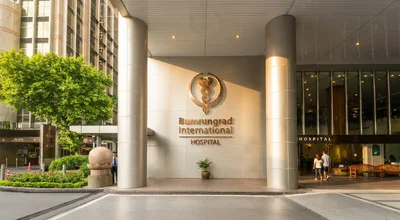
Bumrungrad International Hospital
Tertiary hospital with over 1,200 physicians treating 520,000+ international patients a year.
View hospital profile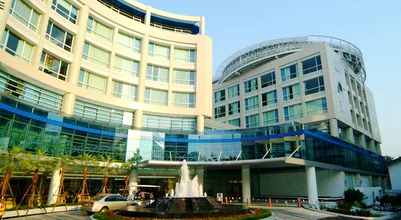
Bangkok Hospital
BDMS flagship tertiary campus with standalone heart, cancer, and neuro-orthopaedic hospitals.
View hospital profile
Tell Us What You Need. We Do the Rest.
Share what you're considering and we'll come back with surgeon options, pricing, and a clear plan.
- Real hospital pricing with zero markup
- Matched with a specialist experienced in your specific procedure
- Full coordination from consultation to recovery


Trusted by patients worldwide
The complete guide to Vertebral Augmentation in Thailand
Everything below is for readers who want the full detail: costs broken down, types and techniques, recovery, risks and safety, and planning your trip.
Spine Surgeons and Hospitals in Thailand
For a fragility fracture, the surgeon is only half the team. Whether the hospital also investigates and treats the bone disease behind the fracture tells you a good deal about the quality of care on offer.
Accredited Spine Units
Our partner hospitals operate dedicated spine programmes with high-resolution MRI and CT, live two-plane fluoroscopy or CT-based navigation in theatre, cement-augmented screw systems, and the ability to convert to an open decompression and fusion if the fracture pattern turns out to need it. They also have the endocrine and rehabilitation services that a fragility fracture patient needs alongside the operation.
Fellowship-Trained Spinal Surgeons
Our partner spinal surgeons hold board certification in orthopaedic surgery or neurosurgery with further fellowship training in spinal surgery, many of them at centres in the United States, United Kingdom, Germany, Japan or Korea. Fragility fracture work sits within that, and experience with cement augmentation in osteoporotic bone specifically is a fair thing to ask about.
What to Ask Before You Commit
Ask whether an MRI will confirm the fracture is recent, since that single test predicts whether the procedure will help. Ask how the hardware will be itemised in your quote, given the package excludes it. Ask who will assess and treat your osteoporosis and whether that happens during your stay or is handed back to your doctor at home. Ask what the plan is if the fracture pattern looks different once imaging is repeated. Straight answers to those four are worth more than any brochure.
Understanding Your Results
This is an area where the published evidence is more mixed than the marketing, and being clear-eyed about that helps you ask better questions.
What the Evidence Shows
Cement procedures relieve pain quickly in many people with recent painful osteoporotic fractures, and current evidence suggests kyphoplasty may help people feel better sooner than vertebroplasty does, with the benefit of vertebroplasty appearing to be shorter-lived1. Against that, trials comparing these procedures with conservative care have reached genuinely different conclusions, which is why NICE recommends them only for patients whose pain remains severe after optimal pain management and whose fracture is confirmed as recent on imaging3. Instrumented fixation is a different case, addressing mechanical instability that time will not resolve.
What You Can Reasonably Expect
Expect stabilisation of the fractured level and, in many cases, a marked reduction in fracture pain within days. Expect to be walking early and to avoid the deconditioning that comes with weeks in bed. Do not expect the procedure to restore lost height fully, to correct an established stoop, or to protect the neighbouring vertebrae, because it does none of those things. Results vary with the age of the fracture, the number of levels involved and the state of the bone, and no honest surgeon will promise a specific outcome.
Vertebral Augmentation Cost in Thailand
What the Published Package Says
Our partner hospital publishes a fixed fly-in package for percutaneous screw fixation with cement augmentation at ฿604,000 with four nights in hospital, valid to 31 December 2026. The package is titled as excluding the implant. That is roughly $17,800 at current rates. It is one accredited hospital's published figure rather than a Thai national price, and fees vary considerably between hospitals and even between branches of the same group.
Why That Figure Is Incomplete
This operation cannot be performed without screws and rods. They are not an optional extra or an upgrade, they are the procedure. So a package that excludes the implant is publishing the cost of everything except one of the largest components of the bill, and the real total will be higher by an amount the published price does not tell you. No Thai hospital publishes what it charges for spinal implants, and we are not going to guess at it, because a guess dressed up as a figure is worse than no figure. Ask for the hardware to be itemised in writing in your personal quote before you commit to anything.
What Else Sits Outside the Package
Pre-operative medical clearance, specialist consultant fees where another department is involved, pathology, laboratory tests and imaging including MRI, CT and bone density scanning, medication for conditions you already take, and any ICU care or nights beyond the four stated are all outside the price. Osteoporosis medication is outside it too, and that treatment is the part with the longest-lasting effect on your spine. Physiotherapy after discharge is separate as well, since the package covers a pre-operative rehabilitation assessment rather than a course of rehab.
When Conservative Treatment Is the Right Choice
Most osteoporotic vertebral fractures heal without any procedure. The standard first approach is pain relief, a short period of reduced activity, a brace in some cases, and early return to gentle movement, and the majority of fractures settle over roughly six to twelve weeks as the bone consolidates. Starting or reviewing osteoporosis medication belongs in that same conversation, because the fracture is a symptom of the underlying bone disease and treating one without the other leaves the job half done2.
The evidence on cement procedures is genuinely mixed, and it is worth knowing that before anyone offers you one. Studies have reached different conclusions about how much better vertebroplasty and kyphoplasty are than conservative care for a straightforward painful osteoporotic fracture, and NICE recommends them as options only for people whose pain remains severe after optimal pain management and whose fracture is confirmed as recent on imaging3. That is a narrower recommendation than the way these procedures are sometimes described.
Where the picture changes is instability. A fracture that is collapsing further, spans several levels, or involves the back of the vertebra will not be solved by waiting, and screw fixation addresses something that time cannot. Neurological symptoms, meaning new leg weakness, numbness or any bladder or bowel change, need urgent assessment rather than a considered plan. If your fracture is stable, recent and painful, ask directly why a procedure is being recommended over another few weeks of proper pain management, and expect a specific answer.
Types of Vertebral Augmentation
These procedures sit on a ladder, from cement alone through to cement plus instrumentation. Where your fracture lands on it depends on how unstable the break is, not on preference.
Vertebroplasty
Bone cement is injected directly into the fractured vertebra through a needle placed under X-ray guidance, with the patient lying face down. The cement hardens within minutes and internally splints the broken bone. It is the simplest of these procedures and the quickest, and it does not attempt to restore the height the vertebra has lost.
- Cement injected straight into the fractured body of the vertebra1
- No balloon, no cavity creation, shortest procedure time
- Does not restore lost vertebral height
- Best for: painful recent osteoporotic fractures without significant instability
Balloon Kyphoplasty
A balloon is inserted into the collapsed vertebra and inflated to push the bone back towards its original shape, creating a cavity. The balloon is removed and the space is filled with cement at lower pressure than vertebroplasty uses. The aim is to recover some of the lost height and reduce the forward stoop that multiple collapsed vertebrae produce.
- Balloon expands the bone before cement goes in1
- Cement placed into a prepared cavity rather than into intact bone
- May recover some vertebral height and correct some angulation
- Best for: recent fractures with height loss where restoring shape is worthwhile
Percutaneous Screw Fixation with Cement Augmentation
Screws are placed through small skin punctures into the vertebrae above and below the fracture and joined with rods, taking the load off the broken level while it heals. Cement is injected around the screw threads because osteoporotic bone alone does not grip them reliably. This is the operation the four-night package refers to, and it is a considerably bigger undertaking than cement alone.
- Stabilises the fractured level with instrumentation rather than filling it
- Cement around the screws is what makes them hold in thin bone
- Placed percutaneously, so the back muscles are not stripped off the spine
- Best for: unstable fractures, multi-level involvement, or bone too poor for screws alone
Open Instrumented Fusion
Where the fracture involves the back of the vertebra, where fragments are pressing on the spinal cord or nerves, or where deformity needs correcting, the operation moves to a conventional open approach with decompression and fusion. It is a longer operation with a longer recovery, and it is the right one when the fracture pattern demands it.
- Allows direct decompression of the cord or nerve roots
- Handles fracture patterns that percutaneous techniques cannot address
- Longer operation, longer stay and a longer recovery
- Best for: burst fractures, neurological compression or significant deformity
How the Procedure Is Done
Everything here happens under live X-ray, through punctures rather than incisions. That is what allows a spinal stabilisation to be done on people whose bones and general health would make open surgery a much harder proposition.
Percutaneous Access Under Live Imaging
You lie face down and the surgeon works through skin punctures a few millimetres across, guiding needles and screws into the vertebrae using two-plane X-ray or CT-based navigation. The back muscles are pushed apart rather than stripped from the bone, which is a large part of why people are mobile quickly afterwards despite the extent of what has been done inside.
- Screws placed through punctures rather than through a long incision
- Position confirmed against live imaging at every stage
- Muscle attachments to the spine are preserved
- Why it matters: less surgical trauma matters more in older patients with fragile bone
Cement Augmentation of the Screws
Osteoporotic bone is soft, and a screw placed into it can loosen or pull out under load. Cement is delivered through cannulated screws so it sets around the threads and locks them into the vertebra. This is the specific reason the operation is called cement-augmented fixation rather than simply fixation, and it is what makes instrumenting a fragile spine viable.
- Cement flows through the screw and hardens around the threads
- Substantially improves grip in bone that would not hold a screw alone
- Cement leakage outside the vertebra is the main technical risk to watch
- Why it matters: it is the difference between fixation that holds and fixation that loosens
Imaging That Decides the Plan
An MRI distinguishes a fresh fracture that is still healing, and still painful, from an old one that has already consolidated. Cement helps the first and generally does not help the second. A CT shows the fracture pattern and whether the back of the vertebra is involved. A bone density scan quantifies the osteoporosis. All three shape the plan, and all three sit outside the published package price.
- MRI separates a recent painful fracture from a healed one
- CT shows whether fragments threaten the canal
- Bone density scanning informs the medical treatment that follows
- Why it matters: the wrong fracture cemented is a procedure that will not relieve pain
Recovery After Vertebral Augmentation
Days 1–2
You are helped up and walking within a day, often sooner after cement-only procedures. Fracture pain frequently improves quickly once the bone is stabilised, though soreness at the puncture sites is normal. The nursing team monitors for any new leg symptoms. A brace may be fitted depending on the fracture and what was done.
Days 3–4
Walking distance builds under physiotherapy supervision and you are taught how to get in and out of bed, stand and sit without loading the healing level. Imaging confirms the cement and any screws are where they should be. Osteoporosis treatment is reviewed before discharge, because that conversation is the one that protects the rest of your spine.
Weeks 1–6
Light daily activity at your accommodation, with short frequent walks rather than long ones. A follow-up review checks wound healing and repeat imaging where needed, and your surgeon clears you to fly. Bending, twisting and lifting stay restricted. Any brace is worn as instructed, usually for several weeks.
Weeks 6–12
Posture and endurance work continue with a physiotherapist at home, and this is the part that has the most influence on how the next year goes. Bone-strengthening medication should be under way by now if it was not before. Most people are back to their usual daily activities within three months, with heavy lifting reviewed individually.
When Can You Fly Home?
Most people are cleared to fly around 12 to 14 days after the procedure, once the puncture sites have healed, imaging is satisfactory and you are walking comfortably. Book an aisle seat, get up and move every hour or so, and keep the ankles working while seated. Your surgeon provides a fitness-to-fly letter and advises on clot prevention, which matters more in this group than in a younger, more mobile one.
When Can You Return to Normal Activity?
Walking begins in hospital and builds steadily. Light household activity is usually fine within a couple of weeks, with bending, twisting and lifting restricted for around six weeks and any brace worn as instructed. Most people are back to their usual routine within three months. Heavy lifting and impact activity are reviewed individually and are often permanently modified, less because of the fixation than because of the bone around it.
When Will the Pain Settle?
Fracture pain frequently improves within days of stabilisation, and that early change is what most people notice first. Puncture-site soreness and muscle ache take a couple of weeks. What can persist is pain from other levels, from the muscle strain of months of altered posture, or from a fracture that turned out to be older than the imaging suggested. Results vary, and a procedure that stabilises the bone perfectly does not always abolish the pain.
Anaesthesia for Vertebral Augmentation
Cement-only procedures are often performed under local anaesthetic with sedation, so you are comfortable and drowsy but not fully asleep. Percutaneous screw fixation is usually done under general anaesthesia, because it takes longer and requires you to stay completely still face down while several screws are placed. A consultant anaesthetist stays with you throughout and monitors you continuously.
Many people having these procedures are older and have other medical conditions, so the pre-operative assessment carries more weight here than it does for a younger patient. Blood tests, a heart and lung review, and a look at blood thinners and osteoporosis medication all form part of it. Anticoagulants in particular need a plan agreed in advance rather than on the morning. That clearance sits outside the published package price and should be quoted separately.
Afterwards, the pain that dominates is usually the fracture pain, which frequently improves once the level is stabilised. Puncture-site soreness and muscle ache settle over days. Pain relief is built around a combination of medicines rather than a single strong opioid, partly because opioids increase confusion and fall risk in older patients, and a fall is the last thing a fragile spine needs.
Risks and Safety of Vertebral Augmentation
The procedure itself is done through punctures and is generally well tolerated. The risks worth understanding are the ones created by the cement, and the one created by the osteoporosis that is still there when you go home.
- Cement leaking outside the vertebra, usually harmless but occasionally reaching a nerve, the spinal canal or a vein
- Cement travelling into the lung circulation, which is uncommon and can be serious
- New fractures in neighbouring vertebrae, since the underlying bone disease is unchanged
- Screw loosening or pull-out in poor-quality bone, which cement augmentation is specifically intended to reduce
- Nerve root irritation or injury from needle or screw placement, which is rare
- Infection at the puncture sites or in the treated vertebra, uncommon with antibiotic prophylaxis
- Bleeding or bruising around the tract, more likely if you take blood thinners
- Persistent pain despite technically successful stabilisation, particularly where the fracture was older than it appeared
The consideration that outlives all the others is the next fracture. Cementing or fixing one vertebra does nothing for the bone density of the ones above and below it, and people who have had one osteoporotic fracture are at meaningfully higher risk of another. Whether cement itself raises the risk at adjacent levels has been debated for years without a settled answer, but the underlying risk from untreated osteoporosis is not in doubt. Bone-protective medication, vitamin D and calcium adequacy, fall prevention at home and progressive strength work do more to protect your spine over the following decade than the procedure itself does. If nobody has raised that with you, raise it with them.
Is This Procedure Safe in Thailand?
Accredited Thai hospitals run dedicated spine units with fellowship-trained spinal surgeons, live two-plane imaging or navigation in theatre, and the implant systems used internationally. The relevant question for this operation is less about the country and more about the workup. Ask whether an MRI will be done to confirm the fracture is recent, and whether bone density will be measured, because a unit that treats the fracture without addressing the osteoporosis is doing half the job.
How to Reduce Your Own Risk
Bring recent imaging, ideally an MRI, so the age of the fracture is established rather than assumed. Bring a full list of medicines, with blood thinners flagged early so a plan can be agreed. Have your vitamin D and calcium status checked. If you have not had a bone density scan, ask for one. Sorting fall hazards at home before you travel is unglamorous and probably protects your spine more than anything else on this list.
What if Another Vertebra Fractures?
It is a real possibility, because the bone disease is unchanged by the procedure. A new fracture usually presents the same way the first did, with sudden localised back pain after minimal provocation. It is assessed with fresh imaging and managed on its own merits, which may mean conservative treatment rather than another procedure. The best protection is bone-protective medication taken consistently, adequate vitamin D and calcium, strength and balance work, and removing the trip hazards at home.
Planning Your Trip to Thailand
The workup for a fragility fracture is more involved than the procedure. Getting your imaging reviewed before you fly is what stops the trip being wasted.
How Long to Stay
Plan on 12 to 14 days. The first days cover consultation, MRI and CT review or repeat scanning, blood tests, bone density assessment and pre-operative clearance. The procedure and four nights in hospital follow. The remaining days cover daily walking, wound checks, repeat imaging where needed, an osteoporosis treatment discussion and your fitness-to-fly clearance.
How the Trip Is Organised
Your care coordinator arranges scheduling, hospital admission, interpreting where needed and follow-up appointments. Send your MRI and CT ahead of travelling, because whether the fracture is recent enough to benefit is the single question that determines whether the trip is worth making. Flights and accommodation are separate. Ground-floor or lift-served accommodation close to the hospital is worth prioritising here more than for most procedures.
What to Bring
Bring all spinal imaging on disc or shared electronically, any bone density scan result, and a full list of your medicines with blood thinners and osteoporosis treatment clearly flagged. Bring reports from previous spinal surgery. Practically, loose clothing that goes on without deep bending, supportive shoes with good grip, and a grabber for picking things up off the floor all make the first weeks easier. Any brace you already own should come with you.
Related Procedures
Other procedures that address similar goals or conditions, in case one of them is a closer fit for you.
Planning your treatment in Thailand
Independent guides to help you weigh the decision, before you commit to anything.
Common Questions About Vertebral Augmentation
Everything you need to know before your procedure

Medical References
Keep researching with AI
Open this guide in your AI assistant to dig deeper and ask the questions it didn't answer.
Opens in a new tab with this guide already loaded.
Medical disclaimer: Content on this site is provided for informational purposes and should not be treated as medical advice. Outcomes, timelines, and eligibility differ from person to person. Consult a qualified medical professional before making any decisions about surgery or treatment.
Ready to Get Started?
Send us your imaging and we will come back with a fully itemised quote, including the hardware the published package leaves out.
Speak to Our Team