Scoliosis Correction in Thailand Your guide to cost, top specialists & hospitals
Straightening a curved spine is not cosmetic. It changes how you breathe, stand, and move through life.
What Is Scoliosis Correction?
Also known as: Scoliosis Surgery · Spinal Fusion for Scoliosis
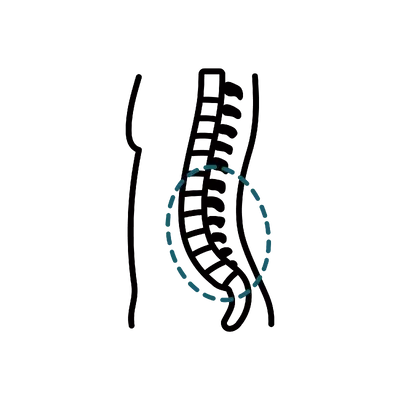
Scoliosis correction is spinal surgery that straightens an abnormally curved spine by anchoring screws into the affected vertebrae and connecting them with contoured rods that rotate the spine back toward alignment. Bone graft is then added so the instrumented segments grow together into one solid block, called fusion, which holds the correction for life.2,3 It treats curves too large for bracing or physiotherapy, usually past 40 to 50 degrees, and commonly runs four to eight hours under general anaesthesia.
No two curves bend the same way, so the plan is built around yours. Your surgeon studies your imaging to decide how many levels to instrument and how much correction is safe. The goal is a straighter, more balanced spine that lets you stand, breathe, and move more comfortably.
Correction is substantial but not total, and that is normal. Most people see substantial correction, with a small residual bend that stays stable.2 Recovery takes a few months, and the early weeks need real support at home, so it helps to talk through your curve and goals with the team first.
It can address a range of concerns, including:
Am I a Good Candidate for Scoliosis Correction?
Candidacy is measured in degrees, growth remaining, and the fitness to come through a long operation and a long recovery well.
The curve itself has to justify surgery of this scale.
Past the 40-50 degree mark: Curves under 40 degrees are usually managed conservatively; beyond 40-50 degrees on standing X-rays, surgery becomes the most reliable way to stop deterioration.
Documented progression: A curve progressing despite bracing, with measurements to prove it, strengthens the case considerably.
Symptoms that count: Chronic pain from spinal imbalance, visible trunk asymmetry, or breathing difficulty from thoracic compression in severe curves.
Skeletal maturity shapes both the timing and the type of operation.
Maturity for fusion: Standard correction suits patients who are skeletally mature or close to it, so the fused alignment holds for life.
Growing spines differ: Adolescents with flexible curves and substantial growth remaining may suit vertebral body tethering, which guides growth without permanent fusion.
Adults weigh a different equation: In adult curves, ongoing pain and functional decline drive the decision, and the trade-off between relief, correction and rigidity needs careful discussion.
A four-to-eight-hour operation under general anaesthesia demands a thorough pre-operative workup.
Lungs assessed: Pulmonary function testing is standard, since reduced lung capacity raises anaesthetic risk in large thoracic curves.
Underlying conditions reviewed: Concurrent neuromuscular or connective tissue disease can complicate fixation and needs review by the surgical team first.
Full screening before theatre: Cardiac screening, coagulation studies and blood work identify problems before they become intraoperative ones.
Correction is substantial and permanent, but it is not total and it is not quick.
Substantial correction: A 60-degree curve corrected to under 20 is a typical result; residual curves of 15-25 degrees are normal and stable.
Months, with help: Recovery from multi-level fusion takes three to six months, and the early weeks genuinely require family or home support.
Lasting limits: Contact sports and extreme spinal loading are generally discouraged after fusion, though walking, swimming and general fitness return fully.
Who is not suitable for scoliosis correction?
- Reduced pulmonary function, until anaesthetic risk is fully assessed
- Neuromuscular or connective tissue disease not yet reviewed by the surgical team
- No family or home support for the months of assisted recovery
- Curves under 40 degrees that are still appropriately managed conservatively
- Uncorrected bleeding or clotting disorder, until assessed and optimised
- Severe osteoporosis or poor bone quality, until treated and optimised, as it compromises screw fixation
- Active systemic or surgical-site infection, until fully treated
Pricing
How Much Will Scoliosis Correction Cost in Thailand?
What scoliosis correction costs at accredited hospitals in Thailand, and what your final quote depends on.
Get your exact price
Tell us what you're considering and we'll send a personalised quote from accredited hospitals within 24 hours.
Get my free quoteTypical prices in Thailand
Typical ranges based on recent hospital quotes. Your exact price depends on the hospital and how complex your case is, and is confirmed at your teleconsultation.
Scoliosis Correction
The curved section of spine is straightened and held with screws and rods until the vertebrae fuse.
| Short-segment posterior fusion, 3 to 5 levels 5 to 7 nights Screws and rods across a short run of vertebrae, for a moderate curve in one region | $12,000 to $15,000 ฿408,000 to ฿510,000 |
| Long-segment posterior fusion, 6 to 10 levels 5 to 7 nights Instrumentation extends over more vertebrae, for curves spanning several thoracic or lumbar levels | $15,000 to $18,500 ฿510,000 to ฿629,000 |
| Combined anterior-posterior correction 5 to 7 nights Two stages, front and back, for rigid curves that will not correct from behind alone | $18,000 to $21,600 ฿612,000 to ฿734,400 |
Added to the above where needed
| Robotic-assisted screw placement Guidance such as Mazor or ROSA that plans and directs each pedicle screw, used where rotation makes accuracy critical | $2,500 to $4,000 ฿85,000 to ฿136,000 |
Typically not included
- Spinal implant hardware, the screws, rods, connectors and any cage, quoted once your surgeon settles how many levels to instrument
- Intensive care, or hospital nights beyond the stay quoted, if recovery takes longer than planned
- Treatment of a complication, and any revision surgery, both handled under the hospital's aftercare policy
- The months of structured rehabilitation at home, arranged with a physiotherapist locally
- A post-operative brace, where your surgeon prescribes one to support the healing fusion
Get your exact price
Tell us what you're considering and we'll send a personalised quote from accredited hospitals within 24 hours.
Hospitals Trusted for Scoliosis Correction
From internationally accredited flagships to dedicated specialist hospitals, these are the kinds of facilities where international patients have this procedure.
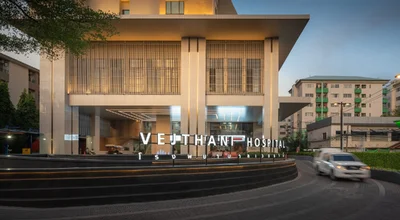
Vejthani Hospital
Orthopaedic-focused tertiary hospital with a high-volume joint replacement and spine programme.
View hospital profile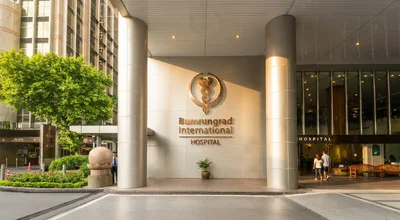
Bumrungrad International Hospital
Tertiary hospital with over 1,200 physicians treating 520,000+ international patients a year.
View hospital profile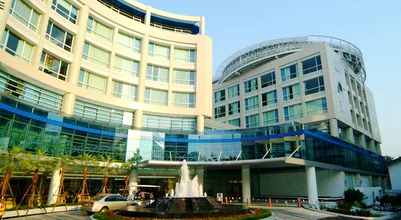
Bangkok Hospital
BDMS flagship tertiary campus with standalone heart, cancer, and neuro-orthopaedic hospitals.
View hospital profile
Tell Us What You Need. We Do the Rest.
Share what you're considering and we'll come back with surgeon options, pricing, and a clear plan.
- Real hospital pricing with zero markup
- Matched with a specialist experienced in your specific procedure
- Full coordination from consultation to recovery


Trusted by patients worldwide
The complete guide to Scoliosis Correction in Thailand
Everything below is for readers who want the full detail: costs broken down, types and techniques, recovery, risks and safety, and planning your trip.
Scoliosis Surgeons & Clinics in Thailand
Scoliosis correction demands a surgeon who handles spinal deformity cases regularly, not one who performs occasional scoliosis operations between knee replacements.
Leading Hospitals in Bangkok
Our partner hospitals have dedicated spinal deformity programmes with purpose-built operating theatres equipped for long cases, intraoperative neuromonitoring, navigation, and cell-saver blood conservation. These are among the busiest spinal centres in Southeast Asia.
Fellowship-Trained Deformity Surgeons
Our partner surgeons hold fellowship training in spinal deformity correction (a sub-specialty within spine surgery). Many completed additional training at high-volume deformity centres in South Korea, Japan, or Europe. That combination of international training and Thailand's high surgical volume produces consistently strong outcomes.
What to Look for in a Surgeon
Fellowship training in spinal deformity is the baseline. Ask specifically about their scoliosis case volume and whether they have experience with your curve type. Confirm that intraoperative neuromonitoring is used for every case without exception. Review post-operative imaging from similar curves. Correction percentages and overall spinal balance tell you more than marketing photographs.
Understanding Your Results
Scoliosis correction results are measured in degrees of correction, spinal balance, and functional improvement.
Typical Scoliosis Correction Results
Modern instrumentation achieves substantial curve correction in most cases, with curves often straightened to under 25 degrees. A 60-degree curve corrected to under 20 degrees produces a substantial improvement in spinal balance, trunk symmetry, posture, and pain. Residual curves of 15–25 degrees are normal and stable. The correction is permanent once the fusion matures.
What Results Can You Expect?
You will notice improved trunk symmetry and posture within days of surgery, though swelling and stiffness initially mask the full result. Pain from spinal imbalance typically resolves as the spine heals in its corrected position. For thoracic curves that were compressing the lungs, breathing capacity may improve measurably. Final assessment of correction and balance is made at six to twelve months.
Scoliosis Correction Cost in Thailand
Average Cost of Scoliosis Correction
Scoliosis correction in Thailand typically costs between $12,000 and $21,600, depending on the number of levels fused, the type of instrumentation, and the complexity of the curve. A shorter fusion in a flexible adolescent curve sits at the lower end, while a severe or rigid curve needing combined anterior and posterior correction sits at the top.
Cost Breakdown
Instrumentation (screws, rods, connectors, and bone graft substitutes) accounts for a large portion of the bill. The surgeon's fee reflects the complexity and duration of the operation, which commonly runs four to eight hours. Hospital and theatre fees cover the facility, intensive care (if needed), anaesthesia, neuromonitoring, and nursing. Physiotherapy and aftercare are also included.
What Affects the Price?
The number of spinal levels instrumented is the biggest cost driver. More levels means more screws, more rods, and longer surgery. Adult cases tend to be more expensive than adolescent cases because the spine is stiffer and requires more aggressive correction techniques. Revision scoliosis surgery costs more still, due to scar tissue, implant removal, and the need for extended constructs.
Thailand vs International Price Comparison
Scoliosis surgery in Thailand costs 50–70% less than the US ($36,000–$72,000), Australia (A$30,000–A$60,000), or UK (£26,400–£54,000). The savings are particularly significant for this procedure because instrumentation costs are high in Western countries. Our partner hospitals use internationally established implant systems at substantially lower pricing.
When Bracing and Observation Come First
For smaller curves, surgery is not the starting point. Curves under roughly 40 to 50 degrees are usually managed conservatively: regular monitoring with standing X-rays to watch for progression, physiotherapy and scoliosis-specific exercise to support posture and core strength, and bracing in skeletally immature patients to hold a growing curve and reduce the chance it worsens. For many people, that conservative path is the right one and surgery never becomes necessary.
What these measures cannot do is straighten a curve that is already large. Bracing aims to stop progression while a spine is still growing, not to reverse the existing bend, and it has no role once skeletal maturity is reached. Exercise and physiotherapy help symptoms and conditioning but do not correct the structural deformity. When a curve keeps progressing despite a well-fitted brace, or is documented advancing on serial imaging, the limits of the conservative route have been reached.
Surgery becomes the right step when the curve passes the 40 to 50 degree threshold, is clearly progressing, or is causing pain, marked trunk asymmetry, or breathing difficulty from thoracic compression. At that point fusion is the most reliable way to stop the curve worsening and hold a lasting correction, which is what the rest of this page covers. The conservative options above are followed under your own doctor at home; we arrange the surgical route once that path has genuinely been exhausted.
Types of Scoliosis Correction
The surgical approach depends on curve pattern, flexibility, skeletal maturity, and whether the goal is permanent correction or growth modulation in younger patients.
Posterior Spinal Fusion
The workhorse approach for most scoliosis corrections. Pedicle screws are placed into each vertebra within the curve through a midline back incision, connected by contoured rods that correct alignment. Bone graft fuses the instrumented segments permanently.
- Suitable for virtually all curve patterns and severities
- Strong fixation with pedicle screws provides reliable correction
- Well-established long-term outcomes across decades of use
- Best for: most adolescent and adult scoliosis cases
Anterior Spinal Fusion
Accesses the spine through the chest or abdomen, removing discs between vertebrae and placing structural bone graft. Can achieve strong correction while fusing fewer levels, preserving more motion. Used selectively for specific thoracolumbar and lumbar curve patterns.
- Direct access to vertebral bodies and disc spaces
- Potentially shorter fusion construct preserving more motion segments
- Suited to specific single thoracolumbar or lumbar curves
- Best for: select thoracolumbar curves where fewer fused levels are desirable
Vertebral Body Tethering (VBT)
A growth-modulation option for skeletally immature patients with flexible curves. A flexible cord anchored to screws on the convex side applies controlled compression, guiding ongoing spinal growth toward correction without permanent fusion. Only appropriate when significant growth remains.
- Preserves spinal growth and flexibility in growing patients
- Thoracoscopic approach with smaller incisions and faster recovery
- Avoids the permanence of fusion while correcting the curve
- Best for: adolescents with flexible curves and substantial remaining growth
Scoliosis Correction Techniques
Technique selection depends on curve type, severity, flexibility, and skeletal maturity. Pre-operative imaging (full-length standing X-rays, MRI, and CT) guides instrumentation placement, fusion levels, and correction targets.
Pedicle Screw Fixation with Rod Correction
The current standard. Screws are placed into the pedicles of each vertebra in the curve under fluoroscopic or navigation guidance. Pre-contoured rods are connected and gradually rotated to correct the curvature. This provides strong three-dimensional correction and reliable fixation.
- Three-dimensional correction of the curve's rotation and lateral deviation
- Navigation-assisted placement reduces screw misplacement risk
- Intraoperative neuromonitoring protects spinal cord function throughout
- Best for: the majority of scoliosis corrections regardless of curve pattern
Ponte Osteotomies
Used alongside pedicle screw fixation when the curve is stiff. Small wedges of bone and ligament are removed from the posterior spine at each level, increasing flexibility and allowing greater correction. This is a surgical technique, not a standalone procedure.
- Increases curve flexibility to achieve better correction
- Performed at multiple levels within the instrumented segment
- Adds operative time but significantly improves achievable correction
- Best for: stiff, rigid curves that resist correction with rod rotation alone
Vertebral Column Resection (VCR)
The most aggressive correction technique, reserved for severe or angular curves where standard instrumentation cannot achieve adequate alignment. One or more vertebral bodies are partially or completely removed and the spine is reconstructed with cage implants and extended rod constructs.
- Achieves correction in deformities too severe for standard techniques
- Requires a highly experienced surgical team and extended operative time
- Higher risk than standard approaches; used only when necessary
- Best for: severe rigid deformities exceeding 80–100 degrees or sharp angular kyphosis
Robotic-Assisted Screw Placement
Some of Thailand's leading spinal centres use a robotic guidance system, such as Mazor or ROSA, that plans every screw on pre-operative imaging and then physically guides the surgeon's instruments to the exact planned trajectory. It does not replace the surgeon; it adds a layer of precision to pedicle screw placement, which matters most in the rotated, distorted anatomy of a scoliotic spine. Available at a smaller number of hospitals rather than everywhere.
- Plans and guides each screw to a pre-set trajectory for consistent accuracy
- Particularly useful where rotation and deformity distort the normal landmarks
- Used alongside intraoperative neuromonitoring, not instead of it
- Best for: complex or heavily rotated curves where screw accuracy is critical
Minimally Invasive Fusion
Rather than one long midline incision, the instrumentation is placed through several smaller incisions using tubular retractors and image guidance. The muscle is spread rather than stripped, which can mean less blood loss and a gentler early recovery. It suits selected curve patterns rather than every case, and not every surgeon offers it for deformity work.
- Smaller incisions with less muscle disruption than open surgery
- Potentially less blood loss and a more comfortable early recovery
- Suited to selected, more flexible curve patterns rather than all deformities
- Best for: appropriate curves where reduced tissue trauma is a priority
Scoliosis Correction Recovery Timeline
Days 1–3
You begin sitting and short supervised walks within 24 hours. Pain is managed with intravenous and oral medication. The physiotherapy focus is gentle mobilisation, breathing exercises, and preventing complications such as blood clots.
Days 4–7
Walking distance increases gradually. You practise getting in and out of bed safely and managing daily activities independently. Most patients transition to oral pain relief and are assessed for discharge once mobility targets are met.
Weeks 2–6
Activity increases with light walking encouraged daily. Bending, twisting, and lifting are restricted to protect the healing fusion. A follow-up appointment with imaging confirms instrumentation position and early healing progress.
Months 2–6
Structured rehabilitation rebuilds core strength and endurance. Most patients return to school or desk work by eight to twelve weeks. The fusion consolidates over the following months and matures by six to twelve months, after which activity restrictions are progressively lifted.
When Can You Fly After Scoliosis Correction?
Most patients are cleared to fly two to three weeks after surgery, once wound healing and mobility are satisfactory. An aisle seat, compression stockings, and regular movement during the flight are essential. Your surgeon provides a fitness-to-fly assessment and ensures pain management is adequate for the flight home.
When Can You Return to Work and Exercise?
Desk work or school can typically resume eight to twelve weeks after surgery, depending on how your recovery progresses. Light walking is encouraged within days of the operation and distances increase gradually. Gym workouts, sports, and heavy lifting are restricted until your surgeon confirms solid fusion on imaging, which generally takes six to twelve months. Contact sports are generally discouraged long-term.
When Will You See Final Results?
You will notice improved posture and trunk symmetry within days of surgery, though swelling and stiffness initially mask the full correction. The fusion matures over six to twelve months, after which the corrected alignment is permanent. Final assessment of spinal balance and curve correction is made at the twelve-month follow-up with standing X-rays.
Anaesthesia for Scoliosis Correction
Scoliosis correction is performed under general anaesthesia, so you are fully asleep for the entire operation and feel nothing while it is done. A consultant anaesthetist stays with you throughout the four to eight hours of surgery and monitors you continuously, which is standard practice at the accredited hospitals we work with for spinal procedures of this length.
Because this is major, lengthy surgery, the anaesthetic team plays a larger role than in shorter operations. Alongside the anaesthetist, a neuromonitoring technologist tracks your spinal cord function in real time while you are under, and your blood loss, fluids, and temperature are carefully managed across the procedure. Your fitness for anaesthesia is assessed in advance, which is why pulmonary function tests, cardiac screening, and coagulation studies form part of the pre-operative workup, particularly in larger thoracic curves where lung capacity matters.
You feel nothing during surgery. Afterwards, soreness around the back is managed with a combination of intravenous and oral pain relief, easing significantly over the first week, and by the time you are discharged it is usually controlled with standard oral medication. The team keeps you comfortable from the moment you wake, and the early physiotherapy is paced around your pain levels, not against them.
Risks and Safety of Scoliosis Correction
Scoliosis correction is major spinal surgery performed under general anaesthesia. Complications are uncommon in experienced, high-volume centres that use intraoperative neuromonitoring, but they must be understood.
The most important risk-reduction factor is surgeon experience with scoliosis cases specifically. High-volume centres with dedicated spinal deformity teams, intraoperative neuromonitoring, and cell-saver technology for blood conservation have the lowest complication rates.
Is Scoliosis Surgery Safe in Thailand?
Yes. Our partner hospitals are JCI-accredited with dedicated spinal deformity programmes, intraoperative neuromonitoring, navigation systems, and intensive care facilities. Surgeons are fellowship-trained in spinal deformity correction and operate in teams that include a neuromonitoring technologist and, where needed, a thoracic or vascular surgeon.
How to Reduce Risks
Choose a hospital with a dedicated spinal deformity unit, not a general orthopaedic department that occasionally handles scoliosis. Verify your surgeon's fellowship training and scoliosis-specific case volume. Ensure intraoperative neuromonitoring is standard for every case. Thorough pre-operative workup including pulmonary function testing, cardiac screening, and coagulation studies identifies issues before they become intraoperative problems.
When Might Revision Be Needed?
Revision is uncommon but may be necessary for implant failure, pseudarthrosis, late infection, or proximal junctional kyphosis, where the unfused segment just above a long fusion gradually angles forward and can require the construct to be extended. The risk of rod breakage is highest in the first twelve months before solid fusion is established. Loss of correction and junctional changes are monitored through post-operative imaging at scheduled intervals. If concerns arise, early intervention produces better outcomes than waiting.
Planning Your Trip to Thailand for Scoliosis Correction
Scoliosis surgery requires a longer stay than most procedures (typically two to three weeks). Here is how to plan it.
How Long to Stay in Thailand
Plan for 14–21 days. The first one to two days cover pre-operative diagnostics, imaging, and surgical planning. Surgery and the hospital stay take five to seven days. The remaining time is outpatient recovery, early physiotherapy, and a follow-up appointment with imaging to confirm instrumentation position before you are cleared to fly.
What Is Included in a Medical Trip
Your care coordinator manages hospital transfers, surgery scheduling, and all appointments. The surgical quote covers surgeon fees, anaesthesia, all instrumentation, hospital stay including ICU if needed, neuromonitoring, imaging, physiotherapy, and aftercare. Flights and accommodation are arranged separately, with recommendations for nearby hotels.
Recovery in Bangkok
Stay in Bangkok for the full recovery period. You need to be close to your hospital for wound checks, imaging, and physiotherapy, and if any issue arises, your surgical team is accessible immediately. Most patients are mobile enough to manage short outings within a week of discharge, though activity remains limited during the early weeks.
Related Procedures
Other procedures that address similar goals or conditions, in case one of them is a closer fit for you.
Planning your treatment in Thailand
Independent guides to help you weigh the decision, before you commit to anything.
Common Questions About Scoliosis Surgery
Everything you need to know before your procedure

Medical References
Keep researching with AI
Open this guide in your AI assistant to dig deeper and ask the questions it didn't answer.
Opens in a new tab with this guide already loaded.
Medical disclaimer: Content on this site is provided for informational purposes and should not be treated as medical advice. Outcomes, timelines, and eligibility differ from person to person. Consult a qualified medical professional before making any decisions about surgery or treatment.
Ready to Get Started?
Speak with our care team for a free consultation and personalised quote.
Speak to Our Team