Laparoscopic (Minimally Invasive) Colorectal Cancer Surgery in Thailand Your guide to cost, top specialists & hospitals
Keyhole surgery removes the part of the bowel with the cancer through small incisions, so recovery is faster with the same cancer outcomes when you are suitable for it.
What Is Laparoscopic (Minimally Invasive) Colorectal Cancer Surgery?
Also known as: Keyhole Bowel Cancer Surgery · Laparoscopic Colorectal Resection
Laparoscopic colorectal cancer surgery is keyhole removal of the section of bowel that contains the cancer, along with the nearby lymph nodes it drains into, through several small incisions instead of one large open cut. A camera and long instruments are passed through the small openings, the affected segment is taken out, and the healthy ends of the bowel are usually rejoined, which surgeons call an anastomosis. In some cases a stoma is needed instead. The operation typically takes 2 to 4 hours under general anaesthesia, and the exact procedure depends on where the tumour sits in the bowel.
Hearing you need bowel cancer surgery is a lot to take in, and wanting to understand exactly what will be removed and what your bowel will be like afterwards is completely normal. The right operation is the one that suits your tumour, its position, and your general health, and your surgeon talks it through with you. You are not asked to decide alone.
Compared with open surgery, the keyhole approach means smaller scars, less pain, and a faster recovery4,2, and the cancer outcomes have been shown to be equivalent in suitable patients. We want to be honest that not everyone is suitable, that the surgeon may need to convert to open surgery during the operation, and that a stoma is sometimes needed. Surgery is also usually one part of a wider plan that can include chemotherapy and, for rectal cancer, radiotherapy.
It can address a range of concerns, including:
Am I a Good Candidate for Laparoscopic (Minimally Invasive) Colorectal Cancer Surgery?
Laparoscopic colorectal cancer surgery suits patients with confirmed bowel cancer whose tumour the surgeon judges suitable for a minimally invasive approach, and the staging and planning are completed before operating.
The operation follows the cancer's location and stage, so the workup is completed first.
Confirmed on biopsy: good candidates have cancer confirmed on biopsy from colonoscopy with staging scans complete.
Tumour location known: the specific operation depends on where the tumour sits in the colon or rectum.
Stage understood: staging shapes the plan and whether chemotherapy or radiotherapy is recommended around surgery.
Stage IV is assessed individually: if the cancer has spread to the liver or lung, surgery may still be part of a curative plan, removing the bowel tumour and the metastases either together or in stages, or it may be done for symptom control while chemotherapy leads. Widespread, non-removable disease is usually treated without keyhole resection. The tumour board decides the intent before anything is booked.
Not everyone is suitable for a minimally invasive approach, and this is assessed first.
Surgeon's judgement: the surgeon decides whether keyhole or open surgery is right after reviewing your scans.
Some need open surgery: large or locally advanced tumours, an obstructed bowel, or extensive adhesions may need open surgery.
Conversion is possible: the surgeon may need to convert to open during the operation for access or safety.
General health and a few modifiable factors affect healing after major abdominal surgery.
Fit for surgery: good candidates are in stable general health suitable for general anaesthesia.
Smoking and diabetes: stopping smoking and optimising diabetes or heart conditions helps healing and lowers risk.
Committed to follow-up: suitability includes a commitment to follow-up and any recommended chemotherapy or radiotherapy.
Surgery is part of a wider cancer pathway, so expectations span beyond the operation itself.
A stay commitment: the surgery needs roughly 2 to 3 weeks in Thailand with 4 to 6 weeks of recovery.
A stoma is sometimes needed: temporary or, for some low rectal cancers, permanent, and discussed beforehand.
Wider plan: chemotherapy and, for rectal cancer, radiotherapy are often part of the plan and usually given at home.
Who is not suitable for laparoscopic (minimally invasive) colorectal cancer surgery?
- No tissue diagnosis yet, until biopsy confirms cancer and staging is complete
- An acutely obstructed bowel or emergency presentation, which needs urgent open surgery
- General health too frail for major surgery under general anaesthesia
- Widespread Stage IV disease that is not removable, where treatment is led by chemotherapy rather than keyhole resection (limited liver or lung spread may still be operable, so this is assessed case by case)
- Prior pelvic radiotherapy that has heavily scarred the tissue, where open surgery may be the safer route than keyhole
- Smokers unwilling to stop and poorly controlled diabetes, until optimised
Pricing
How Much Will Laparoscopic (Minimally Invasive) Colorectal Cancer Surgery Cost in Thailand?
What laparoscopic (minimally invasive) colorectal cancer surgery costs at accredited hospitals in Thailand, and what your final quote depends on.
Get your exact price
Tell us what you're considering and we'll send a personalised quote from accredited hospitals within 24 hours.
Get my free quoteTypical prices in Thailand
Typical ranges based on recent hospital quotes. Your exact price depends on the hospital and how complex your case is, and is confirmed at your teleconsultation.
Laparoscopic (Minimally Invasive) Colorectal Cancer Surgery
The section of bowel holding the tumour is taken out through small incisions, along with the lymph nodes it drains into, and the healthy ends are usually rejoined.
| Laparoscopic colectomy 4 to 7 nights Segment of colon removed with its draining lymph nodes, for cancer sitting above the rectum | $8,000 to $14,000 ฿272,000 to ฿476,000 |
| Laparoscopic anterior resection 4 to 7 nights Rectum removed inside its intact fatty envelope, for rectal cancer where the anus can be preserved | $12,000 to $18,000 ฿408,000 to ฿612,000 |
| Robotic-assisted or complex resection 4 to 7 nights Magnified robotic view and finer instrument control, for tumours deep in the pelvis or difficult access | $15,000 to $20,000 ฿510,000 to ฿680,000 |
Typically not included
- Chemotherapy and, for rectal cancer, radiotherapy, which run in cycles over weeks or months and are quoted once the final pathology is back
- Treatment of disease found beyond the bowel, such as surgery to remove liver or lung spread, which is a separate operation
- Intensive care, or ward nights beyond the four to seven stated, and treatment of any complication such as an anastomotic leak
- Reversal of a temporary stoma, a smaller operation usually planned three to six months later. Stoma bags and supplies are bought once you are home
- Long-term surveillance, meaning the follow-up colonoscopy, scans and blood tests your oncology team schedules in the years after you return home
Get your exact price
Tell us what you're considering and we'll send a personalised quote from accredited hospitals within 24 hours.
Hospitals Trusted for Laparoscopic (Minimally Invasive) Colorectal Cancer Surgery
From internationally accredited flagships to dedicated specialist hospitals, these are the kinds of facilities where international patients have this procedure.
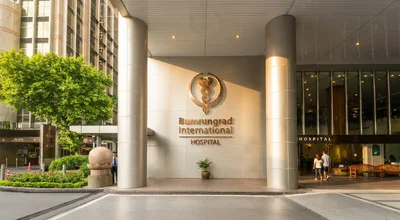
Bumrungrad International Hospital
Tertiary hospital with over 1,200 physicians treating 520,000+ international patients a year.
View hospital profile
Bangkok Hospital
BDMS flagship tertiary campus with standalone heart, cancer, and neuro-orthopaedic hospitals.
View hospital profile
MedPark Hospital
Purpose-built tertiary hospital opened in 2020, focused on complex cardiac, cancer, and transplant care.
View hospital profile
Tell Us What You Need. We Do the Rest.
Share what you're considering and we'll come back with surgeon options, pricing, and a clear plan.
- Real hospital pricing with zero markup
- Matched with a specialist experienced in your specific procedure
- Full coordination from consultation to recovery


Trusted by patients worldwide
The complete guide to Laparoscopic (Minimally Invasive) Colorectal Cancer Surgery in Thailand
Everything below is for readers who want the full detail: costs broken down, types and techniques, recovery, risks and safety, and planning your trip.
Where to Have Colorectal Cancer Surgery in Thailand
In bowel cancer surgery, the multidisciplinary team around the surgeon matters as much as the surgical skill itself. This is what our partner centres bring to that.
JCI-Accredited Cancer Centres
Our partner hospitals have dedicated colorectal surgery programmes within their cancer centres. Leading JCI-accredited hospitals in Bangkok provide multidisciplinary tumour boards, on-site pathology, robotic surgical systems, and radiation oncology departments, so the full treatment pathway sits under one roof rather than spread across separate referrals.
Board-Certified Colorectal Surgeons
Our partner colorectal surgeons are board-certified with specific oncological training and high surgical volumes. Many completed fellowships at established international units. They work within a multidisciplinary team alongside oncologists, radiologists, pathologists, and specialist stoma nurses, so the surgery is planned in the context of your whole cancer treatment.
What to Look for in a Colorectal Surgeon
Board certification in colorectal or general surgery with a cancer focus, and a high volume of laparoscopic resections. Ask about their conversion-to-open rate and their experience with total mesorectal excision for rectal cancer. Confirm your case will be reviewed by a multidisciplinary tumour board before surgery. A surgeon who explains the chance of a stoma, the margins, and the wider treatment plan during consultation is operating at the right level.
Understanding Your Results
Colorectal cancer surgery is measured by complete tumour removal with clear margins, accurate staging from the lymph nodes, and a recovery faster than open surgery allows. What follows sets out what to expect.
Typical Surgical Results
The aim is complete removal of the tumour with clear margins and clearance of the draining lymph nodes, confirmed on pathology. The keyhole approach delivers this with a gentler recovery than open surgery, and where a stoma is formed most people adapt well with specialist support.
What Results Can You Expect?
The full pathology report takes about one to two weeks and confirms the stage and lymph-node status. This determines what happens next: chemotherapy, radiotherapy for rectal cancer, or surveillance with regular follow-up. Your oncology team reviews everything with you and coordinates the handover to your home medical team before you depart. We never promise a cure, but the goal is clear margins, accurate staging, and a plan you understand.
Laparoscopic Colorectal Cancer Surgery Cost in Thailand
Average Cost of Colorectal Cancer Surgery
Laparoscopic colorectal cancer surgery in Thailand typically costs between $8,000 and $20,000, depending on the operation, its complexity, and the length of hospital stay. A straightforward colectomy sits at the lower end, while a complex rectal resection, robotic assistance, or a longer stay sits higher. Chemotherapy and radiotherapy, where recommended, are usually additional.
Cost Breakdown
The colorectal surgeon's fee is the primary component, reflecting surgical complexity and operative time. Hospital charges cover the operating theatre, the 4 to 7 night stay, and nursing. Anaesthesia, pathology analysis, staging scans, and post-operative medications are itemised separately. Stoma supplies and education are included where a stoma is formed. Coordinator support is included.
What Affects the Price?
The type and complexity of the operation are the main price drivers. Rectal surgery with total mesorectal excision and robotic assistance costs more than a standard colectomy. A longer hospital stay or any complication adds to the total. The figures above cover the surgery itself; any recommended chemotherapy or radiotherapy is quoted and billed separately.
Thailand vs International Price Comparison
Colorectal cancer surgery in Thailand costs 50 to 70 percent less than equivalent private surgery in the US ($30,000–$80,000), Australia (A$35,000–A$70,000), and the UK (£20,000–£45,000). The saving is most meaningful for complex or robotic cases, though any recommended chemotherapy or radiotherapy is additional in every country and should be factored into your overall plan.
Laparoscopic vs Open Colorectal Cancer Surgery
The keyhole and open approaches achieve the same cancer operation: removing the section of bowel with the tumour along with the draining lymph nodes. The difference is how the surgeon gets there. Open surgery uses one larger incision, while the laparoscopic approach uses several small ones, and the cancer goals and clearance are the same either way.
Where the tumour is suitable, the laparoscopic approach is preferred for its smaller scars, less pain, and quicker recovery, and trials have shown the cancer outcomes are equivalent. That suitability is the key word: it is a genuine clinical judgement made by your surgeon after reviewing your scans, not a marketing preference.
Open surgery remains necessary for some patients. Large or locally advanced tumours, an obstructed bowel, or extensive adhesions from previous surgery can make open surgery the safer route, and it is also the fallback if the surgeon needs to convert from keyhole to open during the operation for access or safety. This is not a complication or a failure; it is the surgeon doing the right thing for your particular case. The honest position is that the keyhole approach is better when it is suitable, and open surgery is the right and safe choice when it is not.
Types of Colorectal Cancer Operation
The specific operation depends on where the tumour sits in the bowel and how far it has spread. Lymph-node clearance is part of the cancer operation in every case. Your colorectal surgeon and the multidisciplinary team decide the approach together.
Right or Left Hemicolectomy
Removes the section of the colon containing the cancer, either the right or left side, along with the blood vessels and lymph nodes that drain it. The two healthy ends are then rejoined. This is one of the most common colon cancer operations and is frequently done laparoscopically when the tumour is suitable.
- Removes the affected right or left segment of the colon
- Includes clearance of the draining lymph nodes
- Healthy ends are usually rejoined in the same operation
- Best for: colon cancer in the right or left side suitable for keyhole removal
Sigmoid Colectomy
Removes the sigmoid colon, the S-shaped section just above the rectum, when the cancer is located there. The descending colon is then joined to the upper rectum. Like the hemicolectomies, it is commonly performed using a keyhole approach in suitable patients with clearance of the local lymph nodes.
- Removes the sigmoid section of the colon
- Joins the descending colon to the upper rectum
- Lymph-node clearance is part of the operation
- Best for: cancer located in the sigmoid colon
Anterior Resection (Rectal)
Removes the part of the rectum containing the cancer while preserving the anus and bowel continuity where possible. For rectal cancer the surgeon also performs total mesorectal excision, removing the surrounding fatty tissue and lymph nodes as a complete package. A temporary defunctioning stoma is sometimes formed to protect the join while it heals.
- Removes the affected rectum while preserving the anus where possible
- Includes total mesorectal excision for rectal cancer
- A temporary stoma is sometimes needed to protect the join
- Best for: rectal cancer where the anal sphincter can be preserved
Abdominoperineal Resection
Used for cancers very low in the rectum or involving the anus, where preserving the anal sphincter is not possible. The rectum and anus are removed and a permanent stoma (colostomy) is formed. It is a bigger operation, but it can sometimes still be started laparoscopically depending on the tumour and the surgeon's assessment.
- Removes the rectum and anus for very low tumours
- Results in a permanent colostomy
- May be started laparoscopically in suitable cases
- Best for: low rectal or anal cancers where sphincter preservation is not possible
Colorectal Cancer Surgery Techniques
Beyond which segment is removed, several technical choices shape the cancer and functional outcome. An experienced colorectal cancer surgeon and team matter as much as the technology used.
Standard and Robotic-Assisted Laparoscopy
Both achieve the cancer operation through small incisions rather than one large cut. Standard laparoscopy uses hand-held instruments and a camera; robotic assistance adds a magnified view and finer control. The choice depends on tumour position, the surgeon's experience, and what the hospital offers.
- Keyhole access through several small incisions
- Robotic assistance can help in the confined pelvis
- Conversion to open surgery is sometimes necessary mid-operation
- Best for: tumours the surgeon assesses as suitable for a minimally invasive approach
Total Mesorectal Excision for Rectal Cancer
For rectal cancer, the surgeon removes the rectum together with the surrounding envelope of fatty tissue and lymph nodes as one intact package. This technique is central to reducing local recurrence in rectal cancer and is a key marker of surgical quality, whether done open or laparoscopically.
- Removes the rectum and surrounding tissue as one package
- Central to lowering local recurrence in rectal cancer
- A recognised marker of surgical quality
- Best for: rectal cancer requiring complete mesorectal clearance
Anastomosis and Stoma Decisions
Once the cancer is removed, the healthy ends are usually rejoined, either with a stapling device or hand-sewn. For some rectal operations a temporary defunctioning stoma is formed to rest the join while it heals, then reversed later. For very low tumours a permanent stoma may be unavoidable. The surgeon discusses which applies to you before the operation.
- Stapled or hand-sewn rejoining of the healthy bowel
- Temporary stoma sometimes protects a healing rectal join
- Permanent stoma may be needed for very low tumours
- Why it matters: tells you what your bowel will be like after surgery
Enhanced Recovery (ERAS) Protocols
Enhanced-recovery protocols combine careful pain control, early eating, and early walking to speed recovery after bowel surgery. Paired with the keyhole approach, they help most patients leave hospital sooner and regain bowel function faster. The accredited centres we work with follow established ERAS pathways as standard.
- Structured pain control, early eating, and early mobility
- Works alongside keyhole surgery to speed recovery
- Standard practice at accredited centres
- Why it matters: supports a quicker, smoother recovery for everyone
Colorectal Cancer Surgery Recovery Timeline
Days 1–2
You recover on the surgical ward with close monitoring of your pain, fluids, and wounds. Following an enhanced-recovery pathway, the nursing team helps you sit up, sip fluids, and take your first short walks within a day. Early movement lowers the risk of clots and helps the bowel wake up again.
Days 3–7
Eating and drinking are gradually reintroduced as your bowel function returns, which can take several days. Your surgical team monitors closely for any sign of an anastomotic leak, the most important early complication. If a stoma has been formed, the stoma nurse begins teaching you how to manage it. Most patients are discharged from hospital within this window.
Weeks 2–3
You remain in Thailand for outpatient wound checks and to review the final pathology, which confirms the tumour stage and whether the lymph nodes were involved. This report guides whether chemotherapy or radiotherapy is recommended. You build up gentle walking and avoid heavy lifting. Recovery pace depends on the operation: a colectomy or anterior resection settles fastest, while an abdominoperineal resection also has a perineal wound where the anus was removed, which is slower to heal, can stay tender for several weeks, and needs its own dressing and hygiene care that the nursing team teaches you.
Weeks 4–6
Most patients return to normal daily routines and light work within about six weeks5, with energy and bowel habit still settling; abdominoperineal resection patients with a healing perineal wound and the most pelvic surgery often need the longer end of that range. Your oncology team at home receives a complete treatment summary, and any recommended chemotherapy or, for rectal cancer, radiotherapy is coordinated before or after you travel. If you had a temporary defunctioning stoma, it is not reversed now: reversal is a separate, smaller operation usually planned about 3 to 6 months later, once you have recovered and any chemotherapy is complete, and it can be arranged at home or back in Thailand.
When Can You Fly After Colorectal Cancer Surgery?
Most patients are cleared to fly around two to three weeks after surgery, once wounds are healing well, bowel function has returned, and your surgical team is satisfied. Abdominal surgery carries a higher clot risk, so your team confirms you are fit to fly and advises on compression stockings, hydration, and moving regularly during the flight.
When Can You Return to Work and Exercise?
Light desk work is usually possible within three to four weeks, depending on how you feel and your type of operation. Avoid heavy lifting and strenuous exercise for around six weeks to protect the abdominal wounds and reduce the risk of a hernia. Your surgeon gives you specific guidance based on the surgery you had.
When Will Final Pathology Be Available?
The full pathology report, confirming the tumour stage, the margins, and whether the lymph nodes contained cancer, usually takes about one to two weeks. This report determines whether chemotherapy or radiotherapy is recommended, so your oncology team reviews it with you and builds the onward plan before you travel home.
Anaesthesia for Colorectal Cancer Surgery
Laparoscopic colorectal cancer surgery is performed under general anaesthesia, so you are fully asleep and feel nothing during the operation. A consultant anaesthetist stays with you throughout and continuously monitors your heart rate, breathing, and oxygen levels, which is standard at the accredited cancer centres we work with. An epidural or other regional technique is sometimes added to help control pain in the first days after surgery.
Because this is major abdominal surgery, you have a formal pre-operative assessment before you are cleared. This typically includes blood tests, a review of your current medications, and heart and lung checks where your history or age makes them relevant, so the anaesthetist can plan the safest approach for you. The colorectal surgeon and anaesthetist decide the details together based on your general health and the planned operation.
You feel nothing during the procedure itself. Afterwards, abdominal soreness and tenderness around the small incisions are expected rather than severe pain, and they are controlled through a structured pain protocol, with the nursing team helping you start moving early. Most patients describe the discomfort as manageable and steadily easing over the first week, and the keyhole approach generally means less pain than open surgery.
Risks and Safety of Colorectal Cancer Surgery
Laparoscopic colorectal surgery is a well-established operation, and complication rates at high-volume centres are low, but this is major surgery and all the risks should be understood before you decide.
- Anastomotic leak, where the rejoined bowel does not heal fully (a serious early complication)1
- Bleeding during or after the operation
- Wound or abdominal infection
- Blood clots in the legs or lungs (reduced with early movement and prevention measures)
- The need for a stoma, temporary or sometimes permanent
- Conversion from keyhole to open surgery during the operation2
- Urinary dysfunction (retention or incontinence) from pelvic nerve disturbance, mainly after rectal surgery
- Sexual dysfunction from pelvic nerve injury (erectile difficulty in men, vaginal dryness or painful sex in women), mainly after anterior resection or abdominoperineal resection
- Low Anterior Resection Syndrome (LARS) after rectal surgery, with urgency, frequency, clustering of stools, and occasional soiling that affects most patients to some degree
- Longer-term changes in bowel function, particularly after rectal surgery
Pre-operative assessment includes staging scans, blood work, and multidisciplinary discussion. Your colorectal surgeon explains the risks specific to your planned operation, including the chance of needing a stoma or converting to open surgery. Close post-operative monitoring is designed to catch complications such as a leak early, while you are still in hospital.
Is Colorectal Cancer Surgery Safe in Thailand?
The accredited centres we work with perform this surgery at JCI-accredited hospitals, with board-certified colorectal surgeons working within full cancer programmes that include on-site pathology and multidisciplinary teams. The surgical infrastructure mirrors the structure of major Western colorectal units. As with anywhere, choosing an experienced surgeon and a high-volume centre is the most important safety factor.
How to Reduce Surgical Risks
Choose a JCI-accredited hospital with a dedicated colorectal cancer programme and an experienced surgeon. Following the enhanced-recovery pathway, with early walking, clot-prevention measures, and early eating, lowers several risks. Stopping smoking before surgery and optimising any diabetes or heart condition helps healing. Report any fever, increasing abdominal pain, or wound changes promptly.
What Happens if a Stoma Is Needed?
For some operations, particularly low rectal cancers, a stoma is needed, where the bowel is brought out onto the abdomen into a bag. This may be temporary, to protect a healing join and reversed later, or sometimes permanent. A specialist stoma nurse teaches you how to manage it, and many people live full and active lives with a stoma. Your surgeon discusses whether one is likely before the operation, so it is not a surprise.
Bowel, Urinary and Sexual Function After Rectal Surgery
Rectal surgery dissects close to the pelvic autonomic nerves, so functional changes are an honest part of the conversation. After anterior resection most patients have some degree of Low Anterior Resection Syndrome (LARS), with urgency, frequent or clustered stools, and occasional soiling that usually eases over the first year3 and is helped by diet, medication, and pelvic floor support. Nerve disturbance during anterior resection or abdominoperineal resection can also cause urinary retention or incontinence and sexual dysfunction, meaning erectile difficulty in men or vaginal dryness and painful sex in women3. Nerve-sparing technique reduces this risk, your surgeon discusses it before any pelvic operation, and the team supports you if it occurs.
Planning Your Colorectal Cancer Surgery in Thailand
Most patients need 2 to 3 weeks in Thailand. Here is how to organise your trip, what is covered, and what to expect on arrival.
How Long to Stay in Thailand
Plan for 2 to 3 weeks. This covers pre-operative diagnostics and tumour board review, the surgery itself, 4 to 7 nights in hospital, the early recovery while bowel function returns, wound checks, and a final assessment before travel. Rectal surgery or any complication may need a little longer, and your coordinator sets out a realistic timeline before you commit.
What's Included in a Medical Trip
Your care coordinator manages hospital scheduling, transfers, and follow-up appointments. The surgical quote covers the surgeon's fee, anaesthesia, hospital stay, pathology, staging scans, post-operative medications, and coordinator support. Any recommended chemotherapy or radiotherapy is quoted separately. Flights and accommodation are arranged separately.
Emotional and Practical Support
A cancer diagnosis and surgery overseas is a significant undertaking emotionally, and the possibility of a stoma adds to that. We encourage bringing a companion. Our partner hospitals offer counselling and specialist stoma nursing, and your coordinator is available throughout for practical and pastoral support. Clear communication about what to expect at each stage helps reduce uncertainty.
Related Procedures
Other procedures that address similar goals or conditions, in case one of them is a closer fit for you.
Planning your treatment in Thailand
Independent guides to help you weigh the decision, before you commit to anything.
Common Questions About Colorectal Cancer Surgery
Everything you need to know before your surgery

Medical References
Keep researching with AI
Open this guide in your AI assistant to dig deeper and ask the questions it didn't answer.
Opens in a new tab with this guide already loaded.
Medical disclaimer: Content on this site is provided for informational purposes and should not be treated as medical advice. Outcomes, timelines, and eligibility differ from person to person. Consult a qualified medical professional before making any decisions about surgery or treatment.
Ready to Get Started?
Speak with our care coordinators for a free, no-obligation consultation and personalised quote.
Speak to Our Team