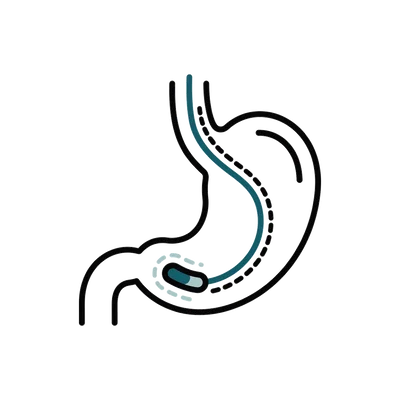
Variceal Banding in Thailand Your guide to cost, top specialists & hospitals
An endoscopic treatment that places tiny elastic bands around swollen veins in the oesophagus to stop them bleeding or to prevent a bleed, as part of managing liver disease.
What Is Variceal Banding?
Also known as: Variceal Banding · Endoscopic Variceal Ligation (EVL)
Variceal banding, known medically as endoscopic variceal ligation (EVL), is a treatment for swollen veins in the oesophagus called varices. During an upper endoscopy, a thin flexible tube with a camera is passed through the mouth, and small elastic bands are placed around each varix. The band cuts off the blood supply to the vein, so over the following days it shrinks, scars over, and drops off.1 The whole procedure usually takes around 20 to 30 minutes and is done under light sedation.
Varices form because of liver disease. When the liver is scarred, most often by cirrhosis, blood cannot flow through it easily, so pressure builds up in the portal vein that drains into it. This is called portal hypertension. The blood is forced to find other routes, swelling the thin-walled veins at the lower end of the oesophagus. These veins can rupture and bleed heavily, which is a medical emergency, so banding is used either to stop active bleeding or, more often, to prevent a first or repeat bleed in someone known to have varices.
It is important to be clear about what banding does and does not do. It treats the varices, not the underlying liver disease, which still needs managing in its own right. It almost always takes a course of several sessions, usually a few weeks apart, to clear the varices completely2, and it lowers but does not remove the risk of bleeding. Banding can be done urgently for active bleeding or planned in advance to prevent it. For most people this is care for an ongoing condition rather than a single curative trip, and it works best alongside the medical management of the liver disease itself.
It can address a range of concerns, including:
Am I a Good Candidate for Variceal Banding?
Suitability for variceal banding rests on having varices that need treating, being stable enough for the procedure, and being willing to complete the course of sessions usually needed. Because it is part of managing liver disease, it works best in step with your own specialist.
Banding is the mainstay for treating and preventing bleeding from oesophageal varices.
Known varices: Medium or large varices found at endoscopy, usually from cirrhosis, that need treating or watching.
Preventing a bleed: Used to prevent a first bleed, or a repeat bleed after a previous haemorrhage, often alongside medication.
Clearing over time: A planned course of sessions can eradicate the varices, with surveillance afterwards.
A little preparation makes the procedure safer and the plan clearer.
Liver disease assessed: Your liver function and overall condition are reviewed so you are stable enough and sedation is planned safely.
Blood thinners reviewed: If you take them, the team plans whether to pause them, ideally before you travel.
Share your records: Bring your diagnosis, scans, and medication list so the plan fits with your liver team at home.
Banding is rarely a one-off, so it helps to expect a course.
Repeat sessions: Usually several sessions a few weeks apart, until the varices are cleared.
Surveillance: Follow-up endoscopies check the varices have not returned.
Alongside medication: Often combined with beta-blockers and with managing the liver disease itself.
A few situations mean planned banding should be deferred or reconsidered.
Unstable liver disease: Very advanced or unstable disease may need stabilising first.
Active heavy bleed: An emergency bleed needs urgent care close to home, not planned travel.
Blood thinners not reviewed: These should be assessed before the procedure.
Who is not suitable for variceal banding?
- Very advanced or unstable liver disease until stabilised and assessed
- An active heavy variceal bleed needing emergency care close to home
- Isolated gastric varices, where glue injection is usually preferred over banding
- Severe uncorrected coagulopathy or very low platelets that cannot be optimised before the procedure
- Child-Pugh C or a very high MELD score, where any elective procedure needs formal hepatology clearance first
- Not medically fit for an endoscopy under light sedation until assessed
Pricing
How Much Will Variceal Banding Cost in Thailand?
What variceal banding costs at accredited hospitals in Thailand, and what your final quote depends on.
Get your exact price
Tell us what you're considering and we'll send a personalised quote from accredited hospitals within 24 hours.
Get my free quoteTypical prices in Thailand
Typical ranges based on recent hospital quotes. Your exact price depends on the hospital and how complex your case is, and is confirmed at your teleconsultation.
Variceal Banding
Small elastic bands are placed around the swollen veins through an endoscope, cutting off their blood supply so they shrink and scar over.
| Planned elective banding session 0 to 1 nights Bands placed at a scheduled session under sedation, to prevent a first or repeat bleed | $600 to $1,200 ฿20,400 to ฿40,800 |
| Banding with additional varices or monitoring 0 to 1 nights More varices banded in one sitting, or closer watching afterwards, for a heavier or higher-risk case | $1,000 to $1,500 ฿34,000 to ฿51,000 |
| Complex or higher-risk session 0 to 1 nights Banding with more intensive monitoring and care, where advanced liver disease raises the risk | $1,500 to $2,000 ฿51,000 to ฿68,000 |
Typically not included
- Further banding sessions in the course. The figure above is for one session, and clearing the varices usually takes several a few weeks apart
- Emergency or inpatient care if a banding ulcer bleeds or a complication needs admission, along with any hospital nights beyond the stated stay
- Surveillance endoscopies afterwards to check the varices have not returned
- The ongoing medication and wider management of the underlying liver disease itself, beyond the guidance given after the procedure
- Liver imaging and investigations, such as a fibroscan or staging scans, used to assess the underlying disease
Get your exact price
Tell us what you're considering and we'll send a personalised quote from accredited hospitals within 24 hours.
Hospitals Trusted for Variceal Banding
From internationally accredited flagships to dedicated specialist hospitals, these are the kinds of facilities where international patients have this procedure.
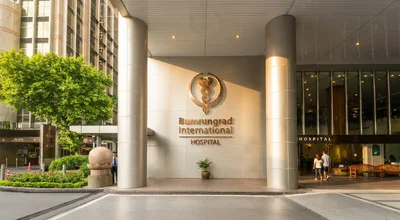
Bumrungrad International Hospital
Tertiary hospital with over 1,200 physicians treating 520,000+ international patients a year.
View hospital profile
Bangkok Hospital
BDMS flagship tertiary campus with standalone heart, cancer, and neuro-orthopaedic hospitals.
View hospital profile
Samitivej Sukhumvit Hospital
Tertiary hospital known for paediatrics, home to Thailand's first private children's hospital.
View hospital profile
Tell Us What You Need. We Do the Rest.
Share what you're considering and we'll come back with surgeon options, pricing, and a clear plan.
- Real hospital pricing with zero markup
- Matched with a specialist experienced in your specific procedure
- Full coordination from consultation to recovery


Trusted by patients worldwide
The complete guide to Variceal Banding in Thailand
Everything below is for readers who want the full detail: costs broken down, types and techniques, recovery, risks and safety, and planning your trip.
Where to Have Variceal Banding in Thailand
Variceal banding is treatment for a complication of liver disease, so the hospital, the specialist performing it, and the wider liver service all matter. When choosing where to have it done in Thailand, these are the things to look for.
JCI-Accredited Hospitals
Choose a hospital with Joint Commission International (JCI) accreditation and a dedicated gastroenterology, endoscopy, and liver service. JCI accreditation sets the same patient-safety and infection-control standards used by leading Western hospitals, which matters for the handling of scopes, the monitoring used during sedation, and the backup available if a complication occurs. An accredited hospital with a liver unit can also manage the underlying disease, not just the banding.
Board-Certified Gastroenterologists and Hepatologists
The procedure should be performed by a board-certified gastroenterologist or hepatologist with formal endoscopy training and experience in variceal work, not an occasional operator. Experience is what most reduces the small risk of perforation, banding-ulcer bleeding, and re-bleeding, and a specialist also judges which varices to band and how aggressively. Many specialists at Thailand's leading hospitals hold international fellowships in endoscopy and hepatology.
A Specialist Liver Unit and Continuity of Care
Because banding is part of managing liver disease over time, look for a hospital that can assess and treat the underlying condition, plan the course of repeat sessions, and provide surveillance afterwards. Ask how the procedure will be done, what sedation you have, how many sessions are likely, and how results and reports are shared with your liver team at home. A good unit sets all of this out clearly and gives you a written report, rather than treating the banding in isolation.
What Variceal Banding Realistically Achieves
Banding is effective at treating and preventing variceal bleeding, but it is honest to be clear about what it does and does not do, and that it is part of managing an ongoing condition. What follows is a realistic picture of what to expect.
What Banding Can and Cannot Do
Banding directly treats the varices, stopping an active bleed or shrinking the veins so they are far less likely to bleed. Over a course of sessions it can clear the varices entirely. What it does not do is treat the underlying liver disease, which still needs managing, and it lowers rather than removes the risk of bleeding, since new varices can form while the portal pressure remains high.1,3 Understanding this is what separates realistic expectations from disappointment.
Why It Is a Course, Not a One-Off
A single session rarely clears the varices, so several are scheduled until they are gone, with surveillance afterwards. Combined with medication and proper management of the liver disease, this is what gives the best protection against bleeding over time. It is best thought of as ongoing care for a chronic condition rather than a single trip with a fixed end point.
Variceal Banding Cost in Thailand
Average Cost of Variceal Banding
A single variceal banding session in Thailand typically costs between $600 and $2,000, depending on the hospital, the sedation used, and how many varices are banded. This is a per-session figure. Because banding almost always requires a course of several sessions a few weeks apart to clear the varices, the overall cost is higher than a single session and is best understood as the total of the planned course rather than a one-off price.
Priced Per Session, Over a Course
Variceal banding is quoted per session because the number of sessions needed varies from person to person and is only known as the varices respond. Most people need several sessions, typically a few weeks apart, until the varices are eradicated, followed by surveillance endoscopies. A clear quote sets out the per-session cost and an expected number of sessions, so you can plan the course rather than budgeting for a single visit.
What Affects the Price?
The main factors are whether the procedure is planned or done as an emergency, the sedation used and the monitoring it requires, how many varices are banded, and the hospital itself. Because banding is part of managing liver disease, the wider care, such as assessment of the liver, medication, and follow-up, also forms part of the overall picture. A JCI-accredited hospital with a specialist liver unit may charge a little more than a basic clinic, but for a procedure done for a serious underlying condition, that is where the value sits.
Thailand vs International Price Comparison
Variceal banding in Thailand costs far less per session than the private price in the US ($3,000–$8,000), Australia (A$3,500–A$7,000), and the UK (£2,000–£5,000), reflecting lower local operating costs rather than weaker standards. Because banding is treatment for an ongoing condition that needs a course of sessions and close links with your liver team, the decision to travel for it should be made with your own specialist, and many people have it as part of managing their liver disease rather than as a standalone trip.
Banding vs Medication and TIPS
Banding is one part of how variceal bleeding is treated and prevented, and it is usually combined with other approaches rather than chosen instead of them. Understanding how they fit together helps set realistic expectations.
Beta-blocker medication, such as carvedilol or propranolol, lowers the pressure in the portal vein and so reduces the tendency of varices to bleed. It works throughout the liver rather than on individual veins, and is often used alongside banding, sometimes as the main preventive treatment on its own. Banding deals directly with the varices the endoscopist can see and band; medication lowers the pressure driving them. The two are complementary, which is why a typical plan uses both.
For difficult cases, where bleeding cannot be controlled or keeps recurring despite banding and medication, a procedure called TIPS (transjugular intrahepatic portosystemic shunt) can be considered. This creates a channel inside the liver to relieve the high portal pressure directly. It is a more involved interventional radiology procedure with its own risks and is reserved for specific situations rather than used routinely.
For most people with oesophageal varices, banding remains the mainstay for both treating active bleeding and preventing it, typically alongside medication, with TIPS held in reserve. None of these treats the underlying liver disease, which always needs managing in its own right. Your liver team will advise which combination suits your situation.
Types of Variceal Banding
Banding is used in several situations, from an emergency at the bedside to a planned course of outpatient sessions. What is done depends on whether the varices are bleeding now, are likely to bleed, or simply need clearing over time. Here are the main forms, with a note on the related injection techniques.
Emergency Banding for Active Bleeding
When a varix is actively bleeding, banding is done urgently, often within hours of admission, to stop the haemorrhage. The endoscopist locates the bleeding vein and places bands to control it, usually alongside medication and supportive care. This is genuine emergency treatment and is normally done at the nearest capable hospital rather than something you travel for.
- Used to stop an active variceal bleed, which is a medical emergency
- Done urgently, usually combined with medication and resuscitation
- Performed wherever you are admitted, not a planned trip
- Best for: a varix that is bleeding now and needs immediate control
Elective and Prophylactic Banding
For someone known to have medium or large varices that have not yet bled, banding can be done in a planned way to prevent a first bleed. It is also used to prevent a repeat bleed after a previous haemorrhage, often alongside beta-blocker medication. Because it is scheduled in advance, this is the form most suited to a planned medical trip.
- Prevents a first or repeat bleed in someone with known varices
- Planned in advance rather than done as an emergency
- Often combined with medication to lower portal pressure
- Best for: known varices being managed to reduce the risk of bleeding
A Planned Course to Eradicate Varices
Banding rarely clears the varices in a single session. The usual approach is a course of repeat endoscopies, typically a few weeks apart, banding the remaining varices each time until they are gone. Follow-up endoscopies then check they have not returned. This is the reality of variceal treatment and the reason it is care for an ongoing condition rather than a one-off fix.
- A series of sessions, usually a few weeks apart, until varices are cleared
- Surveillance endoscopies afterwards check the varices have not returned
- Treats the varices but not the underlying liver disease
- Best for: chronic liver disease where varices need clearing over time
Sclerotherapy and Glue Injection
Banding is the mainstay for oesophageal varices, but related techniques exist. Sclerotherapy (endoscopic variceal sclerotherapy, EVS) injects a solution into or beside the vein to scar it shut, and is sometimes used when banding is difficult. For varices in the stomach (gastric varices), a tissue glue is injected instead, as bands are less effective there. Which technique is used depends on where the varices are and what the endoscopist finds.
- Sclerotherapy injects the vein to scar it shut, an alternative to banding
- Glue injection is used for gastric (stomach) varices where bands work less well
- Banding remains the first choice for oesophageal varices
- Best for: situations where banding alone is not the best option
Variceal Banding Techniques and Approaches
Banding is a well-established endoscopic technique, and the choices that matter most are about doing it safely in an experienced unit and combining it with the wider management of the liver disease. The main considerations are set out below, including why repeat sessions are scheduled.
The Banding Device on the Endoscope
A small banding device, preloaded with several elastic bands, is fitted to the tip of the endoscope. The endoscopist draws each varix into a cap by suction, then releases a band around its base. The principle is simple and mechanical, which is part of why banding has become the standard treatment for oesophageal varices. Several varices can usually be banded in one session.
- A multi-band device fits onto the tip of the standard endoscope
- Each varix is suctioned in and a band released around its base
- Several varices are typically banded in a single session
- Why it matters: the simple, mechanical principle is why banding is the standard
Identifying and Ligating the Varices
The endoscopist inspects the lower oesophagus to find the varices, judges their size and which are most at risk, and bands them working from the bottom upwards. Care is taken not to band too aggressively in one sitting, which is one reason a course of sessions is used rather than attempting everything at once. The aim is steady, safe eradication over time.
- Varices are assessed for size and bleeding risk before banding
- Banding is done in a measured way, not all at once
- A staged approach reduces the chance of ulcers and complications
- Why it matters: working gradually keeps each session safe
Combining With Medication to Lower Portal Pressure
Banding is often used together with a beta-blocker medication, such as carvedilol or propranolol, which lowers the pressure in the portal vein and so reduces the tendency of varices to form and bleed. The two work in different ways and are commonly used side by side. Managing the underlying liver disease, including alcohol, viral hepatitis, or fatty liver where relevant, remains central throughout.
- Beta-blocker medication lowers portal pressure to reduce bleeding risk
- Often used alongside banding rather than instead of it
- Treating the underlying liver disease remains essential
- Why it matters: medication and banding tackle the problem from two angles
A Specialist Liver and Endoscopy Unit
Variceal banding sits within the wider management of liver disease, so it is best done at a hospital with a specialist liver (hepatology) and endoscopy service that can also manage the underlying condition and any complications. Repeat endoscopies are scheduled, usually a few weeks apart, until the varices are gone, with surveillance afterwards. Continuity of care matters as much as the procedure itself.
- Best performed within a specialist liver and endoscopy service
- Repeat endoscopies are scheduled until varices are eradicated
- The unit can also manage the underlying liver disease
- Why it matters: continuity of care counts as much as the procedure
What to Expect After Variceal Banding
First Few Hours
If you had sedation, you rest in a recovery area until it wears off, usually an hour or two. Because the sedation stays in your system, you must not drive, travel alone, or sign anything important for 24 hours, so arrange for someone to accompany you. Some chest discomfort, a feeling of something in the throat, and mild difficulty swallowing are common as the banded veins begin to settle. The team monitors you, and many people stay in for one night so any early problem is caught while you are close to the unit.
The Next Few Days
Mild chest discomfort and some difficulty swallowing are normal for a few days while the banded varices scar and drop off. You are usually advised to eat soft foods, avoid very hot or rough foods, and take any prescribed medication, such as a stomach-acid reducer, to protect the healing areas. Most people manage this comfortably with simple measures and feel back to themselves within a couple of days. Most people with a desk job return to work within 2 to 3 days; physical or strenuous work should wait until you feel fully comfortable, usually within a week.
Watching for Warning Signs
The bands drop off after about 5 to 14 days, leaving small ulcers that heal over, but these can occasionally bleed. The bleed risk is highest in that one-to-two-week window, which extends beyond your stay in Thailand, so do not treat discharge or flying home as an all-clear: keep watching for warning signs for up to two weeks. You are told exactly what to watch for, vomiting blood, black tarry stools, severe chest or abdominal pain, or feeling faint, and to seek urgent care immediately if any appear.3 This is why staying near the hospital for the first few days after the procedure is sensible rather than flying out straight away.
The Course and Follow-Up
Because a single session rarely clears the varices, a repeat endoscopy is usually planned a few weeks later, and then further sessions until the varices are gone. Your care coordinator helps plan this and provides a clear written report so the timing and any medication can be continued by your own liver team at home. Ongoing surveillance and management of the liver disease itself continue alongside.
Can You Fly After Variceal Banding?
Not straight away. Because the banded veins leave small ulcers that can occasionally bleed in the days after the procedure, it is sensible to stay near the hospital for a few days rather than flying out immediately. If you had sedation, you should not drive or travel alone for 24 hours, so plan for someone to be with you. Bear in mind the bands fall off after about 5 to 14 days and the bleed risk runs through that whole window, so even after you fly home keep watching for warning signs for up to two weeks. We suggest allowing a short stay of several days so any early problem is caught while you are close to the unit, and your specialist will advise when it is safe to fly based on your situation and the underlying liver disease.
When Can You Eat, Drink and Resume Activity?
Once any throat numbness and sedation have worn off, you can usually drink and then eat, starting with soft, cool foods and avoiding very hot, hard, or rough foods for a few days while the banded areas heal. Mild chest discomfort and some difficulty swallowing are normal during this time. Most people return to light activity within a day or two, guided by how they feel and by any advice specific to their liver condition. Those with a desk job are usually back to work within 2 to 3 days; physical or strenuous work should wait until you feel fully comfortable, usually within a week.
When Will the Varices Be Cleared?
Rarely in one session. Banding usually clears the varices over a course of several sessions, typically a few weeks apart, with each session banding the varices that remain. Follow-up endoscopies then check they have not returned. Your care coordinator helps plan the timing, and you travel home with a clear written report so your own liver team can continue the course and surveillance without gaps.
Sedation and Comfort During Variceal Banding
Variceal banding does not need a general anaesthetic. It is done under light conscious sedation, given through a small cannula, which leaves you relaxed and drowsy so you usually remember little or nothing of the procedure. A numbing throat spray is often used as well to dull the gag reflex. The procedure itself usually takes around 20 to 30 minutes.
Before any sedation you have a brief assessment of your fitness, including your liver function, any heart or lung conditions, and the medications you take, particularly blood thinners. Because variceal banding is done for liver disease, your overall condition is reviewed carefully, as more advanced disease can affect how sedation is planned. Throughout the procedure your oxygen levels, pulse, and breathing are monitored continuously by the team, which is standard at the accredited hospitals.
Afterwards you may have mild chest discomfort and some difficulty swallowing for a few days as the banded veins settle and scar. This is usually manageable with soft foods and simple medication. If the banding is done as an emergency for active bleeding, the priority is stopping the bleed and stabilising you, and sedation is managed accordingly within that wider care.
Risks and Safety of Variceal Banding
Variceal banding is a well-established treatment that is generally safe in experienced hands, but it carries real risks worth understanding, and the seriousness of the underlying liver disease matters as much as the procedure itself. Most after-effects are minor and short-lived, but some are more serious.
- Chest discomfort and a feeling of tightness for a few days (common, settles as the bands take effect)
- Temporary difficulty or discomfort on swallowing while the banded veins heal (common)
- Ulcers where the bands were placed, which can themselves bleed (one of the main risks)2
- Re-bleeding from the varices, which is why a course of sessions and follow-up are needed
- A reaction to the sedation, monitored for and managed by the team
- Perforation (a tear in the oesophageal wall), which is rare but serious4
- Complications related to the underlying liver disease, which the specialist team manages alongside
The most relevant risks, bleeding from a banding ulcer, re-bleeding, and the rare perforation, are lowest in experienced hands at a properly equipped unit with a specialist liver service and surgical and intensive-care backup. Having any blood thinners reviewed beforehand, following the soft-diet and medication advice afterwards, and staying near the hospital for a few days are the main ways the small risks are kept small. The seriousness of the underlying liver disease remains part of the overall picture.
Is Variceal Banding Safe in Thailand?
Yes, when done at a JCI-accredited hospital with a specialist liver and endoscopy service. Banding is a well-established procedure performed by board-certified gastroenterologists or hepatologists using the same scopes, banding devices, and monitoring as major Western centres. Because varices are a complication of liver disease, an accredited hospital with a liver unit can also assess and manage the underlying condition and has the surgical and intensive-care backup to handle the rare serious complication, with a dedicated care coordinator alongside you throughout.
How to Reduce Your Risk
Have any blood-thinning medication reviewed before you travel, as it may need pausing around the procedure. Make sure your liver disease has been assessed and is stable enough for planned banding. Follow the soft-diet and medication advice afterwards to protect the healing areas, and stay near the hospital for a few days so any banding-ulcer bleed is caught early. And choose a JCI-accredited hospital with a specialist liver unit rather than the cheapest clinic, since experience and the right backup are what most reduce the rare risks.
What If I Bleed or Have a Complication After I Get Home?
The riskiest window is the days soon after the procedure, which is why we suggest staying near the hospital rather than flying straight out. Once home, your care coordinator stays in contact and the hospital can advise remotely, but variceal bleeding is a medical emergency: warning signs such as vomiting blood, black tarry stools, severe chest or abdominal pain, or feeling faint must be treated as urgent and seen at your nearest hospital immediately. You travel with a clear written report and plan so your own liver team can continue your care without gaps.
Fitting Variceal Banding Into Your Trip to Thailand
A planned banding session needs only a short stay, but because the veins can bleed in the days afterwards and the treatment is usually a course, planning around your liver team matters. A few things are worth thinking through before you book.
How Long to Stay in Thailand
Allow 3 to 5 days for a planned session: a consultation and assessment, the procedure itself, and several days nearby afterwards before flying. If your plan is a course of sessions, your specialist and care coordinator will help schedule them, which may mean more than one trip or a longer stay depending on the spacing your liver team advises.
What's Included in a Medical Trip
Your care coordinator arranges the appointment, hospital transfers, and follow-up. The quote covers the specialist's fee, the banding session, sedation and monitoring, and the assessment and report. Because banding is per session, the cost of any further sessions in the course is set out separately. Flights and accommodation are arranged separately, though your coordinator can recommend hotels near the hospital. You travel home with a written report so your own liver team can continue your care.
Coordinating With Your Liver Team at Home
Because variceal banding is part of managing an ongoing liver condition, it works best in step with your own specialist at home. Share your diagnosis, scans, and medication list before you travel, and make sure your home team knows the plan, so the sessions, medication, and surveillance continue without gaps.
Related Procedures
Other procedures that address similar goals or conditions, in case one of them is a closer fit for you.
Planning your treatment in Thailand
Independent guides to help you weigh the decision, before you commit to anything.
Common Questions About Variceal Banding
Everything you need to know before your procedure

Medical References
Keep researching with AI
Open this guide in your AI assistant to dig deeper and ask the questions it didn't answer.
Opens in a new tab with this guide already loaded.
Medical disclaimer: Content on this site is provided for informational purposes and should not be treated as medical advice. Outcomes, timelines, and eligibility differ from person to person. Consult a qualified medical professional before making any decisions about surgery or treatment.
Ready to Get Started?
Speak with our care coordinators for a free, no-obligation consultation and personalised quote.
Speak to Our Team