FibroScan in Thailand Your guide to cost, top specialists & hospitals
A quick, painless scan that measures how stiff and how fatty your liver is, so a chronic liver condition can be checked, staged, and tracked over time without a needle or sedation.
What Is FibroScan?
Also known as: Liver Scan (FibroScan) · Transient Elastography
A FibroScan, known medically as transient elastography, is a quick and painless scan that measures how stiff your liver is, which is a marker of scarring (fibrosis), and, with an added reading called CAP, how much fat it contains. It is done with a small probe rested on the skin over the liver, much like a routine ultrasound, with no needles, no injections, and no sedation. The whole scan usually takes only ten to fifteen minutes.
It works by sending a gentle, painless pulse through the skin that creates a small vibration wave in the liver. The stiffer the liver, the faster that wave travels, so the machine can estimate the degree of scarring from how quickly the wave moves. The CAP reading uses the same probe to estimate how much fat has built up in the liver. Together these give a numerical picture of the liver's condition that can be repeated over time to see whether things are improving or worsening.
It is important to be honest about what a FibroScan does and does not do. It estimates liver stiffness and fat rather than giving a tissue diagnosis, so it tells you how scarred or fatty the liver is likely to be, not exactly why. Readings can be affected by body type, fluid, and recent eating, which is why you fast beforehand and why an experienced operator matters. A FibroScan has greatly reduced how often a liver biopsy is needed, but it does not always replace one: where the result is unclear, does not fit the rest of the picture, or another diagnosis is suspected, a biopsy is still sometimes required.
It can address a range of concerns, including:
Am I a Good Candidate for FibroScan?
Suitability for a FibroScan is straightforward for most people with a liver concern, but it rests on a few practical things: a few hours of fasting, the right probe for your body type, and a reading interpreted alongside your blood tests.
A FibroScan is a comfortable first step for assessing and monitoring a chronic liver condition.
A known or suspected condition: Fatty liver, hepatitis B or C, alcohol-related liver disease, or abnormal liver blood tests are all clear reasons.
Staging without a needle: It estimates how much scarring is present, often answering the question before any biopsy is considered.
Tracking over time: Because it is painless and quick, it is ideal for repeat scans to see whether the liver is improving.
A little preparation is what makes the reading reliable.
Fast beforehand: You are usually asked not to eat for a few hours, as recent food can falsely raise the reading. Clear water is normally allowed.
Share your history: Mention your weight, any abdominal fluid, and your full history so the right probe is chosen and the result is read in context.
Bring previous results: Any earlier scans or blood tests help the specialist interpret the numbers and judge change.
The scan gives two readings, taken in the same short sitting.
Liver stiffness: Estimates how much scarring (fibrosis) is present, from little or none through to cirrhosis.
CAP fat reading: Estimates how much fat is in the liver, central to fatty liver disease.
An estimate, not a diagnosis: The numbers are interpreted alongside your blood tests and history, not in isolation.
A few situations mean a FibroScan may be unreliable or should be deferred.
A lot of fat over the liver: A high body mass index can make a standard reading unreliable and may need a larger probe or another test.
Fluid in the abdomen: Ascites can prevent a valid reading.
Pregnancy: Usually deferred unless the scan is clearly necessary.
Who is not suitable for fibroscan?
- Significant fluid in the abdomen (ascites), which can prevent a valid reading
- A very high body mass index, where a standard M probe may give an unreliable reading and a larger XL probe is needed, or where another test is considered instead<sup class='cite'><a href='#ref-4'>4</a></sup>
- Pregnancy, unless the scan is clearly necessary
Pricing
How Much Will FibroScan Cost in Thailand?
What fibroscan costs at accredited hospitals in Thailand, and what your final quote depends on.
Get your exact price
Tell us what you're considering and we'll send a personalised quote from accredited clinics within 24 hours.
Get my free quoteTypical prices in Thailand
Typical ranges based on recent hospital quotes. Your exact price depends on the hospital and how complex your case is, and is confirmed at your teleconsultation.
FibroScan
A probe rested on the skin sends a painless pulse into the liver and measures how fast it travels, which reflects how scarred and how fatty the liver is.
| FibroScan alone, stiffness and CAP readings The stiffness and CAP fat numbers on their own, with no consultation attached | $80 to $150 ฿2,720 to ฿5,100 |
| FibroScan with specialist review The scan followed by a specialist consultation to interpret the numbers for you | $150 to $250 ฿5,100 to ฿8,500 |
| FibroScan within a liver assessment The scan set within liver blood tests and a fuller work-up | $200 to $300 ฿6,800 to ฿10,200 |
Typically not included
- Treating anything the scan finds. The price covers assessing your liver, not the care of fatty liver disease, hepatitis or alcohol-related damage it may reveal
- A liver biopsy or further tests, if the reading is unclear, does not fit your blood results, or another cause is suspected
- Repeat scans to track your liver over time, since each later FibroScan is booked and priced separately
Get your exact price
Tell us what you're considering and we'll send a personalised quote from accredited clinics within 24 hours.
Hospitals Trusted for FibroScan
From internationally accredited flagships to dedicated specialist hospitals, these are the kinds of facilities where international patients have this procedure.
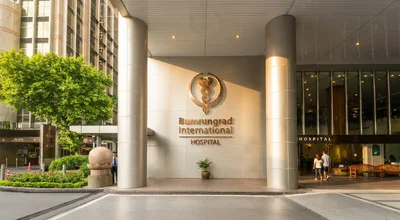
Bumrungrad International Hospital
Tertiary hospital with over 1,200 physicians treating 520,000+ international patients a year.
View hospital profile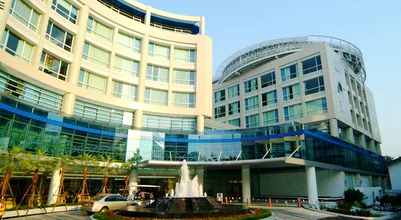
Bangkok Hospital
BDMS flagship tertiary campus with standalone heart, cancer, and neuro-orthopaedic hospitals.
View hospital profile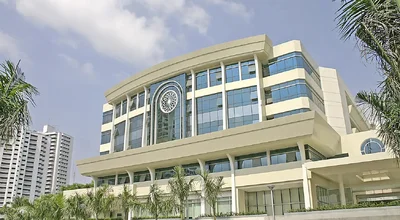
Samitivej Sukhumvit Hospital
Tertiary hospital known for paediatrics, home to Thailand's first private children's hospital.
View hospital profile
Tell Us What You Need. We Do the Rest.
Share what you're considering and we'll come back with surgeon options, pricing, and a clear plan.
- Real hospital pricing with zero markup
- Matched with a specialist experienced in your specific procedure
- Full coordination from consultation to recovery


Trusted by patients worldwide
The complete guide to FibroScan in Thailand
Everything below is for readers who want the full detail: costs broken down, types and techniques, recovery, risks and safety, and planning your trip.
Where to Have a FibroScan in Thailand
A FibroScan is painless and low-risk, but a reliable, well-interpreted reading still depends on the hospital, the operator, and the specialist who reads it. Here is what to look for when choosing where to have it done in Thailand.
JCI-Accredited Hospitals
Choose a hospital with Joint Commission International (JCI) accreditation and a dedicated liver, hepatology, or gastroenterology service. JCI accreditation sets the same patient-safety and quality standards used by leading Western hospitals, and a hospital with a proper liver service is more likely to have a well-maintained machine, experienced operators, and specialists who can interpret the reading and arrange any follow-up rather than handing over a bare number.
A Hepatology or Gastroenterology Team
A FibroScan reading is only as useful as the doctor reading it. Look for a hospital where a hepatologist or gastroenterologist interprets the result alongside your blood tests and history, can explain what it means for you, and can advise whether non-invasive tests are enough or a biopsy is genuinely needed. Many specialists at Thailand's leading hospitals hold international training in liver disease.
What to Look for in a Unit
Look for a properly maintained FibroScan machine with the range of probe sizes needed for different body types, an operator experienced in getting reliable readings, and same-day specialist interpretation. Ask whether blood tests and a consultation are included so the result is put in context, and expect a written report to take home rather than just a number on a screen.
What a FibroScan Realistically Achieves
A FibroScan is an assessment, not a treatment, so its value is in the answers it gives and the invasive tests it can often avoid. What it realistically achieves falls into two parts: what it can tell you, and what it cannot do on its own.
What a FibroScan Can Tell You
A FibroScan gives a numerical estimate of how scarred and how fatty your liver is, which is enough for many people to be reassured, to stage a known condition, or to track change over time. For someone with fatty liver, hepatitis, or a high alcohol intake, it can show whether scarring is mild or advanced without a needle, and a reassuring result alongside normal blood tests often means a serious problem is unlikely.
What It Cannot Do on Its Own
It is honest to be clear about the limits. A FibroScan estimates stiffness and fat rather than diagnosing the exact cause of liver disease, and its readings can be affected by body type, fluid, or recent eating. Where the result is unclear or does not fit the rest of the picture, a biopsy or further tests may still be needed to settle the diagnosis.
FibroScan Cost in Thailand
Average Cost of a FibroScan
A FibroScan in Thailand typically costs between $80 and $300. A standard scan with the stiffness and CAP fat readings sits at the lower end. The figure rises if it is bundled with a specialist consultation, liver blood tests, or a wider liver assessment, which is often how it is sensibly done rather than as a scan in isolation.
Scan Alone vs Liver Assessment
The lowest-cost option is the scan on its own. Most people, though, have it as part of a proper liver assessment, with a hepatology or gastroenterology consultation and blood tests, so the result can be interpreted rather than handed over as a bare number. A quote usually sets out the scan price with the cost of the consultation and any blood tests added clearly, so you can see what you are paying for.
What Affects the Price?
The main factors are whether the scan is bundled with a consultation and blood tests, whether a specialist interprets the result on the day, and the hospital itself. A JCI-accredited hospital with an experienced hepatology team and a properly maintained machine may charge a little more than a basic clinic, but for a reading you and your doctor will rely on, that reliability is where the value sits.
Thailand vs International Price Comparison
A FibroScan in Thailand costs far less than the private price in the US ($200–$800), Australia (A$250–A$700), and the UK (£150–£500), reflecting lower local operating costs rather than weaker standards. Because the absolute saving on a single low-cost scan is small, a FibroScan makes most sense as part of a liver check, a wider health screen, or ongoing monitoring rather than as a standalone reason to travel.
FibroScan vs Liver Biopsy and Blood Tests
A FibroScan is one of several ways to assess a liver, and for most people it is one of the first, gentlest steps. Blood-based fibrosis scores, such as FIB-4 and the enhanced liver fibrosis (ELF) test, use a sample of blood and a simple calculation to estimate the likelihood of significant scarring. They are non-invasive and widely used as an initial filter, and a FibroScan often follows to add a direct measurement of liver stiffness. Used together, blood scores and a FibroScan can build a strong non-invasive picture.
A liver biopsy is different in kind. A small sample of liver tissue is taken with a needle and examined under a microscope, which remains the most detailed test because it shows the actual structure and can reveal the specific cause of disease, not just the amount of scarring. The trade-off is that it is invasive, carries a small risk of bleeding, and samples only a tiny part of the liver.
The sensible order for most people is the non-invasive tests first: blood scores and a FibroScan can often answer the question and avoid a biopsy altogether. A biopsy is reserved for when the non-invasive results are unclear, disagree with each other, or do not fit the clinical picture, or when knowing the exact cause will change treatment. A FibroScan has greatly reduced how often a biopsy is needed, but it has not abolished it4, and an honest assessment uses each test for what it does best.
Types of FibroScan Measurement
A FibroScan is a single short scan, but it gives more than one kind of reading, and how it is used depends on what your doctor needs to know. Here are the main forms.
Liver Stiffness Measurement
The core reading. The probe measures how fast a gentle vibration wave travels through the liver, which reflects how stiff it is and therefore how scarred. The result is a number that helps place your liver on a scale from no significant scarring through to advanced fibrosis or cirrhosis, without a needle.
- Measures liver stiffness as a marker of fibrosis (scarring)
- Helps stage how advanced any scarring is likely to be
- A painless number that can be compared over time
- Why it matters: this is what stages scarring in a chronic liver condition
CAP Measurement (Liver Fat)
A second reading taken with the same probe at the same sitting. The Controlled Attenuation Parameter (CAP) estimates how much fat has built up in the liver, which is central to assessing fatty liver disease. It adds no extra time and no discomfort, and gives a fuller picture alongside the stiffness reading.
- Estimates the amount of fat in the liver
- Taken at the same time as the stiffness reading
- Central to assessing fatty liver disease (NAFLD/MASLD)
- Why it matters: it adds a fat reading to the scarring number at no extra cost
Repeat Scans for Monitoring
Because it is painless and quick, a FibroScan can be repeated as often as needed to track whether the liver is improving or worsening. This makes it useful for following the effect of weight loss, treating hepatitis, or cutting out alcohol, where seeing the numbers change over months gives real feedback.
- Easily repeated to track change over time
- Shows the effect of treatment or lifestyle change
- No needle, so monitoring is comfortable and low-risk
- Why it matters: it lets you follow a known liver condition over months or years
Probe Choice for Different Body Types
The scan uses different probe sizes depending on body shape and the amount of tissue over the liver. A larger probe is used where there is more fat over the liver, which improves the chance of a reliable reading. Choosing and positioning the right probe is part of why an experienced operator gives a more dependable result.
- Different probe sizes suit different body types
- A larger probe helps where there is more tissue over the liver
- Correct probe choice improves the reliability of the reading
- Why it matters: it keeps the scan reliable across a range of body shapes
How a FibroScan Is Performed
The scan itself is simple for you, but a few technical points decide how reliable the reading is, which is why preparation and an experienced operator make a difference.
The Elastography Probe & Shear Wave
The operator rests a probe on the skin over the right side of the liver. It sends a gentle pulse that creates a small vibration, called a shear wave, inside the liver, and measures how fast it travels. A stiffer, more scarred liver carries the wave faster. You feel only a light flick with each measurement, and several readings are taken and averaged.
- A probe on the skin sends a painless vibration into the liver
- Wave speed reflects how stiff and scarred the liver is
- Several readings are taken and averaged for accuracy
- Why it matters: this is how scarring is estimated without a needle
The CAP Fat Assessment
For the fat reading, the same probe measures how much the ultrasound signal is weakened as it passes through the liver, since fat scatters and absorbs the signal. This Controlled Attenuation Parameter is captured automatically alongside the stiffness measurement.
- Fat is read from how much the ultrasound signal weakens
- Captured automatically with the stiffness reading
- Adds no extra time or discomfort
- Why it matters: it measures fat and scarring from one probe placement
Fasting Beforehand
You are usually asked not to eat for a few hours before the scan, because recent food increases blood flow to the liver and can raise the stiffness reading falsely. Following the fasting instructions is one of the simplest ways to make sure the result is reliable, and clear water is normally allowed.
- Fasting for a few hours improves reliability
- Recent food can falsely raise the stiffness reading
- Clear water is usually allowed beforehand
- Why it matters: it is the simplest thing you can do for a dependable reading
Factors That Affect the Reading
Some things can make a reading less reliable: a high body mass index or a lot of fat over the liver, fluid in the abdomen, recent eating, and certain other conditions. Where a reading is unreliable or fails, it is simply repeated, a different probe is used, or another test is suggested. Being open about these limits is part of an honest result.
- Body type, fluid, and recent food can affect the reading
- An unreliable reading is repeated or done differently
- Sometimes another test is needed instead
- Why it matters: it is what an honest result has to account for
The Value of an Experienced Operator
A FibroScan looks simple, but a reliable result depends on correct probe choice, good positioning, and recognising when a reading is not valid. An experienced operator at a properly equipped unit gets more usable, dependable readings, which is why where you have it matters even for a painless scan.
- Correct probe choice and positioning improve reliability
- An experienced operator recognises invalid readings
- More dependable results from a high-volume unit
- Why it matters: it is the difference between a number you can trust and one you cannot
What to Expect After a FibroScan
Straight Afterwards
There is nothing to recover from. The scan is painless and leaves no mark, so you get up and carry on with your day immediately. You can eat and drink as normal again, drive, and return to all your usual activities right away. There is no sedation to wear off and no aftercare to manage.
Your Result
The numbers, your liver stiffness and CAP fat reading, are available the same day, and a specialist explains what they mean for you. Because the result is a measurement rather than a tissue sample, there is no laboratory wait, so you usually leave understanding where your liver sits.
What the Numbers Lead To
Depending on the result, your doctor may reassure you, suggest lifestyle changes such as weight loss or cutting out alcohol, start or adjust treatment for hepatitis, or recommend further tests. Where the picture is unclear or does not fit, a liver biopsy may still be advised to settle the diagnosis.
Follow-Up
Because the scan is so easy to repeat, follow-up is often simply another FibroScan in a few months to see whether the numbers are improving. Your care coordinator helps arrange any next step, and you travel home with a written report so your own doctor can continue your care without gaps.
Can You Fly After a FibroScan?
Yes, with no restriction at all. A FibroScan is a painless scan with no needle, no sedation, and no recovery, so there is no medical reason to wait before flying. You can have the scan and travel the same day. The only reason to allow a little extra time is if you want to discuss the result, have blood tests, or arrange any follow-up while you are there.
When Can You Eat, Drink and Work Again?
Immediately. You fast for a few hours before the scan for a reliable reading, but as soon as it is done you can eat and drink normally and return to work and all your usual activities straight away. There is no sedation and nothing to recover from, so the scan does not interrupt your day beyond the short appointment itself.
When Will You Get Your Results?
The same day. A FibroScan gives a numerical reading rather than a tissue sample, so there is no laboratory wait. The stiffness and CAP fat numbers are available straight away, and a specialist explains what they mean for you and what, if anything, to do next.
Is a FibroScan Painful?
A FibroScan needs no anaesthetic of any kind, because there is nothing to numb.2,3 The probe simply rests on the skin over your liver, in much the same way as a routine ultrasound, and there are no needles and no injections involved at any point.
With each measurement you feel a light flick or gentle tap as the probe sends its painless pulse into the liver. Most people describe this as a mild, slightly odd sensation rather than anything uncomfortable, and several readings are taken in quick succession over a few minutes. You lie on your back with your right arm raised so the operator can reach the right side of your liver.
There is no sedation, so you stay fully awake and alert throughout and can drive and carry on straight afterwards. The only preparation is fasting for a few hours beforehand so the reading is reliable, and the scan itself is over in around ten to fifteen minutes.
Risks and Safety of a FibroScan
A FibroScan is one of the safest tests in medicine. It uses no needles and no radiation, so there is essentially nothing to recover from and no physical risk to speak of. The few caveats worth knowing are about the reliability of the reading rather than your safety.
- A high body mass index, fluid in the abdomen, or a lot of fat over the liver can make a standard reading unreliable, sometimes needing a different probe or another test4
- It is least accurate in the intermediate range, where mild and moderate fibrosis (F1–F2) overlap, so a borderline reading is confirmed with blood-based scores or a repeat scan rather than taken as a precise stage
- A normal or reassuring reading does not completely rule out liver disease, so it is interpreted alongside your blood tests and history
The honest summary is that there is no meaningful safety risk from a FibroScan, only the chance that a reading is unreliable and needs repeating or backing up with another test. This is why fasting beforehand, an experienced operator, and interpreting the number alongside blood tests and your history all matter.
Is a FibroScan Safe in Thailand?
Yes, and there is very little that can go wrong, because the scan uses no needle and no radiation. At JCI-accredited hospitals it is performed on the same equipment used in leading Western centres and interpreted by hepatology or gastroenterology specialists. The main thing that varies between settings is the experience of the operator and the team reading the result, which is why an accredited hospital with a proper liver service is worth choosing.
How to Make Your Reading Reliable
Fast for the few hours you are asked to beforehand, as recent food is the most common reason for a falsely high reading. Mention your weight, any abdominal fluid, and your full history so the right probe is chosen and the result is interpreted in context. And have the scan at a unit experienced in liver assessment, since a dependable reading depends as much on the operator and the doctor reading it as on the machine.
What If the Scan or Diagnosis Is Unclear?
A FibroScan estimates scarring and fat rather than giving a tissue diagnosis, so sometimes the picture is not clear cut: a reading may be unreliable, the numbers may not fit your blood tests, or another cause may be suspected. In those cases the specialist will explain the uncertainty honestly and may suggest repeating the scan, adding blood-based fibrosis tests, or, where it is genuinely needed, a liver biopsy to settle the diagnosis. The aim is a clear answer, not a number taken in isolation.
Fitting a FibroScan Into Your Trip to Thailand
A FibroScan needs no stay and no recovery, so it slots into a trip with almost no planning. The few practical points worth knowing are about fitting it around a consultation rather than around downtime.
No Dedicated Stay Needed
A FibroScan requires no minimum stay and no downtime, so it can sit on any day of your trip without shaping the rest of it. If you want the result interpreted properly, the one thing worth budgeting time for is a specialist consultation and blood tests at the same visit, which is often the sensible way to do it.
What's Included
Your care coordinator arranges the appointment and any hospital transfers. A quote covers the scan and its readings, and, if you choose, a hepatology or gastroenterology consultation and liver blood tests so the result can be interpreted properly. Flights and accommodation are arranged separately, though your coordinator can recommend hotels nearby. You travel home with a written report for your own doctor.
Combining It With a Liver Check or Health Screen
Because it is quick, painless, and low-cost, a FibroScan combines easily with other tests. It is often done as part of a wider liver check or general health screen, alongside blood tests, an abdominal ultrasound, or other investigations, so a single visit answers more than one question and the scan earns its place in a fuller work-up.
Related Procedures
Other procedures that address similar goals or conditions, in case one of them is a closer fit for you.
Planning your treatment in Thailand
Independent guides to help you weigh the decision, before you commit to anything.
Common Questions About FibroScan
Everything you need to know before your scan

Medical References
Keep researching with AI
Open this guide in your AI assistant to dig deeper and ask the questions it didn't answer.
Opens in a new tab with this guide already loaded.
Medical disclaimer: Content on this site is provided for informational purposes and should not be treated as medical advice. Outcomes, timelines, and eligibility differ from person to person. Consult a qualified medical professional before making any decisions about surgery or treatment.
Ready to Get Started?
Speak with our care coordinators for a free, no-obligation consultation and personalised quote.
Speak to Our Team