PEG Tube Placement in Thailand Your guide to cost, top specialists & hospitals
A short endoscopic procedure to place a feeding tube directly into the stomach, so that food, fluids, and medicines can be given safely when swallowing by mouth is no longer possible.
What Is PEG Tube Placement?
Also known as: Feeding Tube (PEG) · Percutaneous Endoscopic Gastrostomy
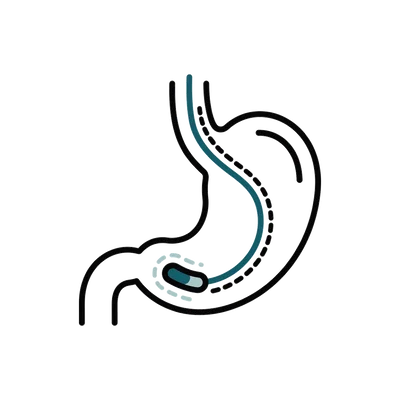
A PEG, or percutaneous endoscopic gastrostomy, is a feeding tube placed directly into the stomach through the wall of the abdomen, guided by an endoscope. It allows food, fluids, and medicines to be given when a person cannot eat or swallow safely by mouth. The placement itself is a short procedure, usually taking twenty to thirty minutes, done under sedation with local anaesthetic at the site.
It is important to be clear about what a PEG does. It supports nutrition; it does not treat the condition that caused the swallowing problem. People come to need a PEG for very different reasons: unsafe swallowing after a stroke or brain injury, a progressive neurological condition such as motor neurone disease or advanced Parkinson's, or head and neck cancer during or after treatment. For some, the tube is temporary, used while swallowing recovers; for others it is long-term. Either way, it is there to keep a person nourished, hydrated, and able to take their medicines when the mouth can no longer do that safely.
A PEG is not an elective choice in the way most cosmetic or quality-of-life procedures are. It is supportive care for a specific clinical need, and the decision to have one is always made together with the medical team and the family, weighing the benefit to nutrition and comfort against what is right for the person. It also brings ongoing responsibility: the tube and the skin around it need daily care, feeds are planned by a dietitian, and supplies and support need to be arranged for home. This page explains honestly what the procedure involves, what life with a PEG is like, and what to consider before travelling for it.
It can address a range of concerns, including:
Am I a Good Candidate for PEG Tube Placement?
A PEG is considered when someone cannot eat or swallow safely by mouth and is likely to need tube feeding for more than a few weeks. Suitability rests on the clinical need, fitness for a short procedure, and the support available for care at home.
A PEG is supportive care for people who cannot meet their nutrition needs safely by mouth.
A confirmed need: A swallowing assessment shows that eating or drinking by mouth is unsafe, after a stroke, with a neurological condition, or with head and neck cancer.
Longer-term feeding: It is preferred over a nasal tube when feeding is likely to be needed for more than a few weeks.
Supports, not treats: It keeps the person nourished and able to take medicines while the underlying condition is managed separately.
A little preparation makes the procedure safer and the recovery smoother.
Fitness for sedation: Heart or lung conditions are reviewed so sedation is planned safely.
Blood thinners reviewed: If you take them, the team plans whether to pause them before the procedure.
An empty stomach: You will be asked to fast beforehand so the procedure can be done safely.
A PEG is a continuing responsibility, so support is planned before you travel home.
Training: You and your carers are taught feeding, flushing, and stoma care before discharge.
Supplies: Feed, syringes, dressings, and replacement tubes need to be arranged where you live.
Local oversight: Knowing which local team or doctor will help is important before you leave.
A PEG is decided together rather than chosen in isolation.
With the medical team: Best discussed with the doctors already caring for the stroke, condition, or cancer.
With the family: The benefit to nutrition and comfort is weighed against the person's wider situation and wishes.
The person's wishes: Where possible, the decision reflects what the person themselves wants.
Who is not suitable for peg tube placement?
- Feeding only needed for a short time, where a nasal tube may be more appropriate
- Previous total gastrectomy, as there is no stomach to place the tube into, which rules out a PEG entirely
- Anatomy that makes the stomach hard to reach with an endoscope, where a RIG may be needed instead
- Swallowing expected to recover soon, where waiting may avoid a procedure altogether
Pricing
How Much Will PEG Tube Placement Cost in Thailand?
What peg tube placement costs at accredited hospitals in Thailand, and what your final quote depends on.
Get your exact price
Tell us what you're considering and we'll send a personalised quote from accredited clinics within 24 hours.
Get my free quoteTypical prices in Thailand
Typical ranges based on recent hospital quotes. Your exact price depends on the hospital and how complex your case is, and is confirmed at your teleconsultation.
PEG Tube Placement
A feeding tube is passed through the wall of the abdomen into the stomach using an endoscope, so food and medicines can be given when swallowing is unsafe.
| PEG placement with sedation and inpatient stay 1 to 2 nights Standard PEG or a PEG-J extension, for feeding when swallowing by mouth is no longer safe | $800 to $2,500 ฿27,200 to ฿85,000 |
Typically not included
- Feed formula, syringes, dressings and replacement tubes for use at home, an ongoing cost for as long as the PEG stays in place
- Home nursing or trained carer support arranged where you live
- A low-profile button device, if you later switch to one once the tract has matured
- A radiologically inserted gastrostomy instead, placed under X-ray guidance, if the endoscope cannot pass safely
- Treatment of the underlying stroke, neurological condition or cancer
Get your exact price
Tell us what you're considering and we'll send a personalised quote from accredited clinics within 24 hours.
Hospitals Trusted for PEG Tube Placement
From internationally accredited flagships to dedicated specialist hospitals, these are the kinds of facilities where international patients have this procedure.
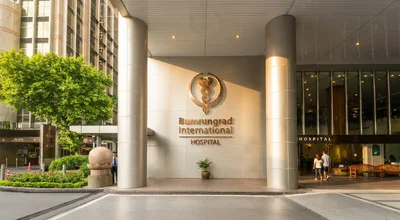
Bumrungrad International Hospital
Tertiary hospital with over 1,200 physicians treating 520,000+ international patients a year.
View hospital profile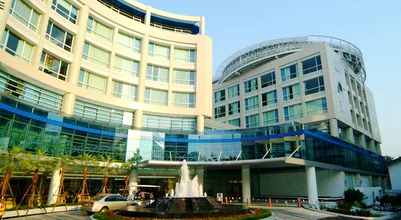
Bangkok Hospital
BDMS flagship tertiary campus with standalone heart, cancer, and neuro-orthopaedic hospitals.
View hospital profile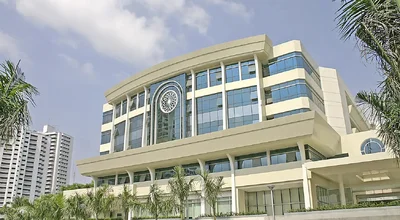
Samitivej Sukhumvit Hospital
Tertiary hospital known for paediatrics, home to Thailand's first private children's hospital.
View hospital profile
Tell Us What You Need. We Do the Rest.
Share what you're considering and we'll come back with surgeon options, pricing, and a clear plan.
- Real hospital pricing with zero markup
- Matched with a specialist experienced in your specific procedure
- Full coordination from consultation to recovery


Trusted by patients worldwide
The complete guide to PEG Tube Placement in Thailand
Everything below is for readers who want the full detail: costs broken down, types and techniques, recovery, risks and safety, and planning your trip.
Where to Have a PEG Tube Placed in Thailand
A PEG is a routine procedure, but it is still a procedure with real risks, performed for people who are often unwell, so the hospital and the team matter. Three things are worth checking when choosing where to have it done in Thailand.
JCI-Accredited Hospitals
Choose a hospital with Joint Commission International (JCI) accreditation and a dedicated gastroenterology or endoscopy unit. JCI accreditation sets the same patient-safety and infection-control standards used by leading Western hospitals, which matters both for the cleaning and handling of scopes and for the monitoring used during sedation. An accredited hospital also has the surgical and intensive-care backup on site to manage the rare complication, such as peritonitis.
An Experienced Gastroenterology and Nutrition Team
The placement should be carried out by an experienced gastroenterology team that performs PEGs regularly, working alongside a dietitian who plans the feeding. Nutrition support is a team effort, not a single procedure, and the best outcomes come where the endoscopist, nursing staff, and dietitian work together. A unit used to caring for people who need feeding tubes will treat the whole picture, not just the placement.
Training and Support Before You Leave
Just as important is how well the unit prepares you for home. A good team makes sure the person and their carers can confidently give feeds, flush the tube, care for the stoma, and recognise problems before discharge, and provides a clear written plan and report to take home. Ask what training is given, what support is available, and how the unit will stay in contact once you have travelled back.
What a PEG Realistically Achieves
A PEG is supportive care, so its value is best understood in terms of what it allows, and what it does not change. Here is an honest view of what to expect.
What a PEG Can and Cannot Do
A PEG makes it possible to give reliable nutrition, fluids, and medicines when the mouth can no longer do that safely. For many people it relieves the strain and risk of struggling to eat, reduces the chance of malnutrition and chest infections from food going the wrong way, and can ease pressure at mealtimes for the whole family. What it does not do is treat the underlying condition, the stroke, the neurological disease, or the cancer, that caused the swallowing problem in the first place. It supports the person while that condition is managed separately.
Temporary or Long-Term
For some people a PEG is temporary. After a stroke or brain injury, for example, it may be used to keep the person nourished while swallowing recovers with rehabilitation, and removed once safe swallowing returns. For others, particularly with progressive conditions, it is long-term and becomes a settled part of daily life. Which it is depends entirely on the person's condition and how it changes over time, and it is something the medical team reviews with the person and family rather than something fixed at the start.
PEG Tube Placement Cost in Thailand
Average Cost of a PEG Placement
A PEG placement in Thailand typically costs between $800 and $2,500. A straightforward standard PEG with a short stay sits at the lower end. The figure rises with a PEG-J, a longer hospital stay where the person needs closer monitoring, or where additional assessments are needed before the procedure. The quote covers the placement, sedation, and the inpatient stay rather than the cost of feeding at home.
What Affects the Price?
The main factors are the type of device placed, a PEG-J costs more than a standard PEG, the length of stay needed, and how much pre-procedure assessment is required given the person's underlying condition. The hospital itself matters too: a JCI-accredited hospital with an experienced gastroenterology and nutrition team and the backup to handle a rare complication may charge a little more, and for a procedure with small but real risks that is where the value sits.
Feed Supplies and Ongoing Care
The placement cost does not include the continuing cost of living with a PEG. Feed formula, syringes, dressings, replacement tubes, and any home nursing support are ongoing and are arranged where the person lives. It is important to plan for these before travelling, and to confirm what support will be available at home, so the tube can be looked after safely once you return. Your care coordinator can set out clearly what the Thailand quote does and does not cover.
Thailand vs International Price Comparison
A PEG placement in Thailand costs considerably less than the private price in the US ($4,000–$12,000), Australia (A$4,500–A$9,000), and the UK (£3,000–£6,000), reflecting lower local operating costs rather than weaker standards. That said, a PEG is supportive care for a real clinical need, often in someone who is unwell, so the decision to travel for it should be made carefully with the medical team and family, weighing the practicalities of travel and aftercare alongside the cost.
PEG vs Nasogastric Tube and RIG
A PEG is one of several ways to give nutrition when eating by mouth is unsafe, and which is right depends mostly on how long feeding is likely to be needed and on the person's anatomy.
A nasogastric tube passes through the nose and down into the stomach. It needs no procedure to place, which makes it the usual choice for short-term feeding, for example in the first days or weeks after a stroke while it is still unclear whether swallowing will recover. Its drawbacks are that it is visible on the face, can be uncomfortable, is easily dislodged, and is not comfortable or practical for the longer term. When feeding is expected to be needed for more than a few weeks, a PEG is generally preferred because it is more secure, more discreet, and easier to live with.
A radiologically inserted gastrostomy (RIG) places the same kind of tube into the stomach, but using X-ray guidance rather than an endoscope. It is the alternative when an endoscopic PEG is not suitable, for instance when a scope cannot pass safely because of a narrowing in the throat or oesophagus, which can happen with some head and neck cancers. The choice between a PEG and a RIG is a clinical one, made by the team based on what can be done safely for that person, rather than a preference. Your medical team will explain which option fits the situation and why.
Types of Feeding Tube and Device
A PEG is the most common gastrostomy, but there are variations to suit different needs, and an alternative for people in whom an endoscopic PEG is not suitable. The right device is chosen with the gastroenterology and nutrition team based on the person's anatomy, how feeds are tolerated, and how long feeding is likely to be needed.
Standard PEG
The usual device: a soft tube placed through the abdominal wall directly into the stomach, held in place by a small internal disc or bumper and an external fixation plate. Feeds, fluids, and medicines are given through it. It is the standard choice when the stomach can be fed into safely and feeding is likely to be needed for more than a few weeks.
- A tube into the stomach, secured inside and out
- The most common gastrostomy for longer-term feeding
- Suitable when stomach feeding is well tolerated
- Best for: most people needing medium or long-term tube feeding
PEG-J (with Jejunal Extension)
A PEG with a thin extension threaded onward into the small bowel (the jejunum). It is used for people who cannot tolerate feeds delivered into the stomach, for example because of severe reflux, a high risk of aspiration, or delayed stomach emptying. Feeding into the small bowel bypasses the stomach while still using the same gastrostomy site.
- A jejunal extension carries feed past the stomach
- For reflux, aspiration risk, or poor stomach emptying
- Uses the same abdominal site as a standard PEG
- Best for: people who do not tolerate feeding into the stomach
Button / Low-Profile Device
Often fitted later, once the tract between the skin and stomach is well established. A button sits almost flush against the skin, with a short connector attached only when feeding, which many people find more comfortable, more discreet, and easier to live with day to day than a longer tube. It is a change of device rather than a new procedure for most people.
- Sits flush to the skin, discreet and low-profile
- Usually fitted after the tract has matured
- More comfortable and easier to manage for many
- Best for: longer-term feeding once the site has healed
RIG (Radiologically Inserted Gastrostomy)
Not a PEG, but the main alternative when an endoscopic PEG is not suitable, typically when a scope cannot pass safely, as can happen with some head and neck cancers. A RIG places the same kind of tube using X-ray imaging rather than an endoscope. The decision between PEG and RIG is made by the team based on the person's anatomy.
- Places a gastrostomy tube using X-ray guidance, not a scope
- The alternative when an endoscope cannot pass safely
- Common where a throat or oesophageal narrowing is present
- Best for: people in whom an endoscopic PEG is not possible
How a PEG Is Placed
A PEG placement is a coordinated procedure involving the endoscopist, the nursing team, and a dietitian who plans the feeding around it. Understanding the steps, and the support that comes with them, helps the person and their family know what to expect.
Endoscopy to Locate the Site
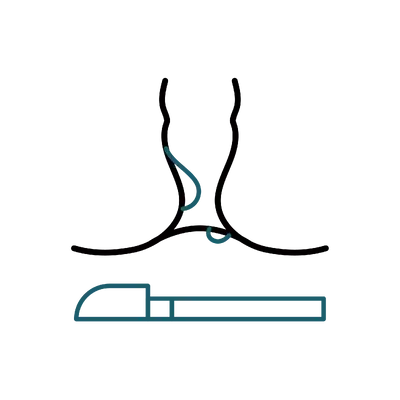
An endoscope is passed through the mouth into the stomach, exactly as in a gastroscopy, so the team can see the stomach lining from the inside. The light from the scope is used to find the safest point on the abdominal wall, away from other organs, where the tube should pass. This is done under sedation, so the person is relaxed and drowsy and usually remembers little of it.
- A scope gives a direct view from inside the stomach
- Light from the scope identifies the safest entry point
- Carried out under sedation with the area numbed
- Why it matters: the site is found safely, away from other organs
Placing and Securing the Tube
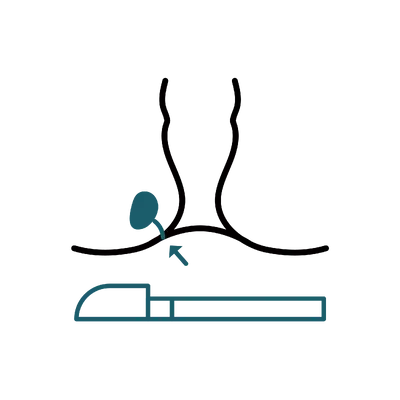
Once the site is chosen, the skin is numbed with local anaesthetic and a small opening is made. The feeding tube is passed through the abdominal wall into the stomach and held in place by an internal bumper and an external fixation plate, so it cannot move or fall out. The whole placement usually takes only twenty to thirty minutes.1
- The skin is numbed and a small opening made
- The tube is held by internal and external fixation
- A short procedure, usually twenty to thirty minutes
- Why it matters: the tube stays correctly positioned and cannot fall out
Dietitian-Led Feed Planning
A PEG is only half the picture; what goes through it matters just as much. A dietitian plans the feed regime to meet the person's nutritional and fluid needs, whether that is continuous feeding overnight, bolus feeds during the day, or a combination, and adjusts it over time. This planning is central to the procedure being worthwhile, not an afterthought.
- Feeds are planned to meet nutrition and fluid needs
- Continuous, bolus, or combined regimes as suits the person
- Adjusted over time as needs change
- Why it matters: the tube only helps if what goes through it is right
Patient and Carer Training
Before going home, the person and their family or carers are taught how to use and look after the tube: giving feeds and medicines, flushing the tube, cleaning the skin around the stoma, and recognising problems early. Good training is what makes living with a PEG safe and manageable, and an experienced gastroenterology and nutrition team treats it as an essential part of the care.
- Hands-on training in feeding, flushing, and stoma care
- How to spot and respond to early problems
- Given to the person and their family or carers
- Why it matters: confident, safe care at home prevents most problems
What to Expect After a PEG Is Placed
First 24 Hours
You rest in hospital while the sedation wears off and the team checks the tube and the site. There is usually some tenderness or soreness around the stoma, which is normal and eased with simple pain relief. Feeding is started gently, often with water first and then feed, once the team is satisfied the tube is settling well. Most people stay one or two nights. Because of the sedation, you must not drive or operate machinery for at least 24 hours afterwards, so arrange for a companion to take you back from hospital.2,3
Days 2–7
The soreness at the site settles over the first few days. The team and dietitian establish the feeding regime, and you and your family are taught how to give feeds, flush the tube, and clean the skin around it. This is the part of the stay that matters most: you leave when everyone is confident the tube can be looked after safely.
First Few Weeks
The tract between the skin and stomach gradually heals and matures over the weeks after placement. Daily care of the tube and stoma becomes routine. Any mild redness or slight leakage at the site is reviewed, and the dietitian adjusts feeds as needed. This is when most people, and their carers, grow comfortable with the tube as part of normal life.
Ongoing Care
A PEG needs continued care for as long as it is in place: daily cleaning, regular flushing, planned feeds, and arrangements for feed supplies and support. Tubes are replaced periodically, and a low-profile button may be fitted later. Where feeding is temporary, such as after a stroke, the tube is removed once safe swallowing returns, decided with the medical team.
Can You Fly After a PEG Is Placed?
Not straight away. The site needs a few days to begin healing and the feeding regime needs to be established and tolerated before travel, which is why we suggest allowing five to seven days rather than flying out quickly. Flying with a recently placed PEG should be planned with the medical team, who will advise when it is safe based on how the person is recovering and how feeding is being tolerated.
When Can Normal Feeding and Activity Resume?
Feeding through the tube usually begins within the first day or so, gently at first, and builds up to the full planned regime over roughly three to five days as the dietitian guides the rate and your tolerance is checked. Gentle normal activity resumes as the site settles, though anything that pulls on the tube is avoided while the tract heals. The team explains what is safe and when, and care of the tube becomes part of the daily routine.
How Long Until the Site Settles?
The soreness around the stoma usually eases over the first week, and the tract between the skin and stomach matures over the following weeks. During this time the site is kept clean and checked regularly. Once the tract is well established, often after several weeks, a low-profile button can be fitted if preferred, which many people find more comfortable for the longer term.
Sedation and Comfort During a PEG Placement
A PEG placement does not need a general anaesthetic. It is done under sedation, which leaves the person relaxed and drowsy and usually with little or no memory of the procedure, combined with local anaesthetic to numb the skin where the tube passes through the abdominal wall.1 The two together mean the placement is generally well tolerated.
Before any sedation there is a brief assessment of fitness, including any heart or lung conditions and the medicines being taken, particularly blood thinners, which may need to be paused beforehand. Throughout the procedure oxygen levels, pulse, and breathing are monitored continuously by the team, which is standard at the accredited hospitals.
Afterwards, the most common feeling is soreness or tenderness around the stoma site for a few days, much like any small wound, which is managed with simple pain relief. This usually eases steadily over the first week as the site begins to heal. Any discomfort that is worsening rather than settling should be mentioned to the team, as it can be a sign the site needs attention.
Risks and Safety of a PEG
PEG placement is a well-established procedure, and serious complications are uncommon, but it is still a procedure and the people who need it are often unwell, which is part of why the risks deserve honest attention. Most problems relate to the stoma site and the tube, and most are manageable when recognised early.
- Infection or soreness at the stoma site, a common problem, usually treated with skin care and sometimes antibiotics1
- Tube blockage, which can often be cleared by flushing, or accidental removal of the tube, which needs prompt attention
- Leakage of stomach contents or feed around the site1
- Overgranulation, where extra moist red tissue forms around the stoma, the most common delayed problem, which can bleed, weep, or get sore and is treated with simple skin care
- Buried bumper syndrome, a PEG-specific problem where the internal disc erodes into the stomach wall, making the tube hard to turn or feed through and needing endoscopic or surgical removal
- Bleeding at the site, usually minor
- Aspiration, where stomach contents enter the lungs, reduced by careful feeding and positioning1
- Rarely, peritonitis (infection inside the abdomen) or injury to a nearby organ, which are serious and need urgent treatment
The most serious risks, peritonitis and injury to nearby organs, are rare and are lowest in experienced hands at a properly equipped hospital, which is exactly why where the procedure is done matters. The common problems, soreness, infection, and tube issues, are managed well when carers are trained to spot them early. Honest discussion of these risks is part of deciding whether a PEG is the right step.
Is a PEG Safe in Thailand?
At a JCI-accredited hospital, a PEG is placed by an experienced gastroenterology team using the same scopes, monitoring, and techniques as major Western centres, with a dietitian planning the feeds and the surgical and intensive-care backup on site to manage the rare complication. Sedation is monitored continuously by trained staff. As anywhere, much of the safety also depends on careful aftercare once home.
How to Reduce the Risk
Make sure the decision has been made properly with the medical team and family, so a PEG is genuinely the right step. Have any blood-thinning medication reviewed before travelling, as it may need pausing. Declare heart, lung, or other conditions so sedation is planned safely. Choose a JCI-accredited hospital with an experienced gastroenterology and nutrition team. And take the carer training seriously, since good daily care of the tube and stoma is what prevents most common problems.
What If There Is a Problem After Going Home?
Most common problems, soreness, a blocked tube, minor leakage, or skin irritation at the site, can be managed at home with the training given before discharge, and your care coordinator stays in contact to advise. A blocked tube can often be cleared by flushing as taught. Overgranulation, where red moist tissue builds up around the stoma and weeps or bleeds, is common and treated with simple skin care, so have it reviewed if it appears. Two PEG-specific signs need prompt review rather than home management: the tube becoming hard to turn or feed through, or pain on feeding, which can mean the internal bumper is burying into the stomach wall (buried bumper syndrome) and may need an endoscopy. More urgent signs, such as the tube falling out, a high fever, severe abdominal pain, or feed and stomach contents leaking heavily, should be treated as urgent and seen by a doctor at home without delay, with your Thai team kept informed. You travel home with a written report so your home medical team can pick up your care without gaps. Any aftercare arrangement is confirmed with you in writing before you book.
Planning a PEG Procedure in Thailand
A PEG involves a hospital stay, training, and careful planning for care at home, so it needs more preparation than a quick day-case test. The points below cover what to arrange.
How Long to Stay in Thailand
Allow five to seven days. This covers the consultation and assessment, the placement itself, one or two nights in hospital, and, importantly, the time for the site to begin settling and for the person and their carers to be properly trained before travelling home. Rushing this stage is not worth it: confident, safe tube care at home depends on the time taken before you leave.
Planning Care for When You Get Home
Before travelling, it is essential to arrange how the PEG will be looked after at home: who will help with feeds and stoma care, how feed supplies and replacement tubes will be obtained, and which local team or doctor will oversee ongoing care. A PEG is a continuing responsibility, not a one-off, so confirming this support in advance is as important as the procedure itself. Your care coordinator can help you plan around it.
Making the Decision With the Medical Team
A PEG is not a procedure to arrange in isolation. The decision should be made together with the person's medical team and family, weighing the benefit to nutrition, comfort, and quality of life against the person's wider situation and wishes. If a PEG is being considered as part of care for a stroke, a neurological condition, or cancer, it is best discussed with the doctors already involved, with the Thailand team coordinating the practical side.
Related Procedures
Other procedures that address similar goals or conditions, in case one of them is a closer fit for you.
Planning your treatment in Thailand
Independent guides to help you weigh the decision, before you commit to anything.
Common Questions About PEG Tube Placement
Everything you need to know before the procedure

Medical References
Keep researching with AI
Open this guide in your AI assistant to dig deeper and ask the questions it didn't answer.
Opens in a new tab with this guide already loaded.
Medical disclaimer: Content on this site is provided for informational purposes and should not be treated as medical advice. Outcomes, timelines, and eligibility differ from person to person. Consult a qualified medical professional before making any decisions about surgery or treatment.
Talk It Through With Us
Speak with our care coordinators for a free, no-obligation consultation and personalised quote.
Speak to Our Team