Carbon-Ion Therapy in Thailand Your guide to cost, top specialists & hospitals
Carbon ions stop inside the tumour and carry a stronger biological effect once they arrive. For a small group of radioresistant cancers, that combination matters.
What Is Carbon-Ion Therapy?
Also known as: Heavy-Ion · Carbon Therapy · Carbon-Ion Radiotherapy (CIRT)
Carbon-ion radiotherapy, also called heavy-ion therapy, is an advanced form of radiotherapy that treats cancer with beams of accelerated carbon ions rather than the X-rays (photons) used in conventional radiotherapy or the protons used in proton therapy. Like protons, carbon ions release most of their energy at a precise depth, a point called the Bragg peak, so the dose is deposited inside the tumour while the tissue in front of and behind it is largely spared1. What sets carbon ions apart is that they carry a higher biological effect than photons or protons, which can make them useful against certain tumours that resist conventional radiotherapy. It is delivered as a short course of daily outpatient sessions, with no surgery and no anaesthetic.
A cancer diagnosis is a heavy thing to carry, more so when the cancer is one that standard treatment struggles with. Carbon-ion therapy is not a stronger version of ordinary radiotherapy for everyone. It is a highly specialised option suited to a specific set of tumours, decided on by a radiation-oncology team after they review your imaging and pathology. The aim is better local control of difficult tumours, often where surgery is not possible and conventional radiation has limited effect.
There are real limits worth setting out. Carbon-ion therapy is available at only a small number of advanced centres worldwide, it suits particular tumour types rather than being a general cancer treatment, and for some indications the long-term comparative data is still maturing. There is no operating carbon-ion facility publicly documented in Thailand at present, so we do not ask anyone to travel on the assumption it is available. Where access can be arranged, it is through specialist partnerships and is confirmed case by case, with a written commitment that the treatment will be delivered for your specific case before you book any travel. No team can promise a cure or a specific outcome, and a good oncologist will tell you when standard radiotherapy or proton therapy would serve you just as well.
It can address a range of concerns, including:
Am I a Good Candidate for Carbon-Ion Therapy?
Carbon-ion therapy suits a specific group of radioresistant tumours, and a specialist team confirms suitability from your imaging and pathology before anything is planned.
Carbon-ion therapy is highly specialised, so it suits situations where the tumour type genuinely benefits from its biological advantage.
Localised disease: good candidates have a localised tumour confirmed on imaging and pathology.
Radioresistant types: it is considered for sarcomas, recurrent or previously irradiated tumours, and selected other sites that resist standard radiation.
Precision matters: it is most valuable where the tumour sits near critical structures and exit dose must be limited.
A course runs over a few weeks of daily sessions, so general fitness to attend is part of suitability.
Daily attendance: good candidates are well enough to attend a course of outpatient sessions.
Motion management: tumours that move with breathing need gating or breath-hold protocols available.
Prior treatment: earlier radiotherapy to the same area is reviewed carefully against the cumulative dose.
Carbon ions help in the right cases but offer no advantage in others, and that distinction is the whole point.
Not for everyone: common cancers suited to standard radiotherapy or protons gain nothing from carbon ions.
Limited benefit in spread: widely metastatic disease usually gains little from a localised treatment.
A team decision: suitability is confirmed by a specialist radiation-oncology team against your full picture.
Who is not suitable for carbon-ion therapy?
- Pregnancy, an absolute contraindication to radiotherapy of any kind because of the risk to the unborn baby
- An implanted electronic device such as a cardiac pacemaker, spinal cord stimulator, or cochlear implant in or near the planned beam path, which particle therapy can interfere with
- Widely metastatic disease, where localised treatment does not change the overall intent
- Common cancers already well served by standard radiotherapy or proton therapy
- Significant tumour motion without gating or breath-hold available
- Prior radiotherapy to the same region exceeding the safe cumulative dose
- Cases where surgery or another modality offers a clearer benefit
- A tumour type the specialist team has not accepted as suitable for carbon-ion therapy
Pricing
How Much Will Carbon-Ion Therapy Cost in Thailand?
What carbon-ion therapy costs at accredited hospitals in Thailand, and what your final quote depends on.
Get your exact price
Tell us what you're considering and we'll send a personalised quote from accredited clinics within 24 hours.
Get my free quoteTypical prices in Thailand
Typical ranges based on recent hospital quotes. Your exact price depends on the hospital and how complex your case is, and is confirmed at your teleconsultation.
Carbon-Ion Therapy
The number of fractions is the main cost driver, so a shorter hypofractionated course sits below an extended one, with tumour complexity and location adding planning time.
| Standard fractionated course Conventional fraction counts across the full course | $30,000 to $40,000 ฿1,020,000 to ฿1,360,000 |
| Shorter hypofractionated course Fewer, higher-dose sessions where that suits the tumour | $20,000 to $30,000 ฿680,000 to ฿1,020,000 |
| Complex case with intricate planning or motion management Extra physics work for difficult anatomy or a tumour that moves with breathing | $38,000 to $45,000 ฿1,292,000 to ฿1,530,000 |
Get your exact price
Tell us what you're considering and we'll send a personalised quote from accredited clinics within 24 hours.
Hospitals Trusted for Carbon-Ion Therapy
From internationally accredited flagships to dedicated specialist hospitals, these are the kinds of facilities where international patients have this procedure.
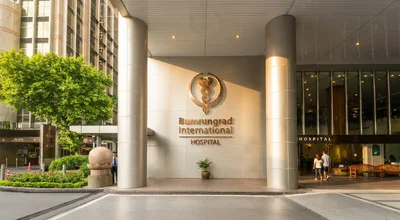
Bumrungrad International Hospital
Tertiary hospital with over 1,200 physicians treating 520,000+ international patients a year.
View hospital profile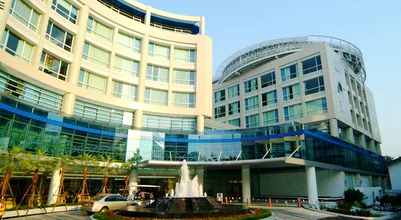
Bangkok Hospital
BDMS flagship tertiary campus with standalone heart, cancer, and neuro-orthopaedic hospitals.
View hospital profile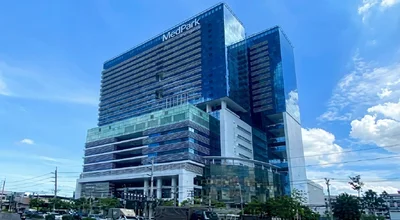
MedPark Hospital
Purpose-built tertiary hospital opened in 2020, focused on complex cardiac, cancer, and transplant care.
View hospital profile
Tell Us What You Need. We Do the Rest.
Share what you're considering and we'll come back with surgeon options, pricing, and a clear plan.
- Real hospital pricing with zero markup
- Matched with a specialist experienced in your specific procedure
- Full coordination from consultation to recovery


Trusted by patients worldwide
The complete guide to Carbon-Ion Therapy in Thailand
Everything below is for readers who want the full detail: costs broken down, types and techniques, recovery, risks and safety, and planning your trip.
Where to Have Carbon-Ion Therapy in Thailand
Carbon-ion therapy requires a JCI-accredited cancer centre, a radiation-oncology team trained in particle therapy, and dedicated medical physics. Here is what to look for.
A JCI-Accredited Cancer Centre
Carbon-ion therapy belongs in a major, internationally accredited cancer centre with the infrastructure and quality systems to support it. No operating carbon-ion facility is publicly documented in Thailand at present, so where access can be arranged it is through partnerships with established international particle-therapy programmes, and confirmed in writing for your specific case before you commit to travel.
A Specialist Radiation-Oncology Team
Delivery depends on radiation oncologists trained in particle therapy working alongside medical physicists who verify every plan. The team's role is not only to deliver treatment but to assess honestly whether carbon-ion therapy is the right choice for your tumour, or whether standard radiotherapy or proton therapy would serve you better.
What to Look for in a Centre
Confirm the centre holds international accreditation and that its physics team independently verifies treatment plans. Ask whether they have assessed your specific tumour type for carbon-ion therapy and how they decide suitability. A reputable centre will review your imaging and pathology before you travel and tell you whether the therapy genuinely helps your case.
Understanding Your Results
Carbon-ion therapy is measured through imaging response over time and through better local control of tumours that conventional radiotherapy struggles with. It is not an instant result.
What Carbon-Ion Therapy Realistically Achieves
For the right radioresistant tumours, carbon-ion therapy aims to improve local control while sparing nearby healthy tissue, often where surgery is not possible. It is not a cure-all, and for some indications the long-term comparative evidence is still maturing. The honest position is that it offers a meaningful option for specific difficult cancers, not a guaranteed outcome for any of them.
How Results Are Assessed
Response is assessed through follow-up imaging over the weeks and months after treatment rather than immediately. Your radiation oncologist reviews these scans and sets a long-term surveillance schedule with your home team. No team can promise a specific result, because response depends on the tumour type, stage, and your individual circumstances.
Carbon-Ion Therapy Cost in Thailand
Average Cost of Carbon-Ion Therapy
A course of carbon-ion therapy in Thailand is expected to be in the region of $20,000 to $45,000. The range reflects the number of fractions, the complexity of the tumour and its location, and the planning required. The cost is higher than conventional radiotherapy because it reflects a specialised facility and the specialist team needed to deliver it.
Cost Breakdown
The radiation oncologist's fee covers treatment planning, on-treatment reviews, and clinical oversight. Medical physics charges cover dosimetry, plan optimisation, and quality assurance. Facility fees cover the accelerator, treatment-room time, and daily imaging verification. Coordinator support is included throughout your stay.
What Affects the Price?
The number of fractions is the main cost driver, so a shorter hypofractionated course sits lower than an extended one. Tumour complexity and location influence planning time, and cases needing motion management or intricate dose shaping add to the physics workload. The specialised nature of the facility is reflected across the whole course rather than in a single line item.
Thailand vs International Price Comparison
Carbon-ion therapy in Thailand costs roughly 40 to 60 percent less than equivalent treatment in the US ($50,000–$90,000), Australia (A$55,000–A$95,000), and the UK (£40,000–£75,000), with comparable figures in Canada, Ireland, New Zealand, Singapore, and the UAE. For a therapy available at so few centres worldwide, accessing it at a JCI-accredited centre in Thailand can make a genuine difference to both reach and cost.
Carbon-Ion vs Proton Therapy and Standard Radiotherapy
These three treatments all aim radiation at a tumour, but they are not interchangeable, and the right one depends entirely on your cancer. Knowing how they differ helps make sense of any advice you are given.
Standard radiotherapy uses X-rays (photons), which pass right through the body and deposit dose both before and after the tumour. It is the most widely available option, it is well understood, and for the majority of cancers it is exactly the right tool. Most people who need radiotherapy will have this, and a good oncologist will not steer you towards anything more exotic without a clear reason.
Proton therapy stops inside the tumour at the Bragg peak, sparing tissue beyond it, which matters for tumours near critical organs or in children. It adds depth precision over standard radiotherapy and is more widely available than carbon-ion therapy, including at a centre in Thailand.
Carbon-ion therapy keeps that same depth precision but adds a higher biological effect, hitting harder once it arrives. That extra effect is the whole point: it is reserved for selected radioresistant tumours that photons and protons struggle to control. It is the least available of the three and the most specialised. For most cancers it offers no advantage over the simpler options, so the honest answer to which you need is the one your radiation-oncology team reaches after reviewing your specific case.
Types of Carbon-Ion Therapy
Carbon-ion therapy is reserved for situations where its biological advantage genuinely matters. The clinical indication, not patient preference, determines whether it is used, and it is always delivered as an outpatient course.
Carbon-Ion Therapy for Sarcoma & Bone Tumours
One of the best-established uses. Bone and soft-tissue sarcomas, particularly those at the skull base or along the spine, are often radioresistant and difficult to remove surgically without harming nearby nerves or the spinal cord. The higher biological effect of carbon ions can improve local control where conventional radiotherapy has limited reach.
- Targets radioresistant bone and soft-tissue sarcomas
- Valuable at the skull base and spine where surgery is constrained
- Higher biological effect than photons or protons for these tumours
- Best for: inoperable or partly resectable sarcomas in delicate locations
Carbon-Ion Therapy for Recurrent or Previously Irradiated Tumours
When a tumour comes back in an area that has already received radiotherapy, giving more conventional radiation is often unsafe because of the cumulative dose to healthy tissue. The depth precision of carbon ions can allow re-treatment in selected cases by concentrating dose on the tumour while limiting it to surrounding structures.
- Considered for tumours recurring in a previously irradiated field
- Depth precision helps respect prior cumulative radiation dose
- Reviewed carefully against earlier treatment records
- Best for: localised recurrence where further standard radiation is unsafe
Carbon-Ion Therapy for Selected Pancreatic, Liver & Prostate Tumours
Used in a research-informed way for certain locally advanced pancreatic cancers, some liver tumours, and selected prostate cancers. These are situations where conventional radiotherapy may be limited and the biological and dosimetric properties of carbon ions are being applied, always within a specialist team's assessment of the individual case.
- Applied to selected locally advanced pancreatic, liver, and prostate tumours
- Chosen case by case, not as routine treatment for these cancers
- Suitability depends on tumour location, stage, and prior treatment
- Best for: specific cases identified by the radiation-oncology team
Hypofractionated Carbon-Ion Courses
Because carbon ions deliver a higher biological dose per session, treatment can often be given in fewer, higher-dose fractions than conventional radiotherapy. This hypofractionated approach can shorten the overall course while maintaining the targeted dose to the tumour, which suits patients travelling for treatment.
- Fewer, higher-dose sessions than conventional radiotherapy
- Can shorten the overall treatment course
- Delivered as outpatient sessions with no anaesthetic
- Best for: tumour types where a shorter, intensified schedule is clinically appropriate
Carbon-Ion Therapy Techniques
Carbon-ion therapy relies on a major specialist facility and a precise delivery system. Here is what underpins the treatment and why these centres are rare.
Bragg-Peak Depth Precision
Carbon ions deposit most of their energy at a defined depth and then stop, the Bragg peak, so the dose lands inside the tumour with little radiation carrying on into healthy tissue beyond. This is the same physical principle that makes proton therapy precise, applied here to heavier particles.
- Dose concentrated at a set depth, then the beam stops
- Tissue in front of and behind the tumour is largely spared
- Allows treatment of tumours close to critical structures
- Best for: targets where limiting exit dose is essential
Higher Linear-Energy-Transfer (LET) Biological Effect
The defining feature of carbon ions is their high linear energy transfer, which causes more concentrated, harder-to-repair damage within the tumour than photons or protons. This higher biological effect is why carbon ions are considered for tumours that resist conventional radiotherapy.
- Greater biological effect per unit of physical dose than X-rays or protons
- Causes damage that radioresistant tumour cells repair less easily
- The main reason carbon ions are chosen over photons or protons
- Best for: recognised radioresistant tumour types
Scanning-Beam Delivery & Precise Immobilisation
A narrow carbon-ion beam is steered to paint the tumour layer by layer, conforming to its shape. Because the Bragg peak depth is sensitive to small positional changes, treatment depends on careful immobilisation, imaging verification before each session, and motion management for tumours that move with breathing.
- Beam scanned across the tumour for a conformal dose
- Sub-millimetre positioning checked before each fraction
- Motion management used for chest and abdominal targets
- Best for: ensuring the dose lands precisely every session
Specialist Team & Major Facility
Carbon-ion centres require a large accelerator, dedicated medical physics, and radiation oncologists trained in particle therapy. The facilities are capital-intensive and rare, which is why so few exist worldwide and why access has historically meant travelling to a handful of countries.
- Large accelerator and dedicated physics infrastructure required
- Radiation oncologists with particle-therapy training
- Among the most resource-intensive treatments in oncology
- Best for: why these centres are scarce and concentrated
Carbon-Ion Therapy Recovery Timeline
During Treatment
Each daily session is painless and delivered as an outpatient, with immobilisation but no anaesthetic. You remain fully alert and most people continue normal activities between sessions, including light work, walking, and rest. The treatment itself takes only a short time once you are positioned.
First Week After Course
Mild fatigue and localised skin changes in the treated area are the most common early effects and usually peak shortly after the final session. For the skin, keep the treated area out of direct sun, wear loose clothing over the site rather than anything tight or rubbing, wash gently with lukewarm water, and use only a plain, fragrance-free moisturiser your team approves. Your clinical team reviews early recovery and provides guidance on managing any site-specific symptoms.
Weeks 1–3 After Course
Fatigue gradually eases and any skin redness begins to settle. Keep up the skin-care routine and continue protecting the treated area from sun, since irradiated skin stays sensitive for some weeks. Follow-up imaging and review are arranged to assess the initial response, and most patients feel well enough to consider travelling home during this period.
Beyond One Month
Acute side effects resolve for most patients and energy returns towards baseline. Most people can build back to vigorous exercise once fatigue has settled, usually within a few weeks of the final session, and can resume swimming once any treated skin has fully healed and is no longer broken or irritated, typically around four to six weeks. The response to treatment is assessed through imaging over the following weeks and months, and your oncologist sets a long-term surveillance plan with your home medical team.
How Long Does a Carbon-Ion Course Take?
Carbon-ion courses are often shorter than conventional radiotherapy because more biological dose is delivered per session. Many courses run over two to four weeks of daily sessions, though the exact number of fractions depends on the tumour type and the plan your radiation oncologist sets. Allow additional time for the planning scan and simulation before treatment begins.
When Can You Travel Home After Treatment?
Most patients travel home within one to two weeks of their final session, once a post-treatment review confirms recovery is on track. Any fatigue may persist for a while but does not usually prevent travel. Your team provides a fitness-to-fly recommendation before you go.
What About Long-Term Follow-Up?
Your radiation oncologist provides a detailed surveillance plan with imaging intervals and review schedules for your home team, along with a full record of the treatment delivered. Remote consultations with your Thai oncologist remain available so there is continuity in your ongoing care.
Risks and Safety of Carbon-Ion Therapy
Carbon-ion therapy is precise, but it is still radiotherapy, and side effects depend heavily on the area being treated. Most acute effects are confined to the treatment site and ease after the course ends.
- Skin reactions such as redness or irritation in the treated area2
- Fatigue that builds during the treatment course3,4
- Site-specific effects depending on tumour location, for example bowel or bladder effects for pelvic tumours
- Localised swelling or inflammation near the target
- Mucosal or swallowing effects for some head-and-neck or oesophageal sites
- Radiation necrosis of brain or bone, a recognised late risk for skull-base tumours where the target sits beside the brainstem and optic structures5
- Radiation myelopathy, an uncommon but serious late risk of damage to the spinal cord when treating spinal or paraspinal tumours
- Late gastrointestinal effects such as bowel or pancreatic-area injury for abdominal targets like pancreatic tumours
- A small long-term risk of a second, radiation-induced cancer, as with any high-dose radiotherapy and a consideration with high-LET particles5
Because side effects depend so heavily on where the tumour sits, your radiation oncologist explains your individual risk profile before treatment begins. Pre-treatment assessment includes diagnostic imaging, pathology review, and a check of any prior radiation exposure to the area.
Is Carbon-Ion Therapy Safe in Thailand?
Where carbon-ion therapy can be accessed through JCI-accredited centres and specialist partnerships, it is delivered to international safety, quality-assurance, and equipment-calibration standards, with every treatment plan verified by medical physics and a radiation-oncology team trained in particle therapy. There is no operating carbon-ion facility publicly documented in Thailand at present, so whether a centre can treat your specific case, and when, is confirmed in writing before you commit or book travel.
How Do Side Effects Compare to Standard Radiotherapy?
The aim of carbon-ion therapy is to concentrate dose on the tumour while sparing tissue around it, which can mean side effects are confined more tightly to the treated area. They are not absent, though, and the pattern depends on the tumour site. Your oncologist sets out what to expect for your particular case rather than giving a blanket promise.
Are There Cancers Where Carbon-Ion Therapy Is Not Appropriate?
Yes, and this matters. Carbon-ion therapy suits specific radioresistant or hard-to-treat tumours, not the majority of common cancers, where standard radiotherapy or proton therapy is already effective. Widely metastatic disease usually gains nothing from a localised treatment. Your radiation-oncology team will tell you when another approach would serve you better.
Planning Your Carbon-Ion Therapy in Thailand
A carbon-ion course requires a stay of a few weeks. Because suitability is decided after a specialist review, the planning starts well before you travel.
How Long to Stay in Thailand
Plan for around two to four weeks. This covers the planning scan and simulation in the first few days, the course of daily sessions, and a post-treatment review. Because carbon-ion courses are often shorter than conventional radiotherapy, the overall stay can be more compact. Your coordinator provides a personalised timeline once your fraction count is confirmed.
What's Included in Treatment
Your quote covers the radiation oncologist, the medical physics team, all treatment sessions, daily imaging verification, pre-treatment diagnostics, and follow-up reviews, with a dedicated care coordinator throughout. Accommodation near the centre and flights are arranged separately, with coordinator assistance.
Daily Life During a Carbon-Ion Course
Sessions are short and delivered as an outpatient, so most patients have the rest of the day free and continue light routines between appointments. Many international patients work remotely or rest at their accommodation. Your coordinator helps arrange comfortable serviced apartments close to the centre.
Related Procedures
Other procedures that address similar goals or conditions, in case one of them is a closer fit for you.
Planning your treatment in Thailand
Independent guides to help you weigh the decision, before you commit to anything.
Common Questions About Carbon-Ion Therapy
Everything you need to know before your treatment

Medical References
Keep researching with AI
Open this guide in your AI assistant to dig deeper and ask the questions it didn't answer.
Opens in a new tab with this guide already loaded.
Medical disclaimer: Content on this site is provided for informational purposes and should not be treated as medical advice. Outcomes, timelines, and eligibility differ from person to person. Consult a qualified medical professional before making any decisions about surgery or treatment.
Ready to Get Started?
Speak with our care coordinators for a free, no-obligation consultation and personalised quote.
Speak to Our Team