Breast Reconstruction in Thailand Your guide to cost, top specialists & hospitals
Reconstruction rebuilds the shape of a breast after cancer surgery. It is often a staged process, the choices vary, and the goal is restoring what feels right to you.
What Is Breast Reconstruction?
Also known as: Breast Reconstruction · Post-Mastectomy Breast Reconstruction
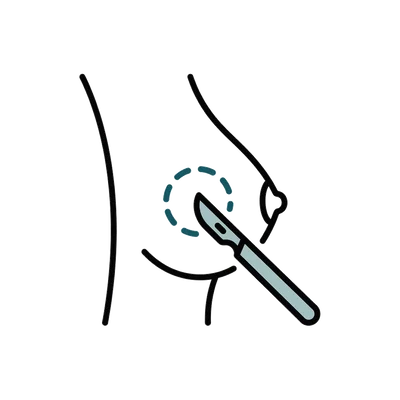
Breast reconstruction is surgery to rebuild the shape of a breast after it has been removed for cancer in a mastectomy, or sometimes after breast-conserving surgery has left a noticeable difference. The new breast shape is created either with a breast implant or using your own tissue moved from elsewhere on your body, and the surgery can be done at the same time as the mastectomy (immediate) or months to years later (delayed). It is reconstructive surgery, restoring after cancer, rather than cosmetic enhancement.
It helps to know early that reconstruction is often a staged process rather than a single operation. Building a natural-looking shape, adjusting symmetry with the other breast, and rebuilding a nipple if you want one can take more than one procedure over several months. Implant reconstruction is usually the smaller operation with a quicker recovery, but an implant may need revision in future. Flap reconstruction uses your own tissue, which tends to age and feel more naturally with you, but it is a bigger operation with a second surgical site where the tissue is taken from.
We want to be honest about what reconstruction can and cannot do. Results and symmetry vary from person to person, sensation in a reconstructed breast is usually reduced, and it does not look or feel identical to a natural breast. If radiotherapy is part of your cancer treatment it affects both the timing and the choice, because radiotherapy can harm an implant result, so flaps or delayed reconstruction are often preferred when radiotherapy is planned. These decisions are made with your breast and reconstructive team, never rushed, and there is no single right answer.
It can address a range of concerns, including:
Am I a Good Candidate for Breast Reconstruction?
Breast reconstruction suits people who have had or are planning a mastectomy and want to rebuild the breast shape, but the right method and timing depend on your treatment plan. These are the things the team weighs up before reconstruction.
Reconstruction fits around your cancer treatment, so the plan is reviewed first.
Mastectomy agreed: good candidates have had or are planning a mastectomy with the cancer plan settled.
Radiotherapy matters: if radiotherapy is planned, flaps or delayed reconstruction are often preferred over implants.
Immediate or delayed: the timing is chosen with the team based on your treatment, not fixed in advance.
The method shapes the operation, recovery and number of stages, so it is decided together.
Implant or flap: implant is the smaller operation; a flap is bigger but uses your own tissue.
Often staged: good candidates understand reconstruction may take more than one procedure over months.
Donor site: flap reconstruction means a second surgical site to consider in the plan.
General health and a few modifiable factors strongly affect healing, especially for flaps.
Fit for surgery: good candidates are in stable general health suitable for general anaesthesia.
Smoking and diabetes: both meaningfully raise wound-healing and flap-failure risk, so smokers should stop first.
Optimised conditions: healing-related conditions are best controlled before surgery.
Honest expectations are part of suitability, because results vary and this is reconstruction, not replacement.
Results vary: symmetry and appearance differ between people, and sensation is usually reduced.
Not identical: a reconstructed breast does not look or feel exactly like a natural one.
Your choice: including the option not to reconstruct, or to delay, which is entirely valid.
Who is not suitable for breast reconstruction?
- Radiotherapy planned where an implant is being considered, until the team reviews timing and method
- Active or untreated breast cancer, or metastatic (stage IV) disease, where reconstruction is usually deferred until cancer treatment is complete
- Too little lower-abdominal tissue (very low body weight) for a DIEP or TRAM flap, or a previous abdominoplasty or abdominal surgery that has divided the perforator vessels a DIEP flap relies on
- Active smokers unwilling to stop before surgery
- Poorly controlled diabetes or other healing-related conditions, until optimised
- Expecting a reconstructed breast to look or feel identical to a natural one
Pricing
How Much Will Breast Reconstruction Cost in Thailand?
What breast reconstruction costs at accredited hospitals in Thailand, and what your final quote depends on.
Get your exact price
Tell us what you're considering and we'll send a personalised quote from accredited hospitals within 24 hours.
Get my free quoteTypical prices in Thailand
Typical ranges based on recent hospital quotes. Your exact price depends on the hospital and how complex your case is, and is confirmed at your teleconsultation.
Breast Reconstruction
A breast shape is rebuilt after mastectomy, either with an implant under the skin and muscle or with skin and fat moved from your own abdomen or back.
| Implant-based reconstruction, one breast 1 to 3 nights Implant rebuilds the shape, usually after an expander stretches the skin, where radiotherapy is not planned | $6,000 to $11,000 ฿204,000 to ฿374,000 |
| Autologous flap reconstruction, one breast 3 to 5 nights Skin and fat moved from the abdomen or back, for natural tissue or when radiotherapy is planned | $12,000 to $18,000 ฿408,000 to ฿612,000 |
Typically not included
- Chemotherapy, radiotherapy and the rest of your cancer treatment, a separate course planned by your oncology team
- Each figure covers one breast, so a second side, plus later stages like fat grafting, symmetry surgery, and nipple and areola reconstruction with tattooing
- The mastectomy itself, which stays a separate cost even when reconstruction is done at the same operation
- Intensive care, hospital nights beyond your quoted package, and any return to theatre, including surgery a flap needs if its blood supply is threatened
- Pathology and pathologist charges on any tissue removed, which is never optional after cancer surgery
Get your exact price
Tell us what you're considering and we'll send a personalised quote from accredited hospitals within 24 hours.
Hospitals Trusted for Breast Reconstruction
From internationally accredited flagships to dedicated specialist hospitals, these are the kinds of facilities where international patients have this procedure.
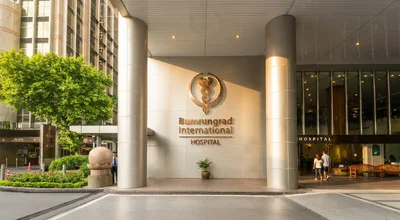
Bumrungrad International Hospital
Tertiary hospital with over 1,200 physicians treating 520,000+ international patients a year.
View hospital profile
Bangkok Hospital
BDMS flagship tertiary campus with standalone heart, cancer, and neuro-orthopaedic hospitals.
View hospital profile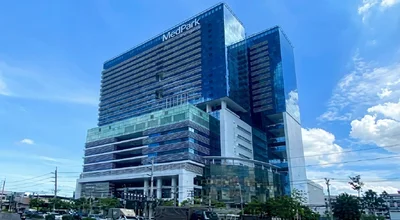
MedPark Hospital
Purpose-built tertiary hospital opened in 2020, focused on complex cardiac, cancer, and transplant care.
View hospital profile
Tell Us What You Need. We Do the Rest.
Share what you're considering and we'll come back with surgeon options, pricing, and a clear plan.
- Real hospital pricing with zero markup
- Matched with a specialist experienced in your specific procedure
- Full coordination from consultation to recovery


Trusted by patients worldwide
The complete guide to Breast Reconstruction in Thailand
Everything below is for readers who want the full detail: costs broken down, types and techniques, recovery, risks and safety, and planning your trip.
Where to Have Breast Reconstruction in Thailand
For reconstruction, the surgeon's experience and the team around them matter enormously, particularly for microsurgical flaps. The points below are worth weighing as you choose where to be treated.
JCI-Accredited Hospitals
Reconstruction is best done at a JCI-accredited hospital with full surgical infrastructure and, for flap reconstruction, the microsurgical capability and intensive post-operative monitoring that flaps require. Leading accredited hospitals in Bangkok provide reconstructive surgery within their cancer and plastic surgery programmes, so the breast team and reconstructive surgeon can plan together under one roof.
Board-Certified Reconstructive Surgeons
Look for a board-certified reconstructive or plastic surgeon with specific experience in post-mastectomy reconstruction, working alongside the breast team. Microsurgical flaps such as DIEP demand a surgeon who performs them regularly, so it is fair to ask how often they carry out your proposed method. Coordinated planning between the breast and reconstructive teams is what makes immediate reconstruction work well.
What to Look for in a Reconstructive Surgeon
Ask about their experience with your specific method, whether implant or flap, and how they handle staged work and symmetry. A good surgeon talks through the trade-offs honestly and shows you photographs of their own past cases rather than promising a particular outcome. Confirm that your case is planned with the breast team, and that the timing accounts for any radiotherapy in your treatment plan.
Understanding Your Results
It helps to picture a realistic outcome before you start, not an idealised one. Here is what reconstruction genuinely achieves, and how the result keeps changing in the months after surgery.
What Reconstruction Realistically Achieves
Reconstruction rebuilds a breast shape that restores contour under clothing and, for many people, a sense of wholeness after mastectomy. It does not recreate a natural breast exactly: sensation is usually reduced or absent, the shape and softness differ from the other side, and perfect symmetry is not guaranteed. Flap reconstruction tends to feel more natural over time than an implant, but both are a reconstruction rather than a replacement.
How Results Change Over Time
The reconstructed shape continues to settle for months after surgery as swelling resolves and tissues soften. Staged steps such as an expander swap, fat grafting or nipple reconstruction refine the result along the way. An implant may change over the years and need revision, while a flap ages more like your own tissue. Your team reviews progress at each stage and plans any refinement with you.
Breast Reconstruction Cost in Thailand
Average Cost of Breast Reconstruction
Breast reconstruction in Thailand typically costs between $6,000 and $18,000, depending mainly on the method. Implant-based reconstruction sits at the lower end as the smaller operation, while autologous flap reconstruction, such as a DIEP flap, sits at the higher end because it is longer, more complex microsurgery with a donor site. A straightforward single-stage case costs less than a multi-stage journey.
Cost Breakdown
The reconstructive surgeon's fee is the primary component, reflecting the complexity and length of the operation, which is why flap surgery costs more than implant surgery. Hospital charges cover the operating theatre, ward stay and nursing, and a flap's longer stay adds to this. Anaesthesia, any implant or expander, medications and follow-up are itemised separately, and coordinator support is included.
What Affects the Price?
The method is the biggest driver: flap reconstruction costs more than implant reconstruction. Whether the work is single-stage or staged matters too, since staged surgery, an expander swap, fat grafting and nipple reconstruction may each add cost. Bilateral reconstruction costs more than one side. Whether radiotherapy has been given can also influence the method chosen, and therefore the price.
Thailand vs International Price Comparison
Breast reconstruction in Thailand costs roughly 50 to 70 percent less than equivalent private surgery in the US ($20,000–$50,000), Australia (A$22,000–A$45,000) and the UK (£12,000–£30,000). The saving is most meaningful for flap reconstruction, where the complexity makes private surgery abroad particularly expensive. Where staged surgery is needed, the total saving across the journey can be substantial.
Implant vs Flap Reconstruction, and Choosing Not to Reconstruct
The first choice in reconstruction is usually between an implant and a flap, and they suit different people. Implant-based reconstruction is the simpler operation with a quicker recovery and a shorter hospital stay, which appeals to many, but an implant is not lifelong and may need revision in future, and it tolerates radiotherapy less well. Flap (autologous) reconstruction uses your own tissue from the abdomen or back, so it ages and feels more naturally with you and copes better with radiotherapy, but it is a bigger operation with a second surgical site and a longer recovery.
Radiotherapy often tips this decision. Where radiotherapy is planned, a flap or delaying reconstruction until radiotherapy is finished is frequently preferred, because radiotherapy can compromise an implant result. This is one of the main reasons the method and timing are decided with your team rather than chosen in advance, and why your full treatment plan matters so much to the advice you get.
It is also worth saying clearly that not reconstructing is a perfectly valid choice. An external breast prosthesis worn in a bra suits many people well, and some choose to go flat after mastectomy. Reconstruction can also be delayed until after your cancer treatment is complete, so deciding against it now does not close the door later. There is no single right answer here, only the one that feels right for you, made together with your breast and reconstructive team.
Types of Breast Reconstruction
There is no single best method. The right approach depends on your body, whether radiotherapy is planned, whether you want surgery now or later, and what you want from the result. The options below are talked through with you before anything is decided.
Implant-Based Reconstruction
The breast shape is rebuilt with a breast implant. This is often done in two stages: a tissue expander is placed first and gradually filled over weeks to stretch the skin, then swapped for a permanent implant. In selected cases a direct-to-implant approach places the final implant in one operation. It is generally the smaller surgery with a quicker recovery, but an implant is not lifelong and may need revision in future, and it tolerates radiotherapy less well than your own tissue.
- Usually the smaller operation with a shorter hospital stay and quicker recovery
- Often staged: tissue expander first, then a permanent implant
- Implants may need revision or replacement over the years2
- Best for: those wanting a less major operation where radiotherapy is not planned
Autologous (Flap) Reconstruction
The breast is rebuilt using your own skin, fat and sometimes muscle moved from another part of the body, such as the lower abdomen or the back. A DIEP flap uses lower-abdominal tissue while sparing the muscle; a latissimus dorsi flap uses tissue from the back; a TRAM flap uses abdominal tissue including some muscle. It is a longer, bigger operation with a second surgical site where the tissue is taken from, but it uses natural tissue that ages with you and generally copes better with radiotherapy.
- Uses your own tissue, which tends to look and feel more natural over time
- A bigger operation with a donor site and a longer recovery
- Generally tolerates radiotherapy better than an implant
- Best for: those who want natural tissue or where radiotherapy is planned
Nipple and Areola Reconstruction
Once the breast shape has settled, a nipple can be rebuilt from local tissue and an areola recreated, often finished later with medical tattooing for colour. This is usually a smaller, separate stage carried out months after the main reconstruction, and it is entirely optional. Some people choose it to complete the look; others decide it is not for them, and a stick-on prosthetic nipple is also an option.
- A smaller, optional stage done after the breast shape has settled
- Areola colour is usually added later with medical tattooing
- Entirely your choice; many people are happy without it
- Best for: those who want to complete the reconstructed breast appearance
Symmetry and Fat-Grafting Procedures
Reconstruction often involves fine-tuning to balance the two breasts. Fat grafting, taking small amounts of your own fat and injecting it to soften contours, can improve shape and smooth edges. Surgery to the other breast, such as a lift, reduction or augmentation, may be offered so the two sides match more closely. These steps are part of why reconstruction is frequently staged rather than finished in one operation.
- Fat grafting refines contour and softens the edges of a reconstruction
- The other breast may be adjusted so the two sides match better
- Usually carried out as later refinement stages
- Best for: improving overall symmetry once the main reconstruction has healed
Breast Reconstruction Techniques
Where the section above covers the broad route, these are the surgical techniques that deliver it, from expanding skin for an implant to reconnecting tiny blood vessels for a flap. For the more demanding of these, the experience of the surgeon and team counts as much as the technique itself.
Tissue Expanders
A temporary expander is placed under the skin and chest muscle, then gradually filled with saline through a small port over a series of clinic visits to stretch the tissue and create space for a permanent implant. It is a common first stage in implant reconstruction, particularly when there is not enough skin to place a final implant straight away. The expansion process takes weeks and is done a little at a time.
- Creates space for a permanent implant by gradually stretching the skin
- Filled in stages over several clinic visits, not all at once
- A common first step in two-stage implant reconstruction
- Why it matters: lets an implant be used when there is not enough skin to place one straight away
Acellular Dermal Matrix Support
A sheet of processed dermal tissue can be used to support and position an implant, acting like an internal sling that helps hold the implant in place and improve the lower-breast contour. It can allow more of the implant to be covered and, in selected cases, supports a direct-to-implant approach. Whether it is used depends on your tissue quality and the surgeon's plan.
- Supports and positions an implant like an internal sling
- Can improve the lower-breast contour and implant coverage
- May support a single-stage direct-to-implant result in selected cases
- Why it matters: better support can mean fewer stages and a more natural lower-breast shape
Microsurgical Free Flaps (DIEP)
A free flap, most commonly a DIEP flap from the lower abdomen, moves your own skin and fat to the chest, where the surgeon reconnects the tiny blood vessels under a microscope. The DIEP technique spares the abdominal muscle, which helps protect core strength. It is technically demanding microsurgery and a longer operation, but it builds a soft, natural breast from your own living tissue.
- Moves your own tissue and reconnects blood vessels under a microscope
- The DIEP technique spares abdominal muscle to protect core strength1
- A longer, technically demanding operation done by an experienced team
- Best for: natural-tissue reconstruction, often where radiotherapy is planned
Pedicled Flaps (Latissimus Dorsi)
A pedicled flap keeps its own blood supply attached as the tissue is rotated into place rather than being detached and reconnected. The latissimus dorsi flap brings skin and muscle from the back round to the chest, often combined with an implant to add volume. It is a reliable option, particularly after radiotherapy, and leaves a scar on the back where the tissue is taken.
- Tissue is rotated into place with its blood supply still attached
- The latissimus dorsi flap uses back tissue, often with an implant
- A robust choice, including after radiotherapy
- Best for: adding healthy tissue and volume, especially to irradiated skin
Staged Nipple Reconstruction and Tattooing
The technique itself folds small flaps of local skin to recreate nipple projection, with the areola added afterwards by specialist three-dimensional medical tattooing that shades colour and shadow for a lifelike look. It is timed for after the breast has settled because the final shape determines exactly where the nipple should sit.
- Local skin flaps are folded to build nipple projection
- Three-dimensional tattooing recreates areola colour and shading
- Positioning waits until the breast shape is stable
- Best for: completing the reconstruction once the breast shape is stable
Breast Reconstruction Recovery Timeline
Days 1–5
You recover on the ward with wound and drain monitoring. After flap reconstruction the team checks the flap's blood supply closely in the first days, which is why a flap needs a longer stay than an implant. Pain is controlled through a structured protocol, and the nursing team helps you begin gentle movement. Implant patients often go home sooner than flap patients.
Weeks 1–2
Drains are removed once output settles. Your surgical team reviews wound healing and, where relevant, begins planning the gradual filling of a tissue expander. You avoid lifting and stretching, and after a flap you protect the donor site as it heals. A final check confirms healing before any travel home.
Weeks 2–6
Swelling and bruising settle and the reconstructed shape begins to take form, though it continues to change for months. Tissue expander filling, if you are having it, continues at clinic visits. Light daily activity resumes gradually; heavier activity and lifting wait longer, particularly after a flap with an abdominal or back donor site.
Months 2–6 and beyond
The reconstruction settles into its longer-term shape, and any later stages, such as swapping an expander for a permanent implant, fat grafting for symmetry, or nipple reconstruction, are planned and mapped out with you. The shape continues to refine across these steps rather than being final at the first operation.
When Can You Fly After Breast Reconstruction?
This depends heavily on the method. After implant reconstruction many patients are cleared to fly within about two weeks, once drains are out and healing is confirmed. After flap reconstruction the recovery is longer and flying is usually delayed further while the flap and donor site heal. Your surgical team provides a fitness-to-fly letter and will advise rather than rush your departure.
When Can You Return to Work and Exercise?
Light desk work is often possible within two to three weeks after implant reconstruction, and a little longer after a flap. Driving resumes once you have adequate movement and are off strong pain medication. Lifting, stretching and exercise return gradually over weeks, and longer after a flap with an abdominal or back donor site, so your surgeon will set a personalised timeline.
Why Reconstruction Is Often Staged
Building a natural shape, balancing symmetry with the other breast, and rebuilding a nipple often cannot all be done well in one operation. Tissue needs time to heal and settle, and an expander may need swapping for a permanent implant later. Planning the work across stages over several months usually gives a better and more durable result than trying to complete everything at once.
Anaesthesia for Breast Reconstruction
Breast reconstruction is performed under general anaesthesia, so you are fully asleep and feel nothing during the operation. A consultant anaesthetist stays with you throughout and monitors your heart rate, breathing and oxygen levels continuously, which is standard at the accredited hospitals we work with. Flap reconstruction is a longer operation than implant reconstruction, so the anaesthetic time is correspondingly longer, and the team plans for that.
Because this is major surgery, you have a formal pre-operative assessment before you are cleared. This typically includes blood tests, a review of your current medications, and cardiac and respiratory checks where your history or age makes them relevant, so the anaesthetist can plan the safest approach for you. The reconstructive surgeon and anaesthetist decide the details together based on your general health and the method planned.
You feel nothing during the procedure itself. Afterwards, a tight or heavy feeling across the chest is expected rather than sharp pain, and after a flap there is also discomfort at the donor site where tissue was taken. Both are controlled through a structured pain protocol, with the nursing team helping you move gently and early. Most patients describe it as moderate and steadily easing over the first week or two.
Risks and Safety of Breast Reconstruction
Breast reconstruction is well-established surgery, but it is real surgery with real risks, and flap reconstruction in particular is a major operation. Understanding the risks honestly is part of making the right choice for you.
- Bleeding or haematoma after surgery
- Wound infection or delayed wound healing
- Seroma, a collection of fluid under the wound or at the donor site, sometimes needing drainage
- Blood clots in the legs (DVT) or lungs (pulmonary embolism), a recognised risk after long flap surgery, lowered by clot-prevention measures
- Implant complications such as capsular contracture or rupture
- Rare implant-associated lymphoma (BIA-ALCL), discussed during consent
Pre-operative assessment, careful patient selection, and choosing a method suited to your treatment plan all reduce these risks. Your reconstructive surgeon explains the risks specific to your chosen approach during consent, and close post-operative monitoring, especially of a flap's blood supply in the early days, catches problems early.
Is Breast Reconstruction Safe in Thailand?
Reconstruction at JCI-accredited hospitals in Thailand is carried out by board-certified reconstructive or plastic surgeons working alongside the breast team, with full surgical infrastructure and the microsurgical capability that flap reconstruction needs. The standards at the accredited hospitals we work with mirror the structure of major Western units. As anywhere, outcomes depend on appropriate method selection and an experienced surgeon, not on location.
How Radiotherapy Affects the Plan
If radiotherapy is planned or has been given, it changes the safest approach. Radiotherapy can stiffen tissue and raise the risk of complications with an implant, so flap reconstruction, or delaying reconstruction until after radiotherapy is complete, is often preferred. This is a key reason the timing and method are decided with your breast and reconstructive team rather than fixed in advance, and being honest about your full treatment plan helps them advise you well.
When Is Further Surgery Likely?
Reconstruction commonly involves more than one operation, so some further surgery is expected rather than a sign something has gone wrong. An expander is swapped for a permanent implant, fat grafting may refine symmetry, and a nipple can be rebuilt later. Separately, an implant may need revision over the years. Your surgeon sets out the likely staged plan during consent so you know what to expect.
Planning Your Breast Reconstruction in Thailand
Most patients need around 2 to 3 weeks in Thailand for the first operation, and longer for flap reconstruction. Here is how to organise your trip and what to expect.
How Long to Stay in Thailand
Plan for around 2 to 3 weeks for implant reconstruction, covering assessment, surgery, a 1 to 3 night hospital stay, drain removal, wound checks and a fitness-to-fly review. Flap reconstruction needs longer, with a 3 to 5 night stay and more recovery before travel. Any later stages are usually a separate return trip, which your coordinator will map out so you can plan around work and family.
What's Included in a Medical Trip
Your care coordinator manages hospital scheduling, transfers and follow-up appointments. The surgical quote covers the surgeon's fee, anaesthesia, hospital stay, any implant or expander, medications and coordinator support. Later stages are quoted separately so you can see the full staged picture. Flights and accommodation are arranged separately.
Emotional and Practical Support
Deciding on reconstruction after cancer is a significant and personal thing, and there is no wrong choice, including choosing not to reconstruct. We encourage bringing a companion. Our partner hospitals offer counselling, and your coordinator is available throughout for practical and pastoral support. Clear information about each stage, and honest expectations, help reduce the uncertainty.
Related Procedures
Other procedures that address similar goals or conditions, in case one of them is a closer fit for you.
Planning your treatment in Thailand
Independent guides to help you weigh the decision, before you commit to anything.
Common Questions About Breast Reconstruction
Everything you need to know before your surgery

Medical References
Keep researching with AI
Open this guide in your AI assistant to dig deeper and ask the questions it didn't answer.
Opens in a new tab with this guide already loaded.
Medical disclaimer: Content on this site is provided for informational purposes and should not be treated as medical advice. Outcomes, timelines, and eligibility differ from person to person. Consult a qualified medical professional before making any decisions about surgery or treatment.
Ready to Get Started?
Speak with our care coordinators for a free, no-obligation consultation and personalised quote.
Speak to Our Team