Adenoidectomy in Thailand Your guide to cost, top specialists & hospitals
When enlarged adenoids block the nose, fuel glue ear, or disturb sleep, removing them is a quick day case that clears the airway and lets breathing settle.
What Is Adenoidectomy?
Also known as: Adenoid Removal · Adenoidectomy
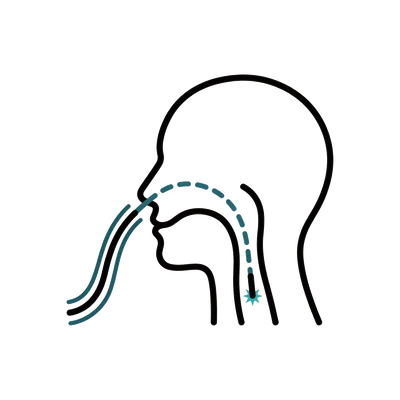
An adenoidectomy is the surgical removal of the adenoids, a patch of lymphoid tissue that sits high at the back of the nose where it meets the throat. When the adenoids become enlarged, they block the nasal airway and the opening of the tubes that drain the middle ear, which is why they are linked to a persistently blocked nose, mouth-breathing, recurrent ear and sinus problems, and snoring. Removing them reopens that space. The operation is most common in children but is sometimes done in adults.
It is a quick procedure, usually 20 to 30 minutes under general anaesthesia, carried out entirely through the open mouth with no cuts on the face or skin and no visible scar. Because of this, recovery is faster and less painful than after a tonsillectomy, with most people back to normal within about a week1,2. It is often combined with other ENT surgery in the same anaesthetic, most commonly with tonsil removal or the insertion of grommets for glue ear.
Surgery is usually considered once the problem is persistent and other measures have not settled it, rather than as a first response to a single blocked nose or one ear infection. It is a well-established operation with a good safety record, though adenoids can occasionally regrow in very young children. What the rest of this page covers is who it suits, how it is done, what recovery looks like, and what it costs in Thailand.
It can address a range of concerns, including:
Am I a Good Candidate for Adenoidectomy?
An adenoidectomy suits patients whose persistent symptoms clearly point to enlarged adenoids and have not settled with medical treatment, rather than mild or one-off problems.
Surgery makes sense when the symptoms genuinely trace back to the adenoids, not something else.
Linked to enlarged adenoids: A blocked nose, mouth-breathing, glue ear, or snoring that examination ties to enlarged adenoid tissue.
Not just one bad spell: Persistent or recurring problems carry more weight than a single infection or a passing blocked nose.
Other causes excluded: Allergy, a deviated septum, or other causes of nasal blockage are considered, since adenoid removal will not fix those.
A fair trial of medical treatment usually comes before surgery for milder cases.
Nasal steroids tried: Steroid sprays to shrink swollen tissue and calm inflammation, used correctly and for long enough to judge.
Allergies and infections treated: Underlying allergy or recurrent infection addressed, as these can keep the adenoids enlarged.
Surgery for what does not settle: Removal is reserved for persistent obstruction, glue ear, or sleep apnoea that medical treatment has not controlled.
A few things need sorting before a general anaesthetic and surgery are safe.
Active infection settled: A current throat or chest infection is brought under control before elective surgery proceeds.
Bleeding risk managed: Blood thinners and anti-inflammatory medicines are paused beforehand under medical guidance.
Palate checked: The palate is assessed in advance, as a cleft or palate problem raises the risk of nasal-sounding speech afterwards.
The operation reliably clears the blockage, but it treats the adenoids and nothing else.
Functional, not cosmetic: The benefit is clearer breathing, better sleep, and fewer ear and sinus problems, not a change in appearance.
Lasting for most: Results are durable, with only a small chance of regrowth in very young children.
Not a cure-all: Unrelated causes of a blocked nose, such as allergy or a deviated septum, may still need their own treatment.
Who is not suitable for adenoidectomy?
- Mild or intermittent symptoms that have never had a fair trial of medical treatment
- A blocked nose driven by allergy or a deviated septum, which adenoid removal will not fix
- Symptoms not clearly traced to the adenoids on examination
- An unassessed cleft or palate problem, given the risk of nasal-sounding speech
- Hoping to avoid medical management that has not yet been tried
Pricing
How Much Will Adenoidectomy Cost in Thailand?
What adenoidectomy costs at accredited hospitals in Thailand, and what your final quote depends on.
Get your exact price
Tell us what you're considering and we'll send a personalised quote from accredited hospitals within 24 hours.
Get my free quoteTypical prices in Thailand
Typical ranges based on recent hospital quotes. Your exact price depends on the hospital and how complex your case is, and is confirmed at your teleconsultation.
Adenoidectomy
The adenoids, a pad of tissue behind the nose, are lifted out through the open mouth, so there is no cut on the face.
| Adenoidectomy alone Day case Adenoids removed through the mouth on their own, for a blocked nose and mouth-breathing | $1,200 to $2,000 ฿40,800 to ฿68,000 |
| Adenotonsillectomy Day case Adenoids and tonsils removed in the same anaesthetic, for snoring or sleep apnoea with both enlarged | $2,200 to $3,000 ฿74,800 to ฿102,000 |
| Adenoidectomy with grommets Day case Adenoids removed and ventilation tubes placed in the eardrums, for persistent glue ear affecting hearing | $1,800 to $2,600 ฿61,200 to ฿88,400 |
Typically not included
- Treatment of any complication, such as a return to theatre to control bleeding from the adenoid bed
- Extra hospital nights if an overnight stay replaces same-day discharge, most likely after a combined adenotonsillectomy or for a young child
- Any care once you are back home, such as a local ENT treating later tonsil-bed bleeding or a grommet problem
- Laboratory tests or imaging your surgeon requests beyond the standard pre-operative assessment
- Treatment of a separate cause of nasal blockage the adenoids do not fix, such as allergy management or deviated-septum surgery
Get your exact price
Tell us what you're considering and we'll send a personalised quote from accredited hospitals within 24 hours.
Hospitals Trusted for Adenoidectomy
From internationally accredited flagships to dedicated specialist hospitals, these are the kinds of facilities where international patients have this procedure.

Bumrungrad International Hospital
Tertiary hospital with over 1,200 physicians treating 520,000+ international patients a year.
View hospital profile
Bangkok Hospital
BDMS flagship tertiary campus with standalone heart, cancer, and neuro-orthopaedic hospitals.
View hospital profile
Samitivej Sukhumvit Hospital
Tertiary hospital known for paediatrics, home to Thailand's first private children's hospital.
View hospital profile
Tell Us What You Need. We Do the Rest.
Share what you're considering and we'll come back with surgeon options, pricing, and a clear plan.
- Real hospital pricing with zero markup
- Matched with a specialist experienced in your specific procedure
- Full coordination from consultation to recovery


Trusted by patients worldwide
The complete guide to Adenoidectomy in Thailand
Everything below is for readers who want the full detail: costs broken down, types and techniques, recovery, risks and safety, and planning your trip.
Where to Have an Adenoidectomy in Thailand
Quick and routine though it is, the operation still needs an experienced ENT surgeon and a proper hospital around them. Here is what our partner centres provide.
JCI-Accredited Hospitals
Our partner hospitals hold JCI accreditation and run dedicated ENT departments within full-service hospitals, not day-clinics. They have the operating theatres, anaesthetic support, and recovery facilities to carry out adenoidectomy safely, including for children, with the infrastructure to manage any complication promptly should it arise.
Board-Certified ENT Surgeons
The operation is performed by surgeons board-certified in ENT (otolaryngology), many with experience operating on children as well as adults. High patient volumes at busy Bangkok hospitals keep technique sharp, and the surgeon examines and assesses each case carefully before recommending and planning the procedure.
What to Look for in a Surgeon
Board certification in ENT is the starting point. Beyond that, look for a surgeon who regularly operates on the relevant age group, explains clearly whether the adenoids alone or a combined procedure is needed, and assesses the palate beforehand. A good surgeon is also honest about when surgery is the right call rather than rushing to operate.
Understanding Your Results
Adenoidectomy results are measured by symptom relief rather than appearance. The improvement is functional: clearer nasal breathing, better sleep, and fewer ear and sinus problems.
What an Adenoidectomy Realistically Achieves
Most patients gain a clearer nasal airway, less mouth-breathing, quieter sleep, and fewer episodes of glue ear and sinus infection once the adenoids are removed. Where the adenoids were the main cause of the problem, the improvement is often marked. It does not treat unrelated causes of a blocked nose, such as allergy or a deviated septum, which may need their own management.
How Results Change Over Time
Nasal breathing usually improves within the first week or two, while the benefit to sleep, snoring, and recurrent infections becomes clearer over the following weeks and months. For most people the result is lasting, and the adenoids naturally shrink with age regardless.
Adenoidectomy Cost in Thailand
Average Cost of an Adenoidectomy
An adenoidectomy in Thailand typically costs between $1,200 and $3,000, depending on whether it is done alone or combined with other surgery, the technique used, and the hospital. Adenoid removal on its own sits at the lower end, while combining it with tonsil removal or grommets in the same anaesthetic sits higher because more is being done in one sitting.
Cost Breakdown
The surgeon's fee is the largest component. Hospital and theatre fees cover the facility, operating room, equipment, and nursing. Anaesthesia covers the anaesthetist and monitoring throughout. Aftercare covers follow-up review, any medications, and coordinator support during the stay.
What Affects the Price?
Whether the adenoidectomy is done alone or combined with tonsillectomy or grommet insertion is the main driver, since combined surgery involves more theatre time. The technique used, the hospital chosen, and whether the patient is a child or an adult can also affect the figure. A combined adenotonsillectomy costs more than adenoid removal alone, but far less than two separate operations.
Thailand vs International Price Comparison
An adenoidectomy in Thailand costs around 50 to 70 percent less than equivalent surgery in the US ($3,000–$8,000), Australia (A$4,000–A$7,000), and the UK (£2,500–£5,000) on like-for-like cases, with the larger savings showing at the busier, higher-priced Western centres. A combined adenotonsillectomy in Thailand can still sit near a simple adenoid removal abroad, so compare the same procedure on both sides rather than the headline ranges. The savings reflect lower operating costs in Thailand, not lower standards. Our partner hospitals hold JCI accreditation and use the same surgical techniques and equipment as leading Western ENT departments.
Adenoidectomy vs Medical Management
Surgery is not the automatic first step for enlarged adenoids. For milder or intermittent symptoms, the usual starting point is medical management: a course of nasal steroid sprays to shrink the swollen tissue and calm inflammation, alongside treating any underlying allergies or infections that are keeping the adenoids enlarged. Given a fair trial and used correctly, this settles symptoms for a good number of patients, particularly younger children whose adenoids often shrink naturally as they grow.
The honest limit is that medical treatment manages the swelling rather than removing the tissue. When the adenoids are persistently large enough to block the nose, drive recurrent glue ear, or disturb sleep, sprays and allergy treatment can only do so much, and many families find the same blocked nose, broken sleep, or repeated ear trouble returns each time. There is also a point where continuing with medication simply delays the relief that a quick operation would give.
Most ENT surgeons look for symptoms that are persistent and genuinely affecting day-to-day life, and that have not settled with a reasonable trial of medical treatment, before recommending removal. Where the problem is clearly the adenoids, obstruction is significant, or there is sleep apnoea or persistent glue ear affecting hearing, an adenoidectomy is the step that clears the blockage for good. If symptoms are mild or coming and going, a trial of medical management first is usually the sensible call.
Types of Adenoidectomy
An adenoidectomy is often planned alongside other ENT work, because the conditions enlarged adenoids cause frequently overlap with tonsil and middle-ear problems. The right combination depends on the symptoms and what the surgeon finds on examination.
Adenoidectomy Alone
Removal of the adenoids on their own, chosen when the main problem is a blocked nose, mouth-breathing, or recurrent sinus and ear trouble driven by the adenoids rather than the tonsils. It is the quickest version of the operation and has the gentlest recovery, since nothing is removed from the throat itself.
- Adenoids removed through the mouth with no external cuts
- Quickest option with the mildest recovery
- No effect on the tonsils or middle ear
- Best for: nasal blockage and mouth-breathing driven by the adenoids
Adenotonsillectomy (With Tonsils)
The adenoids and tonsils are removed together in the same anaesthetic, a common choice when both are enlarged and contributing to snoring, sleep apnoea, or repeated infections. Combining them avoids a second operation and a second general anaesthetic, though recovery follows the slower tonsillectomy timeline rather than the quicker adenoid one.
- Adenoids and tonsils removed in one procedure
- Avoids a separate operation and anaesthetic later
- Recovery follows the tonsillectomy pattern (about two weeks)4
- Best for: snoring or sleep apnoea with both tonsils and adenoids enlarged
Adenoidectomy With Grommets
The adenoids are removed and small ventilation tubes (grommets) are placed in the eardrums in the same sitting, a frequent combination for persistent glue ear. Clearing the adenoids helps the middle ear drain, while the grommets relieve the trapped fluid directly, addressing both sides of the problem at once.
- Combines adenoid removal with grommet insertion for glue ear
- Tackles middle-ear fluid and the blockage feeding it together
- Grommets typically fall out on their own over time
- Best for: persistent glue ear with hearing affected
Choice of Technique
The adenoids themselves can be removed in different ways, including traditional curettage, suction diathermy, and coblation. These differ mainly in how the tissue is cleared and how bleeding is controlled, rather than in the result. The surgeon chooses based on the anatomy, the equipment available, and their own experience.
- Curettage, suction diathermy, or coblation, all through the mouth
- Differences are in method and bleeding control, not the outcome
- Quick procedure with dissolvable or no stitches
- Why it matters: the choice is the surgeon's, made to suit your anatomy
Adenoidectomy Techniques
All techniques remove the adenoids through the open mouth, with no incision on the face. They differ in how the tissue is cleared and how any bleeding is sealed, and an experienced ENT surgeon will use the one that suits the case.
Curettage
The traditional method, using a small curved instrument (an adenoid curette) to scrape the adenoid tissue away from the back of the nose. It is quick and effective, and remains widely used. Any bleeding is then controlled with brief pressure or cautery before the airway is checked and the operation finished.
- Long-established, quick, and effective
- Adenoid tissue scraped away with a curette
- Bleeding controlled with pressure or cautery afterwards
- Why it matters: a dependable, long-proven approach in experienced hands
Suction Diathermy
A heated suction instrument removes the adenoid tissue and seals small blood vessels at the same time, which can reduce bleeding during the procedure and give the surgeon a clearer view. It allows controlled, precise removal under direct vision using a mirror or endoscope.
- Removes tissue and seals vessels in one step
- Often reduces bleeding during the operation
- Performed under clear, direct vision
- Why it matters: useful where bleeding control and precision come first
Coblation
A low-temperature radiofrequency technique that dissolves the adenoid tissue with less heat spread to the surrounding area than older cautery methods. It offers controlled removal with good bleeding control, and is one of the more modern options available at well-equipped hospitals.
- Low-temperature radiofrequency removal
- Less heat spread than traditional cautery
- Controlled removal with good haemostasis
- Why it matters: a modern, gentle option where the equipment is available
Endoscopic-Assisted Removal
An endoscope passed through the nose gives a magnified, direct view of the adenoid bed, so the surgeon can see exactly what is being removed and confirm the area is clear at the end. It is often combined with suction diathermy or coblation for more thorough, precise clearance, particularly where the adenoids sit awkwardly.
- Magnified direct view of the adenoid area
- Confirms complete, precise clearance
- Often paired with diathermy or coblation
- Why it matters: helps with thorough removal and harder-to-reach tissue
Adenoidectomy Recovery Timeline
Day 1
After a short spell in recovery, most patients go home the same day2,3. Expect a blocked or stuffy nose, mild earache or throat discomfort, and tiredness from the anaesthetic. Drinking plenty of fluids and taking simple pain relief as advised keeps things comfortable. There is no packing and no external wound to look after. Adults must not drive, sign anything, or be left alone for the first 24 hours after a general anaesthetic, so arrange a companion to get home and stay overnight.
Days 2–3
The nose often feels its most blocked over the first few days as the area settles, and breath may be temporarily smelly while it heals. Soft foods and fluids are easy to manage. Mild earache, sometimes felt as referred pain, is common and eases with simple pain relief. Quiet activity at home is best.
Days 4–7
Discomfort fades steadily and the nose gradually clears. Most people are back to a normal diet by around day five to seven, moving off soft foods as the throat settles. Children are usually back to normal play by the end of the first week, and many return to school or nursery around this point. Adults can typically return to desk work within a few days to a week, avoiding anything strenuous, and can usually drive again once off strong pain relief and able to react normally, typically after the first 24 to 48 hours.
Weeks 2–3
By now most people are fully back to normal. Nasal breathing continues to improve as any residual swelling settles. The benefit to sleep, snoring, and recurrent infections becomes clearer over the following weeks as the airway stays open and the middle ear drains more freely.
When Can You Fly After an Adenoidectomy?
Most patients are cleared to fly home about five to seven days after surgery, once the surgeon has confirmed there is no bleeding and recovery is settling normally. The nose may still feel a little stuffy at this stage, which is fine. Stay hydrated on the flight, use saline spray if advised, and avoid forceful nose blowing.
When Can a Child Return to School or Activity?
Children are usually ready to return to school or nursery around a week after surgery, once they are eating and drinking normally and feeling themselves again. Avoid swimming and rough play for the first couple of weeks. Adults can return to desk work within a few days to a week, leaving strenuous exercise until any discomfort has fully settled.
When Can You Eat Normally and Drive Again?
Soft foods and plenty of fluids are easiest for the first few days, with a normal diet usually back by around day five to seven as the throat settles. After a general anaesthetic, adults must not drive for at least 24 hours, and should wait until they are off strong pain relief and able to react and brake normally, which is typically within the first 24 to 48 hours. Children, of course, are not affected by this; it applies to adult patients having the operation themselves.
When Will You See the Full Benefit?
Nasal breathing often improves within the first week or two as swelling settles. The fuller benefit to snoring, sleep, and recurrent ear or sinus problems becomes clearer over the following weeks and months, as the airway stays open and the middle ear drains more freely without the enlarged adenoids in the way.
Anaesthesia for an Adenoidectomy
An adenoidectomy is performed under general anaesthesia, so the patient is fully asleep and aware of nothing while the surgeon works through the open mouth. A consultant anaesthetist stays present throughout the operation and monitors continuously, which is standard at the accredited hospitals we work with. Because the procedure involves the airway and needs the patient completely still, a general anaesthetic is used rather than local.
Before the day of surgery there is a pre-operative assessment to confirm fitness for anaesthesia, including a review of general health, any allergies, and any medications. This is also when blood thinners and anti-inflammatory medicines are paused under guidance, since the area can bleed. For children, a parent can usually stay until the anaesthetic takes effect, which most families find reassuring.
There is nothing felt during the operation itself. On waking, the usual sensations are a blocked nose, a slightly sore throat, and mild earache rather than sharp pain, often with some grogginess from the anaesthetic. Simple oral pain relief is normally enough, and because there are no external wounds, most patients are comfortable enough to go home the same day.
Risks and Safety of an Adenoidectomy
An adenoidectomy is a common, well-established operation with a strong safety record. Serious complications are uncommon at experienced centres, but it is still surgery under general anaesthesia, so you should understand what can happen.
- Bleeding from the adenoid bed (uncommon, usually settles on its own)
- Infection of the healing area requiring antibiotics
- Temporary nasal-sounding or "blocked" speech while swelling settles
- Mild earache or throat discomfort for a few days, often referred pain
- Persistent velopharyngeal insufficiency, where air or voice escapes into the nose (rare)2
- Regrowth of adenoid tissue, mainly in very young children
- Nasopharyngeal stenosis, scarring that narrows the space behind the nose, a rare risk of more aggressive thermal removal (suction diathermy or coblation)
- Added risks if combined, secondary bleeding beyond day 5 with tonsil removal, or eardrum perforation, early tube extrusion, and ear discharge with grommets
- Risks associated with general anaesthesia (uncommon)
The most important risk to weigh is persistent nasal-sounding speech, which is rare and more likely where there is an unrecognised palate problem, one reason the palate is checked before surgery. As with any operation, risk is lowest with an experienced board-certified ENT surgeon in an accredited hospital, where bleeding and any rare complication can be managed promptly.
Is an Adenoidectomy Safe in Thailand?
Yes. An adenoidectomy at a JCI-accredited hospital in Thailand meets the same safety standards as the UK, US, and Australia. The operation is carried out by a board-certified ENT surgeon, with a consultant anaesthetist present throughout and full in-house emergency infrastructure should it ever be needed. It is one of the most commonly performed ENT operations worldwide.
How to Reduce Your Risk
Choose a JCI-accredited hospital and a surgeon board-certified in ENT with experience operating on the age group involved, whether a child or an adult. Make sure blood thinners and anti-inflammatory medicines are paused on medical advice beforehand. Following the simple aftercare guidance on fluids, rest, and avoiding strenuous activity also lowers the small risk of bleeding.
What If It Is Combined With Tonsils or Grommets?
Adenoid removal on its own is low-risk, but each added component brings its own. If the tonsils are removed at the same time (adenotonsillectomy), the main extra concern is secondary bleeding from the tonsil beds, which classically appears between day 5 and day 10 as the scabs separate4, often after you would otherwise feel recovered; any fresh bleeding from the mouth at that stage needs to be seen the same day. If grommets are inserted for glue ear, the added risks are perforation of the eardrum, the tube falling out earlier than intended (early extrusion), and ear discharge (otorrhoea), usually treated with ear drops. Choosing a combined procedure means accepting the risks of the added component as well as the adenoidectomy itself, which is why the surgeon talks each one through before you decide.
What About Adenoid Regrowth?
Adenoid tissue can occasionally grow back, almost always in very young children, since the adenoids are still active at that age and naturally shrink later in childhood. Regrowth significant enough to need a second operation is uncommon2,3. If symptoms return, an ENT surgeon can reassess, but for most patients the first operation resolves the problem for good.
Planning Your Trip to Thailand for an Adenoidectomy
This is one of the shorter medical trips. Five to seven days covers everything essential, with a gentle recovery in between.
How Long to Stay in Thailand
Plan for five to seven days. This covers your consultation and pre-operative assessment, the day-case surgery, a few days of gentle recovery, and a final check before you fly home. A longer stay is not usually necessary, though combining it with tonsil removal may warrant a little extra time.
What's Included in a Medical Trip
Your care coordinator handles hospital transfers, surgery scheduling, and follow-up appointments. The surgical quote covers the surgeon's fee, anaesthesia, the hospital day case, any medications, and aftercare. Flights and accommodation are separate, but your coordinator can recommend nearby hotels suited to recovering comfortably, including with a child.
Travelling With a Child
Most adenoidectomies are done in children, so our partner hospitals are set up for paediatric care, and a parent can stay close throughout. Choose a hotel near the hospital, plan for quiet, low-key days during the first week, and keep things flexible. Recovery is usually straightforward, but staying nearby means any question can be answered quickly.
Related Procedures
Other procedures that address similar goals or conditions, in case one of them is a closer fit for you.
Planning your treatment in Thailand
Independent guides to help you weigh the decision, before you commit to anything.
Common Questions About Adenoidectomy
Everything you need to know before your procedure

Medical References
Keep researching with AI
Open this guide in your AI assistant to dig deeper and ask the questions it didn't answer.
Opens in a new tab with this guide already loaded.
Medical disclaimer: Content on this site is provided for informational purposes and should not be treated as medical advice. Outcomes, timelines, and eligibility differ from person to person. Consult a qualified medical professional before making any decisions about surgery or treatment.
Ready to Get Started?
Speak with our care coordinators for a free, no-obligation consultation and personalised quote.
Speak to Our Team