Off-Pump CABG in Thailand Your guide to cost, top specialists & hospitals
Off-pump bypass grafts a beating heart without the heart-lung machine. A technique variant of standard bypass, chosen for the patients it genuinely helps.
What Is Off-Pump CABG?
Also known as: Beating-Heart Bypass (Off-Pump CABG) · Off-Pump Coronary Artery Bypass (OPCAB)
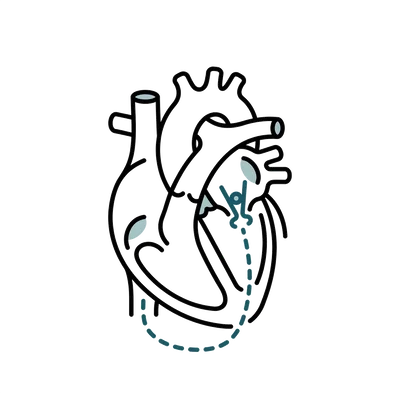
Off-pump CABG is a variant of bypass surgery. The destination is the same: a healthy vessel grafted past a blocked coronary artery so blood reaches the heart muscle again. What is different is the route. In standard, or on-pump, bypass the heart is stopped and a cardiopulmonary bypass machine, the heart-lung machine, takes over the work of the heart and lungs while the surgeon operates on a still, bloodless field. In off-pump bypass the heart keeps beating throughout. A mechanical tissue stabiliser presses gently on the small patch of heart being grafted to steady it, while the rest of the heart carries on pumping. The heart-lung machine is avoided entirely.
This page focuses on that difference. The fundamentals that off-pump shares with all bypass surgery, what grafting is, how many grafts you might need, what general anaesthesia and a sternotomy involve, and the long recovery that follows open-heart surgery, are covered on the main bypass surgery page, and it is worth reading that first. Here we deal with what the off-pump approach changes, who it suits, and the honest limits of the evidence behind it.
The reason a surgeon might avoid the heart-lung machine is that the machine itself, while safe and routine, triggers a systemic inflammatory response and briefly disturbs blood flow to the brain, kidneys, and other organs. For most patients that is well tolerated. For some, particularly those with a heavily calcified aorta, prior stroke risk, or existing kidney or lung disease, avoiding it may reduce certain complications. That is the case for off-pump. It is a real one, but it is specific, and it is not a blanket claim that off-pump is better for everyone.
It can address a range of concerns, including:
Am I a Good Candidate for Off-Pump CABG?
Suitability for off-pump CABG rests on three things: that you need bypass, that you have a specific reason to avoid the heart-lung machine, and that your surgical team is experienced in the beating-heart technique. It is decided from your imaging, not your preference.
Off-pump is chosen for a specific reason, not as a default. The benefit is real but targeted.
Calcified aorta: A heavily calcified 'porcelain' aorta makes clamping for the machine risky, and avoiding it can lower stroke risk.
Higher stroke risk: The anaortic 'no-touch' off-pump technique avoids the aorta entirely, where the clearest benefit shows.
Kidney or lung disease: Avoiding the heart-lung machine may reduce the stress it places on already-compromised kidneys or lungs.
Like all bypass, off-pump is planned from imaging, not symptoms alone.
Angiography confirmed: Coronary blockages needing bypass must be documented on angiography before grafting is considered.
Anatomy suits a beating heart: Vessels must be reachable on a moving heart; deep or small vessels may favour on-pump.
Imaging to hand: Recent angiograms and echocardiography let the team judge whether off-pump genuinely fits your case.
Off-pump is harder than standard bypass, so the team matters more here than almost anywhere.
Off-pump volume: Outcomes depend on how regularly the surgeon performs beating-heart grafting. Ask directly.
Machine on standby: A good programme keeps the heart-lung machine and perfusionist ready for safe conversion.
Honest advice: A frank surgeon will say if standard on-pump would serve you better, rather than pushing off-pump.
This is major open-heart surgery under general anaesthesia, so your whole body is assessed.
Stable circulation: The heart must tolerate being lifted and positioned while still beating.
Lungs and kidneys reviewed: Function is checked, both for fitness and because they shape the off-pump decision.
Smoke-free and optimised: Stopping smoking four weeks before and controlling blood sugar reduce complications.
Who is not suitable for off-pump cabg?
- A healthy aorta and good organ function, where standard on-pump is often the simpler, equally good choice
- Coronary anatomy with deep, small, or hard-to-reach vessels better grafted on a still heart
- A surgical team without sustained off-pump volume
- Haemodynamic instability that may not tolerate positioning the beating heart
- Smoking with no commitment to stop at least four weeks before surgery (a general cardiac-surgery contraindication, not specific to off-pump)
- Recent stroke or significant carotid disease without neurology and vascular clearance
- Active systemic infection or sepsis, until treated
Pricing
How Much Will Off-Pump CABG Cost in Thailand?
What off-pump cabg costs at accredited hospitals in Thailand, and what your final quote depends on.
Get your exact price
Tell us what you're considering and we'll send a personalised quote from accredited hospitals within 24 hours.
Get my free quoteTypical prices in Thailand
Typical ranges based on recent hospital quotes. Your exact price depends on the hospital and how complex your case is, and is confirmed at your teleconsultation.
Off-Pump CABG
Blocked coronary arteries are bypassed while the heart keeps beating, so the heart-lung machine is not used.
| Single-vessel off-pump CABG 5 to 7 nights One graft to the LAD on a beating heart, for disease confined to a single vessel | $12,000 to $16,000 ฿408,000 to ฿544,000 |
| Multivessel off-pump CABG 5 to 7 nights Several grafts built in sequence on the beating heart, for disease in more than one vessel | $16,000 to $22,000 ฿544,000 to ฿748,000 |
| Anaortic (no-touch) off-pump CABG 5 to 7 nights Grafts based on the mammary arteries with no aortic clamping, for a heavily calcified aorta | $18,000 to $25,000 ฿612,000 to ฿850,000 |
| Hybrid, off-pump graft plus stent 5 to 7 nights One arterial graft to the LAD, stents for the other blockages, for selected multi-vessel disease | $17,000 to $24,000 ฿578,000 to ฿816,000 |
Typically not included
- The stents and catheter-lab session on the hybrid row, sized once your cardiologist decides how many stents the remaining vessels need
- Nights in intensive care or on the ward beyond the stay quoted
- Treatment of a complication, such as a return to theatre for bleeding, kidney support, or a longer period on the ventilator
- The heart-lung machine circuit and extra theatre time if the operation converts to on-pump, beyond the standby already priced in
- Blood and blood products beyond the package volume, since how much you need is not known until grafting is under way
Get your exact price
Tell us what you're considering and we'll send a personalised quote from accredited hospitals within 24 hours.
Hospitals Trusted for Off-Pump CABG
From internationally accredited flagships to dedicated specialist hospitals, these are the kinds of facilities where international patients have this procedure.

Bangkok Hospital
BDMS flagship tertiary campus with standalone heart, cancer, and neuro-orthopaedic hospitals.
View hospital profile
Bumrungrad International Hospital
Tertiary hospital with over 1,200 physicians treating 520,000+ international patients a year.
View hospital profile
MedPark Hospital
Purpose-built tertiary hospital opened in 2020, focused on complex cardiac, cancer, and transplant care.
View hospital profile
Tell Us What You Need. We Do the Rest.
Share what you're considering and we'll come back with surgeon options, pricing, and a clear plan.
- Real hospital pricing with zero markup
- Matched with a specialist experienced in your specific procedure
- Full coordination from consultation to recovery


Trusted by patients worldwide
The complete guide to Off-Pump CABG in Thailand
Everything below is for readers who want the full detail: costs broken down, types and techniques, recovery, risks and safety, and planning your trip.
Where to Have Off-Pump Bypass in Thailand
With off-pump CABG more than almost any other bypass technique, the surgeon's specific experience is the decision that matters most. Here is what to look for and what our partner centres offer.
Leading Cardiac Hospitals in Bangkok
Our partner hospitals are JCI-accredited and rank among Southeast Asia's highest-volume cardiac centres. They maintain dedicated cardiac surgery departments with full-time teams, hybrid catheterisation-operating theatres, and cardiac ICUs with one-to-one nursing. For off-pump specifically, what matters is that the centre keeps a heart-lung machine and perfusionist ready in every case, so conversion to on-pump is always a safe option if needed. These are not boutique clinics; they have the infrastructure to handle complications in-house.
Surgeons Experienced in Off-Pump
Off-pump is a technique you get better at by doing it often, so off-pump-specific volume is the question to ask. Our partner cardiothoracic surgeons are board-certified by the Royal College of Surgeons of Thailand and hold subspecialty qualifications in cardiac surgery, and several trained internationally before returning to Thailand where surgical volume is substantially higher. Ask directly how regularly a surgeon performs beating-heart bypass, because an occasional off-pump operator may serve you better with standard on-pump.
What to Look for in an Off-Pump Surgeon
Board certification in cardiothoracic surgery is the baseline. Beyond that, ask specifically about off-pump volume and, if the anaortic technique is being considered, experience with no-touch grafting. A good cardiac surgeon will tell you honestly whether off-pump genuinely benefits you or whether standard on-pump is the better-matched choice for your anatomy. Be wary of any surgeon who presents off-pump as automatically superior; the evidence does not support that, and a frank surgeon will say so.
Understanding Your Results
Off-pump CABG produces the same kind of lasting symptom relief as any successful bypass. Done well, outcomes match on-pump for most patients, with specific advantages for selected higher-risk cases.
Typical Off-Pump CABG Outcomes
The primary outcome, as with any bypass, is resolution or significant reduction of angina, with improved exercise capacity within weeks as the heart receives better blood supply. Large trials show off-pump and on-pump give broadly comparable survival and symptom relief for most patients. The clearest off-pump-specific advantage is in selected higher-risk patients, where avoiding the machine, and in the anaortic technique avoiding the aorta, can reduce stroke, kidney injury, and transfusion.
What Results Can You Expect?
Expect a substantial improvement in daily function: walking further, climbing stairs without chest pain, and sleeping without angina. The honest caveat specific to off-pump is graft completeness: in experienced hands the grafts are as good as on-pump, but the technique is less forgiving of an occasional operator. Long-term outcome depends heavily on medication adherence, smoking cessation, and cardiac rehabilitation. The surgery buys time and function; lifestyle and medication are what protect it. We never promise a specific outcome.
Off-Pump CABG Cost in Thailand
Average Cost of Off-Pump CABG
Off-pump CABG in Thailand typically costs between $12,000 and $25,000, depending on the number of grafts, the complexity of the beating-heart approach, and the hospital. A single-vessel off-pump graft sits at the lower end. Multivessel off-pump, anaortic technique, or hybrid procedures sit higher because they take longer and demand more of the surgical team. Every quote should itemise surgeon fees, ICU stay, and consumables so you know exactly where the money goes.
Cost Breakdown
The total is made up of several components. The surgeon and surgical team fee is the largest single item, and tends to reflect the added skill the off-pump technique requires. Hospital and theatre fees cover the operating room, ICU bed, ward stay, equipment, and nursing, including a heart-lung machine kept on standby in case conversion is needed. Anaesthesia covers the cardiac anaesthetist and the close intraoperative monitoring a beating-heart case demands. Consumables include stabilisers, shunts, grafting materials, and sutures. Aftercare includes cardiac rehabilitation, medications, and follow-up appointments.
What Affects the Price?
The main variables are the number of grafts and whether the off-pump approach is single-vessel or the more demanding multivessel or anaortic technique. Hybrid procedures that add stenting carry the cost of the cardiology side as well. Because off-pump is technically harder, surgeon and team fees can sit at the upper end. Hospital choice also matters; leading Bangkok cardiac centres price differently from mid-tier accredited facilities, though all our partner hospitals meet JCI standards.
Thailand vs International Price Comparison
Off-pump CABG in Thailand costs 50–70% less than equivalent surgery in the US ($40,000–$100,000), Australia (A$45,000–A$95,000), and the UK (£28,000–£60,000). The difference reflects Thailand's lower operating costs, not lower surgical standards. Our partner hospitals hold JCI accreditation, and surgeons hold board certifications equivalent to their international counterparts.
Off-Pump vs On-Pump (Standard) Bypass
Off-pump and on-pump are two ways of doing the same operation, and the honest starting point is that for most patients the evidence shows broadly similar outcomes between them1,2. Large randomised trials comparing the two have not found that off-pump is reliably better across the board on survival or major complications. So the choice is not off-pump versus a worse alternative; it is two valid routes to the same bypass, suited to different patients and different teams.
On-pump is the standard for good reasons. Stopping the heart and using the machine gives the surgeon a still, bloodless field, which makes precise grafting easier, especially for vessels on the back of the heart and for complex multi-vessel work. The main concern raised against off-pump is graft completeness and durability: when beating-heart grafting is done by a team that does not perform it often, there is evidence that fewer grafts may be placed or grafts may be less durable. That is the real trade-off, and it is why surgeon experience matters so much here.
Off-pump earns its place in specific situations. Avoiding the heart-lung machine, and in the anaortic technique avoiding the aorta altogether, can reduce stroke, kidney injury, and the need for transfusion in selected higher-risk patients, those with a heavily calcified aorta, prior stroke, or significant kidney or lung disease. For these patients the case is genuine. For a straightforward patient with a healthy aorta and good kidney function, on-pump is often the simpler, equally good choice. This is a surgeon-led, patient-specific decision made from your imaging and your overall health, not a preference you should feel pressed to make yourself, and your surgeon will explain honestly which route fits your case and why.
Types of Off-Pump CABG
Off-pump is not a single fixed operation but a family of approaches built around one principle: avoiding the heart-lung machine. Which one fits depends on your coronary anatomy and, just as importantly, on your surgeon's experience with the technique.
Single-Vessel Off-Pump CABG
One graft constructed on the beating heart, most often the internal mammary artery to the LAD. With a single target the heart needs little repositioning, so this is among the more straightforward off-pump cases and a common entry point for the technique.
- One graft, usually to the most important artery
- Limited heart repositioning needed
- Avoids the heart-lung machine for a single target
- Best for: isolated disease where one vessel needs grafting
Multivessel Off-Pump CABG
Several grafts built in sequence while the heart beats. This is the technically demanding end of off-pump, because reaching the vessels on the back and side of the heart means lifting and rotating a working heart while keeping circulation stable. It depends heavily on a practised team.
- Multiple grafts on a beating, repositioned heart
- Technically demanding and team-dependent
- Aims for the same completeness as on-pump grafting
- Best for: multi-vessel disease in experienced off-pump centres
Off-Pump With Minimally Invasive Access
The off-pump technique combined with a smaller incision between the ribs rather than a full sternotomy. Avoiding both the heart-lung machine and the divided breastbone, but only suited to anatomy that can be reached this way, usually single-vessel LAD disease.
- Beating-heart grafting through a smaller incision
- Avoids both the machine and full sternotomy
- Anatomy must allow keyhole access
- Best for: selected single-vessel disease, experienced teams only
Hybrid Revascularisation (Off-Pump Graft + Stent)
A planned combination rather than one operation. The surgeon places a durable off-pump arterial graft to the key vessel, the LAD, while a cardiologist treats the remaining blockages with stents, often in a staged sequence.
- Off-pump arterial graft to the LAD, stents elsewhere
- Pairs graft durability with less invasive stenting
- Needs close surgical and cardiology coordination
- Best for: selected multi-vessel disease where the LAD warrants a graft
Anaortic ('No-Touch' Aorta) Technique
An off-pump approach that also avoids touching the aorta at all, using arterial grafts based on the mammary arteries rather than grafts sewn onto the aorta. The aim is to lower stroke risk further in patients with a calcified or fragile aorta. Suitability depends on anatomy and on a surgeon experienced in the technique.
- Avoids clamping or touching the aorta entirely
- Aims to lower stroke risk in calcified aortas
- Relies on mammary-artery-based grafts
- Best for: porcelain aorta or high stroke risk, in expert hands
Off-Pump CABG Techniques
Beating-heart grafting is made possible by a handful of specific tools and methods, each solving a problem the heart-lung machine would otherwise handle. They are what turns an idea into a workable operation.
Tissue Stabilisers
The defining tool of off-pump surgery. A mechanical stabiliser, usually a suction or compression device, holds still the small patch of heart being grafted while the rest keeps beating. It creates a workable field without stopping the heart, but the field is smaller and moves more than the still, bloodless one the machine provides.
- Steadies only the small area being grafted
- Lets the heart keep beating throughout
- A more demanding field than a stopped heart
- Why it matters: the core technology that makes any off-pump case possible
Intracoronary Shunts
A small temporary shunt placed inside the coronary artery while the graft is sewn, keeping a trickle of blood flowing to the heart muscle downstream and keeping the field clear of blood. It helps protect the heart during the minutes each graft takes on a beating heart.
- Maintains some blood flow during grafting
- Keeps the surgical field clearer
- Helps protect heart muscle downstream
- Why it matters: protects the muscle during each graft, especially on larger vessels
Anaortic ('No-Touch') Technique
Beyond avoiding the machine, the surgeon avoids touching the aorta at all, since manipulating a calcified aorta is a leading cause of stroke during bypass. Grafts are based on the mammary arteries rather than sewn onto the aorta. This is where the clearest off-pump benefit, lower stroke risk, tends to show.
- No clamping or partial clamping of the aorta
- Targets the main avoidable cause of bypass stroke
- Requires arterial-graft planning and expertise
- Why it matters: this is where the clearest off-pump benefit, lower stroke risk, shows
Surgeon Experience and Volume
The least visible technique and the most important. Off-pump grafting on a moving heart is harder than grafting a still one, and the quality of the grafts depends on how regularly the team performs it. The honest evidence is that off-pump works best in high-volume, experienced hands and can underperform in occasional ones.
- The single biggest factor in off-pump outcomes
- Beating-heart grafting is harder than on-pump
- Results suffer in low-volume hands
- Why it matters: off-pump volume should guide your choice of surgeon
Off-Pump CABG Recovery Timeline
Days 1–3
ICU monitoring with continuous telemetry, broadly as for any bypass. Because the heart-lung machine was avoided, some off-pump patients need less transfusion and wean from the ventilator a little sooner, but this is not guaranteed. Chest drains and a urinary catheter are in place initially, and physiotherapy gets you sitting and taking first steps within 24–48 hours.
Days 4–7
Transfer to the cardiac ward. Walking distances increase daily under physiotherapy supervision. Chest drains are removed, wound care continues, and breathing exercises help prevent chest infections. Pain steps down from intravenous to oral medication. The sternotomy heals on the same timeline as standard bypass, since the chest is opened the same way.
Weeks 2–4
Light daily activity at your recovery accommodation. Short walks, stair practice, and gentle stretching. Formal cardiac rehabilitation begins with supervised exercise and dietary guidance. Sternal precautions remain in place: no heavy lifting, no driving.
Weeks 4–12
Desk work and driving typically resume around four to six weeks3,4, once an emergency stop is comfortable and the sternum is healing well. Progressive return to fuller activity follows, with heavy lifting and strenuous exertion held until about three months. Cardiac rehab continues with graduated targets, and long-term medications such as aspirin, statins, and blood pressure drugs are reviewed and optimised. The off-pump approach changes the operation, not the months of healing that follow.
When Can You Fly After Off-Pump CABG?
Most patients are cleared to fly about 2–3 weeks after surgery, once sternal healing is progressing well and cardiac function is stable on echocardiography. Your surgical team issues a fitness-to-fly letter. We recommend an aisle seat, compression stockings, and regular leg movement during the flight to reduce the risk of clots.
When Can You Return to Work and Exercise?
Desk work is typically possible four to six weeks after surgery. Driving usually resumes around the same time once you can perform an emergency stop comfortably. Light walking is encouraged from week one and remains the foundation of early recovery. Structured cardiac rehabilitation with graduated targets begins from week two. Heavy lifting and strenuous exertion should wait until about three months, guided by your surgical team.3 The off-pump approach does not meaningfully shorten this; the sternum still needs time to heal.
When Will You See Full Recovery?
The sternum takes six to eight weeks to heal and cardiac function typically improves over the first three months as the heart receives better blood supply through the new grafts. Most patients report significantly improved exercise tolerance and resolution of angina within six to eight weeks. Full recovery, including a return to vigorous activity, is usually achieved by twelve weeks.3
Anaesthesia for Off-Pump CABG
Off-pump CABG is performed under general anaesthesia, so you are fully asleep and aware of nothing during the operation. A consultant cardiac anaesthetist plans and delivers the anaesthetic and stays with you throughout, monitoring your heart, blood pressure, breathing, and depth of anaesthesia continuously. As with all open-heart surgery, arterial and central lines are placed once you are asleep so the team can track your circulation closely while the grafts are constructed.
The anaesthetic challenge that is specific to off-pump is keeping your circulation stable while the heart keeps beating and is lifted and rotated to reach vessels on its back and side. Without the heart-lung machine to maintain blood flow, the cardiac anaesthetist works closely with the surgeon to manage blood pressure and heart rhythm minute by minute as the heart is positioned. This is one of the reasons off-pump is so dependent on an experienced team, the anaesthetist as much as the surgeon. A breathing tube supports you during surgery and into the early ICU period, and is usually removed within hours once you are stable.
As with any bypass, a formal pre-operative assessment comes first: coronary angiography, echocardiography, lung function tests, and blood work, alongside cardiac and respiratory clearance to confirm you are fit for anaesthesia. You feel nothing during the surgery itself. Afterwards there is genuine discomfort around the chest and any graft harvest site, managed with intravenous pain relief in the ICU that steps down to oral medication. Most patients describe the sternum as sore and tight rather than sharply painful.
Risks and Safety of Off-Pump CABG
Off-pump carries the same core risks as any bypass surgery, plus one that is specific to the beating-heart approach: the possibility of converting to on-pump during the operation if needed. The shared bypass risks are covered fully on the main bypass page; here is the honest summary plus what is different.
- Bleeding requiring transfusion (the machine being avoided may reduce, not eliminate, this)2
- Wound infection of the sternotomy or graft harvest site
- Temporary heart rhythm disturbances, particularly atrial fibrillation
- Stroke (the off-pump and anaortic techniques aim to reduce this in selected patients)1,2
- Kidney injury (avoiding the machine may lessen this risk in those already at risk)
- Phrenic nerve injury during internal mammary artery harvest, which can paralyse one side of the diaphragm and cause lingering breathlessness that may only become obvious after discharge
- Graft failure or incomplete revascularisation, a particular concern if the team is not high-volume in off-pump
- Conversion to on-pump mid-operation if the heart does not tolerate the beating-heart approach
- Operative mortality (broadly comparable to on-pump in experienced centres)
The strongest protection against complications with off-pump specifically is the experience of the surgical team, because beating-heart grafting is harder than grafting a still heart. We are honest that conversion to on-pump is a recognised, planned-for possibility rather than a failure: a good team is set up to switch safely if your heart does not tolerate the off-pump approach, and the heart-lung machine is on standby for exactly that reason.
Is Off-Pump CABG Safe in Thailand?
Yes, when performed at a JCI-accredited hospital by a board-certified cardiothoracic surgeon experienced in the off-pump technique. Off-pump is more demanding than standard bypass, so the surgeon's off-pump volume matters even more than usual. Thailand's top cardiac centres maintain rigorous protocols and surgical teams that handle bypass as a routine part of their caseload. The heart-lung machine remains on standby in case conversion is needed, which is a safety feature of any well-run off-pump programme rather than a sign of a problem.
How to Reduce Risks Before Surgery
Stop smoking at least four weeks before surgery; this single step materially reduces wound complications and respiratory risk. Optimise blood sugar if you are diabetic, as uncontrolled glucose increases infection rates. Adjust blood-thinning medications only as directed by your cardiologist. A thorough pre-operative workup including coronary angiography, echocardiography, lung function, and blood work identifies issues that can be addressed first, and helps confirm whether off-pump is genuinely the right approach for your anatomy.
What Happens If Complications Arise?
The ICU at our partner hospitals runs 24-hour cardiac monitoring with immediate access to interventional cardiology and reoperation capability. Atrial fibrillation, the most common post-CABG arrhythmia, is detected on continuous telemetry and managed with medication or cardioversion. Should your heart not tolerate the beating-heart approach during surgery, the team converts to on-pump using the machine kept on standby. You are not discharged until your surgical team is satisfied that recovery is on track.
Planning Your Trip to Thailand for Off-Pump CABG
Most patients need about 2–3 weeks in Thailand, the same as standard bypass, since the recovery is driven by open-heart surgery rather than by which technique was used. Here is how to plan the trip.
How Long to Stay in Thailand
Plan for about 2–3 weeks. The first two days cover your cardiac assessment and pre-operative workup, including coronary angiography if not already completed and a review of whether off-pump genuinely suits your anatomy. Surgery and ICU recovery take five to seven days. The remainder covers ward recovery, initial cardiac rehabilitation, and at least two follow-up appointments to confirm wound healing, cardiac rhythm, and graft function before you are cleared to fly.
What's Included in a Medical Trip
Your care coordinator handles hospital logistics: surgical scheduling, pre-operative assessments, interpreter services if needed, and all post-operative follow-up appointments. Surgical quotes cover the surgeon and team fee, anaesthesia, ICU and ward stay, consumables, and aftercare including cardiac rehabilitation. Flights and accommodation are arranged separately, but your coordinator recommends hotels near the hospital and helps with bookings.
Recovery in Bangkok
Bangkok is the only practical base for cardiac surgery recovery. You need to be close to your surgical team for the critical first two weeks, with ICU-level backup available if anything unexpected occurs. Our partner hospitals are in central Bangkok with nearby accommodation ranging from serviced apartments to international hotels. Moving to a resort during early cardiac recovery is not advisable; proximity to your surgical team is not optional for this procedure.
Related Procedures
Other procedures that address similar goals or conditions, in case one of them is a closer fit for you.
Planning your treatment in Thailand
Independent guides to help you weigh the decision, before you commit to anything.
Common Questions About Off-Pump CABG
Everything you need to know before your procedure

Medical References
Keep researching with AI
Open this guide in your AI assistant to dig deeper and ask the questions it didn't answer.
Opens in a new tab with this guide already loaded.
Medical disclaimer: Content on this site is provided for informational purposes and should not be treated as medical advice. Outcomes, timelines, and eligibility differ from person to person. Consult a qualified medical professional before making any decisions about surgery or treatment.
Ready to Get Started?
Speak with our care coordinators for a free, no-obligation consultation and personalised quote.
Speak to Our Team