Cardiac Catheterisation in Thailand Your guide to cost, top specialists & hospitals
A coronary angiogram looks inside your arteries and answers the question that scans and stress tests can only hint at: where the narrowings are, and what to do about them.
What Is Cardiac Catheterisation?
Also known as: Coronary Angiogram · Cardiac Catheterisation · Coronary Angiography
Cardiac catheterisation, the test most people know as a coronary angiogram, is the standard way to see inside the arteries that supply the heart. A cardiologist passes a thin, flexible tube called a catheter from an artery in the wrist or groin up to the heart, injects a contrast dye, and takes X-ray images as the dye flows through the coronary arteries. Narrowings and blockages show up clearly, and pressures inside the heart can be measured at the same time. It is primarily a diagnostic test, and it is the gateway to angioplasty and stenting.
The procedure usually takes thirty to sixty minutes.3 You are awake but sedated and given a local anaesthetic at the access site, so you feel pressure rather than pain.1,2 Most catheterisations are done through the wrist, which is more comfortable, carries a lower bleeding risk, and lets most people sit up and go home the same day or after a single night. The images are reviewed straight away, so you and your cardiologist usually know the result before you leave.
What makes catheterisation valuable is that it does not just describe the problem, it sets up the solution. If a significant blockage is found, angioplasty and a stent can often be carried out in the same sitting, while the catheter is already in place. If the disease is more extensive, the angiogram is what allows your cardiologist and a surgeon to plan bypass surgery properly. It is a safe, routine test in experienced hands, but it is still invasive, and this page is honest about both sides of that.
It can address a range of concerns, including:
Am I a Good Candidate for Cardiac Catheterisation?
Suitability for catheterisation rests on what your symptoms and prior tests suggest, your fitness for a procedure under sedation, and a few factors such as kidney function and blood thinners that are planned around in advance.
Catheterisation is ordered when there is a specific question about the coronary arteries that less invasive tests cannot answer fully.
Investigating symptoms: Angina or chest pain that needs the coronary arteries looked at directly.
Following an abnormal test: A stress test, CT angiogram, or other imaging that has come back abnormal or unclear.
Before heart surgery: Assessing the coronary arteries before valve or bypass surgery, or checking results after stenting or bypass.
Because it is done under local anaesthetic with sedation rather than a general anaesthetic, the fitness bar is lower than for surgery, but a few things are checked.
Stable enough: You need to be stable enough for a procedure under sedation; uncontrolled heart failure or an unstable rhythm is usually settled first.
Kidney function: This is checked because the contrast dye is cleared by the kidneys and needs planning around if function is reduced.
No active infection: An active infection is usually treated before a planned catheterisation.
A few factors do not rule catheterisation out but need agreeing before the day.
Contrast allergy: A previous reaction to contrast dye is managed with a pre-treatment plan rather than being a barrier.
Blood thinners: Any blood-thinning medication needs an adjustment plan agreed with your cardiologist beforehand.
Hydration and timing: You are usually asked not to eat for a few hours and to stay well hydrated as advised around the procedure.
It helps to understand that catheterisation is a step on a path, not the end of it.
It may be the whole answer: Clear arteries can mean reassurance and medication, with nothing further needed.
It may lead to a stent: A significant blockage can be treated with angioplasty and a stent, sometimes in the same sitting.
It may point to surgery: Extensive disease can lead towards bypass surgery, planned with a surgeon.
Who is not suitable for cardiac catheterisation?
- Significant kidney impairment until contrast use and hydration are planned to protect the kidneys
- Known severe contrast reaction without an agreed pre-treatment plan
- Blood thinners with no agreed adjustment plan from your cardiologist
- Active infection or sepsis, until treated
- Uncontrolled heart failure or an unstable rhythm, until settled first
- Severe peripheral arterial disease affecting both the wrist and groin vessels, until a vascular assessment confirms a safe access route
- Inability to lie reasonably still for the procedure without an alternative plan
Pricing
How Much Will Cardiac Catheterisation Cost in Thailand?
What cardiac catheterisation costs at accredited hospitals in Thailand, and what your final quote depends on.
Get your exact price
Tell us what you're considering and we'll send a personalised quote from accredited clinics within 24 hours.
Get my free quoteTypical prices in Thailand
Typical ranges based on recent hospital quotes. Your exact price depends on the hospital and how complex your case is, and is confirmed at your teleconsultation.
Cardiac Catheterisation
A thin catheter is threaded from an artery in the wrist or groin to the heart, where contrast dye and X-ray images reveal any narrowings in the coronary arteries.
| Coronary angiography, transfemoral route 1 night Catheter passed through the groin artery, which needs several hours lying flat afterwards | $1,950 ฿66,700 |
| Coronary angiography, transradial route 1 night Catheter passed through the wrist artery, with an overnight stay | $2,050 ฿69,000 |
| Coronary angiography, transradial route, day case Day case The same wrist procedure with no overnight stay, so you go back to your hotel the same day | $1,850 ฿62,100 |
Typically not included
- Devices or additional measurements not specified in the package
- Intensive care days beyond the night stated
- Pre-procedure medical clearance and pre-anaesthetic assessment
- Consultation or treatment by a specialist outside the cardiac team
- Medication prescribed to take home after discharge
Get your exact price
Tell us what you're considering and we'll send a personalised quote from accredited clinics within 24 hours.
Hospitals Trusted for Cardiac Catheterisation
From internationally accredited flagships to dedicated specialist hospitals, these are the kinds of facilities where international patients have this procedure.

Bangkok Hospital
BDMS flagship tertiary campus with standalone heart, cancer, and neuro-orthopaedic hospitals.
View hospital profile
Bumrungrad International Hospital
Tertiary hospital with over 1,200 physicians treating 520,000+ international patients a year.
View hospital profile
MedPark Hospital
Purpose-built tertiary hospital opened in 2020, focused on complex cardiac, cancer, and transplant care.
View hospital profile
Tell Us What You Need. We Do the Rest.
Share what you're considering and we'll come back with surgeon options, pricing, and a clear plan.
- Real hospital pricing with zero markup
- Matched with a specialist experienced in your specific procedure
- Full coordination from consultation to recovery


Trusted by patients worldwide
The complete guide to Cardiac Catheterisation in Thailand
Everything below is for readers who want the full detail: costs broken down, types and techniques, recovery, risks and safety, and planning your trip.
Where to Have a Cardiac Catheterisation in Thailand
With catheterisation, the cath lab and the cardiologist performing it are the two decisions that matter most. The points below set out what to look for and what JCI-accredited partner centres offer.
JCI-Accredited Cardiac Centres
Partner hospitals are JCI-accredited and rank among Southeast Asia's higher-volume cardiac centres. They run dedicated catheterisation laboratories with full-time interventional teams, not visiting consultants, and have the infrastructure to move straight from diagnosis to treatment when appropriate. Cardiac ICU and reoperation backup sit alongside the cath lab, which is exactly what you want available in the rare event that something needs managing in-house.
Board-Certified Interventional Cardiologists
Partner interventional cardiologists are board-certified and perform catheterisation as a routine part of a high-volume caseload. Several trained internationally, with fellowships abroad before returning to Thailand where procedural volume is substantial. That combination of recognised certification and sustained volume is a significant factor in the safety and quality of cardiac procedures in Thailand.
What to Look for in an Interventional Cardiologist
Board certification in interventional cardiology is the baseline. Beyond that, ask about procedural volume, how many catheterisations the cardiologist performs, and whether the lab routinely uses radial access, FFR, and intravascular imaging. Pay attention to how clearly the cardiologist explains the plan, including when they would stop at diagnosis and when they would proceed to treatment. A good cardiologist discusses the risks honestly rather than minimising them, and answers questions directly.
What a Cardiac Catheterisation Tells You
Catheterisation is a test, not a treatment in itself, so the result is information that guides what comes next. Here is what it can and cannot tell you, set out honestly.
What the Angiogram Shows
A coronary angiogram shows the layout of your coronary arteries and where, and how severely, they are narrowed. FFR can add whether a borderline narrowing is actually limiting blood flow, and intravascular imaging can detail the artery wall. Pressures can be measured where relevant. What it does not do is predict the future or guarantee what will or will not happen to your heart; it describes the disease present at the time of the test, which is what allows a sound plan to be made.
What Happens With the Result
Depending on what the angiogram shows, the path forward varies. Clear or mildly narrowed arteries may mean reassurance and medication. A significant, suitable blockage may be treated with angioplasty and a stent, sometimes in the same sitting. Extensive multi-vessel or left main disease may point towards bypass surgery, planned by your cardiologist and a surgeon together. The value of the test is that it turns uncertainty into a specific, evidence-based decision about your care.
Cardiac Catheterisation Cost in Thailand
What the Published Packages Cover
Our partner hospital holds three fly-in figures for diagnostic coronary angiography at its cardiac centre, all valid to 31 December 2026. Through the groin with one night in hospital it is ฿66,700, through the wrist with one night it is ฿69,000, and through the wrist as a day case with no overnight stay it is ฿62,100. The cardiac packages are more generous than the surgical ones in one specific way, which is that intermediate critical care and critical care unit time are named as included rather than billed if you use them.
What Sits Outside the Package
Pre-procedure medical clearance and the pre-anaesthetic assessment are not in the price. A consultation with a specialist outside the cardiac team is billed separately, as are measurements and devices not named in the package, any intensive care days beyond the night stated, and medication you take home. Flights, accommodation and travel insurance sit outside entirely. Ask for the exclusions in writing before you travel, because a package price only helps you plan if you know its edges.
What Actually Moves the Total
Very little, which is unusual and reflects a test that varies less than most. The spread across all three options is ฿6,900, and it is driven by the access route and the overnight stay rather than by anything found during the study. The one thing that genuinely changes the bill is what happens next. If a blockage is found and stented in the same sitting, you move onto the angioplasty package, which is quoted separately at ฿299,000 to ฿322,000 and which is covered on our angioplasty and stents page.
How That Compares Internationally
The packages work out at roughly $1,800 to $2,000. A private coronary angiogram runs from around $5,000 to $15,000 in the United States, A$6,000 to A$16,000 in Australia, £4,000 to £9,000 in the UK, and S$4,000 to S$10,000 in Singapore. This is one hospital's published rate rather than a Thai national price, and figures at other Thai hospitals differ in both directions.
Cardiac Catheterisation vs CT Coronary Angiogram
The main alternative to invasive catheterisation is a CT coronary angiogram, a scan that uses a CT machine and a contrast injection into a vein in the arm rather than a catheter threaded to the heart. Because nothing is passed into the arteries, it avoids the access site, the bleeding risk, and the small chance of a serious procedural complication. For many people with chest pain and a lower likelihood of significant disease, a CT angiogram is an excellent first test, and it is particularly good at ruling disease out: a clear scan is very reassuring.
Where the CT angiogram reaches its limits is when treatment is likely to be needed. It produces detailed pictures but cannot measure pressures, cannot perform FFR in the way a catheter can, and crucially cannot treat anything. Heavy calcium in the arteries can also blur the images and make a narrowing hard to grade. When the picture is borderline or the suspicion of significant disease is high, the scan often ends up pointing towards a catheter anyway.
Invasive catheterisation remains the standard when treatment may be required in the same sitting, when previous tests are abnormal or unclear, or when the coronary arteries need assessing before valve or bypass surgery. It is the more definitive test and the only one that can move straight from diagnosis to angioplasty and a stent. Which test is right for you depends on your symptoms and your prior results, and it is a fair question to put directly to your cardiologist.
Types of Cardiac Catheterisation
Catheterisation is not a single fixed test. What is done depends on the question being asked, from a straightforward look at the coronary arteries to detailed pressure measurements, and treatment can sometimes follow in the same sitting.
Diagnostic Coronary Angiography
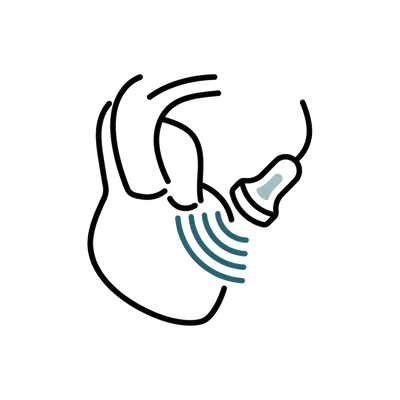
The core test. Contrast dye is injected through the catheter and X-ray images map the coronary arteries, showing where they are narrowed and by how much. This is what most people mean by an angiogram, and for many patients it is the whole procedure.
- Maps the coronary arteries and locates any narrowings or blockages
- Results are visible immediately and reviewed before you leave
- Usually a day case through the wrist with light sedation
- Why it matters: answers angina, an abnormal stress test, or unclear CT findings
Right-Heart Catheterisation
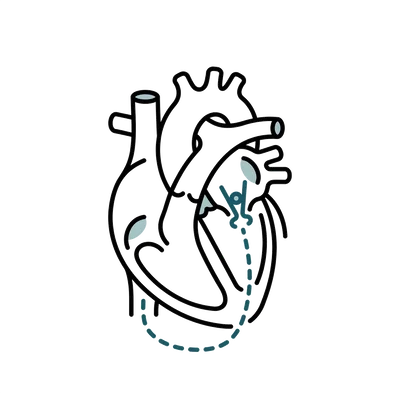
A catheter is passed to the right side of the heart and the pulmonary artery to measure pressures and how well the heart is pumping. It does not look at the coronary arteries; instead it assesses the heart as a pump, which matters in heart failure and certain valve conditions.
- Measures pressures inside the heart and lungs
- Assesses pump function rather than coronary narrowings
- Often combined with coronary angiography when both are needed
- Why it matters: assesses heart failure, valve disease, or suspected pulmonary hypertension
Catheterisation with FFR or iFR
When a narrowing looks borderline on the images, fractional flow reserve (FFR) or instantaneous wave-free ratio (iFR) measures whether it is actually restricting blood flow enough to matter. A pressure-sensing wire is passed across the narrowing, giving a number that guides whether a stent is genuinely needed.
- Tests whether a borderline narrowing is functionally significant
- Helps avoid stenting narrowings that do not need it
- Adds a short step to a standard angiogram
- Why it matters: clarifies intermediate narrowings where images alone leave the decision unclear
Angiography with PCI in the Same Sitting
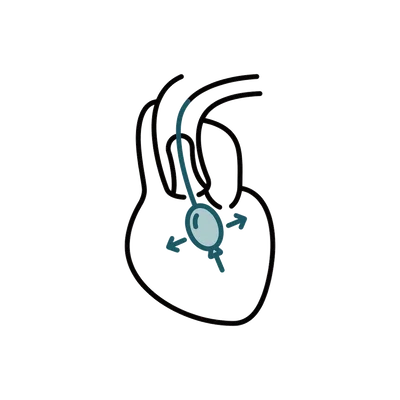
If the angiogram reveals a significant blockage, the cardiologist can often go straight on to treat it with angioplasty and a stent (percutaneous coronary intervention, or PCI) while the catheter is already in place. This avoids a second procedure on another day, though it is a decision made and discussed at the time.
- Treatment can follow diagnosis without a second procedure
- Decided during the angiogram, based on what the images show
- Adds time, cost, and the considerations of stenting itself
- Why it matters: lets a significant, suitable blockage be treated as soon as it is found
Cardiac Catheterisation Techniques
The detail of how a catheterisation is done has improved steadily, and the difference shows in comfort, safety, and the quality of the decision that follows. Here is what experienced cath labs use and why each matters.
Radial (Wrist) Access
Entering through the wrist rather than the groin is now the default approach for most diagnostic angiograms. It carries a markedly lower bleeding risk, is more comfortable afterwards, and means most people can sit up and walk soon after the procedure rather than lying flat for hours. A small band is worn on the wrist for a few hours to seal the artery.
- Lower access-site bleeding risk than the groin
- Faster mobilisation and a more comfortable recovery
- Now the preferred route in most cases
- Why it matters: spares most patients the longer, flat-lying groin recovery
Femoral (Groin) Access
The traditional route, still used when the radial arteries are too small or unsuitable, or when larger catheters are needed for complex work. It requires lying flat for a few hours afterwards while the artery seals, and carries a slightly higher bleeding risk, which is why the wrist is now usually chosen first.
- Used when wrist access is not suitable or larger equipment is needed
- Requires a period lying flat afterwards to seal the artery
- Reliable and well established for complex cases
- Why it matters: keeps catheterisation possible when the wrist is not an option
Fractional Flow Reserve (FFR / iFR)
A pressure-sensing wire measures blood flow across a narrowing to show whether it is genuinely limiting supply to the heart. This turns a visual judgement into a measured one, helping avoid stenting narrowings that look worse than they behave, and confirming treatment where it is truly needed.
- Measures the functional significance of a narrowing, not just its appearance
- Guides whether a stent is actually warranted
- Backed by strong evidence for better-targeted treatment
- Why it matters: turns a visual judgement into a measured one on borderline narrowings
Intravascular Imaging (IVUS / OCT)
Miniature ultrasound (IVUS) or light-based imaging (OCT) on the catheter tip looks at the artery wall from the inside, far more detail than the X-ray dye images alone. It assesses how tight a narrowing really is, the make-up of the plaque, and, when stenting is done, whether the stent is fully expanded.
- Detailed view of the artery wall from inside the vessel
- Clarifies narrowing severity and plaque type
- Used to optimise stent placement when PCI is performed
- Why it matters: guides precise stenting in complex narrowings
An Experienced Interventional Cardiologist and Accredited Cath Lab
The single biggest factor in a safe, useful catheterisation is the person doing it and the lab around them. High-volume interventional cardiologists in accredited cath labs handle the routine and the unexpected, and decide soundly when to stop at diagnosis and when to proceed to treatment.
- Operator experience and case volume drive safety and quality
- Accredited cath labs have the backup for the rare complication
- Sound judgement on when to treat and when to stop at diagnosis
- Why it matters: this weighs more than any single technique
Cardiac Catheterisation Recovery Timeline
First Few Hours
You rest in a recovery area while the access site is monitored. With wrist access, a small compression band is worn for a few hours and you can usually sit up straight away. With groin access, you lie flat for several hours while the artery seals. Your heart rhythm and blood pressure are watched, and you are encouraged to drink fluids to help clear the contrast dye.
Same Day or Overnight
Many patients go home the same day after a diagnostic angiogram, particularly with wrist access.1,2 Some stay one night, especially if treatment was carried out in the same sitting or the groin was used. You are given clear instructions on caring for the access site and what to watch for before you leave.
Days 1–2
Most people feel back to normal within a day or two. The access site may be bruised or tender for a few days, which is common and settles on its own. You are usually advised to avoid heavy lifting and strenuous activity for a couple of days. With groin (femoral) access, do not drive for at least 24 to 48 hours after an uncomplicated diagnostic angiogram; with wrist access there is no fixed driving restriction once the band is off and the hand is comfortable.
Beyond Day 2
If only a diagnostic angiogram was done, there is little ongoing recovery beyond the access site settling. If a stent was placed, your recovery and medication follow the angioplasty pathway, including a course of antiplatelet drugs your cardiologist will explain in detail.
When Can You Fly After a Cardiac Catheterisation?
After a straightforward diagnostic angiogram, many people are fit to fly within a couple of days once the access site has settled and your cardiologist is satisfied there are no complications. If treatment such as a stent was carried out in the same sitting, the timeline follows the angioplasty pathway and is usually a little longer. Your cardiologist confirms when it is safe to travel based on what was done and how your recovery is going, rather than a fixed rule.
Caring for the Access Site
The wrist or groin where the catheter entered needs simple care for a few days. Keep it clean and dry, avoid heavy lifting and strenuous activity, and, with groin access, do not drive for at least 24 to 48 hours after an uncomplicated diagnostic angiogram. Some bruising and tenderness is normal and settles on its own. You are told exactly what to watch for, such as fresh bleeding, increasing swelling, or pain, and how to contact the team if you are concerned.
When Will You Have Your Results?
One of the advantages of catheterisation over many other tests is that the images are available immediately. In most cases your cardiologist reviews the findings with you before you leave the hospital and explains what they mean, whether that is reassurance, a recommendation for medication, a plan for stenting, or a referral towards bypass surgery. You leave with a clear understanding of where you stand and what comes next.
Anaesthesia for Cardiac Catheterisation
Cardiac catheterisation is done under local anaesthetic with sedation rather than a general anaesthetic, so you stay awake but relaxed. The cardiologist numbs the small area at the wrist or groin where the catheter enters, which is the only part that needs anaesthetising. You may feel pressure as the catheter is moved, and a brief warm flush when the dye is injected, but the test itself is not painful, and the arteries themselves have no sensation as the catheter passes through them.
A light sedative given through a drip helps you stay calm and comfortable, and many people remember little of the procedure afterwards. Because you are not fully anaesthetised, you recover quickly, you can talk to the team during the test, and there is none of the grogginess that follows a general anaesthetic. Your heart rhythm, blood pressure, and oxygen levels are monitored continuously throughout by the cath lab team.
Before the procedure you will be asked whether you have ever reacted to X-ray contrast dye before, and about your kidney function and any blood-thinning medication, so the team can plan around them. A prior contrast reaction is the relevant thing to flag here; a shellfish or other food allergy does not raise your risk of a contrast reaction, despite the old belief that it does. If you have had a reaction to contrast before, tell them, as a pre-treatment plan can usually be put in place. You are normally asked not to eat for a few hours beforehand, and your care coordinator will give you clear, personalised instructions ahead of the day.
Risks and Safety of Cardiac Catheterisation
Cardiac catheterisation is generally very safe and one of the most commonly performed cardiac procedures in the world, but it is still an invasive test, and serious complications, while rare, are real. Honest figures matter more than reassurance here.
- Bruising or minor bleeding at the access site (common and usually minor)
- A collection of blood under the skin at the access site (haematoma), which settles over time
- Reaction to the contrast dye, ranging from mild to, rarely, severe
- Temporary effect of the contrast dye on the kidneys, more likely if kidney function is already reduced3
- Damage to the artery used for access (uncommon)
- Blockage of the wrist artery after radial access (radial artery occlusion), seen in roughly 1–5 per cent of cases, usually silent because the hand has a second blood supply
- Irregular heart rhythm during the procedure, usually brief and treatable
- Rare serious events including stroke, heart attack, or significant bleeding
For an elective diagnostic angiogram, major adverse events such as death, heart attack, stroke, or serious vascular injury are rare1,4. Counting every complication, including the minor ones, gives a higher figure, but the great majority of people have nothing more than a bruised wrist or groin. The risk is lowest in experienced hands and accredited cath labs, which is why operator volume and hospital quality matter. Your cardiologist will discuss your individual risk honestly, taking your kidney function, prior contrast reactions, and overall health into account.
Is Cardiac Catheterisation Safe in Thailand?
Yes. When performed at a JCI-accredited hospital by a board-certified interventional cardiologist, catheterisation in Thailand meets the same safety standards as the UK, US, and Australia. It is a high-volume, routine procedure at leading Thai cardiac centres, performed in modern cath labs with the backup to manage the rare complication. As anywhere, the strongest protection is an experienced operator and an accredited lab, which is what partner hospitals provide.
How to Reduce Your Risk
Tell the team about any previous reaction to contrast dye and any kidney problems, so contrast can be planned and your kidneys protected. Share your full medication list, particularly blood thinners, so an adjustment plan can be agreed in advance with your cardiologist. Stay well hydrated as advised around the procedure, and follow the access-site instructions afterwards. A thorough pre-procedure assessment is what identifies and manages these factors before you reach the cath lab.
What Happens If Complications Arise?
Catheterisation is done in a fully equipped cath lab with monitoring throughout and a team ready to respond immediately to anything unexpected, from a rhythm disturbance to bleeding at the access site. The rare serious events tend to occur during or soon after the procedure, while you are still under direct hospital care. You are not discharged until the team is satisfied your access site is secure and your recovery is on track.
Planning Your Trip to Thailand for a Cardiac Catheterisation
A diagnostic angiogram needs only a short stay, but it is worth allowing room in case treatment follows in the same sitting. What follows covers how to plan the trip and what to arrange before you travel.
How Long to Stay in Thailand
Plan for a minimum of two to three days for a diagnostic angiogram: a day for assessment and the procedure, time to recover and have the access site checked, and a follow-up to discuss results before you fly. If the angiogram is likely to lead to stenting in the same sitting, allow longer, closer to the angioplasty timeline, since recovery and medication then take precedence. Your care coordinator helps you plan for both possibilities.
What's Included in a Medical Trip
Your care coordinator handles hospital logistics: scheduling, pre-procedure assessment, interpreter services if needed, and follow-up appointments. The procedure quote and what it covers are itemised in the pricing section above. Flights and accommodation are arranged separately, but your coordinator recommends hotels near the hospital and helps with bookings.
Recovery in Bangkok
Stay close to your hospital for the short recovery, particularly so the access site can be reviewed and your results discussed before you travel home. Partner hospitals are in central Bangkok with nearby accommodation ranging from serviced apartments to international hotels. If treatment follows the angiogram, remaining near your cardiac team is more important still, and moving to a resort destination is best left until your cardiologist confirms you are clear to travel.
Related Procedures
Other procedures that address similar goals or conditions, in case one of them is a closer fit for you.
Planning your treatment in Thailand
Independent guides to help you weigh the decision, before you commit to anything.
Common Questions About Cardiac Catheterisation
Everything you need to know before your procedure

Medical References
Keep researching with AI
Open this guide in your AI assistant to dig deeper and ask the questions it didn't answer.
Opens in a new tab with this guide already loaded.
Medical disclaimer: Content on this site is provided for informational purposes and should not be treated as medical advice. Outcomes, timelines, and eligibility differ from person to person. Consult a qualified medical professional before making any decisions about surgery or treatment.
Ready to Get Started?
Speak with our care coordinators for a free, no-obligation consultation and personalised quote.
Speak to Our Team