Balloon Valvuloplasty in Thailand Your guide to cost, top specialists & hospitals
When a heart valve stiffens and narrows, the blood that should flow freely has to force its way through. Balloon valvuloplasty stretches that valve open again, without opening the chest.
What Is Balloon Valvuloplasty?
Also known as: Balloon Valve Widening · Percutaneous Balloon Valvuloplasty
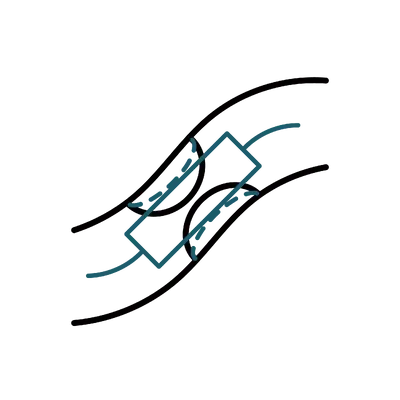
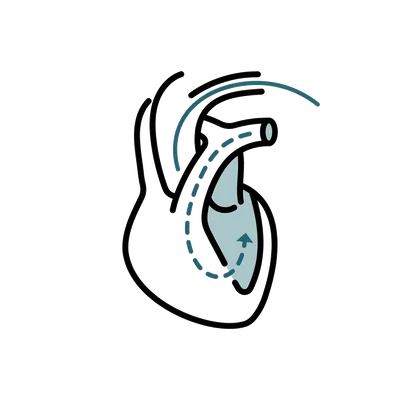
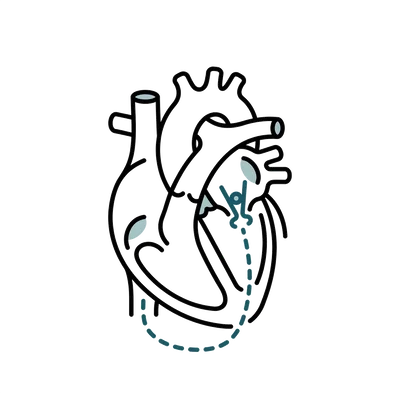
Balloon valvuloplasty is a catheter-based procedure that opens up a narrowed heart valve without open-heart surgery. A thin tube with a deflated balloon at its tip is threaded through a blood vessel, usually from the groin, up to the stiff valve. The balloon is then inflated to stretch the valve open, improving blood flow, before being deflated and removed. It is also called balloon valvotomy, and medically known as percutaneous balloon valvuloplasty.
Because nothing is cut open, the procedure usually takes one to two hours, is most often done under local anaesthetic with sedation rather than general anaesthesia, and needs only one to two nights in hospital1,2. Most people are back to light activity within about a week. That makes it a far smaller undertaking than valve surgery, which is part of why it suits some patients so well.
How lasting the result is depends heavily on which valve is treated. For a narrowed mitral valve, particularly the rheumatic narrowing common in younger patients, results can be excellent and durable. For the pulmonary valve it is often the definitive treatment and can be effectively curative in younger patients. For a narrowed aortic valve in older adults it is usually a temporary or bridging measure, because the valve tends to narrow again, and a replacement is the more lasting answer. Your cardiologist decides what is right from your echocardiogram, and will be honest with you about how long the benefit is likely to hold.
It can address a range of concerns, including:
Am I a Good Candidate for Balloon Valvuloplasty?
Suitability for balloon valvuloplasty rests on your echocardiogram, the type of valve narrowing, and whether ballooning is likely to give a lasting result or only a temporary one.
The procedure is planned from imaging, not symptoms alone; echocardiography decides whether a balloon is the right tool.
Echo confirmed: A narrowed valve must be documented on echocardiography, with its structure assessed before ballooning is considered. This is the baseline, not a formality.
Favourable echo score: A pliable, non-calcified valve with little existing leak predicts a good, lasting balloon result, while a poor score points to repair or replacement.
Imaging to hand: Recent echocardiograms let the team judge the valve and plan the approach before you travel.
The valve being treated changes everything about whether ballooning is a fix or a bridge.
Mitral stenosis: The main and best-validated use, often rheumatic, with results that can be durable for years in the right valve.
Pulmonary stenosis: Frequently the definitive treatment and often effectively curative, especially in younger patients.
Aortic stenosis: Usually a temporary or bridging measure only, as the valve tends to re-narrow; TAVI or surgery is more durable.
A few findings make ballooning a poor choice and steer towards another route.
Little existing leak: Significant regurgitation already present can be worsened by ballooning and counts against it.
Not heavily calcified: A rigid, calcified, or distorted valve, or heavy commissural calcium and severe subvalvular disease, will not stretch reliably and is better replaced.
No clot in the heart: A clot in the left atrium must be cleared before mitral ballooning can proceed.
Heart pumping well enough: Severe left ventricular dysfunction (a low ejection fraction) makes elective ballooning higher-risk and counts against it.
Pulmonary pressures: Severe pulmonary hypertension raises the risk of mitral ballooning and is weighed carefully before going ahead.
As with any procedure, going in clear-eyed about the result matters as much as suitability.
Honest about durability: Mitral and pulmonary results can last years; an aortic result is usually short-lived and may need replacement later.
Follow-up matters: Ongoing echocardiograms watch for re-narrowing so a repeat or replacement can be planned in good time.
Your decision: The choice should be made with your cardiologist from your imaging, weighing ballooning against replacement or TAVI.
Who is not suitable for balloon valvuloplasty?
- Significant valve leak (regurgitation) already present, which ballooning can worsen
- A heavily calcified, rigid, or distorted valve that will not stretch reliably
- Clot in the left atrium, until cleared, before mitral ballooning
- Aortic stenosis where a durable result is the priority and TAVI or surgery is more suitable
- Active systemic infection, including endocarditis, until treated
- Severe left ventricular dysfunction (a low ejection fraction), where elective ballooning carries more risk than benefit
- Severe pulmonary hypertension, which makes mitral ballooning higher-risk and must be weighed carefully first
- Heavy commissural calcification or severe subvalvular (chordal) disease on echo, which predicts a poor, short-lived balloon result
Pricing
How Much Will Balloon Valvuloplasty Cost in Thailand?
What balloon valvuloplasty costs at accredited hospitals in Thailand, and what your final quote depends on.
Get your exact price
Tell us what you're considering and we'll send a personalised quote from accredited clinics within 24 hours.
Get my free quoteTypical prices in Thailand
Typical ranges based on recent hospital quotes. Your exact price depends on the hospital and how complex your case is, and is confirmed at your teleconsultation.
Balloon Valvuloplasty
A balloon on the tip of a catheter is threaded up to a stiffened heart valve and inflated to stretch it open, leaving the chest untouched.
| Mitral balloon valvuloplasty 1 to 2 nights Fused mitral leaflets split apart from the venous side, for rheumatic narrowing in a pliable valve | $10,000 to $16,000 ฿340,000 to ฿544,000 |
| Pulmonary balloon valvuloplasty 1 to 2 nights Narrowed pulmonary valve stretched open, for congenital stenosis straining the right side of the heart | $8,000 to $12,000 ฿272,000 to ฿408,000 |
| Aortic balloon valvuloplasty 1 to 2 nights Aortic valve stretched open, for aortic stenosis in older adults as a bridge to TAVI or replacement | $12,000 to $18,000 ฿408,000 to ฿612,000 |
Typically not included
- Any later valve replacement, TAVI, or repeat ballooning if the valve narrows again
- Treatment of a complication, including emergency valve surgery or repair of the groin access vessel
- Intensive care, or hospital nights beyond the one to two in your package
- Medication to take home, including any blood thinner started or restarted around the procedure and its monitoring
- Ongoing echocardiographic follow-up once home, beyond the post-procedure echo and review included in Thailand
Get your exact price
Tell us what you're considering and we'll send a personalised quote from accredited clinics within 24 hours.
Hospitals Trusted for Balloon Valvuloplasty
From internationally accredited flagships to dedicated specialist hospitals, these are the kinds of facilities where international patients have this procedure.

Bangkok Hospital
BDMS flagship tertiary campus with standalone heart, cancer, and neuro-orthopaedic hospitals.
View hospital profile
Bumrungrad International Hospital
Tertiary hospital with over 1,200 physicians treating 520,000+ international patients a year.
View hospital profile
MedPark Hospital
Purpose-built tertiary hospital opened in 2020, focused on complex cardiac, cancer, and transplant care.
View hospital profile
Tell Us What You Need. We Do the Rest.
Share what you're considering and we'll come back with surgeon options, pricing, and a clear plan.
- Real hospital pricing with zero markup
- Matched with a specialist experienced in your specific procedure
- Full coordination from consultation to recovery


Trusted by patients worldwide
The complete guide to Balloon Valvuloplasty in Thailand
Everything below is for readers who want the full detail: costs broken down, types and techniques, recovery, risks and safety, and planning your trip.
Where to Have a Balloon Valvuloplasty in Thailand
With a catheter valve procedure, the hospital and the interventional cardiologist performing it are the two decisions that matter most. Below is what to look for, and what our partner centres offer against it.
JCI-Accredited Cardiac Hospitals
Our partner hospitals are JCI-accredited and rank among Southeast Asia's higher-volume cardiac centres. They maintain dedicated catheter laboratories with high-quality imaging, cardiac monitoring, and the on-site cardiac surgery and intensive care backup needed to manage the rare serious complication. These are not standalone clinics; they have the infrastructure to handle problems in-house if they arise, which is exactly what you want behind a valve procedure.
Board-Certified Interventional Cardiologists
Balloon valvuloplasty is performed by interventional cardiologists, board-certified specialists who carry out catheter-based heart procedures as their core work. Several of our partner cardiologists trained internationally before practising in Thailand, where procedural volume is high. That combination of training and sustained volume is a significant factor in the outcomes Thailand's cardiac centres achieve for suitable cases.
What to Look for in an Operator
Procedural volume and honest assessment are what matter. Ask how many valvuloplasty procedures the cardiologist performs and whether your particular valve is well suited to a balloon. A good operator is candid about durability, especially for the aortic valve, and will tell you plainly if replacement or TAVI would serve you better. If anyone promises a permanent result from ballooning an aortic valve, treat that as a warning sign rather than reassurance.
Understanding Your Results
Balloon valvuloplasty can produce a clear, measurable improvement in blood flow through a narrowed valve. How lasting that improvement is depends heavily on which valve is treated, and being clear-eyed about that is part of choosing well.
Typical Balloon Valvuloplasty Outcomes
The immediate result is a wider valve opening and improved blood flow, confirmed on echocardiography before you leave hospital. For a well-selected mitral valve the improvement can be substantial and durable, often holding for years, and the procedure is similarly effective and frequently long-lasting for the pulmonary valve in younger patients. For the aortic valve the opening achieved is real but typically temporary, as the valve tends to re-narrow, which is why it is used as a bridge rather than a lasting fix.
What Results Can You Expect?
Most suitable patients notice breathlessness and fatigue ease as the valve opens and the heart works less hard to push blood through it. We never promise a specific or permanent result, because durability depends on your valve, the type of narrowing, and how the valve behaves over time. Some patients, particularly those treated for aortic stenosis, will need a more durable treatment such as TAVI or surgical replacement later, and ongoing echocardiographic follow-up is how that is planned in good time.
Balloon Valvuloplasty Cost in Thailand
Average Cost of Balloon Valvuloplasty
Balloon valvuloplasty in Thailand typically costs between $8,000 and $18,000, depending on the valve treated, the complexity of the case, and the hospital. A straightforward mitral or pulmonary ballooning sits at the lower end; more complex cases, or those needing additional imaging and monitoring, sit higher. Every quote should itemise the cardiologist fee, catheter laboratory and hospital stay, consumables, and follow-up so you know exactly what is included.
Cost Breakdown
The total is made up of several parts. The interventional cardiologist and team fee covers the operator and supporting staff. Catheter laboratory and hospital fees cover the procedure room, the one to two night stay, and nursing. Anaesthesia and sedation cover the anaesthetic team and monitoring. Consumables include the balloon catheter and related hardware, which are a meaningful share of the cost. Aftercare covers the post-procedure echocardiogram and follow-up review.
What Affects the Price?
The main variables are which valve is treated and how complex the case is, including whether a transoesophageal echo is needed throughout and whether general anaesthesia is used. Balloon catheters are a significant consumable cost. Hospital choice also matters; leading Bangkok cardiac centres price differently from mid-tier accredited facilities, though all our partner hospitals meet JCI standards.
Thailand vs International Price Comparison
Balloon valvuloplasty in Thailand costs 50–70% less than in the US ($25,000–$60,000), Australia (A$28,000–A$55,000), and the UK (£18,000–£40,000). The difference reflects Thailand's lower operating costs, not lower standards. Our partner hospitals hold JCI accreditation and the procedure is performed by board-certified interventional cardiologists, with outcomes for suitable cases comparable to leading international centres.
Balloon Valvuloplasty vs Valve Replacement and TAVI
The main alternatives to ballooning a narrowed valve are repairing or replacing it. Surgical valve replacement removes the diseased valve and sews in a mechanical or tissue valve through open-heart surgery, and is the most durable answer for many valves. TAVI (transcatheter aortic valve implantation) is the catheter-based way to replace the aortic valve without opening the chest, and has become the usual treatment for aortic stenosis in older patients. Both deliver a new valve rather than stretching the old one, so the result generally lasts far longer than a balloon.
The trade-off is invasiveness and durability. Balloon valvuloplasty is the gentler procedure, with local anaesthetic and sedation, a one to two night stay, and recovery in about a week, but it works by stretching the existing valve rather than replacing it, so the result can fade as the valve re-narrows over time. This matters most for the aortic valve, where ballooning is usually only a temporary or bridging step and TAVI or surgery is the lasting fix. It matters far less for the mitral and pulmonary valves, where a well-selected balloon procedure can give an excellent and durable result and is often the first-line choice.
This is why the decision is made from your echocardiogram, not your preference, and usually by a cardiologist and surgeon together. Where the valve is pliable and the disease is the right pattern, ballooning may be the best-matched option and the rest of this page covers what that involves. Where the valve is heavily calcified, already leaking, or where a lasting result is the priority, replacement or TAVI is likely the better route, and that is a conversation for your cardiologist.
Types of Balloon Valvuloplasty
The procedure is the same in principle wherever it is used, but the valve being treated changes everything: how well it works, how long it lasts, and whether it is a fix or a bridge. Suitability is decided from echocardiography before anything is planned.
Percutaneous Mitral Balloon Valvuloplasty (PMBV)
The most established and successful use of the technique, for mitral stenosis that is usually rheumatic in origin. A balloon is passed across the narrowed mitral valve and inflated to split the fused leaflets apart. In the right patient with a pliable, non-calcified valve, the result can be excellent and last many years, which is why it remains a first-line treatment for suitable mitral stenosis.
- A first-line treatment for suitable rheumatic mitral stenosis
- Particularly valuable in younger patients and during pregnancy
- Results can be durable for years in a well-selected valve1
- Best for: pliable, non-calcified rheumatic mitral stenosis with little leak
Pulmonary Balloon Valvuloplasty
The treatment of choice for pulmonary valve stenosis, which is often congenital. The balloon stretches open the narrowed pulmonary valve to relieve the strain on the right side of the heart. In younger patients especially, a single procedure is frequently all that is needed, and the result is often effectively curative.
- First-line treatment for most pulmonary valve stenosis
- Often curative, particularly in children and younger adults1
- Relieves pressure load on the right side of the heart
- Best for: congenital pulmonary stenosis with a suitable valve
Aortic Balloon Valvuloplasty (Bridge or Palliative)
Used for a narrowed aortic valve, but with an honest caveat: in adults the benefit is usually temporary, because the valve tends to narrow again within months to a couple of years. It is therefore most often a bridge to keep a patient stable until a more durable treatment such as TAVI or surgical replacement can be done, or a palliative step for someone unsuitable for those.
- Usually a short-term or bridging measure, not a lasting fix1
- The aortic valve commonly re-narrows over months to a few years
- Can stabilise a patient before TAVI or surgical replacement
- Why it matters: it buys time when durable treatment is delayed or not possible, rather than ending the problem
Echo-Based Suitability Scoring
Not a procedure in itself, but the assessment that decides whether ballooning is the right choice at all. (link: procedures/cardiac/echocardiography text: Echocardiography) is used to score the valve on how pliable, thickened, or calcified it is, how the supporting structures look, and how much leak is already present. A favourable score predicts a good, lasting result; an unfavourable one points towards repair or replacement instead.
- Echo scoring grades valve pliability, thickening, and calcification
- A favourable score predicts a durable balloon result
- Existing valve leak or heavy calcium counts against ballooning
- Why it matters: it is the planning step that protects you from an unsuitable procedure
Balloon Valvuloplasty Techniques
The detail of how the balloon is delivered and guided matters as much as the balloon itself, and so does the experience of the operator. These are the methods Thailand's cardiac centres rely on, and why each one counts.
Trans-Septal Access (Mitral)
For the mitral valve, the cardiologist reaches it from the venous side by making a small, controlled puncture in the wall between the two upper chambers of the heart. This trans-septal route gives a direct line to the mitral valve and is the standard access for mitral ballooning. The puncture is tiny and seals on its own.
- Standard access route for percutaneous mitral valvuloplasty
- A small, self-sealing puncture across the inter-atrial septum
- Gives a direct, controlled path to the mitral valve
- Best for: mitral stenosis suited to a balloon procedure
The Inoue Balloon Technique
The most widely used method for mitral valvuloplasty, named after the surgeon who developed it. The Inoue balloon has a distinctive hourglass shape that lets it be positioned and inflated in stages across the valve, splitting the fused leaflets in a controlled way. Its design is a large part of why mitral ballooning is so reproducible in experienced hands.
- The most established balloon design for mitral valvuloplasty
- Inflated in stages for controlled, even opening of the valve
- Well-studied with decades of outcome data behind it
- Best for: the majority of suitable mitral stenosis cases
TOE and Echo Guidance
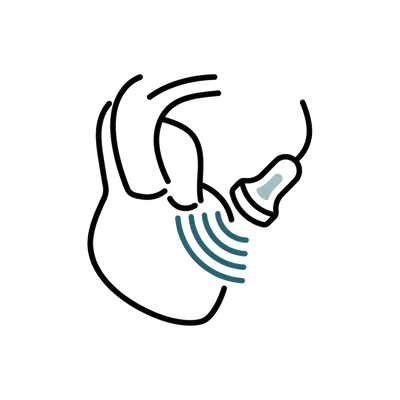
The whole procedure is guided by imaging. A transoesophageal echo (TOE), a probe passed into the gullet behind the heart, together with X-ray screening, lets the team watch the balloon cross the valve, confirm correct positioning, and check immediately afterwards whether the valve has opened and whether any leak has appeared. This real-time feedback is what makes the procedure safe and precise.
- Transoesophageal echo and X-ray guide the balloon throughout
- Confirms correct crossing and positioning before inflation
- Checks the result and any new leak immediately afterwards
- Why it matters: imaging guidance is integral to every case, not an optional extra
Case Selection and Operator Experience
The single biggest factor in a good outcome is not equipment but judgement: choosing the right patient and having an experienced operator perform the procedure. A skilled interventional cardiologist knows when a valve will respond well to a balloon and when it will not, and inflates conservatively to open the valve without tearing it or creating a leak. This is why where you have it done matters.
- Careful patient selection on echo predicts a durable result
- An experienced operator inflates conservatively to avoid a new leak
- Volume and judgement matter more than any single piece of kit
- Why it matters: this is the strongest argument for a high-volume centre with an experienced operator
Balloon Valvuloplasty Recovery Timeline
First 24 Hours
You are monitored closely after the procedure, with continuous heart tracing and regular checks of the access site in the groin. You will lie flat for a few hours to let the puncture seal, then be allowed to sit up and move gently. An echocardiogram confirms how well the valve has opened and checks for any new leak. Most people stay one to two nights in hospital.
Days 2–3
The access site is checked and you are usually up and walking comfortably. Bruising or tenderness in the groin is normal and settles over a few days. Your cardiologist reviews the echo result and pressure findings with you, and confirms your medication plan before discharge. If you take a blood thinner such as warfarin or a DOAC, common where mitral stenosis comes with atrial fibrillation, your cardiologist tells you exactly when to restart it, usually within a day or two of the procedure once the access site is secure.
Week 1
Most people are back to light, normal activity within about a week.1 Avoid heavy lifting and strenuous exertion while the access site heals fully. A follow-up echocardiogram is arranged to document the valve opening and provides a baseline to compare against later.
Beyond
Many patients notice breathlessness and fatigue ease as the opened valve lets the heart work less hard. How long the benefit lasts depends on the valve treated. Mitral and pulmonary results can hold for years; an aortic result is usually shorter-lived. Ongoing follow-up with echocardiography watches for any re-narrowing over time.
When Can You Fly After Balloon Valvuloplasty?
Most patients are cleared to fly around one to two weeks after the procedure, once the groin access site has healed well and a follow-up echocardiogram confirms the valve result is stable. Your cardiologist issues a fitness-to-fly letter. Because this is a catheter procedure rather than open surgery, the wait is shorter than for valve surgery. We recommend an aisle seat, leg movement during the flight, and compression stockings to reduce the risk of clots.
When Can You Return to Work and Exercise?
Light activity and desk work are usually possible within about a week, once the access site is comfortable. Avoid heavy lifting and strenuous exertion for the first one to two weeks while the puncture site heals fully. Your cardiologist will guide a graduated return to more vigorous exercise based on your valve, your symptoms, and your follow-up echo, rather than a fixed calendar date.
When Will You Feel the Benefit?
Many patients notice breathlessness and fatigue ease within days to weeks as blood flows more freely through the opened valve. How long that benefit lasts depends on the valve treated: mitral and pulmonary results can hold for years, while an aortic result is usually shorter-lived and may need a more durable treatment later. Ongoing echocardiographic follow-up tracks the valve over time so any re-narrowing is picked up early.
Anaesthesia for Balloon Valvuloplasty
Balloon valvuloplasty is most often done under local anaesthetic with sedation rather than full general anaesthesia. The access site in the groin is numbed so you feel no pain there, and sedation keeps you relaxed and drowsy, though not necessarily fully asleep, while the catheter work is carried out. Many people remember little of the procedure afterwards. General anaesthesia is used for some cases, particularly where a transoesophageal echo probe is needed throughout or where the patient would be more comfortable fully asleep.
A consultant cardiologist leads the procedure with an anaesthetic team monitoring you throughout, tracking your heart rhythm, blood pressure, and breathing continuously. Because the work is done through a catheter rather than an open incision, the anaesthetic burden is lighter than for valve surgery, which is one of the reasons recovery is so much quicker.
A pre-procedure assessment comes first, including echocardiography to confirm the valve is suitable, blood tests, and a review of your medications. You will be told clearly beforehand whether your case is planned under sedation or general anaesthesia, and why. There is no significant pain to manage afterwards beyond some tenderness at the groin access site, which settles over a few days.
Risks and Safety of Balloon Valvuloplasty
Balloon valvuloplasty is far less invasive than valve surgery, and in experienced hands serious complications are uncommon. It is not risk-free, though, and the risks are worth understanding clearly before you decide.
- A new or worsened valve leak (regurgitation), occasionally severe enough to need surgery
- Re-narrowing of the valve (restenosis) over time, which can need a repeat procedure or replacement1,3
- Bleeding or bruising at the groin access site, or damage to the access vessel
- Disturbances of heart rhythm during or after the procedure
- Cardiac tamponade, where bleeding collects around the heart (rare, can be serious)
- Stroke, from a dislodged clot or air (rare)
- Need for emergency open-heart surgery if a serious complication occurs (uncommon)
The strongest protection against complications is careful patient selection on echocardiography and an experienced operator at a centre equipped to manage problems if they arise. That is why where you have the procedure, and who performs it, matters as much as the procedure itself.
Is Balloon Valvuloplasty Safe in Thailand?
When performed at a JCI-accredited hospital by a board-certified interventional cardiologist, balloon valvuloplasty in Thailand meets the same safety standards as the UK, US, and Australia. Our partner centres maintain dedicated catheter laboratories with imaging guidance and the backup to manage complications, including access to cardiac surgery if a rare serious event requires it. Careful echo-based patient selection is a core part of how they keep outcomes favourable.
How to Reduce Your Risk
The most important step is having the procedure only when echocardiography confirms the valve is genuinely suitable, which is why the assessment matters as much as the procedure. Beyond that, choose a high-volume centre with an experienced operator, follow the pre-procedure instructions on medications and blood thinners exactly as directed by your cardiologist, and attend your follow-up echocardiograms so any re-narrowing or new leak is caught early.
What Happens If Complications Arise?
The catheter laboratories at our partner hospitals run continuous monitoring during the procedure, with imaging that shows a new leak or fluid around the heart immediately if it occurs. Rhythm disturbances are detected on telemetry and managed promptly. In the uncommon event that a serious complication such as severe regurgitation or tamponade arises, the centre has the cardiac surgery and intensive care backup to respond. You are not discharged until your cardiologist is satisfied the result is stable.
Planning Your Trip to Thailand for Balloon Valvuloplasty
Most patients need one to two weeks in Thailand for a balloon valvuloplasty. Here is how to plan the trip, what is included, and what to arrange before you travel.
How Long to Stay in Thailand
Plan for around one to two weeks. The first days cover your cardiac assessment, including echocardiography to confirm the valve is suitable, blood tests, and consultation. The procedure itself is one to two hours with one to two nights in hospital afterwards. The remainder covers recovery, a follow-up echocardiogram, and a review appointment to confirm the result is stable and you are fit to fly home.
What's Included in a Medical Trip
Your care coordinator handles hospital logistics: scheduling, pre-procedure assessment, interpreter services if needed, and follow-up appointments. Quotes cover the interventional cardiologist and team fee, anaesthesia and sedation, the catheter laboratory and hospital stay, consumables including the balloon catheter, and aftercare with a follow-up echocardiogram. Flights and accommodation are arranged separately, but your coordinator recommends hotels near the hospital and helps with bookings.
Recovery in Bangkok
Bangkok is the practical base for a cardiac catheter procedure, where the partner hospitals and your cardiologist are. You need to stay close to your team for the first week so the access site can be checked and a follow-up echo arranged before you travel. Accommodation near the hospitals ranges from serviced apartments to international hotels. Because recovery is quicker than for valve surgery, many patients are comfortable adding a few quiet days elsewhere once their cardiologist confirms it is safe.
Related Procedures
Other procedures that address similar goals or conditions, in case one of them is a closer fit for you.
Planning your treatment in Thailand
Independent guides to help you weigh the decision, before you commit to anything.
Common Questions About Balloon Valvuloplasty
Everything you need to know before your procedure

Medical References
Keep researching with AI
Open this guide in your AI assistant to dig deeper and ask the questions it didn't answer.
Opens in a new tab with this guide already loaded.
Medical disclaimer: Content on this site is provided for informational purposes and should not be treated as medical advice. Outcomes, timelines, and eligibility differ from person to person. Consult a qualified medical professional before making any decisions about surgery or treatment.
Ready to Get Started?
Speak with our care coordinators for a free, no-obligation consultation and personalised quote.
Speak to Our Team