Penile Implant in Thailand Your guide to cost, top specialists & hospitals
When other treatments have not worked, a prosthesis restores what matters, reliably and permanently.
What Is Penile Implant?
Also known as: Penile Prosthesis · Penile Prosthesis Implantation
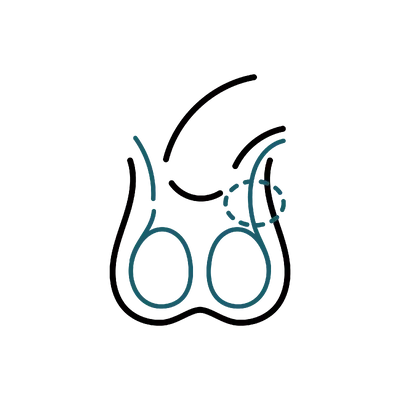
A penile implant is surgery that restores erectile function by placing a small prosthetic device entirely inside the penis. It treats erectile dysfunction once tablets, injections and vacuum devices have stopped working, giving an erection on demand rather than relying on blood flow. The most common type, the three-piece inflatable, uses cylinders in the penis, a fluid reservoir, and a discreet pump in the scrotum: a squeeze fills the cylinders, and a release valve returns the penis to a soft, natural state. The device is concealed within the body and not visible from outside.
This is usually the final step on the erectile dysfunction pathway, considered once gentler options have been tried, because placing the cylinders permanently changes the erectile tissue. It is a big decision, and many men reach it after years of frustration. Your urologist talks through the device types before anything is agreed.
An implant restores rigidity on demand, while sensation, orgasm and ejaculation are preserved because the nerve pathways are left alone. Studies report patient and partner satisfaction above 90%1, though results vary from person to person and your surgeon will be honest about your case.
It can address a range of concerns, including:
Am I a Good Candidate for Penile Implant?
A penile implant suits men with confirmed erectile dysfunction where other treatments have not worked, after a urological assessment.
An implant is usually considered once less invasive options have been tried, so this comes first.
ED confirmed: good candidates have erectile dysfunction confirmed by urological assessment.
Earlier options tried: oral PDE5 inhibitors, injections, or a vacuum device should have been trialled.
Found unsuitable: an implant suits men for whom those treatments were ineffective or unsuitable.
Infection is the main implant risk, so health factors that raise it are addressed first.
Fit for surgery: good candidates are in reasonable general health for surgery under anaesthesia.
Diabetes controlled: poorly controlled diabetes raises prosthesis infection risk and is best optimised.
Infection treated: any active skin or urinary infection must be fully treated before implantation.
Different devices suit different needs, so the choice is made before surgery.
Options understood: the choice between three-piece, two-piece, and semi-rigid devices shapes the result.
Lifestyle fit: the right device depends on dexterity, preference, and anatomy.
Decision made: settling the device type is part of planning the operation.
An implant restores function mechanically, so understanding what it does and does not change matters.
A short stay: the surgery needs roughly 7 to 10 days in Thailand with 4 to 6 weeks of recovery.
Mechanical solution: the implant provides rigidity on demand rather than changing sensation or desire.
Permanent step: placing an implant alters the natural tissue, which is discussed beforehand.
Who is not suitable for penile implant?
- Oral PDE5 inhibitors, injections, or a vacuum device not yet trialled
- Poorly controlled diabetes, until optimised
- Active skin or urinary infection, until fully treated
- Severe penile fibrosis that prevents safe cylinder placement, for example after prior priapism or removal of an earlier device
- Severe Peyronie's disease with heavily calcified plaque that precludes proper cylinder placement
- Smokers unwilling to stop before surgery, given the infection risk
Pricing
How Much Will Penile Implant Cost in Thailand?
What penile implant costs at accredited hospitals in Thailand, and what your final quote depends on.
Get your exact price
Tell us what you're considering and we'll send a personalised quote from accredited hospitals within 24 hours.
Get my free quoteTypical prices in Thailand
Typical ranges based on recent hospital quotes. Your exact price depends on the hospital and how complex your case is, and is confirmed at your teleconsultation.
Penile Implant
A prosthesis is placed inside the erectile bodies through a small incision, giving an erection on demand. Anatomy and hand strength decide which device fits.
| Three-piece inflatable implant 1 to 2 nights Cylinders, a scrotal pump and a separate fluid reservoir, for the most natural erection and flaccid look | $11,500 to $14,400 ฿391,000 to ฿489,600 |
| Two-piece inflatable implant 1 to 2 nights Pump and reservoir combined in one scrotal component, for men whose earlier pelvic surgery complicates reservoir placement | $9,500 to $11,500 ฿323,000 to ฿391,000 |
| Semi-rigid (malleable) implant 1 to 2 nights Paired bendable rods positioned by hand, no moving parts, for limited hand strength or dexterity | $8,000 to $9,500 ฿272,000 to ฿323,000 |
Typically not included
- Revision surgery to replace the device if it later fails mechanically, planned as a fresh operation
- Treatment of a prosthesis infection, including device removal and any re-implantation once the tissue has settled
- Correcting penile curvature or scarring such as Peyronie's plaque at the same operation, quoted once your urologist has examined you
- Hospital nights beyond the one to two included in your quote
- Follow-up appointments, device checks and any urology care once you are home
Get your exact price
Tell us what you're considering and we'll send a personalised quote from accredited hospitals within 24 hours.
Hospitals Trusted for Penile Implant
From internationally accredited flagships to dedicated specialist hospitals, these are the kinds of facilities where international patients have this procedure.

Bumrungrad International Hospital
Tertiary hospital with over 1,200 physicians treating 520,000+ international patients a year.
View hospital profile
Bangkok Hospital
BDMS flagship tertiary campus with standalone heart, cancer, and neuro-orthopaedic hospitals.
View hospital profile
Samitivej Sukhumvit Hospital
Tertiary hospital known for paediatrics, home to Thailand's first private children's hospital.
View hospital profile
Tell Us What You Need. We Do the Rest.
Share what you're considering and we'll come back with surgeon options, pricing, and a clear plan.
- Real hospital pricing with zero markup
- Matched with a specialist experienced in your specific procedure
- Full coordination from consultation to recovery


Trusted by patients worldwide
The complete guide to Penile Implant in Thailand
Everything below is for readers who want the full detail: costs broken down, types and techniques, recovery, risks and safety, and planning your trip.
Penile Implant Surgeons & Hospitals in Thailand
Penile implant surgery requires specific prosthetic urology expertise. Device selection, surgical approach, and infection prevention all depend on the surgeon's experience.
Leading Hospitals in Bangkok
Our partner hospitals have dedicated urology departments with all major device brands available (Coloplast, Boston Scientific). Strict operating theatre protocols for prosthetic surgery, including laminar airflow and antibiotic irrigation, are standard. These are full-scale hospitals with in-house capability to manage any complication.
Experienced Prosthetic Urologists
Our partner surgeons hold board certification with fellowship training in prosthetic urology. They perform penile implant surgery as a regular part of their practice, including both primary implantation and revision cases. Experience with all three device types ensures the recommendation matches your needs.
What to Look for in a Surgeon
Ask about annual implant volume; experience correlates with lower infection rates and better device positioning. Check that antibiotic-coated devices are used as standard. Verify that the surgeon offers all three device types, not just one. You want a recommendation based on your anatomy and needs, not limited inventory.
Understanding Your Results
Penile implant results are functional: reliable erections on demand, with the device completely concealed.
Typical Penile Implant Results
Published studies consistently report patient and partner satisfaction rates above 90%. The three-piece inflatable implant produces the most natural erection and flaccid appearance. The device is invisible when clothed or unclothed. Most patients report significant improvement in confidence, relationship satisfaction, and quality of life.
What Results Can You Expect?
Reliable erections available on demand via the pump mechanism. Natural flaccid appearance when the device is deflated. Full concealment; partners are typically unable to detect the implant. Penile sensation and orgasm ability are preserved, as the implant does not affect nerve pathways.1 The device is designed for regular use over many years.
Penile Implant Cost in Thailand
Average Cost of Penile Implant Surgery
Penile implant surgery in Thailand typically costs between $8,000 and $14,400 all-inclusive. Semi-rigid implants sit at the lower end. Three-piece inflatable implants from Coloplast or Boston Scientific sit at the upper end, as the device cost is a significant portion of the total.
Cost Breakdown
The largest single component is the prosthetic device itself. The remainder covers the surgeon's fee, anaesthesia, operating theatre, hospital stay, pre-operative diagnostics, post-operative medications, and follow-up. Device cost varies by manufacturer and model; your urologist will explain the options.
What Affects the Price?
Device type is the main variable. Three-piece inflatable implants cost more than two-piece or semi-rigid options because the device itself is more expensive and more complex to implant. Revision surgery (replacing a failed device) costs more than primary implantation due to longer operative time and scar tissue management.
Thailand vs International Price Comparison
Penile implant surgery in Thailand costs 50–70% less than equivalent procedures in the US ($24,000–$48,000), Australia (A$20,000–A$40,000), and UK (£17,600–£36,000). The device cost is the same worldwide; the savings come from lower surgical fees, facility charges, and hospital stay costs.
Non-Surgical Alternatives to a Penile Implant
A penile implant is not usually the first treatment for erectile dysfunction. Before it, most men work through the less invasive options: oral PDE5 inhibitors such as sildenafil or tadalafil, injection therapy that produces an erection directly, and vacuum erection devices that draw blood into the penis with a pump and a constriction ring. For many men these manage the problem well, and where they work, surgery is not needed.
The honest limit is that they do not work for everyone, and they tend to lose effect over time, particularly with diabetes, prostate surgery or significant vascular disease. Tablets fail when blood flow is too poor to respond; injections can become painful or inconsistent with use; vacuum devices restore rigidity for some but feel cumbersome to others. None of these is a one-off fix, each one is something you keep doing every time, and none rebuilds the erectile tissue itself.
A penile implant becomes the right step once those gentler options have genuinely been tried and have failed or stopped suiting you. Because placing the cylinders permanently changes the erectile tissue, tablets and injections no longer work afterwards, so it is treated as the final, lasting step on the pathway rather than something to rush into. That is the route the rest of this page covers, and your urologist will confirm the earlier options have been properly exhausted before recommending it.
Types of Penile Implant
Three device types are available. Your urologist recommends based on anatomy, manual dexterity, medical history, and personal preference. The three-piece inflatable is the most popular choice worldwide for good reason.
Three-Piece Inflatable Implant
The most natural-feeling option. Paired cylinders in the penis inflate from a fluid reservoir via a discreet scrotal pump. Produces the most realistic erection and the most natural flaccid appearance. Highest long-term satisfaction rates of all implant types.
- Most natural erection and flaccidity of all device types
- Discreet pump in the scrotum activates on demand
- Highest patient and partner satisfaction rates in published data
- Best for: most candidates; the standard recommendation unless a specific reason favours another type
Two-Piece Inflatable Implant
A simplified system combining pump and reservoir into a single scrotal component connected to penile cylinders. Fewer components mean shorter surgery and less complexity. Good rigidity with a more straightforward pump mechanism. Suited to patients with prior pelvic surgery that makes reservoir placement difficult.
- Fewer components reduce surgical time and complexity
- Suitable when prior surgery makes reservoir placement difficult
- Good rigidity with simpler pump operation
- Best for: patients with previous pelvic or abdominal surgery, or those wanting simpler device mechanics
Semi-Rigid (Malleable) Implant
Paired firm but bendable rods placed within the penile shaft. The penis is positioned upward for intercourse and bent down for concealment. No pump, no moving parts. Mechanically the simplest and most reliable option, with the lowest revision rate. Suited to patients with limited manual dexterity.
- No mechanical parts; simplest device available
- Lowest revision rate due to minimal moving components
- Constant firmness with manual positioning
- Best for: patients with limited hand strength or dexterity, or those preferring mechanical simplicity
Penile Implant Surgical Techniques
Surgical technique focuses on two priorities: correct device placement and infection prevention. Both determine long-term success.
Infrapubic Approach
The implant is placed through a small incision above the base of the penis. This approach provides direct access to the corpora cavernosa and allows the reservoir to be placed in a single operative field. It is the most commonly used approach for three-piece inflatable implants.
- Single incision for cylinder and reservoir placement
- Direct access to the corpora without scrotal dissection
- Well-established approach for three-piece devices
- Best for: most three-piece inflatable implant placements
Penoscrotal Approach
The incision is made at the junction of the penis and scrotum. This approach provides excellent access to the pump placement site and is often preferred for revision surgery or when the anatomy favours scrotal access. Both approaches produce equivalent outcomes.
- Excellent access for pump placement and cylinder insertion
- Often preferred for revision or complex anatomy
- Equivalent outcomes to infrapubic approach
- Best for: revision cases, patients with prior surgery, or surgeon preference
No-Touch Infection Prevention Protocol
Strict antibiotic irrigation, minimal skin contact with the device, and antibiotic-coated or hydrophilic-coated implants reduce infection rates to around 2–3%, with higher figures where diabetes is poorly controlled. Infection is the most serious complication of penile implant surgery; modern protocols have made it uncommon but not impossible.
- Antibiotic irrigation of the surgical field throughout the procedure
- Antibiotic-coated devices further reduce infection risk
- Strict no-touch technique minimises contamination opportunity
- Best for: all penile implant procedures; this is a mandatory safety protocol
Penile Implant Recovery Timeline
Days 1–2
You rest in hospital with catheter care and pain management via oral medication. Swelling and bruising are normal and managed with ice packs and supportive dressing. Your surgeon reviews the surgical site before discharge.
Days 3–7
After discharge you recover at your accommodation. Swelling gradually subsides and a follow-up appointment checks wound healing and device position. Light walking is encouraged. Avoid lifting, straining, or pressure on the surgical area.
Weeks 2–4
Bruising and swelling continue to resolve. You may begin cycling the inflatable pump as instructed by your surgeon; this maintains device function and tissue flexibility. Strenuous exercise and sexual activity remain restricted.
When Can You Fly After Penile Implant Surgery?
Most patients can fly home seven to ten days after surgery, once wound healing is confirmed and swelling has begun to subside. Wear loose, comfortable clothing. Avoid sitting for extended periods without standing breaks. Carry prescribed pain medication.
When Can You Return to Work and Exercise?
Desk work within one to two weeks. Light exercise at three to four weeks. Sexual activity at around six weeks; this allows complete internal healing. Cycling and activities that put pressure on the perineum should wait until your surgeon clears you.
When Will You See Final Results?
The device is functional from the moment it is implanted; you can inflate and deflate it once cleared to do so. Full confidence and comfort with the pump mechanism develops over the first few months of use. Partners are typically unable to detect the implant.
Anaesthesia for Penile Implant Surgery
Penile implant surgery in Thailand is performed under general anaesthesia, so you are fully asleep and feel nothing during the operation. A consultant anaesthetist stays with you throughout and monitors you continuously, which is standard at the accredited hospitals we work with. The procedure itself is short, usually one to two hours, but a full anaesthetic keeps you comfortable and still while the device is placed.
For prosthetic surgery the priority is a calm, sterile, controlled environment, and general anaesthesia supports the strict no-touch infection prevention the operation depends on. Your urologist and anaesthetist decide the precise plan together, based on your medical history and the device being implanted. Because many implant candidates are older or diabetic, the pre-operative assessment matters: blood tests, blood sugar review, and a check of any regular medication all happen before you are cleared for anaesthesia.
You feel nothing during the surgery itself. When you wake there is some soreness and swelling around the penis and scrotum, more an aching pressure than sharp pain, and it is well controlled with the oral pain relief your surgeon prescribes. The discomfort eases steadily over the first week or two; pain that worsens rather than settles should always be reported to your surgical team.
Risks and Safety of Penile Implant Surgery
Penile implant surgery has a well-established safety profile. Infection is the most serious potential complication. With antibiotic-coated devices and strict surgical protocols, published infection rates are around 2–3%, and run higher in higher-risk patients, particularly where diabetes is poorly controlled. Many implant candidates are diabetic, so optimising blood sugar before surgery matters.
- Infection, the most important risk, requiring device removal if it occurs (around 2–3%, higher with poorly controlled diabetes)2
- Scrotal or perineal haematoma (blood collecting under the skin), a recognised early complication usually managed with support and ice but occasionally needing drainage
- Some loss of perceived penile length compared with a natural erection, a common and well-documented finding that your surgeon discusses beforehand1
- Mechanical failure over time; modern devices are designed to last many years, on average around 20 years1
- Erosion of the device through tissue (rare)
- Persistent pain or discomfort
- Altered penile sensation
- Device malposition requiring surgical adjustment (uncommon)
Infection prevention is the overriding priority. Antibiotic-coated implants, strict no-touch technique, and pre-operative antibiotic protocols keep infection rates around 2–3%. Diabetic patients carry a higher baseline risk even with coated devices and should optimise blood sugar control before surgery to bring that risk down.
Is Penile Implant Surgery Safe in Thailand?
Yes. Our partner hospitals are JCI-accredited with fellowship-trained urologists experienced in prosthetic surgery. They use the same branded devices (Coloplast Titan, Boston Scientific AMS 700) with the same antibiotic-coating technology as Western centres. Infection rates at our partner hospitals are consistent with published international data.
How to Reduce Your Risk
Choose a urologist with specific penile prosthesis experience, not a general urologist who has done a handful of cases. Verify that the hospital uses antibiotic-coated implants and follows a no-touch surgical protocol. Optimise blood sugar control if you are diabetic. Stop smoking before surgery.
When Is Device Revision Needed?
Modern inflatable implants are designed to last many years, on average around 20 years. Mechanical failure, typically a leak in the hydraulic system, is the most common reason for revision. If a device fails, replacement surgery is straightforward and outcomes remain good. Infection requiring device removal is the more serious scenario but is rare with current protocols.
Planning Your Trip to Thailand for Penile Implant Surgery
Most patients need seven to ten days in Thailand. Complete confidentiality is maintained throughout.
How Long to Stay in Thailand
Seven to ten days covers consultation, pre-operative blood work, surgery, one to two nights in hospital, and a follow-up appointment before flying home. Some patients add a few days of relaxation after clearance.
What's Included in a Medical Trip
Your care coordinator handles all arrangements: consultation, surgery scheduling, hospital transfers, and follow-up. The quote covers surgeon fees, anaesthesia, the prosthetic device, hospital stay, diagnostics, medications, and aftercare. Flights and accommodation are separate.
Recovery in Bangkok vs Phuket
Stay in Bangkok for the surgical window and follow-up. After clearance, light travel is fine. Recovery is manageable; the main restriction is avoiding strenuous activity and sexual intercourse for around six weeks.
Related Procedures
Other procedures that address similar goals or conditions, in case one of them is a closer fit for you.
Planning your treatment in Thailand
Independent guides to help you weigh the decision, before you commit to anything.
Common Questions About Penile Implants
Everything you need to know before your procedure

Medical References
Keep researching with AI
Open this guide in your AI assistant to dig deeper and ask the questions it didn't answer.
Opens in a new tab with this guide already loaded.
Medical disclaimer: Content on this site is provided for informational purposes and should not be treated as medical advice. Outcomes, timelines, and eligibility differ from person to person. Consult a qualified medical professional before making any decisions about surgery or treatment.
Ready to Get Started?
Speak with our care coordinators for a free, no-obligation consultation and personalised quote.
Speak to Our Team