Kidney Stone Removal in Thailand Your guide to cost, top specialists & hospitals
Stones that are too large to pass need removing. The relief afterwards is immediate.
What Is Kidney Stone Removal?
Also known as: Kidney Stone Surgery · Lithotripsy · Ureteroscopy · Percutaneous Nephrolithotomy
Kidney stone removal is a group of procedures that clears stones from the kidney or ureter, either breaking them into passable fragments or extracting them directly. It treats stones too large to pass, usually over 5 to 6 mm, or any stone causing blockage, infection, or pain that will not settle. There are three main routes: shock waves (ESWL) that fragment the stone from outside, a thin scope passed up the urethra to laser it, and keyhole access through the back for large stones. None need an open incision, and relief is often immediate.
If you have lived through the pain of a stone, the priority is simply getting it out and getting you comfortable. Which method suits you depends on the size, position, and hardness of the stone, so your urologist decides from your CT scan. Smaller stones may pass on their own, and that is always considered first.
Single-session clearance is high for the scope and keyhole methods, though a stone occasionally needs a second, shorter procedure. Analysing what it was made of helps lower the odds of another.
It can address a range of concerns, including:
Am I a Good Candidate for Kidney Stone Removal?
Stone removal suits stones that will not pass or are causing problems, with imaging and infection status confirmed first.
The size, location, and number of stones drive the technique, so current imaging comes first.
Too large to pass: good candidates have stones too large to pass naturally, typically over 5 to 6 mm.
Persistent symptoms: ongoing symptoms despite conservative management point to intervention.
Recent CT: recent imaging confirms stone size, location, and number to plan the approach.
Operating through an active infection is risky, so it is treated before any procedure.
No active UTI: an active urinary tract infection should be treated and cleared first.
Obstruction noted: confirmed obstruction or infection on imaging is an indication to act, once stabilised.
Emergencies local: signs of sepsis, severe obstruction, or acute kidney injury need local emergency care first.
General fitness and blood-thinner status affect the safety of the procedure.
Fit for the approach: good candidates are in adequate general health for the planned technique.
Blood thinners reviewed: anticoagulants need a safe pause planned before intervention.
A short stay: the procedure needs roughly 5 to 7 days in Thailand with 1 to 2 weeks of recovery.
Who is not suitable for kidney stone removal?
- An active urinary tract infection, until treated and cleared
- No recent CT imaging to confirm stone size and location
- On blood thinners that cannot be safely paused
- Signs of sepsis or acute kidney injury, needing local emergency care first
- Pregnant, which rules out shockwave lithotripsy
- Uncorrected bleeding disorder
Pricing
How Much Will Kidney Stone Removal Cost in Thailand?
What kidney stone removal costs at accredited hospitals in Thailand, and what your final quote depends on.
Get your exact price
Tell us what you're considering and we'll send a personalised quote from accredited clinics within 24 hours.
Get my free quoteTypical prices in Thailand
Typical ranges based on recent hospital quotes. Your exact price depends on the hospital and how complex your case is, and is confirmed at your teleconsultation.
Kidney Stone Removal
A fine scope is passed up the urinary tract to reach a stone in the ureter or kidney, break it up and remove it, with no open incision.
| Ureterorenoscope with double J stent 1 night The scope reaches and retrieves the stone, with a temporary stent left in the ureter | $5,100 ฿173,000 |
| Ureterorenoscope with lithoclast and basket 1 night The stone is broken by a pneumatic probe and the fragments lifted out in a basket | $5,400 ฿182,000 |
| Ureterorenoscope with holmium laser and double J stent 1 night Laser fragmentation, which handles the hardest stone compositions, plus a stent | $5,500 ฿188,000 |
Typically not included
- Laboratory tests and imaging, including the CT scan the technique is chosen from and the follow-up scan that confirms clearance
- Intensive care or extra hospital nights beyond the one in the package
- Implants and any device not named in the package
- Pathology and pathologist charges, including chemical analysis of the removed stone, which is what guides prevention
- Pre-operative medical clearance and fitness assessment, and specialist consultant fees outside the operating urologist
- Shock wave lithotripsy and keyhole surgery through the back, which are quoted separately and not part of these scope packages
Get your exact price
Tell us what you're considering and we'll send a personalised quote from accredited clinics within 24 hours.
Hospitals Trusted for Kidney Stone Removal
From internationally accredited flagships to dedicated specialist hospitals, these are the kinds of facilities where international patients have this procedure.
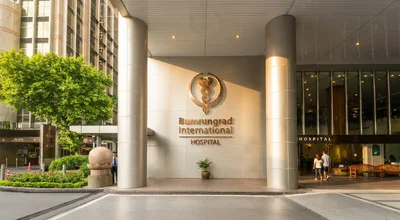
Bumrungrad International Hospital
Tertiary hospital with over 1,200 physicians treating 520,000+ international patients a year.
View hospital profile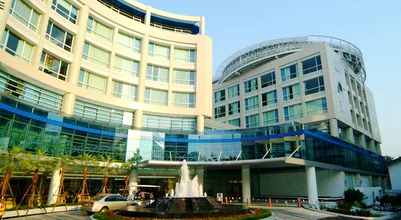
Bangkok Hospital
BDMS flagship tertiary campus with standalone heart, cancer, and neuro-orthopaedic hospitals.
View hospital profile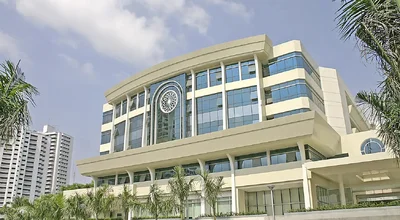
Samitivej Sukhumvit Hospital
Tertiary hospital known for paediatrics, home to Thailand's first private children's hospital.
View hospital profile
Tell Us What You Need. We Do the Rest.
Share what you're considering and we'll come back with surgeon options, pricing, and a clear plan.
- Real hospital pricing with zero markup
- Matched with a specialist experienced in your specific procedure
- Full coordination from consultation to recovery


Trusted by patients worldwide
The complete guide to Kidney Stone Removal in Thailand
Everything below is for readers who want the full detail: costs broken down, types and techniques, recovery, risks and safety, and planning your trip.
Kidney Stone Surgeons & Hospitals in Thailand
Stone management requires a urologist with access to all three treatment modalities. Here is what to look for.
Leading Hospitals in Bangkok
Our partner hospitals have dedicated urology departments with ESWL suites, flexible ureteroscopy with holmium laser, and PCNL capability. Importantly, they have all three options available, so your urologist selects the best technique for your stones rather than defaulting to whatever equipment happens to be on site.
Experienced Urologists
Our partner urologists hold board certification with fellowship training in endourology. They handle the full spectrum of stone disease, from simple ureteric stones to complex staghorn calculi, as a core part of their practice. High case volume builds the judgment to select the right technique for each patient.
What to Look for in a Surgeon
Verify that the hospital offers all three modalities: ESWL, ureteroscopy, and PCNL. A facility that only offers one or two may steer you towards what they have rather than what you need. Ask whether the urologist routinely performs metabolic stone analysis; prevention is as important as treatment.
Understanding Your Results
Kidney stone treatment is about eliminating pain and preventing recurrence. Here is what to expect.
Typical Kidney Stone Removal Results
Ureteroscopy and PCNL clear most stones in a single procedure. ESWL is more size-dependent and clears a smaller proportion in one session, especially for larger or harder stones, which is why a second session is more common after shock-wave treatment3. Pain relief is immediate once the stone is removed or fragmented. Urine colour normalises within days. The metabolic prevention plan that follows is what protects you from the next stone.
What Results Can You Expect?
Complete pain resolution and confirmed stone clearance on follow-up imaging. For patients with recurrent stones, the metabolic workup identifies actionable causes (high oxalate, high calcium, low citrate) and provides a targeted prevention strategy. Without this step, roughly half of patients will form another stone within five years1.
Kidney Stone Removal Cost in Thailand
Average Cost of Kidney Stone Removal
Our partner hospital quotes three packages for the scope route, and they sit close together. Ureterorenoscopy with a double J stent is ฿173,000, about $5,088. With a lithoclast and basket it is ฿182,000, about $5,353. With a holmium laser and a stent it is ฿188,000, about $5,529. Each includes one night in hospital. Shock wave lithotripsy and percutaneous surgery through the back are not packaged and are quoted case by case. This is one hospital's pricing rather than what Thailand charges, and rates vary widely between branches of the same network.
Cost Breakdown
The package covers the urologist's fee, the anaesthetist, theatre time with the scope and its disposable instruments, the stent where the package names one, and the single night in hospital with nursing care. Imaging is not included, and on this procedure that matters more than usual. The CT scan that decides which technique your stone calls for and the follow-up scan that confirms clearance are both billed separately, as are blood tests, pre-operative clearance and the chemical analysis of the removed stone.
What Affects the Price?
Between the three published packages the spread is only ฿15,000, so the choice of fragmentation method barely moves the total. The stay is one night in all three. Where cost genuinely varies is around the operation rather than inside it. Imaging before and after, stone analysis, and a second procedure if fragments are left behind are all separate. Treating both sides adds the stone-related components again, and a stone that needs shock waves or percutaneous access falls outside the published packages entirely.
Thailand vs International Price Comparison
Be careful with the arithmetic here. At about $5,088 to $5,529, ureterorenoscopy at our partner hospital sits below the $6,000 to $12,000 charged for self-funded stone surgery in the US, but only modestly so at the bottom of that American range. Against UK private pricing of £4,400 to £9,000 the gap is narrower still. The saving is real against a complex or repeated case and against the upper half of Western pricing, and it is slim against a straightforward one-off ureteroscopy quoted at the low end at home. Anyone travelling purely to save money on a single simple stone should get a written comparison first.
When a Stone Can Pass on Its Own
Not every stone needs a procedure. Smaller stones, usually under about 5 mm, often pass naturally with plenty of fluids2, pain relief, and sometimes a short course of medication that relaxes the ureter to ease the stone down (medical expulsive therapy). For a stone that is small, well positioned, and not causing infection or blockage, this watch-and-wait approach is the sensible first step, and a good urologist will always consider it before anything else.
The limits are about size and what the stone is doing. Larger stones, typically over 5 to 6 mm, are far less likely to pass, and waiting on one that is blocking the kidney, causing repeated infections, or producing pain that will not settle risks lasting damage to the kidney itself. Passing a stone can also mean weeks of intermittent, severe colic with no guarantee of success at the end of it.
When a stone is too large to pass, is obstructing flow, or has simply gone on too long, removing it is the route to immediate and reliable relief, and that is what the rest of this page covers. Your urologist confirms which situation you are in from a recent CT scan, so the decision rests on what the imaging shows rather than guesswork.
Types of Kidney Stone Treatment
The right treatment depends on stone size, location, and composition. Your urologist selects based on CT imaging, not patient preference. Here are the main options.
ESWL (Shock Wave Lithotripsy)
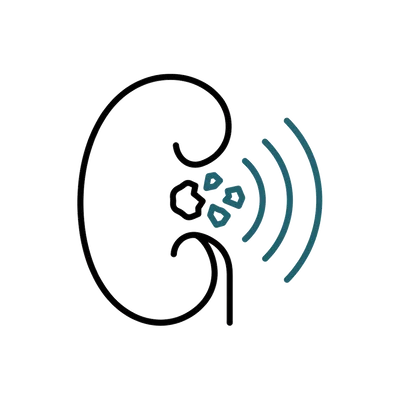
External shock waves fragment the stone into small pieces that pass naturally through the urine. Non-invasive, with no instruments entering the body. Performed as a day case under sedation. Effective for kidney stones under 2 cm and upper ureteric stones, though hard stones (calcium oxalate monohydrate) respond less well.
- Non-invasive with no incisions or instruments
- Day case under sedation or light anaesthesia
- Fragments pass naturally over several days
- Best for: kidney stones under 2 cm, softer stone compositions
Ureteroscopy (URS) with Laser Lithotripsy
A thin flexible or semi-rigid scope passes through the urethra into the ureter or kidney. Stones are fragmented with a holmium laser and extracted with a basket. No external incisions. Highly effective for ureteric stones and kidney stones up to 2 cm, with high single-procedure clearance rates.
- Direct visualisation and laser fragmentation
- No external incisions; scope passes naturally
- High clearance rates for ureteric and moderate kidney stones
- Best for: ureteric stones and kidney stones up to 2 cm
PCNL (Percutaneous Nephrolithotomy)
A small keyhole incision through the back accesses the kidney directly under image guidance. A nephroscope breaks up and suctions out large or complex stones. PCNL is the gold standard for stones over 2 cm, staghorn calculi, and cases where ureteroscopy cannot reach effectively.
- Gold standard for large, complex, or staghorn stones
- High single-procedure clearance rates
- Requires one to two nights in hospital
- Best for: stones over 2 cm, staghorn calculi, and complex stone burden
Mini-PCNL (Miniaturised PCNL)
Mini-PCNL uses the same keyhole approach as standard PCNL but through a smaller tract, which means less bleeding, less pain, and a quicker recovery. It bridges the gap between ureteroscopy and full PCNL, handling moderate-to-large stones that are too big for the scope alone but do not warrant the larger standard tract. Your urologist decides on the tract size from the stone burden on your CT scan.
- Smaller percutaneous tract than standard PCNL
- Less bleeding and a quicker, more comfortable recovery
- Bridges the gap between ureteroscopy and full PCNL
- Best for: moderate-to-large stones around 1.5 to 2.5 cm, or where a smaller tract is preferred
Stone Removal Techniques
Technique depends on stone size, location, and composition. Pre-operative CT imaging guides the decision. Here is what each approach involves and when it is used.
Holmium Laser Lithotripsy
The workhorse of modern stone surgery. A holmium laser fibre passed through a ureteroscope fragments stones of any composition, including hard calcium oxalate monohydrate stones that ESWL struggles with. The fragments are extracted with a basket or left small enough to pass naturally.
- Fragments all stone types including the hardest compositions
- Delivered through a ureteroscope with no external incision
- High single-procedure stone-free rates
- Best for: any stone accessible by ureteroscopy, particularly hard stones
Ultrasonic and Pneumatic Lithotripsy (PCNL)
During percutaneous access, ultrasonic or pneumatic probes break up large stones while simultaneously suctioning out the fragments. This combination approach is highly efficient for clearing large stone burdens in a single session and is the standard technique during PCNL procedures.
- Combined fragmentation and suction for rapid stone clearance
- Handles large and staghorn stones in a single session
- Used through percutaneous access during PCNL
- Best for: large stone burdens requiring percutaneous approach
Metabolic Stone Analysis
After stone removal, the fragments are sent for chemical composition analysis. Combined with 24-hour urine studies, this identifies the metabolic cause: high calcium, high oxalate, high uric acid, or other factors. Targeted dietary changes and medication reduce the risk of forming further stones5.
- Chemical analysis identifies the specific stone type
- 24-hour urine study reveals metabolic risk factors
- Targeted prevention strategy reduces recurrence significantly
- Best for: all patients; prevention is as important as treatment
Kidney Stone Removal Recovery Timeline
Day 1
You rest in hospital while the care team monitors urine output, pain levels, and any signs of bleeding. Intravenous fluids encourage fragment passage. ESWL patients are typically discharged the same day. URS and PCNL patients stay overnight for observation.
Days 2–4
Pain and discomfort settle progressively with oral medication. Increased fluid intake flushes remaining fragments. If a temporary ureteric stent was placed, it may cause mild bladder irritation. This is normal and resolves once the stent is removed. After general anaesthesia for ureteroscopy or PCNL, do not drive for 24 to 48 hours, so arrange private transport for any travel around Bangkok in these early days.
Days 5–7
A follow-up appointment confirms stone clearance with imaging and checks wound healing for PCNL patients. Stents are typically removed during this period in a brief outpatient procedure. Most patients feel well enough to explore Bangkok comfortably.
Weeks 1–2
Normal daily activities resume progressively. Heavy lifting and strenuous exercise are avoided until your urologist confirms full healing. Metabolic stone analysis and 24-hour urine studies may be arranged to guide long-term prevention.
When Can You Fly After Kidney Stone Removal?
Most patients can fly home five to seven days after treatment, once imaging confirms satisfactory stone clearance and any stent has been removed. Stay hydrated during the flight, move regularly, and carry prescribed pain medication as a precaution for any residual fragment passage.
When Can You Return to Work and Exercise?
Desk work within a few days for ESWL and ureteroscopy patients. PCNL patients may need one to two weeks. After general anaesthesia for ureteroscopy or PCNL, do not drive for 24 to 48 hours, so plan private transport rather than self-driving in Bangkok during days 2 to 4. Heavy lifting should wait until your urologist confirms full healing. Swimming is fine once any PCNL wound is sealed. Contact sports can resume at two to three weeks.
When Will You See Final Results?
Pain relief is typically immediate. Stone clearance is confirmed on follow-up imaging at five to seven days. Any residual fragments from ESWL may take a few weeks to pass completely. Metabolic stone analysis results are available within one to two weeks and form the basis of your long-term prevention plan.
Anaesthesia for Kidney Stone Removal
Most kidney stone procedures in Thailand are performed under general anaesthesia, so you are fully asleep and feel nothing while the urologist works. This is standard for ureteroscopy and PCNL, where the scope or keyhole tract needs you completely still. A consultant anaesthetist stays with you throughout and monitors you continuously, which is routine at the accredited hospitals we work with.
The exception is ESWL (shock wave lithotripsy), which is non-invasive and usually done under sedation rather than full general anaesthesia. You are relaxed, drowsy, and pain-free while the shock waves break up the stone, but not fully under. Your urologist and anaesthetist decide the right approach based on the technique your stone calls for and your medical history, and they will talk it through with you beforehand.
Before you are cleared, you have a pre-operative assessment, including blood tests, a urine check to rule out active infection, and a review of any medications, particularly blood thinners that may need pausing. You feel nothing during the procedure itself. Afterwards, discomfort is usually mild: some cramping as fragments pass, a little bladder irritation if a stent is in place, and short-lived soreness at the keyhole site after PCNL, all well controlled with the pain relief your urologist prescribes.
Risks and Safety of Kidney Stone Removal
Kidney stone removal procedures have an excellent safety profile. Serious complications are rare, but understanding the possibilities helps set appropriate expectations.
- Bleeding, usually minor but occasionally significant enough to need a transfusion after PCNL3,4
- Urinary tract infection, managed with antibiotics if it occurs
- Ureteric injury during ureteroscopy (rare)
- Steinstrasse after ESWL, where a column of fragments stacks up and obstructs the ureter, occasionally needing ureteroscopy or a stent to clear
- Delayed bleeding after PCNL from an arteriovenous fistula or pseudoaneurysm at the access tract, rare, and can appear as fresh blood in the urine days after discharge; treated with embolisation if it occurs
- Injury to the lung lining (pleural) or bowel (colonic) with upper-pole PCNL access, rare, and minimised by image-guided puncture
- Incomplete stone clearance requiring a second procedure
- Stent-related discomfort, temporary bladder irritation while the stent is in place
- Post-operative renal colic from fragment passage
The most common post-procedural issue is stent discomfort, not a complication per se but an expected temporary side effect. Stents are typically removed within five to seven days. Fragment passage after ESWL can cause brief episodes of colic; staying well hydrated helps fragments move through faster.
Is Kidney Stone Removal Safe in Thailand?
Yes. Kidney stone procedures at JCI-accredited Thai hospitals use the same laser platforms, lithotripsy equipment, and flexible ureteroscopes as major Western urology centres. Our partner urologists are fellowship-trained with extensive stone-management experience. Complication rates match published international benchmarks.
How to Reduce Your Risk
Provide your CT imaging in advance so your urologist can plan the optimal approach before you arrive. Complete a urine culture before travel; treating any active infection before stone surgery reduces complication risk. Stay well hydrated before and after the procedure to promote fragment passage.
When Is Repeat Treatment Needed?
Without preventive measures, up to half of people who have had a kidney stone form another within five years. Metabolic stone analysis and 24-hour urine studies identify the underlying cause. Targeted dietary modifications, increased fluid intake, and specific medication can meaningfully reduce that risk. For incomplete clearance, a second procedure may be scheduled.
Planning Your Trip to Thailand for Kidney Stone Removal
Most patients need five to seven days in Thailand. The trip is compact and well suited to combining with a short break afterwards.
How Long to Stay in Thailand
Five to seven days covers CT review, consultation, treatment, stent removal if applicable, and follow-up imaging. ESWL patients may need less time. PCNL patients should plan for the full week. Complex cases or bilateral treatment may benefit from an extra few days.
What's Included in a Medical Trip
Your care coordinator arranges CT review, consultation, treatment scheduling, stent management, and follow-up. The published package covers urologist fees, anaesthesia, the facility, the scope and its instruments, the stent where named, and one night in hospital. Imaging, laboratory tests and stone analysis are billed separately, so ask for those itemised alongside the package. Flights and accommodation are separate, with nearby hotel recommendations provided.
Recovery in Bangkok vs Phuket
Stay in Bangkok for the treatment window. Stent removal and follow-up imaging need to happen at the treating hospital. After clearance, some patients enjoy a few days at the beach before heading home; stone surgery recovery is light enough to make that feasible.
Related Procedures
Other procedures that address similar goals or conditions, in case one of them is a closer fit for you.
Planning your treatment in Thailand
Independent guides to help you weigh the decision, before you commit to anything.
Common Questions About Kidney Stone Removal
Everything you need to know before your procedure

Medical References
Keep researching with AI
Open this guide in your AI assistant to dig deeper and ask the questions it didn't answer.
Opens in a new tab with this guide already loaded.
Medical disclaimer: Content on this site is provided for informational purposes and should not be treated as medical advice. Outcomes, timelines, and eligibility differ from person to person. Consult a qualified medical professional before making any decisions about surgery or treatment.
Ready to Get Started?
Speak with our care coordinators for a free, no-obligation consultation and personalised quote.
Speak to Our Team