IUI in Thailand Your guide to cost, top specialists & hospitals
Sometimes the simplest approach is the right first step. IUI gives nature a measured advantage without the complexity of IVF.
What Is IUI?
Also known as: Artificial Insemination · Intrauterine Insemination
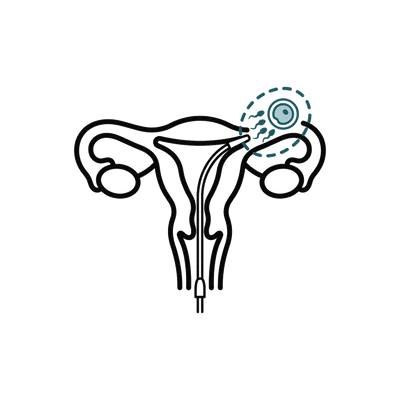
IUI, or intrauterine insemination, is a fertility treatment that improves the chance of conception by placing prepared sperm directly into the uterus, close to the egg, around ovulation. A laboratory washes and concentrates the sample to gather the most active sperm, then a thin catheter passes it through the cervix in a few minutes. It runs in your natural cycle or with mild medication to support follicle timing, with one cycle spanning two to four weeks. It suits unexplained infertility, mild male factor or cervical factor issues, and donor sperm conception.
Trying to conceive can be quietly exhausting, and treatment far from home adds its own questions. IUI is one of the gentler first steps: no surgery, no sedation, little downtime. Your specialist reads your cycle and results, then suggests the natural or stimulated approach that fits you.
It helps to know the odds. For women under 35 with no major fertility factors, success per cycle is modest, and many people need a few attempts. Whether IUI is the right first step, or whether IVF would serve you better, is what a consultation is for.
It can address a range of concerns, including:
Am I a Good Candidate for IUI?
IUI works for a fairly narrow set of situations, and honest clinics check you fit them before recommending it.
Fertilisation still happens naturally inside the body, which makes tubal patency non-negotiable.
At least one open fallopian tube: Confirmed by HSG or a similar test before treatment is offered.
Both tubes blocked rules IUI out: Insemination cannot bypass damaged tubes; IVF is the appropriate treatment instead.
Regular or inducible ovulation: A reliable egg release, whether natural or supported by low-dose medication, completes the picture.
IUI tolerates mild male factor issues but not severe ones.
Adequate post-wash count: Specialists look for a post-wash motile sperm count ideally above five to ten million for reasonable per-cycle odds.
Mild issues are the classic indication: Slightly reduced count or motility, cervical factor problems, or difficulty with timed intercourse all suit IUI.
Donor sperm is an option: IUI with screened donor sperm is a straightforward route to conception; eligibility for single women and same-sex couples under Thai law varies, so your coordinator confirms what is possible first.
Because per-cycle odds are modest, age changes the calculus quickly.
Strongest case under 38: From 38 onwards, months spent on IUI delay a more time-sensitive move to IVF.
Three to four cycles maximum: Cumulative success builds over the first three to four cycles; beyond four well-timed attempts, the evidence supports switching.
Short stays suit repeat trips: Each cycle needs 7-14 days in Thailand, and the pregnancy test can be taken at a laboratory near home.
IUI is a numbers game played over several gentle attempts.
Modest per cycle under 35: A low-intervention first step, not a guarantee.
Stimulated cycles edge ahead: Low-dose medication modestly improves follicle development and timing precision.
Know the exit point: A clinic that tells you clearly when to stop IUI and move to IVF is protecting your time and budget, not selling you short.
Who is not suitable for iui?
- Both fallopian tubes blocked or significantly damaged
- Severe male factor with a low post-wash motile sperm count
- Three to four well-timed IUI cycles already completed without success
- Age 38 or above where moving directly to IVF is usually advised
- Diminished ovarian reserve (low AMH or low antral follicle count), where IVF is the more effective first choice
Pricing
How Much Will IUI Cost in Thailand?
What iui costs at accredited hospitals in Thailand, and what your final quote depends on.
Get your exact price
Tell us what you're considering and we'll send a personalised quote from accredited clinics within 24 hours.
Get a Free QuoteTypical prices in Thailand
Typical ranges based on recent hospital quotes. Your exact price depends on the hospital and how complex your case is, and is confirmed at your teleconsultation.
IUI
Washed, concentrated sperm is placed straight into the uterus through a thin catheter around ovulation, giving it a shorter path to the egg than natural conception.
| Natural-cycle IUI, no medication Insemination timed to your own ovulation, with no stimulation drugs | $800 to $950 ฿27,200 to ฿32,300 |
| Stimulated IUI with oral medication Clomiphene or letrozole tablets to encourage more follicles to develop | $950 to $1,150 ฿32,300 to ฿39,100 |
| Stimulated IUI with injectable gonadotropins Injected hormones for a stronger response, with closer monitoring | $1,150 to $1,450 ฿39,100 to ฿49,300 |
Typically not included
- Donor sperm, including donor screening and sperm-bank fees
- Ovarian stimulation medication and the trigger injection, on stimulated cycles only
- Further cycles, since each price covers one cycle and most people need three to four
- Fertility investigations run on the same trip, such as an HSG, hormone panels or hysteroscopy
- Freezing and ongoing storage of sperm
Get your exact price
Tell us what you're considering and we'll send a personalised quote from accredited clinics within 24 hours.
Hospitals Trusted for IUI
From internationally accredited flagships to dedicated specialist hospitals, these are the kinds of facilities where international patients have this procedure.

Jetanin Hospital
Specialist IVF hospital near BTS Chit Lom, founded 1995, with in-house genetic testing and JCI and RTAC accreditation.
View hospital profile
BNH Hospital
Mid-sized hospital founded in 1898, known for women's health, orthopaedics, and spine care.
View hospital profile
SAFE Fertility Center
RTAC-accredited IVF clinic in Gaysorn Amarin by BTS Chit Lom, founded 2007, with in-house genetic testing. Not JCI accredited.
View hospital profile
Tell Us What You Need. We Do the Rest.
Share what you're considering and we'll come back with surgeon options, pricing, and a clear plan.
- Real hospital pricing with zero markup
- Matched with a specialist experienced in your specific procedure
- Full coordination from consultation to recovery


Trusted by patients worldwide
The complete guide to IUI in Thailand
Everything below is for readers who want the full detail: costs broken down, types and techniques, recovery, risks and safety, and planning your trip.
IUI Clinics & Specialists in Thailand
IUI is a straightforward procedure, but the monitoring and timing that surround it require genuine expertise. Here is what to look for.
Leading Fertility Clinics in Bangkok
Our partner clinics offer IUI as part of a comprehensive fertility service, meaning if IUI does not succeed, you can progress directly to IVF at the same centre with the same team. This continuity matters. The clinics use high-resolution ultrasound for cycle monitoring and have on-site andrology labs for same-day sperm processing.
Experienced Fertility Specialists
IUI monitoring and timing decisions are made by board-certified reproductive endocrinologists at our partner clinics. These are not general gynaecologists adding fertility services as an afterthought; they are specialists whose primary clinical focus is helping patients conceive. The quality of monitoring directly affects IUI success rates.
What to Look for in a Clinic
Ask whether IUI is performed by a fertility specialist or a generalist. Confirm the clinic uses ultrasound monitoring for follicle tracking rather than relying solely on ovulation predictor kits. Check whether the andrology lab can process and wash sperm on-site. And make sure the clinic has clear protocols for cycle cancellation if too many follicles develop.
IUI Results and Outcomes
IUI is a lower-intensity treatment with correspondingly modest per-cycle success rates. Here is what realistic expectations look like.
Typical IUI Success Rates
Per-cycle success rates for IUI are modest for women under 35 with no severe fertility factors.1,2 Stimulated cycles tend to perform slightly better than natural cycles. Cumulative success builds over three to four cycles. After four unsuccessful cycles, success rates per additional attempt drop significantly, and IVF becomes the more efficient path forward.
What Affects Your Chances?
Age is the biggest factor: egg quality declines with time, and IUI does not bypass this. Sperm quality after washing matters; the post-wash total motile sperm count should ideally be above five to ten million for reasonable IUI success. Tubal patency is essential, with at least one open tube required. Ovulatory function and timing precision also play significant roles.
IUI Cost in Thailand
Average Cost of IUI
A single IUI cycle in Thailand costs between $800 and $1,450. Natural cycle IUI without medication sits at the lower end. Stimulated cycles with monitoring and medication cost more. Multiple cycles can often be packaged at a reduced per-cycle rate. Ask your coordinator about this.
Cost Breakdown
The cost covers specialist consultations, cycle monitoring (ultrasound and blood tests), sperm preparation and washing, the insemination procedure itself, and a follow-up appointment. If ovarian stimulation medication is used, this is typically an additional charge. Donor sperm costs are separate if applicable.
What Affects the Price?
The main variable is whether you use a natural or stimulated cycle; medication adds cost. Donor sperm, if needed, is an additional line item. Some patients combine IUI with basic diagnostic tests during the same trip, which is cost-effective. The number of monitoring visits may vary slightly depending on how predictable your cycle is.
Thailand vs International Price Comparison
IUI in Thailand costs 50–60% less than equivalent treatment in the US ($2,000–$3,600), Australia (A$1,750–A$3,200), and UK (£1,600–£2,800). Because IUI often requires multiple cycles, the savings compound; three cycles in Thailand may cost less than a single cycle at home.
Types of IUI
The decision between natural and stimulated IUI depends on your cycle regularity and diagnosis. Your specialist will recommend whichever gives you the best per-cycle odds without unnecessary medication.
Natural Cycle IUI
No stimulation medication is used. Your natural cycle is monitored with ultrasound and blood tests to identify the developing follicle and predict ovulation. A trigger injection may be given to time ovulation precisely. The insemination is performed 24–36 hours after the trigger or at natural ovulation.
- No medication side effects or OHSS risk
- Lower cost per cycle than stimulated IUI
- Requires regular, predictable cycles for reliable timing
- Best for: women with regular cycles and no ovulatory dysfunction
Stimulated IUI
Low-dose fertility medication (oral tablets like letrozole or clomiphene, or low-dose injectable gonadotropins) stimulates one or two mature follicles. Monitoring ensures the response stays controlled. This modestly improves per-cycle success rates by ensuring at least one good follicle develops and ovulation timing is precise.
- Modestly higher success rates than natural cycle IUI
- Careful monitoring reduces the risk of multiple pregnancy
- Suitable for women with irregular ovulation or mild ovulatory issues
- Best for: patients where natural cycle timing is unreliable or where an ovulatory boost may help
IUI Techniques
IUI is a straightforward procedure, but the sperm preparation and timing protocols that support it are where the clinical skill shows up.
Sperm Washing and Concentration
The raw semen sample is processed in the laboratory to remove seminal fluid, debris, and non-motile sperm. What remains is a concentrated preparation of the most actively swimming sperm, suspended in a small volume of culture medium. This concentrated sample is what gets deposited into the uterus, maximising the number of healthy sperm reaching the fallopian tubes.
- Removes prostaglandins that can cause uterine cramping
- Concentrates the most motile sperm into a small volume
- Processing takes about one to two hours before insemination
- Best for: all IUI cycles; sperm washing is standard practice
Ovulation Timing Protocols
Precise timing is the single most important variable in IUI success. The insemination window is narrow, roughly 12–24 hours around ovulation. Ultrasound monitoring tracks follicle development, and a trigger injection (hCG) induces ovulation on a predictable schedule. Insemination is performed 24–36 hours after the trigger, placing sperm in the uterus when the egg is available.
- Serial ultrasound and blood tests pinpoint the ovulation window
- hCG trigger injection removes guesswork from timing
- Insemination is scheduled to the hour for maximum precision
- Best for: all IUI patients; timing accuracy directly affects success rates
IUI Treatment Timeline
Days 1–7
If you are having a stimulated cycle, low-dose medication begins in the first few days of your period. For a natural cycle, monitoring starts around day eight to ten. Ultrasound scans and blood tests every two to three days track follicle growth and hormone levels. The process is non-invasive and appointments are quick.
Day 10–14
Once a mature follicle is identified, a trigger injection induces ovulation. Your partner provides a sperm sample on the insemination day, or a frozen or donor sample is thawed. The lab washes and concentrates the sperm, a process that takes one to two hours.
Day of Insemination
The insemination itself takes just a few minutes and feels similar to a smear test. A thin catheter is passed through the cervix and the prepared sperm is deposited into the uterus. No anaesthesia is needed. You can return to normal activities immediately afterwards.
Two-Week Wait
A pregnancy blood test is performed 14 days after insemination. You can take this test in Thailand or at a laboratory near your home. Your coordinator stays in touch throughout the waiting period. If the result is negative, a cycle review determines whether to adjust the protocol or try again.
When Can You Fly After IUI?
You can fly the same day as the insemination if needed, though most patients stay for one to two days afterwards. There are no physical restrictions. Many patients choose to fly home before the pregnancy test and take it at a local laboratory. Your Thai clinic will review the result remotely and advise on next steps.
When Can You Resume Normal Activities?
Immediately. IUI requires no recovery time. You can walk, eat, work, and carry on with daily life right after the procedure. There is no evidence that resting improves outcomes. Avoid only extreme physical exertion and very hot baths during the two-week wait.
How Many Cycles Should You Try Before Considering IVF?
Most specialists recommend three to four well-timed IUI cycles before moving to IVF3, provided there are no factors that make IVF a better first choice. Cumulative success builds over three to four cycles for women under 35.2,3 If IUI has not succeeded after this point, the probability of further IUI cycles working drops significantly, and IVF is usually the logical next step.
Risks and Safety of IUI
IUI is one of the lowest-risk fertility treatments available. Serious complications are rare, and most cycles are completed without any issues when properly monitored.
Stimulated cycles are monitored closely. If too many follicles develop, the cycle may be cancelled or converted to IVF to avoid a high-order multiple pregnancy. Thai clinics follow international guidelines to keep IUI as safe and controlled as possible.
Is IUI Safe in Thailand?
Yes. IUI is a simple outpatient procedure with minimal risk. Thai fertility clinics perform it under specialist oversight with the same monitoring standards used in UK and European clinics. The main safety consideration (managing ovarian stimulation to avoid multiple pregnancy) is handled through careful monitoring and strict follicle-count thresholds.
How to Reduce Risks
The primary risk to manage is multiple pregnancy from ovarian stimulation. If monitoring shows more than two mature follicles, the cycle should be cancelled or converted. This is standard practice at reputable clinics. Using low-dose stimulation protocols rather than aggressive medication further reduces the risk. Choose a clinic that takes this seriously rather than one that transfers multiple embryos to inflate success statistics.
When Should You Move to IVF Instead?
IUI is not the right treatment for blocked fallopian tubes, severe male factor infertility, or advanced maternal age where time is a significant factor. If you have failed three to four IUI cycles, the evidence strongly supports moving to IVF rather than continuing with a lower-probability treatment. Your specialist will make this recommendation clearly when the data supports it.
Planning Your Trip to Thailand for IUI
An IUI cycle typically requires 7–14 days in Thailand. Here is how to plan your visit.
How Long to Stay in Thailand
A natural cycle IUI requires five to seven days if you arrive around day eight to ten of your cycle. A stimulated cycle requires seven to fourteen days, starting from day two to three of your period. The insemination is typically performed around day twelve to sixteen. You can fly home the same day or the next.
What Is Included in Your Treatment
Your coordinator handles scheduling and communication with the clinic. The treatment quote covers specialist consultations, cycle monitoring with ultrasound and blood tests, sperm preparation and washing, the insemination procedure, and a follow-up appointment. Medication and donor sperm are quoted separately if applicable. A full breakdown is provided before you commit.
Combining IUI with Other Tests
Many patients combine their IUI cycle with other fertility investigations (hormone testing, a full fertility assessment, or diagnostic procedures like hysteroscopy) during the same trip. This is an efficient use of your time in Thailand and provides your specialist with a complete picture of your fertility status alongside the treatment itself.
Related Procedures
Other procedures that address similar goals or conditions, in case one of them is a closer fit for you.
Planning your treatment in Thailand
Independent guides to help you weigh the decision, before you commit to anything.
Common Questions About IUI in Thailand
Everything you need to know before your treatment

Medical References
Keep researching with AI
Open this guide in your AI assistant to dig deeper and ask the questions it didn't answer.
Opens in a new tab with this guide already loaded.
Medical disclaimer: Content on this site is provided for informational purposes and should not be treated as medical advice. Outcomes, timelines, and eligibility differ from person to person. Consult a qualified medical professional before making any decisions about surgery or treatment.
Ready to Get Started?
Speak with our care coordinators for a free, no-obligation consultation and personalised quote for your IUI treatment in Thailand.
Get a Free QuoteIVF & Assisted Reproduction