ICSI in Thailand Your guide to cost, top specialists & hospitals
When sperm quality is the barrier, ICSI removes it. One selected sperm, one egg, and the embryologist does the rest.
What Is ICSI?
Also known as: Sperm Injection IVF · Intracytoplasmic Sperm Injection
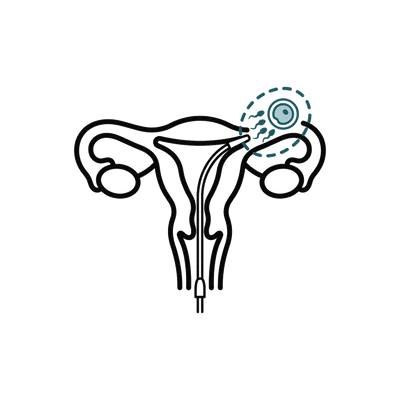
ICSI is a laboratory step within an IVF cycle that fertilises an egg by injecting a single sperm directly into it. Under high magnification, an embryologist selects one sperm and places it inside each mature egg using micromanipulation, fine instruments steered under the microscope, rather than leaving them to meet in a dish. It is the standard approach for male-factor infertility, low count, poor movement, or abnormal shape, and for surgically retrieved sperm, prior fertilisation failure, or genetic testing. It usually fertilises around 50 to 80 percent of the eggs injected.1,2
If sperm quality is the barrier, this is the part of treatment built to get past it. The injection happens in the lab, not in your body, so the cycle looks much like ordinary IVF: stimulation, monitoring, retrieval, then a fertilisation report the next morning. Even a few viable sperm can be enough.
ICSI cannot change egg or embryo quality, and where sperm is normal it offers no real advantage over conventional IVF3. No clinic can guarantee a pregnancy, so the right answer depends on your own results, which a consultation can assess.
It can address a range of concerns, including:
Am I a Good Candidate for ICSI?
ICSI is the right tool when fertilisation itself is the obstacle, which is exactly what the workup is there to establish.
Guidance is unambiguous that ICSI should answer a specific problem, not serve as a default upgrade.
Male factor confirmed: Severe low count, poor motility, or abnormal morphology on semen analysis is the core indication.
Previous fertilisation failure: A prior IVF cycle with poor or failed fertilisation justifies the switch.
PGT or surgically retrieved sperm: Genetic testing cycles and samples from TESA, PESA, or Micro-TESE require ICSI.
No indication, no advantage: In non-male-factor cycles, ESHRE and ASRM guidance shows no fertilisation or live-birth benefit over conventional IVF, just added laboratory cost.
The male side of the assessment shapes both feasibility and timing.
A recent semen analysis: Even a handful of motile sperm can be enough, since ICSI needs just one viable sperm per egg.
Urology input for retrieval: Men with no sperm in the ejaculate need surgical retrieval assessed before the cycle is committed.
DNA fragmentation considered: High fragmentation may warrant PICSI, IMSI, or a lifestyle window before retrieval.
No recent fever or infection: Illness in the male partner can suppress sperm quality for several months.
The female partner's preparation mirrors a standard IVF cycle.
Good general health and a full workup: Stimulation, monitoring, retrieval, and transfer follow the same IVF pathway, with the same screening.
A 2-3 week stay: The partner providing sperm only needs to be present for one to two days around retrieval, or a frozen sample can be used.
Married under Thai law: A marriage certificate is required at clinic registration. Access for married same-sex couples is not yet settled under the ART Act, so confirm a clinic's current position first.
ICSI fixes fertilisation; it does not change egg or embryo quality.
50-80% fertilisation per injected egg: A small percentage of eggs do not survive the injection.
Pregnancy rates mirror IVF: ICSI does not lift the ceiling set by age and egg quality.
Reassuring long-term data: Over thirty years of follow-up show no significant increase in birth defects attributable to the technique itself.
Who is not suitable for icsi?
- No fertility workup or recent semen analysis completed
- Recent fever or infection in the male partner until sperm quality recovers
- Azoospermia not yet assessed by a urologist for surgical retrieval
- Previous total fertilisation failure without a detailed cycle review first
- Very poor ovarian reserve (very low antral follicle count or AMH) where stimulation is unlikely to yield usable eggs
- A significant uterine cavity abnormality that must be corrected before any embryo transfer
- Active medical conditions that make gonadotropin ovarian stimulation unsafe
- Single women, who are not eligible for assisted reproduction under Thai law
- Couples without a legal marriage certificate, required under Thai law
Pricing
How Much Will ICSI Cost in Thailand?
What icsi costs at accredited hospitals in Thailand, and what your final quote depends on.
Get your exact price
Tell us what you're considering and we'll send a personalised quote from accredited clinics within 24 hours.
Get a Free QuoteTypical prices in Thailand
Typical ranges based on recent hospital quotes. Your exact price depends on the hospital and how complex your case is, and is confirmed at your teleconsultation.
ICSI
A single sperm is injected directly into each mature egg in the laboratory, so fertilisation no longer depends on the sperm reaching the egg itself.
| Standard ICSI cycle Stimulation, retrieval, injection of every mature egg and transfer, for male factor, failed fertilisation or frozen sperm | $5,500 to $7,500 ฿187,000 to ฿255,000 |
| ICSI cycle with PGT-A Embryos biopsied and screened for chromosome errors before one is chosen for transfer | $7,500 to $9,900 ฿255,000 to ฿336,600 |
| ICSI cycle with surgical sperm retrieval Sperm collected directly from the testis or epididymis by TESA, PESA or Micro-TESE, for none in the ejaculate | $8,000 to $12,000 ฿272,000 to ฿408,000 |
Typically not included
- Stimulation medication, priced once your protocol is set and adjusted if your ovaries respond differently than expected
- Donor sperm or donor eggs, including the donor's screening and matching
- A later frozen embryo transfer, or any repeat attempt, as each price covers one cycle only
- Freezing surplus embryos and storage, charged as a freeze fee then a recurring storage fee
- Advanced sperm selection such as PICSI, IMSI or microfluidic sorting, added only when the lab recommends it for your sample
Get your exact price
Tell us what you're considering and we'll send a personalised quote from accredited clinics within 24 hours.
Hospitals Trusted for ICSI
From internationally accredited flagships to dedicated specialist hospitals, these are the kinds of facilities where international patients have this procedure.

Jetanin Hospital
Specialist IVF hospital near BTS Chit Lom, founded 1995, with in-house genetic testing and JCI and RTAC accreditation.
View hospital profile
BNH Hospital
Mid-sized hospital founded in 1898, known for women's health, orthopaedics, and spine care.
View hospital profile
SAFE Fertility Center
RTAC-accredited IVF clinic in Gaysorn Amarin by BTS Chit Lom, founded 2007, with in-house genetic testing. Not JCI accredited.
View hospital profile
Tell Us What You Need. We Do the Rest.
Share what you're considering and we'll come back with surgeon options, pricing, and a clear plan.
- Real hospital pricing with zero markup
- Matched with a specialist experienced in your specific procedure
- Full coordination from consultation to recovery


Trusted by patients worldwide
The complete guide to ICSI in Thailand
Everything below is for readers who want the full detail: costs broken down, types and techniques, recovery, risks and safety, and planning your trip.
ICSI Clinics & Specialists in Thailand
ICSI outcomes are determined in the embryology laboratory. The clinic you choose, and the embryologists who work there, matter more than almost any other decision.
Leading Fertility Clinics in Bangkok
Our partner clinics operate purpose-built embryology labs with micromanipulation stations, time-lapse incubators, and dedicated clean-room environments. These are not multi-purpose hospital labs; they are designed specifically for reproductive medicine. The teams handle hundreds of ICSI cycles per month, which translates directly into consistent technique and reliable fertilisation rates.
Experienced Embryologists
The embryologist performing your ICSI injection is arguably the most important person in your treatment. Our partner clinics employ senior embryologists with years of ICSI-specific experience and ongoing quality assessment. Many have trained internationally before returning to Thailand. Ask about their egg survival rates and fertilisation rates; these numbers tell you more than any marketing claim.
What to Look for in a Clinic
Ask for the clinic's ICSI fertilisation rate; it should be consistently above 70%. Confirm they use time-lapse embryo monitoring and have strong blastocyst development rates. Check whether the embryology team undergoes regular competency assessment. Read independent patient reviews that mention the laboratory specifically, not just the bedside manner of the doctors.
ICSI Results and Outcomes
ICSI transforms the fertilisation stage for patients with male factor infertility. Here is what to expect from the process and the outcomes.
Typical ICSI Outcomes
ICSI achieves fertilisation rates of 50–80% per injected egg, significantly higher than conventional IVF can manage with poor-quality sperm. Clinical pregnancy rates per transfer mirror those of standard IVF3, since ICSI changes how the egg is fertilised rather than the chance of pregnancy. For patients where conventional fertilisation previously failed entirely, ICSI often makes the difference between having embryos to transfer and having none.
What Results Can You Expect?
The fertilisation report, typically available the morning after egg retrieval, tells you how many eggs survived the injection and how many fertilised normally. From there, embryo culture over five days determines how many reach blastocyst stage. The final pregnancy outcome depends on embryo quality, uterine receptivity, and the biological factors that no technique can fully control. A realistic assessment is provided during your consultation based on your specific test results.
ICSI Cost in Thailand
Average Cost of ICSI
A full ICSI cycle in Thailand typically costs between $5,500 and $12,000. The price includes everything from stimulation monitoring through to embryo transfer, with the ICSI laboratory procedure as an additional component on top of the standard IVF pathway. Straightforward cycles sit at the lower end. Cases involving surgical sperm retrieval, genetic testing, or complex protocols cost more.
Cost Breakdown
The ICSI cost is built on the same base as an IVF cycle. Specialist consultation fees, stimulation medication, monitoring, egg retrieval, embryo culture, and embryo transfer form the core. The ICSI laboratory fee (covering the micromanipulation equipment, embryologist time, and per-egg injection) is an additional line item. If surgical sperm retrieval (TESA or Micro-TESE) is needed, that is quoted separately. Medication costs vary based on your stimulation protocol and ovarian response.
What Affects the Price?
The main variables are medication dose, whether ICSI is performed on all eggs or a subset, whether PGT-A genetic testing is added, and whether surgical sperm retrieval is required. Clinics using time-lapse embryo monitoring and advanced culture systems tend to charge slightly more, reflecting the laboratory investment. The number of embryos frozen also affects the final bill.
Thailand vs International Price Comparison
ICSI in Thailand costs 50–70% less than equivalent treatment in the US ($13,800–$24,800), Australia (A$12,100–A$22,000), and UK (£11,000–£19,300). Thai clinics use the same micromanipulation equipment and embryology protocols as leading international centres. The cost difference comes from lower operating overheads, not from differences in clinical quality or equipment.
When ICSI Is the Right Step (and When It Is Not)
ICSI is not always the first move. For couples where sperm parameters are normal, conventional IVF lets egg and sperm meet in the dish without injection, and the evidence from ESHRE and ASRM is clear that it fertilises just as well without the added laboratory cost. Earlier still, less intensive routes can be appropriate before any IVF at all: a few cycles of intrauterine insemination (IUI), timed intercourse around ovulation, or a short course of ovulation-induction medication, sometimes resolve things for mild or unexplained cases without committing to a full cycle.
The limits are what make those routes a step rather than a substitute. IUI, timed cycles, and medication do nothing to overcome a genuine sperm barrier, since they still rely on the sperm reaching and penetrating the egg on its own. Where the count is very low, motility or morphology is poor, sperm is surgically retrieved, or a previous cycle fertilised poorly, those gentler pathways tend to fail repeatedly and simply delay the treatment that addresses the actual problem.
ICSI is the right step precisely when fertilisation itself is the obstacle, because it bypasses every barrier between sperm and egg and needs only one viable sperm to work. The same legal and eligibility framing applies as for IVF in Thailand: couples must be legally married, single women are not eligible, and treatment runs at licensed clinics under the 2015 ART Act. Which route fits your case is something a semen analysis and consultation establish, rather than a default upgrade, and that is what the rest of this page covers.
Types of ICSI
The core ICSI technique is consistent across all cases, but the method used to select the best sperm for injection can vary depending on the severity of the male factor issue.
Standard ICSI
The embryologist examines the sperm sample at 200–400x magnification, selects the most motile and morphologically normal sperm, immobilises it, and injects it into each mature egg. This is the most widely used approach globally, backed by over 30 years of clinical data and millions of cycles. It is offered when there is a clinical indication; in non-male-factor cases, conventional IVF insemination is typically preferred.
- Fertilisation rates of 50–80% per injected egg in indicated cases
- Well-established technique with extensive safety data
- Used when a male-factor or other specific indication is present
- Best for: male-factor infertility, surgically retrieved sperm, PGT cycles, prior fertilisation failure
IMSI (Ultra-High Magnification Selection)
Uses specialised optics at over 6,000x magnification to examine individual sperm in far greater structural detail before injection. This allows the embryologist to identify and avoid sperm with subtle vacuoles or structural defects invisible at standard magnification. Available at select Thai clinics with the specialist equipment.
- May benefit patients with high sperm DNA fragmentation
- Identifies structural defects invisible at standard magnification
- Limited availability; requires specialist microscopy equipment
- Best for: repeated ICSI failure, severely abnormal morphology, or high DNA fragmentation
ICSI Techniques
The ICSI injection itself is a precise laboratory skill. What surrounds it (sperm preparation, egg assessment, and post-injection culture) matters just as much for your final outcome.
Sperm Preparation Methods
Before injection, the semen sample is processed to isolate the healthiest sperm. Density gradient centrifugation separates motile sperm from debris and immotile cells. Swim-up techniques select the most actively moving sperm. For surgically retrieved samples, the embryologist may need to identify individual sperm within testicular tissue fragments, a task requiring patience and skill.
- Density gradient and swim-up select the healthiest sperm population
- Surgical sperm samples require specialised handling and identification
- Preparation quality directly affects fertilisation and embryo outcomes
- Best for: all ICSI cycles; sperm preparation is a non-negotiable step
Physiological ICSI (PICSI)
PICSI uses a hyaluronan-coated dish to select sperm based on their ability to bind to hyaluronic acid, a substance found naturally around the egg. Sperm that bind successfully are considered more mature and less likely to carry DNA damage. Some evidence suggests improved embryo development and reduced miscarriage rates compared to standard selection.
- Selects sperm based on biological maturity, not just appearance
- May reduce miscarriage risk by selecting sperm with lower DNA fragmentation
- Available at leading Thai fertility centres with advanced labs
- Best for: patients with borderline DNA fragmentation or previous unexplained ICSI failure
Microfluidic Sperm Selection
Microfluidic sorting passes the prepared sample through a chip with microscopic channels, so only the healthiest, most actively swimming sperm migrate through to be collected. Because it avoids the centrifugation used in conventional preparation, it tends to select sperm with less DNA damage and handles the sample more gently. Increasingly offered at advanced Thai labs as an alternative to PICSI for the same group of patients.
- Gentle, centrifuge-free selection that can lower DNA fragmentation in the chosen sperm
- Selects on natural swimming ability rather than appearance alone
- Available at leading Thai fertility centres with advanced laboratories
- Best for: high sperm DNA fragmentation, repeated ICSI failure, or unexplained poor embryo quality
Recovery After ICSI
Egg retrieval day
Egg retrieval is a day procedure under light sedation, so there is no hospital stay. You rest at the clinic for an hour or two, then return to your hotel the same day. Expect mild bloating and period-like cramping that simple pain relief settles.
1–2 days after retrieval
This is the only real downtime in the cycle. Most patients are back to desk work and gentle activity within one to two days, once the bloating and cramping ease, and can drive again the day after retrieval once the sedation has fully worn off.
2–3 days after embryo transfer
Flying home is safe from two to three days after transfer; cabin pressure does not affect implantation. The transfer itself is a short, painless procedure with no sedation, so it adds nothing to your recovery.
The two-week wait
Keep to light activity through to your pregnancy test: walking and gentle routines are fine, but avoid heavy lifting, vigorous exercise, and hot baths. There is no evidence bed rest improves outcomes, so gentle movement is encouraged.
Male partner after surgical retrieval
If your partner had TESA, PESA, or Micro-TESE, he should avoid heavy lifting and strenuous exercise for several days while the site settles, using supportive underwear and simple pain relief for any bruising or ache.
When Can You Fly After ICSI?
Flying is safe two to three days after embryo transfer. Cabin pressure does not affect implantation. Some patients choose to remain in Thailand until their pregnancy blood test at day 10–12 post-transfer, but flying home before the test is perfectly fine. The blood test can be done at any local laboratory. Any post-retrieval bloating typically resolves within a few days.
When Can You Return to Normal Activities?
Light daily activities can be resumed immediately after embryo transfer. Walking, gentle sightseeing, and non-strenuous routines are all fine. Avoid heavy lifting, vigorous exercise, and hot baths during the two-week wait. There is no evidence that bed rest improves outcomes; in fact, gentle movement is encouraged. Most patients feel physically back to normal within a few days of egg retrieval.
When Will You Know If the Cycle Worked?
A beta-hCG blood test taken 10–12 days after embryo transfer provides the definitive result. If positive, an ultrasound at six to seven weeks confirms a viable pregnancy with a heartbeat. If negative, a cycle review is scheduled to analyse every stage (from ovarian response to fertilisation rates to embryo quality) and adjust the protocol for any subsequent attempt.
Anaesthesia for ICSI
For most of an ICSI cycle you need no anaesthesia at all. The stimulation injections, the monitoring scans, and the embryo transfer are all done while you are fully awake, with the transfer feeling similar to a smear test. The ICSI injection itself happens in the laboratory under the embryologist's microscope, not in your body, so there is nothing to sedate for at that stage.
The one step that does need it is egg retrieval, which is carried out under light sedation. You are relaxed and drowsy rather than fully asleep, you feel nothing during the collection, and an anaesthetist stays with you throughout to monitor you. The whole retrieval takes around fifteen to twenty minutes, after which you rest at the clinic for an hour or two before returning to your hotel the same day. If your partner needs surgical sperm retrieval, that is also done under light sedation or local anaesthetic, depending on the method.
Before retrieval you have a short pre-sedation assessment covering your medical history, any medications, and fasting instructions for the morning of the procedure. You feel nothing while the eggs are collected, and any discomfort afterwards is mild: usually some bloating and period-like cramping that settles within a day or two and is easily managed with simple pain relief.
Risks and Safety of ICSI
ICSI has been used in millions of cycles since 1992 and has an established safety record. The risks are largely the same as standard IVF, with a small number of additional considerations specific to the injection process.
- Ovarian hyperstimulation syndrome (OHSS), same risk profile as conventional IVF
- A small percentage of eggs may not survive the injection process3,1
- Multiple pregnancy if more than one embryo is transferred
- Mild bloating or discomfort during the stimulation phase
- Emotional and psychological strain across the treatment cycle
- No guarantee of fertilisation or pregnancy; biology sets limits that technique cannot always overcome
- Ectopic pregnancy (rare), with one-sided abdominal or shoulder-tip pain and post-transfer bleeding as the warning signs
- Cycle cancellation if ovarian response is insufficient
- Where surgical sperm retrieval (TESA, PESA, or Micro-TESE) is used, the male partner has a small risk of scrotal bruising or haematoma, infection, testicular pain, and occasionally no usable sperm being found
Children conceived through ICSI have a slightly higher chance of a birth defect than naturally conceived children, though researchers attribute this small increase to the underlying infertility rather than the injection itself. The very small increased risk of certain chromosomal conditions noted in some studies appears related to the underlying fertility issue rather than the ICSI technique itself.1,2
Is ICSI Safe in Thailand?
Yes. ICSI is performed at licensed, regulated fertility clinics using the same micromanipulation platforms found in top laboratories worldwide. Thai clinics performing high volumes of ICSI maintain strict quality-control measures including daily calibration of injection equipment, controlled incubator environments, and double-witnessing protocols for patient identification at every step.
How to Reduce Risks
The most impactful thing you can do is choose a clinic with experienced embryologists who perform ICSI at high volume. Fertilisation rates and egg survival rates are the metrics to ask about; they reflect the team's technical consistency. Single embryo transfer should be the default recommendation for most patients. If your case involves surgical sperm retrieval, confirm that an experienced reproductive urologist will perform the procedure in coordination with the embryology team.
Risks for the Male Partner (Surgical Sperm Retrieval)
When sperm has to be obtained surgically by TESA, PESA, or Micro-TESE, the retrieval is a minor procedure under light sedation or local anaesthetic, but it carries its own small risks: scrotal bruising or haematoma, infection, and testicular pain that usually settles within a few days. Occasionally no usable sperm is found despite a thorough search. Having an experienced reproductive urologist perform the retrieval, alongside rest, supportive underwear, and simple pain relief afterwards, keeps these risks low.
Is ICSI Safe for the Baby?
Large population studies have followed children conceived through ICSI for over 30 years. The evidence consistently shows no significant increase in birth defects or developmental issues attributable to the ICSI technique itself.1,3 A very small increased risk of certain chromosomal conditions has been observed, but researchers believe this relates to the underlying male infertility rather than the injection process. This is discussed during your initial consultation.
Planning Your Trip to Thailand for ICSI
An ICSI cycle follows the same timeline as IVF, 14–21 days in Thailand. Here is how to organise the logistics.
How Long to Stay in Thailand
Plan for two to three weeks. The stimulation, monitoring, and retrieval phase takes 10–14 days. Embryo culture and transfer add another five to seven days. If your partner needs to provide a fresh sperm sample, he only needs to be present for one to two days around the retrieval date. If using frozen or donor sperm, you can attend the cycle independently.
What Is Included in Your Treatment
Your coordinator manages all scheduling, transfers, and clinical communication. The treatment quote covers specialist consultations, stimulation monitoring, egg retrieval, the ICSI laboratory procedure, embryo culture, and embryo transfer. Medication, genetic testing, embryo freezing, and sperm retrieval (if needed) are quoted as separate line items with full transparency.
Recovery in Bangkok
Stay in Bangkok for the full cycle. You need to be near the clinic for monitoring every two to three days, and if anything unexpected comes up (an OHSS concern, a scheduling adjustment), proximity to your clinical team matters. Between appointments, Bangkok offers everything you need for a comfortable stay. Most patients treat the waiting periods as a chance to decompress.
Related Procedures
Other procedures that address similar goals or conditions, in case one of them is a closer fit for you.
Planning your treatment in Thailand
Independent guides to help you weigh the decision, before you commit to anything.
Common Questions About ICSI in Thailand
Everything you need to know before your treatment

Medical References
Keep researching with AI
Open this guide in your AI assistant to dig deeper and ask the questions it didn't answer.
Opens in a new tab with this guide already loaded.
Medical disclaimer: Content on this site is provided for informational purposes and should not be treated as medical advice. Outcomes, timelines, and eligibility differ from person to person. Consult a qualified medical professional before making any decisions about surgery or treatment.
Ready to Get Started?
Speak with our care coordinators for a free, no-obligation consultation and personalised quote for your ICSI cycle in Thailand.
Get a Free QuoteIVF & Assisted Reproduction