Frozen Embryo Transfer in Thailand Your guide to cost, top specialists & hospitals
Transfer on your terms. Frozen embryos let you separate timing from biology and choose when your body is ready.
What Is Frozen Embryo Transfer?
Also known as: FET · Cryopreserved Embryo Transfer
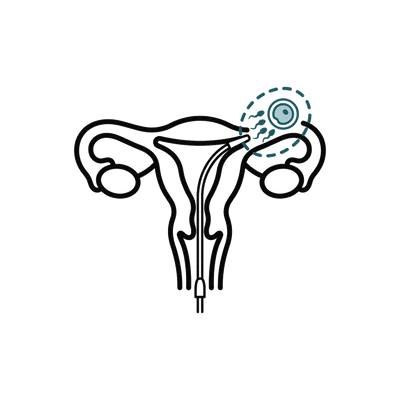
Frozen embryo transfer is a fertility procedure that places a previously thawed embryo into the uterus, timed to your cycle. It uses embryos created in an earlier IVF or ICSI round, so there is no ovarian stimulation or egg retrieval this time. The embryos are stored by vitrification, an ultra-rapid freezing method, and most survive the thaw regardless of storage time. Your womb lining is prepared with hormone medication or tracked through your natural cycle, and transfer goes ahead only once it reaches the right thickness, usually 7mm or more. The transfer takes about ten minutes, without sedation.
If you have embryos in storage, this is often the gentler, shorter chapter, which can feel like a relief after a full IVF cycle. Your specialist waits until your lining is genuinely ready rather than rushing to fit a schedule.
A good embryo in a well-prepared lining is a strong start, not a certainty, and results vary. For women under 35 transferring a genetically tested embryo, success is higher than with untested embryos, but rates still vary; your specialist will give you a realistic figure at consultation. Your specialist will talk through your realistic odds at consultation.
It can address a range of concerns, including:
Am I a Good Candidate for Frozen Embryo Transfer?
If you have embryos in storage, FET candidacy is mostly about your uterus being genuinely ready to receive one.
The starting point is simple: viable vitrified embryos and clear logistics for using them.
Embryos in storage: From a previous IVF or ICSI cycle, a freeze-all round, or a PGT-A testing pathway.
Stored elsewhere needs planning: Cryoshipping to Thailand must be confirmed before booking travel; returning to the clinic that holds your embryos is usually simpler and cheaper.
Survival odds are high: Modern vitrification means most embryos survive the thaw, and storage time does not affect viability.
Transfer only goes ahead when the endometrium is confirmed ready, so lining history matters.
A lining that can reach 7mm: Previous cycles where the lining struggled even on medication need investigating before another transfer is attempted.
New pathology treated first: Newly found polyps, fibroids, or a hydrosalpinx may need hysteroscopy or salpingectomy before transfer.
Repeated failures investigated: Recurrent implantation failure warrants a proper workup rather than simply transferring again; note that ERA testing has not been shown to improve live-birth rates.
A good embryo in a well-prepared lining is a strong position, not a certainty.
Higher with a tested embryo: For women under 35 transferring a PGT-A-tested blastocyst; untested embryos run slightly lower.
Age at retrieval is what counts: Egg quality was set when the eggs were collected, not when you transfer.
Equivalent to fresh: Frozen and fresh transfers now produce broadly similar outcomes, so there is no penalty for having waited.
Who is not suitable for frozen embryo transfer?
- No vitrified embryos currently in storage
- Newly found polyps, fibroids, or a hydrosalpinx until treated
- A lining that has not reached 7mm on previous cycles without further workup
- Recurrent implantation failure not yet investigated
- Embryos stored at another clinic until cryoshipping is confirmed
Pricing
How Much Will Frozen Embryo Transfer Cost in Thailand?
What frozen embryo transfer costs at accredited hospitals in Thailand, and what your final quote depends on.
Get your exact price
Tell us what you're considering and we'll send a personalised quote from accredited clinics within 24 hours.
Get a Free QuoteTypical prices in Thailand
Typical ranges based on recent hospital quotes. Your exact price depends on the hospital and how complex your case is, and is confirmed at your teleconsultation.
Frozen Embryo Transfer
A thawed embryo from an earlier IVF cycle is placed into the womb through a thin catheter, once the lining reaches the right thickness.
| Natural-cycle FET Timed to your own ovulation, with very little medication | $1,500 to $1,800 ฿51,000 to ฿61,200 |
| Medicated FET Oestrogen and progesterone used to prepare the womb lining | $1,800 to $2,200 ฿61,200 to ฿74,800 |
| FET with assisted hatching A laser thins the embryo shell to help it implant | $2,100 to $2,700 ฿71,400 to ฿91,800 |
Typically not included
- Lining-preparation medication, the oestrogen and progesterone, dosed to each patient
- Annual embryo storage fees, billed for as long as any embryos remain frozen
- Surgery for newly found polyps, fibroids or a hydrosalpinx before transfer, such as hysteroscopy or salpingectomy
- Added investigations after repeated implantation failure, including ERA testing where a specialist advises it
- Genetic counselling for PGT-A results carried over from an earlier cycle
Get your exact price
Tell us what you're considering and we'll send a personalised quote from accredited clinics within 24 hours.
Hospitals Trusted for Frozen Embryo Transfer
From internationally accredited flagships to dedicated specialist hospitals, these are the kinds of facilities where international patients have this procedure.
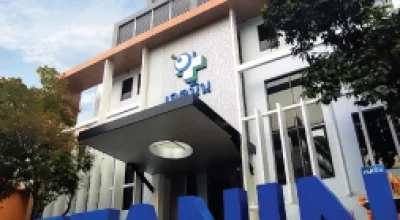
Jetanin Hospital
Specialist IVF hospital near BTS Chit Lom, founded 1995, with in-house genetic testing and JCI and RTAC accreditation.
View hospital profile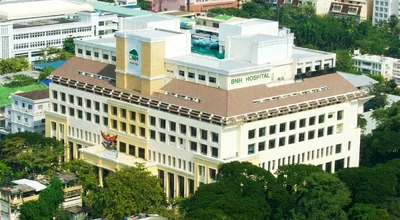
BNH Hospital
Mid-sized hospital founded in 1898, known for women's health, orthopaedics, and spine care.
View hospital profile
SAFE Fertility Center
RTAC-accredited IVF clinic in Gaysorn Amarin by BTS Chit Lom, founded 2007, with in-house genetic testing. Not JCI accredited.
View hospital profile
Tell Us What You Need. We Do the Rest.
Share what you're considering and we'll come back with surgeon options, pricing, and a clear plan.
- Real hospital pricing with zero markup
- Matched with a specialist experienced in your specific procedure
- Full coordination from consultation to recovery


Trusted by patients worldwide
The complete guide to Frozen Embryo Transfer in Thailand
Everything below is for readers who want the full detail: costs broken down, types and techniques, recovery, risks and safety, and planning your trip.
FET Clinics & Specialists in Thailand
FET success depends on embryology quality, lining preparation, and precise timing. Here is what matters when choosing where to transfer.
Leading Fertility Clinics in Bangkok
Our partner clinics operate high-volume embryology labs with documented high post-thaw survival rates. They handle hundreds of FET cycles per month, which means their thawing and transfer protocols are well-practised and consistent. Continuity matters; returning to the clinic where your embryos are stored avoids the logistics and risk of cryoshipping.
Experienced Specialists
The fertility specialist managing your FET cycle oversees lining preparation, confirms readiness for transfer, and makes the call on timing. At our partner clinics, these decisions are made by board-certified reproductive endocrinologists who manage FET as a significant part of their caseload, not as an afterthought.
What to Look for in a Clinic
Ask for the clinic's post-thaw embryo survival rate; it should be consistently high. Confirm they offer both medicated and natural cycle FET protocols. Check whether ERA testing is available if you have had previous failed transfers. And ask about their single embryo transfer policy. Transferring one good blastocyst at a time is the standard of care at responsible clinics.
FET Results and Outcomes
FET outcomes are now considered broadly equivalent to fresh transfers. Here is what the data shows.
Typical FET Success Rates
Pregnancy rates per FET are higher for women under 35 transferring a PGT-A-tested euploid blastocyst, though they still vary by individual circumstances. Without genetic testing, rates are slightly lower as some transferred embryos will be chromosomally abnormal. Recent randomised data, including 2024 RCTs, suggest that frozen and fresh transfers produce broadly equivalent outcomes overall1, with the choice between them driven by cycle response, OHSS risk, and whether embryos need to be banked for PGT or scheduling.
What Determines Your FET Outcome?
Embryo quality is the primary factor: a well-graded blastocyst that survived thawing intact has strong implantation potential. Endometrial preparation quality matters next, with adequate thickness and correct hormonal timing being essential. Your age at the time of egg retrieval (not the time of transfer) determines egg quality. If you are using PGT-A-tested embryos, the per-transfer success rate is higher because chromosomally abnormal embryos have already been excluded.
Frozen Embryo Transfer Cost in Thailand
Average Cost of FET
A frozen embryo transfer cycle in Thailand costs between $1,500 and $2,700. This covers endometrial preparation, monitoring, embryo thawing, and the transfer procedure. Medication costs are additional and vary depending on the protocol used. If PGT-A results are pending from a previous cycle, there may be a separate genetic counselling fee.
Cost Breakdown
The FET fee covers specialist consultations, serial ultrasound scans and blood tests for lining monitoring, embryo thawing by the embryology team, the transfer procedure, and a follow-up blood test. Endometrial preparation medication (oestrogen and progesterone) is typically quoted separately as dosages vary between patients. Annual embryo storage fees are billed independently.
What Affects the Price?
The main variables are whether you use a medicated or natural cycle protocol, how many monitoring visits are needed before the lining is confirmed ready, and whether any additional investigations like ERA testing are recommended. If this is your first FET after a freeze-all cycle, the cost is straightforward. If complications from a previous transfer need to be addressed first (such as a hysteroscopy to check for polyps) that is a separate procedure.
Thailand vs International Price Comparison
FET in Thailand costs 50–60% less than equivalent cycles in the US ($3,800–$6,800), Australia (A$3,300–A$6,000), and UK (£3,000–£5,300). The saving is particularly significant when you consider that FET is often the follow-up to a previous full IVF cycle; the cumulative cost of treatment in Thailand remains well below a single cycle at home.
Types of Frozen Embryo Transfer
The primary decision in an FET cycle is how to prepare your endometrium: with medication or by tracking your natural cycle. Both approaches produce comparable pregnancy rates when managed by an experienced team.
Medicated (Programmed) FET
Hormone medication (oestrogen tablets or patches followed by progesterone) builds and maintains the uterine lining on a controlled schedule. Your natural ovulation is suppressed, giving your specialist complete control over transfer timing. This is the most widely used protocol for international patients because the schedule is highly predictable.
- Precise scheduling gives you control over travel dates and timing
- Suitable for patients with irregular cycles or unpredictable ovulation
- The most commonly used FET protocol worldwide
- Best for: most patients, especially those travelling internationally for treatment
Natural Cycle FET
Your body's own hormones prepare the lining without medication. Ultrasound and blood tests track ovulation, and the embryo is transferred relative to your natural progesterone rise. This avoids exogenous hormones but requires more flexible scheduling and frequent monitoring visits.
- No hormone medication required; some patients prefer this approach
- Relies on regular, predictable menstrual cycles for accurate timing
- May require more frequent monitoring visits and flexible travel dates
- Best for: patients with regular cycles who want to avoid medication
FET Preparation Techniques
Endometrial preparation is the clinical core of an FET cycle. The goal is a lining of adequate thickness (typically 7mm or more) with the right hormonal environment for implantation.
Endometrial Thickness Monitoring
Serial transvaginal ultrasound scans measure the endometrial lining thickness and assess its pattern, ideally trilaminar, which indicates optimal receptivity. Blood tests confirm hormone levels are supportive. If the lining is not developing adequately, medication adjustments are made before proceeding. Transfer only happens when the uterine environment is confirmed ready.
- Target thickness of 7mm or more with trilaminar pattern
- Serial scans ensure the lining is genuinely ready before thawing the embryo
- Blood hormone levels are cross-checked to confirm the implantation window
- Best for: all FET patients; lining quality directly affects implantation
Progesterone Timing Protocol
The transfer date is calculated based on when progesterone exposure begins, either from exogenous progesterone in a medicated cycle or from the natural LH surge in a natural cycle. Timing the transfer to the correct day of progesterone exposure ensures the embryo and endometrium are synchronised. Getting this wrong by even a day can reduce implantation rates. The endometrial receptivity array (ERA) test was once promoted to identify a personalised window, but the STAR trial (Simón et al., 2020) and a large multicentre randomised trial published in JAMA in 2022 found no improvement in live-birth rates, and the HFEA traffic-light system currently rates it red; some clinics still offer it in recurrent implantation failure, but evidence does not support routine use.
- Embryo-endometrium synchronisation is a critical determinant of success
- Transfer timing is calculated to the day based on progesterone start
- ERA testing is not recommended for routine FET; evidence does not support a live-birth benefit4
- Best for: ensuring maximum implantation potential from a single transfer
Frozen Embryo Transfer Timeline
Days 1–7
For a medicated FET, oestrogen medication begins around day one to two of your period. This can often be started at home before you travel. For a natural cycle FET, monitoring begins around day eight to ten. Your clinic tracks lining thickness and hormone levels with ultrasound and blood tests.
Days 8–12
A scan confirms endometrial lining has reached target thickness with the right pattern. In a medicated cycle, progesterone support starts. In a natural cycle, the body's own progesterone rise is detected. The embryo thaw is then scheduled based on precise timing calculations.
Transfer Day
The embryo is thawed by the embryology team, a process that takes a few hours. Survival is confirmed before transfer. The transfer itself is a simple, painless procedure lasting about ten minutes. A thin catheter is guided through the cervix and the embryo is placed into the uterus under ultrasound guidance. No sedation is needed.
Two-Week Wait
Most patients return to work the next day; with no sedation involved you can drive yourself straight after the transfer, and desk-based work is fine immediately. The one to two days of light rest only matter for physically demanding jobs. You continue progesterone support as prescribed. A pregnancy blood test is taken 10–12 days after transfer. Many patients return home during this period and take the test at a local laboratory. Your clinic reviews the result remotely and advises on next steps.
When Can You Fly After FET?
You can fly the day after transfer without any medical concern. Cabin pressure and altitude do not affect implantation. Some patients prefer to stay in Thailand for the pregnancy blood test at day 10–12, but most fly home during the two-week wait and take the test locally. Your clinic will review the result remotely.
What Should You Do During the Two-Week Wait?
Resume normal daily activities. Most patients return to work the next day, and because there is no sedation you can drive yourself straight after the transfer. Walk, eat well, sleep well, and stay occupied. There is no evidence that bed rest improves outcomes; in fact, gentle movement is encouraged. Avoid heavy lifting, vigorous exercise, and hot baths. Continue all prescribed progesterone medication exactly as directed. The waiting is the hardest part, and your coordinator is available for support throughout.
When Will You Know If It Worked?
A beta-hCG blood test at 10–12 days post-transfer gives the definitive answer. If positive, an early ultrasound at six to seven weeks confirms a heartbeat. If negative, a review consultation analyses the cycle (lining quality, transfer difficulty, embryo grade) and determines adjustments for the next attempt.
Risks and Safety of Frozen Embryo Transfer
FET is one of the lowest-risk procedures in fertility treatment. There is no ovarian stimulation, no egg retrieval, and no sedation; the physical demands are minimal.
- Ectopic pregnancy (around 5% with assisted reproduction)2
- Multiple pregnancy (twins) if more than one embryo is transferred2,3, or rarely from a single embryo splitting; transferring one embryo keeps this risk low
- Very rarely, minor trauma to the cervix or, exceptionally, uterine perforation as the soft catheter passes through (uncommon with ultrasound guidance)
- Emotional and psychological strain during the two-week wait
FET carries significantly lower physical risk than a full stimulated IVF cycle. The main challenge is managing expectations, since even a genetically normal embryo transferred to a well-prepared lining does not guarantee pregnancy. Your specialist will discuss realistic probabilities based on your embryo quality and history.
Is FET Safe in Thailand?
Yes. FET is a routine procedure at all accredited fertility clinics in Thailand. The physical risks are minimal: there is no surgery, no sedation, and no ovarian stimulation. The embryology team follows strict thawing protocols with documented survival rates. Double-witnessing procedures ensure correct embryo identification at every step.
How to Maximise FET Success
Endometrial preparation quality is the controllable factor. Make sure your lining reaches adequate thickness with the right hormonal support before transfer proceeds. ERA testing, an endometrial biopsy intended to identify a personal implantation window, is sometimes offered after repeated implantation failure; however, the STAR trial (Simón et al., 2020) and a large multicentre randomised trial published in JAMA in 2022 found no improvement in live-birth rates from ERA-guided transfer, and the HFEA traffic-light system currently rates it red. The evidence does not support routine use, and the decision should be made selectively in consultation with your specialist.
What If FET Does Not Work?
If the transfer is unsuccessful, the next step depends on how many frozen embryos remain and what the cycle review reveals. If more embryos are available, a subsequent FET can be attempted, sometimes with adjusted medication or timing. If no embryos remain, a new stimulation cycle may be needed. Each failed transfer provides clinical data that helps refine the next approach.
Planning Your Trip to Thailand for FET
An FET cycle is shorter and simpler than a full IVF round. Most patients need 7–10 days in Thailand.
How Long to Stay in Thailand
For a medicated FET, you can start oestrogen medication at home and fly to Thailand once your lining is approaching target thickness, reducing your in-country stay to as few as five to seven days. For a natural cycle FET, arrive a few days earlier for ovulation monitoring. Most patients plan for 7–10 days total to allow for monitoring, transfer, and a follow-up consultation before flying home.
What Is Included in Your Treatment
Your quote covers specialist consultations, endometrial monitoring (ultrasound and blood tests), embryo thawing, the transfer procedure, and a follow-up blood test. Medication for lining preparation and any embryo storage fees are quoted separately. Your coordinator manages scheduling and clinic communication throughout.
Returning to Bangkok for FET
Most patients returning for FET already know the city and the clinic. Your coordinator can help with hotel recommendations near the clinic and schedule your appointments to minimise time away from home. If you are considering having embryos shipped to a clinic closer to home instead, discuss this with your coordinator; in most cases, returning to Thailand is simpler and cheaper.
Related Procedures
Other procedures that address similar goals or conditions, in case one of them is a closer fit for you.
Planning your treatment in Thailand
Independent guides to help you weigh the decision, before you commit to anything.
Common Questions About Frozen Embryo Transfer in Thailand
Everything you need to know before your treatment

Medical References
Keep researching with AI
Open this guide in your AI assistant to dig deeper and ask the questions it didn't answer.
Opens in a new tab with this guide already loaded.
Medical disclaimer: Content on this site is provided for informational purposes and should not be treated as medical advice. Outcomes, timelines, and eligibility differ from person to person. Consult a qualified medical professional before making any decisions about surgery or treatment.
Ready to Get Started?
Speak with our care coordinators for a free, no-obligation consultation and personalised quote for your frozen embryo transfer in Thailand.
Get a Free QuoteIVF & Assisted Reproduction