Reciprocal IVF in Thailand Your guide to cost, top specialists & hospitals
Both partners share a biological role in your family. One provides the eggs, the other carries the pregnancy.
What Is Reciprocal IVF?
Also known as: Shared Motherhood IVF · Partner-Assisted Reproduction · Co-IVF
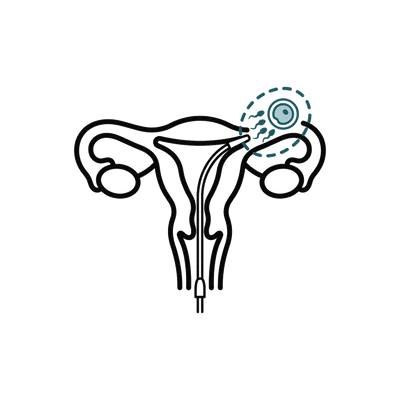
Reciprocal IVF is a fertility treatment that lets both partners in a female couple share a biological role in the same pregnancy by splitting the process between them. One partner provides the eggs, fertilised with donor sperm, and the other carries the pregnancy after an embryo is transferred to her uterus. The medicine matches standard donor-sperm IVF; only the roles are shared, so one becomes the genetic mother and the other the birth mother. Also called shared motherhood or co-IVF, it runs as a synchronised fresh transfer or a freeze-all, with embryos transferred later.
For many couples the appeal is simple: you both want to be part of how your child arrives. Who provides the eggs and who carries is partly medical, guided by each partner's ovarian reserve and uterine health, and partly personal.
Success rates match standard IVF and depend mostly on the egg provider's age, so results vary and pregnancy is never guaranteed in one cycle. Legal recognition of both mothers varies by home country, so speak to a family lawyer where you live. A consultation is the place to weigh your own chances honestly.
It can address a range of concerns, including:
Am I a Good Candidate for Reciprocal IVF?
Candidacy involves two people: the partner providing eggs, the partner carrying, and the legal framework around you both.
The medical assessment shows which arrangement gives your family the best odds.
The egg provider's reserve: AMH and antral follicle count confirm adequate ovarian reserve for stimulation.
The carrier's uterus: A healthy uterus confirmed by ultrasound; fibroids, polyps, or a thin lining need assessing before the plan is set.
Preference matters too: A significant reserve gap between partners may shift the clinical recommendation, but the final decision belongs to you as a couple, and your specialist supports it.
The legal position is still evolving in Thailand and needs checking at home too before you travel.
Married, but eligibility is clinic-dependent: Marriage equality (January 2025) lets same-sex couples marry, but the ART Act amendment extending treatment to them is still pending, so some clinics treat married same-sex couples and others do not. We confirm in writing that a clinic can treat you before any commitment.
Home-country parentage confirmed: Birth registration and recognition of both mothers vary widely between countries; a family lawyer should review your situation before treatment.
Donor sperm arranged early: Selection from screened sperm bank databases can begin remotely before you arrive.
A synchronised cycle asks more of your diary than standard IVF.
3-4 weeks together for a fresh transfer: Both partners attend monitoring in parallel through the synchronised cycle.
Freeze-all splits the trips: The egg provider needs about two weeks; the carrier can return separately for a 7-10 day FET, which also allows PGT-A testing.
Both in treatable health: Each partner is assessed individually, with the egg provider within the clinic's treatable age range.
The shared biology changes the meaning, not the medicine.
Around 41% per transfer: When the egg provider is under 35; her age and reserve set the ceiling, not the carrier's.
Same risks, shared out: The provider takes the stimulation and retrieval risks; the carrier takes the transfer and pregnancy ones.
One embryo at a time: Single embryo transfer is the standard recommendation to avoid a multiple pregnancy.
Who is not suitable for reciprocal ivf?
- Egg provider with poor or no ovarian reserve (premature ovarian insufficiency, AMH below the stimulatable threshold, or a high basal FSH)
- Egg provider beyond the clinic's treatable age range, typically older than 42 to 45
- Medical conditions in either partner that make ovarian stimulation or endometrial preparation unsafe until treated
- Uterine pathology in the intended carrier until assessed
- A synchronised fresh transfer when the couple cannot attend together, though a freeze-all can split the trips instead
- Home-country parentage rules not yet checked with a family lawyer
- Couples without a legal marriage certificate, required under Thai law
Pricing
How Much Will Reciprocal IVF Cost in Thailand?
What reciprocal ivf costs at accredited hospitals in Thailand, and what your final quote depends on.
Get your exact price
Tell us what you're considering and we'll send a personalised quote from accredited clinics within 24 hours.
Get a Free QuoteTypical prices in Thailand
Typical ranges based on recent hospital quotes. Your exact price depends on the hospital and how complex your case is, and is confirmed at your teleconsultation.
Reciprocal IVF
One partner's eggs are collected and fertilised with donor sperm, and an embryo is transferred to the other partner, who carries the pregnancy.
| Standard reciprocal IVF, per cycle Eggs and donor sperm fertilise together in the dish, with no added laboratory step | $6,000 to $7,500 ฿204,000 to ฿255,000 |
| Reciprocal IVF with ICSI, per cycle A single donor sperm is injected into each mature egg, for a thawed donor sample | $7,500 to $9,000 ฿255,000 to ฿306,000 |
| Reciprocal IVF with PGT-A, per cycle Cells biopsied from each embryo and screened for chromosome number, with transfer in a later cycle | $9,000 to $10,800 ฿306,000 to ฿367,200 |
Typically not included
- Donor sperm, meaning the vial plus the bank's screening, quarantine and shipping charges, which follows the bank and donor you choose
- Medication for both partners, the egg provider's stimulation drugs and trigger and the carrier's oestrogen and progesterone, priced once protocols are set
- Any further frozen embryo transfer beyond the one covered above, including the carrier's preparation, monitoring and the transfer itself
- Vitrification of embryos not transferred, plus the annual storage fee to keep them
- The pre-treatment workup for both partners, meaning hormone and AMH bloods, infectious disease screening and ultrasound of the carrier's uterus
- Hospital treatment of a complication, such as admission for ovarian hyperstimulation syndrome after retrieval
Get your exact price
Tell us what you're considering and we'll send a personalised quote from accredited clinics within 24 hours.
Hospitals Trusted for Reciprocal IVF
From internationally accredited flagships to dedicated specialist hospitals, these are the kinds of facilities where international patients have this procedure.

Jetanin Hospital
Specialist IVF hospital near BTS Chit Lom, founded 1995, with in-house genetic testing and JCI and RTAC accreditation.
View hospital profile
BNH Hospital
Mid-sized hospital founded in 1898, known for women's health, orthopaedics, and spine care.
View hospital profile
SAFE Fertility Center
RTAC-accredited IVF clinic in Gaysorn Amarin by BTS Chit Lom, founded 2007, with in-house genetic testing. Not JCI accredited.
View hospital profile
Tell Us What You Need. We Do the Rest.
Share what you're considering and we'll come back with surgeon options, pricing, and a clear plan.
- Real hospital pricing with zero markup
- Matched with a specialist experienced in your specific procedure
- Full coordination from consultation to recovery


Trusted by patients worldwide
The complete guide to Reciprocal IVF in Thailand
Everything below is for readers who want the full detail: costs broken down, types and techniques, recovery, risks and safety, and planning your trip.
Reciprocal IVF Clinics in Thailand
Reciprocal IVF requires a clinic experienced in coordinating two parallel treatment tracks. Here is what to look for.
Leading Fertility Clinics in Bangkok
Our partner clinics have experience with reciprocal IVF and LGBTQ+ family-building. They operate dedicated fertility laboratories with the capacity to manage synchronised cycles, and their coordination teams are accustomed to handling the additional scheduling complexity that reciprocal IVF involves.
Experienced Specialists
The fertility specialists at our partner clinics manage all aspects of reciprocal IVF, from assessing both partners and recommending the optimal egg provider/carrier arrangement, through cycle synchronisation, to transfer and follow-up. They are board-certified reproductive endocrinologists with specific experience in diverse family-building pathways.
What to Look for in a Clinic
Ask whether the clinic has specific experience with reciprocal IVF, as not all fertility centres do, even if they offer standard IVF. Confirm they can coordinate synchronised cycles for both partners. Check their approach to LGBTQ+ patients; professionalism and respect should be evident from your first interaction. And confirm they have access to reputable sperm bank databases with a diverse donor pool.
Reciprocal IVF Results and Outcomes
Reciprocal IVF achieves the same clinical outcomes as standard IVF. The shared biological connection is what makes it meaningful beyond the numbers.
Typical Reciprocal IVF Success Rates
Pregnancy rates are equivalent to standard IVF, with around 41% per embryo transferred for egg providers under 35.1 The fact that different partners provide the egg and carry the pregnancy does not affect the success rate. What matters is the egg provider's age and ovarian reserve, the embryo quality, and the carrier's uterine environment.
What Makes Reciprocal IVF Unique
The clinical outcome is the same as standard donor sperm IVF. What is unique is the emotional significance: one partner is the genetic mother and the other is the birth mother. Both share a direct biological role in creating your family. For many couples, this shared experience is what distinguishes reciprocal IVF from other pathways to parenthood.
Reciprocal IVF Cost in Thailand
Average Cost of Reciprocal IVF
A full reciprocal IVF cycle in Thailand costs between $6,000 and $10,800. This covers treatment for both partners: the egg provider's stimulation, monitoring, and retrieval, plus the gestational carrier's endometrial preparation and embryo transfer. Donor sperm, medication, genetic testing, and embryo freezing are typically additional.
Cost Breakdown
The cost combines two treatment tracks. The egg provider's portion includes specialist consultations, ovarian stimulation monitoring, and egg retrieval under sedation. The gestational carrier's portion covers endometrial preparation, monitoring, and embryo transfer. Laboratory fees cover fertilisation (ICSI), embryo culture, and any advanced techniques. Donor sperm, medication for both partners, and genetic testing are quoted separately.
What Affects the Price?
Whether you choose a synchronised fresh transfer or a freeze-all approach affects the total. Freeze-all cycles add embryo freezing costs but allow PGT-A testing. Donor sperm costs vary depending on the sperm bank and donor selection. Medication costs depend on the stimulation protocol for the egg provider and the preparation protocol for the carrier. If both partners complete their portions during a single trip, travel costs are lower.
Thailand vs International Price Comparison
Reciprocal IVF in Thailand costs 50–70% less than equivalent treatment in the US ($15,000–$27,000), Australia (A$13,200–A$24,000), and UK (£12,000–£21,000). Because the procedure involves two treatment tracks, the absolute savings in Thailand are among the highest of any fertility procedure, often $10,000 or more compared to home.
Reciprocal IVF vs Donor-Sperm IUI
The simpler, less-intensive route for a female couple is donor-sperm IUI, where screened donor sperm is placed directly into one partner's uterus around ovulation, often in a natural or lightly stimulated cycle. It avoids ovarian stimulation, egg retrieval, and the laboratory stage entirely, so it is quicker, cheaper, and a reasonable first step when the partner who wants to carry also has good ovarian reserve and healthy fallopian tubes.
The limit is that IUI involves only one partner biologically. The same woman provides the egg and carries, so there is no way to split those roles, which is the whole point of reciprocal IVF. Per-cycle success is also lower than IVF and falls with age, so couples often need several attempts, and IUI cannot use PGT-A genetic testing or work around tubal or significant egg-quality issues.
Reciprocal IVF is the right route when you specifically want both partners to share a biological role, one as the genetic mother and one as the birth mother, or when egg quality, tubal factors, or the need for embryo testing mean IUI is unlikely to succeed. That shared-motherhood pathway, and how it is run in Thailand, is what the rest of this page covers.
Types of Reciprocal IVF
The main decision is whether to synchronise both partners' cycles for a fresh transfer or to freeze all embryos and transfer later. Each approach has practical advantages depending on your schedule and clinical priorities.
Synchronised Fresh Transfer
Both partners' cycles are coordinated simultaneously. The egg provider undergoes stimulation while the gestational carrier prepares her uterine lining. After retrieval and fertilisation, a fresh embryo is transferred within three to five days. This requires both partners in Thailand for the full three to four week cycle.
- Both partners actively involved at the same time
- Single trip covers the entire treatment cycle
- Requires precise hormonal coordination of both cycles
- Best for: couples who can both commit to a full three to four week stay
Freeze-All with Subsequent FET
The egg provider completes stimulation and retrieval first. All embryos are vitrified. The gestational carrier then undergoes endometrial preparation and a frozen embryo transfer, either later in the same trip or on a return visit. This simplifies scheduling and allows PGT-A genetic testing before transfer.
- More flexible scheduling for both partners
- Allows PGT-A genetic testing before transfer
- The gestational carrier can prepare without time pressure
- Best for: couples wanting scheduling flexibility or genetic testing of embryos
Reciprocal IVF Techniques
The clinical pathway involves coordinating two parallel treatment tracks: one for the egg provider and one for the gestational carrier. The logistics are more complex than standard IVF, which is why an experienced team matters.
Cycle Synchronisation Protocol
Hormonal medication is used to align both partners' cycles so that the egg provider's retrieval and the gestational carrier's endometrial readiness coincide. The clinical team manages timing using a combination of oral contraceptives, GnRH agonists, and oestrogen. This coordination is standard practice at high-volume clinics and allows a fresh embryo transfer without freezing.
- Both partners begin medication simultaneously under careful monitoring
- Timing adjustments are made throughout to keep cycles aligned
- Requires both partners to attend monitoring appointments in parallel
- Best for: couples who want a fresh transfer during a single trip
Donor Sperm Selection and Coordination
Donor sperm is selected from accredited sperm bank databases based on your preferences (ethnicity, physical characteristics, blood type, education, and other criteria). Samples are screened, quarantined, and cleared before use. Your coordinator guides you through the selection process and manages all logistics so donor sperm is available on the day of egg retrieval.
- Access to reputable international and local sperm bank databases
- Full medical, genetic, and infectious disease screening of all donors
- Donor selection can begin remotely before you arrive in Thailand
- Best for: all reciprocal IVF cycles; donor sperm is required
ICSI (Intracytoplasmic Sperm Injection)
ICSI fertilises each mature egg by injecting a single donor sperm directly into it, rather than leaving sperm and eggs to fertilise on their own in a dish. Because reciprocal IVF always uses donor sperm, often a single thawed sample on retrieval day, most clinics use ICSI as the default to give the most reliable fertilisation from the sample available. It adds a laboratory step but takes the uncertainty out of how many eggs fertilise.
- A single donor sperm is injected directly into each mature egg
- More predictable fertilisation from a thawed donor sample
- Standard practice in most reciprocal IVF cycles, adding a small laboratory fee
- Best for: making the most of a single donor-sperm sample on retrieval day
PGT-A (Preimplantation Genetic Testing)
PGT-A screens each embryo for the correct number of chromosomes before transfer, so the embryo most likely to implant is chosen and the chance of miscarriage from a chromosomal cause is reduced. A few cells are biopsied from each blastocyst, the embryos are vitrified while results come back, and a screened embryo is transferred in a later FET. It pairs naturally with a freeze-all approach rather than a fresh transfer.
- Screens embryos for chromosomal abnormalities before transfer
- Improves implantation odds and lowers miscarriage risk from chromosomal causes
- Combined with a freeze-all cycle, as embryos are frozen while results return
- Best for: couples choosing freeze-all, older egg providers, or anyone wanting to screen before transfer
Reciprocal IVF Treatment Timeline
Days 1–10 (Egg Provider)
The egg provider begins daily stimulation injections. Monitoring appointments every two to three days track follicle development. Simultaneously, the gestational carrier begins endometrial preparation with oestrogen medication if a synchronised fresh transfer is planned.
Day 10–14 (Egg Retrieval)
A trigger injection is given when follicles are mature. Egg retrieval takes place 34–36 hours later under light sedation, lasting 15–20 minutes. Donor sperm fertilises the eggs via conventional IVF or ICSI. The egg provider rests for the remainder of the day.
Days 14–19 (Embryo Culture)
Embryos are cultured to blastocyst stage over three to five days. The embryology team provides daily updates on fertilisation rates and development. For a freeze-all approach, embryos are vitrified at this point. For a synchronised fresh transfer, the gestational carrier's lining is confirmed at target thickness.
Day 17–21 (Embryo Transfer)
The best embryo is transferred to the gestational carrier's uterus in a painless ten-minute procedure guided by ultrasound. A pregnancy blood test is taken 10–12 days later. Both partners can fly home two to three days after transfer.
When Can You Fly Home?
Both partners can fly two to three days after the embryo transfer. The egg provider can fly the day after retrieval if she is feeling well, though most prefer to wait for the transfer to be complete. If using a freeze-all approach, the egg provider can leave Thailand after retrieval, and the gestational carrier returns separately for FET.
Recovery for the Egg Provider
Egg retrieval recovery is typically straightforward, with mild bloating and fatigue for one to two days. Most egg providers feel back to normal within 48 hours. The provider's role in the cycle is complete once retrieval is done, though she will of course be present for the transfer and pregnancy test as a partner.
Support During the Two-Week Wait
The two-week wait between transfer and pregnancy test is an emotional period for both partners. Your coordinator remains available for questions and support throughout. Continue prescribed progesterone medication as directed. Resume gentle daily activities. The pregnancy blood test can be taken in Thailand or at a local laboratory at home.
Anaesthesia & Sedation
Most of a reciprocal IVF cycle needs no anaesthesia at all. The daily stimulation injections, the monitoring scans, the endometrial preparation, and the embryo transfer itself are all done while you are fully awake. The only step that needs anaesthesia is the egg provider's retrieval, and that is done under light sedation rather than a general anaesthetic, so she is not fully asleep but is relaxed, drowsy, and feels nothing during the fifteen to twenty minute procedure.
The sedation is given and monitored by an anaesthetist throughout, alongside the fertility team performing the retrieval. Because it is light sedation rather than general anaesthesia, recovery is quick: the egg provider rests for the remainder of the day and most feel back to normal within a day or two. The gestational carrier's embryo transfer needs no sedation at all. It is a simple ten-minute procedure guided by ultrasound, much like a smear test, so she stays awake and goes home the same day.
Before the cycle begins, the egg provider has a pre-treatment assessment, including blood work and a review of any medication she takes, so she is cleared as fit for sedation well ahead of retrieval day. Honestly, the discomfort across the whole cycle is mild: some bloating and cramping during stimulation, and nothing felt during retrieval or transfer themselves. Any soreness afterwards settles quickly and is easily managed with simple pain relief.
Risks and Safety of Reciprocal IVF
Reciprocal IVF carries the same risks as standard IVF, distributed between two partners. The egg provider faces stimulation and retrieval risks, while the gestational carrier faces transfer and pregnancy risks.
- Ovarian hyperstimulation syndrome in the egg provider (manageable with careful monitoring)4
- Mild bloating or discomfort during stimulation for the egg provider
- Egg-retrieval complications for the provider: bleeding at the follicle puncture site, pelvic infection after retrieval, and rarely injury to nearby structures such as bowel, bladder, or blood vessels3,4
- Cycle cancellation or no embryo to transfer: a poor ovarian response, failed fertilisation, or no embryos reaching transfer-quality blastocyst
Both partners are assessed individually before treatment begins. Single embryo transfer is the standard recommendation to avoid multiple pregnancy. Thai clinics offering reciprocal IVF follow the same safety protocols as their standard IVF programmes, with additional coordination protocols for managing two patients in parallel.
Is Reciprocal IVF Safe in Thailand?
Clinically, yes. The medical process is identical to standard IVF with donor sperm, and Thai clinics offering it are licensed fertility centres with experienced laboratory and clinical teams handling the added complexity of two patients in parallel. Safety and eligibility are separate questions, though: whether a clinic can treat a same-sex couple depends on the pending ART Act position described below, not on clinical safety.
Legal Considerations
The legal position for same-sex couples is still evolving. The Marriage Equality Act came into force in January 2025, but it did not by itself open assisted reproduction to same-sex couples: Thailand's ART Act still frames eligibility around a husband and wife and the amendment to align it with marriage equality has not yet passed. Access is therefore clinic-dependent, and we only proceed once a clinic confirms in writing it can treat you. Parentage recognition and birth registration in your home country are a separate matter that depends on local law, so we strongly recommend consulting a family lawyer there before proceeding.
How to Choose Who Provides Eggs and Who Carries
This is both a personal and a medical decision. Both partners' ovarian reserve (AMH, antral follicle count) and uterine health are assessed to determine the optimal arrangement. Typically, the partner with better ovarian reserve provides the eggs and the partner with a healthy uterus carries. But personal preferences matter equally. Your specialist will present the clinical picture and support whatever decision you make as a couple.
Planning Your Trip to Thailand for Reciprocal IVF
Reciprocal IVF requires 18–25 days in Thailand if both partners attend for a synchronised cycle. Here is how to plan the logistics.
How Long to Stay in Thailand
For a synchronised fresh transfer, both partners should plan for three to four weeks. The egg provider needs two weeks for stimulation and retrieval. The gestational carrier's endometrial preparation runs in parallel. Transfer happens around day 17–21, and both can fly home two to three days later. For a freeze-all approach, the egg provider needs about two weeks, and the carrier returns separately for a 7–10 day FET cycle.
What Is Included in Your Treatment
Your quote covers treatment for both partners: consultations, the egg provider's stimulation and monitoring, egg retrieval, embryo culture, the carrier's endometrial preparation, and embryo transfer. Donor sperm, medication, genetic testing, and embryo freezing are quoted separately. Your coordinator manages all scheduling and logistics for both partners.
Practical Considerations for Couples
Both partners will have clinic appointments, though the egg provider's schedule is busier during the stimulation phase. Between appointments, Bangkok offers everything you need for a comfortable stay. Many couples treat the trip as an experience they share together, which aligns with the spirit of the treatment itself.
Related Procedures
Other procedures that address similar goals or conditions, in case one of them is a closer fit for you.
Planning your treatment in Thailand
Independent guides to help you weigh the decision, before you commit to anything.
Common Questions About Reciprocal IVF in Thailand
Everything you need to know before your treatment

Medical References
Keep researching with AI
Open this guide in your AI assistant to dig deeper and ask the questions it didn't answer.
Opens in a new tab with this guide already loaded.
Medical disclaimer: Content on this site is provided for informational purposes and should not be treated as medical advice. Outcomes, timelines, and eligibility differ from person to person. Consult a qualified medical professional before making any decisions about surgery or treatment.
Ready to Get Started?
Speak with our care coordinators for a free, no-obligation consultation and personalised quote for your reciprocal IVF cycle in Thailand.
Get a Free QuoteIVF & Assisted Reproduction