Rhinoplasty in Thailand Your guide to cost, top specialists & hospitals
The nose anchors the face. When it fits, everything around it makes sense, forehead, cheeks, chin, all of it.
What Is Rhinoplasty?
Also known as: Nose Job · Rhinoplasty
Gender-affirming rhinoplasty is surgery that reshapes the nose to match your gender identity by altering its bone, cartilage and skin. A feminising plan usually narrows the bridge, lowers a dorsal hump and rotates the tip slightly upward; a masculinising plan does the reverse, straightening or widening the bridge, keeping height and strengthening the tip. The techniques match cosmetic rhinoplasty, but the direction differs, and the changes are structural and lasting. It is usually done under general anaesthesia in about 1.5 to 3 hours.1
The real difference is context. Your nose is planned in relation to your forehead, cheeks and chin, especially if those have been or will be reshaped. So your surgeon reads your whole face, not the nose alone, and builds around how you want to be seen.
Results emerge slowly. You see a preview when the splint comes off at day 7, but the nose keeps settling for 6 to 12 months, and the tip is always last to refine2,1. Outcomes vary from person to person, so the consultation is the place to talk honestly about what your anatomy will and will not allow.
It can address a range of concerns, including:
Am I a Good Candidate for Rhinoplasty?
Good candidates have fully developed nasal structures and a clear sense of how the nose should sit within their wider transition plan.
Gender-affirming rhinoplasty is planned in relation to the forehead, cheeks, and chin, not in isolation.
Sequencing matters: If forehead or jaw contouring is planned for later, nasal proportions are best decided with the full FFS or FMS plan in view.
Combining works well: Having rhinoplasty in the same session as other facial work lets the surgeon balance the nose against simultaneous changes.
Direction confirmed: Feminising and masculinising goals change the entire surgical plan, so surgeons want your intended outcome clearly established at consultation.
The nose must be assessed as a functional structure before any aesthetic plan is agreed.
Fully developed structures: Nasal bone and cartilage growth should be complete before reshaping.
Breathing assessed: An unaddressed deviated septum or chronic breathing difficulty is evaluated alongside the aesthetic goals and can be corrected in the same operation.
Previous rhinoplasty: Scar tissue and existing structural changes mean revision cases need a separate assessment before a plan is offered.
The operation runs 1.5-3 hours under general anaesthesia with one night in hospital.
Good general health: Fit for general anaesthesia with no unmanaged conditions.
Smoking: Stopping at least four weeks before surgery is required, since nasal tissues bruise easily and nicotine impairs healing.
Medication check: Aspirin, ibuprofen, and blood-thinning medications are avoided for two weeks beforehand, and hormone therapy is disclosed at consultation.
Rhinoplasty results emerge slowly, and good candidates accept that timeline up front.
A slow reveal: The splint comes off at day 7 as a preview; the settled result takes 6-12 months, with the tip refining last.
Thicker skin settles slower: Patients with thicker nasal skin should expect a longer settling period before tip definition shows.
Revision judged late: Any decision about revision waits at least 12 months, because early concerns frequently resolve as swelling clears.
Who is not suitable for rhinoplasty?
- Nasal structures not yet fully developed
- Unassessed deviated septum or chronic breathing difficulty
- Previous rhinoplasty without a revision assessment first
- Smokers unwilling to stop at least four weeks before surgery
- Isotretinoin (Accutane) use within the past 6 to 12 months, which impairs skin healing
- Unmanaged bleeding or clotting disorder
- Active infection of the nasal or surrounding facial skin at the planned surgical site
Pricing
How Much Will Rhinoplasty Cost in Thailand?
What rhinoplasty costs at accredited hospitals in Thailand, and what your final quote depends on.
Get your exact price
Tell us what you're considering and we'll send a personalised quote from accredited hospitals within 24 hours.
Get a Free QuoteTypical prices in Thailand
Typical ranges based on recent hospital quotes. Your exact price depends on the hospital and how complex your case is, and is confirmed at your teleconsultation.
Rhinoplasty
The bone and cartilage that shape the nose are reshaped to alter its width, bridge height and tip, worked either through the nostrils or a small external incision.
| Closed rhinoplasty 1 night Worked through the nostrils for tip refinement or a small bridge change | $2,000 to $2,500 ฿68,000 to ฿85,000 |
| Open rhinoplasty 1 night A small incision under the nose allows fuller reshaping of bridge and tip | $2,500 to $3,100 ฿85,000 to ฿105,400 |
| Revision rhinoplasty 1 night Correcting an earlier operation, usually needing grafting and longer in theatre | $3,000 to $3,600 ฿102,000 to ฿122,400 |
Typically not included
- Cartilage grafting harvested from your own rib for bridge augmentation or a compromised revision, adding a second surgical site and operating time
- Correcting a deviated septum or other functional breathing work carried out alongside the reshaping
- Treatment of any complication that needs a return to theatre
- Hospital nights beyond the single night included, if your recovery needs longer on the ward
- Blood tests and the pre-operative assessment that clears you for anaesthesia
Get your exact price
Tell us what you're considering and we'll send a personalised quote from accredited hospitals within 24 hours.
Hospitals Trusted for Rhinoplasty
From internationally accredited flagships to dedicated specialist hospitals, these are the kinds of facilities where international patients have this procedure.
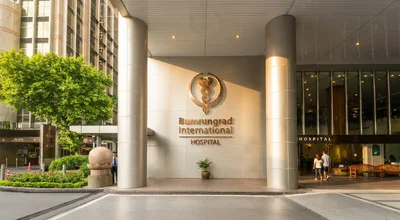
Bumrungrad International Hospital
Full-service hospital with over 1,200 physicians treating 520,000+ international patients a year.
View hospital profile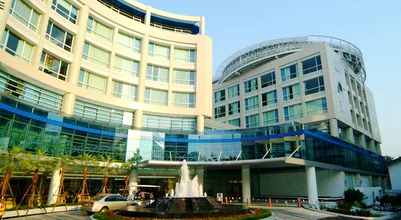
Bangkok Hospital
BDMS flagship hospital campus with standalone heart, cancer, and neuro-orthopaedic hospitals.
View hospital profile
Samitivej Sukhumvit Hospital
Full-service hospital known for paediatrics, home to Thailand's first private children's hospital.
View hospital profile
Tell Us What You Need. We Do the Rest.
Share what you're considering and we'll come back with surgeon options, pricing, and a clear plan.
- Real hospital pricing with zero markup
- Matched with a specialist experienced in your specific procedure
- Full coordination from consultation to recovery


Trusted by patients worldwide
The complete guide to Rhinoplasty in Thailand
Everything below is for readers who want the full detail: costs broken down, types and techniques, recovery, risks and safety, and planning your trip.
Gender-Affirming Rhinoplasty Surgeons & Clinics in Thailand
Rhinoplasty results depend heavily on surgeon skill and judgment. Here is what to look for when choosing.
Leading Hospitals in Bangkok
Our partner hospitals are JCI-accredited facilities with dedicated plastic surgery departments and full imaging capabilities. Rhinoplasty is performed in a proper operating theatre with anaesthetic support, not a clinic procedure room. When rhinoplasty is part of an FFS session, these hospitals have the capacity for extended operating times and overnight stays.
Experienced Gender-Affirming Rhinoplasty Surgeons
Our partner surgeons are board-certified and have specific experience in gender-affirming nasal surgery. They understand the nuanced differences between feminizing and masculinizing nasal proportions and how the nose needs to relate to the rest of the face, particularly the forehead and chin. Several have trained internationally before returning to practise in Bangkok's high-volume environment.
What to Look for in a Surgeon
Ask for before-and-after photos of gender-affirming rhinoplasty specifically, not just cosmetic cases. Check board certification and ask about rhinoplasty case volume. If you are having rhinoplasty as part of FFS, confirm that the surgeon plans the nose in relation to the other procedures rather than treating it as an isolated step. Clear communication about what is achievable with your nasal anatomy is a reliable indicator of surgeon quality.
Understanding Your Results
Gender-affirming rhinoplasty results are permanent and emerge gradually over months. Here is what to expect.
Typical Results
Feminizing rhinoplasty produces a narrower, softer nose with a refined tip and reduced dorsal prominence. Masculinizing rhinoplasty produces a stronger, more angular nose with maintained or increased dorsal height. In both cases, the result should look proportionate to the rest of the face. The changes are structural and permanent, though the nose will age naturally over time.
What Results Can You Expect?
A noticeable difference is visible once the splint comes off at day 7, but this is a preview. The actual result emerges over 6–12 months as swelling resolves, the tip always settles last. Surgeons use clinical photography during consultation to discuss what is achievable, and some offer 3D simulation. The consultation is the time to ask direct questions about limits and likely outcomes.
Gender-Affirming Rhinoplasty Cost in Thailand
Average Cost of Gender-Affirming Rhinoplasty
Gender-affirming rhinoplasty in Thailand typically costs between $2,000 and $3,600, depending on whether it is a standalone procedure or combined with FFS, and whether an open or closed approach is used. Standalone cases sit at the lower end. Combined cases add marginally to the overall FFS cost because the rhinoplasty component shares anaesthesia and facility time.
Cost Breakdown
The total includes the surgeon's fee, anaesthesia, hospital stay (one night), operating theatre, nasal splint, post-operative medications, and follow-up appointments. If cartilage grafting from rib is required, this increases the cost due to the additional surgical site and operating time.
What Affects the Price?
Open rhinoplasty costs more than closed because it takes longer and involves more structural work. Masculinizing rhinoplasty with cartilage grafting costs more than feminizing refinement. Revision cases are more expensive than primary procedures. Whether the rhinoplasty is standalone or bundled with FFS also affects where the cost falls.
Thailand vs International Price Comparison
Gender-affirming rhinoplasty in Thailand costs 40–60% less than equivalent procedures in the US ($6,000–$11,000), Australia (A$5,600–A$10,000), and UK (£5,000–£9,000). The savings are driven by Thailand's lower operating costs, not by any difference in surgical standards. Our partner hospitals hold JCI accreditation and surgeons hold board certifications equivalent to those in your home country.
Surgical vs Non-Surgical Approaches
Some nasal changes can be approached without surgery. Non-surgical, or liquid, rhinoplasty uses temporary hyaluronic acid filler to camouflage a small dorsal bump, lift a drooping tip, or smooth a minor irregularity in around fifteen minutes, with no downtime. For transmasculine patients in particular, careful filler placement can also add height or projection to the bridge, the same direction a masculinising plan moves in, which makes it a genuine way to trial a stronger profile before committing.
The limits are real, though. Filler only adds volume, so it can build a nose up but never make it smaller, narrow a wide bridge, or refine the tip downward, which is most of what a feminising plan needs. The result is temporary, fading over roughly twelve to eighteen months, and repeated filler in the nose carries its own risks, so it is not a lasting substitute for structural change.
For a feminising result, or any change that means a smaller, narrower nose or a reshaped tip, surgical rhinoplasty is the route, since only surgery can remove and restructure bone and cartilage. The same is true for a masculinising result that needs a permanent, integrated change rather than maintained filler, and that is what the rest of this page covers.
Types of Gender-Affirming Rhinoplasty
Whether the goal is feminization or masculinization changes the entire surgical plan. The techniques are the same, the direction and intent are different.
Feminizing Rhinoplasty
Narrows the bridge, reduces dorsal height, refines and rotates the tip upward, and may reduce nostril width. The overall effect is a smaller, softer nose that complements a feminized forehead and jawline. Most commonly performed as part of an FFS session.
- Bridge narrowing and dorsal hump reduction for a smoother profile
- Tip rotation and refinement for a more delicate, upturned appearance
- Alar reduction where nostrils are disproportionately wide
- Best for: transfeminine patients wanting a softer, refined nasal profile
Masculinizing Rhinoplasty
Straightens or widens the bridge, maintains or increases dorsal height, and strengthens tip projection. The goal is a nose that looks proportionate to a broader jaw and more prominent brow, structurally stronger, not delicate.
- Bridge widening or straightening for a more angular frontal view
- Dorsal height preserved or augmented rather than reduced
- Tip projection strengthened for a more defined profile
- Best for: transmasculine patients wanting a stronger, more angular nose
Rhinoplasty Combined with FFS/FMS
When rhinoplasty is performed alongside forehead contouring, jaw reshaping, or chin modification, the surgeon adjusts the nose in real time relative to the other changes happening in the same session. This produces better overall facial harmony than staging the nose separately.
- Surgeon assesses nasal balance against other simultaneous changes
- Single anaesthetic and consolidated recovery period
- Avoids the risk of the nose looking mismatched after other work settles
- Best for: patients having multiple facial procedures who want cohesive results
Rhinoplasty Techniques
Technique depends on what needs changing and how much restructuring is involved. Open and closed approaches both have clear indications, and the choice is made based on anatomy rather than preference.
Open Rhinoplasty
A small incision across the columella allows the surgeon to lift the nasal skin and work with full visibility of the cartilage and bone framework. Preferred for complex reshaping, significant tip work, grafting, structural modification, or when the rhinoplasty is part of a broader FFS session.
- Full visualisation for precise sculpting of cartilage and bone
- Essential for complex tip restructuring and grafting
- Allows the surgeon to assess symmetry directly during surgery
- Best for: significant reshaping, tip work, or rhinoplasty combined with FFS
Closed Rhinoplasty
All incisions inside the nostrils with no external cuts. The surgeon reshapes bone and cartilage through the nasal openings. Suited for less extensive modifications, hump reduction, subtle bridge narrowing, minor refinements, where full structural access is not required.
- No visible external scarring anywhere
- Shorter procedure time and faster initial recovery
- Less tip swelling than the open approach
- Best for: straightforward dorsal and bridge refinements without major tip work
Cartilage Grafting
When additional structural support or augmentation is needed, cartilage can be harvested from the septum, ear, or rib and used to rebuild, project, or support the nose. This is particularly relevant in masculinizing rhinoplasty where bridge augmentation is the goal, or in revision cases where support structures are compromised.
- Septum and ear cartilage used for minor augmentation or support
- Rib cartilage used for significant bridge building or structural reconstruction
- Integrates naturally with existing nasal framework
- Best for: masculinizing augmentation, structural support, or revision rhinoplasty
Piezo Rhinoplasty (Ultrasonic)
Piezo uses ultrasonic energy to reshape and narrow the nasal bones precisely while sparing the surrounding soft tissue. That control matters in feminizing rhinoplasty, where narrowing a broad bony bridge is often central to the plan, and the gentler handling of bone tends to mean less bruising and an easier early recovery. Not available everywhere, but the leading Bangkok hospitals have it.
- Reshapes and narrows the bony bridge with fine, controlled cuts
- Less bruising and swelling than a traditional osteotomy
- Available at Thailand's leading plastic surgery hospitals
- Best for: feminizing cases that need bridge narrowing with minimal downtime
Gender-Affirming Rhinoplasty Recovery Timeline
Days 1–3
Swelling and bruising concentrate around the nose and under the eyes. A nasal splint protects and supports the new shape. Breathing through the mouth is common initially. Your coordinator checks in daily and ensures you are comfortable at your recovery accommodation.
Day 7
The nasal splint is removed at your follow-up, revealing the initial new shape.1 Most bruising has faded. Swelling is still present but improving daily. The refined contour is visible as a preview, though the nose will continue to evolve over months.
Weeks 2–4
Swelling subsides progressively and the nose settles into a more defined shape. Light activities, desk work, and social engagements can resume. Avoid contact sports, heavy lifting, and anything risking impact to the nose. Keep glasses off the bridge.
Months 3–12
The nose continues to refine as deep swelling resolves and nasal skin redrapes over the new framework. Most of the gross swelling has settled by now, but the finer detail keeps emerging and tip definition sharpens across the full 6–12 months, particularly for patients with thicker skin. The settled, final shape is judged at 12 months rather than earlier.
When Can You Fly After Rhinoplasty?
Most patients can fly 10–14 days after surgery, once the splint has been removed and the surgeon confirms healing is on track. Cabin pressure at cruising altitude is safe at this stage. Mild swelling may temporarily increase during the flight due to reduced movement, this settles within a day or two of landing.
When Can You Return to Work and Exercise?
Desk work can resume 1–2 weeks after surgery, once the splint is off and initial bruising has faded. Light walking is encouraged from day one. Gym workouts and cardio should wait until 4–6 weeks. Contact sports and anything with risk of impact to the nose should be avoided for at least 3 months.
When Will You See Final Results?
You will see a clear improvement once the splint comes off at day 7, but that is a rough preview. Most visible swelling resolves within 4–6 weeks, giving you a good sense of the new profile.2 The tip takes longest, subtle refinement continues for 6–12 months, and patients with thicker skin should expect a longer settling period.
Anaesthesia for Gender-Affirming Rhinoplasty
Gender-affirming rhinoplasty is performed under general anaesthesia, so you are fully asleep and feel nothing during the operation. A consultant anaesthetist stays with you throughout and monitors you continuously, which is standard at the JCI-accredited hospitals we work with. When the rhinoplasty is part of a wider FFS or FMS session, everything is done under a single general anaesthetic, so the nose and your other facial procedures are completed in one operation rather than separate trips to theatre.
Before you are cleared for surgery you have a pre-operative assessment, including blood tests and a review of your medical history and any medications you take. If you are on hormone therapy, mention it here, as it is noted alongside any blood-thinning medication you may need to pause beforehand. This is also the point where your surgeon and anaesthetist confirm you are fit for the length of operation your plan involves.
You feel nothing while you are asleep, and the discomfort once you wake is usually mild. Most patients describe pressure, congestion, and a blocked feeling around the nose and eyes rather than sharp pain, and it is well controlled with the medication your surgeon prescribes. You spend one night in hospital so your care team can keep you comfortable and check on you before you move to your recovery accommodation.
Risks and Safety of Gender-Affirming Rhinoplasty
Rhinoplasty is one of the most commonly performed cosmetic procedures worldwide with a strong safety profile. As with all surgery, there are risks you should understand before going ahead.
- Swelling and bruising around the nose and under the eyes (expected and temporary)
- Temporary numbness or reduced sensation at the nasal tip
- Minor asymmetry or contour irregularity requiring assessment
- Temporary breathing changes due to internal swelling (usually resolves)
- Infection at the incision site (rare)
- Need for revision surgery (uncommon with experienced surgeons)
- Prolonged tip swelling, especially with thicker skin
- Temporary or, rarely, permanent reduction or loss of smell (anosmia)1,2
- Saddle nose deformity or bridge collapse from over-resection or graft failure, mainly in augmentation and revision cases
- Septal perforation (a hole in the wall between the nostrils)2,1
The nose is a complex three-dimensional structure, and gender-affirming rhinoplasty requires balancing aesthetic goals with functional integrity. A thorough assessment of nasal anatomy, skin thickness, cartilage strength, septum position, and airway, is completed before surgery, and every relevant risk is discussed before you confirm.
Is Gender-Affirming Rhinoplasty Safe in Thailand?
Yes, rhinoplasty at JCI-accredited hospitals by board-certified surgeons in Thailand meets the same safety standards as the US, UK, and Australia. Our partner surgeons have specific experience in gender-affirming nasal surgery and understand the technical differences between feminizing and masculinizing approaches. The complication profile is comparable to published international figures.
How to Reduce Risks
Choose a surgeon with specific rhinoplasty and gender-affirming experience, not just general cosmetic credentials. Ensure a thorough pre-operative nasal assessment is part of your consultation, including airway evaluation. Stop smoking at least four weeks before surgery, as nasal tissues bruise easily and nicotine impairs healing. Avoid blood-thinning medications for two weeks prior.
When Is Revision Needed?
Revision rhinoplasty may be considered if persistent asymmetry, breathing issues, or an aesthetic outcome that does not match the agreed plan remains after swelling has fully resolved. The key is to wait at least 12 months before making that judgment, tip swelling resolves slowly and early concerns frequently resolve on their own.
Planning Your Trip to Thailand for Rhinoplasty
Most patients need 10–14 days in Thailand for rhinoplasty. Here is how to plan your trip.
How Long to Stay in Thailand
Plan for 10–14 days minimum. This covers consultation and pre-operative assessment (day 1–2), the procedure, one night in hospital, the first week of recovery including daily check-ins, splint removal at day 7, and a final follow-up before you fly home. If rhinoplasty is part of an FFS plan, the stay extends to 14–21 days.
What's Included in a Medical Trip
Your coordinator handles hospital transfers, scheduling, and all follow-up appointments. Surgical quotes cover surgeon fees, anaesthesia, hospital stay, and aftercare. Flights and accommodation are arranged separately, but your coordinator can recommend nearby hotels and assist with bookings.
Recovery in Bangkok
Bangkok is the practical choice. You are close to the hospital for follow-ups, and if anything unexpected arises, your surgical team is minutes away. After your final follow-up, you can consider moving elsewhere for relaxation, but during the critical first 10 days, proximity to your surgeon matters.
Related Procedures
Other procedures that address similar goals or conditions, in case one of them is a closer fit for you.
Planning your treatment in Thailand
Independent guides to help you weigh the decision, before you commit to anything.
Common Questions About Gender-Affirming Rhinoplasty
Everything you need to know before your procedure

Medical References
Keep researching with AI
Open this guide in your AI assistant to dig deeper and ask the questions it didn't answer.
Opens in a new tab with this guide already loaded.
Medical disclaimer: Content on this site is provided for informational purposes and should not be treated as medical advice. Outcomes, timelines, and eligibility differ from person to person. Consult a qualified medical professional before making any decisions about surgery or treatment.
Ready to Get Started?
Speak with our care coordinators for a free, no-obligation consultation and personalised quote.
Get a Free Quote







What patients say
In their own words, from people we've helped plan treatment in Thailand.
“I was on an NHS waiting list for 18 months. With you I had my hip done five weeks after my first email, and I was playing golf again by spring.”
“My daughter came out with me and Bea got her a room right next to mine. Having her close by helped a lot in the first few days after surgery.”
“...Nick spent a long time on the phone going through the three hospitals with me, the surgeons, the costs, how long I’d need to stay. I felt like he actually listened.”
“Our coordinator met us at the hospital on the first day and translated anything we didn’t understand. We never felt lost, and every appointment was booked before we even arrived.”
“Very thorough health check, and the doctor went through all my results with me the same afternoon. It was all done in one day. Will be booking again next year.”
“...sent all my documents to my GP at home without me even asking. Little things like that mean a lot when you’re dealing with a hospital in another country.”
“My wife and I felt supported from the first phone call right up to my last follow-up. Having someone to ask whenever we had a question took a lot of pressure off.”
“Quick, simple and well organised. The hospital was excellent, I was in and out the same morning, and Mint had a driver waiting to take me back to my hotel...”


