Forehead & Brow Bone Contouring in Thailand Your guide to cost, top specialists & hospitals
The brow ridge is the feature people rarely identify consciously, but it is often the reason a face reads the way it does.
What Is Forehead & Brow Bone Contouring?
Also known as: Forehead Feminization · Frontal Bone Contouring · Forehead Cranioplasty
Forehead and brow bone contouring is craniofacial surgery that softens the upper face by reshaping the frontal bone above the eyes. The brow ridge, or bossing, is reduced and the forehead recurved into a smoother line. Where the prominence is heavy, the surgeon removes, thins, and resets the front wall of the frontal sinus, the cavity behind the brow, fixing it with titanium screws. The changes are lasting, always done under general anaesthesia in two to three hours, often through a hairline incision shared with a brow lift.
The brow ridge quietly shapes how the upper face reads. If your eyes have long looked shadowed, or your expression harder than you feel, this is often the area that explains it. Your surgeon plans around your own anatomy, guided by a CT scan.
The smoother shape shows as swelling settles from week two, but the final contour takes four to six months, and some forehead numbness for months afterward is common. Most people choose this within a wider facial feminization plan, though it works well alone. A consultation and CT scan show what your forehead can become.
It can address a range of concerns, including:
Am I a Good Candidate for Forehead & Brow Bone Contouring?
Suitability rests less on how heavy your brow looks and more on what a CT scan shows behind it.
A pre-operative CT scan of the frontal sinus is mandatory, because the thickness of the sinus wall decides which technique is safe for you.
Type I or Type III: A thick sinus wall with mild bossing allows burring alone; a thin wall or heavy bossing requires full reconstruction of the anterior sinus wall.
No sinus disease: Chronic sinusitis, frontal sinus infection, or previous sinus surgery must be cleared before the sinus wall is opened.
Imaging, not photographs: This is craniofacial surgery, so candidacy is judged from your scan rather than from how the brow looks externally.
Surgeons look for brow and forehead features that genuinely respond to bone work.
Heavy brow ridge: Prominent bossing that casts shadows over the eyes and creates a hard resting expression.
Flat or sloped forehead: A profile that reads as masculine and that burring or reconstruction can convert to a smooth, convex curve.
Deep-set eyes: Where excessive brow projection makes the eyes appear recessed.
Upper face mismatch: A brow that feels disconnected from feminised lower features, often the dominant cue in how the face reads.
This is a 2-3 hour operation under general anaesthesia with an overnight hospital stay, so general fitness matters.
Fit for general anaesthesia: Good overall health with no conditions that complicate a longer craniofacial procedure.
Smoking: Stopping at least four weeks before surgery is required, as nicotine impairs bone and soft-tissue healing.
Hormone therapy disclosed: Any adjustments around surgery are discussed with the surgical team beforehand.
10-14 days in Thailand: Enough time for imaging, surgery, suture or staple removal, and a clearance check.
The result is permanent, but the route to seeing it takes patience.
Months of numbness: Forehead numbness after the coronal incision is common and expected; most patients regain full feeling within six to twelve months.
A settling timeline: Swelling recedes from week two, but the final contour emerges over four to six months.
Early bruising: Swelling around the eyes peaks at day two; most patients feel comfortable in public from weeks two to three.
Who is not suitable for forehead & brow bone contouring?
- Active frontal sinus disease or infection until treated
- Chronic sinusitis or previous sinus surgery not yet cleared
- Smokers unwilling to stop at least four weeks before surgery
- Unwilling to accept several months of forehead numbness
- Proceeding without a pre-operative CT scan of the frontal sinus
- History of VTE or thrombophilia, or oestrogen therapy, not reviewed for perioperative clot risk
Pricing
How Much Will Forehead & Brow Bone Contouring Cost in Thailand?
What forehead & brow bone contouring costs at accredited hospitals in Thailand, and what your final quote depends on.
Get your exact price
Tell us what you're considering and we'll send a personalised quote from accredited hospitals within 24 hours.
Get a Free QuoteTypical prices in Thailand
Typical ranges based on recent hospital quotes. Your exact price depends on the hospital and how complex your case is, and is confirmed at your teleconsultation.
Forehead & Brow Bone Contouring
The bone ridge above the eyes is reduced and the forehead reshaped into a smooth curve, reached through an incision in or along the hairline.
| Brow bone shaving 1 night Ridge burred down without opening the sinus, for mild prominence where the bone wall is thick | $4,000 to $5,000 ฿136,000 to ฿170,000 |
| Forehead reconstruction (bone flap setback) 1 night Front wall of the sinus lifted out, reshaped and reset with titanium, for heavy bossing | $5,200 to $6,500 ฿176,800 to ฿221,000 |
| Forehead contouring with hairline lowering 1 night Bone work plus the hairline brought forward through one incision, for a high hairline alongside the ridge | $6,000 to $7,200 ฿204,000 to ฿244,800 |
Typically not included
- Revision or touch-up surgery, if a contour irregularity or asymmetry needs correcting once swelling has fully settled
- Any further procedure in the same session, such as a brow lift or work on the jaw, chin or nose
- Treatment of a complication, including surgery for a frontal sinus mucocele or an infection involving the titanium fixation
- Intensive care, or hospital nights beyond the one night stated in the rows above
- Pre-operative medical clearance and blood tests, and treatment of any sinus disease that must be cleared before opening the sinus wall
Get your exact price
Tell us what you're considering and we'll send a personalised quote from accredited hospitals within 24 hours.
Hospitals Trusted for Forehead & Brow Bone Contouring
From internationally accredited flagships to dedicated specialist hospitals, these are the kinds of facilities where international patients have this procedure.
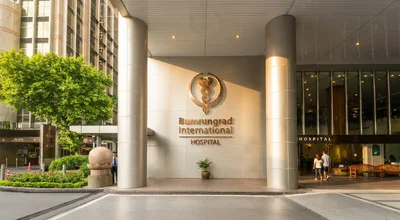
Bumrungrad International Hospital
Full-service hospital with over 1,200 physicians treating 520,000+ international patients a year.
View hospital profile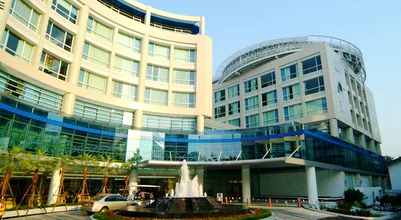
Bangkok Hospital
BDMS flagship hospital campus with standalone heart, cancer, and neuro-orthopaedic hospitals.
View hospital profile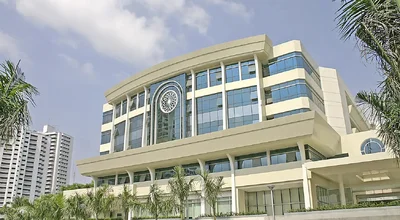
Samitivej Sukhumvit Hospital
Full-service hospital known for paediatrics, home to Thailand's first private children's hospital.
View hospital profile
Tell Us What You Need. We Do the Rest.
Share what you're considering and we'll come back with surgeon options, pricing, and a clear plan.
- Real hospital pricing with zero markup
- Matched with a specialist experienced in your specific procedure
- Full coordination from consultation to recovery


Trusted by patients worldwide
The complete guide to Forehead & Brow Bone Contouring in Thailand
Everything below is for readers who want the full detail: costs broken down, types and techniques, recovery, risks and safety, and planning your trip.
Forehead Contouring Surgeons & Clinics in Thailand
Forehead contouring is craniofacial surgery, not cosmetic surface work. The surgeon and hospital you choose need specific capabilities.
Leading Hospitals in Bangkok
Our partner hospitals are JCI-accredited with dedicated craniofacial departments, in-house CT imaging, piezoelectric instruments, and titanium fixation hardware. They are full-scale hospitals that can manage any complication in-house. This is not a procedure for a boutique clinic, it requires hospital-level infrastructure and support.
Experienced Forehead Contouring Surgeons
Our partner surgeons are board-certified in plastic and reconstructive surgery with specific craniofacial training and high volumes of forehead contouring cases. Several have international fellowships and have returned to Thailand where the gender-affirming surgical volume supports ongoing specialisation in this area.
What to Look for in a Surgeon
Board certification is the baseline. Beyond that, verify specific experience with Type III forehead reconstruction, not all plastic surgeons have trained in this technique. Ask to see before-and-after photos of patients with similar brow anatomy to yours. Check that pre-operative CT imaging is a standard part of their workup. A surgeon who explains the difference between Type I and Type III and why one applies to your case is demonstrating the right level of specificity.
Understanding Your Results
Forehead contouring produces permanent bone changes that are visible once swelling resolves. Here is what realistic results look like.
Typical Forehead Contouring Results
The brow ridge is flattened and the forehead reshaped to a smooth, convex curve. The shadows that previously fell over the eyes are eliminated, creating an open, bright-eyed appearance. When combined with a brow lift, the overall upper face transformation is substantial. The changes are structural and permanent, the bone does not grow back.
What Results Can You Expect?
You will see a clear difference once the swelling starts to recede around week two, but that is a preview. The settled shape emerges by months four to six as deep tissue swelling fully resolves. Your surgeon will use CT imaging during consultation to show you how the bone will be modified and what the expected contour change will be. This is the stage to ask specific questions about what is achievable with your anatomy.
Forehead Contouring Cost in Thailand
Average Cost of Forehead Contouring
Forehead and brow bone contouring in Thailand typically costs between $4,000 and $7,200, depending on whether Type I or Type III is required and whether additional procedures like a brow lift or hairline advancement are included. Type III reconstruction sits at the higher end due to longer operating time and titanium hardware.
Cost Breakdown
The total comprises the surgeon's fee (the largest component, reflecting the craniofacial expertise required), hospital and theatre fees, anaesthesia, CT imaging, titanium hardware where applicable, and aftercare including follow-up appointments and medication. Everything is itemised so you can see where the cost sits.
What Affects the Price?
Type III costs more than Type I because it involves more complex bone work and titanium fixation. Adding a brow lift or hairline advancement through the same incision increases operating time and cost. Surgeon seniority and hospital tier are also factors. A combined forehead, brow, and hairline procedure costs more than forehead contouring alone.
Thailand vs International Price Comparison
Forehead contouring in Thailand costs 40–60% less than equivalent procedures in the US ($12,000–$22,000), Australia (A$11,200–A$20,000), and UK (£10,000–£18,000). The savings reflect Thailand's lower operating costs. The equipment, techniques, and surgeon qualifications are equivalent to leading international centres.
Non-Surgical Alternatives to Forehead Contouring
Some of what shapes the upper face sits in the soft tissue rather than the bone, and that part can be softened without surgery. A neuromodulator brow lift relaxes the muscles that pull the brow down, lifting and opening the eye area by a few millimetres, while small amounts of filler can smooth a flat spot above the brow. Both take minutes, with no downtime, and can be a reasonable first step if your concern is mostly brow position and expression rather than a heavy ridge.
The limit is that these only move skin, muscle, and surface volume. The brow bossing this page is about is bone, and no injectable can reduce a prominent frontal ridge, recess the sinus wall, or lift the shadow that bone projection casts over the eyes. The effect is also temporary, fading over three to six months, so it becomes ongoing maintenance rather than a settled change. Adding filler over a projecting brow can make the area read fuller, not softer.
When the brow ridge itself is what reads as masculine, or the upper face feels structurally out of step with feminised lower features, forehead and brow bone contouring is the route to a lasting, complete result, and that is what the rest of this page covers. Your CT scan is what shows whether your concern is bone, soft tissue, or both.
Types of Forehead Contouring
The right technique depends on how much bossing you have and how thick the anterior wall of your frontal sinus is. A CT scan determines this before any surgical plan is made.
Type III Forehead Reconstruction
The standard for significant bossing. The anterior sinus wall is removed, thinned, reshaped, and reset in a recessed position using titanium micro-screws. Surrounding bone is burred smooth to create a smooth, rounded contour. This is the only technique that addresses heavy bossing where the sinus wall is thin.
- Handles even the most prominent brow ridges
- Maximum reduction by repositioning the sinus wall itself
- Creates a naturally convex forehead rather than a flat reduction
- Best for: moderate to severe brow bossing with a pneumatised frontal sinus
Type I Contouring (Burring Only)
For patients with a thick sinus wall and mild to moderate bossing, the brow ridge is reduced by carefully burring the bone without entering the sinus cavity. Less invasive than Type III, with a slightly shorter operating time and marginally faster initial recovery.
- Suitable when the sinus wall is thick enough to allow direct bone reduction
- No need to enter the frontal sinus cavity
- Shorter procedure and slightly quicker initial healing
- Best for: mild bossing where the sinus wall has sufficient thickness for safe burring
Forehead Contouring Techniques
Technique selection is driven by anatomy, not preference. A pre-operative CT scan maps sinus size, wall thickness, and bone density to determine the safest and most effective approach for your specific case.
Anterior Wall Setback (Type III)
The anterior wall of the frontal sinus is osteotomised, removed in one piece, reshaped and thinned on the back table, then reset in a more recessed position. Titanium micro-screws hold it permanently. The surrounding forehead bone is burred to create a smooth, continuous curve from hairline to brow.
- The only technique that addresses severe bossing where the sinus wall is thin
- Repositions bone rather than just removing it
- Titanium fixation is permanent, biocompatible, and MRI-safe
- Best for: patients with significant brow bossing and a pneumatised frontal sinus
Forehead Burring with Bone Cement Augmentation
For patients who need burring of the brow ridge plus additional contouring above the brow, hydroxyapatite bone cement can be applied to build a smoother, more convex forehead shape. The cement sets hard and integrates with the underlying bone surface.
- Combines brow reduction with forehead shape correction in one session
- Bone cement allows sculpting of areas where natural bone is insufficient
- Particularly useful for forehead flatness above the brow area
- Best for: mild bossing combined with forehead contour irregularities
Endoscopic Brow Lift (Combined)
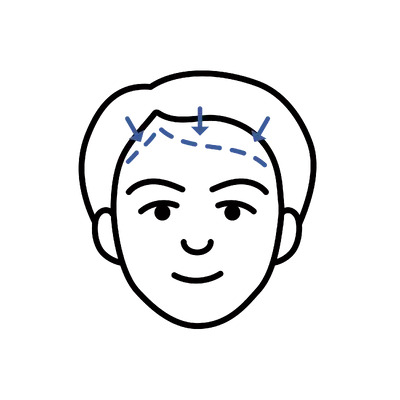
When forehead contouring is combined with a brow lift, the same coronal or hairline incision provides access for both. The brow lift repositions the eyebrows to a higher, more arched position, complementing the smoother forehead and creating a more open, feminine eye area.
- Addresses both bone shape and soft-tissue position through one incision
- Higher, more arched brows enhance the feminizing effect of the bone work
- Particularly effective when combined with hairline advancement
- Best for: patients whose brow position is low in addition to having brow bossing
Pretrichial vs Coronal Incision Approach
The bone work is reached through one of two incisions, and which one your surgeon chooses affects more than just where the scar sits. A coronal incision is placed back within the hair, so the scar is fully hidden but the hairline cannot be moved. A pretrichial incision runs along the front of the hairline instead, which trades a faint frontal scar for the ability to lower a high hairline in the same operation. The decision turns on your hairline height and whether forehead reduction is part of the plan.
- Coronal incision hides the scar in the hair but leaves the hairline where it is
- Pretrichial incision allows hairline lowering at the same time as the bone work
- Both give the surgeon full access to recontour the frontal bone and brow ridge
- Best for: anyone deciding between a hidden scar and combining hairline advancement
Forehead Contouring Recovery Timeline
Days 1–3
Significant swelling around the forehead, eyes, and upper cheeks peaks around day two. Bruising beneath the eyes is common and expected.2 You remain in hospital overnight with head elevation, ice packs, and IV pain management. A compressive headband may be applied to manage swelling.
Days 4–7
Swelling begins to subside and bruising yellows as it resolves. Discharge to your hotel with oral pain medication and aftercare instructions. Keep the scalp incision clean and dry until your team clears gentle hair washing, usually around day 3 to 5, then wash carefully with a mild shampoo, lukewarm water, and no scrubbing or rubbing over the suture or staple line. Pat dry and avoid hair dryers on hot settings near the incision. Avoid bending forward or any activity that raises blood pressure to the head. Daily coordinator check-ins continue.
Weeks 2–3
Most visible swelling has resolved and the smoother forehead contour becomes apparent. Sutures or staples are removed at your follow-up. Forehead numbness persists at this stage but improves steadily. Most patients feel comfortable being out in public and resuming light activities.
Months 2–6
Residual deep swelling resolves and the recontoured forehead becomes clearly defined. Sensation returns progressively. Most patients recognise the settled shape by four to six months. Full sensation recovery can take up to a year in some cases.
When Can You Fly After Forehead Contouring?
Most patients can fly 10–14 days after surgery, once their surgeon has confirmed healing is progressing well at the follow-up. Residual swelling may still be present but does not pose a risk during air travel. Stay hydrated during the flight and avoid anything that raises blood pressure to the head.
When Can You Return to Work and Exercise?
Desk work can resume within 2 weeks, once swelling has reduced enough to be comfortable. Light walking is encouraged from day one. After a general anaesthetic you should not drive for at least 1–2 weeks, and only once swelling no longer restricts your vision, your reactions feel normal, and you are off prescription pain medication. Gym workouts and cardio should wait until 4–6 weeks. Activities with risk of impact to the forehead should be avoided for at least 3 months.
When Will You See Final Results?
The smoother forehead is visible once the swelling begins to subside in week 2, but the final contour takes 4–6 months to fully settle as deep swelling resolves. Patients with Type III reconstruction may notice the forehead continuing to refine subtly for up to a year. By month six, what you see is very close to your permanent result.
Anaesthesia for Forehead Contouring
Forehead and brow bone contouring is always performed under general anaesthesia, so you are fully asleep and feel nothing while the surgeon reshapes the bone.1,2 A consultant anaesthetist stays with you for the whole two to three hours and monitors you continuously, which is standard at the accredited hospitals we work with. Because the work reaches the frontal bone and sits close to the brow and forehead nerves, being completely still and asleep is what allows the surgeon to work precisely and safely.
Before you are cleared for anaesthesia you have a pre-operative assessment, including blood tests and a review of any medications you take. This is also the point to flag your hormone therapy, as the team will advise on any adjustments around surgery. The CT scan you have for surgical planning doubles as part of building a safe, complete picture before you go under.
You feel nothing during the procedure itself. When you wake, most people describe a dull pressure or tightness across the forehead rather than sharp pain, often alongside the numbness that is normal after this surgery while the nerves recover. It is well controlled with the medication your surgeon prescribes and eases over the first week.
Risks and Safety of Forehead Contouring
Forehead contouring is a well-established craniofacial procedure. It involves working on bone near the frontal sinus and the brain's protective coverings, so precision and experience matter more here than in most cosmetic procedures.
- Prolonged swelling and bruising around the eyes and forehead
- Temporary or extended forehead numbness (common and expected)2
- Contour irregularities that may require minor touch-up
- CSF leak from inadvertent dural injury (very rare, specific to Type III work near the posterior sinus wall)
- Frontal sinus mucocele (very rare, specific to Type III reconstruction)
- Infection or hardware-related complication (rare at accredited facilities)
- Temporary hair thinning along the incision line
- Asymmetry requiring assessment once swelling has resolved
A pre-operative CT scan is mandatory. It maps your frontal sinus anatomy, bone thickness, and wall integrity before any surgical decisions are made. Every risk relevant to your specific anatomy and technique is discussed before you confirm your procedure.
Is Forehead Contouring Safe in Thailand?
Yes, when performed at a JCI-accredited hospital by a craniofacial surgeon with specific forehead contouring experience. Thailand's leading hospitals have the imaging, instruments, and surgical teams to handle this procedure at the same standard as top centres elsewhere. The additional benefit is surgical volume, these teams do this regularly.
How to Reduce Risks
Insist on pre-operative CT imaging, any surgeon who skips this step is a red flag. Verify craniofacial or plastic surgery board certification specifically. Follow smoking cessation instructions precisely, as smoking impairs bone healing and increases infection risk.3 If you are on hormone therapy, discuss any adjustments with your surgical team beforehand.
Will Forehead Numbness Be Permanent?
Temporary forehead numbness after the procedure is common and expected because the coronal incision crosses sensory nerves. In the vast majority of patients, sensation returns gradually over weeks to months. Most regain full feeling within six to twelve months. Permanent numbness is uncommon.
Planning Your Trip to Thailand for Forehead Contouring
Most patients need 10–14 days in Thailand for forehead contouring. Here is how to plan the trip.
How Long to Stay in Thailand
Plan for 10–14 days. This covers pre-operative CT scanning and consultation (day 1–2), surgery, one night in hospital, and the recovery period including suture or staple removal and a final follow-up appointment. If combining with hairline advancement or brow lift, the same timeline applies since all procedures use the same incision.
What's Included in a Medical Trip
Your coordinator manages CT imaging, hospital transfers, surgery scheduling, and all follow-up appointments. The surgical quote covers surgeon fees, anaesthesia, hospital stay, imaging, hardware, and aftercare. Flights and accommodation are your responsibility, but your coordinator can recommend hotels close to the hospital.
Recovery in Bangkok
Bangkok is the right base for forehead contouring recovery. You need easy access to your hospital for follow-ups and potential concerns, especially during the first week. The convenience of being minutes from your surgical team outweighs any appeal of recovering elsewhere.
Related Procedures
Other procedures that address similar goals or conditions, in case one of them is a closer fit for you.
Planning your treatment in Thailand
Independent guides to help you weigh the decision, before you commit to anything.
Common Questions About Forehead & Brow Bone Contouring
Everything you need to know before your procedure

Medical References
Keep researching with AI
Open this guide in your AI assistant to dig deeper and ask the questions it didn't answer.
Opens in a new tab with this guide already loaded.
Medical disclaimer: Content on this site is provided for informational purposes and should not be treated as medical advice. Outcomes, timelines, and eligibility differ from person to person. Consult a qualified medical professional before making any decisions about surgery or treatment.
Ready to Get Started?
Speak with our care coordinators for a free, no-obligation consultation and personalised quote.
Get a Free Quote



What patients say
In their own words, from people we've helped plan treatment in Thailand.
“I was on an NHS waiting list for 18 months. With you I had my hip done five weeks after my first email, and I was playing golf again by spring.”
“My daughter came out with me and Bea got her a room right next to mine. Having her close by helped a lot in the first few days after surgery.”
“...Nick spent a long time on the phone going through the three hospitals with me, the surgeons, the costs, how long I’d need to stay. I felt like he actually listened.”
“Our coordinator met us at the hospital on the first day and translated anything we didn’t understand. We never felt lost, and every appointment was booked before we even arrived.”
“Very thorough health check, and the doctor went through all my results with me the same afternoon. It was all done in one day. Will be booking again next year.”
“...sent all my documents to my GP at home without me even asking. Little things like that mean a lot when you’re dealing with a hospital in another country.”
“My wife and I felt supported from the first phone call right up to my last follow-up. Having someone to ask whenever we had a question took a lot of pressure off.”
“Quick, simple and well organised. The hospital was excellent, I was in and out the same morning, and Mint had a driver waiting to take me back to my hotel...”


