Facial Masculinization Surgery in Thailand Your guide to cost, top specialists & hospitals
A stronger jaw, a more defined brow, the structural foundation that testosterone alone cannot always build.
What Is Facial Masculinization Surgery?
Also known as: FMS · Facial Masculinization Surgery (FMS)
Facial masculinization surgery is a set of bone and soft-tissue procedures that builds a stronger, more angular face by augmenting the underlying skeleton. It reshapes the brow ridge, jaw angles, chin, cheeks, or nose to add the projection that reads as masculine. Testosterone thickens skin and brings facial hair, but it cannot change bone, so a flat brow or soft jaw stays soft unless surgery addresses it. The structural changes are long-lasting and usually settle over four to six months.
This is rarely a single operation. Some people want jaw implants and a stronger chin, others brow work or a sharper profile, and most plans combine a few. Your surgeon studies a 3D scan of your own bone and builds the approach around the features you most want to change.
Most people seeking this are trans men, trans-masculine, or non-binary, and the goal can be a full structural shift or one quiet change. The consultation, with that 3D scan, is where you and your surgeon see honestly what your anatomy allows and agree what is realistic before anything is decided.
It can address a range of concerns, including:
Am I a Good Candidate for Facial Masculinization Surgery?
Surgeons assess bone structure, hormone history, and oral health before confirming a masculinization plan, so suitability is decided face by face.
Surgeons assess which skeletal features are limiting masculine definition and which procedures will shift them meaningfully.
Flat brow: An underprojected supraorbital ridge suits augmentation with PEEK, bone cement, or fat grafting, adding the projection testosterone cannot build.
Soft lower face: A narrow or rounded jawline and a weak or recessed chin suit jaw angle implants and chin advancement, the most requested FMS components.
Overall proportion: A nose that reads small or rounded against an augmented jaw and brow may need masculinizing rhinoplasty so the profile stays balanced.
Hormone therapy is not required for FMS, but its timing shapes the surgical conversation.
Not a prerequisite: The plan is built from your current bone structure and goals, whether or not you are on testosterone.
Under a year on T: If testosterone started less than a year ago, hormones may still be changing how your face reads, and that is worth discussing before committing to bone work.
What hormones cannot do: Testosterone thickens skin and increases facial hair, but it does not alter the underlying skeleton, which is exactly what FMS addresses.
Implant placement and bone work demand a healthy surgical field, inside the mouth as much as anywhere.
Oral health first: Outstanding dental work or jaw issues should be resolved beforehand, since intraoral incisions need a clean oral environment to heal.
Non-smoker: Quit at least four weeks before surgery; nicotine restricts blood flow and impairs healing around implants and bone.
General fitness: Good overall health, with any ongoing conditions stable, is expected before a 3-6 hour general anaesthetic.
Medication review: Blood thinners and certain supplements stop at least two weeks before surgery.
Augmented contours take time to settle, and the planning stage is where honest boundaries are set.
4-6 month timeline: Implants settle and deep swelling clears over months; the definitive result is not visible early, so judge nothing before then.
Custom implant lead time: Implants designed from your CT scan need fabrication time, which has to be built into your travel dates.
Anatomy-led results: 3D imaging at consultation establishes what your bone structure allows; a surgeon who discusses limitations alongside possibilities is usually the right choice.
Who is not suitable for facial masculinization surgery?
- Smokers unable to quit at least four weeks before surgery
- Untreated dental or jaw problems until resolved, given the intraoral incisions
- Less than a year on testosterone until discussed with the surgeon, as testosterone may still be changing the soft tissues of the face
- Active connective-tissue disease, prior facial radiation, or existing jaw hardware that compromises the bone bed for implant-on-bone surgery, until reviewed; and any uncontrolled health condition until stabilised
- Blood-thinning medication that cannot be stopped two weeks before surgery
- Uncontrolled erythrocytosis on testosterone, or VTE history, until reviewed and optimised
Pricing
How Much Will Facial Masculinization Surgery Cost in Thailand?
What facial masculinization surgery costs at accredited hospitals in Thailand, and what your final quote depends on.
Get your exact price
Tell us what you're considering and we'll send a personalised quote from accredited hospitals within 24 hours.
Get a Free QuoteTypical prices in Thailand
Typical ranges based on recent hospital quotes. Your exact price depends on the hospital and how complex your case is, and is confirmed at your teleconsultation.
Facial Masculinization Surgery
The brow, jaw angle, or chin is built up with an implant or repositioned bone to give the facial skeleton more angular projection.
| Jaw angle implants 1 to 2 nights Custom or standard implants set through the mouth, to widen a narrow or rounded jaw angle | $3,000 to $5,500 ฿102,000 to ฿187,000 |
| Chin advancement (genioplasty) 1 to 2 nights The chin bone is cut, moved forward and fixed with titanium, for a recessed chin | $2,500 to $4,500 ฿85,000 to ฿153,000 |
| Brow ridge augmentation 1 to 2 nights Bone cement or an implant builds projection across a flat brow ridge | $2,000 to $4,000 ฿68,000 to ฿136,000 |
| Full FMS plan (three or more procedures) 1 to 2 nights Several regions treated in one operation under a single anaesthetic | $7,000 to $12,600 ฿238,000 to ฿428,400 |
Typically not included
- Revision or a second-stage operation, such as adjusting a moved implant or refining the augmentation later
- Any hospital nights beyond the one to two in your package, and treatment if a complication such as an implant infection arises
- Pre-operative blood tests and medical clearance before you are passed fit for the general anaesthetic
- Dental treatment to clear the mouth beforehand, since the incisions are intraoral and need a healthy environment to heal
Get your exact price
Tell us what you're considering and we'll send a personalised quote from accredited hospitals within 24 hours.
Hospitals Trusted for Facial Masculinization Surgery
From internationally accredited flagships to dedicated specialist hospitals, these are the kinds of facilities where international patients have this procedure.
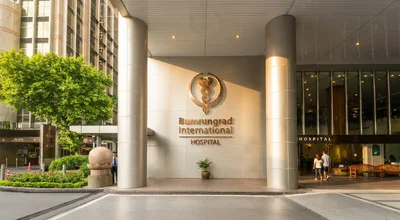
Bumrungrad International Hospital
Full-service hospital with over 1,200 physicians treating 520,000+ international patients a year.
View hospital profile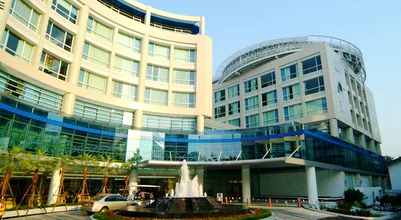
Bangkok Hospital
BDMS flagship hospital campus with standalone heart, cancer, and neuro-orthopaedic hospitals.
View hospital profile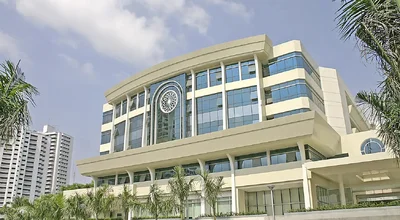
Samitivej Sukhumvit Hospital
Full-service hospital known for paediatrics, home to Thailand's first private children's hospital.
View hospital profile
Tell Us What You Need. We Do the Rest.
Share what you're considering and we'll come back with surgeon options, pricing, and a clear plan.
- Real hospital pricing with zero markup
- Matched with a specialist experienced in your specific procedure
- Full coordination from consultation to recovery


Trusted by patients worldwide
The complete guide to Facial Masculinization Surgery in Thailand
Everything below is for readers who want the full detail: costs broken down, types and techniques, recovery, risks and safety, and planning your trip.
FMS Surgeons & Clinics in Thailand
Choosing the right surgeon and hospital matters more than anything else when augmenting facial bone. Here is what to look for.
Leading Hospitals in Bangkok
Our partner hospitals are JCI-accredited facilities with dedicated craniofacial and plastic surgery departments. They have in-house CT imaging, custom implant design capabilities, and the infrastructure to manage any complication without external transfers. These are full-scale hospitals that handle complex bone surgery daily.
Experienced FMS Surgeons
Our partner surgeons hold board certification from the Thai Board of Plastic and Reconstructive Surgery and have specific training in facial augmentation and gender-affirming procedures. Many have international fellowship training, South Korea, Japan, or the US, combined with the high case volumes that come from practising in Bangkok's busiest hospitals.
What to Look for in a Surgeon
Verify board certification in plastic and reconstructive surgery specifically. Ask about their experience with masculine augmentation cases, FMS requires a different skillset from feminization. Review before-and-after photos of patients with similar anatomy and goals. Check independent reviews. A surgeon who takes time to discuss limitations alongside possibilities is usually the right choice.
Understanding Your Results
FMS results are permanent structural changes. Here is what realistic outcomes look like and how long they take to appear.
Typical FMS Results
FMS adds angular definition to the lower and upper face. Common outcomes include wider jaw angles, stronger chin projection, a more prominent brow ridge, and sharper cheekbone definition. The changes are structural and permanent, once bone and implants have healed, the result is stable for life. Your face will continue to age naturally, but the augmented framework remains.
What Results Can You Expect?
You will see a visible difference within the first month as swelling subsides. The full result settles by 4–6 months, once implants have stabilised and all residual swelling has resolved. Surgeons use clinical photography and 3D imaging during consultation to discuss what is achievable. The consultation is where you establish what your anatomy allows and what the likely outcome will be.
Facial Masculinization Surgery Cost in Thailand
Average Cost of FMS
FMS in Thailand typically costs between $2,000 and $12,600, depending on the number and complexity of procedures included. A single procedure such as brow ridge augmentation sits at the lower end, while a plan combining three or more sits at the top. Quotes are itemised per component so you understand exactly where the cost sits.
Cost Breakdown
The total comprises surgeon fees (reflecting technical complexity and operating time), hospital and theatre fees (facility, equipment, nursing), anaesthesia (anaesthetist and monitoring), and custom implant costs where applicable. Aftercare includes follow-up visits, medication, and coordinator support throughout your stay.
What Affects the Price?
Scope is the biggest factor, how many regions are being augmented and whether custom implants are involved. Custom 3D-printed implants cost more than off-the-shelf options but provide superior fit. Adding rhinoplasty or brow augmentation to a jaw plan increases operating time and cost. Surgeon seniority and hospital tier also contribute.
Thailand vs International Price Comparison
FMS in Thailand costs 40–60% less than equivalent procedures in the US ($21,000–$38,500), Australia (A$19,600–A$35,000), and UK (£17,500–£31,500). The difference reflects Thailand's lower operating costs, not lower standards. Our partner hospitals hold JCI accreditation and surgeons hold board certifications equivalent to their international counterparts.
Non-Surgical Alternatives to FMS
Testosterone is the foundation, and for many people it does a lot before surgery is ever considered. It thickens the skin, brings facial hair that broadens the look of the jaw, redistributes facial fat, and over time can strengthen the jawline and squareness of the face. Dermal fillers can also add temporary volume to the chin, jaw, or cheeks to firm up the lower-face contour without an operation. These are real, worthwhile changes, and it is often sensible to let testosterone do its work first and see where it lands.
What none of these can do is change bone. A flat brow ridge, a recessed chin, or jaw angles that lack projection are skeletal, so hormones and filler cannot build them, and filler in particular is temporary, needs topping up, and adds volume rather than the underlying structure. Time matters here too: in the first year on testosterone the face is still changing, which is why we say so clearly on this page that judging the structure too early is a mistake.
When the limit you have reached is the bone itself, when testosterone and softer measures have taken you as far as they can and a stronger brow, chin, or jaw is what would shift how your face reads, facial masculinization surgery is the route that achieves it, permanently, by augmenting the skeleton directly. That is what the rest of this page covers.
Types of FMS Procedures
FMS is modular, each facial region is assessed separately, and only the procedures that will shift perception meaningfully are included. Here are the most commonly requested components.
Jaw Angle & Chin Augmentation
The most requested FMS component. Custom implants or bone advancement widen the jaw angles and project the chin forward, creating the angular lower face that is the strongest visual cue of masculinity. Implants are placed through incisions inside the mouth.
- Custom implants designed from 3D CT scan data for precise anatomical fit
- Sliding genioplasty advances the chin using your own bone
- Jaw angle implants create the flared, square look testosterone cannot produce
- Best for: patients whose lower face lacks the angular definition they want
Brow Ridge Augmentation
A flat brow is one of the features testosterone does not change. Bone cement, custom PEEK implants, or fat grafting can build a more prominent supraorbital ridge, adding the shadowing and projection that reads as masculine from the front and in profile.
- PEEK or bone cement creates permanent, stable brow projection
- Custom implants match your exact anatomy from CT data
- Fat grafting offers a softer, less invasive augmentation option
- Best for: patients with a flat brow who want a more prominent, masculine upper face
Masculinizing Rhinoplasty
Straightens the bridge, maintains or increases dorsal height, and strengthens tip projection. The goal is a nose that looks proportionate to a broader jaw and more prominent brow, not a feminized refinement but a structurally stronger profile.
- Widens or straightens the bridge for a stronger frontal view
- Maintains dorsal height rather than reducing it
- Tip projection strengthened rather than rotated upward
- Best for: patients whose nose appears small or rounded relative to augmented jaw and brow
FMS Techniques
Masculinization typically builds volume and projects angles, which is the opposite direction from feminization. The techniques reflect this, augmentation, advancement, and structural addition rather than reduction.
Custom Alloplastic Implants
Patient-specific implants in silicone or porous polyethylene (Medpor) are designed from 3D CT scan data to fit precisely over existing bone. They are used for jaw angles, chin, cheeks, and brow. The implant sits on the bone surface and provides permanent structural enhancement.
- Custom-designed for exact anatomical fit from your own imaging
- Provides permanent volume and projection without bone grafting
- Placed through concealed incisions inside the mouth or under the chin
- Best for: patients wanting significant, predictable augmentation of jaw, chin, or brow
Sliding Genioplasty for Chin Advancement
The chin bone is cut horizontally and advanced forward, downward, or both, then fixed with titanium plates. This uses your own bone rather than an implant, producing a result that integrates naturally and is stable long-term. Width can also be increased by splitting and spreading the segment.
- Uses your own bone for a natural, permanent result
- Advances the chin forward and downward simultaneously
- Width increase possible by splitting the bony segment
- Best for: patients who prefer bone repositioning over implants for chin projection
Fat Grafting & Soft-Tissue Sculpting
Fat harvested from the body is processed and injected into the cheeks, temples, jawline, or brow to add masculine volume. This complements implant-based work or serves as a standalone approach for patients wanting subtler enhancement without foreign material.
- Uses your own tissue, no rejection risk
- Adds natural-feeling fullness to cheeks, jawline, and temples
- Can refine contour irregularities after implant placement
- Best for: patients wanting subtle volume addition or augmentation without implants
3D Virtual Surgical Planning
Before any masculinizing bone work, a 3D CT scan of your own skull is turned into a digital model the surgeon plans on screen. Implants are designed to fit your exact anatomy, osteotomies are mapped around nerve positions and dental roots, and the augmentation is previewed before the operating room. It is the planning layer that makes custom implants and predictable bone advancement possible.
- Custom jaw, chin, and brow implants designed from your own CT data for an exact fit
- Osteotomy cuts mapped around nerves and tooth roots to lower complication risk
- Lets you and your surgeon agree the augmentation at consultation, before surgery
- Best for: any custom-implant or bone-advancement plan, where precise fit and safety matter
FMS Recovery Timeline
Days 1–3
Swelling and bruising are most pronounced around the jaw, chin, and brow. Numbness in the chin and lower lip is common after jaw or chin work and resolves gradually. You will rest in hospital with IV pain management and head elevation. Jaw compression garment is fitted.
Days 4–7
Discharge to recovery accommodation with oral medications and compression garment for the jaw. Swelling migrates downward and bruising shifts to yellow. Soft diet continues if jaw implants were placed or bone work was done. Daily coordinator check-ins.
Weeks 2–4
Bruising resolves and swelling reduces substantially. Follow-up appointments for suture removal and progress assessment. Most patients feel comfortable resuming light activities and being seen socially by week two. Strenuous exercise remains off-limits.
Months 2–6
The angular, masculine contours become fully visible as residual swelling clears. Sensation returns to any numb areas. Implants settle into their permanent position and the augmented structure stabilises. Most patients see the definitive result by four to six months.
When Can You Fly After FMS?
Most patients are cleared to fly 14–21 days after surgery, once their surgeon confirms healing at the final follow-up. Swelling may still be visible during travel, this is normal and does not pose a risk. Stay hydrated and avoid heavy lifting or jaw strain while in transit.
When Can You Return to Work and Exercise?
Desk work can typically resume after 2–3 weeks, once swelling and discomfort have settled enough to concentrate. Light walking is encouraged from day one. Gym and cardio should wait until 6 weeks post-surgery. Contact sports and activities with facial impact risk need at least 3 months, longer if jaw implants were placed.
When Will You See Final Results?
The stronger contours are visible within the first month as swelling subsides, but the definitive result takes 4–6 months. Implants take time to settle into their final position, and residual deep swelling distorts the shape during the first few months. By month six, what you see is what you keep.
Anaesthesia for FMS
Facial masculinization surgery is performed under general anaesthesia, so you are fully asleep and feel nothing during the operation.1 This is the right approach for FMS because the work involves bone and implants across several areas of the face, and several procedures are often combined in one three to six hour session. A consultant anaesthetist stays with you throughout and monitors you continuously, which is standard at the accredited hospitals we work with.
Most of the incisions are inside the mouth, so being fully under also keeps your airway protected and your jaw still while the surgeon places implants or repositions bone. Your surgeon and anaesthetist plan the anaesthetic together around the components in your plan and your medical history, including your testosterone therapy if you are on it, since that is reviewed before surgery rather than something you adjust on your own.
Before you are cleared you have a pre-operative assessment, including blood tests and a medication review, alongside the 3D CT imaging used to plan the bone work. You feel nothing during surgery. When you wake, most patients describe a deep ache and tightness in the jaw rather than sharp pain, which is well controlled with the medication your surgical team provides and eases noticeably over the first week.
Risks and Safety of Facial Masculinization Surgery
FMS involves implant placement and bone modification under general anaesthesia. Complications are uncommon at accredited hospitals with experienced surgeons, but every surgical procedure carries risk.
- Prolonged swelling or bruising beyond the typical recovery timeline
- Temporary or lasting numbness in the chin, lower lip, or brow2,3
- Inferior alveolar nerve injury during genioplasty or jaw-angle work, causing numbness of the lower lip and chin (usually temporary, occasionally permanent)
- Implant malposition or asymmetry requiring surgical adjustment3
- Infection around implant material (rare at accredited facilities)3
- Bone resorption beneath implants over time (uncommon with proper fixation)
- Unfavourable scarring at incision sites (most are concealed intraorally)
- Jaw stiffness or limited mouth opening during recovery
Pre-operative 3D CT imaging maps bone anatomy, nerve positions, and dental roots before any plan is confirmed. Every potential risk specific to your procedures is discussed openly, and you will have time to weigh the information before committing.
Is FMS Safe in Thailand?
Yes, at JCI-accredited hospitals with surgeons certified by the Thai Board of Plastic and Reconstructive Surgery. Thailand's top hospitals handle a high volume of craniofacial and gender-affirming cases, and that volume builds the kind of surgical judgment that reduces complications. Equipment standards, infection control, and nursing protocols match international benchmarks.
How to Reduce Risks
JCI accreditation is the starting point. Verify your surgeon has specific experience in facial augmentation and gender-affirming surgery, not just cosmetic work. Ensure 3D CT imaging is part of your pre-operative workup, this maps nerve positions and bone thickness before any decisions are made. Follow smoking cessation and medication instructions precisely. If you are on testosterone, discuss timing with your surgeon.
When Is Revision Needed?
Revision after FMS is uncommon but may be appropriate if an implant shifts, asymmetry persists beyond the swelling phase, or the degree of augmentation does not match what was planned. Wait at least 6–9 months before considering revision, implants take time to settle and residual swelling can distort the appearance of the result in the early months.
Planning Your Trip to Thailand for FMS
Most FMS patients need 14–21 days in Thailand. Here is how to structure the trip and what to expect.
How Long to Stay in Thailand
Plan for a minimum of 14–21 days. This covers pre-operative CT imaging and consultation (days 1–2), surgery, 1–2 nights in hospital, and the recovery period including follow-up appointments and suture checks. If custom implants are being designed, allow additional lead time for fabrication before the surgery date.
What's Included in a Medical Trip
Your care coordinator manages hospital transfers, surgery scheduling, interpreter services, and post-operative follow-ups. Surgical quotes include surgeon fees, anaesthesia, hospital stay, imaging, and aftercare. Flights and accommodation are arranged separately, but your coordinator can recommend hotels close to the hospital.
Recovery in Bangkok vs Phuket
Bangkok is the practical choice for FMS recovery. You need proximity to your surgical team for the first two weeks, especially if jaw implants were placed. Being minutes from your hospital means any concern can be assessed quickly. Save the beach for after your final follow-up.
Related Procedures
Other procedures that address similar goals or conditions, in case one of them is a closer fit for you.
Planning your treatment in Thailand
Independent guides to help you weigh the decision, before you commit to anything.
Common Questions About Facial Masculinization Surgery
Everything you need to know before your procedure

Medical References
Keep researching with AI
Open this guide in your AI assistant to dig deeper and ask the questions it didn't answer.
Opens in a new tab with this guide already loaded.
Medical disclaimer: Content on this site is provided for informational purposes and should not be treated as medical advice. Outcomes, timelines, and eligibility differ from person to person. Consult a qualified medical professional before making any decisions about surgery or treatment.
Ready to Get Started?
Speak with our care coordinators for a free, no-obligation consultation and personalised quote.
Get a Free Quote







What patients say
In their own words, from people we've helped plan treatment in Thailand.
“I was on an NHS waiting list for 18 months. With you I had my hip done five weeks after my first email, and I was playing golf again by spring.”
“My daughter came out with me and Bea got her a room right next to mine. Having her close by helped a lot in the first few days after surgery.”
“...Nick spent a long time on the phone going through the three hospitals with me, the surgeons, the costs, how long I’d need to stay. I felt like he actually listened.”
“Our coordinator met us at the hospital on the first day and translated anything we didn’t understand. We never felt lost, and every appointment was booked before we even arrived.”
“Very thorough health check, and the doctor went through all my results with me the same afternoon. It was all done in one day. Will be booking again next year.”
“...sent all my documents to my GP at home without me even asking. Little things like that mean a lot when you’re dealing with a hospital in another country.”
“My wife and I felt supported from the first phone call right up to my last follow-up. Having someone to ask whenever we had a question took a lot of pressure off.”
“Quick, simple and well organised. The hospital was excellent, I was in and out the same morning, and Mint had a driver waiting to take me back to my hotel...”


