Hairline Lowering in Thailand Your guide to cost, top specialists & hospitals
A lower, rounder hairline reframes the entire face, the kind of change that makes everything else click.
What Is Hairline Lowering?
Also known as: Forehead Reduction · Scalp Advancement
Hairline lowering is surgery that brings the front hairline forward by advancing the hair-bearing scalp and removing a strip of forehead skin. It reduces forehead height and softens an M-shaped or receding hairline into a rounder, more feminine frame. A single-stage advancement usually moves it 1.5 to 3 centimetres, and the new position is lasting. The incision follows a trichophytic pattern, bevelled so hair grows up through the scar and gradually hides it.1 It is often combined with forehead contouring through the same incision.
A tall forehead can quietly undo other work on the face, and many people feel it most when they want to wear their hair back. How far the hairline can move comes down to your own scalp, so your surgeon measures it at consultation rather than promising a number. If the scalp is tight, a two-stage tissue expander can reach further.
The lowered hairline shows as soon as the dressings come off, though the scar settles more slowly. For most people it fades over several months and becomes hard to spot, even with hair pulled back. Your surgeon will talk through what is realistic first.
It can address a range of concerns, including:
Am I a Good Candidate for Hairline Lowering?
Whether you suit a single-stage advancement comes down to two things measured at consultation, scalp laxity and hair-loss stability.
How far your scalp stretches forward without excessive tension determines what a single operation can achieve.
The 1.5-3 cm window: Adequate laxity allows a single-stage advancement of 1.5 to 3 centimetres; the available distance is measured during consultation.
Tight scalps need staging: Advancements of 5 cm or more, or limited laxity, call for a tissue expander filled over 4-6 weeks before a second surgery.
Borderline cases have options: Galeal scoring can release tension and gain several millimetres without committing to a two-stage plan.
Advancing the hairline only makes sense if the hair behind it is going to stay.
Stabilised pattern loss: Ongoing androgenetic hair loss should be stabilised on finasteride, minoxidil, or similar before the hairline is moved.
Hormone therapy helps: Ongoing hormone therapy often stabilises a pre-existing pattern of loss, which strengthens candidacy.
Density behind the line: Temple-focused recession with dense scalp behind works well; more widespread thinning may need a combined advancement and hair transplant plan.
Scalp surgery depends heavily on blood supply, so the lifestyle requirements are firm.
No active scalp conditions: Severe alopecia or scalp psoriasis must be excluded before surgery.
Smoking: Quitting at least four weeks before surgery is critical, as nicotine restricts blood flow to the scalp and impairs wound healing.
Trip and hair-care planning: Allow 10-14 days in Thailand, and colour your hair at least two weeks before surgery rather than just before.
The new hairline is visible immediately, but the finished look takes months to arrive.
Scar maturation: The trichophytic scar is pink at first and becomes very difficult to detect over 3-6 months as hair grows through it; most patients wear hair pulled back confidently by month six.
Numbness behind the incision: Expected for weeks to months, resolving progressively.
One incision, one plan: If forehead contouring is on your list, sequence both through the same coronal incision rather than staging them separately.
Who is not suitable for hairline lowering?
- Active scalp conditions such as severe alopecia or scalp psoriasis
- Ongoing androgenetic hair loss until stabilised on treatment
- Very tight scalps expecting more than 3 cm in a single stage
- Smokers unwilling to stop at least four weeks before surgery
- Unwilling to accept a months-long scar settling period
- Known tendency to form keloid or hypertrophic scars, since the whole benefit of the trichophytic incision depends on a fine, concealable scar
- Significant uncontrolled heart or lung disease, or otherwise not medically fit for general anaesthesia
- Bleeding disorders or blood-thinning medication that cannot be safely stopped before surgery
Pricing
How Much Will Hairline Lowering Cost in Thailand?
What hairline lowering costs at accredited hospitals in Thailand, and what your final quote depends on.
Get your exact price
Tell us what you're considering and we'll send a personalised quote from accredited hospitals within 24 hours.
Get a Free QuoteTypical prices in Thailand
Typical ranges based on recent hospital quotes. Your exact price depends on the hospital and how complex your case is, and is confirmed at your teleconsultation.
Hairline Lowering
The hair-bearing scalp is lifted, advanced forward, and a strip of forehead skin removed, so the hairline sits lower and the forehead is shorter.
| Single-stage scalp advancement 0 to 1 nights Scalp advanced and a strip of forehead removed, for scalps loose enough to move in one stage | $3,000 to $3,800 ฿102,000 to ฿129,200 |
| Hairline lowering with tissue expansion 0 to 1 nights Scalp stretched by an implanted expander first, then advanced in a second stage, for tighter scalps | $4,000 to $4,800 ฿136,000 to ฿163,200 |
| Hairline lowering with hair transplant 0 to 1 nights Advancement with follicle grafts to the temples, for recession the scalp shift alone cannot fill | $4,500 to $5,400 ฿153,000 to ฿183,600 |
Typically not included
- Forehead contouring, when combined with the advancement through the same incision, quoted as its own procedure once the bone work is planned
- The tissue expander device on a two-stage plan, added when a tight scalp needs staging rather than a single advancement
- Any later scar revision or secondary touch-up
- Pre-operative blood tests and medical clearance before you are cleared for anaesthesia
- The finasteride, minoxidil or similar that holds any ongoing pattern hair loss, continued at home to protect the lowered hairline
Get your exact price
Tell us what you're considering and we'll send a personalised quote from accredited hospitals within 24 hours.
Hospitals Trusted for Hairline Lowering
From internationally accredited flagships to dedicated specialist hospitals, these are the kinds of facilities where international patients have this procedure.
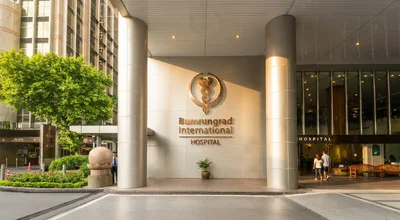
Bumrungrad International Hospital
Full-service hospital with over 1,200 physicians treating 520,000+ international patients a year.
View hospital profile
Bangkok Hospital
BDMS flagship hospital campus with standalone heart, cancer, and neuro-orthopaedic hospitals.
View hospital profile
Samitivej Sukhumvit Hospital
Full-service hospital known for paediatrics, home to Thailand's first private children's hospital.
View hospital profile
Tell Us What You Need. We Do the Rest.
Share what you're considering and we'll come back with surgeon options, pricing, and a clear plan.
- Real hospital pricing with zero markup
- Matched with a specialist experienced in your specific procedure
- Full coordination from consultation to recovery


Trusted by patients worldwide
The complete guide to Hairline Lowering in Thailand
Everything below is for readers who want the full detail: costs broken down, types and techniques, recovery, risks and safety, and planning your trip.
Hairline Lowering Surgeons & Clinics in Thailand
Hairline lowering requires specific skill in scalp surgery and scar management. Here is what to prioritise when choosing.
Leading Hospitals in Bangkok
Our partner hospitals are JCI-accredited with dedicated plastic and craniofacial surgery departments. When hairline lowering is combined with forehead contouring, the full infrastructure for craniofacial bone work, CT imaging, operating theatre, overnight stay, is available. Standalone scalp advancement can be performed as a day case depending on the extent of surgery.
Experienced Hairline Lowering Surgeons
Our partner surgeons perform scalp advancement regularly as part of gender-affirming FFS. They use trichophytic incision techniques and galeal scoring to maximise advancement and scar quality. Their familiarity with the procedure means consistent results and well-managed expectations about advancement distance.
What to Look for in a Surgeon
Ask specifically about their trichophytic closure technique and review before-and-after photos with hair pulled back, this is the real test of scar quality. Confirm they assess scalp laxity during consultation to give you an accurate advancement estimate. A surgeon who discusses the realistic limit of advancement rather than promising a specific number is demonstrating honest practice.
Understanding Your Results
Hairline lowering produces an immediate, visible change. Here is what realistic results look like.
Typical Results
The hairline advances 1.5 to 3 centimetres, reducing forehead height and creating a rounder, more feminine frame for the upper face. Temple recession is addressed, and the M-shaped masculine hairline is replaced with a smooth, curved line. When combined with forehead contouring, the upper face transformation is comprehensive, both the bone shape and hairline position are changed through one incision.
What Results Can You Expect?
The lower hairline is visible as soon as dressings are removed. The scar goes through a maturation process over 3–6 months, initially pink, then fading as hair grows through it. By month six, most patients can confidently wear their hair pulled back. The advancement is permanent and the hairline position is stable long-term.
Hairline Lowering Cost in Thailand
Average Cost of Hairline Lowering
Hairline lowering in Thailand typically costs between $3,000 and $5,400, depending on whether it is performed as a standalone procedure or combined with forehead contouring, and whether a single-stage or two-stage approach is used. Single-stage standalone cases sit at the lower end. Adding forehead contouring or using a tissue expander increases the total.
Cost Breakdown
The total includes surgeon fees, anaesthesia, operating theatre, hospital stay if overnight is required, post-operative medications, and follow-up appointments including staple or suture removal. Tissue expanders, if required for a two-stage approach, are quoted separately.
What Affects the Price?
The main factors are whether forehead contouring is combined (which increases operating time), whether a two-stage approach with tissue expansion is needed (adding a second procedure), and the hospital or facility where the surgery takes place. Surgeon seniority and experience level also contribute.
Thailand vs International Price Comparison
Hairline lowering in Thailand costs 40–60% less than equivalent procedures in the US ($9,000–$16,500), Australia (A$8,400–A$15,000), and UK (£7,500–£13,500). The savings are substantial, and the surgical techniques, scar management, and aftercare protocols are the same as those used at leading international centres.
Surgical Hairline Lowering vs Hair Transplantation
The main alternative to scalp advancement is a hair transplant, where individual follicles are grafted into the upper forehead to draw a new, lower hairline. It adds no surgical scar across the scalp, builds out the temples, and can soften an M-shaped hairline into a rounder shape, which makes it genuinely useful when the scalp is too tight to advance, when the goal is mainly filling temple recession, or as a refinement after advancement.
What grafting cannot do is reduce the height of the forehead itself, because it adds hair rather than moving the scalp forward over the bone. Density builds gradually as the grafts take, so the full result takes months and sometimes more than one session, the transplanted hair still follows any underlying pattern of loss, and it does not give access to the brow bone for forehead contouring the way a hairline incision does.
When you want a meaningful, immediate reduction in forehead height, a smooth advancement of the whole hair-bearing scalp in one stage, or contouring of the brow ridge through the same incision, surgical hairline lowering is the route, and that is what the rest of this page covers. For some people the two are combined, advancement to lower the line and grafts to refine the temples or front edge.
Types of Hairline Lowering Procedures
The amount of advancement achievable depends on your scalp laxity, how far the scalp can stretch forward without excessive tension. This determines whether a single-stage or two-stage approach is appropriate.
Single-Stage Scalp Advancement
The standard approach. An incision along the hairline allows the scalp to be undermined, lifted, and advanced forward. A strip of forehead skin is removed and the scalp is secured in its new position. Typical advancement is 1.5 to 3 centimetres. Can be combined with forehead contouring.
- Immediate, visible hairline lowering in a single procedure
- Incision follows the natural hairline for optimal scar concealment
- Frequently combined with forehead contouring through the same incision
- Best for: patients with adequate scalp laxity wanting 1.5–3 cm advancement
Two-Stage Advancement with Tissue Expander
For patients needing more than 3 cm of advancement or with limited scalp laxity. A tissue expander is placed beneath the scalp in a preliminary procedure and gradually filled with saline over 4–6 weeks, stretching the scalp to allow greater advancement in the second surgery.
- Allows advancement of 5 cm or more in patients with tight scalps
- Produces additional hair-bearing skin rather than just stretching existing tissue
- Reduces tension on the final scar for better healing
- Best for: patients with significant hairline recession or a very high forehead
Hairline Lowering Techniques
The incision design, undermining depth, and closure technique all affect scar quality and hair growth through the scar. Here are the key approaches.
Trichophytic Incision Technique
The incision is made at an angle through the hairline, bevelling the wound edge so that hair follicles grow through the scar as it heals. This produces a scar that becomes increasingly difficult to detect over time, even when the hair is pulled back. It is the standard closure approach for gender-affirming hairline lowering.
- Hair grows through the scar, progressively improving camouflage
- Bevelled incision angle preserves follicles at the wound edge
- Scar becomes very difficult to detect within months
- Best for: all patients wanting maximum scar concealment
Scalp Advancement with Galeal Scoring
For patients with moderate scalp laxity, the surgeon scores the galea (the fibrous layer beneath the scalp skin) to release tension and allow greater advancement without an expander. This can increase the achievable advancement by several millimetres beyond what simple undermining provides.
- Increases advancement distance without tissue expansion
- Reduces tension at the suture line for better scar quality
- Avoids the two-stage process when laxity is borderline
- Best for: patients with moderate laxity who need slightly more advancement than simple advancement provides
Combined Hairline Advancement and Forehead Contouring
The same coronal or hairline incision provides access for both hairline advancement and forehead bone contouring. Combining the two addresses both the hairline position and the brow ridge shape through a single surgical approach, one anaesthetic, and one recovery period.
- Single incision addresses hairline and brow bone simultaneously
- Avoids a second surgery and second anaesthetic
- Produces a cohesive upper face transformation
- Best for: patients who need both hairline lowering and forehead feminization
Hairline Lowering Recovery Timeline
Days 1–3
Tightness across the forehead and scalp is the predominant sensation. Swelling may extend down to the eyebrows and upper eyelids. A compressive headband is usually worn. Pain is typically mild and controlled with prescribed medication. Rest with your head elevated.
Days 4–7
Swelling subsides and tightness begins to ease. You can gently wash your hair following your surgeon's instructions. Numbness behind the incision line is expected and resolves gradually over weeks. Keep avoiding alcohol while swelling settles, as it widens blood vessels and adds to bleeding and scalp swelling. Most patients feel comfortable going out by the end of the first week.
Weeks 2–3
Sutures or staples are removed at your follow-up. The incision line may appear pink or slightly raised but is largely concealed by surrounding hair. Normal activities resume. New hair growth through and around the scar typically begins within a few months.
Months 3–12
The scar fades and becomes increasingly difficult to detect as hair grows through it. Scalp sensation returns progressively. The advanced hairline is fully stable and permanent. Most patients can wear hair pulled back confidently by month six.
When Can You Fly After Hairline Lowering?
Most patients can fly 10–14 days after surgery, once sutures or staples have been removed and the surgeon confirms healing is on track.1 Residual swelling may still be present but does not pose a risk during air travel.
When Can You Return to Work and Exercise?
Desk work can resume within 2 weeks. Light walking is encouraged from day one. Gym and cardio should wait until 4 weeks post-surgery. Avoid driving while you are taking prescription pain medication and until forehead and eyelid swelling has settled and you can turn your head comfortably, usually around 7 to 10 days and not before your sutures or staples are out. Heat styling, colouring, and chemical hair treatments should be avoided for at least 6 weeks to protect the incision.
When Will You See Final Results?
The lower hairline is visible immediately once dressings are removed. The scar takes 3–6 months to fully fade and become concealed by hair growth through and around it. Scalp sensation behind the incision returns progressively over months. Most patients feel fully confident wearing hair pulled back by month six.
Anaesthesia for Hairline Lowering
Hairline lowering is carried out either under general anaesthesia, where you are fully asleep, or under local anaesthesia with sedation, where the scalp is thoroughly numbed and you are relaxed and pain-free but not fully under. Either way you feel nothing during the procedure, and a consultant anaesthetist stays with you throughout and monitors you continuously, which is standard at the accredited hospitals we work with.
Which option is used depends on the case. A standalone single-stage advancement is often comfortably done under local with sedation, while a longer procedure, or one combined with forehead contouring through the same incision, is usually done under general anaesthesia. Your surgeon and anaesthetist decide together what is safest for you, based on the extent of surgery and your medical history.
Before you are cleared you have a pre-operative assessment, including blood tests and a review of any medications, supplements, and hormone therapy you take. You feel nothing while the scalp is advanced and the incision closed. Afterwards the main sensation is tightness across the forehead and scalp rather than sharp pain, eased by the compressive headband, and any soreness is mild and well controlled with the medication your surgeon prescribes.
Risks and Safety of Hairline Lowering
Hairline lowering is a well-established procedure with a strong safety record. As with any scalp surgery, there are specific risks related to blood supply, scarring, and nerve function that you should understand.
- Visible or widened scar along the hairline (managed by trichophytic technique)
- Temporary or prolonged numbness behind the incision line1
- Hair thinning or shock loss near the incision (usually temporary)
- Compromised blood supply to the advanced scalp flap, rarely causing partial flap necrosis or wound-edge healing problems (risk raised by smoking and excessive closure tension)2,3
- Asymmetry of the hairline requiring assessment
- Infection at the incision site (rare)
- Insufficient advancement if scalp laxity is more limited than assessed
A thorough assessment of your scalp laxity, hair density, and hairline shape is carried out before any plan is recommended. If advancement distance is a concern, a two-stage approach with tissue expansion is discussed. Scarring potential and every relevant risk are reviewed during your consultation.
Is Hairline Lowering Safe in Thailand?
Yes. Scalp advancement is a well-established procedure performed routinely at our partner hospitals. The main safety considerations, blood supply, scar tension, and nerve preservation, are managed through thorough pre-operative assessment and proven surgical technique. At JCI-accredited hospitals with experienced teams, complication rates are low.
How to Reduce Risks
Stop smoking at least four weeks before surgery, nicotine restricts blood flow to the scalp and impairs wound healing.2,3 Follow all pre-operative instructions regarding medications and supplements. If you colour your hair, do so at least two weeks before rather than immediately before surgery. Attend all follow-up appointments so healing can be monitored closely.
What About Hair Loss After Surgery?
Some temporary hair thinning (shock loss) near the incision is possible but uncommon. In most cases, affected hair regrows within a few months. Ongoing hormone therapy often helps stabilise any pre-existing pattern of hair loss. If hair loss is a concern, discuss it during consultation, combining scalp advancement with hair transplantation may be an option.
Planning Your Trip to Thailand for Hairline Lowering
Most patients need 10–14 days in Thailand. Here is how to plan your trip.
How Long to Stay in Thailand
Plan for 10–14 days. This covers consultation and assessment (day 1–2), surgery, recovery at your hotel, suture or staple removal, and a final follow-up. If combining with forehead contouring, the same timeline applies since both are done through the same incision.
What's Included in a Medical Trip
Your coordinator handles scheduling, hospital transfers, and all follow-up appointments. The surgical quote covers surgeon fees, anaesthesia, facility fees, medications, and aftercare. Flights and accommodation are arranged separately. Your coordinator can recommend hotels close to the hospital.
Combining with Forehead Contouring
Hairline lowering and forehead contouring are frequently combined through the same incision. If both are part of your plan, there is no additional recovery time, the same incision heals once, and the combined result addresses both bone shape and hairline position. This is one of the most efficient procedure combinations in FFS.
Related Procedures
Other procedures that address similar goals or conditions, in case one of them is a closer fit for you.
Planning your treatment in Thailand
Independent guides to help you weigh the decision, before you commit to anything.
Common Questions About Hairline Lowering
Everything you need to know before your procedure

Medical References
Keep researching with AI
Open this guide in your AI assistant to dig deeper and ask the questions it didn't answer.
Opens in a new tab with this guide already loaded.
Medical disclaimer: Content on this site is provided for informational purposes and should not be treated as medical advice. Outcomes, timelines, and eligibility differ from person to person. Consult a qualified medical professional before making any decisions about surgery or treatment.
Ready to Get Started?
Speak with our care coordinators for a free, no-obligation consultation and personalised quote.
Get a Free Quote





What patients say
In their own words, from people we've helped plan treatment in Thailand.
“I was on an NHS waiting list for 18 months. With you I had my hip done five weeks after my first email, and I was playing golf again by spring.”
“My daughter came out with me and Bea got her a room right next to mine. Having her close by helped a lot in the first few days after surgery.”
“...Nick spent a long time on the phone going through the three hospitals with me, the surgeons, the costs, how long I’d need to stay. I felt like he actually listened.”
“Our coordinator met us at the hospital on the first day and translated anything we didn’t understand. We never felt lost, and every appointment was booked before we even arrived.”
“Very thorough health check, and the doctor went through all my results with me the same afternoon. It was all done in one day. Will be booking again next year.”
“...sent all my documents to my GP at home without me even asking. Little things like that mean a lot when you’re dealing with a hospital in another country.”
“My wife and I felt supported from the first phone call right up to my last follow-up. Having someone to ask whenever we had a question took a lot of pressure off.”
“Quick, simple and well organised. The hospital was excellent, I was in and out the same morning, and Mint had a driver waiting to take me back to my hotel...”


