Adam's Apple Shaving in Thailand Your guide to cost, top specialists & hospitals
One of the quickest procedures with one of the biggest everyday impacts, a smooth neck that no longer draws attention.
What Is Adam's Apple Shaving?
Also known as: Tracheal Shave · Chondrolaryngoplasty
Adam's apple shaving is surgery that softens the visible throat bulge by shaving down the thyroid cartilage of the larynx2,3. Known medically as chondrolaryngoplasty, it works on cartilage rather than bone, so it is quick, usually 30 to 60 minutes under local anaesthesia with sedation. The reduction is lasting, since cartilage does not regrow once removed.
It is a small change in scale that many people find makes a real difference to how comfortable they feel day to day. Your surgeon assesses where your vocal cords attach to the cartilage before going ahead, because that point sets how much can be safely shaved away. The incision sits in a natural neck crease, so the scar settles into a fine line over a few months.
How much can be removed depends on your own anatomy, so most people reach a smooth profile rather than a guaranteed perfectly flat neck. A consultation is the honest way to understand what your cartilage and vocal cord position allow, and to talk through any concern about your voice before you decide.
It can address a range of concerns, including:
Am I a Good Candidate for Adam's Apple Shaving?
Most trans women, trans-feminine, and non-binary patients troubled by a prominent laryngeal bulge are suitable for this quick, low-risk procedure.
Because the thyroid cartilage sits directly in front of the vocal cords, surgeons assess voice and throat health before agreeing how much to remove.
Vocal cord position: Where your vocal cords attach to the cartilage is assessed before surgery, since it sets the limit of safe removal.
No active throat conditions: A history of acid reflux, laryngitis, or vocal-cord nodules should be reviewed and settled before the procedure is scheduled.
Professional voice users: Singers, teachers, and speakers can still proceed, but the depth of shaving is judged more conservatively and discussed openly first.
The procedure targets one specific feature, the visible laryngeal prominence, rather than reshaping the wider neck.
A bulge that draws attention: An Adam's apple noticeable in profile, in photographs, or when swallowing is the core indication.
Clothing workarounds: Patients who avoid open necklines or rely on scarves consistently report a disproportionate everyday benefit from this small change.
Neck and face mismatch: Where the neck undermines feminisation already achieved in the face, a tracheal shave restores consistency between the two.
This is a brief day case under local anaesthesia with sedation, so the health bar is modest but still real.
Good general health: Surgeons look for no active infections and a clean medical history around the throat and neck.
Smoking: Stopping at least two weeks before surgery improves incision healing in the neck crease.
A 7-10 day window: You stay in Thailand for suture removal around day 7 and a final check before flying home.
Good candidates understand what the cartilage anatomy allows rather than expecting a guaranteed outcome.
Reduction, not guaranteed flatness: How much can be removed depends on cartilage size and where the vocal cords attach; most patients achieve a smooth profile.
A small neck scar: The 2-3 cm incision sits in a natural crease and fades to a fine line over 2-3 months.
Temporary voice change possible: Mild hoarseness in the first few days is normal and resolves on its own; permanent change is very rare.
Who is not suitable for adam's apple shaving?
- Active throat, vocal cord, or laryngeal conditions until reviewed
- Untreated acid reflux, laryngitis, or vocal-cord nodules until assessed
- Smokers unwilling to stop at least two weeks before surgery
- Under 18 or with the larynx still growing, since reduction is best done once laryngeal growth is complete
- A strong keloid or hypertrophic scarring tendency, given the visible neck incision, until reviewed
- Expecting a perfectly flat neck regardless of cartilage anatomy
- Previous neck or throat surgery not yet disclosed to the surgeon
Pricing
How Much Will Adam's Apple Shaving Cost in Thailand?
What adam's apple shaving costs at accredited hospitals in Thailand, and what your final quote depends on.
Get your exact price
Tell us what you're considering and we'll send a personalised quote from accredited hospitals within 24 hours.
Get a Free QuoteTypical prices in Thailand
Typical ranges based on recent hospital quotes. Your exact price depends on the hospital and how complex your case is, and is confirmed at your teleconsultation.
Adam's Apple Shaving
The thyroid cartilage that forms the Adam's apple is shaved down through a small incision in a neck crease, lowering the prominence at the front of the throat.
| Standard tracheal shave Day case Cartilage reduction alone, suited to a smaller, well-defined Adam's apple | $1,500 to $1,900 ฿51,000 to ฿64,600 |
| Extended tracheal shave Day case Deeper cartilage removal where the thyroid cartilage is more prominent | $1,900 to $2,300 ฿64,600 to ฿78,200 |
| Tracheal shave with neck liposuction Day case Adds neck contouring for a smoother line below the jaw | $2,200 to $2,700 ฿74,800 to ฿91,800 |
Typically not included
- A revision or touch-up shave, if the first reduction leaves the cartilage more prominent than you hoped
- Any FFS or other facial and neck surgery you combine this with in the same session
- Treatment of any complication back home, such as ENT or laryngology review for a lingering voice change
- Pre-operative blood tests and any ECG or medical clearance the hospital requires
- Scar treatment such as silicone gel, or a later scar revision, if your healing calls for it
Get your exact price
Tell us what you're considering and we'll send a personalised quote from accredited hospitals within 24 hours.
Hospitals Trusted for Adam's Apple Shaving
From internationally accredited flagships to dedicated specialist hospitals, these are the kinds of facilities where international patients have this procedure.
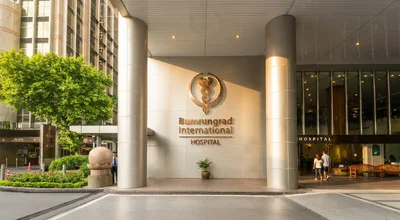
Bumrungrad International Hospital
Full-service hospital with over 1,200 physicians treating 520,000+ international patients a year.
View hospital profile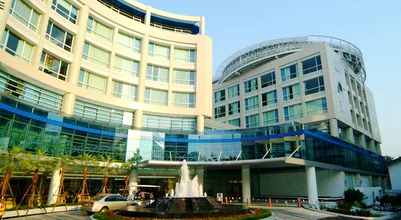
Bangkok Hospital
BDMS flagship hospital campus with standalone heart, cancer, and neuro-orthopaedic hospitals.
View hospital profile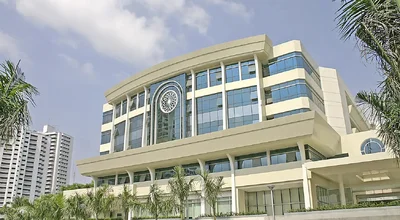
Samitivej Sukhumvit Hospital
Full-service hospital known for paediatrics, home to Thailand's first private children's hospital.
View hospital profile
Tell Us What You Need. We Do the Rest.
Share what you're considering and we'll come back with surgeon options, pricing, and a clear plan.
- Real hospital pricing with zero markup
- Matched with a specialist experienced in your specific procedure
- Full coordination from consultation to recovery


Trusted by patients worldwide
The complete guide to Adam's Apple Shaving in Thailand
Everything below is for readers who want the full detail: costs broken down, types and techniques, recovery, risks and safety, and planning your trip.
Tracheal Shave Surgeons & Clinics in Thailand
Even for a procedure this straightforward, the right surgeon and facility make a measurable difference to the result and the scar.
Leading Hospitals in Bangkok
Our partner hospitals and clinics have dedicated gender-affirming surgery teams. For standalone tracheal shave, the procedure can be performed at a specialist clinic with day-case facilities. When combined with FFS, it is done at a JCI-accredited hospital with full operating theatre and overnight capacity.
Experienced Tracheal Shave Surgeons
Our partner surgeons perform chondrolaryngoplasty regularly as both a standalone procedure and as part of comprehensive FFS. They have specific training in laryngeal anatomy and understand the precise limits of safe cartilage removal. That routine familiarity with the anatomy is what distinguishes a good result from an average one.
What to Look for in a Surgeon
Ask specifically about their chondrolaryngoplasty volume and whether they routinely assess vocal cord position before surgery. Review before-and-after photos focusing on scar quality and degree of reduction. A surgeon who discusses the limits of how much cartilage can be removed, rather than promising a perfectly flat neck regardless, is usually the better choice.
Understanding Your Results
Tracheal shave results are permanent and visible almost immediately. Here is what to expect.
Typical Tracheal Shave Results
The visible laryngeal prominence is reduced to a smooth, flat, or gently curved anterior neck. The degree of reduction depends on the size of the thyroid cartilage and the position of the vocal cords. Most patients achieve a neck profile where the Adam's apple is no longer detectable in profile or when swallowing.1 The change is subtle in scale but significant in daily comfort.
What Results Can You Expect?
Results are visible within days as swelling subsides. The scar at the incision site takes 2–3 months to fully mature and blend. By that point, most patients report the scar is essentially invisible, especially if the incision was placed in a natural crease. The smooth neck contour is permanent and requires no maintenance.
Tracheal Shave Cost in Thailand
Average Cost of Tracheal Shave
Chondrolaryngoplasty in Thailand typically costs between $1,500 and $2,700. The price depends on whether it is performed as a standalone procedure or added to an FFS session. Standalone cases are usually at the lower end. Adding it to an existing FFS plan involves minimal extra cost because the operating time is short.
Cost Breakdown
The total covers the surgeon's fee, local anaesthesia with sedation (or a share of general anaesthesia if combined with FFS), facility or theatre fees, post-operative medications, and follow-up appointments including suture removal. There is no additional equipment or implant cost.
What Affects the Price?
The main variables are whether the procedure is standalone or combined and the facility where it is performed. Standalone cases at a clinic cost less than those at a full hospital. If performed as part of an FFS session under general anaesthesia, the marginal cost of adding tracheal shave is relatively small.
Thailand vs International Price Comparison
Tracheal shave in Thailand costs 40–60% less than equivalent procedures in the US ($4,500–$8,300), Australia (A$4,200–A$7,500), and UK (£3,800–£6,800). For a procedure this straightforward, the savings are substantial, and the technique and aftercare are identical to what you would receive at home.
Non-Surgical Alternatives to a Tracheal Shave
Some people reach for non-surgical ways to soften how the Adam's apple reads before deciding on surgery, and they can genuinely help in the moment. Makeup contouring, posture, higher or layered necklines, and a chin-lengthening haircut all draw the eye away from the throat, and many trans women use them comfortably for years. They are worth knowing about, and there is no rush to move past them.
What none of these can do is change the cartilage itself. The Adam's apple forms when the thyroid cartilage grows and angles forward during testosterone-driven puberty, and once it has developed, oestrogen and hormone therapy do not shrink it back. Voice therapy changes how you sound, not how the neck looks. So camouflage stays camouflage: it works while the lighting, clothing, and angle cooperate, and stops the moment they do not, which is exactly where many people find it wears thin.
A tracheal shave is the route when you want the prominence physically reduced rather than concealed, with a smooth neck that holds in any light, profile, or photograph and needs no daily management. Because it works on the cartilage directly, the change is lasting, and that is what the rest of this page covers.
Types of Tracheal Shave Procedures
The procedure itself is straightforward, but the surgical approach varies depending on whether it is performed as a standalone procedure or combined with other neck or facial work.
Standalone Chondrolaryngoplasty
Performed as an isolated procedure under local anaesthesia with sedation. A single small incision directly over the thyroid cartilage gives the surgeon access to shave the prominence. This is the most common approach when no other neck procedures are planned.
- Quick procedure, typically 30–45 minutes
- Local anaesthesia with sedation means faster recovery than general
- Incision hidden in a natural neck crease
- Best for: patients wanting tracheal reduction as their only procedure
Combined with FFS or Neck Procedures
When chondrolaryngoplasty is part of a broader FFS session or combined with submentoplasty, the cartilage is accessed through an existing incision, either a submental approach or the same theatre session under general anaesthesia. No additional neck scar is needed.
- Avoids a separate neck incision by using an existing surgical approach
- Minimal added operating time when combined with FFS
- Single anaesthetic and single recovery period
- Best for: patients already having FFS or submental contouring who want to add tracheal shave
Tracheal Shave Techniques
The technique is determined by how the surgeon accesses the cartilage and whether the procedure is combined with other work. The amount of cartilage that can be safely removed depends on the vocal cord attachment point, which is assessed before surgery.
Direct Cervical Approach
A 2–3 cm incision in a natural neck crease directly over the thyroid cartilage. The surgeon carefully exposes the cartilage and shaves it down using a scalpel or burr, checking the contour from multiple angles before closing. This is the most common standalone technique.
- Direct visualisation allows precise, symmetrical reduction
- Scar sits in a natural crease and fades to a fine line
- Well-established technique with predictable outcomes
- Best for: standalone tracheal shave where no other neck work is planned
Submental or Combined Approach
When performed alongside submentoplasty or within an FFS session, the surgeon accesses the thyroid cartilage through an existing incision beneath the chin. This avoids adding a separate neck scar and consolidates recovery into a single period.
- No additional neck incision required
- Ideal when combining with chin liposuction, neck lift, or FFS
- Single recovery period for all neck and facial procedures
- Best for: patients already having chin or neck work who want tracheal shave added
Needle-Localised Cartilage Reduction
Before shaving begins, the surgeon places a fine needle to mark where the vocal cords attach to the inner surface of the thyroid cartilage. That marker shows the exact safe limit of reduction, so the cartilage above it can be shaved confidently while the vocal cord insertion is protected. It is a refinement of standard technique rather than a different operation, and surgeons experienced in gender-affirming work use it to push the reduction as far as the anatomy safely allows.
- A needle marks the vocal cord attachment point before any cartilage is removed
- Allows maximum safe reduction without risking the vocal cords
- Particularly useful when the Adam's apple is prominent and a deeper shave is wanted
- Best for: prominent cartilage where confident, maximal reduction matters
Tracheal Shave Recovery Timeline
Days 1–2
Mild soreness and a sensation of tightness in the throat are normal after the cartilage has been reduced. You may notice slight swelling at the incision site and a temporary scratchiness when swallowing. Pain is minimal and managed with simple analgesics. Rest your voice as much as practical.
Days 3–5
Swelling subsides and throat discomfort diminishes noticeably. You can resume speaking normally, just avoid straining or raising your voice. The incision is covered with steri-strips or a light dressing. Most patients feel well enough to go out comfortably.
Week 1–2
Residual swelling resolves and the smoother neck profile becomes clearly visible. Sutures are removed at your follow-up appointment around day 7. Normal activities including light exercise can resume. Keep the scar out of direct sunlight.
Months 1–3
The incision scar fades from pink to a fine, nearly invisible line sitting within a natural neck crease. The smooth neck contour is fully established and permanent. No further follow-up is typically needed after your departure clearance.
When Can You Fly After a Tracheal Shave?
Most patients can fly 7–10 days after the procedure, once sutures have been removed and healing is confirmed at your follow-up. Cabin pressure changes do not affect the surgical site. The procedure is gentle enough that travel is straightforward once the incision has closed.
When Can You Return to Work and Exercise?
Most patients can return to desk work within 3–5 days. Light exercise can resume after one week. Avoid activities that involve straining, heavy lifting, or neck hyperextension for two weeks. Swimming should wait until the incision is fully healed, typically around 10 days.
When Will You See Final Results?
The smoother neck contour is visible as soon as the initial swelling subsides, usually within the first week. The incision scar takes 2–3 months to fade fully and blend into the natural neck crease. The result is permanent, thyroid cartilage does not regenerate once removed.
Anaesthesia for a Tracheal Shave
A standalone tracheal shave in Thailand is performed under local anaesthesia with sedation. This means you are relaxed and pain-free but not fully asleep, which keeps the procedure short and the recovery gentler than going under general. Numbing medication is applied to the neck so you feel no pain, while the sedation keeps you calm and drowsy throughout. An anaesthetist or trained team monitors you the whole time.
There is a practical reason this approach suits the procedure well: working close to the larynx, the surgeon can keep light contact with you and check your voice as they shave the cartilage, which helps protect the vocal cords. If your tracheal shave is combined with FFS or other neck work in the same session, it is instead done under general anaesthesia as part of that operation, and your surgeon and anaesthetist decide the safest plan for your case.
Before you are cleared, you have a pre-operative assessment that reviews your general health, any throat or vocal-cord history, and the medications you take. You feel nothing during the surgery itself. Afterwards, most people notice only mild soreness and a scratchy throat for a few days, more a sense of tightness than sharp pain, and it is easily managed with the simple pain relief your surgeon prescribes.
Risks and Safety of Tracheal Shave
Chondrolaryngoplasty is a low-risk procedure, but it operates in close proximity to the vocal cords and laryngeal structures.1 Careful surgical technique is essential to protect voice function.
- Temporary voice hoarseness or subtle change in pitch (usually resolves within days)
- Permanent voice change or loss of pitch range (dysphonia) if the vocal cord attachment is compromised (rare with experienced surgeons)1
- Haematoma or seroma (a collection of blood or fluid) at the incision, which may need draining
- Minor swelling or bruising at the incision site2
- Visible scarring if the incision is not well-placed (rare with experienced surgeons)
- Incomplete reduction requiring a touch-up procedure
- Infection at the incision site (rare)
- Temporary discomfort or scratchiness when swallowing
Before surgery, the position and attachment of your vocal cords relative to the thyroid cartilage are assessed to determine how much cartilage can be safely removed. This ensures maximum reduction while preserving voice quality. Any anatomy-specific risks are discussed before you proceed.
Is Tracheal Shave Safe in Thailand?
Yes. Chondrolaryngoplasty is a well-established, low-risk procedure. At accredited hospitals with gender-affirming surgical teams, the complication rate is very low. The key safety factor is the surgeon's understanding of laryngeal anatomy, specifically the relationship between the thyroid cartilage and the vocal cord attachment. Our partner surgeons assess this routinely.
How to Reduce Risks
Choose a surgeon who performs chondrolaryngoplasty regularly, not occasionally. Ensure a pre-operative assessment of your vocal cord position is part of the plan. Follow instructions about voice rest in the first few days. If you smoke, stopping at least two weeks before surgery improves incision healing. These are simple measures that significantly reduce the already low risk profile.
Will It Affect My Voice?
The risk of permanent voice change from chondrolaryngoplasty is very low when performed by an experienced surgeon. The vocal cords sit behind the thyroid cartilage, and the shaving is done on the exterior surface without entering the larynx. Mild temporary hoarseness in the first few days is possible but resolves on its own.
Planning Your Trip to Thailand for Tracheal Shave
A standalone tracheal shave requires a shorter stay than most facial procedures. Here is what to plan for.
How Long to Stay in Thailand
Plan for 7–10 days minimum. This covers your consultation (day 1), the procedure (day 2–3), a few days of initial recovery, suture removal around day 7, and a final follow-up before you fly home. If combined with FFS, the stay extends to 14–21 days based on the broader recovery timeline.
What's Included in a Medical Trip
Your coordinator handles scheduling, transfers, and all follow-up appointments. The surgical quote covers the surgeon's fee, anaesthesia, facility fees, medication, suture removal, and follow-up visits. Flights and accommodation are arranged separately, though your coordinator can recommend nearby options.
Standalone vs Combined Trip
If tracheal shave is your only procedure, the trip is short and straightforward, you can be back to sightseeing within a few days. If it is part of an FFS plan, the tracheal shave adds almost nothing to the overall recovery timeline. In either case, Bangkok is the practical base for proximity to your surgical team.
Related Procedures
Other procedures that address similar goals or conditions, in case one of them is a closer fit for you.
Planning your treatment in Thailand
Independent guides to help you weigh the decision, before you commit to anything.
Common Questions About Adam's Apple Shaving
Everything you need to know before your procedure

Medical References
Keep researching with AI
Open this guide in your AI assistant to dig deeper and ask the questions it didn't answer.
Opens in a new tab with this guide already loaded.
Medical disclaimer: Content on this site is provided for informational purposes and should not be treated as medical advice. Outcomes, timelines, and eligibility differ from person to person. Consult a qualified medical professional before making any decisions about surgery or treatment.
Ready to Get Started?
Speak with our care coordinators for a free, no-obligation consultation and personalised quote.
Get a Free Quote


What patients say
In their own words, from people we've helped plan treatment in Thailand.
“I was on an NHS waiting list for 18 months. With you I had my hip done five weeks after my first email, and I was playing golf again by spring.”
“My daughter came out with me and Bea got her a room right next to mine. Having her close by helped a lot in the first few days after surgery.”
“...Nick spent a long time on the phone going through the three hospitals with me, the surgeons, the costs, how long I’d need to stay. I felt like he actually listened.”
“Our coordinator met us at the hospital on the first day and translated anything we didn’t understand. We never felt lost, and every appointment was booked before we even arrived.”
“Very thorough health check, and the doctor went through all my results with me the same afternoon. It was all done in one day. Will be booking again next year.”
“...sent all my documents to my GP at home without me even asking. Little things like that mean a lot when you’re dealing with a hospital in another country.”
“My wife and I felt supported from the first phone call right up to my last follow-up. Having someone to ask whenever we had a question took a lot of pressure off.”
“Quick, simple and well organised. The hospital was excellent, I was in and out the same morning, and Mint had a driver waiting to take me back to my hotel...”


