Varicose Vein Treatment in Thailand Your guide to cost, top specialists & hospitals
Treating varicose veins is not vanity. It is about stopping the aching, swelling, and progression before complications develop.
What Is Varicose Vein Treatment?
Also known as: Varicose Vein Removal · Endovenous Ablation · Phlebectomy
Varicose vein treatment is a minimally invasive procedure that closes faulty leg veins by sealing them from the inside. A thin fibre or needle delivers laser heat, radiofrequency energy, or a foam medicine to the vein wall, which collapses and is absorbed by the body. Blood reroutes through the healthy deeper veins, so the aching, heaviness, and visible bulging ease. It is done under local anaesthesia as a day case1,2, usually in 30 to 90 minutes.
Varicose veins happen when tiny one-way valves in the surface veins weaken and let blood pool, so this is a plumbing problem, not vanity. If the throbbing and swelling have been wearing on you, this is where it gets quieter. Your specialist maps your veins with ultrasound first, so treatment targets the actual source, not just what shows on the surface.
The treated vein stays closed for most people, and symptoms usually improve within the first week. The tendency for valve weakness does not vanish, though, so new veins can appear elsewhere over time. Whether treatment will genuinely help comes down to what your ultrasound shows, which is what a consultation is for.
It can address a range of concerns, including:
Am I a Good Candidate for Varicose Vein Treatment?
Suitability rests on what the duplex ultrasound shows, not on how the veins look from the outside.
Duplex ultrasound mapping decides whether treatment will work, because it shows exactly where the valve failure sits.
Superficial reflux confirmed: Specialists look for valve failure in the great or small saphenous vein on duplex. This is the problem endovenous treatment fixes.
Deep system healthy: If duplex shows the deep veins are the primary problem, sealing the surface veins will not help and the plan is reconsidered.
Mapped before any plan: Ideally the specialist who scans is the one who treats, so the procedure targets the actual source of reflux rather than just the visible veins.
Treatment is aimed at symptomatic, progressing veins rather than purely cosmetic ones.
Aching, heaviness, swelling: Leg symptoms that worsen through the day, plus night cramps or restless legs, are the classic indication.
Skin changes or ulcer risk: Discolouration, eczema, and early venous ulceration signal disease that genuinely warrants intervention.
Conservative measures exhausted: Compression and exercise no longer providing adequate relief is the usual trigger to treat rather than watch.
A short health review confirms the procedure can run safely under local anaesthesia with light sedation.
Good general health: No general anaesthetic is needed; tumescent local anaesthesia with sedation keeps the bar low for most patients.
Clotting history reviewed: A previous deep vein thrombosis or known clotting disorder needs specialist review before treatment goes ahead.
Medication check: Blood-thinning medication is paused for about a week beforehand, but only where it is safe to do so.
Not pregnant or recently postpartum: Veins often improve on their own after pregnancy, so treatment waits.
Treated veins stay closed; the underlying tendency does not disappear.
High closure rates: Laser and radiofrequency ablation have high long-term closure rates, and leg symptoms typically improve within the first week.
Cosmetic result takes time: Bruising and discolouration fade over one to three months, with the best cosmetic result around three months.
New veins can appear: Valve weakness is constitutional, so new varicosities can develop in other locations over the years. Healthy weight, activity, and compression during prolonged standing reduce that risk.
Who is not suitable for varicose vein treatment?
- Deep venous disease identified as the primary problem on duplex
- History of DVT or a clotting disorder not yet reviewed by the specialist
- Pregnant or recently postpartum, when veins often improve on their own
- Anticoagulant medication that cannot be safely paused
- Significant peripheral arterial disease, which makes the compression stockings needed after thermal ablation or phlebectomy unsafe
- Known patent foramen ovale, which steers treatment towards thermal or adhesive closure rather than foam sclerotherapy
Pricing
How Much Will Varicose Vein Treatment Cost in Thailand?
What varicose vein treatment costs at accredited hospitals in Thailand, and what your final quote depends on.
Get your exact price
Tell us what you're considering and we'll send a personalised quote from accredited clinics within 24 hours.
Get my free quoteTypical prices in Thailand
Typical ranges based on recent hospital quotes. Your exact price depends on the hospital and how complex your case is, and is confirmed at your teleconsultation.
Varicose Vein Treatment
A faulty leg vein is sealed shut from the inside with heat or medical glue, and the bulging branch veins are lifted out through tiny punctures in the same session.
| Endovascular ablation with stab avulsion, one leg 1 night Heat threaded into the faulty truncal vein to seal it, with branch veins lifted out the same session | $6,200 ฿212,000 |
| Endovascular ablation with stab avulsion, both legs 1 night The same treatment on both legs in one session, for disease confirmed on both sides | $10,200 ฿348,000 |
| Endovascular glue with stab avulsion, one leg 1 night Non-thermal adhesive closure of the same vein, with no tumescent anaesthesia needed | $6,100 ฿209,000 |
Typically not included
- Duplex ultrasound mapping, laboratory tests and other investigations, and the mapping is what decides which veins are treated
- Additional nights beyond the one stated
- Devices not specified in the package
- Pre-operative medical clearance and pre-anaesthetic assessment, and specialist consultant fees outside the treating team
Get your exact price
Tell us what you're considering and we'll send a personalised quote from accredited clinics within 24 hours.
Hospitals Trusted for Varicose Vein Treatment
From internationally accredited flagships to dedicated specialist hospitals, these are the kinds of facilities where international patients have this procedure.
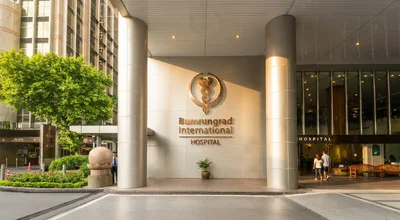
Bumrungrad International Hospital
Tertiary hospital with over 1,200 physicians treating 520,000+ international patients a year.
View hospital profile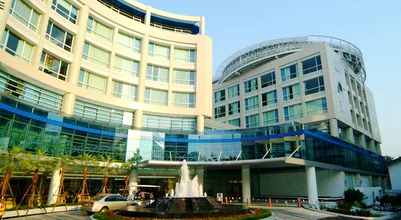
Bangkok Hospital
BDMS flagship tertiary campus with standalone heart, cancer, and neuro-orthopaedic hospitals.
View hospital profile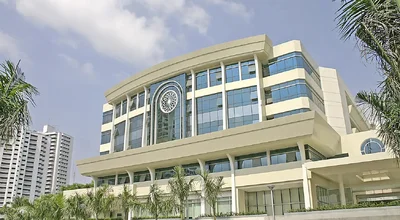
Samitivej Sukhumvit Hospital
Tertiary hospital known for paediatrics, home to Thailand's first private children's hospital.
View hospital profile
Tell Us What You Need. We Do the Rest.
Share what you're considering and we'll come back with surgeon options, pricing, and a clear plan.
- Real hospital pricing with zero markup
- Matched with a specialist experienced in your specific procedure
- Full coordination from consultation to recovery


Trusted by patients worldwide
The complete guide to Varicose Vein Treatment in Thailand
Everything below is for readers who want the full detail: costs broken down, types and techniques, recovery, risks and safety, and planning your trip.
Varicose Vein Specialists & Hospitals in Thailand
Varicose vein treatment requires vascular expertise and duplex ultrasound skills. Here is what to look for.
Leading Hospitals in Bangkok
Our partner hospitals have dedicated vascular centres with duplex ultrasound, endovenous laser and RF platforms, and sclerotherapy capability. They treat varicose veins at high volume as a core part of their vascular service, not as an occasional add-on.
Experienced Vascular Specialists
Our partner specialists are board-certified in vascular surgery with specific training in endovenous techniques. They perform their own ultrasound mapping. The specialist who scans is the same person who treats, which improves accuracy and outcomes.
What to Look for in a Specialist
Check that the specialist performs duplex ultrasound themselves rather than relying on a separate sonographer. Verify that all treatment modalities are available: laser, RF, foam, and phlebectomy. Ask whether follow-up ultrasound is included to confirm closure and screen for DVT.
Understanding Your Results
Varicose vein treatment delivers both symptomatic relief and visible cosmetic improvement, often dramatic.
Typical Varicose Vein Treatment Results
Aching, heaviness, and swelling improve within the first week. Visible veins shrink progressively over two to four weeks. Skin changes (eczema, discolouration) improve gradually over months. Ulcers related to venous insufficiency begin to heal once the underlying reflux is corrected.
What Results Can You Expect?
Endovenous laser and radiofrequency ablation are highly effective at sealing the faulty vein, though no treatment closes every vein.3 Most patients report dramatic symptom improvement within the first two weeks. The cosmetic result continues improving for three months. Compression stockings may be discontinued once your specialist confirms stable closure.
Varicose Vein Treatment Cost in Thailand
What the Published Packages Cover
Our partner hospital quotes three figures, all current to the end of 2026 and all covering one night in hospital. Endovascular ablation with stab avulsion is ฿212,000 for one leg and ฿348,000 for both. The glue alternative, again with stab avulsion, is ฿209,000 for one leg. Stab avulsion means the bulging branch veins are lifted out through tiny punctures in the same session as the truncal vein is sealed, so the figure is for the whole job on that leg rather than the trunk alone. Worth noting on the night in hospital, since this is clinically a day-case procedure at home, the overnight is there because you are travelling rather than because the treatment needs it.
Treating Both Legs Together Is Cheaper Per Leg
Pricing on this procedure is per leg, and that is easy to read as a warning. Here it works the other way. Two legs treated in one session is ฿348,000, which is ฿174,000 a leg against ฿212,000 for a single leg on its own, so the second leg is effectively ฿136,000 rather than a full-price repeat. Booking two separate single-leg packages costs ฿76,000 more than the bilateral one for the same work. If your duplex scan shows disease on both sides, say so at the quoting stage rather than treating one leg and coming back.
What Sits Outside the Package
This is a surgical package rather than a cardiac one, so it is drawn tightly. Duplex ultrasound mapping, laboratory tests and other investigations are not in the figure, and on this procedure the mapping scan is what decides the plan, so it is a real cost to budget for rather than a formality. Pre-operative clearance, specialist consultant fees outside the treating team, pathology, medication for underlying conditions and anything you take home also sit outside, as do additional nights. Flights, accommodation and travel insurance are yours.
What Actually Moves the Total
Two things, and the choice of technique is not really one of them. Whether you treat one leg or both is the larger factor by a distance. The glue route is ฿3,000 below the thermal one for a single leg, which is worth knowing mainly because non-thermal adhesive closure is usually the premium option elsewhere, so if you were expecting to pay extra for it here you are not. The other variable is the workup, which is billed separately. This is one hospital's published rate rather than a Thai national price, and figures at other Thai hospitals differ in both directions.
How That Compares Internationally
A single leg works out at roughly $6,100 to $6,200 and both legs together at roughly $10,200. Private treatment runs from around $6,000 to $12,000 in the United States, A$5,000 to A$10,000 in Australia, and £4,400 to £9,000 in the UK, and public funding for varicose veins has become restrictive in several of those systems. On a single leg the Thai figure sits at the bottom of the US private range rather than below it, so the case for travelling here rests on treating both legs, on access, or on being turned down at home.
Compression and Conservative Care vs Treatment
The main non-surgical option is conservative management: graduated compression stockings worn through the day, regular walking, leg elevation, weight management, and avoiding long periods of standing still. Compression supports the failing valves from the outside, eases aching and swelling, and is often the sensible first step, especially for mild symptoms or where the diagnosis is still being worked up. For many people it is also exactly what a specialist will ask you to try before recommending anything more.
What compression cannot do is fix the underlying valve failure. It manages symptoms while it is worn and the benefit stops when you take the stockings off, so it is maintenance rather than a cure, and it does not make the bulging veins go away. Where reflux is confirmed on duplex ultrasound and symptoms are progressing, or where skin changes and early venous ulceration have appeared, guidelines generally favour treating the faulty vein rather than relying on compression alone, as the underlying disease tends to advance if the source is left untreated.
Endovenous treatment is the route when conservative measures are no longer giving adequate relief, when the duplex scan shows clear superficial reflux that can be sealed, or when skin damage means leaving it carries a real cost. It closes the faulty vein at the source rather than just supporting it, which is what the rest of this page covers. Compression is something you arrange through your own pharmacy or GP; it is not something we provide.
Types of Varicose Vein Treatment
The treatment plan depends on which veins are affected and how severe the disease is. Duplex ultrasound mapping identifies exactly where the valve failure occurs, and treatment is targeted precisely.
Truncal Vein Ablation (Great / Small Saphenous Vein)
Treatment of the main saphenous veins, the primary source of most varicose veins. Endovenous laser or radiofrequency energy seals the trunk vein, after which the visible branch varicosities often shrink on their own or are treated with sclerotherapy. This addresses the root cause, not just the visible symptoms.
- Targets the primary source of varicose veins
- Branch varicosities often resolve once the trunk is sealed
- Performed under local anaesthesia as a day case
- Best for: great or small saphenous vein reflux confirmed on ultrasound
Branch Varicosity Treatment
Visible branch veins are treated with foam sclerotherapy, phlebectomy (removal through tiny punctures), or a combination. These are the bulging veins patients see on the surface. Often treated at the same session as trunk ablation for comprehensive single-visit management.
- Treats the visible bulging veins on the surface
- Foam sclerotherapy or micro-phlebectomy through tiny punctures
- Combinable with trunk ablation in a single session
- Best for: visible branch varicosities after or alongside trunk treatment
Spider Vein Treatment (Cosmetic Sclerotherapy)
Fine thread veins and reticular veins treated with microsclerotherapy: injection of a sclerosant solution into tiny veins using a very fine needle. Primarily cosmetic but can be combined with varicose vein treatment. Multiple sessions may be needed for full clearance.
- Targets fine thread veins and reticular veins
- Primarily cosmetic with minimal downtime
- Multiple sessions may be needed for comprehensive clearance
- Best for: cosmetic improvement of spider veins on the legs
Varicose Vein Treatment Techniques
Technique depends on vein size, location, and anatomy. In many cases, techniques are combined in a single session for comprehensive treatment.
Endovenous Laser Ablation (EVLA)
A thin laser fibre inserted under ultrasound guidance delivers controlled energy to the vein wall, sealing it shut. The body gradually absorbs the treated vein. Blood reroutes naturally through healthy deeper veins. Long-term closure rates are high. The most widely used endovenous technique worldwide.
- Ultrasound-guided precision with high documented closure rates
- Performed under tumescent local anaesthesia, no general anaesthetic
- Day-case treatment, with one night in hospital on the fly-in package
- Best for: great and small saphenous vein reflux
Radiofrequency Ablation (RFA)
A radiofrequency catheter delivers segmental thermal energy along the incompetent vein, causing controlled collapse and sealing. Some studies report slightly less post-procedural bruising and discomfort compared with laser. Equivalent long-term closure rates.
- Segmental heating for consistent, controlled vein closure
- Potentially less bruising and post-procedure discomfort than laser
- Equivalent long-term outcomes to EVLA
- Best for: truncal saphenous vein reflux, patients wanting minimal post-procedure discomfort
Ultrasound-Guided Foam Sclerotherapy
Microfoam sclerosant injected under ultrasound guidance displaces blood and irritates the vein lining, causing collapse and scarring. Effective for tortuous, recurrent, or residual varicosities not amenable to thermal ablation. Can be repeated if additional veins require treatment.
- No thermal energy or incisions; injection-based treatment
- Effective for branching, tortuous, and recurrent varicose veins
- Repeatable if additional veins develop
- Best for: branch varicosities, recurrent veins, and veins unsuitable for thermal ablation
Cyanoacrylate Adhesive Closure (VenaSeal)
A medical adhesive delivered through a catheter under ultrasound guidance seals the faulty vein shut, which the body then absorbs. Because no heat is used, there is no need for tumescent anaesthetic along the vein and no risk of thermal nerve injury. Compression stockings are often not required afterwards. Closure rates are comparable to thermal ablation.
- Non-thermal, glue-based closure with no tumescent anaesthesia
- No thermal nerve-injury risk; compression often not needed afterwards
- Closure rates comparable to laser and radiofrequency
- Best for: saphenous reflux where avoiding heat or compression is preferred
Ambulatory Phlebectomy
Bulging branch varicosities are removed through a series of tiny needle-sized punctures using a small hook, under local anaesthesia. The punctures are so small they usually need no stitches and heal to become barely visible. Often combined with truncal ablation in the same session to treat both the source and the visible veins together.
- Physical removal of bulging veins through tiny punctures
- No stitches needed; punctures heal to become barely visible
- Commonly combined with truncal ablation in a single session
- Best for: prominent branch varicosities alongside or after trunk treatment
Varicose Vein Treatment Recovery Timeline
Day of Procedure
You walk out of the clinic within an hour. A compression stocking is applied to the treated leg. Mild tenderness along the treated vein is normal. Light walking is encouraged immediately; it promotes healthy circulation and recovery.
Days 1–3
Short daily walks continue. Some bruising and firmness along the treated vein is expected and normal. Compression stockings should be worn as directed, typically for one to two weeks. Over-the-counter pain relief handles any discomfort.
Days 4–7
Bruising fades and leg symptoms improve noticeably. Light exercise such as walking and swimming resumes. A follow-up duplex ultrasound confirms successful vein closure and checks for deep vein thrombosis. Clearance to fly is given.
Weeks 2–4
Most patients feel fully recovered. Residual skin discolouration fades gradually over weeks to months. Compression stockings may be discontinued on your specialist's advice. The final cosmetic result continues improving for two to three months.
When Can You Fly After Varicose Vein Treatment?
Most patients can fly home a few days after treatment once a follow-up ultrasound has confirmed vein closure and screened for clots; note that some specialists advise avoiding flights for around two weeks after thermal ablation, so confirm the timing with your treating specialist. Wear compression stockings during the flight, stay hydrated, and perform regular calf exercises. Request an aisle seat for easy movement.
When Can You Return to Work and Exercise?
Walking immediately. Because light sedation is usual, do not drive or do demanding work on the day of treatment; desk work and driving resume from the next day4,1 once the sedation has worn off. Light exercise within a few days. Avoid heavy weightlifting and hot baths for two weeks. Swimming is fine once any puncture sites have healed. Compression stockings are worn during exercise for the first two weeks.
When Will You See Final Results?
Leg aching and heaviness improve within the first week. Visible veins begin to shrink within two to four weeks. Any skin discolouration or bruising fades over one to three months. The best cosmetic result is typically seen at three months, though improvement continues gradually.
Anaesthesia for Varicose Vein Treatment
Endovenous varicose vein treatment is done under tumescent local anaesthesia, often with light sedation, so there is no need for a general anaesthetic. You stay awake but relaxed and comfortable throughout. A dilute anaesthetic fluid is infiltrated along the length of the vein, which numbs it, protects the surrounding tissue from the heat, and means you feel pressure rather than pain while the vein is sealed. The whole treatment usually takes 30 to 90 minutes and you walk out within the hour.
Whether sedation is added, and how much, is decided by your specialist and the anaesthetist based on how many veins are being treated, whether both legs are done in one session, and your own preference and medical history. Where sedation is used, an anaesthetist or trained team monitors your heart rate, blood pressure, and oxygen throughout, which is standard at the accredited hospitals we work with.
Before treatment you have a pre-operative assessment, including a review of your medical history and any blood-thinning medication, which is paused for about a week beforehand only where it is safe to do so. You feel nothing sharp during the procedure itself; afterwards, mild tenderness, tightness, and bruising along the treated vein are normal for a few days and settle with over-the-counter pain relief.
Risks and Safety of Varicose Vein Treatment
Endovenous varicose vein treatments are minimally invasive with an excellent safety profile. Serious complications are rare.
- Bruising along the treated vein (expected and temporary)
- Temporary skin numbness near the treatment site2
- Skin discolouration (hyperpigmentation), usually temporary; may take months to fade
- Superficial thrombophlebitis, a tender, palpable, cord-like firmness along the treated vein (common after laser or radiofrequency ablation; harmless and distinct from DVT)
- Skin burn where tumescent anaesthetic is inadequate (specific to laser and radiofrequency ablation; uncommon)
- With foam sclerotherapy, transient visual disturbance, headache, or rarely temporary neurological events from microbubbles entering the circulation, with a very small stroke risk in people who have a patent foramen ovale
- Allergic or hypersensitivity reaction to the cyanoacrylate adhesive used in VenaSeal closure (foreign-body reaction or contact allergy)
- Deep vein thrombosis (rare, screened for at follow-up ultrasound)2
- Nerve irritation causing temporary tingling or numbness
- Vein recurrence (new varicose veins can develop over time in other locations)
The most important follow-up step is the post-treatment duplex ultrasound, performed before you fly home, which confirms the treated vein is sealed and screens for DVT. This is standard at our partner hospitals, though it is billed separately from the treatment package rather than inside it.
Is Varicose Vein Treatment Safe in Thailand?
Yes. Endovenous ablation and foam sclerotherapy are standard treatments performed worldwide. Our partner hospitals are JCI-accredited with board-certified vascular specialists who use the same laser and RF platforms found in Western vein clinics. Follow-up duplex scanning is performed before you leave Thailand.
How to Reduce Your Risk
Choose a vascular specialist rather than a cosmetic clinic. Insist on duplex ultrasound mapping before any treatment; this identifies which veins are causing the problem. Confirm that follow-up ultrasound is included to check for DVT and vein closure. Wear compression stockings as directed.
Will My Varicose Veins Come Back?
Treated veins are permanently sealed or removed and will not return. However, the underlying tendency for valve weakness means new varicose veins can develop in other locations over time3,4. Maintaining a healthy weight, staying active, and wearing compression stockings during prolonged standing reduce this risk.
Planning Your Trip to Thailand for Varicose Vein Treatment
Most patients need three to five days in Thailand. One of the easiest medical trips to plan.
How Long to Stay in Thailand
Three to five days covers the full trip. Day one includes consultation and duplex ultrasound mapping. Treatment happens on day two. Recovery is immediate; walk out and resume light activities. A follow-up ultrasound on day three to five clears you to fly home.
What's Included in a Medical Trip
Your care coordinator arranges consultation, treatment scheduling, and follow-up. The package covers the specialist's fee, the procedure including stab avulsion of the branch veins, anaesthesia and one night in hospital. Duplex ultrasound mapping, pre-operative clearance, laboratory tests and take-home medication are billed on top. Flights and accommodation are separate.
Recovery in Bangkok vs Phuket
Either works. Varicose vein treatment has minimal recovery. Bangkok is practical for the assessment and follow-up. Some patients treat in Bangkok and head to the coast the same week. Recovery is light enough that this is entirely feasible.
Related Procedures
Other procedures that address similar goals or conditions, in case one of them is a closer fit for you.
Planning your treatment in Thailand
Independent guides to help you weigh the decision, before you commit to anything.
Common Questions About Varicose Vein Treatment
Everything you need to know before your procedure

Medical References
Keep researching with AI
Open this guide in your AI assistant to dig deeper and ask the questions it didn't answer.
Opens in a new tab with this guide already loaded.
Medical disclaimer: Content on this site is provided for informational purposes and should not be treated as medical advice. Outcomes, timelines, and eligibility differ from person to person. Consult a qualified medical professional before making any decisions about surgery or treatment.
Ready to Get Started?
Speak with our care coordinators for a free, no-obligation consultation and personalised quote.
Speak to Our Team