NAD+ Infusions in Thailand Your guide to cost, top specialists & hospitals
Cellular energy starts at the molecular level, and NAD+ is the coenzyme that keeps the machinery running.
What Are NAD+ Infusions?
Also known as: NAD Drip · Nicotinamide Adenine Dinucleotide Infusion
NAD+ infusions are an intravenous wellness therapy that raises your level of nicotinamide adenine dinucleotide, a coenzyme cells use to make energy and repair DNA1,2, by delivering it into the bloodstream. NAD+ powers the production of ATP, the cell's energy currency, and activates sirtuins and PARPs, repair enzymes that respond to cellular stress. The drip runs slowly over two to four hours, usually as a course of three to five sessions on consecutive days, which raises plasma NAD+ faster than oral supplements.
If your energy, sleep, or focus has slipped with age, it helps to know what to expect. Your specialist starts with blood work and sets the dose and drip rate around your results. The pace is gentle on purpose, since too fast can cause brief flushing or chest tightness, and a nurse can ease it at any point.
We would rather be straight than oversell. Raising NAD+ is well established, but whether it helps healthy adults long term is not settled by large trials, and effects fade over months. Follow-up blood work, not how you feel alone, shows real change. A good consultation covers what is realistic for you.
It can address a range of concerns, including:
Am I a Good Candidate for NAD+ Infusions?
NAD+ infusions suit most healthy adults aged 35 and over; the screening that matters is cardiac, and the commitment is consecutive days.
Most adults tolerate NAD+ well; the assessment focuses on cardiovascular stability, available time, and honest goals.
Cardiovascular stability: the flushing reaction can briefly raise heart rate and blood pressure, so uncontrolled hypertension, recent cardiac events, or significant arrhythmia need review before any drip.
Time for a full course: standard protocols run three to five consecutive daily sessions of two to four hours each; the benefit is cumulative.
Evidence-aware goals: IV NAD+ raises plasma levels in the short term; whether that translates to meaningful benefit in healthy adults is not yet established by large randomised trials.
Baseline blood work: programmes start with metabolic and inflammatory panels so any change can be measured at follow-up, not just felt.
Who is not suitable for nad+ infusions?
- Pregnancy, breastfeeding, or near-term pregnancy plans
- Uncontrolled hypertension or a recent cardiac event until reviewed
- Unstable thyroid disorder or significant arrhythmia not yet reviewed by a cardiologist
- Active cancer or current cancer treatment
- Active severe infection
- Significant renal impairment, as NAD+ metabolites are cleared by the kidneys
- Regular anticoagulant use, which complicates repeated daily IV access until reviewed
- G6PD deficiency, which affects the metabolic pathways NAD+ feeds into
Pricing
How Much Will NAD+ Infusions Cost in Thailand?
What nad+ infusions costs at accredited hospitals in Thailand, and what your final quote depends on.
Get your exact price
Tell us what you're considering and we'll send a personalised quote from accredited clinics within 24 hours.
Get a Free QuoteTypical prices in Thailand
Typical ranges based on recent hospital quotes. Your exact price depends on the hospital and how complex your case is, and is confirmed at your teleconsultation.
NAD+ Infusions
A dose of NAD+, a coenzyme the body makes itself, is delivered into a vein through a slow drip over a couple of hours.
| Standard NAD+ infusion (250 mg) A single infusion at the standard 250 mg dose | $300 to $360 ฿10,200 to ฿12,240 |
| High-dose NAD+ infusion (500 mg) A single infusion at the higher 500 mg dose | $360 to $430 ฿12,240 to ฿14,620 |
| Course of three to five infusions Total for the full course rather than a single session | $900 to $2,500 ฿30,600 to ฿85,000 |
Typically not included
- Investigating or treating anything the baseline blood work uncovers, which is arranged and priced separately from the programme
- Any maintenance or booster course you decide on later, quoted afresh each time rather than covered by this figure
- Add-on treatments some patients combine with the drip, such as PRP or peptide therapy, quoted on their own
- The repeat blood panel drawn locally after you return home, though the specialist review of those results is included
Get your exact price
Tell us what you're considering and we'll send a personalised quote from accredited clinics within 24 hours.
Hospitals Trusted for NAD+ Infusions
From internationally accredited flagships to dedicated specialist hospitals, these are the kinds of facilities where international patients have this procedure.
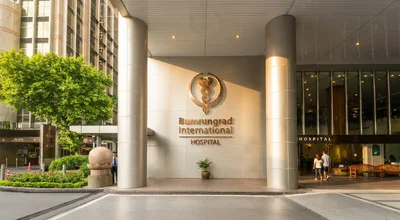
Bumrungrad International Hospital
Full-service hospital with over 1,200 physicians treating 520,000+ international patients a year.
View hospital profile
Bangkok Hospital
BDMS flagship hospital campus with standalone heart, cancer, and neuro-orthopaedic hospitals.
View hospital profile
Samitivej Sukhumvit Hospital
Full-service hospital known for paediatrics, home to Thailand's first private children's hospital.
View hospital profile
Tell Us What You Need. We Do the Rest.
Share what you're considering and we'll come back with surgeon options, pricing, and a clear plan.
- Real hospital pricing with zero markup
- Matched with a specialist experienced in your specific procedure
- Full coordination from consultation to recovery


Trusted by patients worldwide
The complete guide to NAD+ Infusions in Thailand
Everything below is for readers who want the full detail: costs broken down, types and techniques, recovery, risks and safety, and planning your trip.
NAD+ Infusion Clinics in Thailand
The quality of an NAD+ programme depends on the clinic's infusion protocols, the pharmaceutical grade of their NAD+ supply, and the physician designing your course.
Leading Clinics in Bangkok
Our partner clinics source pharmaceutical-grade NAD+ from certified suppliers with full batch documentation. Infusion suites are designed for multi-hour sessions with comfortable recliners, individual monitoring stations, and attending nursing staff throughout. These are dedicated longevity and regenerative medicine centres, not general wellness spas with an IV menu.
Longevity Medicine Specialists
Partner physicians hold qualifications in regenerative, anti-aging, or functional medicine and design NAD+ programmes based on your blood work and clinical assessment. They set dosing, infusion rates, and complementary therapies according to your individual metabolic profile rather than a standard package.
What to Look For
Ask where the clinic sources its NAD+ and whether batch certificates are available. Confirm that infusion rates are managed by trained nursing staff, not self-administered or dripped at a fixed rate without monitoring. Check whether the programme includes baseline blood work and follow-up testing, which is the only way to verify biological benefit.
Measuring NAD+ Therapy Outcomes
NAD+ benefits should be tracked objectively, not assessed by feel alone. Here is how outcomes are measured and what realistic expectations look like.
Objective Tracking
Responsible programmes use pre- and post-treatment blood panels to measure inflammatory markers (hs-CRP, IL-6), metabolic indicators (fasting insulin, HbA1c), and cellular health proxies. Some clinics also track intracellular NAD+ levels directly. This data provides an objective record of whether the protocol produced measurable biological change.
Realistic Expectations
NAD+ infusion is not a single-session miracle treatment. Measurable improvements in energy metabolism, sleep architecture, and inflammatory markers are reasonable expectations from a full multi-day course. Cognitive and physical energy improvements are commonly reported within the first week. The effects diminish over months as NAD+ levels naturally decline again, which is why maintenance protocols exist.
NAD+ Infusion Cost in Thailand
Average Cost of NAD+ Infusions
A full course of three to five sessions in Thailand runs $900 to $2,500 in total. Five sessions is the standard protocol for most anti-ageing goals, so the course figure is the one worth budgeting for rather than the single-session price. Bought session by session, a single infusion is $300 to $430 depending on whether you have the standard 250 mg or the high-dose 500 mg. High-dose programmes and combination protocols with additional IV nutrients sit at the higher end.
What Affects the Price?
Dose is the biggest variable; a 500 mg session costs more than a 250 mg session because the pharmaceutical-grade NAD+ compound itself is the most expensive input. The number of sessions, whether complementary drips are included, and baseline plus follow-up blood panels all contribute to the total programme cost.
Thailand vs International Price Comparison
A single NAD+ infusion in Thailand is $300 to $430, against $600 to $1,200 a session in the US, A$550 to A$1,050 in Australia, and £500 to £900 in the UK. Because that gap repeats on every session, a three to five session course at $900 to $2,500 here costs a fraction of the same protocol run privately at home. The savings make multi-session protocols genuinely accessible; in the West, cost often forces patients to do fewer sessions than their protocol requires.
Types of NAD+ Protocols
Not every NAD+ programme is the same. Dosage, duration, and supporting therapies vary based on what you are trying to achieve. Your specialist will match the protocol to your goals and baseline markers.
Standard NAD+ Infusion Course
The most common anti-aging approach. Daily IV sessions of 250–500 mg NAD+ over two to four hours across three to five consecutive days. Targets general cellular energy, sirtuin activation, and recovery from age-related NAD+ depletion.
- 250–500 mg NAD+ per session via controlled IV drip
- 3–5 consecutive daily sessions for cumulative benefit
- Infusion rate adjusted to minimise flushing and chest tightness
- Best for: general anti-aging, energy restoration, and cognitive enhancement
High-Dose NAD+ Protocol
Delivers 750–1000 mg per session over longer infusion windows with closer monitoring. Designed for patients with specific therapeutic needs such as chronic fatigue syndrome, neurological support, or post-addiction recovery, where higher intracellular NAD+ concentrations are the goal.
- 750–1000 mg NAD+ per session over 4–6 hours
- 5–7 sessions with physician oversight
- Often paired with amino acid and micronutrient support
- Best for: chronic fatigue, neurological conditions, and post-addiction cellular repair
NAD+ Combination Programme
Integrates NAD+ infusions with glutathione, Myers' cocktail, vitamin C, and other IV nutrients across a structured multi-day stay. The additions target oxidative stress and general wellbeing alongside NAD+ replenishment, chosen from your blood work rather than applied as a fixed bundle.
- NAD+ paired with glutathione and B-complex on alternating sessions
- Pre- and post-programme blood panels included
- Protocol adjusted to individual metabolic and inflammatory profiles
- Best for: patients wanting comprehensive cellular support across multiple pathways
NAD+ Delivery Methods and Supporting Therapies
How NAD+ is delivered, at what rate, and what it is combined with all affect how well the protocol works. Here is what each component involves.
IV Infusion Rate Management
NAD+ must be infused slowly to avoid side effects. Pushing the drip too fast causes flushing, nausea, and chest pressure. Experienced Thai clinics start at a conservative rate and increase gradually based on your tolerance, balancing effective dosing with patient comfort across the session.
- Slow initial drip rate increased gradually based on tolerance
- Attending nurse monitors for flushing, nausea, or chest tightness
- Each session runs 2–4 hours depending on dose and individual response
- Best for: ensuring therapeutic NAD+ levels without unnecessary discomfort
Complementary IV Nutrients
NAD+ does not work in isolation. Many clinics add glutathione to address oxidative stress, B vitamins to support methylation pathways, and amino acids to provide the building blocks for cellular repair. These additions are selected based on your blood work rather than applied as a default bundle.
- (link: procedures/iv-therapy/glutathione text: Glutathione) for antioxidant support
- B-complex for methylation and nervous system function
- Amino acids (taurine, glycine) for cellular repair substrates
- Best for: patients whose blood work shows deficiencies beyond NAD+ depletion alone
Biomarker Tracking
Pre- and post-programme blood panels measure inflammatory markers (hs-CRP, IL-6), metabolic indicators (fasting insulin, HbA1c), and NAD+ proxy markers. This objective data separates genuine biological improvement from placebo effect and guides decisions about repeat protocols.
- Baseline panel drawn before first session
- Follow-up panel at 6–12 weeks post-programme
- Results reviewed via telemedicine if you have returned home
- Best for: patients who want measurable evidence of benefit, not just subjective feedback
What to Expect During and After NAD+ Infusions
During the Infusion
Some patients experience mild flushing, warmth, chest tightness, or nausea as the drip runs. These are dose-rate dependent and resolve quickly when the infusion is slowed. An attending nurse monitors you throughout.
Same Day
Most patients feel an energy lift and improved mental clarity within hours of completing a session. You return to your accommodation and resume normal activities immediately; no rest period is needed.
Over the Course
Benefits accumulate with each consecutive session. By the end of a multi-day protocol, patients commonly report sustained energy, better sleep, sharper focus, and a general sense of restored vitality.
Weeks 4–12
The effects of a full NAD+ course typically last several weeks to months. Follow-up blood work confirms improvements in metabolic and inflammatory markers. Maintenance infusions every three to six months help sustain the benefit.
How Long Should You Stay?
Plan for three to seven days depending on the number of sessions. A standard five-session protocol requires five consecutive days plus a travel buffer day at each end. Some patients extend their stay to incorporate additional treatments like glutathione, PRP, or peptide therapy.
When Will You Notice Results?
Many patients report improved energy and mental clarity within hours of the first session. Cumulative benefits such as sustained energy, better sleep, and sharper cognition build over the course and typically persist for several weeks to months. Follow-up blood work at six to twelve weeks provides objective confirmation of metabolic improvement.
Maintenance Protocols
Most longevity specialists recommend a booster course of one to three sessions every three to six months to maintain elevated NAD+ levels. Between courses, oral precursors like NMN or NR can provide partial support, though they do not match the plasma levels achieved by IV delivery.
Risks and Safety of NAD+ Infusions
NAD+ is a naturally occurring molecule and IV infusion has a strong safety profile when administered at appropriate doses and drip rates. Side effects are almost always transient and manageable.
- Flushing, warmth, or redness during the infusion (dose-rate dependent)2
- Mild chest tightness or pressure sensation that resolves when the drip is slowed
- Nausea or stomach discomfort during higher-dose sessions
- Headache or lightheadedness during or shortly after the infusion
Most side effects are related to infusion speed and resolve quickly when the rate is adjusted; your attending nurse manages the drip throughout and can pause or slow it at any point. Rarer issues such as IV-site phlebitis or a hypersensitivity reaction are not speed-related, which is why every session is supervised and IV sites are rotated and checked across a multi-day course.
Is NAD+ Therapy Safe?
NAD+ is a naturally occurring molecule in the human body, and intravenous infusion at standard clinical doses has a good safety record. Side effects are usually transient and dose-rate dependent; the most common are flushing and mild nausea, both of which resolve quickly when the drip rate is reduced. Serious adverse events are rare, but the published literature does include case reports of severe nausea, vomiting, and bronchospasm-like reactions with higher-dose IV NAD+ protocols, and as with any infusion a hypersensitivity reaction is possible. This is why dosing is conservative, the rate is titrated, and a nurse supervises every session.
Evidence Base for NAD+ Therapy
Some tissue-level studies suggest NAD+ availability declines with age, though the magnitude varies by tissue and population and specific percentage figures often cited are not well-supported by direct human longitudinal data. IV supplementation as a clinical intervention is newer still, with most evidence coming from animal models, small pilot human studies, and clinical observation rather than large-scale randomised trials. A transparent clinic will explain this distinction clearly and avoid overstating what is known.
Contraindications
NAD+ infusions are not recommended during pregnancy or breastfeeding, for patients with active severe infections, or for individuals with uncontrolled heart conditions. Your specialist will review your full medical history, current medications, and blood work before approving treatment. If you are on immunosuppressive therapy, additional screening may be required.
Planning Your NAD+ Infusion Trip
Most patients need three to seven days in Thailand for a NAD+ programme. Here is how to organise your visit.
How Long to Stay
A standard five-session protocol requires five consecutive treatment days. Allow a buffer day for arrival and initial blood work plus a day after the final session for a follow-up assessment. Seven days total is comfortable. Patients doing a shorter three-session course can manage in four to five days.
What Is Included
Your programme includes pre-treatment blood panels, specialist consultation, pharmaceutical-grade NAD+ for all sessions, nurse monitoring throughout each infusion, and a dedicated care coordinator. Complementary IV nutrients are added where clinically indicated. Accommodation and flights are arranged separately, but your coordinator can recommend nearby hotels.
Preparing Before Arrival
Your clinic will send a health questionnaire covering your medical history, current medications, supplements, and treatment goals. Bring any recent blood work if available; it helps your specialist plan the protocol before you arrive. Stay well hydrated in the days before treatment, as hydration makes IV access easier and the infusion more comfortable.
Related Procedures
Other procedures that address similar goals or conditions, in case one of them is a closer fit for you.
Planning your treatment in Thailand
Independent guides to help you weigh the decision, before you commit to anything.
Common Questions About NAD+ Infusions
What to know before booking your NAD+ programme in Thailand

Medical References
Keep researching with AI
Open this guide in your AI assistant to dig deeper and ask the questions it didn't answer.
Opens in a new tab with this guide already loaded.
Medical disclaimer: Content on this site is provided for informational purposes and should not be treated as medical advice. Outcomes, timelines, and eligibility differ from person to person. Consult a qualified medical professional before making any decisions about surgery or treatment.
Ready to Get Started?
Speak with our care coordinators for a free, no-obligation consultation and personalised quote.
Get a Free QuoteLongevity & Anti-Aging