Exosome Therapy in Thailand Your guide to cost, top specialists & hospitals
An emerging cell-free regenerative approach, delivering stem cell signalling without the cells themselves.
What Is Exosome Therapy?
Also known as: Exosome Treatment · Exosome Infusion Therapy
Exosome therapy is a regenerative treatment that aims to reduce inflammation and support tissue repair by delivering the signalling messengers stem cells release, without the cells themselves1,2. Exosomes are tiny vesicles, around 30 to 150 nanometres across, carrying growth factors and genetic instructions to your cells. Given by IV infusion over one to two hours, or by targeted injection into a joint, they prompt the body's own repair rather than replacing tissue. Being cell-free, they need no tissue matching and do not cause immune rejection.
Weighing this up from abroad, it helps to know what it is and is not. It encourages repair and calms inflammation; it is not a single fix that resets the clock. Your specialist screens your health first, then plans the route and dose around your goals.
It is worth being clear-eyed: this is a young field. The biological reasoning is strong, but most evidence so far comes from laboratory and early clinical work, not large human trials, and the products are not approved as biologics by the FDA, MHRA, or TGA. Good clinics are open about this and speak of measurable benefit, not guarantees.
It can address a range of concerns, including:
Am I a Good Candidate for Exosome Therapy?
Suitability here rests on clean screening, a verified product source, and an informed view of a young evidence base.
Exosomes sit a step beyond PRP and peptides, and specialists position them accordingly.
A plateau with first-line regenerative options: patients whose PRP or peptide protocols have stopped progressing are the natural fit for the step up.
Recovery acceleration: slow healing after surgery, injury, or chronic illness is a common indication.
Stubborn low-grade inflammation: chronic inflammation that persists despite lifestyle change and standard medical management, tracked through pre- and post-treatment markers rather than feel alone.
Screening is strict because exosomes deliver growth-factor-rich signalling throughout the body.
No active or recent cancer: growth-factor signalling could in theory support residual tumour cells, so malignancy is an exclusion.
Pregnancy and immune status: pregnancy, breastfeeding, and immunosuppressive therapy for transplant or autoimmune disease rule treatment out or require additional screening.
Allergy history: a history of anaphylaxis requires additional screening before approval.
Infection-free at treatment: severe uncontrolled infection postpones any infusion.
The honest pitch is a young field with strong biological rationale and limited human trial data.
Evidence still accumulating: most published data comes from in vitro studies, animal models, and case series rather than large randomised trials.
No regulatory approval: exosome products are not FDA, MHRA, or TGA approved as biologics, and the US FDA has issued public warnings about unapproved products.
Progressive, measured results: benefits build over three to six months and are tracked through blood panels, not promised as a one-session transformation.
Who is not suitable for exosome therapy?
- Active or recently treated cancer
- Pregnancy or breastfeeding
- Severe uncontrolled infection
- Immunosuppressive therapy (corticosteroids at immunosuppressive doses, biologics such as TNF inhibitors, or calcineurin inhibitors like tacrolimus or ciclosporin) or a history of anaphylaxis, until additional screening is completed
Pricing
How Much Will Exosome Therapy Cost in Thailand?
What exosome therapy costs at accredited hospitals in Thailand, and what your final quote depends on.
Get your exact price
Tell us what you're considering and we'll send a personalised quote from accredited clinics within 24 hours.
Get a Free QuoteTypical prices in Thailand
Typical ranges based on recent hospital quotes. Your exact price depends on the hospital and how complex your case is, and is confirmed at your teleconsultation.
Exosome Therapy
Tiny vesicles taken from donated stem cells are infused into a vein over one to two hours, or injected at a chosen site.
| Exosome IV infusion, standard dose Purified exosomes diluted in saline and run through a vein over one to two hours | $3,000 to $3,500 ฿102,000 to ฿119,000 |
| Exosome IV infusion with targeted injection The same infusion, plus an injection placed into a joint, the scalp or soft tissue | $3,500 to $4,200 ฿119,000 to ฿142,800 |
| Exosome programme, two to three sessions Two or three infusions given across consecutive days, dosed to your age, weight and blood markers | $4,200 to $4,800 ฿142,800 to ฿163,200 |
Typically not included
- Other regenerative treatments added to the same visit, such as IV NAD+, glutathione drips, peptide therapy or PRP
- Repeat or maintenance sessions on a later visit, which are priced as a new programme
- Treatment of an adverse reaction, including emergency assessment or a hospital admission
- Imaging of a joint or soft tissue site, such as a scan your specialist wants before a targeted injection
- Follow-up blood panels drawn in your home country after you return, which are billed by the laboratory that takes them
Get your exact price
Tell us what you're considering and we'll send a personalised quote from accredited clinics within 24 hours.
Hospitals Trusted for Exosome Therapy
From internationally accredited flagships to dedicated specialist hospitals, these are the kinds of facilities where international patients have this procedure.
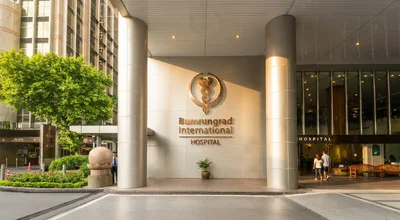
Bumrungrad International Hospital
Full-service hospital with over 1,200 physicians treating 520,000+ international patients a year.
View hospital profile
Bangkok Hospital
BDMS flagship hospital campus with standalone heart, cancer, and neuro-orthopaedic hospitals.
View hospital profile
Samitivej Sukhumvit Hospital
Full-service hospital known for paediatrics, home to Thailand's first private children's hospital.
View hospital profile
Tell Us What You Need. We Do the Rest.
Share what you're considering and we'll come back with surgeon options, pricing, and a clear plan.
- Real hospital pricing with zero markup
- Matched with a specialist experienced in your specific procedure
- Full coordination from consultation to recovery


Trusted by patients worldwide
The complete guide to Exosome Therapy in Thailand
Everything below is for readers who want the full detail: costs broken down, types and techniques, recovery, risks and safety, and planning your trip.
Exosome Therapy Clinics in Thailand
Product quality and clinical expertise are the two factors that determine whether exosome therapy delivers genuine benefit. Here is what distinguishes our partner clinics.
Leading Clinics in Bangkok
Our partner clinics source exosomes from certified MSC laboratories and maintain cold-chain storage protocols to preserve vesicle integrity. Infusion suites are staffed by trained nurses with continuous monitoring capabilities. These are dedicated regenerative medicine centres with the diagnostic and clinical infrastructure to deliver evidence-based programmes.
Regenerative Medicine Specialists
Partner physicians specialise in regenerative and longevity medicine with specific training in exosome biology and clinical application. They design programmes based on your health assessment and track outcomes objectively, not just anecdotally.
What to Look For
Ask for batch documentation; a reputable clinic will provide certificates showing donor screening results, particle size analysis, sterility testing, and potency data. Confirm that the programme includes pre- and post-treatment blood work. Be sceptical of clinics making bold cure claims for exosome therapy; the evidence supports regenerative and anti-inflammatory benefit, but the field is too young for definitive outcome guarantees.
Measuring Exosome Therapy Outcomes
Exosome therapy benefits should be tracked objectively alongside subjective improvements. Here is how responsible clinics measure results.
Objective Tracking
Pre- and post-treatment blood panels measure inflammatory markers (hs-CRP, IL-6, TNF-alpha), metabolic indicators, and biological age proxies. Imaging may be used for joint applications. This objective data provides evidence of whether the therapy produced measurable biological change, essential for a field where subjective feedback alone is insufficient.
Realistic Expectations
Exosome therapy is a regenerative intervention, not a one-session transformation. Realistic outcomes include reduced inflammatory markers, improved tissue quality, better energy and recovery, and progressive improvements in targeted areas like joints or skin. Your specialist should discuss what the current evidence supports for your specific indication and be transparent about uncertainty.
Exosome Therapy Cost in Thailand
Average Cost of Exosome Therapy
Exosome therapy in Thailand typically costs between $3,000 and $4,800 per programme, depending on the number of sessions, delivery route, and whether targeted injections are combined with systemic infusion. Single IV sessions sit at the lower end, while multi-session programmes with blood panels and joint injections are higher.
What Affects the Price?
The exosome product itself is the largest cost component; quality-controlled, batch-tested exosomes from certified laboratories are not cheap to produce. The number of sessions, whether IV and injection routes are combined, and the scope of diagnostic blood work also affect the total programme price.
Thailand vs International Price Comparison
Exosome therapy in Thailand costs 50–70% less than equivalent treatments in the US ($6,000–$12,000), Australia (A$5,400–A$10,500), and UK (£4,800–£9,000). The exosome products, laboratory standards, and physician expertise at our partner clinics are comparable to leading Western regenerative centres.
Types of Exosome Therapy Programmes
Exosome therapy can be delivered through several routes, each suited to different clinical goals. Your specialist assesses your health profile and target tissues before recommending the approach.
Intravenous Exosome Infusion
The most common systemic approach. Exosomes are delivered into the bloodstream via IV drip for whole-body distribution, preferred for general anti-ageing, immune modulation, and systemic inflammation reduction. Sessions typically last one to two hours.
- Billions of exosomes delivered per session via IV drip
- Systemic distribution reaches all major organ systems
- Often combined with IV NAD+ or glutathione for synergistic effect
- Best for: whole-body anti-ageing, immune support, and systemic inflammation
Targeted Injection Therapy
For localised conditions such as joint pain, hair loss, or specific soft-tissue injuries, exosomes are injected directly into the affected area under ultrasound guidance. This concentrates the regenerative payload at the exact site where repair is needed.
- Intra-articular injection for cartilage and joint repair
- Scalp injections for hair follicle regeneration
- Peri-lesional injection for tendon and ligament healing
- Best for: localised joint repair, hair restoration, and soft-tissue healing
Nebulised Exosome Therapy
Exosomes delivered via nebuliser target the respiratory epithelium directly. This route is used for chronic respiratory inflammation, post-viral lung damage, or pulmonary rejuvenation as part of a broader programme. Evidence for this route is still early-stage.
- Direct delivery to lung tissue via inhalation over 20–30 minutes
- Targets respiratory inflammation and epithelial repair
- Often combined with IV infusion in the same visit
- Best for: patients with respiratory concerns or post-viral lung issues (emerging evidence)
Exosome Delivery Methods and Quality Standards
The therapeutic value of exosome therapy depends heavily on product quality and delivery precision. Here is what each component involves at our partner clinics.
Exosome Sourcing and Quality Control
Partner clinics source exosomes from mesenchymal stem cells derived from ethically donated umbilical cord tissue.2,3 Every batch undergoes donor screening, sterility testing, potency assays, and particle size verification. Full chain-of-custody documentation is maintained from donor tissue through to the product that enters your vein.
- Donor tissue screened for infectious disease and genetic abnormalities
- Particle size and concentration verified by nanoparticle tracking analysis
- Sterility, endotoxin, and mycoplasma testing on every batch
- Best for: ensuring product safety and therapeutic quality before administration
IV Infusion Protocol
Exosomes are diluted in sterile saline and infused through a peripheral vein over one to two hours. The infusion rate is controlled to minimise any immune response and your attending nurse monitors vital signs throughout. Most patients feel nothing beyond mild warmth.
- Controlled drip rate with continuous monitoring
- Typically 1–2 hours per session depending on dose
- Vital signs checked at regular intervals during infusion
- Best for: systemic delivery with maximum distribution
Dosing and Programme Structure
A single high-dose session can deliver meaningful benefit, but two to three sessions across consecutive days are common for pronounced anti-ageing or recovery goals. Your specialist calibrates dosing based on age, inflammatory burden, and treatment objectives. Supporting blood work tracks whether the intervention is producing measurable change.
- Single session or 2–3 sessions over consecutive days
- Dose calibrated to patient age, weight, and inflammatory profile
- Pre- and post-treatment blood panels for objective outcome tracking
- Best for: patients wanting a structured, measurable regenerative programme
What to Expect After Exosome Therapy
During Infusion
You relax in a private treatment suite while the exosome solution is infused over one to two hours. Most patients read, work on a laptop, or rest comfortably during the session.
First 24–48 Hours
Mild fatigue or a slight flu-like sensation may occur as the immune system responds to the exosome signalling cascade. This is transient and typically resolves within a day. A peripheral IV leaves only a small cannula site that needs no special care.
After a Targeted Injection
If you had an intra-articular, scalp, or soft-tissue injection, expect brief soreness at the site. Keep the puncture site clean and dry, and avoid swimming pools, the sea, and hot tubs for the first 48 to 72 hours to reduce infection risk. After scalp injections, keep the area out of direct sun and skip harsh hair products for a day or two. A systemic IV infusion has no injection site to protect.
Weeks 1–4
Patients commonly report improved energy, better skin texture, reduced joint discomfort, and deeper sleep as the exosomes continue to modulate cellular repair pathways. Benefits accumulate progressively.
Months 2–6
The full regenerative effect unfolds over several months as tissue remodelling, collagen synthesis, and immune recalibration continue. Follow-up blood panels track inflammatory markers and biological age indicators objectively.
How Long Should You Stay?
Two to five days is typical. A single-session programme requires only two days: one for blood work and consultation, one for the infusion. Multi-session programmes or combined protocols (exosomes plus PRP, NAD+, or peptides) benefit from a three to five day stay.
When Will You Notice Results?
Some patients report improved energy and sleep within the first week. Skin quality, joint comfort, and cognitive clarity improve progressively over four to twelve weeks as the exosome-triggered repair cascades reach tissue level. Full benefit is typically felt at three to six months.
Follow-Up and Monitoring
Your clinic schedules remote follow-up consultations and can arrange blood work through international laboratory partners. Pre- and post-treatment panels tracking inflammatory markers and biological age indicators provide objective evidence of whether the therapy has produced measurable benefit.
Risks, Safety, and Evidence Considerations
Exosome therapy has a favourable safety profile in clinical use, but the evidence base is younger than for established regenerative treatments like PRP. Both the risks and the evidence boundaries should be understood.
- Mild fatigue or flu-like symptoms for 24–48 hours post-infusion
- Temporary redness or swelling at injection sites (targeted therapy)
- Headache or mild nausea during or after infusion
- Rare allergic or hypersensitivity reaction
- Theoretical risk of promoting growth in undetected malignancies
- Limited large-scale randomised trial data; most evidence comes from pre-clinical studies and case series
- Exosome therapy is NOT FDA/MHRA/TGA-approved as a biologic, and past FDA warnings about unapproved products traced serious harm to contamination rather than exosomes themselves, which is why source, sterility testing, and batch certification matter.
All exosome products used at partner clinics are sourced from certified laboratories with full chain-of-custody documentation. Your specialist screens for contraindications including active cancer, severe infection, and pregnancy before approving treatment.
Is Exosome Therapy Safe?
Exosome therapy has an excellent safety record in clinical use to date. Because exosomes are cell-free, they do not trigger immune rejection or require tissue matching. The primary safety requirement is ensuring the product comes from a certified, quality-controlled source; our partner clinics guarantee this with full batch documentation and third-party testing.
Understanding the Evidence Base
Exosome therapy is a newer field than PRP or stem cell therapy. Most published evidence comes from in vitro studies, animal models, and clinical case series rather than large randomised controlled trials.3 The biological rationale is strong, since exosomes are a major paracrine signalling mechanism by which stem cells exert their effects, alongside direct differentiation and secretion of other cytokines and growth factors, but patients should understand that robust human trial data is still accumulating.
Contraindications
Patients with active cancer, severe uncontrolled infections, or who are pregnant should not undergo exosome therapy. Those on immunosuppressive medication (corticosteroids at immunosuppressive doses, biologics such as TNF inhibitors, or calcineurin inhibitors like tacrolimus or ciclosporin) or with a history of anaphylaxis require additional screening. Your specialist reviews your full medical history and current medications before approving treatment.
Planning Your Exosome Therapy Trip
Most patients need two to five days in Thailand for an exosome programme. Here is how to structure your visit.
How Long to Stay
Two days for a single-session programme, three to five days for multi-session or combined protocols. If you are adding stem cell therapy, PRP, NAD+, or peptides to the same visit, a full week gives comfortable scheduling flexibility.
What Is Included
Your programme includes pre-treatment blood panels, specialist consultation, certified exosome product with batch documentation, all infusion or injection sessions, post-treatment monitoring, and a dedicated care coordinator. Accommodation and flights are arranged separately, with coordinator assistance available for hotel recommendations.
Combining with Other Regenerative Treatments
Exosome infusions pair well with IV NAD+, glutathione drips, peptide therapy, and PRP. Many patients use a Thailand regenerative medicine trip to complete a comprehensive programme across a single visit, something that would take months to coordinate through separate clinics in the West.
Related Procedures
Other procedures that address similar goals or conditions, in case one of them is a closer fit for you.
Planning your treatment in Thailand
Independent guides to help you weigh the decision, before you commit to anything.
Common Questions About Exosome Therapy
What to know before booking your exosome programme in Thailand

Medical References
Keep researching with AI
Open this guide in your AI assistant to dig deeper and ask the questions it didn't answer.
Opens in a new tab with this guide already loaded.
Medical disclaimer: Content on this site is provided for informational purposes and should not be treated as medical advice. Outcomes, timelines, and eligibility differ from person to person. Consult a qualified medical professional before making any decisions about surgery or treatment.
Ready to Get Started?
Speak with our care coordinators for a free, no-obligation consultation and personalised quote.
Get a Free QuoteLongevity & Anti-Aging