ReLEx SMILE Surgery in Thailand Your guide to cost, top specialists & hospitals
Flapless laser vision correction through an incision smaller than a grain of rice.
What Is ReLEx SMILE Surgery?
Also known as: SMILE Eye Surgery · Small Incision Lenticule Extraction
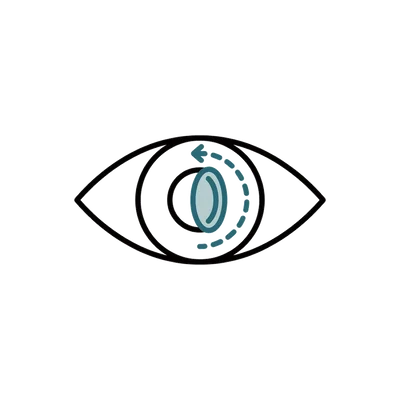
ReLEx SMILE is a laser eye procedure that corrects short-sightedness by reshaping the cornea, the clear front surface of the eye. A femtosecond laser sculpts a thin disc of tissue, called a lenticule, inside the intact cornea, and the surgeon slides it out through an incision a few millimetres wide. This changes the cornea's curvature so light focuses correctly. It treats myopia, with or without astigmatism, usually takes 15 to 20 minutes for both eyes, and is meant to last. Unlike LASIK, no corneal flap is cut1.
If you have only known the flap-lifting kind of laser surgery, SMILE feels different. There is no flap to heal or dislodge later, the cornea keeps more of its natural strength, and dry eye afterwards is usually milder. Your surgeon checks your cornea in detail and plans the lenticule around your prescription.
Most people within the treatable range see clearly within a few days, though vision often keeps sharpening for a month or two. SMILE only suits certain prescriptions and corneal shapes, so a proper assessment is what tells you whether it fits.
It can address a range of concerns, including:
Am I a Good Candidate for ReLEx SMILE Surgery?
SMILE has the narrowest entry criteria of the laser options; suitability is mostly a question of what your prescription and cornea measure.
SMILE treats a defined band of short-sightedness and nothing outside it.
Myopia only: The approved range is -1.00 to -10.00 dioptres, with astigmatism up to -5.00. Long-sightedness cannot currently be treated with SMILE.
Hyperopes redirected: If you are long-sighted, LASIK or refractive lens exchange will be recommended instead.
Within range, strong results: Patients inside the treatment band achieve outcomes comparable to major clinical trials, with most reaching 20/20 or better by three months.
The lenticule comes out of your corneal stroma, so the maths on remaining tissue has to work.
Sufficient thickness: Pachymetry must confirm enough cornea for safe lenticule extraction, with the residual stromal bed staying above safe limits.
Topography screened: Ectatic risk markers on corneal mapping exclude SMILE at responsible centres.
Borderline options exist: For borderline biomechanics, combined SMILE and cross-linking can extend candidacy; your surgeon will say whether that applies to you.
SMILE asks for a slightly older and more settled eye than LASIK.
22 or older: Most surgeons set the minimum at 22, when myopic prescriptions stabilise more reliably.
Stable for 12 months: A prescription that has shifted in the past year means waiting.
Contacts out before biometry: Lens wear must be paused long enough for accurate corneal measurements; your coordinator confirms the exact gap for your lens type.
The flapless design is precisely why certain patients are steered towards SMILE.
Active lifestyles favoured: Contact sports, martial arts, and physical outdoor work all benefit from having no flap to displace.
Dry-eye history considered: SMILE severs fewer corneal nerves than LASIK, making it the gentler option for dry-prone eyes, though the surface is still assessed.
Healing conditions reviewed: Connective tissue or autoimmune disease that affects corneal wound healing needs specialist review before surgery is agreed.
Pregnancy and breastfeeding wait: Hormonal changes can temporarily shift your prescription, so elective laser correction is postponed until a few months after you finish.
Large pupils flagged: Pupils above roughly 6 to 7 mm in low light raise the chance of lasting night-vision halos and glare; the optical zone is planned around this, and some patients are advised against SMILE.
Who is not suitable for relex smile surgery?
- Long-sightedness, which SMILE cannot currently correct
- Ectatic risk markers on corneal topography
- A residual stromal bed that would fall below safe limits
- Connective tissue or autoimmune disease affecting healing until reviewed
- A prescription that has shifted within the past year
- Pregnancy or breastfeeding, until a few months after you finish, as hormonal changes can shift your prescription
Pricing
How Much Will ReLEx SMILE Surgery Cost in Thailand?
What relex smile surgery costs at accredited hospitals in Thailand, and what your final quote depends on.
Get your exact price
Tell us what you're considering and we'll send a personalised quote from accredited hospitals within 24 hours.
Get a Free QuoteTypical prices in Thailand
Typical ranges based on recent hospital quotes. Your exact price depends on the hospital and how complex your case is, and is confirmed at your teleconsultation.
ReLEx SMILE Surgery
A laser sculpts a thin disc of tissue inside the intact cornea and the surgeon slides it out through a tiny incision, reshaping the eye to correct short-sightedness.
| ReLEx SMILE, two eyes Day case Flapless lenticule extraction, outpatient, no overnight stay | $2,950 ฿101,000 |
Typically not included
- Enhancement by PRK or thin-flap LASIK if a residual prescription is left behind, which is a separate procedure
- The pre-operative health check at ฿2,000, which the hospital requires before any of its procedures and charges separately
- Pre-operative medical clearance beyond that check, and specialist consultant fees where another department is brought into your care
- Laboratory tests, imaging and other investigations
Get your exact price
Tell us what you're considering and we'll send a personalised quote from accredited hospitals within 24 hours.
Hospitals Trusted for ReLEx SMILE Surgery
From internationally accredited flagships to dedicated specialist hospitals, these are the kinds of facilities where international patients have this procedure.
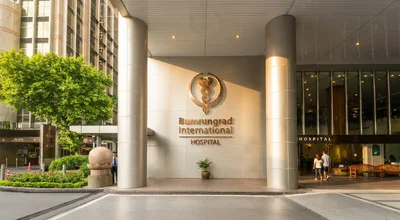
Bumrungrad International Hospital
Full-service hospital with over 1,200 physicians treating 520,000+ international patients a year.
View hospital profile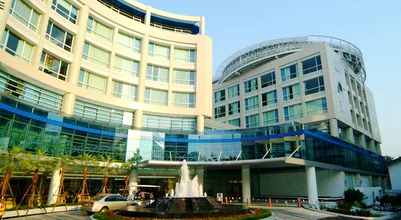
Bangkok Hospital
BDMS flagship hospital campus with standalone heart, cancer, and neuro-orthopaedic hospitals.
View hospital profile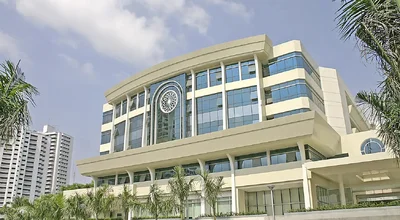
Samitivej Sukhumvit Hospital
Full-service hospital known for paediatrics, home to Thailand's first private children's hospital.
View hospital profile
Tell Us What You Need. We Do the Rest.
Share what you're considering and we'll come back with surgeon options, pricing, and a clear plan.
- Real hospital pricing with zero markup
- Matched with a specialist experienced in your specific procedure
- Full coordination from consultation to recovery


Trusted by patients worldwide
The complete guide to ReLEx SMILE Surgery in Thailand
Everything below is for readers who want the full detail: costs broken down, types and techniques, recovery, risks and safety, and planning your trip.
SMILE Surgeons & Clinics in Thailand
SMILE requires specific surgical skill during lenticule extraction that is more operator-dependent than LASIK. Choosing the right surgeon matters more here than for any other refractive procedure.
Leading Eye Hospitals in Bangkok
Our partner centres were among the first in Thailand to offer SMILE and now operate both VisuMax and VISUMAX 800 platforms. These are dedicated refractive surgery departments within JCI-accredited hospitals, staffed by ophthalmologists whose primary caseload is laser vision correction. They are not general eye clinics offering SMILE as a side service.
Experienced SMILE Surgeons
Our partner surgeons have completed thousands of SMILE procedures individually. That volume matters because the manual lenticule extraction step requires a feel for tissue planes that only comes with repetition. Several trained at international centres before returning to Thailand where refractive surgery volumes are among the highest in the region.
What to Look for in a SMILE Surgeon
Ask specifically about SMILE case volume, not total refractive surgery volume, but SMILE specifically. The lenticule extraction step is the key differentiator, and a surgeon who performs it daily handles it very differently from one who does it monthly. Ask about enhancement rates and complication rates. A surgeon who is transparent about their numbers is usually the one worth trusting.
Understanding Your Results
SMILE delivers equivalent visual outcomes to LASIK by 3 months, with the added advantage of greater corneal structural preservation.
Typical SMILE Results
Around 88% of SMILE patients achieve 20/20 vision and 99% reach at least 20/40 within months of surgery1. Visual recovery is slightly slower than LASIK in the first few days (most patients notice good functional vision by day 2–3 rather than day 1) but outcomes converge by the one-month mark. The correction is permanent, and the flapless design means the cornea is structurally stronger long-term.
What Results Can You Expect?
Your pre-operative assessment determines the predicted outcome based on prescription, corneal thickness, and lenticule design parameters. Patients within the approved treatment range (-1.00 to -10.00 dioptres of myopia, up to -5.00 dioptres of astigmatism) can expect outcomes comparable to those published in major clinical trials. Your surgeon will discuss both the likely result and the small probability of needing an enhancement.
SMILE Surgery Cost in Thailand
Average Cost of SMILE
Our partner hospital holds a fixed fly-in package price for ReLEx SMILE until 31 December 2026. It is ฿101,000, roughly $2,971, for two eyes as an outpatient with no overnight stay. A lower ฿88,000 is advertised on the hospital's own site, below the package rate, so if you have seen that number, ask which figure applies to you and get the answer in writing. These figures come from a single hospital rather than a national Thai price.
Cost Breakdown
The package covers the surgeon, the femtosecond laser and its single-use interface, the operating suite and the day-case visit for both eyes. Unlike LASIK there is no excimer laser charge inside it, because SMILE uses one laser rather than two. Sitting immediately outside the package is the pre-operative health check at ฿2,000, which the hospital requires before any procedure and bills separately, so count it as part of what SMILE costs you. Further out sit any clearance beyond that check, laboratory tests and imaging, consultant fees from other departments, and medication for conditions you already take.
What Affects the Price?
Nothing moves it, which is the striking thing here. The hospital holds one SMILE figure regardless of your prescription strength, and it is the same ฿101,000 that applies to FemtoLASIK. That matters for how you choose. At clinics that price SMILE above LASIK, the flapless technique reads as a paid upgrade. Here it does not, so pick on clinical grounds, which for most people means corneal thickness, prescription type and how prone your eyes are to dryness. The one figure to add is the ฿2,000 health check, and the one to query is the ฿88,000 advertised on the hospital's own SMILE page.
Thailand vs International Price Comparison
Our partner hospital's package is ฿101,000, about $2,971 for two eyes, against $4,500 to $7,200 in the US, A$4,100 to A$6,800 in Australia and £3,600 to £6,300 in the UK. The saving is real, roughly a third off the American floor, though it is narrower than the figures we used to carry on this page, and a flight and a few days in Bangkok take a bite out of it. The technology is identical. The cost difference reflects lower operating expenses in Thailand, not lower clinical standards.
Glasses and Contacts vs SMILE
For short-sightedness, glasses and contact lenses are the obvious non-surgical route, and for many people they are a perfectly good one. Both correct the same myopia that SMILE treats, neither involves surgery, and a prescription can be updated cheaply if your eyes change. If you are happy wearing them, there is no medical need to have laser surgery at all.
What they do not do is remove the daily reliance. Glasses fog, slip, and rule out a lot of sport; contact lenses carry a small but real risk of infection, can worsen dry eye over years of wear, and have an ongoing cost that quietly adds up. Crucially, neither changes the eye itself, so the moment they come off, the blur returns. For an active life, an outdoor job, or chronic lens-related dryness, that constant dependence is exactly what people want to be free of.
SMILE is the route when you want a lasting correction built into the cornea rather than sat in front of it, and the flapless technique is why active and contact-sport patients in particular choose it over LASIK. It only suits certain prescriptions and corneal shapes, so the assessment confirms whether it fits before anything is decided, and the rest of this page covers what the surgery involves.
Types of SMILE Procedure
SMILE has evolved since its introduction, with newer platforms significantly reducing treatment time and improving centration accuracy. Your surgeon selects the approach based on your prescription and corneal measurements.
Standard SMILE (VisuMax)
The original platform uses the Carl Zeiss VisuMax femtosecond laser. Lenticule creation takes approximately 25–30 seconds per eye. Proven track record across more than a decade of international clinical use. Remains the workhorse for most SMILE procedures performed today.
- Flapless technique preserves corneal biomechanical strength
- Reduced dry eye incidence compared to LASIK
- Single-laser procedure with no excimer laser required
- Best for: myopic patients wanting a proven, flapless approach
SMILE Pro (VISUMAX 800)
The next-generation platform cuts lenticule creation to roughly 10 seconds per eye. Robotic centration and docking improve alignment accuracy and reduce the time spent under suction. Faster suction means greater comfort and less anxiety during the procedure.
- Lenticule creation in approximately 10 seconds versus 25–30
- Robotic centration for more consistent alignment
- Reduced suction time for improved patient comfort
- Best for: patients wanting the fastest, most refined SMILE experience available
SMILE Techniques
SMILE is a single-technique procedure; there is no excimer laser step to vary. The main technical variables are the platform generation, lenticule design parameters, and whether a combined approach such as SMILE with cross-linking is appropriate for your case.
Lenticule Design Optimisation
The surgeon programs lenticule diameter, thickness profile, and transition zone based on your prescription, pupil size, and corneal thickness. Getting these parameters right determines both the optical quality of the result and the residual corneal strength. Larger optical zones reduce night-time visual disturbances.
- Optical zone sized to pupil diameter to minimise glare and halos
- Transition zone design affects the smoothness of the correction
- Lenticule thickness calculated to preserve adequate residual stromal bed
- Best for: all SMILE patients, this is the core planning step
Combined SMILE and Corneal Cross-Linking
For patients with borderline corneal biomechanics or keratoconus suspects, cross-linking can be performed immediately after SMILE to strengthen the residual cornea. Riboflavin is applied to the stromal bed through the lenticule pocket, followed by UV-A exposure. This extends SMILE candidacy to some patients who would otherwise be excluded.
- Strengthens the cornea simultaneously with the refractive correction
- Extends candidacy to borderline biomechanical profiles
- Adds approximately 15 minutes to the procedure time
- Best for: patients with early keratoconus signs or borderline corneal thickness
SMILE Recovery Timeline
Day 1
Mild blurring and watery eyes in the first few hours as the small incision begins to settle. A slight foreign body sensation usually resolves by evening. Vision is functional but not yet crisp. Rest your eyes as much as possible.
Days 2–3
Vision clears noticeably. Most patients can read and use screens comfortably and meet the legal standard for daytime driving once the surgeon confirms it at the follow-up. The appointment confirms the incision site looks good and measures early visual progress. Hold off on night driving while early halos settle3, and continue lubricating drops as directed.
Week 1–2
Acuity continues to improve as the cornea remodels around the extracted lenticule space. Light exercise can resume. Avoid swimming and eye make-up. Night vision sharpens progressively.
Months 1–3
The cornea reaches its stable new curvature. Any lingering dryness resolves. A follow-up verifies that your prescription has settled and the corneal surface is fully intact.
When Can You Fly After SMILE?
Most patients can fly home 3–5 days after SMILE. There is no flap to worry about, and the small incision heals quickly. Dry cabin air can aggravate temporary post-SMILE dryness, so bring preservative-free lubricating drops and use them liberally during the flight. Your surgeon confirms travel readiness at your follow-up.
When Can You Return to Work and Exercise?
Desk work and screen use can resume within 2–3 days. Light exercise is fine after about a week. Contact sports can resume sooner than after LASIK because there is no flap to displace, typically 2–3 weeks. Swimming should wait until the incision has fully sealed, usually by week 3–4.
When Will You See Final Results?
Functional vision returns within 2–3 days, and most patients are glasses-free by the end of the first week. Acuity continues to sharpen over the following 1–3 months as the corneal tissue remodels around the extracted lenticule space. Recovery is slower than LASIK in the first few days, but outcomes are equivalent by 3 months.
Anaesthesia for SMILE
SMILE is done under topical anaesthesia, which means anaesthetic eye drops numb the surface of the eye. There is no injection and no general anaesthetic, so you stay fully awake and aware throughout. The drops take effect within a minute or two, and your surgeon and the theatre team are with you the whole time, talking you through each step.
Because you are awake, the part most people worry about is what they will see and feel. You will not watch the surgery happen. While the laser is working you look at a soft fixation light and your vision dims, so there is no clear image of anything being done to the eye. You feel mild pressure while the laser is docked and a sense that the eye is being held, but nothing sharp, and the procedure for both eyes is over in around 15 to 20 minutes.
Your eyes are assessed in detail beforehand, and your surgeon can offer a mild oral relaxant if you are anxious, though most people find they do not need it. Once the drops wear off there is usually a few hours of grittiness, watering, and light sensitivity rather than pain, which settles by the same evening and is eased with the lubricating drops you are sent home with.
Risks and Safety of SMILE Surgery
SMILE has been performed worldwide for more than a decade and carries a well-characterised safety profile. The flapless design eliminates an entire category of LASIK-related complications, but it introduces its own set of considerations.
- Temporary visual haze during the first few days as the incision heals
- Mild dry eye symptoms, though typically less severe and shorter-lasting than after LASIK1,2
- Under-correction requiring a surface-based enhancement in a small number of cases
- Incision-related discomfort or minor foreign body sensation in the first 24 hours
- Cap perforation during lenticule extraction (rare, requires careful surgical handling)
- Suction loss while the eye is docked, which can interrupt the laser and occasionally means pausing, repositioning, or rescheduling the treatment for that eye
- Incomplete or difficult lenticule separation during extraction, which lengthens the step and, rarely, can leave a small residual prescription or affect the smoothness of the correction
- Transient light sensitivity resolving within the first week
- Night-vision symptoms such as haloes, glare, and starbursts3,1, particularly in the first few months; usually settle but may persist in a small minority, more so in patients with large pupils in low light
The main risk-reduction factor is surgeon skill during lenticule extraction. This is a manual step that requires precise tissue handling. Volume and experience matter here more than for LASIK, where the laser does most of the work. Our partner surgeons have completed thousands of SMILE procedures.
Is SMILE Safe in Thailand?
Yes. Thailand's leading SMILE centres hold JCI accreditation and use Carl Zeiss VisuMax and VISUMAX 800 platforms, the only lasers approved for SMILE worldwide. Our partner surgeons are board-certified ophthalmologists with specific refractive surgery subspecialisation and high SMILE case volumes. The safety profile at these centres matches published international data.
How to Reduce Your Risk
Candidacy screening is the first line of defence. SMILE is currently approved only for myopia and myopic astigmatism, and there are strict corneal thickness and prescription limits. Surgeon experience with lenticule extraction is critical. This is where most complications arise, and it is entirely technique-dependent. Choose a surgeon who performs SMILE regularly, not occasionally.
What If an Enhancement Is Needed?
If a residual prescription remains after SMILE, enhancement options include surface-based PRK on the corneal surface or, in some cases, thin-flap LASIK. SMILE enhancement by re-entering the lenticule pocket is technically possible but not yet widely practised. Enhancement after SMILE is sometimes needed but uncommon2,1.
Planning Your Trip to Thailand for SMILE
SMILE requires the same short stay as LASIK. Most patients need 3–5 days in Thailand from assessment to travel clearance.
How Long to Stay in Thailand
Plan for 3–5 days. Day 1 covers your comprehensive assessment including corneal topography, pachymetry, and wavefront aberrometry. Surgery can often be scheduled for day 2. Follow-up on day 3 confirms healing, and most patients are cleared to fly by day 4 or 5. Add a couple of days if you want a more relaxed schedule.
What Is Included in a Medical Trip
Your care coordinator manages scheduling, hospital transfers, and follow-up logistics. The hospital package covers the femtosecond laser procedure for both eyes, the surgeon and the facility. The ฿2,000 pre-operative health check it requires is billed separately, so ask for one written quote that totals the surgery and the check together. Flights and accommodation are arranged separately, with hotel recommendations provided.
Recovery in Bangkok
SMILE recovery is straightforward and Bangkok is the ideal base. You are close to the hospital for follow-ups, and within 48 hours most patients feel comfortable enough to explore the city. There are no positioning requirements or physical restrictions beyond avoiding eye rubbing and swimming for the first few weeks.
Related Procedures
Other procedures that address similar goals or conditions, in case one of them is a closer fit for you.
Planning your treatment in Thailand
Independent guides to help you weigh the decision, before you commit to anything.
Common Questions About SMILE Surgery in Thailand
Everything you need to know before your procedure

Medical References
Keep researching with AI
Open this guide in your AI assistant to dig deeper and ask the questions it didn't answer.
Opens in a new tab with this guide already loaded.
Medical disclaimer: Content on this site is provided for informational purposes and should not be treated as medical advice. Outcomes, timelines, and eligibility differ from person to person. Consult a qualified medical professional before making any decisions about surgery or treatment.
Ready to Get Started?
Speak with our care coordinators for a free, no-obligation consultation and personalised quote.
Get a Free Quote