PRK Surgery in Thailand Your guide to cost, top specialists & hospitals
When your cornea is too thin for LASIK, PRK delivers the same result through a different route.
What Is PRK Surgery?
Also known as: Laser Eye Surgery · Photorefractive Keratectomy
PRK is laser eye surgery that corrects short-sightedness, long-sightedness and astigmatism by reshaping the cornea, the clear front surface of the eye. The surgeon removes the epithelium, the thin outer layer, then uses an excimer laser to reshape the tissue beneath so light focuses correctly on the retina. Because no flap is cut into the deeper cornea, more of its structure stays intact. It is usually done under anaesthetic drops in about 15 to 20 minutes for both eyes, and the correction is long-lasting.
PRK is most often chosen when corneas are too thin for a LASIK flap, so it stays open as an option when others close. The epithelium grows back over the first few days, which is why early recovery feels gritty and vision is blurry before it sharpens. Your surgeon plans the laser pattern around your exact prescription and corneal shape.
Most suitable patients reach 20/20 vision once the surface settles, usually by around six months. The main trade-off is a slower start than LASIK, not a weaker result. A full assessment confirms whether PRK is right for your eyes before anything is decided.
It can address a range of concerns, including:
Am I a Good Candidate for PRK Surgery?
PRK suits eyes that fail LASIK screening on thickness, provided you can absorb a slower recovery and follow the drop regime exactly.
PRK exists for corneas that need maximum structural preservation, and that is exactly who surgeons select for it.
Too thin for a flap: Corneal thickness insufficient for LASIK but adequate for surface ablation is the classic PRK profile.
Previous surgery or scarring: Eyes where prior corneal surgery rules out flap creation are often still good PRK candidates.
Demanding occupations: Professions and sports that cannot tolerate any flap vulnerability favour a surface-based procedure.
A ceiling still applies: Very high prescriptions can demand more ablation depth than is safe, in which case ICL is the better route.
The same refractive stability rules apply to PRK as to every laser procedure.
18 or older: Adulthood plus a settled prescription is the starting point.
Stable for 12 months: Surgeons want at least a year without meaningful prescription change before treating.
A longer trip: Plan for 5-7 days in Thailand rather than the 3-5 LASIK requires, because the epithelium needs time to close before you fly.
PRK's main trade-off is the recovery, and honest candidates weigh it before booking.
3-5 days of discomfort: Expect grittiness, light sensitivity, and intentionally blurry vision while the epithelium regenerates under a bandage lens.
Slower visual return: Functional vision arrives around a week; stable final vision takes around six months.
Work timing matters: Patients who must be back at a screen within days should discuss LASIK or SMILE instead. The long-term outcomes are equivalent; only the path differs.
Post-operative discipline is what protects a PRK result, so surgeons screen for it.
Steroid taper followed exactly: The structured drop schedule is the main defence against corneal haze, and candidates must be able to commit to it.
Sun protection worn: UV-protective sunglasses outdoors for the first several months protect the healing surface.
Healing unimpaired: Systemic isotretinoin and other medication that slows epithelial regeneration must be reviewed first, and moderate to severe dry eye treated before surgery.
Who is not suitable for prk surgery?
- Moderate to severe dry-eye disease until treated and stable
- Unable to commit to the structured steroid drop taper
- Prescriptions so high that ablation depth would compromise the cornea, where ICL is safer
- Systemic isotretinoin or other medication impairing epithelial healing
- A prescription still changing within the last 12 months
Pricing
How Much Will PRK Surgery Cost in Thailand?
What prk surgery costs at accredited hospitals in Thailand, and what your final quote depends on.
Get your exact price
Tell us what you're considering and we'll send a personalised quote from accredited hospitals within 24 hours.
Get a Free QuoteTypical prices in Thailand
Typical ranges based on recent hospital quotes. Your exact price depends on the hospital and how complex your case is, and is confirmed at your teleconsultation.
PRK Surgery
The eye's clear front surface is reshaped with a laser after its thin outer layer is removed, correcting focus without cutting a flap into the cornea.
| Excimer PRK, two eyes Day case Surface laser treatment, outpatient, no overnight stay | $2,100 ฿71,000 |
Typically not included
- Enhancement or retreatment if a residual prescription is left behind, which is a separate procedure at its own price
- The pre-operative health check at ฿2,000, which the hospital requires before any of its procedures and charges separately
- Medical clearance beyond that check, and specialist consultant fees where another department is brought into your care
- Laboratory tests, imaging and other investigations
Get your exact price
Tell us what you're considering and we'll send a personalised quote from accredited hospitals within 24 hours.
Hospitals Trusted for PRK Surgery
From internationally accredited flagships to dedicated specialist hospitals, these are the kinds of facilities where international patients have this procedure.

Bumrungrad International Hospital
Full-service hospital with over 1,200 physicians treating 520,000+ international patients a year.
View hospital profile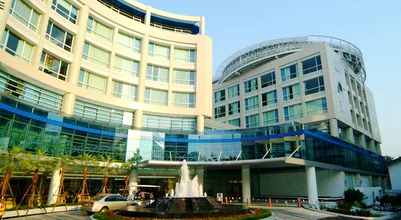
Bangkok Hospital
BDMS flagship hospital campus with standalone heart, cancer, and neuro-orthopaedic hospitals.
View hospital profile
Samitivej Sukhumvit Hospital
Full-service hospital known for paediatrics, home to Thailand's first private children's hospital.
View hospital profile
Tell Us What You Need. We Do the Rest.
Share what you're considering and we'll come back with surgeon options, pricing, and a clear plan.
- Real hospital pricing with zero markup
- Matched with a specialist experienced in your specific procedure
- Full coordination from consultation to recovery


Trusted by patients worldwide
The complete guide to PRK Surgery in Thailand
Everything below is for readers who want the full detail: costs broken down, types and techniques, recovery, risks and safety, and planning your trip.
PRK Surgeons & Clinics in Thailand
PRK is technically straightforward, but the quality of the excimer laser platform and post-operative management protocol matter for the final result.
Leading Eye Hospitals in Bangkok
Our partner hospitals are JCI-accredited facilities with dedicated refractive surgery departments. They operate the latest excimer laser platforms with advanced eye-tracking and iris registration systems. PRK-specific protocols including mitomycin-C application and structured steroid tapering are standardised across these centres.
Experienced Refractive Surgeons
Our partner ophthalmologists perform the full spectrum of refractive surgery, including LASIK, SMILE, PRK, and ICL, and know when each is the right choice. That breadth of experience matters because the decision to recommend PRK over LASIK is one of the most important calls in refractive surgery. Surgeons who only do one procedure tend to recommend that procedure regardless of whether it suits you.
What to Look for in a PRK Surgeon
Check that the surgeon uses mitomycin-C prophylaxis as standard for moderate to high corrections. If they do not, that is outdated practice. Ask about their steroid tapering protocol and how they monitor for haze. The post-operative management of PRK is as important as the surgery itself, and a good centre will have a clear, structured protocol for it.
Understanding Your Results
PRK achieves the same long-term visual acuity as LASIK. The path to get there is simply different.
Typical PRK Results
Long-term studies consistently show that PRK and LASIK produce equivalent visual outcomes once the cornea has fully stabilised. Most suitable PRK patients achieve 20/20 vision or better once the cornea has stabilised, usually by around six months.1 The correction is long-lasting, though some regression can occur over time, particularly at higher prescriptions, and a small number of patients need an enhancement. Because no flap is created, the cornea is structurally stronger than after LASIK, which for patients in physically demanding occupations is a significant difference.
What Results Can You Expect?
Your surgeon will set expectations based on your specific prescription, corneal measurements, and the ablation profile planned. Most patients experience a noticeable improvement within the first week, with vision continuing to sharpen over the next 2–3 months. Higher prescriptions may take slightly longer to stabilise and carry a marginally higher enhancement rate. The consultation covers what is realistically achievable for your eyes.
PRK Cost in Thailand
Average Cost of PRK
Our partner hospital quotes a fixed package price for excimer PRK, current to the end of 2026. It is ฿71,000, roughly $2,088, for two eyes as an outpatient with no overnight stay. That is ฿30,000 below the FemtoLASIK and ReLEx SMILE packages, which both sit at ฿101,000, and the reason is straightforward. PRK needs no femtosecond laser to cut a flap or a lenticule. This is one hospital's figure rather than a national Thai price.
Cost Breakdown
The package covers the surgeon, the excimer laser, the operating suite and the day-case visit for both eyes. Sitting immediately outside it is the pre-operative health check at ฿2,000, which the hospital requires before any procedure and bills separately, so count it as part of what PRK costs you. Further out sit any clearance beyond that check, laboratory tests and imaging, consultant fees from other departments, and medication for conditions you already take. Ask specifically about the bandage contact lenses and the steroid drop course, because PRK needs a longer drop regimen than LASIK does and it is worth having that confirmed in your quote rather than assumed.
What Affects the Price?
There is one PRK figure, so the laser profile, your prescription strength and whether mitomycin C is applied do not appear as separate charges. The variable that decides whether PRK is the right economy at all is time rather than money. The surface heals over three to five days with real discomfort, and vision keeps refining for months, which is a longer road than the day or two LASIK asks of you. Weigh the ฿30,000 you save against a longer stay and more days written off, and against the ฿2,000 health check that applies whichever procedure you choose.
Thailand vs International Price Comparison
The package is ฿71,000, about $2,088 for two eyes, against $3,000 to $4,800 in the US, A$2,800 to A$4,600 in Australia and £2,400 to £4,200 in the UK. At the bottom of those ranges the saving is under a thousand dollars, which a flight and the extra days PRK needs will largely absorb, so this is a procedure to travel for as part of a wider trip rather than on its own. The excimer laser technology and clinical protocols are the same wherever it is done.
PRK vs Glasses and Contact Lenses
Glasses and contact lenses correct the same short-sightedness, long-sightedness and astigmatism that PRK treats, and for most people they do it well. They are non-invasive, reversible, and let your prescription be updated as your eyes change, which is exactly why an unstable prescription rules PRK out in the first place. If you are happy in glasses or comfortable in lenses, there is no medical reason to have surgery at all.
The honest limit is that they correct vision without changing the eye, so the dependence never goes away. Glasses fog, slip and break; contact lenses carry a real, ongoing risk of infection and dry eye, and the lifetime cost of lenses, solutions and replacements adds up well beyond a one-off procedure. For thinner corneas in particular, daily lens wear is simply a long-term management routine, not a fix.
PRK is the route when you want a lasting correction rather than a daily one, and especially when your cornea is too thin for a LASIK flap or your work or sport cannot accommodate glasses and lenses. It reshapes the cornea itself, so suitable patients reach stable 20/20 vision without aids once the surface settles. Whether your eyes are right for it is confirmed at a full corneal assessment before anything is decided, and that is what the rest of this page covers.
Types of PRK Available
The fundamental principle is the same across all PRK variants: remove the epithelium, reshape the exposed stroma with an excimer laser. The differences lie in how the epithelium is removed and the precision of the ablation profile.
Conventional PRK
Epithelium is removed mechanically or with dilute alcohol, then the excimer laser ablates the exposed stroma according to your prescription. A bandage contact lens protects the cornea while the epithelium regenerates over 3–5 days. Proven and reliable with decades of outcome data.
- No flap or stromal incision, preserves maximum corneal strength
- Well-established technique with 30+ years of long-term data
- Lower cost than femtosecond-based procedures
- Best for: patients needing the safest possible laser option for thinner corneas
TransPRK (No-Touch)
The excimer laser itself removes the epithelium and reshapes the stroma in a single continuous step, with no instrument touching the cornea. Reduces procedural variability, produces smoother ablation profiles, and is generally more comfortable for the patient during treatment.
- Fully automated epithelial removal and ablation in one step
- Smoother surface may reduce post-operative haze risk
- Faster procedure with improved patient comfort
- Best for: patients wanting a fully automated, no-contact approach
PRK Techniques
The excimer laser ablation profile is where the real precision lies in PRK. Modern platforms offer several approaches depending on your corneal anatomy and prescription.
Wavefront-Guided Surface Ablation
Wavefront aberrometry maps optical imperfections specific to your eye and programs a custom ablation profile. This treats higher-order aberrations that standard glasses cannot correct, resulting in sharper vision quality, particularly at night. A meaningful upgrade for patients with larger pupils.
- Custom ablation based on your eye's unique optical fingerprint
- Reduced night-time glare and halos compared to conventional profiles
- Treats aberrations beyond what spectacles can correct
- Best for: patients wanting the highest quality of vision, especially in dim lighting
Mitomycin-C Application
A brief application of dilute mitomycin-C to the ablated stroma surface during surgery prevents the scarring response that can cause corneal haze. This is standard practice for moderate to high corrections and has become routine at most centres. It adds seconds to the procedure and significantly reduces haze risk.
- Prevents post-operative corneal haze formation
- Standard of care for corrections above approximately -4.00 dioptres
- Brief application with minimal additional procedure time
- Best for: moderate to high prescriptions where haze risk is elevated
Topography-Guided Ablation
Corneal topography maps the precise shape and surface irregularities of your cornea, rather than the eye's full optical wavefront, and programs the ablation to smooth those irregularities directly. It is particularly useful for corneas that are not perfectly regular, including some scarred or previously treated eyes, where a standard or purely wavefront profile would leave the surface uneven.
- Ablation guided by a detailed map of the corneal surface shape
- Treats irregular astigmatism and surface irregularities directly
- Often the better choice for scarred or previously operated corneas
- Best for: irregular or previously treated corneas where surface shape needs correcting
PRK Recovery Timeline
Days 1–3
A bandage contact lens protects the cornea while the epithelium regenerates. Expect watering, light sensitivity, and moderate discomfort managed with prescribed drops and oral pain relief. Vision is intentionally blurry during this phase. That is normal.
Days 4–7
The epithelium closes and the bandage lens is removed at your follow-up. Discomfort subsides significantly and functional vision begins to emerge. Continue anti-inflammatory and lubricating drops as directed.
Weeks 2–4
Vision improves progressively as the epithelial surface smooths and stabilises. You can return to most daily activities, light exercise, and screen work. UV-protective sunglasses should be worn outdoors. Steroid drops continue on a tapering schedule.
Months 1–3
Refractive stability is reached for most patients by around six months. Any lingering haze clears and lubricating drops can be tapered. A final assessment verifies that your prescription and corneal clarity have settled.
When Can You Fly After PRK?
Most patients can fly home 5–7 days after PRK, once the bandage lens has been removed and the surgeon confirms the epithelium has closed. Dry cabin air can exacerbate temporary dryness, so use preservative-free drops frequently during the flight. Vision will still be improving when you fly. That is normal for PRK.
When Can You Return to Work and Exercise?
Desk work can resume after about a week, once the epithelium has healed and functional vision has returned. Light exercise is fine from week 2. Swimming and contact sports should wait 4–6 weeks. UV-protective sunglasses are important outdoors for the first several months to protect the healing cornea and prevent haze.
When Will You See Final Results?
Functional vision returns within 5–7 days as the epithelium heals. Vision continues to sharpen over the following weeks and months as the surface smooths and the cornea stabilises. Most patients are fully recovered within about six weeks, and the eyes are considered stable by around six months.1 The slower timeline is the main trade-off for PRK's superior safety profile.
Anaesthesia for PRK
PRK is done with anaesthetic eye drops, so the surface of the eye is fully numbed while you stay awake throughout. There is no injection and no need to be put to sleep. You lie back, the drops take effect within a minute or two, and the surgeon uses a small holder to keep the eye comfortably open so you do not have to worry about blinking. The treatment itself takes only around 15 to 20 minutes for both eyes.
You will not see the surgery happening. You are asked to look at a soft fixation light while the laser does its work, and your eye is numb the whole time, so there is nothing sharp to feel. Most people are surprised by how quick and undramatic it is. The surgical team is beside you throughout, talking you through each step, and you can speak to them at any point.
Before the day of surgery you have a full eye assessment, including corneal mapping and thickness measurements, which also confirms the drops are right for you. During the treatment you feel only light pressure and the cool of the laser, not pain. The gritty, watery discomfort comes afterwards, as the surface heals over the first few days, and that is managed with prescribed drops and oral pain relief rather than anything you feel on the table.
Risks and Safety of PRK
PRK has the longest safety record of any laser refractive procedure, with over three decades of clinical data. The risks are well understood and largely manageable with proper post-operative protocols.
- Post-operative discomfort during the first 3–5 days while the epithelium heals1
- Corneal haze, significantly reduced by mitomycin-C prophylaxis
- Delayed visual recovery compared to LASIK, with functional vision by week 1 and stable vision by around six months
- Under- or over-correction occasionally requiring an enhancement procedure2,3
- Refractive regression over time, particularly at higher prescriptions, which can require an enhancement2
- Recurrent corneal erosion, an uncommon late complication where the healed surface intermittently breaks down and causes pain or watering
- Temporary dry eyes requiring lubricating drops for several weeks
- Infection risk (rare, minimised by bandage lens and antibiotic drops)2
The main practical risk of PRK is the slower recovery rather than any serious complication. Patients who need to return to work quickly or cannot tolerate 3–5 days of discomfort should discuss alternatives with their surgeon. For those who can accommodate the recovery, PRK offers the strongest safety profile of any laser procedure.
Is PRK Safe in Thailand?
Yes. Thailand's refractive surgery centres use the same excimer laser platforms and clinical protocols as leading Western hospitals. Mitomycin-C prophylaxis, bandage contact lenses, and structured steroid tapering protocols are standard of care at all accredited centres. Our partner ophthalmologists are board-certified with specific training in surface ablation techniques.
How to Reduce Your Risk
The pre-operative assessment is critical. Corneal topography identifies any irregularities that could affect healing. Pachymetry confirms adequate thickness for safe ablation. Tear film analysis assesses baseline dryness. If you are a borderline candidate for PRK, the surgeon should tell you directly and explain the alternatives. After surgery, adherence to the steroid drop schedule is the single most important factor in preventing haze.
What If an Enhancement Is Needed?
A small percentage of patients may need an enhancement if the initial correction does not fully achieve the target. PRK enhancement is performed as a repeat surface ablation, usually 6–12 months after the original procedure once the refraction has stabilised. The enhancement rate for PRK is comparable to LASIK, and only a small proportion of patients need one.
Planning Your Trip to Thailand for PRK
PRK requires a slightly longer stay than LASIK due to the epithelial healing phase. Plan for 5–7 days minimum.
How Long to Stay in Thailand
Plan for 5–7 days. Day 1 covers your comprehensive assessment. Surgery is typically scheduled for day 2. The bandage contact lens stays in place for 3–5 days while the epithelium regenerates, and is removed at your follow-up. Most patients are cleared to fly once the epithelium has closed and the surgeon has confirmed satisfactory early healing.
What Is Included in a Medical Trip
Your care coordinator manages hospital scheduling, transfers, and all follow-up appointments including the bandage lens removal visit. The surgical quote covers the assessment, excimer laser treatment for both eyes, surgeon and facility fees, bandage lenses, all post-operative medications and drops, and follow-up visits. Flights and accommodation are arranged separately.
Recovery in Bangkok
The first 3–5 days of PRK recovery involve more discomfort and blurred vision than LASIK, so plan accordingly. Stay close to the hospital, keep your room dimly lit, and rest your eyes. Your care coordinator will check in daily. Once the bandage lens is removed and functional vision returns, Bangkok becomes a comfortable recovery environment. Just remember your UV-protective sunglasses whenever you go outside.
Related Procedures
Other procedures that address similar goals or conditions, in case one of them is a closer fit for you.
Planning your treatment in Thailand
Independent guides to help you weigh the decision, before you commit to anything.
Common Questions About PRK Surgery in Thailand
Everything you need to know before your procedure

Medical References
Keep researching with AI
Open this guide in your AI assistant to dig deeper and ask the questions it didn't answer.
Opens in a new tab with this guide already loaded.
Medical disclaimer: Content on this site is provided for informational purposes and should not be treated as medical advice. Outcomes, timelines, and eligibility differ from person to person. Consult a qualified medical professional before making any decisions about surgery or treatment.
Ready to Get Started?
Speak with our care coordinators for a free, no-obligation consultation and personalised quote.
Get a Free Quote