Ovarian Reserve Testing in Thailand Your guide to cost, top specialists & hospitals
Knowing how many eggs you have left is not the whole picture, but it is the part that time keeps changing.
What Is Ovarian Reserve Testing?
Also known as: Egg Count Test · AMH & Antral Follicle Count
Ovarian reserve testing is a fertility assessment that estimates how many eggs remain and how the ovaries are likely to respond to treatment, by pairing a blood marker with an ultrasound count. The two measures are anti-Mullerian hormone (AMH), made by small follicles and tracking the size of your egg pool3,4, and the antral follicle count, where a transvaginal ultrasound counts the resting follicles on each ovary. AMH is stable across the cycle and can be drawn any day4,2; the follicle count is most accurate early, around day 2 to 5. Both fit one visit of 30 to 45 minutes, with results usually in 24 to 48 hours.
There is no single number that is normal for everyone: the expected range falls steadily with age, and reference values also differ between assay platforms (for example Beckman Access versus Roche Elecsys), so your result must be read against your age band and the laboratory's own ranges rather than one universal cut-off. As a very rough orientation only, a reading around 1.0 ng/mL or below in an older patient often points to diminished reserve, while a younger woman may be approaching diminished reserve at a figure that would look reassuring later in life; very high readings can indicate PCOS. What you pay tracks how far you take the assessment: AMH alone from around $180, AMH plus an antral follicle count scan in the middle of the range, and a comprehensive panel adding day-3 FSH and oestradiol up to $300.
Both measures look at egg quantity, not quality, so a result guides planning rather than delivers a verdict; many women with diminished reserve still go on to conceive.
It can address a range of concerns, including:
Am I a Good Candidate for Ovarian Reserve Testing?
There is no real gate here; the assessment suits any woman who wants objective data about her remaining egg supply.
Specialists care less about whether you can have the test and more about whether the result will reflect your true reserve.
Any age, any stage: From early-30s planning ahead, to over-35 weighing pregnancy timing or egg freezing, to baseline data before IVF, the assessment fits a single clinic visit.
Not currently pregnant: AMH is unreliable during pregnancy and temporarily dips for a few months after pregnancy, miscarriage or breastfeeding.
Contraception declared: The combined pill can suppress AMH by up to 30% and undercount antral follicles; a hormonal IUD or implant may also lower the reading, though the evidence is more limited. Pausing four to six weeks beforehand is ideal where possible.
Ready for the answer: Results can show a narrower fertility window than expected, so come prepared for an honest, practical conversation about timing.
Who is not suitable for ovarian reserve testing?
- Currently pregnant, since AMH readings are unreliable in pregnancy
- Within a few months of pregnancy, miscarriage or breastfeeding, until levels recover
- On hormonal contraception, unless results are interpreted with suppression in mind
- Taking high-dose biotin supplements, unless paused 48-72 hours before the blood draw
Pricing
How Much Will Ovarian Reserve Testing Cost in Thailand?
What ovarian reserve testing costs at accredited hospitals in Thailand, and what your final quote depends on.
Get your exact price
Tell us what you're considering and we'll send a personalised quote from accredited clinics within 24 hours.
Get a Free QuoteTypical prices in Thailand
Typical ranges based on recent hospital quotes. Your exact price depends on the hospital and how complex your case is, and is confirmed at your teleconsultation.
Ovarian Reserve Testing
A blood marker made by small follicles is paired with an ultrasound count of the resting follicles to estimate how many eggs remain in the ovaries.
| AMH blood test only A single blood draw estimating the size of your egg pool | $180 to $210 ฿6,120 to ฿7,140 |
| AMH plus antral follicle count scan Adds a transvaginal scan counting the resting follicles on each ovary | $210 to $250 ฿7,140 to ฿8,500 |
| Comprehensive panel with day-3 FSH and oestradiol Adds hormone markers for a fuller picture before treatment planning | $250 to $300 ฿8,500 to ฿10,200 |
Typically not included
- Treatment or fertility care the result leads to, meaning egg freezing, IVF or any onward treatment is quoted and paid for separately
- Additional fertility investigations booked for the same visit, such as a full hormone panel, hysteroscopy, tubal patency testing or a partner's semen analysis
- Genetic testing such as fragile X, where a low result prompts your specialist to recommend it
- A repeat test to confirm an uncertain reading, for example a second AMH after pausing hormonal contraception
Get your exact price
Tell us what you're considering and we'll send a personalised quote from accredited clinics within 24 hours.
Hospitals Trusted for Ovarian Reserve Testing
From internationally accredited flagships to dedicated specialist hospitals, these are the kinds of facilities where international patients have this procedure.

Jetanin Hospital
Specialist IVF hospital near BTS Chit Lom, founded 1995, with in-house genetic testing and JCI and RTAC accreditation.
View hospital profile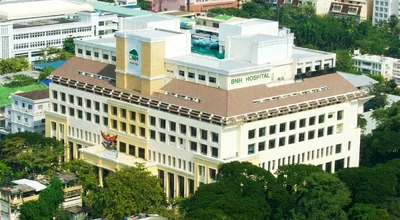
BNH Hospital
Mid-sized hospital founded in 1898, known for women's health, orthopaedics, and spine care.
View hospital profile
SAFE Fertility Center
RTAC-accredited IVF clinic in Gaysorn Amarin by BTS Chit Lom, founded 2007, with in-house genetic testing. Not JCI accredited.
View hospital profile
Tell Us What You Need. We Do the Rest.
Share what you're considering and we'll come back with surgeon options, pricing, and a clear plan.
- Real hospital pricing with zero markup
- Matched with a specialist experienced in your specific procedure
- Full coordination from consultation to recovery


Trusted by patients worldwide
The complete guide to Ovarian Reserve Testing in Thailand
Everything below is for readers who want the full detail: costs broken down, types and techniques, recovery, risks and safety, and planning your trip.
Fertility Clinics for Ovarian Reserve Testing in Thailand
The test is simple. The interpretation is where the value lies.
Accredited Fertility Clinics in Bangkok
Our partner clinics operate within JCI-accredited hospitals or hold independent ISO laboratory accreditation. AMH assays are run on internationally standardised platforms, and ultrasound is performed by fertility specialists (not general sonographers) using high-resolution equipment designed for reproductive imaging.
Specialist Interpretation
Your results are reviewed by a reproductive endocrinologist or fertility specialist who understands what each number means for conception, treatment planning, and time-sensitive decisions. The consultation translates raw data into actionable advice.
What to Look for in a Clinic
Confirm the laboratory holds ISO accreditation for AMH assays. Check that the antral follicle count is performed by a specialist, not a general sonographer. Ensure the results consultation is included in the quoted price and that the clinic can act on findings (for example, scheduling further investigations or beginning treatment) if you choose to proceed in Thailand.
Understanding Your Results
Ovarian reserve testing does not change your biology; it gives you the data to make informed decisions about it.
What the Assessment Reveals
The combined AMH and AFC result tells you approximately how many eggs remain and how the ovaries are likely to respond to stimulation. It identifies whether your reserve is normal for your age, above average (potentially indicating PCOS), or below expected, which may influence timing decisions, treatment approach, or the urgency of egg freezing.
What Happens After Testing
If results are reassuring, you have a documented baseline to compare against in future. If reserve is lower than expected, your specialist discusses the options, which may include expediting conception, adjusting IVF protocol design, or considering egg freezing sooner rather than later. The conversation is honest, practical, and centred on what matters to you.
Ovarian Reserve Testing Cost in Thailand
Average Cost of Ovarian Reserve Testing
Ovarian reserve testing in Thailand costs between $180 and $300. The range depends on whether AMH alone or the full combination of AMH plus antral follicle count is performed, and whether additional hormone markers are included.
What Is Included?
Your quote covers the specialist consultation, AMH blood test, transvaginal ultrasound with antral follicle count, results interpretation, and a written report with recommendations. No hidden fees.
Thailand vs International Price Comparison
Ovarian reserve testing in Thailand costs 50–70% less than private testing in the US ($450–$800), Australia (A$400–A$700), or UK (£350–£650). The savings come from lower laboratory, imaging, and consultation costs. The assay and ultrasound standards are the same.
Types of Ovarian Reserve Testing
Ovarian reserve assessment relies on two complementary tests: one blood-based and one image-based. Used together, they give the most accurate picture. Each can be done individually, but the combination is always more informative.
AMH Blood Test
Anti-Mullerian hormone is produced by the small follicles in your ovaries. The blood level correlates closely with the number of remaining eggs, making it the single most reliable blood marker of ovarian reserve. Unlike FSH, AMH stays stable across the menstrual cycle.
- Can be tested on any day of the menstrual cycle
- Provides the most reliable blood-based estimate of remaining egg supply
- Helps predict response to IVF stimulation and guide medication dosing
- Best for: convenient, any-day assessment of ovarian reserve
Antral Follicle Count (AFC) Ultrasound
A transvaginal ultrasound counts the small resting follicles (2–10 mm) on each ovary2, ideally on day 2–5 of the cycle. Each follicle contains an immature egg that could develop during a stimulated cycle. Combined with AMH, it gives the most complete reserve estimate.
- Combined with AMH provides the most accurate ovarian reserve picture
- Helps predict how many eggs may be retrieved during IVF
- Also identifies ovarian cysts, polycystic morphology, and structural findings
- Best for: completing the reserve assessment alongside AMH
How Ovarian Reserve Testing Works
The assessment combines two complementary investigations. Neither requires preparation, and both can be completed in a single clinic visit lasting 30–45 minutes.
AMH Blood Test
A standard venous blood sample is taken from your arm and sent to an accredited laboratory. AMH reflects the pool of remaining follicles and predicts how the ovaries will respond to stimulation. It can be drawn on any cycle day, a significant advantage for patients who cannot time their visit to a specific day.
- Single blood draw, results in 24–48 hours
- Cycle-independent, with no need to time your appointment
- Correlates closely with the number of recruitable follicles
- Best for: convenient, any-day ovarian reserve measurement
Antral Follicle Count Ultrasound
A transvaginal ultrasound is performed, ideally on day 2–5 of the cycle. The specialist counts the small resting follicles on each ovary. A higher count generally indicates a larger reserve. The scan also checks for cysts, polycystic morphology, and other structural findings.
- Immediate result available at the time of the scan
- Best performed in the early follicular phase for accuracy
- Identifies structural ovarian findings alongside follicle count
- Best for: image-based complement to AMH for a complete reserve picture
What Happens During and After Ovarian Reserve Testing
Blood Draw & Ultrasound
Both tests are completed in a single appointment of 30–45 minutes. The blood draw is a standard venous sample. The ultrasound is a brief transvaginal scan, minimally uncomfortable. No preparation, fasting, or recovery time is needed, and you can resume normal activities immediately.
Within 24–48 Hours
AMH results are typically available within 24–48 hours. Your antral follicle count is available immediately after the scan. Once both results are ready, your specialist schedules a consultation to discuss the findings.
Results Consultation
The consultation explains your AMH level and follicle count in plain language, in the context of your age and reproductive goals. You will understand what the numbers mean, how they compare to average values for your age group, and what your options are, whether that is reassurance, further investigation, egg freezing, or fertility treatment.
After Your Visit
A comprehensive written report is provided with your AMH level, antral follicle count, age-specific reference ranges, and your specialist's interpretation and recommendations. This report can be shared with any fertility clinic worldwide.
When Can You Fly After Ovarian Reserve Testing?
You can fly the same day. Ovarian reserve testing involves only a blood draw and a brief transvaginal ultrasound; there is no sedation, no procedure to recover from, and no physical restriction on travel. Most patients carry on with their day as normal immediately afterwards.
When Can You Resume Normal Activity?
There is zero downtime. You can return to work, exercise, and all normal activities straight away. The blood draw site may benefit from a small dressing for a few hours, but that is the only consideration. Many patients combine this appointment with sightseeing or other fertility investigations on the same day.
When Will You Receive Results?
Your antral follicle count is available immediately after the ultrasound; your specialist can share the number during the scan itself. AMH blood test results typically take 24 to 48 hours. A full results consultation is scheduled as soon as both are ready, giving you a complete picture before you leave Thailand.
Risks and Considerations
Ovarian reserve testing is very low-risk. It involves a routine blood draw and a non-invasive ultrasound. The main considerations relate to result interpretation rather than the tests themselves.
- Minor bruising at the blood draw site3
- Mild discomfort during the transvaginal ultrasound
- Emotional distress if results indicate a lower-than-expected reserve
Results are interpreted carefully, accounting for factors that may influence AMH, such as current hormonal contraception, which can suppress the reading. If results are unexpected, repeating the test after discontinuing contraception may be recommended before drawing conclusions.
Is Ovarian Reserve Testing Safe?
Yes. There is no radiation, no sedation, and no invasive procedure. The blood draw and ultrasound carry the same negligible risk as any routine clinical investigation.1 There is no recovery period.
Understanding Your Results
A low AMH does not mean you cannot conceive; it means fewer eggs remain and the window may be narrower. A high AMH does not guarantee easy conception; it may indicate PCOS. Your specialist interprets the numbers alongside your age, clinical history, and goals before making any recommendation.
When Might Further Investigation Be Needed?
If AMH is unexpectedly low, your specialist may recommend repeating the test after discontinuing hormonal contraception (if applicable) or adding FSH and oestradiol for a more complete hormonal picture. If results suggest premature ovarian insufficiency, genetic testing (such as fragile X) may be recommended. Your written report includes age-specific reference ranges and the specialist's interpretation, and is structured so any fertility clinic worldwide, including your own doctor at home, can act on it without repeating the work.
Planning Your Trip to Thailand for Ovarian Reserve Testing
This is a one-to-two-day assessment. It combines naturally with other fertility investigations if you want a more comprehensive workup.
How Long to Stay in Thailand
One to two days is sufficient. The blood draw and ultrasound are completed in a single appointment. Results are available within 24–48 hours for the follow-up consultation. Many patients combine this assessment with hormone testing, hysteroscopy, or a full female fertility workup during the same trip.
What Is Included
Your care coordinator schedules the appointment, arranges transport to the clinic, and ensures your report is ready before you leave. The quoted price covers the AMH test, ultrasound, specialist consultation, and written report.
Combining with Other Investigations
Ovarian reserve testing pairs well with a full hormone panel, hysteroscopy, tubal patency testing, or semen analysis for your partner. If you are considering IVF in Thailand, completing the full workup during an initial visit allows your specialist to design a treatment protocol for your return.
Related Procedures
Other procedures that address similar goals or conditions, in case one of them is a closer fit for you.
Planning your treatment in Thailand
Independent guides to help you weigh the decision, before you commit to anything.
Common Questions About Ovarian Reserve Testing
Everything you need to know before your assessment

Medical References
Keep researching with AI
Open this guide in your AI assistant to dig deeper and ask the questions it didn't answer.
Opens in a new tab with this guide already loaded.
Medical disclaimer: Content on this site is provided for informational purposes and should not be treated as medical advice. Outcomes, timelines, and eligibility differ from person to person. Consult a qualified medical professional before making any decisions about surgery or treatment.
Ready to Get Started?
Speak with our care team for a free, no-obligation consultation and personalised quote for your ovarian reserve testing.
Get a Free QuoteDiagnostics & Assessment