Hysteroscopy in Thailand Your guide to cost, top specialists & hospitals
If embryos are not implanting, the uterine cavity is the first place to look, and hysteroscopy is how you see it properly.
What Is Hysteroscopy?
Also known as: Womb Examination · Diagnostic · Operative Hysteroscopy
Hysteroscopy is a procedure that examines the inside of the uterus by passing a thin lighted telescope, the hysteroscope, through the cervix to view the cavity in real time. Seeing the womb lining, cavity shape, and fallopian tube openings directly makes it more reliable than ultrasound for spotting polyps, scar tissue, and changes that stop an embryo settling. A diagnostic look takes 10 to 15 minutes, with no incisions and no scars.3 If something treatable is found, slim instruments pass through the same scope to remove a polyp, divide adhesions, or correct a uterine septum there and then.
If embryos have not been implanting, looking inside the uterus is a sensible next step, and feeling uneasy is normal. It is done under sedation, so most people feel little or nothing, and your specialist explains what they see afterwards.
A clear result is still useful, because it rules out a uterine factor before treatment. Where a polyp, fibroid, or adhesion is treated, studies link this to better implantation and pregnancy rates, though no procedure can promise one. Whether it suits you depends on your history and cycle timing.
It can address a range of concerns, including:
Am I a Good Candidate for Hysteroscopy?
Suitability rests on three things, a clear indication for looking inside the uterus, the right cycle timing, and no active infection.
Hysteroscopy is recommended when there is a specific question about the uterine cavity, not as a routine extra.
A referral that fits: Specialists look for recurrent implantation failure after embryo transfer, recurrent miscarriage with a suspected uterine factor, or unexplained infertility where standard tests found nothing.
Imaging findings to confirm: Polyps or submucosal fibroids seen on ultrasound are classic reasons to look directly, with treatment possible in the same session.
Pre-IVF assessment: Some clinics recommend a diagnostic look before a first IVF cycle as part of a thorough workup, though not every patient needs one.
The procedure must be timed so there is no chance you have already conceived in the current cycle.
Definitely not pregnant: Hysteroscopy is never performed if conception may have occurred this cycle, so timing and contraception are confirmed before booking.
A 3-5 day window: You need to attend a pre-procedure consultation and the procedure itself within a short stay, coordinated with your cycle dates.
The next step planned: If polyps, fibroids or adhesions are removed, waiting one to two cycles before IVF is usually built into the plan.
Specialists check for anything that raises infection or bleeding risk inside the uterine cavity.
No active pelvic infection: A current or recently treated infection must clear first, as instrumenting the uterus can seed bacteria into the cavity.
Anticoagulant plan: Blood thinners and antiplatelet medication need a surgeon-led pause plan before any operative work inside the uterus.
Cervical history disclosed: Known cervical stenosis or previous difficult instrumentation may need cervical priming before the scope can pass safely.
Fit for sedation: Good general health is expected for a day procedure under sedation.
A clear view is the goal, and sometimes that view is entirely normal.
Findings may be reassuring: A normal cavity is a genuinely useful result before fertility treatment, even though nothing is removed.
Most treatment is same-session: Polyps and adhesions are typically treated immediately, but large fibroids or dense adhesions occasionally need a staged second procedure.
Pathology takes time: If tissue is removed, laboratory results take three to five working days, and divided adhesions may warrant a follow-up look after one to two cycles.
Who is not suitable for hysteroscopy?
- Any possibility of early pregnancy in the current cycle
- Active or recently treated pelvic infection, until fully cleared
- On anticoagulants or antiplatelet medication without a surgeon-led pause plan
- Known cervical stenosis not yet discussed with the specialist
Pricing
How Much Will Hysteroscopy Cost in Thailand?
What hysteroscopy costs at accredited hospitals in Thailand, and what your final quote depends on.
Get your exact price
Tell us what you're considering and we'll send a personalised quote from accredited clinics within 24 hours.
Get a Free QuoteTypical prices in Thailand
Typical ranges based on recent hospital quotes. Your exact price depends on the hospital and how complex your case is, and is confirmed at your teleconsultation.
Hysteroscopy
A thin lighted telescope is passed through the cervix to view the inside of the uterus on a monitor in real time.
| Diagnostic hysteroscopy A camera inspection of the womb, with nothing removed or sampled | $1,200 to $1,500 ฿40,800 to ฿51,000 |
| Hysteroscopy with endometrial biopsy The same inspection, with a lining sample sent for laboratory analysis | $1,700 to $2,200 ฿57,800 to ฿74,800 |
| Operative hysteroscopy Polyps, small fibroids or adhesions removed during the same procedure | $1,500 to $1,800 ฿51,000 to ฿61,200 |
Typically not included
- Surgery beyond what a hysteroscope can reach, such as laparoscopy or a larger operation for a finding outside the uterine cavity.
- A staged second procedure, if large fibroids or dense adhesions cannot be fully treated in a single session.
- Pathology and laboratory fees for any tissue sent for analysis, quoted separately once tissue removal is anticipated.
- Onward fertility treatment such as IVF or embryo transfer, which is planned and priced separately.
Get your exact price
Tell us what you're considering and we'll send a personalised quote from accredited clinics within 24 hours.
Hospitals Trusted for Hysteroscopy
From internationally accredited flagships to dedicated specialist hospitals, these are the kinds of facilities where international patients have this procedure.

Jetanin Hospital
Specialist IVF hospital near BTS Chit Lom, founded 1995, with in-house genetic testing and JCI and RTAC accreditation.
View hospital profile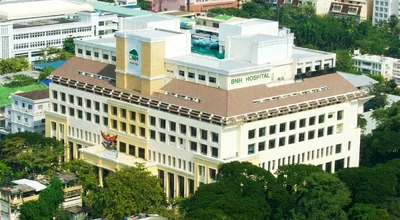
BNH Hospital
Mid-sized hospital founded in 1898, known for women's health, orthopaedics, and spine care.
View hospital profile
SAFE Fertility Center
RTAC-accredited IVF clinic in Gaysorn Amarin by BTS Chit Lom, founded 2007, with in-house genetic testing. Not JCI accredited.
View hospital profile
Tell Us What You Need. We Do the Rest.
Share what you're considering and we'll come back with surgeon options, pricing, and a clear plan.
- Real hospital pricing with zero markup
- Matched with a specialist experienced in your specific procedure
- Full coordination from consultation to recovery


Trusted by patients worldwide
The complete guide to Hysteroscopy in Thailand
Everything below is for readers who want the full detail: costs broken down, types and techniques, recovery, risks and safety, and planning your trip.
Fertility Clinics for Hysteroscopy in Thailand
The value of hysteroscopy depends entirely on the specialist performing it. Here is what to look for.
Accredited Fertility Clinics in Bangkok
Our partner clinics operate within JCI-accredited hospitals with dedicated fertility and gynaecological surgery units. They are equipped with the latest hysteroscopic equipment, including high-definition cameras, bipolar resectoscopes, and fluid management systems. These are established fertility centres, not general gynaecology practices.
Experienced Hysteroscopy Specialists
Our partner gynaecologists perform diagnostic and operative hysteroscopy as a core part of their fertility workup. They have specific training in intrauterine surgery and manage the full spectrum of uterine pathology, from small polyps to complex adhesiolysis and septum correction.
What to Look for in a Specialist
Confirm the specialist has dedicated experience in operative hysteroscopy, not just diagnostic. Ask about their experience with your specific finding; adhesions, polyps, or septae each require different skills. Check that the clinic uses modern bipolar energy systems and fluid monitoring. Ask whether same-session operative treatment is available so you do not need a separate procedure.
Understanding Your Results
Hysteroscopy results are measured in what is found, what is treated, and how it affects your next fertility step.
What Hysteroscopy Reveals
The procedure provides a definitive view of the uterine cavity. Polyps, submucosal fibroids, adhesions, septae, and endometrial irregularities are identified with certainty. This is particularly valuable for patients with recurrent IVF failure, where a treatable uterine factor may have been missed on ultrasound.
Impact on Fertility Treatment
Removing endometrial polyps before IVF may improve implantation and pregnancy rates, with supportive but mixed evidence depending on the finding. Adhesion division restores a normal cavity for embryo implantation, and septum correction is associated with reduced miscarriage risk. Where the cavity is already normal, large trials found routine hysteroscopy did not raise live birth rates, so the benefit comes from treating a specific abnormality. For patients with a treatable uterine factor, hysteroscopy can be the step that changes the trajectory of their treatment.
Hysteroscopy Cost in Thailand
Average Cost of Hysteroscopy
Hysteroscopy in Thailand typically costs between $1,200 and $2,200. A straightforward diagnostic hysteroscopy sits at the lower end. Operative hysteroscopy with polypectomy, myomectomy, or adhesiolysis costs more due to additional instruments, time, and pathology processing.
What Is Included?
Your quote covers the specialist consultation, pre-procedure assessment, the hysteroscopy procedure, sedation or anaesthesia, a follow-up appointment, and your care coordinator. Pathology fees for tissue analysis are discussed before the procedure if tissue removal is anticipated.
Thailand vs International Price Comparison
Hysteroscopy in Thailand costs 50–70% less than the US ($3,000–$5,400), Australia (A$2,600–A$4,800), or UK (£2,400–£4,200). The savings reflect lower facility and specialist costs. Equipment and clinical standards are the same.
Hysteroscopy vs Scan-Based Assessment
Before a hysteroscopy, the uterine cavity is often first assessed with imaging. A pelvic ultrasound, or a saline infusion sonohysterogram (SIS), where sterile fluid is used to outline the cavity on the scan, is non-invasive, quick, and a reasonable first look. A hysterosalpingogram (HSG) is the usual choice when the question is whether the fallopian tubes are open. These are sensible starting points, and a clean scan can sometimes be enough.
The limits are what bring people to hysteroscopy. Imaging shows a shadow or a suggestion, not the lining itself, so smaller polyps, fine adhesions, and subtle changes are missed or left uncertain. Crucially, a scan can only tell you something may be there; it cannot remove it. If a polyp, adhesion, or septum is found on a scan, you still need a procedure to treat it.
Hysteroscopy is the right route when you need certainty about the cavity, when scans have already flagged something that needs treating, or after embryos have failed to implant and a uterine factor has to be ruled in or out. Because it both sees and treats in the same session, a finding can be dealt with there and then rather than triggering a second visit, which is what the rest of this page covers.
Types of Hysteroscopy
Hysteroscopy can be purely diagnostic or operative. The difference depends on whether treatable pathology is found. Many procedures start as diagnostic and become operative when something is identified.
Diagnostic Hysteroscopy
A slender scope is passed through the cervix and sterile saline gently expands the uterus, providing a clear view of the endometrial lining, tubal openings, and cavity shape. The specialist inspects for polyps, fibroids, adhesions, and structural anomalies. Takes 10–15 minutes.
- Direct visualisation is more accurate than ultrasound for detecting uterine pathology
- Identifies subtle adhesions and small polyps that imaging may miss
- Often performed under light sedation for comfort
- Best for: pre-IVF assessment or investigation of unexplained infertility
Operative Hysteroscopy
When an abnormality is identified, operative instruments are passed through the hysteroscope to treat it in the same session. Common procedures include polypectomy, submucosal myomectomy, adhesiolysis, and septoplasty. This avoids a second anaesthetic and accelerates progression to fertility treatment.
- Polyps and small fibroids removed in minutes with minimal bleeding
- Adhesion division restores a normal cavity and may improve implantation rates
- Septum correction is associated with reduced miscarriage risk
- Best for: treating uterine pathology found on diagnostic hysteroscopy or prior imaging
Hysteroscopy Techniques
Both diagnostic and operative hysteroscopy are performed through the natural cervical opening, with no incisions and no scars. The technique used depends on what is found and what needs treating.
Diagnostic Visualisation
A high-definition camera on the hysteroscope projects a magnified image of the uterine cavity onto a monitor. The specialist systematically inspects the endometrium, tubal ostia, and cavity architecture. Sterile saline distension provides a clear field of view throughout.
- Real-time magnified view of the entire uterine cavity
- Systematic inspection of endometrium, tubal openings, and cavity shape
- Photographic and video documentation for your records
- Best for: thorough assessment of the uterine environment before fertility treatment
Operative Instruments
When pathology is identified, miniature graspers, scissors, or resectoscope loops are passed through the working channel of the hysteroscope. Polyps are excised, adhesions divided, and septa resected under direct vision. Modern bipolar energy systems reduce thermal spread and improve safety.
- Miniature instruments allow precise treatment under direct visualisation
- Bipolar energy systems minimise thermal injury to surrounding tissue
- Same-session treatment avoids the need for a second procedure
- Best for: removing polyps, dividing adhesions, or correcting uterine septae
Office (See-and-Treat) Hysteroscopy
A miniature hysteroscope is passed using the vaginoscopic "no-touch" approach, with no speculum and no cervical clamp, so a diagnostic look and the treatment of small findings happen in one outpatient sitting. Smaller polyps and minor adhesions can be dealt with there and then, often with little or no sedation, which is why this approach has become the standard for straightforward cases.
- Slim scope and vaginoscopic entry mean no speculum and minimal discomfort
- Small polyps and adhesions treated immediately in the same outpatient visit
- Often needs only light sedation, or none, with same-day discharge
- Best for: diagnostic assessment and minor findings where a full operative session is not required
Hysteroscopy Recovery Timeline
Day of Procedure
After a brief pre-procedure check, sedation or anaesthesia is administered and the hysteroscopy is performed. Most patients wake within minutes and rest at the clinic for one to two hours before being discharged. Mild cramping similar to period pain is typical and managed with over-the-counter painkillers.3,4
Days 1–2
Most patients feel well enough to move around comfortably the following day. Light spotting or watery discharge may continue for a few days and resolves on its own.3 Avoid swimming, baths, and intercourse for approximately one week. Strenuous exercise should be avoided for a few days.
Day 3–5: Follow-Up
A follow-up appointment reviews the hysteroscopy findings, discusses any pathology results if tissue was removed, and plans next steps for your fertility treatment. The optimal timing to proceed with IVF or embryo transfer is confirmed based on your recovery.
Returning Home
Most patients can fly one to two days after a diagnostic hysteroscopy. If operative work was done, such as polyp removal or adhesion division, your specialist may suggest waiting two to three days so early healing is progressing well, with a short check before travel. You receive a detailed operative report and any pathology results to share with your fertility team at home, and your care coordinator remains in contact to support your onward treatment plan.
When Can You Fly After Hysteroscopy?
Most patients can fly one to two days after a diagnostic hysteroscopy. If operative work was performed (such as polyp removal or adhesion division) your specialist may recommend waiting two to three days to ensure initial healing is progressing well. A short follow-up before travel confirms you are ready to fly.
When Can You Resume Normal Activity?
Light activity can resume the same day or the following morning. Most patients feel back to normal within 24 hours of a diagnostic hysteroscopy. After operative hysteroscopy, avoid heavy exercise, swimming, and intercourse for approximately one week. Your specialist provides specific guidance based on what was done during the procedure.
When Will You Receive Results?
Visual findings from the hysteroscopy are available immediately. Your specialist can tell you what was seen (and treated) as soon as the procedure is finished. If tissue was removed for pathology, laboratory results typically take three to five working days. Your care coordinator ensures these reach you and your home fertility team.
Anaesthesia & Sedation
Hysteroscopy is performed under sedation, so you are relaxed and comfortable rather than fully asleep, and you feel little or nothing while it is done. A nurse or anaesthetist looks after you throughout and keeps you settled, which is standard at the accredited fertility clinics we work with. Because the scope passes through the natural cervical opening, there are no incisions to recover from once it is over.
How deep the sedation goes is matched to what is involved. A quick diagnostic look needs only light sedation, while operative work such as removing a polyp or dividing adhesions may call for slightly more, and your specialist decides what is most comfortable for your case. Sedation also means there is no separate general anaesthetic to recover from, which is part of why most people are discharged the same day.
Before you are cleared, there is a short pre-procedure check, including a review of any medication you take, since blood thinners need a planned pause and any chance of early pregnancy must be ruled out first. You feel nothing during the procedure itself, and afterwards any discomfort is usually mild, more like period-type cramping than sharp pain, and settles within a day with simple painkillers.
Risks and Safety of Hysteroscopy
Hysteroscopy is one of the safest gynaecological procedures, with serious complications occurring in fewer than 1% of cases.1 It is performed routinely at fertility clinics worldwide.
- Uterine perforation (very rare, fewer than 1 in 200 cases)2
- Infection of the uterus or surrounding structures
- Bleeding, usually mild and self-limiting, occasionally requiring treatment
- Adverse reaction to sedation or anaesthesia
- Fluid overload from uterine distension media (rare, monitored throughout)
- New intrauterine adhesions (Asherman's syndrome) after operative work such as adhesiolysis or septum resection
- Incomplete treatment requiring a follow-up procedure
Hysteroscopy is performed under continuous visual guidance; the specialist sees exactly what is happening at every moment. Accredited Thai fertility clinics follow international safety standards, including real-time fluid balance monitoring and modern bipolar energy systems that further reduce risk.
Is Hysteroscopy Safe in Thailand?
Yes. Our partner clinics operate within JCI-accredited hospitals or hold equivalent international accreditation. Specialists performing hysteroscopy have dedicated gynaecological training and high case volumes. Equipment, infection control, and safety monitoring protocols match the standards of any leading fertility centre.
How to Reduce Risks
Ensure the procedure is performed at an accredited facility by a specialist with specific hysteroscopy experience. Confirm that fluid balance monitoring is used throughout operative cases. Follow pre-procedure instructions regarding infection screening. If you have a known history of cervical stenosis or uterine surgery, inform your specialist in advance.
Can Hysteroscopy Cause New Scar Tissue?
Diagnostic hysteroscopy does not cause scarring. After operative work, particularly adhesiolysis or septum resection, new intrauterine adhesions (Asherman's syndrome) can form as the cavity heals, which matters for a fertility-focused patient because adhesions can themselves impair implantation. The risk is reduced by gentle technique and modern bipolar systems, and your specialist may arrange a follow-up hysteroscopy after one to two cycles to confirm the cavity has stayed open, sometimes with measures such as oestrogen support to encourage healthy healing.
When Might a Follow-Up Procedure Be Needed?
If large fibroids or dense adhesions cannot be completely treated in a single session, a staged second hysteroscopy may be recommended. This is uncommon for standard polyp removal or septum correction. If intrauterine adhesions are divided, a follow-up hysteroscopy after one to two cycles may be performed to confirm the cavity remains open.
Planning Your Trip to Thailand for Hysteroscopy
Three to five days covers everything comfortably. Here is how to plan it.
How Long to Stay in Thailand
Three to five days is sufficient. Day one covers the consultation and pre-procedure assessment. The hysteroscopy is performed on day two or three. A follow-up appointment reviews findings and plans next steps before you travel home. Many patients combine hysteroscopy with other fertility investigations during the same visit.
What Is Included
Your care coordinator schedules the consultation, procedure, and follow-up, and arranges transport to the clinic. The quote covers the specialist consultation, procedure, anaesthesia, and follow-up. Pathology fees are discussed before the procedure if tissue removal is expected.
Combining with Other Fertility Investigations
Hysteroscopy combines well with hormone testing, ovarian reserve assessment, semen analysis, or a full female fertility workup. If you are travelling to Thailand specifically for fertility investigation, bundling these procedures into a single trip maximises efficiency and minimises travel.
Related Procedures
Other procedures that address similar goals or conditions, in case one of them is a closer fit for you.
Planning your treatment in Thailand
Independent guides to help you weigh the decision, before you commit to anything.
Common Questions About Hysteroscopy
Everything you need to know before your procedure

Medical References
Keep researching with AI
Open this guide in your AI assistant to dig deeper and ask the questions it didn't answer.
Opens in a new tab with this guide already loaded.
Medical disclaimer: Content on this site is provided for informational purposes and should not be treated as medical advice. Outcomes, timelines, and eligibility differ from person to person. Consult a qualified medical professional before making any decisions about surgery or treatment.
Ready to Get Started?
Speak with our care team for a free, no-obligation consultation and personalised quote for your hysteroscopy procedure.
Get a Free QuoteDiagnostics & Assessment