Hormone Testing in Thailand Your guide to cost, top specialists & hospitals
Fertility starts with chemistry. A hormone panel tells you whether yours is working for you or against you.
What Is Hormone Testing?
Also known as: Fertility Hormone Test · Reproductive Hormone Panel
Hormone testing is a set of blood tests that measures the hormones controlling fertility, read from a single sample drawn from your arm. For women, a standard panel covers FSH, LH, oestradiol, AMH, progesterone, prolactin, and the thyroid markers TSH and free T4. For men, the core is testosterone, FSH, LH, and prolactin. Together these show whether ovulation is happening, how the ovaries are responding, and whether an imbalance is making conception harder. The draw takes a few minutes, with most results back within 24 hours.
What you pay tracks how many markers you need. A basic panel of FSH, LH and oestradiol runs around $200; adding AMH, prolactin and thyroid brings it to the middle of the range; a comprehensive profile adding testosterone, DHEA-S and progesterone for complex or unexplained infertility reaches $350. One thing worth flagging at booking: biotin supplements above 5 mg a day skew TSH and other immunoassays, so they need pausing 48 to 72 hours before the draw.
Timing matters for only a few of these markers: FSH, LH and oestradiol read most clearly on day 2 to 3, progesterone around day 21, and AMH on any day. Your specialist plans the draw around your cycle and travel dates.
It can address a range of concerns, including:
Am I a Good Candidate for Hormone Testing?
Almost anyone wanting clarity on their reproductive hormones can be tested; suitability is mostly about timing the blood draw correctly.
Because this is a standard blood draw, specialists focus less on whether you can have the test and more on whether your results will be reliable.
Open to women and men: Anyone wanting a clear picture of reproductive hormonal health can be tested, including the male panel alongside a wider fertility workup.
Cycle timing matters: FSH, LH and oestradiol are most informative on day 2-3, progesterone around day 21. AMH works on any day if your travel dates are fixed.
Medication review: The combined pill or hormonal IUD suppresses baseline values. Fertility and hormonal medications (clomiphene, letrozole, gonadotropin injections, GnRH agonists or antagonists, progesterone supplements, oestrogen patches or gels) distort FSH, LH, oestradiol and progesterone, so flag them so your specialist can set a suitable testing window. Biotin above 5 mg per day can skew thyroid assays unless paused for 48-72 hours.
A settled few weeks: Acute illness, recent surgery or major stress can distort prolactin and thyroid readings, so flag these at booking.
Who is not suitable for hormone testing?
- On the combined pill or hormonal IUD, until baseline testing is planned around the suppression
- Taking fertility or hormonal medication (clomiphene, letrozole, gonadotropin injections, GnRH agonists or antagonists, progesterone supplements, oestrogen patches or gels), which distorts FSH, LH, oestradiol and progesterone until your specialist sets a suitable testing window
- Taking biotin above 5 mg daily, unless paused 48-72 hours before the draw
- Travel dates that cannot reach day 2-3 when baseline hormones are the clinical question
- Acute illness, recent surgery or a significant stress event in the past few weeks
Pricing
How Much Will Hormone Testing Cost in Thailand?
What hormone testing costs at accredited hospitals in Thailand, and what your final quote depends on.
Get your exact price
Tell us what you're considering and we'll send a personalised quote from accredited clinics within 24 hours.
Get a Free QuoteTypical prices in Thailand
Typical ranges based on recent hospital quotes. Your exact price depends on the hospital and how complex your case is, and is confirmed at your teleconsultation.
Hormone Testing
A blood sample from the arm is measured for the reproductive hormones that govern ovulation in women and sperm production in men.
| Basic hormone panel Core reproductive hormones on cycle day two or three, for an initial fertility check | $200 to $240 ฿6,800 to ฿8,160 |
| Extended hormone panel Adds ovarian reserve and thyroid markers, for cases the core panel leaves unanswered | $240 to $290 ฿8,160 to ฿9,860 |
| Comprehensive hormone panel Full endocrine profile with added androgens, for complex or unexplained infertility | $290 to $350 ฿9,860 to ฿11,900 |
Typically not included
- Treatment of anything the panel finds, whether thyroid or prolactin medication, ovulation induction or IVF
- Further fertility investigations your results may point to, such as pelvic ultrasound, hysteroscopy or semen analysis
- Extra markers added beyond the panel you choose, such as androgens, insulin or thyroid antibodies
- A repeat draw where a cycle-timed marker needs testing again at a different point in your cycle
Get your exact price
Tell us what you're considering and we'll send a personalised quote from accredited clinics within 24 hours.
Hospitals Trusted for Hormone Testing
From internationally accredited flagships to dedicated specialist hospitals, these are the kinds of facilities where international patients have this procedure.
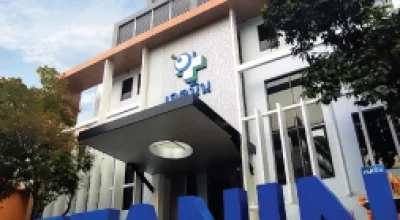
Jetanin Hospital
Specialist IVF hospital near BTS Chit Lom, founded 1995, with in-house genetic testing and JCI and RTAC accreditation.
View hospital profile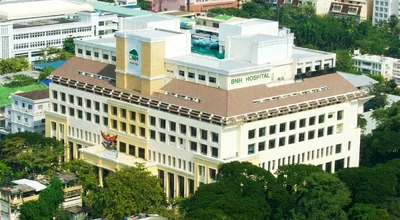
BNH Hospital
Mid-sized hospital founded in 1898, known for women's health, orthopaedics, and spine care.
View hospital profile
SAFE Fertility Center
RTAC-accredited IVF clinic in Gaysorn Amarin by BTS Chit Lom, founded 2007, with in-house genetic testing. Not JCI accredited.
View hospital profile
Tell Us What You Need. We Do the Rest.
Share what you're considering and we'll come back with surgeon options, pricing, and a clear plan.
- Real hospital pricing with zero markup
- Matched with a specialist experienced in your specific procedure
- Full coordination from consultation to recovery


Trusted by patients worldwide
The complete guide to Hormone Testing in Thailand
Everything below is for readers who want the full detail: costs broken down, types and techniques, recovery, risks and safety, and planning your trip.
Fertility Clinics for Hormone Testing in Thailand
Where you have the test matters less than who interprets the results. Here is what to look for.
Accredited Fertility Clinics in Bangkok
Our partner fertility clinics operate within JCI-accredited hospitals or hold independent ISO laboratory accreditation. Blood samples are processed on-site or at affiliated reference laboratories using internationally standardised assay platforms. Results are consistent with what you would receive at any leading fertility centre worldwide.
Fertility Specialist Interpretation
Your results are reviewed by a reproductive endocrinologist or fertility specialist, someone who understands what each marker means in the specific context of trying to conceive or planning fertility treatment. This is not a general practitioner glancing at a lab printout.
What to Look for in a Clinic
Confirm the laboratory holds ISO or equivalent accreditation. Check that the results consultation is included, not an optional add-on. Ask whether the clinic can act on findings immediately, for example by starting medication for elevated prolactin or thyroid dysfunction, or scheduling further investigations such as ultrasound or hysteroscopy.
Understanding Your Results
Hormone testing does not change your body; it changes your understanding of it.
What Hormone Testing Reveals
The panel shows whether ovulation is occurring, how the ovaries and brain are communicating, whether ovarian reserve is adequate for your age, and whether common treatable conditions (thyroid dysfunction, elevated prolactin, PCOS) are present. For men, it reveals whether testosterone and gonadotropins support normal sperm production.
What Happens After Testing
If results are normal, you have reassurance and a documented baseline. If abnormalities are found, many are straightforward to treat. Thyroid medication, prolactin-lowering drugs, or ovulation induction are well-established interventions. Results also guide IVF protocol design, including stimulation dosing and expected response.
Hormone Testing Cost in Thailand
Average Cost of Hormone Testing
A comprehensive reproductive hormone panel in Thailand costs between $200 and $350. The range depends on how many markers are included. A standard fertility panel sits at the lower end, while an extended panel with androgens, insulin, and full thyroid antibodies costs more.
What Is Included?
Your quote covers the specialist consultation, the full blood panel, AMH testing, thyroid screening, laboratory processing, results interpretation, and a written report with recommendations. If additional markers are added, costs are discussed before any blood is drawn.
Thailand vs International Price Comparison
Hormone testing in Thailand costs 50–70% less than private testing in the US ($500–$900), Australia (A$450–A$800), or UK (£400–£700). The savings are driven by lower laboratory and consultation costs. The assay platforms and quality standards are the same.
Types of Hormone Testing
Which hormones are tested depends on your clinical situation. A standard fertility panel covers the essentials; additional markers are added when specific conditions are suspected.
Baseline Hormone Panel (Day 2–3)
The core fertility panel drawn early in the menstrual cycle when hormones are at their resting levels. Includes FSH, LH, oestradiol, prolactin, and thyroid hormones. Elevated FSH can indicate diminished ovarian reserve2, while a raised LH:FSH ratio (LH elevated relative to FSH, often above 2:1) can point towards PCOS.
- FSH and LH reveal how hard the brain is working to stimulate the ovaries
- Oestradiol provides context for interpreting FSH accurately
- Prolactin and thyroid screening catch common treatable causes of anovulation
- Best for: initial fertility assessment or investigation of irregular cycles
AMH & Progesterone Testing
AMH can be drawn on any cycle day. It reflects the remaining follicle pool and predicts response to ovarian stimulation3,5. Progesterone is tested mid-luteal phase to confirm ovulation3,4. Together they answer two critical questions: how many eggs remain and whether you are actually ovulating.
- AMH drawn on any day, ideal for flexible scheduling
- Progesterone confirms whether ovulation is happening each cycle
- Both are essential inputs for IVF protocol design
- Best for: ovarian reserve assessment and ovulation confirmation
Extended Panel (PCOS / Thyroid / Male)
Additional markers when specific conditions are suspected. DHEA-S, testosterone, and insulin for PCOS workup. Full thyroid panel (TSH, free T3, free T4, antibodies) for thyroid disorders. Testosterone, FSH, LH, and prolactin for male reproductive assessment.
- Androgen testing clarifies PCOS diagnosis and guides treatment
- Comprehensive thyroid panel identifies subclinical dysfunction
- Male hormone panel assesses testicular function and sperm production drivers
- Best for: PCOS investigation, thyroid concerns, or male fertility evaluation
How Hormone Testing Works
The process is straightforward: a standard blood draw processed by an accredited laboratory. The clinical value lies in timing the test correctly and interpreting results in the right reproductive context.
Venous Blood Draw
A standard blood sample is taken from a vein in your arm, identical to any routine blood test. The full panel is drawn from a single sample in most cases. No fasting is required for reproductive hormones, though insulin or glucose testing may require an overnight fast.
- Single blood draw captures the full panel
- No special preparation needed for most reproductive hormones
- Results processed by ISO-accredited laboratory
- Best for: all patients. The blood draw itself is the same regardless of panel
Cycle-Timed Testing
Certain hormones fluctuate predictably through the menstrual cycle, and drawing them at the right time produces the most clinically useful results. Your clinic coordinates the timing based on your cycle dates and travel schedule, prioritising the most informative day.
- Day 2–3 baseline captures FSH, LH, and oestradiol at resting levels
- Day 21 progesterone confirms whether ovulation occurred
- AMH is cycle-independent, schedulable at your convenience
- Best for: maximising the diagnostic value of each marker
What Happens During and After Hormone Testing
Blood Draw
A standard venous blood sample is taken from your arm, the same process as any routine test. It takes a few minutes. You can return to normal activities immediately. No preparation beyond any fasting instructions is needed.
Within 24 Hours
Most hormone results are available within 24 hours. AMH and some specialised markers may take slightly longer depending on the laboratory. Your clinic contacts you when results are ready.
Results Consultation
A dedicated consultation covers every marker, what it means for your fertility, and what the numbers suggest as next steps. If any values fall outside the expected range, the clinical significance is explained and a plan is recommended, whether that involves medication, lifestyle changes, or further investigation.
After Your Visit
You receive a written report summarising all hormone levels, reference ranges, and your specialist's interpretation. This document can be shared with your doctor at home or used to begin treatment at a Thai fertility clinic.
When Can You Fly After Hormone Testing?
You can fly the same day as your blood draw. Hormone testing is a standard venous blood test with no sedation, no recovery period, and no physical restrictions afterwards. Many patients schedule their test early in their trip and continue with other plans immediately.
When Can You Resume Normal Activity?
There is no downtime at all. You can return to normal activities (including exercise, work, and sightseeing) as soon as the blood draw is finished. The only thing to be mindful of is keeping the small dressing on the draw site for a few hours to prevent bruising.
When Will You Receive Results?
Most reproductive hormone results are available within 24 hours. AMH may take up to 48 hours depending on the laboratory. A dedicated results consultation is scheduled as soon as the full panel is ready, so you leave Thailand with a clear understanding of where things stand.
Risks and Considerations
Reproductive hormone testing is one of the safest investigations in medicine. It involves only a routine blood draw with no medications, sedation, or invasive procedures.
- Hormone levels fluctuate between cycles, so a single panel provides a snapshot rather than a definitive diagnosis
- Some results may require repeat testing at a different point in the cycle
Results are always interpreted in context. Your age, medical history, symptoms, and reproductive goals all factor in. If a result is borderline or unexpected, repeating the test or adding further investigations may be recommended before drawing conclusions.
Is Hormone Testing Safe?
Yes. This is a standard venous blood draw, the same process used in routine medical check-ups worldwide. There is no radiation, no sedation, and no recovery period. The only physical consideration is minor bruising at the blood draw site, which resolves within a day or two.
Understanding Your Results
Hormone values are not binary. A single slightly elevated FSH does not mean you cannot conceive, and a normal AMH does not guarantee easy conception. Your specialist interprets the full panel together, in the context of your age and clinical picture, before making any recommendation.
When Might Further Testing Be Needed?
If baseline results are borderline or suggest a specific condition (PCOS, thyroid dysfunction, premature ovarian insufficiency), additional testing may be recommended, either repeating the same panel at a different cycle point or adding markers such as androgens, insulin, or thyroid antibodies. No treatment decisions are made on a single test in isolation.
Planning Your Trip to Thailand for Hormone Testing
Hormone testing requires just one to two days. It combines easily with other fertility investigations or can be a standalone visit.
How Long to Stay in Thailand
One to two days is sufficient. The blood draw and consultation can usually be completed in a single visit. One practical caveat: if AMH is part of your panel it can take up to 48 hours, so a single-day stay may not leave time for your results consultation before you fly home. If AMH is included, plan for two days so the full panel is back and you leave with your interpretation done. If you need cycle-timed testing, coordinate with the clinic to arrive on the correct cycle day. Many patients combine hormone testing with ultrasound and other fertility investigations during the same trip.
What Is Included
Your care coordinator schedules the appointment, arranges transport to the clinic, and ensures results and written reports are provided before you leave. The quoted price covers the blood panel, specialist consultation, and report. No hidden fees.
Combining with Other Investigations
Hormone testing pairs naturally with ovarian reserve assessment (AFC ultrasound), hysteroscopy, semen analysis, or a full female fertility workup. If you are planning IVF in Thailand, having baseline hormones done during an initial visit allows your specialist to design your protocol before you return for treatment.
Related Procedures
Other procedures that address similar goals or conditions, in case one of them is a closer fit for you.
Planning your treatment in Thailand
Independent guides to help you weigh the decision, before you commit to anything.
Common Questions About Hormone Testing
Everything you need to know before your tests

Medical References
Keep researching with AI
Open this guide in your AI assistant to dig deeper and ask the questions it didn't answer.
Opens in a new tab with this guide already loaded.
Medical disclaimer: Content on this site is provided for informational purposes and should not be treated as medical advice. Outcomes, timelines, and eligibility differ from person to person. Consult a qualified medical professional before making any decisions about surgery or treatment.
Ready to Get Started?
Speak with our care team for a free, no-obligation consultation and personalised quote for your hormone testing.
Get a Free QuoteDiagnostics & Assessment