MIGS in Thailand Your guide to cost, top specialists & hospitals
Micro-scale surgery that lowers eye pressure through the same incision used for cataract removal.
What Is MIGS?
Also known as: Micro Glaucoma Surgery · Minimally Invasive Glaucoma Surgery
MIGS, or minimally invasive glaucoma surgery, is a group of operations that lower the pressure inside the eye by improving how fluid drains away. Working from inside the eye through a tiny corneal incision, the surgeon places a microscopic stent that bypasses the trabecular meshwork, the eye's main drainage resistance, or opens a controlled route for fluid to escape. This eases the pressure that slowly damages the optic nerve. The device stays in long term, and the operation usually takes 15 to 30 minutes under numbing drops, often alongside cataract surgery.
If daily drops have become a struggle, or your pressure is creeping up, this can feel like an unfamiliar step. The procedure is gentle by design, and recovery is measured in days.
It helps to be honest about what MIGS does. It does not restore sight already lost; it protects the vision you still have1,2, and the pressure drop is real but usually modest. For that reason it suits mild to moderate glaucoma best. Your consultation is where you find out what is realistically achievable for your eyes.
It can address a range of concerns, including:
Am I a Good Candidate for MIGS?
MIGS suits a specific window of glaucoma, and getting that match right is exactly what the pre-operative assessment is for.
MIGS delivers a deliberately modest pressure reduction, so glaucoma surgeons reserve it for earlier disease.
Mild to moderate open-angle glaucoma: This is the core indication. Trabecular devices suit early to moderate disease; the XEN stent stretches to moderately advanced cases.
Not at target on drops: You are using one or more glaucoma medications and pressure still sits above where your specialist wants it, or the daily regimen has become hard to maintain.
Advanced damage points elsewhere: Eyes needing a very low single-digit target pressure are usually better served by filtering surgery as the first step.
The drainage angle determines whether a device can be placed safely, so gonioscopy findings carry real weight.
Open angles on gonioscopy: Trabecular bypass stents need an open, accessible angle to be positioned correctly; narrow, closed, or neovascular angles rule them out.
Quiet inflammation: Active uveitis or unstable inflammation raises the risk of stent obstruction and an unpredictable pressure response, so it is settled first.
A healthy cornea: Significant endothelial disease increases the long-term risk of any anterior-chamber implant, which is why cell health is checked before a device is chosen.
MIGS pairs naturally with cataract surgery, and an upcoming cataract operation often tips the decision.
Cataract surgery planned: iStent and Hydrus devices are implanted through the same corneal incision used for cataract removal, addressing both conditions under one anaesthetic.
Standalone options exist: The XEN stent and GATT can be performed without cataract surgery where pressure lowering is the only goal.
A short, travel-friendly recovery: This is a day procedure under topical anaesthesia with a 5-7 day stay, one of the shortest of any eye surgery.
MIGS trades maximum pressure lowering for safety, and good candidates are comfortable with that balance.
A modest reduction is the goal: Trabecular devices deliver a deliberately modest pressure reduction; expecting trabeculectomy-level results sets MIGS up to disappoint.
Fewer drops, not always none: Most patients reduce their medication burden rather than eliminate it entirely.
Future options stay open: Because conjunctival tissue is preserved, medications, laser, or filtering surgery all remain available if more pressure lowering is needed later.
Who is not suitable for migs?
- Advanced glaucoma needing a very low single-digit target pressure
- Narrow, closed, or neovascular drainage angles on gonioscopy
- Active uveitis or unstable eye inflammation until settled
- Significant corneal endothelial disease not yet assessed for implant safety
- Pressure already comfortably at target on a tolerable drop regimen
Pricing
How Much Will MIGS Cost in Thailand?
What migs costs at accredited hospitals in Thailand, and what your final quote depends on.
Get your exact price
Tell us what you're considering and we'll send a personalised quote from accredited hospitals within 24 hours.
Get a Free QuoteTypical prices in Thailand
Typical ranges based on recent hospital quotes. Your exact price depends on the hospital and how complex your case is, and is confirmed at your teleconsultation.
MIGS
A microscopic device is placed through a tiny corneal incision to give fluid an easier route out of the eye, so the pressure falls.
| iStent or iStent inject, one eye Day case Micro-stents set into the drainage meshwork, for early to moderate glaucoma alongside cataract surgery | $3,500 to $4,500 ฿119,000 to ฿153,000 |
| Hydrus Microstent, one eye Day case A curved scaffold opens a wider arc of the drainage canal, for early to moderate glaucoma | $4,200 to $5,200 ฿142,800 to ฿176,800 |
| XEN Gel Stent, one eye Day case A soft gel tube routes fluid out under the surface of the eye, for moderately advanced glaucoma | $5,000 to $6,300 ฿170,000 to ฿214,200 |
Typically not included
- Cataract surgery and its lens implant. Where both are done together the cataract side is quoted as its own procedure
- Your second eye. Each figure covers one eye, so the fellow eye is priced separately even when both are treated on the same trip
- Further pressure-lowering treatment if the target is not reached, such as needling a XEN bleb, repositioning a device, or a later filtering operation
- Glaucoma drops and pressure monitoring with your own specialist once you are home
- Additional imaging or tests your surgeon asks for at the pre-operative assessment beyond the standard gonioscopy and anterior segment workup
Get your exact price
Tell us what you're considering and we'll send a personalised quote from accredited hospitals within 24 hours.
Hospitals Trusted for MIGS
From internationally accredited flagships to dedicated specialist hospitals, these are the kinds of facilities where international patients have this procedure.
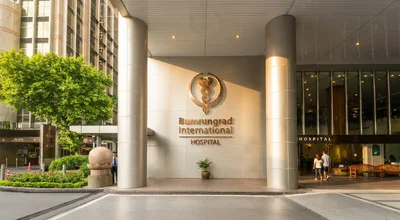
Bumrungrad International Hospital
Full-service hospital with over 1,200 physicians treating 520,000+ international patients a year.
View hospital profile
Bangkok Hospital
BDMS flagship hospital campus with standalone heart, cancer, and neuro-orthopaedic hospitals.
View hospital profile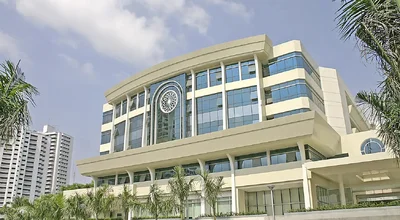
Samitivej Sukhumvit Hospital
Full-service hospital known for paediatrics, home to Thailand's first private children's hospital.
View hospital profile
Tell Us What You Need. We Do the Rest.
Share what you're considering and we'll come back with surgeon options, pricing, and a clear plan.
- Real hospital pricing with zero markup
- Matched with a specialist experienced in your specific procedure
- Full coordination from consultation to recovery


Trusted by patients worldwide
The complete guide to MIGS in Thailand
Everything below is for readers who want the full detail: costs broken down, types and techniques, recovery, risks and safety, and planning your trip.
MIGS Surgeons & Clinics in Thailand
MIGS device selection requires glaucoma subspecialist judgment. Here is what matters when choosing where to have it done.
Leading Glaucoma Centres in Bangkok
Our partner hospitals have dedicated glaucoma departments equipped with gonioscopy suites, anterior segment OCT, visual field analysers, and the full range of approved MIGS devices. They perform combined cataract-MIGS procedures daily; it is core work, not occasional.
Experienced MIGS Surgeons
Our partner surgeons completed glaucoma fellowships and implant MIGS devices as a standard part of their surgical practice. They select between trabecular, subconjunctival, and angle-based approaches based on anatomy and disease stage, not just defaulting to whichever device they have available.
What to Look for in a MIGS Surgeon
Ask which devices they routinely use and why they would recommend one over another for your case. A surgeon who only implants one type of device may not be the best fit. Also ask about their combined cataract-MIGS volume and their approach to XEN bleb management if that device is being considered.
Understanding Your Results
MIGS does not restore vision; it lowers the pressure that damages the optic nerve. The benefit is measured in pressure numbers and medication reduction, not visual acuity.
Typical MIGS Results
Trabecular MIGS devices (iStent, Hydrus) lower eye pressure and allow one or more glaucoma drops to be reduced or discontinued. Subconjunctival MIGS (XEN, PreserFlo) can achieve greater pressure lowering but with a different complication profile, closer to traditional filtering surgery. The right device depends on your target IOP, glaucoma severity, and angle anatomy. Trabecular stent devices have shown lasting pressure control up to five years after surgery.6
What Results Can You Expect?
Your surgeon sets a target pressure based on the stage of your glaucoma and the extent of optic nerve damage. MIGS may meet that target entirely or may get you close enough that a single drop covers the remaining gap. The consultation is where you find out what is realistically achievable with your anatomy and disease stage.
MIGS Cost in Thailand
Average Cost of MIGS
MIGS in Thailand typically costs between $3,500 and $6,300. The range depends on the device used, whether the procedure is standalone or combined with cataract surgery, and the hospital. Trabecular micro-bypass devices generally sit at the lower end; XEN gel stent procedures cost more due to greater surgical complexity.
Cost Breakdown
The total covers the glaucoma surgeon's fee, the MIGS device itself, anaesthesia, operating theatre, post-operative medications and drops, and all follow-up appointments during your stay. For combined cataract-MIGS cases, the intraocular lens is included in the cataract component of the quote.
What Affects the Price?
Device choice is the biggest variable. iStent and Hydrus procedures are shorter and less complex than XEN implantation. Standalone MIGS costs more than combined cataract-MIGS because the infrastructure for the corneal incision is already in place during phacoemulsification. Bilateral procedures are typically quoted at a package rate.
Thailand vs International Price Comparison
MIGS in Thailand costs 40–60% less than in the US ($8,800–$14,000), Australia (A$8,000–A$13,300), and UK (£7,000–£12,300). Device costs are essentially the same everywhere; the difference sits in surgical fees, anaesthesia, and hospital charges at JCI-accredited Thai centres.
MIGS vs Drops and Laser
For most people, glaucoma is managed first with daily pressure-lowering eye drops, and for many they work well for years. Selective laser trabeculoplasty (SLT) is the other common non-surgical step: a quick in-clinic laser that improves drainage and can lower pressure for a few years, often delaying or reducing the need for drops. Neither involves entering the eye, and both are reasonable first lines for mild to moderate glaucoma.
The limits are practical ones. Drops only work if they are used correctly every day, and the regimen, the cost, the side effects, and simple forgetfulness mean adherence slips for a lot of patients, which is one of the main reasons pressure drifts above target. SLT lowers pressure but the effect fades over time and may need repeating, and neither drops nor laser repairs the eye's drainage; they manage around it. Importantly, none of these restores vision already lost, just as MIGS does not.
MIGS becomes the sensible route when drops are a daily struggle or no longer holding pressure at target, when SLT has not done enough, or when cataract surgery is already planned and the drainage stent can be placed through the same incision. It is not a replacement for drops in every case, but for the right eye it reduces the medication burden and treats the drainage problem directly rather than working around it, which is what the rest of this page covers.
Types of MIGS
Several device categories exist, each targeting a different part of the drainage system. The choice depends on your angle anatomy, pressure target, and whether cataract surgery is planned at the same time.
Trabecular Micro-Bypass (iStent inject / Hydrus)
Tiny stents inserted into the trabecular meshwork bypass the primary outflow resistance. The iStent inject places two micro-stents via a single injector; the Hydrus scaffolds open a wider arc of Schlemm's canal. Both are implanted through the cataract incision.
- Smallest FDA-approved implantable glaucoma devices
- Combined with cataract surgery through the same corneal incision3
- Proven reduction in drop burden for mild to moderate open-angle glaucoma
- Best for: patients undergoing cataract surgery who also have early to moderate glaucoma
Subconjunctival Micro-Stent (XEN Gel Stent)
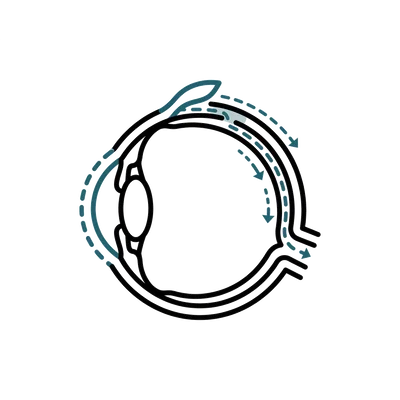
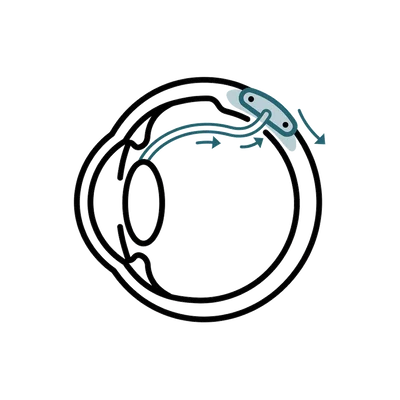
A flexible gelatin stent placed ab interno drains aqueous from the anterior chamber to the subconjunctival space, mechanically similar to trabeculectomy but without a scleral flap. It achieves lower pressures than trabecular devices and can be performed standalone.
- Creates subconjunctival drainage without an external incision or scleral flap
- Greater pressure reduction potential than trabecular bypass devices
- Can be implanted as a standalone procedure or combined with phacoemulsification
- Best for: moderate glaucoma requiring more pressure lowering than trabecular devices offer
MIGS Techniques
The technical approach depends on the device selected. All MIGS procedures share the ab-interno philosophy (working from inside the eye through a small corneal incision), but the drainage target and mechanism differ.
Gonioscopy-Assisted Transluminal Trabeculotomy (GATT)
A suture or microcatheter is threaded through Schlemm's canal for 360 degrees and pulled through, opening the trabecular meshwork along its full circumference. No implant is left behind. Achieves greater pressure reduction than single-stent devices.
- Opens the entire trabecular outflow pathway without an implant
- Greater IOP reduction than single-point bypass devices
- Lower device cost since no implant is required
- Best for: moderate open-angle glaucoma where trabecular outflow can still be improved
Endocyclophotocoagulation (ECP)
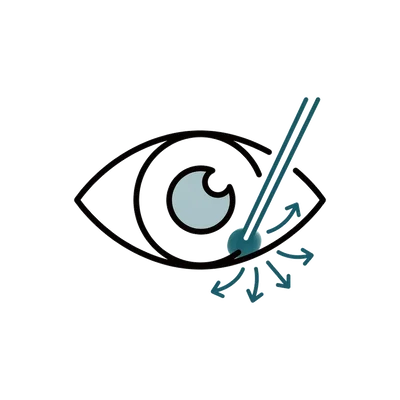
A laser probe inserted through the cataract incision directly treats the ciliary processes, reducing aqueous production. Often combined with cataract surgery. Particularly useful when the drainage angle is not suitable for stent placement.
- Reduces aqueous production at the source rather than enhancing outflow
- Performed through the cataract incision under direct visualisation
- Useful when angle anatomy makes stent placement unsuitable
- Best for: patients with narrow or abnormal angles who still need pressure reduction alongside cataract surgery
Goniotomy (Kahook Dual Blade)
Rather than placing an implant, a dual-bladed instrument excises a strip of the trabecular meshwork through the cataract incision, removing the tissue that resists outflow rather than bypassing it. No device is left behind, and a wider segment of the angle can be treated than a single stent covers. It is frequently combined with cataract surgery.
- Removes a strip of trabecular meshwork instead of leaving an implant
- Treats a broader arc of the drainage angle than a single-point stent
- No device cost, often combined with phacoemulsification
- Best for: mild to moderate open-angle glaucoma where excising the meshwork can improve outflow
MIGS Recovery Timeline
Day 1
Mild irritation, redness, and slightly hazy vision are common. Antibiotic and anti-inflammatory drops start immediately. Most patients resume light activity the same day. A pressure check is performed within 24 hours to confirm the device is functioning.
Days 2–7
Vision clears steadily, often faster than patients expect. Drop regimen continues as directed. Device position and pressure are confirmed at your follow-up before travel. Avoid rubbing the eye, heavy lifting, and swimming.
Weeks 1–4
Steroid drops are tapered on a set schedule. Glaucoma medications may be reduced based on pressure response. Most patients are back to all normal activities within the first week or two.
Months 1–6
The full benefit of the MIGS device becomes apparent as pressure stabilises at its new baseline. Your glaucoma specialist at home adjusts medications accordingly. Most patients achieve a clinically meaningful reduction in daily drops.6
When Can You Fly After MIGS?
Most patients can fly home within 5–7 days. MIGS recovery is fast: once your surgeon confirms stable pressure and satisfactory healing at the post-operative check, flying is safe. Continue your prescribed drops during travel and arrange follow-up with your glaucoma specialist at home within a few weeks.
When Can You Return to Normal Activities?
Light daily activity resumes from day one. Desk work and screen use are fine within the first few days. Avoid heavy lifting, swimming, and dusty environments for the first two weeks. Strenuous exercise typically resumes at 3–4 weeks for trabecular devices (iStent, Hydrus, GATT, goniotomy) and 4–6 weeks for a XEN gel stent, where the subconjunctival bleb takes longer to mature. Your surgeon confirms the timing at your follow-up.
When Will You See Final Results?
Pressure reduction begins immediately, but the full effect takes 1–3 months to stabilise, particularly for XEN stents, where the subconjunctival bleb matures over several weeks. Your home glaucoma specialist monitors pressure and adjusts medications based on the sustained response.
Anaesthesia for MIGS
MIGS in Thailand is done under topical anaesthesia, which simply means numbing eye drops put on the surface of the eye.3 You stay awake and comfortable throughout, with no needle and no general anaesthetic, and the surgeon and theatre team monitor you the whole time. Because the procedure works through a tiny corneal incision and usually takes only 15 to 30 minutes, drops are enough to keep the eye fully numb.
A few patients feel anxious about being awake for eye surgery, so a mild oral or intravenous sedative can be added to help you relax if you would prefer it. The drops keep the eye numb regardless; the sedation is purely for comfort, and your surgeon and anaesthetist decide what suits you based on your medical history and how you feel about staying awake. You are awake but you do not see the surgery happening as you might imagine. The bright microscope light means you see soft light and movement rather than any detail of the instruments.
At your pre-operative assessment the team confirms the drops are working before anything begins, and you feel nothing sharp during the procedure itself, just a sense of mild pressure or water on the eye. Afterwards there is no pain to speak of, usually a little grittiness or irritation that settles within a day or two and is easily managed with the drops you are sent home with.
Risks and Safety of MIGS
MIGS procedures carry a lower complication rate than traditional glaucoma operations such as trabeculectomy and tube shunt surgery. That safety advantage is the primary reason they were developed.
- Mild transient hyphema (blood in the anterior chamber), usually self-resolving
- Temporary pressure spike in the early post-operative period
- Device malposition requiring repositioning or removal (uncommon)
- Insufficient pressure reduction necessitating additional treatment
The overall complication profile is substantially better than trabeculectomy or tube shunt surgery. Each device carries its own specific risk profile, which is covered in detail at your consultation along with what to watch for during recovery.
Is MIGS Safe in Thailand?
Yes. Our partner hospitals hold JCI accreditation and stock the same FDA-approved devices used at leading centres in the US, Europe, and Australia. Surgeons are fellowship-trained glaucoma subspecialists who implant these devices as a routine part of their practice. Published safety outcomes for MIGS at accredited Thai centres are consistent with international data.
How to Minimise Risks
Device selection is the most important factor. An experienced glaucoma surgeon matches the device to your angle anatomy, pressure target, and disease stage. Trabecular devices are safest but offer less pressure reduction. XEN stents offer more reduction but require bleb management. Getting this decision right is where subspecialist judgment matters.
What If MIGS Does Not Lower Pressure Enough?
One of the strengths of MIGS is that it preserves your options. The procedure does not disrupt conjunctival tissue the way trabeculectomy does, so if additional pressure lowering is needed in future, medications, laser, or traditional filtering surgery remain available. Insufficient response is managed, not a dead end.
Planning Your Trip to Thailand for MIGS
MIGS requires one of the shortest stays of any procedure we coordinate; 5–7 days covers everything.
How Long to Stay in Thailand
Plan for 5–7 days. Day one covers your pre-operative assessment and gonioscopy. Surgery is typically scheduled within 1–2 days. Post-operative checks confirm device position and pressure before you fly home. Combined cataract-MIGS cases follow the same timeline.
What Is Included in a Medical Trip
Your care coordinator handles hospital scheduling, transfers, and all follow-up appointments. The surgical quote includes the surgeon's fee, MIGS device, anaesthesia, facility charges, post-operative drops, and a detailed handover report for your home glaucoma specialist.
Continuing Care at Home
Before departure, your surgical team prepares a comprehensive report covering device type and position, current IOP, medication schedule, and recommended follow-up intervals. This is shared directly with your home glaucoma specialist. Ongoing pressure monitoring at home is essential. MIGS is the start of better control, not the end of all management.
Related Procedures
Other procedures that address similar goals or conditions, in case one of them is a closer fit for you.
Planning your treatment in Thailand
Independent guides to help you weigh the decision, before you commit to anything.
Common Questions About MIGS in Thailand
Your MIGS surgery questions answered

Medical References
- Glaucoma (NHS)
- Glaucoma (Cleveland Clinic)
- Trabecular Stent Bypass Microsurgery for Open-Angle Glaucoma, The Procedure (NICE)
- Endophthalmitis Causes, Symptoms and Treatment (Cleveland Clinic)
- Endophthalmitis (MedlinePlus)
- Trabecular Stent Bypass Microsurgery for Open-Angle Glaucoma, Benefits and Risks (NICE)
Keep researching with AI
Open this guide in your AI assistant to dig deeper and ask the questions it didn't answer.
Opens in a new tab with this guide already loaded.
Medical disclaimer: Content on this site is provided for informational purposes and should not be treated as medical advice. Outcomes, timelines, and eligibility differ from person to person. Consult a qualified medical professional before making any decisions about surgery or treatment.
Ready to Get Started?
Speak with our care coordinators to discuss your glaucoma and find out whether MIGS could reduce your reliance on daily eye drops.
Get a Free Quote