Prosthetic Eye Implant in Thailand Your guide to cost, top specialists & hospitals
Restoring a natural appearance and comfortable socket after the loss of an eye.
What Is Prosthetic Eye Implant?
Also known as: Artificial Eye · Orbital Implant and Ocular Prosthesis
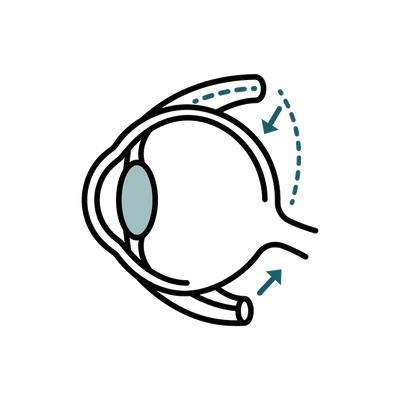
A prosthetic eye implant is a two-part system that rebuilds a natural appearance after an eye is removed, by setting a sphere into the socket and fitting a hand-painted shell over it. The sphere, a biocompatible material such as hydroxyapatite or porous polyethylene, restores lost volume, and the eye muscles are reattached to it so it moves with your other eye1. The shell is matched to the colour, iris, and veining of your remaining eye. The implant lasts a lifetime; the shell is replaced about every five years.
Losing an eye is a lot to take in, and arranging care abroad on top of that can feel like a lot at once. Two people share the work: an oculoplastic surgeon who places the implant, and an ocularist who paints the shell to match your face.
Results vary, honestly. A well-made prosthesis is convincing enough that most people cannot tell which eye it is at conversational distance, but how much it moves depends on the technique and how you heal. Your surgeon and ocularist will talk through what is realistic first.
It can address a range of concerns, including:
Am I a Good Candidate for Prosthetic Eye Implant?
Candidacy here is less about wanting the procedure and more about confirming the diagnosis, the socket, and your own readiness.
Eye removal is irreversible, so the reason for it is confirmed before anything is scheduled.
Oncology confirmation for tumours: Suspected intraocular malignancy needs staging by an ocular oncologist, since cancer findings can change the surgical plan entirely.
Alternatives genuinely explored: Where the diagnosis allows, eye-preserving options such as plaque brachytherapy deserve proper consideration first.
Established indications: A blind painful eye beyond medical management, severe trauma, end-stage disease, or congenital absence of the eye are the recognised reasons to proceed.
The orbit has to support an implant and a custom shell, which the assessment maps in detail.
Adequate orbital tissue: Enough healthy tissue to hold the implant securely and carry a prosthetic shell.
Previously operated sockets planned carefully: Contracted or revised sockets need a revision strategy agreed between surgeon and ocularist before travel is booked.
Evisceration where the shell is healthy: A healthy scleral shell from a non-malignant cause allows the technique with the best implant motility.
This is a 2-3 hour operation under general anaesthesia with an overnight hospital stay.
Cleared for general anaesthesia: Stable general health is confirmed before the procedure is booked.
Able to stay 14-21 days: The socket must heal before the ocularist can begin the fitting process, and that timeline cannot be compressed.
Children are candidates too: In growing children the implant helps stimulate normal orbital bone development, with the shell replaced periodically as they grow.
Adjusting to eye loss is a significant process, and readiness is treated as part of candidacy.
Support considered, not skipped: Psychological support should be offered and thought about before surgery, not after.
Time to decide: Unless cancer or pain forces the timetable, taking time over the decision is encouraged.
A realistic picture of the result: A custom shell is remarkably lifelike and moves with your other eye, but the degree of motility varies with technique and individual healing.
Who is not suitable for prosthetic eye implant?
- Suspected eye cancer not yet staged by an ocular oncologist
- Eye-preserving treatments not yet explored where the diagnosis allows
- Contracted or previously operated sockets without an agreed revision plan
- Active orbital or systemic infection, an uncontrolled bleeding disorder, or a severely contracted socket needing reconstruction before a primary implant can be placed, or otherwise not yet cleared for general anaesthesia
Pricing
How Much Will Prosthetic Eye Implant Cost in Thailand?
What prosthetic eye implant costs at accredited hospitals in Thailand, and what your final quote depends on.
Get your exact price
Tell us what you're considering and we'll send a personalised quote from accredited hospitals within 24 hours.
Get a Free QuoteTypical prices in Thailand
Typical ranges based on recent hospital quotes. Your exact price depends on the hospital and how complex your case is, and is confirmed at your teleconsultation.
Prosthetic Eye Implant
An artificial eye is built in two parts, a sphere set in the socket to replace lost volume and a hand-painted shell fitted over it to match your own.
| Enucleation with porous orbital implant 1 night Whole eye removed and a porous sphere set in its place, for tumours or severe trauma | $4,000 to $5,000 ฿136,000 to ฿170,000 |
| Evisceration with orbital implant 1 night The white outer coat is kept and the implant sits inside it, for a painful blind eye | $4,500 to $5,500 ฿153,000 to ฿187,000 |
| Secondary orbital implant 1 night Implant placed in a socket operated on before, for one that has shifted or become exposed | $5,500 to $7,200 ฿187,000 to ฿244,800 |
Typically not included
- The motility peg, a second-stage operation coupling the implant to the shell for finer movement, considered only once the implant has fully integrated
- Treatment of a complication, such as a return to theatre for an exposed implant, and any hospital nights beyond the one in your quote
- Pre-operative assessment, blood tests and orbital imaging, including the ocular oncologist staging required before a suspected tumour is scheduled for surgery
- Replacement prosthetic shells in later years, and the professional polishing that keeps one comfortable between replacements
- Pathology and pathologist charges on the tissue removed, which are not optional where cancer is the reason for surgery
Get your exact price
Tell us what you're considering and we'll send a personalised quote from accredited hospitals within 24 hours.
Hospitals Trusted for Prosthetic Eye Implant
From internationally accredited flagships to dedicated specialist hospitals, these are the kinds of facilities where international patients have this procedure.

Bumrungrad International Hospital
Full-service hospital with over 1,200 physicians treating 520,000+ international patients a year.
View hospital profile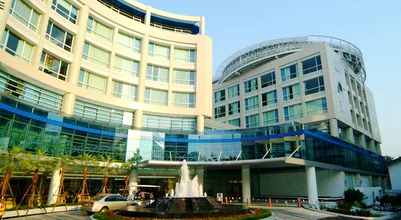
Bangkok Hospital
BDMS flagship hospital campus with standalone heart, cancer, and neuro-orthopaedic hospitals.
View hospital profile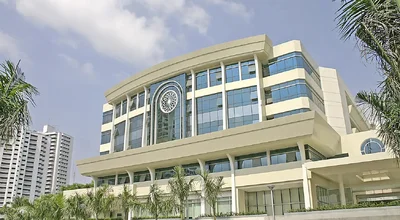
Samitivej Sukhumvit Hospital
Full-service hospital known for paediatrics, home to Thailand's first private children's hospital.
View hospital profile
Tell Us What You Need. We Do the Rest.
Share what you're considering and we'll come back with surgeon options, pricing, and a clear plan.
- Real hospital pricing with zero markup
- Matched with a specialist experienced in your specific procedure
- Full coordination from consultation to recovery


Trusted by patients worldwide
The complete guide to Prosthetic Eye Implant in Thailand
Everything below is for readers who want the full detail: costs broken down, types and techniques, recovery, risks and safety, and planning your trip.
Prosthetic Eye Surgeons & Clinics in Thailand
Prosthetic eye work involves two specialists: the oculoplastic surgeon and the ocularist. Our partner centres have both working together as a coordinated team.
Leading Oculoplastic Centres in Bangkok
Our partner hospitals have dedicated oculoplastic departments with full surgical capabilities for enucleation, evisceration, socket reconstruction, and secondary implant procedures. They stock the full range of orbital implant materials and maintain relationships with specialist ocularists for prosthetic fitting.
Experienced Oculoplastic Surgeons and Ocularists
Our partner surgeons completed oculoplastic fellowships and perform orbital implant surgery regularly. The ocularists who create the custom prosthetic shells work closely with the surgical team: they assess the socket, take detailed impressions, and hand-paint each prosthesis to match the fellow eye. This coordination between surgeon and ocularist is what produces the best results.
What to Look for in a Prosthetic Eye Team
Ask whether the surgeon and ocularist work together routinely or are independent practitioners brought together ad hoc. The best outcomes come from established teams where the surgeon considers prosthetic fit during implant placement and the ocularist understands the surgical anatomy. Also ask to see photographs of previous prosthetic results; the quality of the colour matching and detail work varies between ocularists.
Understanding Your Results
The goal of prosthetic eye surgery is a socket that looks natural, moves in coordination with the other eye, and is comfortable enough that you do not think about it daily.
Typical Results
A well-made custom prosthetic eye is remarkably convincing. The ocularist matches the iris shade, pupil size, scleral colour, and fine blood vessel pattern of your remaining eye.3 Combined with implant-driven movement, most people cannot tell which eye is the prosthesis at conversational distance. The result provides both a natural appearance and a significant psychological benefit.
What Results Can You Expect?
The degree of implant motility varies depending on the surgical technique, implant material, and how well the muscles integrate with the implant. Evisceration generally produces better motility than enucleation. Your surgeon and ocularist will discuss what level of movement and cosmetic match is achievable for your specific situation during the planning process.
Prosthetic Eye Implant Cost in Thailand
Average Cost of Prosthetic Eye Implant
Prosthetic eye implant surgery in Thailand typically costs between $4,000 and $7,200. This covers the enucleation or evisceration, orbital implant placement, conformer shell, all post-operative care, and in most cases the custom prosthetic fitting. More complex socket reconstruction sits at the upper end.
Cost Breakdown
The total includes the oculoplastic surgeon's fee, general anaesthesia, operating theatre, one-night hospital stay, the orbital implant itself, conformer shell, post-operative medications and follow-up appointments, and the ocularist's prosthetic fitting and fabrication fee. Everything is itemised so you can see where the cost sits.
What Affects the Price?
The main variables are the complexity of the socket and whether the case involves primary eye removal or revision of a previous socket. Dermis fat grafts add a secondary surgical site. Socket reconstruction in contracted or previously operated sockets costs more due to additional tissue work. The prosthetic shell itself is a relatively fixed cost based on the ocularist's time.
Thailand vs International Price Comparison
Prosthetic eye implant surgery in Thailand costs 40–60% less than in the US ($10,000–$16,000), Australia (A$9,200–A$15,200), and UK (£8,000–£14,000). Implant and prosthetic shell costs are comparable globally. The savings are in the surgical, anaesthesia, and facility components.
Types of Prosthetic Eye Surgery
The surgical approach depends on the condition of the eye being removed and the state of the surrounding orbital tissues. Both techniques achieve the same end goal (a well-supported implant with good motility) but differ in how much tissue is preserved.
Enucleation with Orbital Implant
The entire eyeball is removed while preserving the extraocular muscles and surrounding orbital tissue. A spherical implant is placed into the socket and the muscles are reattached to its surface. This is the standard approach for intraocular malignancy and cases where the globe cannot be retained.
- Required when the whole eye must be removed: cancer, severe trauma, or failed globe
- Muscles reattached to porous implant surface for coordinated movement
- Tissue integration over time provides stable volume and support
- Best for: intraocular tumours, severely traumatised globes, and end-stage blind painful eyes
Evisceration with Orbital Implant
The eye's internal contents are removed while the outer scleral shell is kept intact. The implant is placed inside this shell, and because the muscles remain attached in their original positions, motility is often superior. Shorter surgery with less tissue disruption.
- Preserves the scleral shell and original muscle attachments
- Typically better implant motility and lower migration risk than enucleation
- Shorter operating time and faster initial recovery
- Best for: painful blind eyes from non-malignant causes where the scleral shell is healthy
Prosthetic Eye Techniques
Beyond the enucleation or evisceration itself, the implant material and muscle reattachment method are the main technical decisions. Both directly affect how well the prosthetic eye will move and how stable it remains over time.
Porous Implant Materials (Hydroxyapatite / Porous Polyethylene)
Porous implant materials allow tissue and blood vessels to grow into the implant surface, creating a biological bond rather than relying on a capsule alone. Hydroxyapatite mimics bone mineral structure; porous polyethylene (Medpor) offers similar integration with a smoother surgical surface. Both have strong long-term track records.
- Vascular ingrowth reduces implant migration and exposure risk
- Hydroxyapatite: mineral composition similar to bone, high integration rate
- Porous polyethylene: smoother edges, easier to suture muscles to directly
- Best for: both materials are well-proven; surgeon preference and case specifics guide the choice
Dermis Fat Graft
An alternative to synthetic implants. A graft of dermis and fat harvested from the patient's own body (usually the abdomen or buttock) is placed into the socket. It provides volume and a living tissue surface. Used when a synthetic implant is not advisable, such as in very young children or sockets with compromised tissue.
- Uses the patient's own tissue, no foreign body
- Living graft integrates with the socket and grows with the child
- No risk of synthetic implant exposure or extrusion
- Best for: paediatric cases, contracted sockets, or situations where synthetic implants are contraindicated
Motility Peg Coupling (Pegged Implant)
With a porous implant, a peg can be placed to directly couple the implant to the back of the prosthetic shell, transferring more of the implant's movement to the eye. It is a secondary step done only once the implant is fully vascularised, and it is offered selectively rather than routinely, since unpegged porous implants already give good movement and pegging adds its own maintenance and complication considerations.
- Directly links the implant to the shell for enhanced, finer movement
- Performed as a second stage once the porous implant has fully integrated
- Reserved for patients wanting maximum motility, not a default step
- Best for: motivated patients with a well-integrated porous implant seeking the most lifelike movement
Prosthetic Eye Implant Recovery Timeline
Days 1–3
Moderate swelling, bruising, and discomfort around the socket are expected. A pressure patch stays in place for the first 24–48 hours, then a clear conformer shell is placed to maintain socket shape during healing. Prescribed pain relief, antibiotics, and anti-inflammatory drops are used. Your care team checks in daily.
Weeks 1–2
Swelling gradually reduces and the socket begins to settle. The conformer remains in place while the conjunctival surface heals over the implant. Follow-up appointments monitor healing progress. Light daily activities can resume, but avoid bending, lifting, or anything that raises pressure in the head.
Weeks 6–8
Months 2–3
This stage marks the completion of the full multi-visit arc, not an extended stay. If the socket heals and the fitting is finished inside your 14–21 day trip, you fly home with the final prosthesis. If the fitting needs a return visit, you fly home with the conformer shell after 2–3 weeks and come back around months 2–3, when the ocularist confirms the fit, teaches you to insert, remove, and care for the prosthesis, and gives you clear care instructions.
When Can You Fly After Prosthetic Eye Implant Surgery?
Most patients can fly home once the initial socket healing is confirmed, typically after 2–3 weeks. If the full prosthetic fitting is completed during your stay, you fly home with the final prosthesis in place. If the fitting requires a return visit, you fly home with the conformer shell and return when the ocularist has the prosthesis ready.
When Can You Return to Normal Activities?
Light daily activities resume within the first week. Avoid bending, heavy lifting, and strenuous exercise for 4–6 weeks to protect the healing socket. Once the prosthetic shell is fitted and comfortable, there are no ongoing activity restrictions; the prosthesis stays in place during all normal activities including exercise.
How Long Does the Prosthetic Shell Last?
A well-maintained custom shell lasts about five years.3 The surface gradually becomes less smooth over time, which can cause increased discharge and reduced comfort. Professional polishing once or twice a year extends the lifespan. The orbital implant itself is permanent and does not normally require replacement.
Anaesthesia for Prosthetic Eye Surgery
Orbital implant surgery, whether enucleation or evisceration, is performed under general anaesthesia, so you are fully asleep and aware of nothing during the operation.1 This is the right approach for this procedure: the eye muscles have to be handled and reattached, the implant seated, and the conjunctiva closed, which is detailed work that should never be done with you awake. A consultant anaesthetist stays with you throughout and monitors you continuously, which is standard at the accredited hospitals we work with.
Because this is general anaesthesia rather than a quick eye-drop procedure, you have a proper pre-operative assessment first: blood tests, a review of any medications you take, and confirmation that you are fit for a general. Where eye cancer is the reason for removal, the diagnosis is staged by an ocular oncologist before you are scheduled, as that can change the surgical plan.
You feel nothing during surgery. When you wake, there is a moderate ache and a sense of pressure around the socket rather than sharp pain, and a pressure patch protects the area for the first day or two. That discomfort is well controlled with the medication your surgeon prescribes and eases noticeably over the first few days as the swelling settles.
Risks and Safety of Prosthetic Eye Implant
Orbital implant surgery involves significant anatomical change. The risks are well documented and most are manageable with proper surgical technique and follow-up. Understanding them is part of being fully informed before proceeding.
- Implant exposure, where conjunctival tissue breaks down over the implant surface
- Implant migration or malposition, which may affect the prosthetic fit
- Socket infection, managed with antibiotics and rarely requiring implant removal1
- Chronic discharge or socket irritation, usually resolved by prosthesis refitting or polishing
- Volume deficit resulting in a sunken appearance around the socket
- Emotional adjustment, as the psychological impact of eye loss is significant and ongoing
Implant material choice, implant size, meticulous muscle reattachment, and careful conjunctival closure all reduce complication rates. Ongoing follow-up with both your oculoplastic surgeon and ocularist catches issues early. Emotional support is available throughout, and is a normal, expected part of this process.
Is Prosthetic Eye Surgery Safe in Thailand?
Yes. Our partner hospitals hold JCI accreditation and employ oculoplastic surgeons who perform enucleation and evisceration as a regular part of their practice. Implant materials are the same FDA-approved products used worldwide. The prosthetic fitting is handled by experienced ocularists who specialise in custom ocular prosthetics.
How to Reduce Complication Risk
The surgical factors that matter most are correct implant sizing, precise muscle reattachment, and secure conjunctival closure over the implant. Porous implant materials reduce migration risk through tissue integration. Post-operative compliance with the drop regimen protects against infection. Choosing an oculoplastic surgeon over a general surgeon for this specific procedure makes a measurable difference to outcomes.
What If the Implant Develops a Problem?
Implant exposure, where the conjunctival tissue thins over the implant, is the most common late complication. Small exposures can be managed with a patch graft. If the implant needs to be replaced, secondary implant surgery is possible. Socket revision and re-fitting of the prosthetic shell are routine procedures for oculoplastic teams experienced in orbital work.
Planning Your Trip to Thailand for Prosthetic Eye Implant
This procedure requires a longer stay of 14–21 days because the socket needs time to heal before the prosthetic fitting process can begin.
How Long to Stay in Thailand
Plan for 14–21 days. The first few days cover the surgical procedure and early recovery. Socket healing over the following weeks allows the ocularist to begin fitting the prosthetic shell. In some cases, the full process (from surgery to final prosthesis) is completed in a single visit. In others, you return home with a conformer and come back for the final fitting.
What Is Included in a Medical Trip
Your care coordinator manages all scheduling between the surgical and prosthetic teams. The quote covers the oculoplastic surgeon, general anaesthesia, hospital stay, orbital implant, conformer shell, all post-operative medications and follow-up, and, where the timeline allows, the ocularist's fitting and prosthetic fabrication fee.
Emotional Support and Practicalities
Eye loss is emotionally significant, and our team approaches every case with that understanding. Your coordinator provides one-to-one support throughout your stay and can arrange contact with previous patients who have been through the same process. Practical questions, such as how to care for the prosthesis, when to have it polished, and how to handle it during travel, are all covered before you leave.
Related Procedures
Other procedures that address similar goals or conditions, in case one of them is a closer fit for you.
Planning your treatment in Thailand
Independent guides to help you weigh the decision, before you commit to anything.
Common Questions About Prosthetic Eye Implants in Thailand
What to know about prosthetic eye surgery

Medical References
Keep researching with AI
Open this guide in your AI assistant to dig deeper and ask the questions it didn't answer.
Opens in a new tab with this guide already loaded.
Medical disclaimer: Content on this site is provided for informational purposes and should not be treated as medical advice. Outcomes, timelines, and eligibility differ from person to person. Consult a qualified medical professional before making any decisions about surgery or treatment.
Ready to Get Started?
Our team is here to support you throughout this process. Speak with a coordinator for a confidential consultation about prosthetic eye options.
Get a Free QuoteEyelid & Reconstructive