Eye Muscle Surgery in Thailand Your guide to cost, top specialists & hospitals
Realigning the muscles that control eye movement so both eyes point in the same direction again.
What Is Eye Muscle Surgery?
Also known as: Squint Surgery · Strabismus Surgery
Eye muscle surgery is an operation that straightens misaligned eyes by repositioning the small muscles that control how each eye moves. It treats strabismus, where one or both eyes turn inward, outward, up, or down rather than together. The surgeon weakens an overactive muscle by moving it back, called recession, or strengthens an underactive one by shortening it, called resection. Also known as squint surgery, it is usually done under general anaesthesia in one to two hours as a day procedure, and the alignment tends to last once the muscles heal.
Every eye turns in its own way, so your surgeon measures your deviation before planning which muscles to adjust. Some people need one muscle changed; others need both eyes balanced. In adults, an adjustable stitch lets the surgeon fine-tune the alignment while you are awake after surgery.
Many people find their eyes look straighter and their double vision eases, and children treated early often regain the most coordinated vision. Alignment is not always perfect after one operation, and large or long-standing deviations sometimes need a second. Your surgeon will examine your case and tell you honestly what to expect.
It can address a range of concerns, including:
Am I a Good Candidate for Eye Muscle Surgery?
Surgeons operate on measured, stable deviations that simpler treatments have not fixed, in patients fit for general anaesthesia.
Surgery comes after the non-surgical options have had a fair trial.
Glasses and prisms tried: Some deviations resolve with refractive correction or prism lenses alone, and that possibility is ruled out before any operation.
Patching where indicated: In children, amblyopia treatment often runs alongside or ahead of the surgical plan.
Orthoptic assessment completed: The deviation measured in multiple gaze positions is the foundation of surgical dosing; without those numbers there is no reliable plan.
Operating on an angle that is still changing invites the wrong correction.
Measurements holding steady: A deviation that is consistent across visits can be dosed reliably; one that shifts cannot.
Thyroid eye disease settled: Restrictive muscle changes must stop evolving before alignment surgery is planned.
Time after neurological events: Following a stroke or cranial nerve palsy, deviations often continue shifting for months, so surgery waits until they plateau.
Children and adults are both candidates, but timing carries different weight at each life stage.
Infantile esotropia operated early: Surgery between six months and two years gives the best chance of developing binocular vision.
Children at amblyopia risk: Uncorrected misalignment can cost a child vision in the suppressed eye, which makes timing genuinely important rather than optional.
Adults at any age: Long-standing deviations still achieve excellent alignment and relief from double vision, with adjustable sutures adding precision.
Alignment surgery has a strong record, with one honest caveat about second procedures.
One operation may not be the last: Some patients eventually need a second procedure, particularly for large, complex, or long-standing deviations.
Adjustable sutures help adults: Fine-tuning at the slit lamp after surgery reduces under- and over-correction.
Function follows the pattern: Children treated early and adults with intermittent deviations recover the most binocular function; long-standing adult cases may gain excellent cosmetic alignment without full depth perception, which is still a significant outcome.
Who is not suitable for eye muscle surgery?
- Deviation not yet measured by an orthoptist in multiple gaze positions
- Thyroid eye disease with muscle changes still evolving
- Recent stroke or nerve palsy where the deviation is still changing
- Glasses, prisms, or patching not yet fully trialled
- Not yet cleared for general anaesthesia
Pricing
How Much Will Eye Muscle Surgery Cost in Thailand?
What eye muscle surgery costs at accredited hospitals in Thailand, and what your final quote depends on.
Get your exact price
Tell us what you're considering and we'll send a personalised quote from accredited hospitals within 24 hours.
Get a Free QuoteTypical prices in Thailand
Typical ranges based on recent hospital quotes. Your exact price depends on the hospital and how complex your case is, and is confirmed at your teleconsultation.
Eye Muscle Surgery
The small muscles that move each eye are repositioned to straighten a misalignment, so both eyes point the same way again.
| Eye muscle correction, one eye Day case Local anaesthetic, outpatient, no overnight stay | $2,000 ฿68,000 |
| Eye muscle correction, two eyes Day case Both eyes balanced in one session, at 1.22 times the one-eye price rather than twice it | $2,450 ฿83,000 |
Typically not included
- General anaesthesia and the anaesthetist's time, since both packages are priced under local anaesthetic. General is the usual route, and the only route for children
- A second operation, which large or long-standing deviations sometimes need to finish the alignment
- Orthoptic assessment, prism measurement and binocular vision testing before surgery
- Pre-operative medical clearance and fitness assessment
Get your exact price
Tell us what you're considering and we'll send a personalised quote from accredited hospitals within 24 hours.
Hospitals Trusted for Eye Muscle Surgery
From internationally accredited flagships to dedicated specialist hospitals, these are the kinds of facilities where international patients have this procedure.

Bumrungrad International Hospital
Full-service hospital with over 1,200 physicians treating 520,000+ international patients a year.
View hospital profile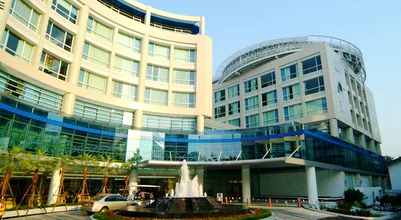
Bangkok Hospital
BDMS flagship hospital campus with standalone heart, cancer, and neuro-orthopaedic hospitals.
View hospital profile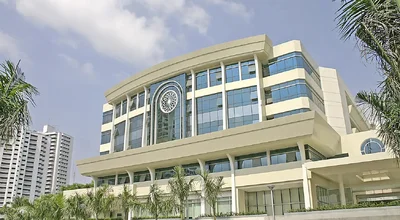
Samitivej Sukhumvit Hospital
Full-service hospital known for paediatrics, home to Thailand's first private children's hospital.
View hospital profile
Tell Us What You Need. We Do the Rest.
Share what you're considering and we'll come back with surgeon options, pricing, and a clear plan.
- Real hospital pricing with zero markup
- Matched with a specialist experienced in your specific procedure
- Full coordination from consultation to recovery


Trusted by patients worldwide
The complete guide to Eye Muscle Surgery in Thailand
Everything below is for readers who want the full detail: costs broken down, types and techniques, recovery, risks and safety, and planning your trip.
Eye Muscle Surgeons & Clinics in Thailand
Strabismus surgery requires subspecialist training in ocular motility and binocular vision. Here is what our partner centres bring to the table.
Leading Strabismus Centres in Bangkok
Our partner hospitals have dedicated paediatric ophthalmology and strabismus departments. Equipment includes synoptophore and prism bar testing, Hess screen analysis, and paediatric anaesthesia suites designed for young children. These are active strabismus units, not general eye clinics performing occasional alignment surgery.
Experienced Strabismus Surgeons
Our partner surgeons completed fellowships in paediatric ophthalmology and strabismus. They manage the full range: infantile esotropia, intermittent exotropia, vertical deviations, complex patterns, and adult strabismus with adjustable sutures. Regular surgical volume across all these categories is what differentiates a subspecialist from a generalist.
What to Look for in a Strabismus Surgeon
Ask about their experience with your specific type of deviation. Check whether they use adjustable sutures for adult cases. For children, confirm the hospital has a dedicated paediatric anaesthesia team. Ask how many strabismus procedures they perform annually and what their reoperation rate is. A surgeon who discusses the possibility of staged surgery upfront is being honest, not pessimistic.
Understanding Your Results
Eye muscle surgery produces visible alignment changes and, in many cases, measurable improvements in binocular function. Here is what to expect.
Typical Results
Successful strabismus surgery brings the eyes into alignment so they focus on the same point. Many patients recover some degree of binocular vision, particularly children treated early and adults with intermittent deviations. Relief from double vision is often the most immediately noticeable benefit. The cosmetic improvement, straight and coordinated eyes, follows naturally.
What Results Can You Expect?
The consultation includes detailed measurement of your deviation and an assessment of binocular vision potential. Your surgeon will explain what degree of alignment is likely, whether one or two procedures may be needed, and what functional improvement is realistic. Long-standing deviations in adults may achieve excellent cosmetic alignment without full binocular fusion, and that is still a significant outcome.
Eye Muscle Surgery Cost in Thailand
Average Cost of Eye Muscle Surgery
Our partner hospital holds two fixed fly-in package prices for muscle correction, valid to 31 December 2026. One eye is ฿68,000, roughly $2,000, and two eyes is ฿83,000, roughly $2,441. Both are local-anaesthetic day cases with no overnight stay. Two eyes works out at 1.22 times one eye rather than twice it, because you pay once for the anaesthetic, the theatre and the recovery slot, so if your surgeon recommends balancing both eyes the extra cost is far smaller than most people expect. These figures come from a single hospital rather than a national Thai price, and they vary noticeably from branch to branch within the same network.
Cost Breakdown
The package covers the strabismus surgeon, the local anaesthetic, the operating theatre and the day-case stay. General anaesthesia is not inside either figure, and since that is the usual route for this operation, treat it as the first thing to add rather than a footnote. Nor does the package cover the orthoptic work-up, the prism measurement and binocular vision testing that decide which muscles are adjusted, and those are worth pricing before you travel because they are a real part of what this operation costs anywhere. Also outside sit pre-operative medical clearance, laboratory tests and imaging, consultant fees from other departments, and medication for conditions you already take.
What Affects the Price?
The hospital prices this by how many eyes are operated on rather than by how many muscles, which is a more forgiving basis than it sounds. A complex pattern needing several muscles adjusted in one eye sits at the same ฿68,000 as a single-muscle recession. What does change the figure is the second eye, and that step is only ฿15,000. The larger variable sits outside the package entirely, and it is the anaesthetic. Both figures are for an awake procedure under local anaesthetic, which suits only a minority of straightforward adult cases. Strabismus surgery is normally done asleep, and always so in children, so for most patients the anaesthetist and theatre time are added to these figures rather than covered by them. Ask which route you are being quoted for before you read anything into the numbers. Large or long-standing deviations sometimes need a second operation to finish the job, and that is a second package.
Thailand vs International Price Comparison
Our partner hospital's packages are ฿68,000 for one eye and ฿83,000 for two, about $2,000 and $2,441, against $7,500 to $12,000 in the US, A$6,900 to A$11,400 in Australia and £6,000 to £10,500 in the UK. That gap is wide enough to survive the caveat, but the caveat is real. The Thai figures are for surgery under local anaesthetic, while a Western quote assumes a general anaesthetic and prices the anaesthetist into it, so you are not yet comparing like with like. Get your own quote written on the same basis as the one you are holding from home. The surgical techniques and post-operative care are equivalent, and the savings come from lower surgeon and facility fees.
Non-Surgical Alternatives to Eye Muscle Surgery
Surgery is not always the first step. Glasses can correct some forms of strabismus outright, particularly accommodative esotropia in children, where the inward turn is driven by long-sightedness and the right prescription brings the eyes back into line. Prism lenses can shift the image so the eyes work together and double vision eases, and in children, patching the stronger eye treats any amblyopia behind the misalignment. For certain smaller deviations, a botulinum toxin injection into an overactive muscle can temporarily relax it and realign the eye without an operation.
Each of these has real limits. Glasses and prisms manage the deviation rather than fix the muscle itself, so the eyes only stay aligned while the correction is worn, and stronger prisms become thick and visually distorting. Botulinum toxin wears off over a few months, so its effect is temporary and the deviation often returns, which is why it suits selected cases rather than large or long-standing turns. None of these options repositions the muscle permanently, and a deviation that simpler treatments have genuinely failed to hold is the point at which surgery is usually considered.
Eye muscle surgery is the route when the misalignment is too large for prisms, has not responded to glasses or patching, or is causing persistent double vision or loss of depth perception that conservative care cannot resolve. By physically repositioning the muscles, it aims for a lasting correction rather than an ongoing one, which is what the rest of this page covers.
Types of Eye Muscle Surgery
The surgical plan depends on which direction the eye deviates, how large the angle is, and whether binocular vision potential still exists. Horizontal deviations are the most common; vertical and oblique patterns require more specialised approaches.
Horizontal Strabismus Correction (Esotropia / Exotropia)
The most common type of eye muscle surgery. Medial rectus recession corrects an inward turn; lateral rectus recession corrects an outward turn. For larger deviations, recession of one muscle is combined with resection of the opposing muscle on the same eye, or bilateral recessions are performed.
- Addresses the most common forms of childhood and adult strabismus
- Adjustable sutures available in adults for post-operative fine-tuning
- One or two muscles per eye depending on the size of the deviation
- Best for: esotropia and exotropia where glasses or prisms have not achieved alignment
Vertical or Complex Strabismus Correction
Vertical deviations involve the superior or inferior rectus or oblique muscles. These patterns are often more complex to plan because the muscles interact in multiple gaze positions. Oblique muscle weakening procedures (inferior oblique recession or superior oblique tuck) are used for specific rotational misalignments.
- Targets superior, inferior, or oblique muscle imbalances
- Often requires surgery on muscles in both eyes for symmetry in all gaze directions
- Pre-operative measurement in multiple gaze positions is essential for surgical planning
- Best for: vertical deviations, pattern strabismus, and complex cases involving oblique muscle dysfunction
Eye Muscle Surgery Techniques
Two fundamental manoeuvres form the basis of all strabismus surgery: recession and resection. They are used individually or in combination depending on which muscles are overacting, which are underacting, and how large the deviation measures.
Adjustable Suture Technique
Used primarily in adult strabismus. The muscle is reattached with a knot that can be repositioned while the patient is awake in the hours after surgery. This allows the surgeon to check alignment once the anaesthetic has worn off and make a precise adjustment without returning to the operating theatre.
- Fine-tuning performed at the slit lamp, no second general anaesthetic
- Alignment is assessed with both eyes open in natural conditions
- Reduces the rate of under- or over-correction requiring formal revision
- Best for: adult patients where precise alignment is the primary goal
Bilateral Symmetric Surgery
Operating on the corresponding muscle in both eyes rather than two muscles in one eye. This approach distributes the surgical effect more evenly and can produce a more stable result in some deviation patterns. Particularly relevant for large-angle deviations where single-eye surgery would require an excessive amount of muscle repositioning.
- Distributes the surgical correction across both eyes for balance
- Reduces the amount of change required on any single muscle
- More stable long-term alignment for large-angle deviations
- Best for: large esotropia or exotropia where bilateral recession is preferable to unilateral recess-resect
Minimally Invasive Strabismus Surgery (MISS)
Rather than opening the conjunctiva widely at the front of the eye, the surgeon works through two small incisions tucked away from view, reaching the muscle through a tunnel. The same recession or resection is performed, but the surface is disturbed far less, so the eye tends to be whiter and more comfortable sooner. It is suited to many standard horizontal cases rather than every deviation, and not every surgeon offers it.
- Small, hidden incisions instead of a wide conjunctival opening
- Less surface redness and irritation, often a quicker-looking recovery
- The underlying muscle adjustment is the same as conventional surgery
- Best for: standard horizontal deviations where minimal post-operative redness matters
Posterior Fixation Suture (Faden Procedure)
A stitch is placed to anchor a muscle further back on the eye, weakening its pull only in the direction it acts most strongly while leaving the eye's primary position largely unchanged. It is a specialised manoeuvre used for particular patterns rather than routine alignment, often combined with a recession on the same muscle.
- Weakens a muscle selectively in its field of greatest action
- Useful for incomitant deviations that vary across gaze positions
- Frequently combined with a recession on the same muscle
- Best for: gaze-dependent deviations and selected nystagmus or DVD patterns
Eye Muscle Surgery Recovery Timeline
Days 1–3
The eye will be red, swollen, and feel gritty, similar to having something in your eye. Children typically bounce back quickly and resume play within a day. Adults should rest and use prescribed anti-inflammatory and lubricating drops. Adjustable suture fine-tuning occurs on day one while you are awake.
Days 5–7
Redness and swelling begin to reduce. Short periods of reading and screen use are fine. Avoid swimming, dusty environments, and rubbing the eyes. A follow-up appointment confirms early alignment and monitors surface healing.
Weeks 2–4
Surface redness fades and the eye feels comfortable. Alignment continues to stabilise as the muscles adapt to their new positions. School, desk work, and light exercise can resume. Contact sports and swimming should wait for surgeon clearance.
Months 2–3
The eye surface returns to its normal white appearance and alignment reaches its stable position. Binocular vision testing can be repeated to assess functional improvement. Any need for prism glasses or further treatment is discussed at this stage.
When Can You Fly After Eye Muscle Surgery?
Most patients can fly home 7–10 days after surgery. Flying does not affect the surgical result. The surface redness may still be visible, but the muscles are healing in their new positions and air travel does not interfere with that process. Continue using prescribed drops during travel.
When Can You Return to Work, School, and Exercise?
Children typically return to school within a week. Adults can resume desk work within the same timeframe.1 Light walking is fine from day one. Avoid swimming, contact sports, and activities risking impact to the eye for 4–6 weeks. Strenuous exercise can resume once surface healing is complete.
When Will Alignment Stabilise?
Alignment continues to settle over the first 6–8 weeks as the repositioned muscles adapt and scar tissue forms at the new attachment sites. The result you see at two to three months is close to final.2 In some cases, minor drift occurs over the following year; this is monitored by your home ophthalmologist.
Anaesthesia for Eye Muscle Surgery
Eye muscle surgery is performed under general anaesthesia1,3, so you (or your child) are fully asleep and feel nothing during the operation. This is the standard approach for strabismus surgery: it keeps the eye completely still while the surgeon detaches, repositions, and re-stitches the small muscles, which would be impossible to do safely on a moving eye. A consultant anaesthetist stays with you throughout and monitors you continuously, and for children this is a dedicated paediatric anaesthesia team experienced with young patients.
The general anaesthetic itself is usually short, in keeping with a one to two hour day procedure, and you wake in recovery the same day. In adults having the adjustable suture technique, there is a second, very different stage a few hours later: once the anaesthetic has worn off and you are fully awake, the surgeon checks your alignment at the slit lamp and fine-tunes the muscle position. That part is done with anaesthetic eye drops only, so the eye is numb and you feel pressure rather than pain while it is adjusted.
One practical warning about how this is priced, because it catches people out. Our partner hospital's two package prices for muscle correction are both written for surgery under local anaesthetic, not general. Some adults with a small, straightforward deviation are suitable for that awake route, and it is a real option worth asking about. Most people reading this page will not be, and children never are. If your case needs a general anaesthetic, which for the reasons above is the usual answer, the published figures are not the ones that apply to you and the anaesthetist and theatre time have to be quoted on top. Settle which route you are being priced for before you commit to travelling, and get it in writing.
Before you are cleared for anaesthesia you have a pre-operative assessment, including a review of your general health and any medications, which for a planned eye operation is straightforward for most people. You feel nothing during the surgery itself. Afterwards the eye typically feels gritty and mildly sore, more like having something in it than sharp pain, and that settles over a few days with the lubricating and anti-inflammatory drops and oral pain relief your surgeon prescribes.
Risks and Safety of Eye Muscle Surgery
Strabismus surgery is one of the most commonly performed eye operations worldwide and has a strong safety record. The main limitation is that achieving perfect alignment can require more than one procedure, particularly for large or complex deviations.
- Conjunctival scarring or granuloma at the muscle reattachment site
- Infection or significant inflammation, uncommon with standard protocols
- Scleral perforation during muscle reattachment, very rare
Precise pre-operative measurements, calibrated surgical dosing, and adjustable sutures in adults all minimise the risk of under- or over-correction. A frank discussion about the possibility of staged surgery is part of every consultation; complex or long-standing deviations may need more than one operation.
Is Eye Muscle Surgery Safe in Thailand?
Yes. Our partner hospitals hold JCI accreditation and employ fellowship-trained strabismus surgeons who perform this procedure regularly on both children and adults. Paediatric anaesthesia is handled by dedicated teams experienced with young patients. The safety profile matches published international data.
How to Reduce Risks
Accurate pre-operative measurements in multiple gaze positions are the foundation of a good outcome. Adjustable sutures in adults add a precision safety net. Choosing a surgeon who specifically subspecialises in strabismus, not a general ophthalmologist doing occasional squint cases, makes the most difference to alignment accuracy.
Will a Second Surgery Be Needed?
Some patients achieve full alignment in a single operation. Others, particularly those with large, complex, or long-standing deviations, may benefit from a staged approach. Further surgery to fully correct the squint is sometimes needed, particularly for large, complex, or long-standing deviations.1 This is discussed openly at the consultation so you know what to expect.
Planning Your Trip to Thailand for Eye Muscle Surgery
Eye muscle surgery requires 7–10 days in Thailand for assessment, surgery, adjustable suture adjustment, and follow-up before flying home.
How Long to Stay in Thailand
Plan for 7–10 days. The first day covers orthoptic assessment and surgical planning. Surgery follows within 1–2 days. For adults with adjustable sutures, fine-tuning happens on day one post-op. A follow-up appointment before departure confirms early alignment and surface healing.
What Is Included in a Medical Trip
Your care coordinator manages all scheduling, hospital transfers, and follow-up appointments. The hospital package covers the strabismus surgeon, the operating theatre and the day-case stay, priced under local anaesthetic. Where your case needs general anaesthesia, which is standard for children, that is quoted on top, as are the orthoptic work-up and any pre-operative clearance, so ask for one written quote that totals everything. A detailed surgical summary is prepared for your home ophthalmologist.
Travelling with a Child
Many of our strabismus patients are children. Our coordinators are experienced with families travelling for paediatric eye surgery. Hospital facilities include child-friendly recovery areas and paediatric anaesthesia teams. Most children recover quickly and are back to normal activity within days. Your coordinator can recommend family-friendly hotels near the hospital.
Related Procedures
Other procedures that address similar goals or conditions, in case one of them is a closer fit for you.
Planning your treatment in Thailand
Independent guides to help you weigh the decision, before you commit to anything.
Common Questions About Eye Muscle Surgery in Thailand
Key questions about strabismus surgery

Medical References
Keep researching with AI
Open this guide in your AI assistant to dig deeper and ask the questions it didn't answer.
Opens in a new tab with this guide already loaded.
Medical disclaimer: Content on this site is provided for informational purposes and should not be treated as medical advice. Outcomes, timelines, and eligibility differ from person to person. Consult a qualified medical professional before making any decisions about surgery or treatment.
Ready to Get Started?
Speak with our care coordinators for a free consultation and find out how strabismus surgery can realign your eyes or your child's eyes.
Get a Free QuoteEyelid & Reconstructive