Periareolar Top Surgery in Thailand Your guide to cost, top specialists & hospitals
Minimal scars, maximum difference. A flat chest without the long incision lines.
What Is Periareolar Top Surgery?
Also known as: O-Scar Top Surgery · Periareolar Mastectomy
Periareolar top surgery is chest masculinization surgery that creates a flat, masculine chest by removing breast tissue through a circular incision around the areola, the pigmented ring around the nipple. The scar stays within that ring instead of crossing the chest, and the areola can be reduced at the same time. The nipple keeps its own blood supply and nerve connections, so sensation is more likely to be retained than with techniques that detach it.1,2 The result lasts once the tissue is removed.
The technique relies on the skin retracting flat over the chest wall, so it suits some chests more than others. It works best for smaller chests, generally A to small B cup, with good skin elasticity.1 If your chest is larger or your skin has lost stretch, your surgeon should say so honestly.
Results vary with anatomy, and a few cases need a touch-up or a switch to double incision. The surgery removes most glandular tissue, so chestfeeding cannot be relied on afterwards. WPATH Standards of Care Version 8 treats that as a conversation to have first.
It can address a range of concerns, including:
Am I a Good Candidate for Periareolar Top Surgery?
This technique is anatomy-gated more than almost any other, with the result resting on starting size and how well your skin retracts.
Patient selection is the single most important factor in whether periareolar surgery delivers a flat result.
A to small B cup: The technique relies on skin retracting flat over the chest wall, so it works best on smaller chests.
Elastic, unstretched skin: Significant weight change, pregnancy, or a long binding history reduces elasticity and limits how cleanly the skin settles.
Minimal sagging: Noticeable ptosis or excess skin points toward double incision instead.
Borderline cases: An extended periareolar variant may bridge the gap, or an honest surgeon will redirect you to double incision for a flatter outcome.
Even with a tissue-preserving approach, chestfeeding cannot be promised, and the decision belongs before surgery.
No guaranteed preservation: The bulk of glandular tissue is removed and ducts are disrupted, so functional lactation cannot be predicted.
Highly variable outcomes: Some tissue and ductal connections may remain, but chestfeeding should not be planned as a goal of the procedure.
Decide before the technique is chosen: WPATH Standards of Care Version 8 frames this as a pre-operative conversation to have with your surgeon.
The procedure is shorter than double incision, but the preparation requirements are the same.
Nicotine pause: Smoking or vaping must stop for the standard pre and post-operative window, since nicotine raises the risk of surgical complications.
A referral letter: A letter from a qualified mental health professional is part of standard candidacy, in line with WPATH-aligned practice.
Good overall health: Fit for general anaesthesia, with a 10-14 day stay in Thailand for surgery and follow-up.
Periareolar rewards the right anatomy, and candid expectations protect you from the wrong outcome.
Puckering settles slowly: Gathering around the areola from the purse-string closure is normal and smooths out over weeks to months.
Revision is possible: A small percentage of cases need a touch-up, or conversion to double incision if skin retraction proves insufficient; this is discussed before you commit.
Sensation usually kept: The nipple stays on its nerve supply, so sensation is preserved in most cases, one of the technique's main advantages.
Who is not suitable for periareolar top surgery?
- Chests larger than a small B cup or with significant sagging
- Markedly reduced skin elasticity until double incision has been considered
- Smokers or vapers unable to pause for the pre and post-operative window
- No referral letter from a qualified mental health professional yet
- Chestfeeding planned as a goal of the procedure
- Significant uncontrolled heart or lung disease, or otherwise not medically fit for general anaesthesia
Pricing
How Much Will Periareolar Top Surgery Cost in Thailand?
What periareolar top surgery costs at accredited hospitals in Thailand, and what your final quote depends on.
Get your exact price
Tell us what you're considering and we'll send a personalised quote from accredited hospitals within 24 hours.
Get a Free QuoteTypical prices in Thailand
Typical ranges based on recent hospital quotes. Your exact price depends on the hospital and how complex your case is, and is confirmed at your teleconsultation.
Periareolar Top Surgery
A ring of skin is taken from around the areola along with the breast tissue, so the scar stays hidden at the areolar edge instead of crossing the chest.
| Peri-areolar (O-scar) top surgery 1 night A ring of skin removed around the areola and closed with a purse-string suture, which tightens the skin and resizes the areola | $5,000 ฿170,000 |
Added to the above where needed
| Nipple reduction Reducing the nipple itself, done at the same operation where you want it | $740 ฿25,000 |
Typically not included
- Revision, or conversion to double incision if the skin does not retract flat, quoted as a separate operation
- Pre-operative assessment and blood tests, done before you are cleared for general anaesthesia
- Laboratory examination of the breast tissue removed during surgery
- Areolar tattooing or later scar revision, once healing is complete
- Referral letter from a mental health professional, required by most surgeons before booking
Get your exact price
Tell us what you're considering and we'll send a personalised quote from accredited hospitals within 24 hours.
Hospitals Trusted for Periareolar Top Surgery
From internationally accredited flagships to dedicated specialist hospitals, these are the kinds of facilities where international patients have this procedure.
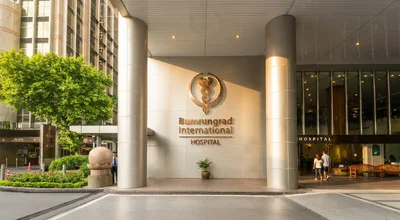
Bumrungrad International Hospital
Full-service hospital with over 1,200 physicians treating 520,000+ international patients a year.
View hospital profile
Bangkok Hospital
BDMS flagship hospital campus with standalone heart, cancer, and neuro-orthopaedic hospitals.
View hospital profile
Samitivej Sukhumvit Hospital
Full-service hospital known for paediatrics, home to Thailand's first private children's hospital.
View hospital profile
Tell Us What You Need. We Do the Rest.
Share what you're considering and we'll come back with surgeon options, pricing, and a clear plan.
- Real hospital pricing with zero markup
- Matched with a specialist experienced in your specific procedure
- Full coordination from consultation to recovery


Trusted by patients worldwide
The complete guide to Periareolar Top Surgery in Thailand
Everything below is for readers who want the full detail: costs broken down, types and techniques, recovery, risks and safety, and planning your trip.
Periareolar Top Surgery Surgeons & Clinics in Thailand
The surgeon's judgment about candidacy is as important as their technical skill. Here is what to look for.
Leading Hospitals in Bangkok
Our partner hospitals are JCI-accredited with dedicated gender-affirming surgery departments. Periareolar top surgery is a routine procedure at these centres. Full hospital infrastructure means complications, if they occur, are handled in-house with immediate access to the surgical team.
Experienced Periareolar Surgeons
Our partner surgeons are board-certified by the Thai Board of Plastic and Reconstructive Surgery and have significant experience with periareolar top surgery specifically. They see enough cases to have clear criteria for who is a good candidate and who should be directed toward double incision for a better outcome.
What to Look for in a Surgeon
Ask specifically about their periareolar candidacy criteria. A surgeon who offers periareolar surgery to every patient regardless of chest size is not someone you want operating on you. Ask for before-and-after photos of periareolar cases with a chest size similar to yours. Check independent reviews for mentions of the result being flat and the scarring being as promised.
Understanding Your Results
Periareolar results are permanent, but the aesthetic outcome depends heavily on starting anatomy. Here is what realistic results look like.
Typical Periareolar Top Surgery Results
A flat masculine chest with scarring visible only at the areolar border. The areola is reduced to masculine proportions. Nipple sensation is preserved in most cases. The result is most successful on A to small B cup chests with good skin elasticity; these patients consistently achieve a smooth, flat contour with no visible scarring beyond the areola.
What Results Can You Expect?
Immediately post-surgery, the chest is flat but may show puckering around the areola from the purse-string closure. This smooths out over weeks to months as the skin retracts and settles. The areolar scar fades significantly by six months and is often very difficult to detect by 12 months. Your consultation will include a frank discussion about whether your anatomy is likely to produce a satisfactory result with this technique.
Periareolar Top Surgery Cost in Thailand
Average Cost of Periareolar Top Surgery
Our partner hospital quotes ฿170,000, about $5,000. That is the operation itself rather than a starting figure, and it sits between the two other techniques. Keyhole is ฿126,000 because it removes no skin at all, and double incision with a free nipple graft is ฿210,000 because it removes skin across the whole chest. What the ฿44,000 above keyhole buys is the ring of skin taken around the areola and the purse-string closure that tightens it. A nipple reduction at the same operation adds ฿25,000. This is one hospital's rate rather than a national price, and figures elsewhere in Bangkok differ.
Cost Breakdown
Each figure covers the surgeon's fee, which reflects the technical precision the closure requires, the anaesthetist and intra-operative monitoring, theatre time, and the night in hospital with nursing care. Aftercare is included, meaning the compression vest, follow-up visits and prescribed medication. Outside it sit pre-operative assessment and blood tests, laboratory examination of the tissue removed, and anything arising from a revision or a later conversion to double incision.
What Affects the Price?
Not much within the technique, since this is quoted as one operation rather than a range. What moves the number is which technique you turn out to be a candidate for, and that is anatomy rather than choice. A small chest with skin that retracts cleanly on its own may only need keyhole at ฿126,000. Where the skin will not lie flat unaided, the peri-areolar ring tightens it and lets the areola be resized in the same step, which is what you are paying ฿170,000 for. If your surgeon judges that neither will leave the chest flat, the recommendation is double incision at ฿210,000. Revision, or a later conversion to double incision, is quoted as a separate operation.
Thailand vs International Price Comparison
Set against $9,000 to $16,500 for self-funded chest masculinization in the US, A$8,400 to A$15,000 in Australia and £7,500 to £13,500 in the UK, ฿170,000 comes in under the bottom of every one of those ranges, at a little over half the American floor. Those Western figures cover top surgery generally rather than the peri-areolar technique specifically, so treat the gap as indicative rather than exact. The saving comes from lower operating costs in Thailand rather than reduced surgical standards, and our partner hospitals are JCI-accredited.
Surgical vs Non-Surgical Chest Masculinization
Before surgery, the usual non-surgical route to a flatter chest is binding. A well-fitted binder compresses chest tissue to create a flatter line under clothing, and for a smaller chest it can be genuinely effective day to day, with no operation and no recovery. Many people bind for years, and it remains the most accessible way to ease chest dysphoria in the moment.
What binding cannot do is change the chest itself. The effect lasts only while the binder is on, it has to be put on again every day, and long or tight binding can bring real downsides: restricted breathing, back and chest pain, skin irritation, and discomfort that the smaller-chest restriction noted above often reflects. Testosterone, separately, deepens the voice and changes fat distribution but does not remove the glandular tissue that developed at puberty, so it does not flatten the chest either.
Periareolar top surgery removes that tissue permanently, so the flat, masculine contour is there without binding, without daily effort, and without the restriction that binding brings. For a lasting flat chest rather than a temporary appearance under clothing, surgery is the route, and that is what the rest of this page covers.
Types of Periareolar Top Surgery
Periareolar surgery has two main variations. The choice between them depends on how much tissue and skin needs to be removed, and whether you sit at the upper limit of periareolar candidacy.
Standard Periareolar (Concentric Circular)
Two concentric circular incisions: one around the areolar border, a larger one surrounding it. Breast tissue is removed through the doughnut-shaped opening, and the outer skin edge is gathered with a purse-string closure. This tightens the skin and reduces the areola in a single step.
- Scarring limited to the areolar border
- Areola can be resized and reshaped simultaneously
- Nipple remains on its pedicle, preserving blood supply and sensation
- Best for: A cup chests with good skin elasticity
Extended Periareolar
Uses a slightly larger outer incision to accommodate more tissue removal in patients at the upper limit of periareolar candidacy. A small lateral skin wedge may be excised to improve contour. This balances minimal scarring with the need for additional skin removal.
- Addresses chests between periareolar and double incision criteria
- Still avoids the long horizontal chest scars of double incision
- Allows more tissue removal than the standard concentric approach
- Best for: small B cup, or borderline cases with minor skin laxity
Periareolar Top Surgery Techniques
Both variations centre on a concentric incision approach, but they differ in how much tissue and skin can be removed. Your surgeon will assess chest size, skin quality, and nipple-areolar dimensions to determine which delivers the flattest result with the best scar outcome.
Concentric Circular Technique
The standard periareolar method. Two circular incisions create a doughnut-shaped opening for tissue removal. The outer skin is gathered and sutured to the areolar margin. Skin contracts over the following months to smooth out any initial puckering.
- Single-step tissue removal, skin tightening, and areola reduction
- Nipple stays on its pedicle with full nerve and blood supply intact
- Initial puckering resolves as the skin settles over weeks to months
- Best for: patients with A cup chests and excellent skin retraction
Extended Periareolar with Lateral Excision
Adds a small lateral wedge of skin excision to the concentric technique. This allows more tissue and skin to be removed for patients at the upper boundary of periareolar candidacy. The additional scar is small and positioned laterally where it is less visible.
- Accommodates slightly larger tissue volumes than standard periareolar
- Small additional lateral scar trades off against a flatter result
- Preserves nipple pedicle and sensation like standard periareolar
- Best for: small B cup or patients with moderate skin laxity
Liposuction-Assisted Contouring
Liposuction is often combined with periareolar excision to debulk fatty tissue and refine the chest borders, particularly the lateral and underarm area where glandular removal alone can leave fullness. It works alongside the excision rather than replacing it, since liposuction removes fat but not the firmer glandular tissue, and it helps the skin redrape smoothly for a flatter overall contour.
- Refines the lateral chest and underarm where excision alone leaves fullness
- Used as an adjunct to excision, not a standalone flattening method
- Smaller cannula access points heal as tiny, well-hidden marks
- Best for: chests with a fatty component or fullness toward the armpit
Periareolar Top Surgery Recovery Timeline
Days 1–3
Mild to moderate soreness and swelling around the chest, well controlled with prescribed pain medication. You wear a compression vest to support healing. Light walking is encouraged, and your care coordinator checks in daily.
Weeks 1–2
Swelling and bruising gradually subside. Temporary puckering around the areola from the purse-string closure is normal and smooths out as healing progresses. A follow-up appointment checks wound healing and suture status.
Weeks 3–4
Comfort and mobility continue to improve. Most patients can resume desk work and gentle exercise. The compression vest is worn for four to six weeks total. Avoid heavy lifting and chest-level exertion.
Months 2–6
The areolar scar matures and blends with surrounding skin. Any residual puckering or irregularity continues to settle. Full exercise and activity restart after surgical clearance. Most patients see their settled chest contour by three to six months.
When Can You Fly After Periareolar Top Surgery?
Most patients can fly home 10–14 days after surgery. By that point the immediate swelling has settled, your surgeon has checked healing at a follow-up, and any initial wound concerns have been addressed. Wearing a compression vest during the flight is recommended. Mild swelling from cabin pressure and immobility is temporary.
When Can You Return to Work and Exercise?
Desk work can resume at two to three weeks. Light walking is encouraged from day one. Gym workouts and upper-body exercise should wait until six weeks. Swimming needs the same clearance. Your surgeon provides guidance based on your specific healing progress.
When Will You See Final Results?
The chest is visibly flat once the compression vest comes off, but initial puckering from the purse-string closure takes weeks to months to smooth out. By three months the contour is close to final. Areolar scars continue to mature and blend for up to 12 months.
Anaesthesia for Periareolar Top Surgery
Periareolar top surgery is performed under general anaesthesia, so you are fully asleep and feel nothing while the chest is being reshaped. A consultant anaesthetist stays with you for the whole operation and monitors you continuously, which is standard at the accredited hospitals we work with.
Because the surgeon needs you completely still and relaxed to remove tissue evenly and place the purse-string closure precisely, general anaesthesia is the right choice for this procedure rather than local with sedation. Your anaesthetist and surgeon confirm the plan together based on your medical history, and you can raise any past experience with anaesthesia at that conversation.
Before you are cleared, you have a pre-operative assessment that includes blood tests and a review of any medications or hormones you take. You feel nothing during surgery itself. When you wake, the chest feels tight and sore rather than sharply painful, and that discomfort is mild to moderate, eases through the first week, and is well controlled with the medication your surgeon prescribes.
Risks and Safety of Periareolar Top Surgery
Periareolar surgery has a good safety profile when performed on appropriately selected patients. Patient selection is the single most important factor in achieving a satisfactory result.
- Residual breast tissue or inadequate flattening requiring revision3
- Skin puckering or contour irregularity around the areola
- Dog-ear or lateral contour bulge at the lateral excision site in the extended periareolar variant
- Contour asymmetry, a visible left-right difference in flatness between the two sides
- Areolar stretching or widening over time
- Temporary or permanent changes in nipple sensation3
- Haematoma or seroma formation
- Infection or delayed wound healing (uncommon)
The most common issue is residual tissue or skin laxity that prevents a completely flat result. This is why patient selection is critical, and why an honest assessment during consultation matters more than a surgeon who agrees to periareolar surgery on every chest.
Is Periareolar Top Surgery Safe in Thailand?
Yes. Performed at a JCI-accredited hospital by a board-certified gender-affirming surgeon, periareolar top surgery in Thailand is as safe as anywhere in the world. The key safety factor is patient selection; the procedure itself is straightforward when it is performed on the right anatomy.
How to Reduce Risks
Start with an honest assessment of whether your chest is actually suitable for periareolar surgery. If your surgeon recommends double incision instead, that is valuable advice, not a sales pitch. Follow compression garment instructions, avoid upper-body strain, and attend all follow-ups. If puckering or contour concerns develop, communicate early.
When Is Revision Needed?
Revision may be needed if the result is not flat enough due to residual tissue, skin laxity, or areolar stretching. A small percentage of periareolar cases require conversion to double incision if skin retraction is insufficient. This possibility is discussed during consultation so you can factor it into your decision.
Planning Your Trip to Thailand for Periareolar Top Surgery
Most patients need 10–14 days in Thailand. Here is how to plan effectively.
How Long to Stay in Thailand
Plan for 10–14 days. This covers your consultation, one night in hospital, the first week of recovery with follow-up appointments, and a clearance check before you fly. Periareolar recovery is slightly faster than double incision, but the minimum stay is the same to allow adequate wound assessment.
What's Included in a Medical Trip
Your care coordinator manages hospital transfers, scheduling, interpreter services, and follow-up appointments. Surgical quotes cover surgeon fees, anaesthesia, hospital stay, compression vest, and aftercare. Flights and accommodation are separate, but your coordinator can recommend nearby recovery-friendly hotels.
Recovery in Bangkok
Stay in Bangkok for the full recovery period. Proximity to the hospital is important for follow-ups, and you want your surgical team accessible if anything unexpected arises. Most patients are comfortable with light activities within a few days and can enjoy the city at a gentle pace during their second week.
Related Procedures
Other procedures that address similar goals or conditions, in case one of them is a closer fit for you.
Planning your treatment in Thailand
Independent guides to help you weigh the decision, before you commit to anything.
Common Questions About Periareolar Top Surgery
Everything you need to know before your procedure

Medical References
- Chest Masculinization Surgery Procedure Steps (American Society of Plastic Surgeons)
- Chest Masculinization Surgery Results (American Society of Plastic Surgeons)
- Chest Masculinization Surgery Risks and Safety (American Society of Plastic Surgeons)
- Patients Should Stop Using E-Cigarettes before Plastic Surgery, Experts Conclude (American Society of Plastic Surgeons)
Keep researching with AI
Open this guide in your AI assistant to dig deeper and ask the questions it didn't answer.
Opens in a new tab with this guide already loaded.
Medical disclaimer: Content on this site is provided for informational purposes and should not be treated as medical advice. Outcomes, timelines, and eligibility differ from person to person. Consult a qualified medical professional before making any decisions about surgery or treatment.
Ready to Get Started?
Speak with our care coordinators for a free, no-obligation consultation and personalised quote.
Get a Free Quote






What patients say
In their own words, from people we've helped plan treatment in Thailand.
“I was on an NHS waiting list for 18 months. With you I had my hip done five weeks after my first email, and I was playing golf again by spring.”
“My daughter came out with me and Bea got her a room right next to mine. Having her close by helped a lot in the first few days after surgery.”
“...Nick spent a long time on the phone going through the three hospitals with me, the surgeons, the costs, how long I’d need to stay. I felt like he actually listened.”
“Our coordinator met us at the hospital on the first day and translated anything we didn’t understand. We never felt lost, and every appointment was booked before we even arrived.”
“Very thorough health check, and the doctor went through all my results with me the same afternoon. It was all done in one day. Will be booking again next year.”
“...sent all my documents to my GP at home without me even asking. Little things like that mean a lot when you’re dealing with a hospital in another country.”
“My wife and I felt supported from the first phone call right up to my last follow-up. Having someone to ask whenever we had a question took a lot of pressure off.”
“Quick, simple and well organised. The hospital was excellent, I was in and out the same morning, and Mint had a driver waiting to take me back to my hotel...”


