FTM Top Surgery in Thailand Your guide to cost, top specialists & hospitals
A flat chest changes everything: how you dress, how you move, how you breathe.
What Is FTM Top Surgery?
Also known as: Chest Masculinization · Subcutaneous Mastectomy with Chest Contouring
FTM top surgery is gender-affirming chest surgery that creates a flat, masculine chest by removing breast tissue and excess skin and repositioning the nipple-areolar complex, the nipple and surrounding areola. It is also called subcutaneous mastectomy with chest contouring. The flat contour is lasting once the tissue is gone. It is performed for trans men, trans-masculine and non-binary people, usually under general anaesthesia in 2 to 4 hours, and does not require prior hormone therapy.
For many people this is the change they have waited longest for, so feeling both certain and nervous at once is normal. Your chest size, skin elasticity and the result you want shape which technique fits. Your surgeon plans the approach around your body, not a template.
It helps to know the trade-offs early. Sensation can change, especially with free nipple grafts, and scars fade but do not vanish. Raise future chestfeeding before surgery, not after: double-incision usually rules it out, and no technique can promise it. WPATH Standards of Care Version 8 treats this as a pre-operative conversation, and a consultation is the place to weigh it.
It can address a range of concerns, including:
Am I a Good Candidate for FTM Top Surgery?
Top surgery has clear gates, documented dysphoria, stable health, and an honest pre-surgery conversation about technique, sensation, and chestfeeding.
Technique selection is led by your anatomy, and your suitability for each approach is assessed at consultation.
C cup and above: Double incision with free nipple grafts is the standard, and the most reliable path to a completely flat chest.
A to small B cup: Periareolar surgery may be possible where skin elasticity is good and sagging minimal.
Skin laxity counts: Loose or excess skin pushes the recommendation toward double incision regardless of cup size, because the skin must lie flat.
Future chestfeeding is a decision point before surgery, not a question for afterwards.
Double incision typically rules it out: The bulk of glandular tissue and ducts is removed, which usually eliminates future lactation.
No technique guarantees it: Periareolar approaches preserve more tissue but offer no assured function, so chestfeeding should never be a goal of this surgery.
Raise it early: WPATH Standards of Care Version 8 frames this as a pre-operative conversation, weighed alongside any wider family-building plans.
A few practical conditions carry real weight in how well this surgery heals.
The nicotine pause is non-negotiable: Smoking and vaping must stop at least four weeks before and after surgery; nicotine is the single biggest threat to nipple graft survival.
A stable weight: Fluctuations affect how the skin retracts and how flat the final contour sits.
No testosterone requirement: Hormone therapy is not a prerequisite; surgery can come before, during, or without it.
Because this is identity-driven surgery, surgeons look for a settled decision with the right groundwork behind it.
Persistent, documented dysphoria: Chest dysphoria that affects daily life, consistent over time rather than a recent impulse.
A referral letter: Most surgeons follow WPATH and ask for one letter from a qualified mental health professional; exact requirements are confirmed before booking.
Support around you: Ongoing mental-health care where relevant and a recovery network ready for the weeks after surgery.
The trade-offs are well documented, and good candidates have weighed them before consultation.
Sensation changes: Free nipple grafts disconnect nerves, so reduced or absent sensation is common; some feeling can return over 12-24 months but is not guaranteed.
Scars that fade, not vanish: Double-incision scars run along the pectoral border and mature from red to pale over 12-18 months.
Flat from day one: Swelling hides fine contour at first; the settled shape is clear by around three months.
Who is not suitable for ftm top surgery?
- Smokers or vapers unable to pause four weeks before and after surgery
- Weight or BMI in active flux
- No referral letter from a qualified mental health professional yet
- Chestfeeding planned as a goal of the surgery
- Recovery support network not yet in place
- Significant uncontrolled heart or lung disease, or otherwise not medically fit for general anaesthesia
- Untreated or undiagnosed breast lump, or unaddressed personal or high family breast-cancer risk
Pricing
How Much Will FTM Top Surgery Cost in Thailand?
What ftm top surgery costs at accredited hospitals in Thailand, and what your final quote depends on.
Get your exact price
Tell us what you're considering and we'll send a personalised quote from accredited hospitals within 24 hours.
Get a Free QuoteTypical prices in Thailand
Typical ranges based on recent hospital quotes. Your exact price depends on the hospital and how complex your case is, and is confirmed at your teleconsultation.
FTM Top Surgery
Breast tissue is removed and the chest contoured, and the price follows how much skin has to come away with it and what happens to the nipple.
| Keyhole top surgery 1 night Tissue taken out through a small incision at the areolar border, with no skin excised and the nipple left where it is | $3,700 ฿126,000 |
| Peri-areolar (O-scar) top surgery 1 night A ring of skin removed around the areola and closed with a purse-string suture, which tightens the skin and resizes the areola | $5,000 ฿170,000 |
| Double incision with free nipple graft 1 night Tissue and excess skin removed through two horizontal incisions, with the nipples resized and grafted back into a masculine position | $6,200 ฿210,000 |
Added to the above where needed
| Nipple reduction Reducing the nipple itself, done at the same operation where you want it | $740 ฿25,000 |
Typically not included
- Treatment of a complication, such as drainage of a haematoma or seroma, or a return to theatre for a wound or graft problem
- Revision of earlier top surgery, including scar and nipple corrections, quoted as a separate operation
- Nights on the ward beyond the one included, if your surgeon keeps you in longer
- Pre-operative assessment and clearance for general anaesthesia, including blood tests and a medication review
- Pathology on the tissue removed at surgery, and any further investigation if it shows something unexpected
- The mental health referral letter most surgeons ask for, arranged at home before you travel
Get your exact price
Tell us what you're considering and we'll send a personalised quote from accredited hospitals within 24 hours.
Hospitals Trusted for FTM Top Surgery
From internationally accredited flagships to dedicated specialist hospitals, these are the kinds of facilities where international patients have this procedure.
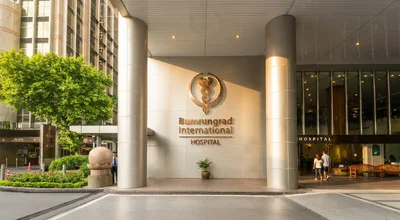
Bumrungrad International Hospital
Full-service hospital with over 1,200 physicians treating 520,000+ international patients a year.
View hospital profile
Bangkok Hospital
BDMS flagship hospital campus with standalone heart, cancer, and neuro-orthopaedic hospitals.
View hospital profile
Samitivej Sukhumvit Hospital
Full-service hospital known for paediatrics, home to Thailand's first private children's hospital.
View hospital profile
Tell Us What You Need. We Do the Rest.
Share what you're considering and we'll come back with surgeon options, pricing, and a clear plan.
- Real hospital pricing with zero markup
- Matched with a specialist experienced in your specific procedure
- Full coordination from consultation to recovery


Trusted by patients worldwide
The complete guide to FTM Top Surgery in Thailand
Everything below is for readers who want the full detail: costs broken down, types and techniques, recovery, risks and safety, and planning your trip.
FTM Top Surgery Surgeons & Clinics in Thailand
Your surgeon's experience with trans-masculine and non-binary chest anatomy matters more than marketing or clinic décor. Here is what to prioritise.
Leading Hospitals in Bangkok
Our partner hospitals are JCI-accredited facilities with dedicated gender-affirming departments. They handle top surgery as a core procedure, not an occasional request. In-house imaging, pathology, and emergency capability are standard. These are full-scale hospitals, not aesthetic clinics.
Experienced Top Surgery Surgeons
Our partner surgeons are board-certified by the Thai Board of Plastic and Reconstructive Surgery and have trained specifically in transmasculine chest procedures. The surgical volume in Thailand means our surgeons see more top surgery cases in a month than many Western surgeons see in a year.
What to Look for in a Surgeon
Ask for before-and-after photos of patients with a similar chest size to yours. Check board certification specifically in plastic surgery, not general surgery. Read independent reviews from other trans patients. Pay attention to how the surgeon discusses scarring, sensation trade-offs, and technique selection during consultation; vague answers are a warning sign.
Understanding Your Results
Top surgery results are permanent. Here is what to expect at each stage and what a realistic outcome looks like.
Typical FTM Top Surgery Results
A flat, masculine chest contour with nipples positioned and sized to match male anatomy. Double incision leaves horizontal scars beneath the pectorals that fade significantly over time. Periareolar leaves a scar at the areolar border that becomes very difficult to detect. Many patients describe the result as the single most impactful change in their transition.
What Results Can You Expect?
The chest is flat immediately after surgery, though swelling obscures fine detail for the first few weeks. By three months you have a clear picture of your settled contour. Scars continue to fade for up to 18 months. Nipple grafts take several months to settle in colour. Your surgeon will discuss realistic outcomes for your specific anatomy during consultation.
FTM Top Surgery Cost in Thailand
Average Cost of FTM Top Surgery
Our partner hospital quotes ฿126,000 to ฿210,000, about $3,700 to $6,200. Keyhole is ฿126,000, peri-areolar with its purse-string closure is ฿170,000, and double incision with a free nipple graft is ฿210,000. A nipple reduction at the same operation adds ฿25,000. These are one hospital's rates rather than a national price, and figures elsewhere in Bangkok differ.
Cost Breakdown
Each figure covers the surgeon's fee, which reflects the technical work and is the largest single component, the anaesthetist and intra-operative monitoring, theatre time, and the night in hospital with nursing care. Aftercare in the weeks that follow is included, meaning the compression vest, drain management, follow-up visits and prescribed medication. What sits outside it is pre-operative assessment and blood tests, pathology on the tissue removed, and treatment of any complication.
What Affects the Price?
Technique is almost the whole of it, and the ladder runs in the order you would expect once you know what each one removes. Keyhole is the cheapest because only gland comes out and the nipple stays where it is. Peri-areolar adds ฿44,000 for the ring of skin taken around the areola and the purse-string closure that tightens it. Double incision is ฿210,000 because skin comes off across the chest and the nipples are resized and grafted back, which is longer in theatre. What decides which figure applies to you is chest size and skin elasticity rather than preference, so it comes out of the consultation rather than off the list. Revision of earlier top surgery is quoted separately.
Thailand vs International Price Comparison
Set against $10,500 to $19,300 for self-funded top surgery in the US, A$9,800 to A$17,500 in Australia and £8,800 to £15,800 in the UK, all three Thai options come in under the bottom of the US range. Double incision, the dearest of them at about $6,200, is still under two thirds of the $10,500 American floor, and keyhole at about $3,700 is roughly a third of it. The difference reflects lower operating costs rather than lower surgical standards, and our partner hospitals hold JCI accreditation.
Surgical vs Non-Surgical Chest Masculinization
Chest binding is the most common non-surgical way to manage chest dysphoria day to day. A well-fitted binder flattens the chest under clothing and, for many people, makes daily life far more comfortable while they decide on next steps. Testosterone, where it is part of your transition, shifts upper-body shape over time by building muscle and redistributing fat, which can change how the chest reads. Both genuinely help, and many people rely on them for years.
What neither can do is remove breast tissue. Binding compresses but does not reduce, the chest returns the moment it comes off, and long-term daily binding carries its own toll: restricted breathing, back and rib discomfort, and skin irritation. Testosterone reshapes the surrounding body but leaves the glandular tissue itself in place, so it cannot create a truly flat contour on its own.
FTM top surgery is the only route to a permanently flat, masculine chest, because it physically removes the breast tissue and excess skin rather than hiding or reshaping around it. For anyone who wants to stop binding for good, swim and move freely, and have a contour that holds for life, surgery is what the rest of this page covers.
The Three Top Surgery Techniques
Three techniques are available, and they form a ladder rather than a menu. What decides which one you are offered is how much tissue there is and whether your skin will draw in flat once it is gone, so this is an anatomy question your surgeon answers rather than a preference you choose. Each has its own page with the detail and the quoted price.
Keyhole Top Surgery, ฿126,000
The smallest operation of the three. Tissue is lifted out through one short incision at the lower edge of the areola, no skin is removed, and the nipple is never detached, so it keeps its blood supply and its nerves. It only works where the skin will draw in flat unaided, which means a small chest with no excess skin,2 and it cannot resize or reposition the areola.
- The smallest scar available, hidden at the areolar edge
- Nipple sensation kept in most cases
- Cannot tighten skin or resize the areola
- Best for: a small chest with firm, elastic skin and no sagging
Peri-areolar (O-Scar) Top Surgery, ฿170,000
The middle route. A ring of skin is taken from around the areola along with the tissue, and the gap is closed with a purse-string suture, which tightens the skin and lets the areola be resized in the same step. The nipple stays on its own pedicle, so sensation is usually retained. Scarring stays at the areolar border.
- Tightens skin that would not lie flat on its own
- Areola can be reduced during the same operation
- Nipple kept on its blood supply, so sensation is usually preserved
- Best for: a small chest that needs some skin taken in, or an areola you want smaller
Double Incision with Free Nipple Grafts, ฿210,000
The dependable one. Two horizontal incisions across the lower chest allow the tissue and the excess skin to be removed and the contour shaped directly, then the nipples are resized and grafted back at a planned height. It is the technique for larger amounts of tissue and excess skin2 and the most reliable route to completely flat at any starting size. Grafting usually costs nipple sensation.
- Works at any chest size, including large and sagging chests
- Nipple size and position planned rather than inherited
- Longer scars along the pectoral border, and sensation commonly reduced
- Best for: a larger chest, or any chest with loose or excess skin
FTM Top Surgery Techniques
Beyond the three main routes above, there are variations your surgeon may raise at consultation, mostly concerning what happens to the nipple and how loose skin is handled. Here are the ones worth knowing about.
Double Incision Mastectomy
Two horizontal incisions across the lower pectoral border provide full access for tissue removal, skin excision, and chest contouring. The nipples are removed, resized, and grafted into a masculine position. Scars run horizontally and fade over 12–18 months.
- Complete control over chest contour and symmetry
- Works for all chest sizes including large and ptotic
- Horizontal scars positioned to sit along the natural pectoral fold
- Best for: moderate to large chests, or any anatomy with excess skin
Buttonhole Technique
A nipple-sparing variation of double incision. The nipple stays connected to a pedicle maintaining blood supply and nerve connections, then is repositioned through a small opening in the skin flap. Preserves more sensation than free grafts but requires anatomy that allows repositioning without full detachment.
- Preserves nipple blood supply and sensation in most cases
- Avoids the graft healing process and associated risks
- Similar chest contour results to standard double incision
- Best for: patients whose nipple position requires only moderate adjustment
Inverted-T (Circumareolar) Technique
A middle-ground approach for intermediate chests that sit between keyhole and full double incision, often a B to small C cup with some skin laxity. Tissue is removed through an incision around the areola extended with a short vertical and horizontal line, tightening loose skin while keeping the nipple on its own pedicle. Scarring is more contained than a full double incision and the nipple usually stays attached to its blood supply and nerves.
- Removes excess skin without the full horizontal double-incision scar
- Nipple kept on a pedicle, so sensation is preserved in most cases
- Bridges the gap when keyhole would leave the chest too loose
- Best for: intermediate chests with moderate skin laxity, between keyhole and double incision
FTM Top Surgery Recovery Timeline
Days 1–3
A compression vest and surgical drains manage fluid accumulation. Moderate soreness and chest swelling are controlled with prescribed pain medication. Rest at your recovery accommodation with daily care coordinator check-ins. Light walking is encouraged from day one.
Weeks 1–2
Drains are typically removed within the first week. Swelling and bruising begin to subside. You attend a follow-up to check incision healing and, if applicable, nipple graft viability. Continue wearing the compression vest as directed.
Weeks 3–4
Significant improvement in comfort and mobility. Most patients can resume desk work and gentle lower-body exercise. The compression vest is worn for four to six weeks total. Avoid lifting anything heavy and all upper-body exercise during this period.
Months 2–6
Chest contour continues to refine as swelling fully resolves and scars mature. Upper-body exercise and full activity restart after surgical clearance. Scars fade from red to pink and eventually pale over 12–18 months with proper scar care.
When Can You Fly After Top Surgery?
Most patients can fly home 10–14 days after surgery, once drains have been removed and your surgeon has confirmed incision healing is progressing well. Cabin pressure at altitude is safe at this stage. Wearing a compression vest during the flight is recommended, and some temporary swelling from reduced movement during travel is normal.
When Can You Return to Work and Exercise?
Desk work and light duties can resume at three to four weeks. Light walking is encouraged from day one. Driving usually waits until around two to three weeks, once you are off prescription pain medication and can comfortably reach the wheel, shoulder-check, and perform an emergency stop without chest strain. Upper-body workouts, swimming, and heavy lifting should wait until six to eight weeks, or until your surgeon clears you. Physically demanding jobs may need the full six-to-eight-week recovery period.
When Will You See Final Results?
You will see a flat chest immediately after surgery, but swelling obscures the final contour for the first few weeks. By six to eight weeks, the shape is becoming clear. Scars take 12–18 months to fully mature and fade. Nipple grafts settle in colour and texture over several months.
Anaesthesia for Top Surgery
FTM top surgery in Thailand is performed under general anaesthesia, so you are fully asleep and feel nothing during the operation.2 A consultant anaesthetist stays with you throughout and monitors you continuously, which is standard at the accredited hospitals we work with. This applies whether you have periareolar, buttonhole, or double incision with free nipple grafts, since all involve tissue removal and contouring that need you completely still and comfortable.
Before you are cleared for anaesthesia you have a pre-operative assessment, including blood tests and a review of any medications you take. If you are on testosterone, mention it here so it can be factored into your plan, though hormone therapy is not a barrier to surgery. This is also when your surgeon and anaesthetist confirm you are fit for a general, based on your health and history.
You feel nothing while the surgery happens. As the anaesthetic wears off, most people describe tightness and soreness across the chest rather than sharp pain, and it is well controlled with the medication your surgeon prescribes. The compression vest adds steady support from the start, and discomfort eases noticeably over the first week.
Risks and Safety of FTM Top Surgery
Top surgery is a well-established procedure performed thousands of times annually by gender-affirming surgeons worldwide. The complication rate is low when performed by experienced surgeons, but these are the risks you should understand.
- Dog ears (excess skin bunching at the outer ends of the double-incision scar)
- Hypertrophic or widened scarring
- Residual breast tissue or contour irregularities requiring revision
- Infection or delayed wound healing (uncommon)
Individual risk factors (chest size, skin type, healing tendencies) are reviewed during consultation to shape the technique and post-operative plan. Compression garment use and activity restrictions play a significant role in reducing complications.
Is FTM Top Surgery Safe in Thailand?
Yes. Performed at a JCI-accredited hospital by a board-certified gender-affirming surgeon, top surgery in Thailand meets the same safety standards as the US, UK, and Australia. Thailand has been performing these procedures at scale for decades, and complication rates at accredited centres are comparable to published international figures.
How to Reduce Risks
Choose a JCI-accredited hospital and verify your surgeon has specific top surgery experience and before-and-after photos of similar cases. Follow compression garment instructions exactly. Avoid lifting and upper-body strain during the recovery period. Attend all scheduled follow-up appointments. If you notice unusual swelling, heat, or fluid accumulation, contact your care team immediately.
When Is Revision Surgery Needed?
Revision may be considered for residual breast tissue, contour irregularities, nipple graft issues, or scarring concerns. Most issues are apparent within the first few months. A small percentage of patients benefit from minor scar revision or contour touch-ups, typically performed as outpatient procedures. Your surgeon will discuss realistic expectations during consultation.
Planning Your Trip to Thailand for FTM Top Surgery
Most patients need 10–14 days in Thailand. Here is how to plan your trip and what to expect.
How Long to Stay in Thailand
Plan for 10–14 days minimum. This covers your consultation, the procedure, one night in hospital, drain removal within the first week, and a follow-up appointment before your surgeon clears you to fly. An extra few days as a buffer is sensible for added confidence.
What's Included in a Medical Trip
Your care coordinator handles hospital transfers, scheduling, interpreter services, and follow-up appointments. Surgical quotes cover surgeon fees, anaesthesia, hospital stay, compression vest, and aftercare. Flights and accommodation are booked separately, but your coordinator can recommend recovery-friendly hotels close to the hospital.
Recovery in Bangkok
Bangkok is the practical choice for recovery. Your hospital is nearby for follow-ups, and your surgical team is accessible if anything comes up. Most patients are comfortable with light activities within a few days. Some move to a quieter location after the first week, but staying in Bangkok keeps you close to your surgeon until clearance.
Related Procedures
Other procedures that address similar goals or conditions, in case one of them is a closer fit for you.
Planning your treatment in Thailand
Independent guides to help you weigh the decision, before you commit to anything.
Common Questions About FTM Top Surgery
Everything you need to know before your procedure

Medical References
Keep researching with AI
Open this guide in your AI assistant to dig deeper and ask the questions it didn't answer.
Opens in a new tab with this guide already loaded.
Medical disclaimer: Content on this site is provided for informational purposes and should not be treated as medical advice. Outcomes, timelines, and eligibility differ from person to person. Consult a qualified medical professional before making any decisions about surgery or treatment.
Ready to Get Started?
Speak with our care coordinators for a free, no-obligation consultation and personalised quote.
Get a Free Quote






What patients say
In their own words, from people we've helped plan treatment in Thailand.
“I was on an NHS waiting list for 18 months. With you I had my hip done five weeks after my first email, and I was playing golf again by spring.”
“My daughter came out with me and Bea got her a room right next to mine. Having her close by helped a lot in the first few days after surgery.”
“...Nick spent a long time on the phone going through the three hospitals with me, the surgeons, the costs, how long I’d need to stay. I felt like he actually listened.”
“Our coordinator met us at the hospital on the first day and translated anything we didn’t understand. We never felt lost, and every appointment was booked before we even arrived.”
“Very thorough health check, and the doctor went through all my results with me the same afternoon. It was all done in one day. Will be booking again next year.”
“...sent all my documents to my GP at home without me even asking. Little things like that mean a lot when you’re dealing with a hospital in another country.”
“My wife and I felt supported from the first phone call right up to my last follow-up. Having someone to ask whenever we had a question took a lot of pressure off.”
“Quick, simple and well organised. The hospital was excellent, I was in and out the same morning, and Mint had a driver waiting to take me back to my hotel...”


