MTF Breast Augmentation in Thailand Your guide to cost, top specialists & hospitals
The chest you have been waiting for, shaped by surgeons who understand exactly what the transfeminine frame needs.
What Is MTF Breast Augmentation?
Also known as: Trans Breast Augmentation · Augmentation Mammoplasty
MTF breast augmentation is gender-affirming surgery that builds a feminine breast contour by placing an implant beneath the breast tissue or chest muscle. It adds projection and fullness where feminising hormone therapy alone has not produced the development you want, and the implant is sized for a transfeminine frame: a broader chest wall, a tighter skin envelope, and less tissue for coverage. It takes around 1 to 2 hours under general anaesthesia, and most surgeons want at least 12 months of hormones first so the implant supplements your growth.
The chest you are working with is yours alone, so the plan is built around it, not a template. Some want a modest step up; others want more projection to balance wider shoulders. Your surgeon measures your chest, checks how much tissue can cover an implant, and chooses the size, profile and placement that suit you.
Results vary, and a good outcome fits your body rather than a number. Implants typically last around 10 years, but are not lifetime devices and a future revision is possible.1,2 Your surgeon will be honest at consultation about what your tissue can safely carry.
It can address a range of concerns, including:
Am I a Good Candidate for MTF Breast Augmentation?
Surgeons look for settled hormonal development, a stable weight, and chest tissue that can safely cover an implant.
Timing against your hormone therapy is the first thing assessed, because it changes what the implant has to do.
At least 12 months of feminising hormones: Most guidelines recommend this before surgery so the implant supplements natural growth rather than replacing it.
A stable oestrogen dose: If your dose has changed recently, breast tissue is still developing and sizing decisions should wait.
Documentation: Many surgeons follow WPATH Standards of Care and ask for a referral letter from a qualified mental health professional; your care team confirms what your surgeon needs.
The transfeminine chest differs from the cisgender baseline, and surgeons plan around those differences rather than against them.
A broader chest wall: Implant profile and placement are chosen for your sternal width so proportions read naturally on your frame.
Tissue thickness: Very thin coverage increases the risk of visible implant edges; in some cases staged tissue expansion comes first.
Skin envelope: A tighter envelope and the degree of hormonal development guide pocket placement, usually submuscular, and achievable size.
This is a 1-2 hour operation under general anaesthesia with one night in hospital, followed by structured recovery weeks.
Smoking: nicotine impairs healing, so stopping four weeks before and after surgery is required.
Good overall health: Fit for general anaesthesia with a stable medical picture.
A stable weight: Weight or BMI still moving shifts the final implant proportion, so surgeons prefer it settled first.
Support in place: Mental-health or peer support to carry you through the recovery weeks is part of sensible candidacy.
A 7-10 day stay: Covers consultation, surgery, and follow-up before you are cleared to fly.
A good result is proportionate to your frame, and good candidates accept what that means in practice.
Size set by anatomy: Chest measurements, tissue coverage, and sizing assessments at consultation determine the achievable volume, not a photograph.
A settling period: Breasts sit high and feel firm at first, then drop and soften into position over three to six months.
Not lifetime devices: Modern implants typically last around 10 years; periodic monitoring and possible future revision are part of the long-term picture.
Who is not suitable for mtf breast augmentation?
- Under 12 months of feminising hormone therapy in most cases
- Recent oestrogen dose changes with breast tissue still developing
- Weight or BMI not yet stabilised
- Very thin chest tissue coverage without a staged expansion plan
- No mental-health or peer support in place for the recovery weeks
- Smokers unwilling to stop four weeks before and after surgery
- Significant uncontrolled heart or lung disease, or otherwise not medically fit for general anaesthesia
- Active infection, or an untreated or undiagnosed breast lump or abnormal screening finding
- Personal or family history of autoimmune connective-tissue disease such as scleroderma or lupus, which raises capsular-contracture risk
- Prior capsular contracture around a previous implant, which makes recurrence more likely without a revised surgical plan
Pricing
How Much Will MTF Breast Augmentation Cost in Thailand?
What mtf breast augmentation costs at accredited hospitals in Thailand, and what your final quote depends on.
Get your exact price
Tell us what you're considering and we'll send a personalised quote from accredited hospitals within 24 hours.
Get a Free QuoteTypical prices in Thailand
Typical ranges based on recent hospital quotes. Your exact price depends on the hospital and how complex your case is, and is confirmed at your teleconsultation.
MTF Breast Augmentation
An implant is placed under the chest muscle or breast tissue to build a fuller, more feminine contour where hormone therapy alone has not.
| Round silicone implants, submuscular 1 night Rounded implant set beneath the chest muscle, for even fullness across the upper breast | $2,200 to $3,000 ฿74,800 to ฿102,000 |
| Anatomical cohesive gel implants 1 night Teardrop implant that concentrates volume low, for a more gradual, natural slope | $2,800 to $3,600 ฿95,200 to ฿122,400 |
| Revision augmentation 1 night Existing implants removed and replaced, for a hardened, worn, or ill-fitting previous result | $3,200 to $4,000 ฿108,800 to ฿136,000 |
Typically not included
- Any future revision or implant replacement, since modern implants are not lifetime devices
- Treatment of a complication that needs a return to theatre, such as an infected pocket or capsular contracture
- A staged tissue-expansion procedure first, where chest coverage is too thin to place an implant safely in one operation
- Pre-operative medical clearance, blood tests, and any imaging your surgeon requires before surgery
- A referral letter from a mental health professional, where your surgeon requires one under WPATH guidance
Get your exact price
Tell us what you're considering and we'll send a personalised quote from accredited hospitals within 24 hours.
Hospitals Trusted for MTF Breast Augmentation
From internationally accredited flagships to dedicated specialist hospitals, these are the kinds of facilities where international patients have this procedure.
Bumrungrad International Hospital
Full-service hospital with over 1,200 physicians treating 520,000+ international patients a year.
View hospital profile
Bangkok Hospital
BDMS flagship hospital campus with standalone heart, cancer, and neuro-orthopaedic hospitals.
View hospital profile
Samitivej Sukhumvit Hospital
Full-service hospital known for paediatrics, home to Thailand's first private children's hospital.
View hospital profile
Tell Us What You Need. We Do the Rest.
Share what you're considering and we'll come back with surgeon options, pricing, and a clear plan.
- Real hospital pricing with zero markup
- Matched with a specialist experienced in your specific procedure
- Full coordination from consultation to recovery


Trusted by patients worldwide
The complete guide to MTF Breast Augmentation in Thailand
Everything below is for readers who want the full detail: costs broken down, types and techniques, recovery, risks and safety, and planning your trip.
MTF Breast Augmentation Surgeons & Clinics in Thailand
The surgeon you choose matters more than the implant brand. Here is what to look for when selecting a surgical team for trans augmentation.
Leading Hospitals in Bangkok
Our partner hospitals are Bangkok's leading JCI-accredited international-patient centres operating dedicated gender-affirming surgery departments. These are full-scale hospitals with in-house imaging, pathology, and emergency capability, not boutique clinics. Trans breast augmentation is a routine procedure in these settings.
Experienced Gender-Affirming Surgeons
Our partner surgeons are board-certified by the Thai Board of Plastic and Reconstructive Surgery and have specific training and case volume in transfeminine procedures. Several trained internationally before returning to Thailand where surgical volume is substantially higher. That combination of training breadth and daily practice is difficult to replicate elsewhere.
What to Look for in a Surgeon
Verify board certification by the Thai Board of Plastic Surgery specifically. Ask to see before-and-after photos of trans patients with similar chest anatomy to yours, not just cisgender augmentation results. Read independent reviews and pay attention to how the surgeon communicates during consultation. A good surgeon will be direct about what is achievable and what is not for your specific anatomy.
Understanding Your Results
MTF breast augmentation results are long-lasting. Here is what a realistic outcome looks like at each stage.
Typical MTF Breast Augmentation Results
The goal is feminine breast contour proportionate to the chest. Common improvements include visible cleavage, natural breast projection, and improved upper-body proportions. Implants positioned correctly on a wider sternal frame create breasts that look natural from the front and side profile. Results are stable once healing is complete.
What Results Can You Expect?
Immediately after surgery, the breasts sit high and appear larger than their settled size due to swelling. Over 3–6 months, they drop and soften into a natural position. The final result depends on your tissue coverage, implant choice, and pocket placement. Your surgeon will use sizing during consultation to show the approximate volume and profile you can expect.
MTF Breast Augmentation Cost in Thailand
Average Cost of MTF Breast Augmentation
MTF breast augmentation in Thailand typically costs between $2,200 and $4,000, depending on the implant type, surgeon experience, and hospital. Silicone gel implants at the lower end, premium cohesive gel or anatomical implants toward the upper end. Quotes should be itemised so you can see where the money goes.
Cost Breakdown
The total is made up of several components. The surgeon's fee reflects the technical work and is typically the largest portion. Hospital and theatre fees cover the facility, operating room, equipment, and nursing. Anaesthesia fees cover the anaesthetist and monitoring. Implant cost varies by brand and type. Aftercare includes follow-up visits, medication, and recovery support.
What Affects the Price?
Implant brand and profile are the biggest price drivers after the surgeon's fee. Premium cohesive gel implants cost more than standard silicone. Anatomical implants are slightly pricier than round. If revision work is needed on a previously augmented chest, complexity and operating time increase the fee. Surgeon experience and hospital accreditation also factor in.
Thailand vs International Price Comparison
MTF breast augmentation in Thailand costs 40–60% less than equivalent procedures in the US ($6,600–$12,100), Australia (A$6,200–A$11,000), and UK (£5,500–£9,900). The saving reflects lower operating costs in Thailand, not lower standards. Our partner hospitals hold JCI accreditation and surgeons hold equivalent board certifications.
Hormone Therapy vs Surgical Augmentation
Feminising hormone therapy is the foundation, not a competitor to surgery, and for many trans women it does produce real breast growth on its own. Oestrogen develops glandular tissue over the first two to three years, and some people are happy with the size and shape it gives them, which is exactly why most surgeons want at least 12 months of hormones in place before they will operate.
The honest limit is that hormonal development plateaus, and where it lands is largely down to your own genetics and starting point. A broad chest wall can make even a good response look modest in proportion, and no amount of additional time on oestrogen builds projection beyond what your tissue will produce. Padding and external forms can fill the gap day to day, but they are not a physical change to your body and many people find that wears thin.
Where hormones have done what they can and the result still does not match the chest you want, augmentation is the route to a permanent change in size and proportion, with an implant chosen specifically for the transfeminine frame. That is what the rest of this page covers, and the two work together: hormone-developed tissue gives the implant softer, more natural coverage.
Types of MTF Breast Augmentation
Implant selection for trans patients differs from standard cosmetic augmentation. Chest width, tissue coverage, and the degree of hormonal development all drive the choice of implant type and profile.
Round Implants
Round implants are the most commonly used for transfeminine augmentation. They provide even fullness across the breast and look the same regardless of rotation, eliminating the risk of implant malposition. Moderate-to-high-profile options are typically selected to achieve visible projection even with limited tissue coverage.
- Consistent shape regardless of implant rotation
- Better upper-pole fullness for patients with minimal native tissue
- Simpler revision if adjustment is needed later
- Best for: patients wanting reliable projection and a rounder breast shape
Anatomical (Teardrop) Implants
Anatomical implants taper upward and concentrate volume in the lower pole, mimicking the slope of natural breast tissue. They can look more natural in patients with some existing breast development but carry a small risk of rotation. Textured shells are typically used to keep them in position.
- More natural slope from upper chest to nipple
- Lower-pole fullness creates a subtle, feminine drape
- Textured surface reduces rotation risk
- Best for: patients with moderate hormonal development who prefer a less round look
MTF Breast Augmentation Techniques
The right technique depends on your tissue coverage, chest width, and how much natural development hormone therapy has produced. Two incision approaches dominate trans augmentation, each with different trade-offs.
Inframammary Incision (Under the Breast Fold)
The most widely used approach for transfeminine augmentation. The incision sits in the natural crease beneath the breast, giving the surgeon maximum control over pocket creation and implant positioning. Especially important when tissue coverage is thin.
- Best visibility for precise pocket dissection on a wider chest wall
- Accommodates all implant types and sizes without restriction
- Lower risk of nipple sensation changes compared to periareolar
- Best for: most trans patients, particularly those with limited native tissue
Periareolar Incision (Around the Areola)
An incision along the lower border of the areola where darker skin meets lighter breast skin. This produces a well-camouflaged scar and can incorporate minor areola resizing. It requires adequate areolar diameter to accommodate implant insertion.
- Scar blends into the natural colour transition of the areola
- Allows simultaneous areola adjustment if desired
- Slightly higher risk of sensation changes than inframammary
- Best for: patients with adequate areolar size who prioritise minimal visible scarring
Submuscular & Dual-Plane Placement
Beyond the incision, the surgeon decides which pocket holds the implant. On the transfeminine chest, where native tissue is often thin, the implant is usually placed under the pectoral muscle (submuscular) or part-under, part-over it (dual-plane). The muscle adds a layer of coverage over the upper edge of the implant, which softens the contour and helps disguise visible rims on a wider, tighter chest.
- Extra muscle coverage reduces visible implant edges and rippling
- Dual-plane balances upper-pole coverage with a natural lower-pole drape
- Often preferred over subglandular placement when tissue coverage is limited
- Best for: patients with thin native tissue who want the most natural-looking upper pole
Subglandular Placement
Subglandular placement sits the implant above the chest muscle and directly behind the breast tissue. It involves less surgical disruption and a gentler early recovery without the muscle pressure some patients feel, but it offers less coverage over the implant. It is generally reserved for trans patients who have developed enough hormonal breast tissue to camouflage the implant on their own.
- No muscle disruption, so early recovery feels more comfortable
- The breast moves more naturally as the muscle is left untouched
- Needs adequate tissue coverage to avoid visible edges on a wider chest
- Best for: patients with good hormonal development who want a quicker, gentler recovery
MTF Breast Augmentation Recovery Timeline
Days 1–3
Moderate tightness, swelling, and soreness across the chest, managed with prescribed pain relief. You will wear a supportive surgical bra and rest at your recovery accommodation with daily check-ins from your care coordinator. Light walking from day one promotes circulation.
Week 1
Swelling and bruising peak around days 3–4 then steadily improve. The breasts sit high and feel firm initially; this is normal and resolves over the coming weeks. A scheduled follow-up allows your surgeon to check healing and address any questions.
Weeks 2–4
Comfort improves significantly as swelling subsides and implants begin to settle into position. Light daily activities and desk work are usually possible. Driving can resume once you are off strong pain medication and can brace for an emergency stop without chest pain, often around one to two weeks. Avoid chest-level lifting or upper-body exercise. A final follow-up is completed before you travel home.
Months 2–6
Implants gradually drop into a natural position, softening in shape and feel as the tissue adapts. Full exercise, including upper-body workouts, can restart once your surgeon gives clearance. Breast shape and softness reach their settled state by three to six months.
When Can You Fly After MTF Breast Augmentation?
Most patients can fly home 7–10 days after surgery. By that point the immediate swelling has settled, you have had at least one follow-up, and your surgeon has confirmed there are no healing concerns. Cabin pressure at cruising altitude is safe and will not affect your implants. Some temporary swelling during the flight is normal and resolves within a day or two.
When Can You Return to Work and Exercise?
Desk-based work can typically resume within a week of surgery. Light walking is encouraged from day one. Gym workouts, particularly anything involving the chest and shoulders, should wait until 6–8 weeks post-surgery. Swimming and contact activities need the same clearance. Specific guidance is provided based on your healing.
When Will You See Final Results?
You will see a clear change immediately, but the breasts will sit high and feel firm for the first few weeks. Over 2–3 months, implants settle into a more natural position and soften. The final shape is usually apparent by 3–6 months. Patients with thicker tissue coverage tend to see a natural drape sooner than those with very thin coverage.
Anaesthesia for MTF Breast Augmentation
MTF breast augmentation is performed under general anaesthesia, so you are fully asleep and feel nothing during the operation. A consultant anaesthetist stays with you for the whole procedure and monitors you continuously, which is standard practice at the accredited hospitals we work with. The surgery itself usually takes around 1 to 2 hours, and you spend one night in hospital afterwards so your team can keep an eye on you as the anaesthetic wears off.
General is the right choice here because creating the implant pocket, especially under the chest muscle on a transfeminine frame, needs you to be completely still and relaxed. Before you are cleared, you have a pre-operative assessment, including blood tests and a review of your medications and hormone regimen, as your surgeon may advise adjusting your oestrogen around the time of surgery.
You will not feel any of the procedure, and the discomfort once you wake is mild rather than sharp: most patients describe a sense of tightness and pressure across the chest, particularly with submuscular placement, and it is well controlled with the medication your surgeon prescribes. That feeling eases noticeably over the first week.
Risks and Safety of MTF Breast Augmentation
Breast augmentation is one of the most frequently performed cosmetic surgeries worldwide and has a strong safety record. Understanding the specific risks for trans patients helps you weigh the decision properly.
Thin tissue coverage on the transfeminine chest increases the importance of correct implant selection and pocket placement. Submuscular positioning and careful sizing are the main ways surgeons mitigate visible edges and capsular issues in trans patients.
Is MTF Breast Augmentation Safe in Thailand?
Yes. When performed at a JCI-accredited hospital by a surgeon experienced in gender-affirming care, MTF breast augmentation in Thailand meets the same safety standards as the US, UK, and Australia. Thailand's top hospitals maintain rigorous infection-control protocols, and trans augmentation is a high-volume procedure here, not an occasional case.
How to Reduce Risks
Choose a JCI-accredited hospital and verify your surgeon has specific trans augmentation experience, not just general cosmetic work. A thorough pre-operative assessment including chest measurements and tissue quality evaluation prevents poor implant selection. Follow compression garment and activity restriction instructions closely during recovery. If something feels wrong, your care coordinator is available around the clock.
When Is Revision Surgery Needed?
Revision may be considered for capsular contracture, implant malposition, size change, or asymmetry. Modern silicone implants typically last around 10 years, but they are not lifetime devices.3,1 If a revision is needed, it is typically a simpler procedure than the original augmentation. Your surgeon will discuss long-term monitoring during your consultation.
Planning Your Trip to Thailand for MTF Breast Augmentation
Most patients need 7–10 days in Thailand. Here is what to expect for your trip.
How Long to Stay in Thailand
Plan for a minimum of 7–10 days. This covers your initial consultation and pre-operative assessment, the procedure itself, one night in hospital, and the first week of recovery with follow-up appointments. Staying the full 10 days gives your surgeon time to confirm healing is on track before clearing you to fly.
What's Included in a Medical Trip
Your care coordinator handles logistics: hospital transfers, surgery scheduling, interpreter services if needed, and all post-operative follow-up appointments. Surgical quotes cover surgeon fees, anaesthesia, implants, hospital stay, and aftercare. Flights and accommodation are arranged separately, but your coordinator can recommend nearby hotels.
Recovery in Bangkok
Bangkok is the base for recovery. You are close to the hospital for follow-ups and your surgical team is minutes away if anything unexpected arises. Most patients are comfortable walking, dining out, and managing daily activities within a few days of surgery. The city has an established infrastructure for medical travellers, including recovery-friendly hotels near the hospital district.
Related Procedures
Other procedures that address similar goals or conditions, in case one of them is a closer fit for you.
Planning your treatment in Thailand
Independent guides to help you weigh the decision, before you commit to anything.
Common Questions About MTF Breast Augmentation
Everything you need to know before your procedure

Medical References
Keep researching with AI
Open this guide in your AI assistant to dig deeper and ask the questions it didn't answer.
Opens in a new tab with this guide already loaded.
Medical disclaimer: Content on this site is provided for informational purposes and should not be treated as medical advice. Outcomes, timelines, and eligibility differ from person to person. Consult a qualified medical professional before making any decisions about surgery or treatment.
Ready to Get Started?
Speak with our care coordinators for a free, no-obligation consultation and personalised quote.
Get a Free Quote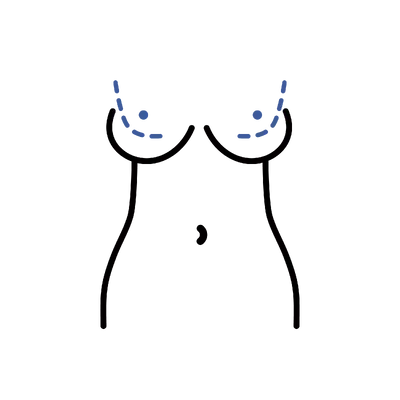





What patients say
In their own words, from people we've helped plan treatment in Thailand.
“I was on an NHS waiting list for 18 months. With you I had my hip done five weeks after my first email, and I was playing golf again by spring.”
“My daughter came out with me and Bea got her a room right next to mine. Having her close by helped a lot in the first few days after surgery.”
“...Nick spent a long time on the phone going through the three hospitals with me, the surgeons, the costs, how long I’d need to stay. I felt like he actually listened.”
“Our coordinator met us at the hospital on the first day and translated anything we didn’t understand. We never felt lost, and every appointment was booked before we even arrived.”
“Very thorough health check, and the doctor went through all my results with me the same afternoon. It was all done in one day. Will be booking again next year.”
“...sent all my documents to my GP at home without me even asking. Little things like that mean a lot when you’re dealing with a hospital in another country.”
“My wife and I felt supported from the first phone call right up to my last follow-up. Having someone to ask whenever we had a question took a lot of pressure off.”
“Quick, simple and well organised. The hospital was excellent, I was in and out the same morning, and Mint had a driver waiting to take me back to my hotel...”


